Entry 032: The Beautiful Game
The first World Cup I remember is 1982. I was seven. Paolo Rossi had just come back from a match-fixing ban and scored six goals in three games and Italy won the whole thing. I did not understand match-fixing. I did not understand most of what was happening. I understood that a man could be written off by everyone and then score a hat trick against Brazil and the television in our living room in Austria became the most important object in the house for a month.
That summer I started my first collection. Panini sticker album. 1982 España. You bought a pack of stickers for the money you earned mowing lawns. You opened the pack. You hoped for Maradona or Zico or Hans Krankl. You got the backup goalkeeper for Cameroon. You traded duplicates with your friends and your sisters and your cousins in the schoolyard and at the kitchen table and the album slowly filled. Two hundred and fifty stickers. A seven-year-old could afford it with a summer of yard work. That was the economy of joy in 1982.
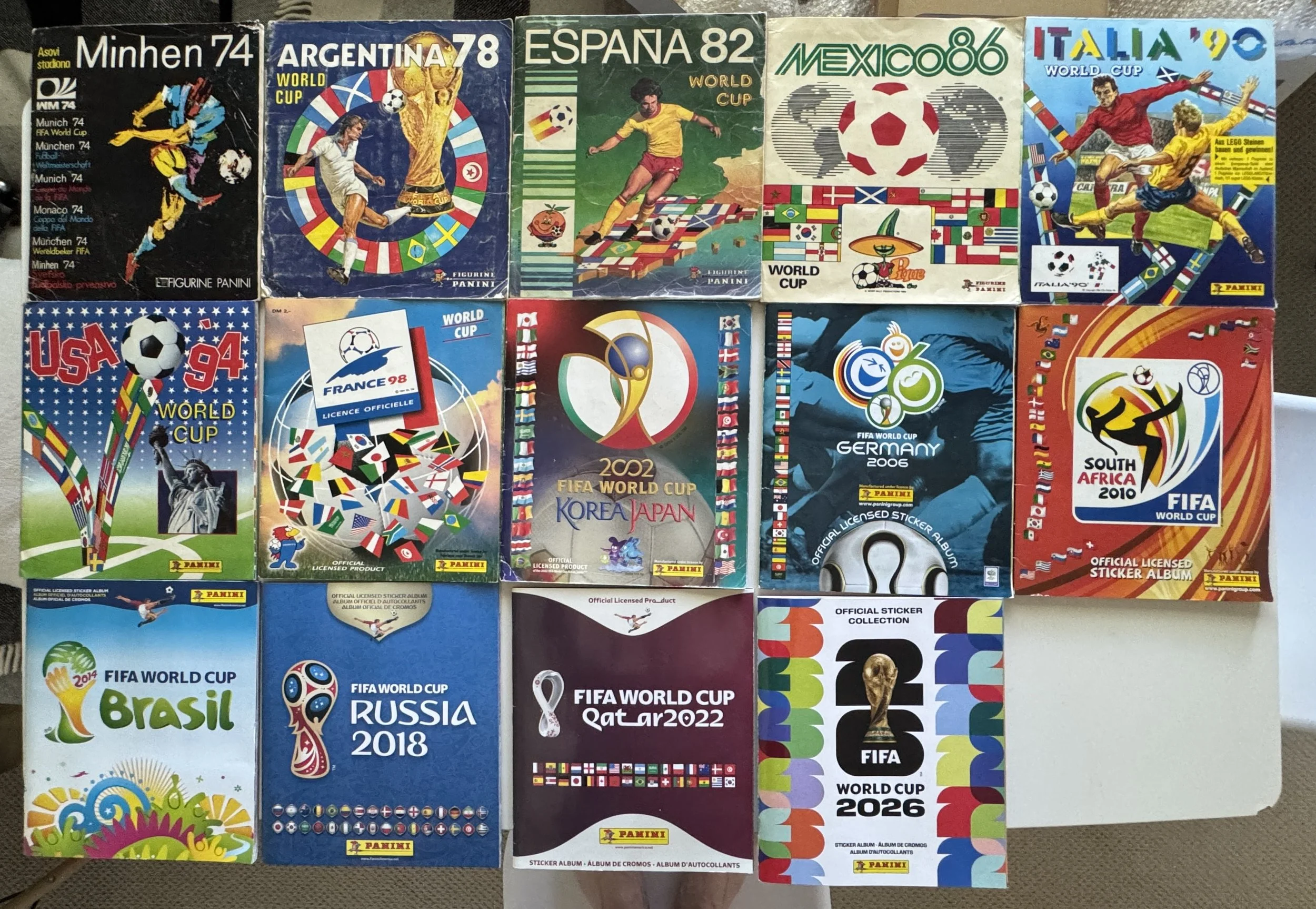
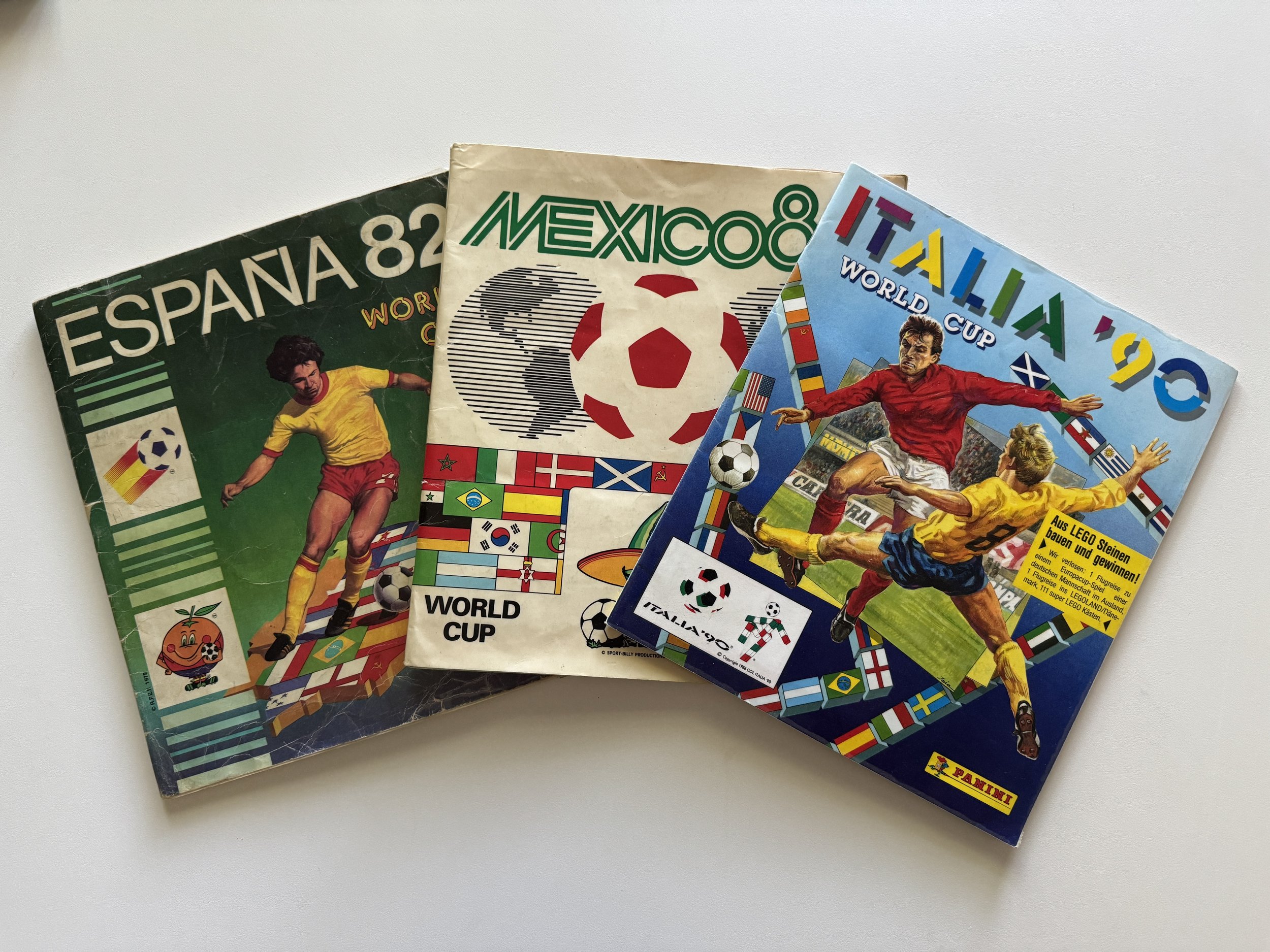
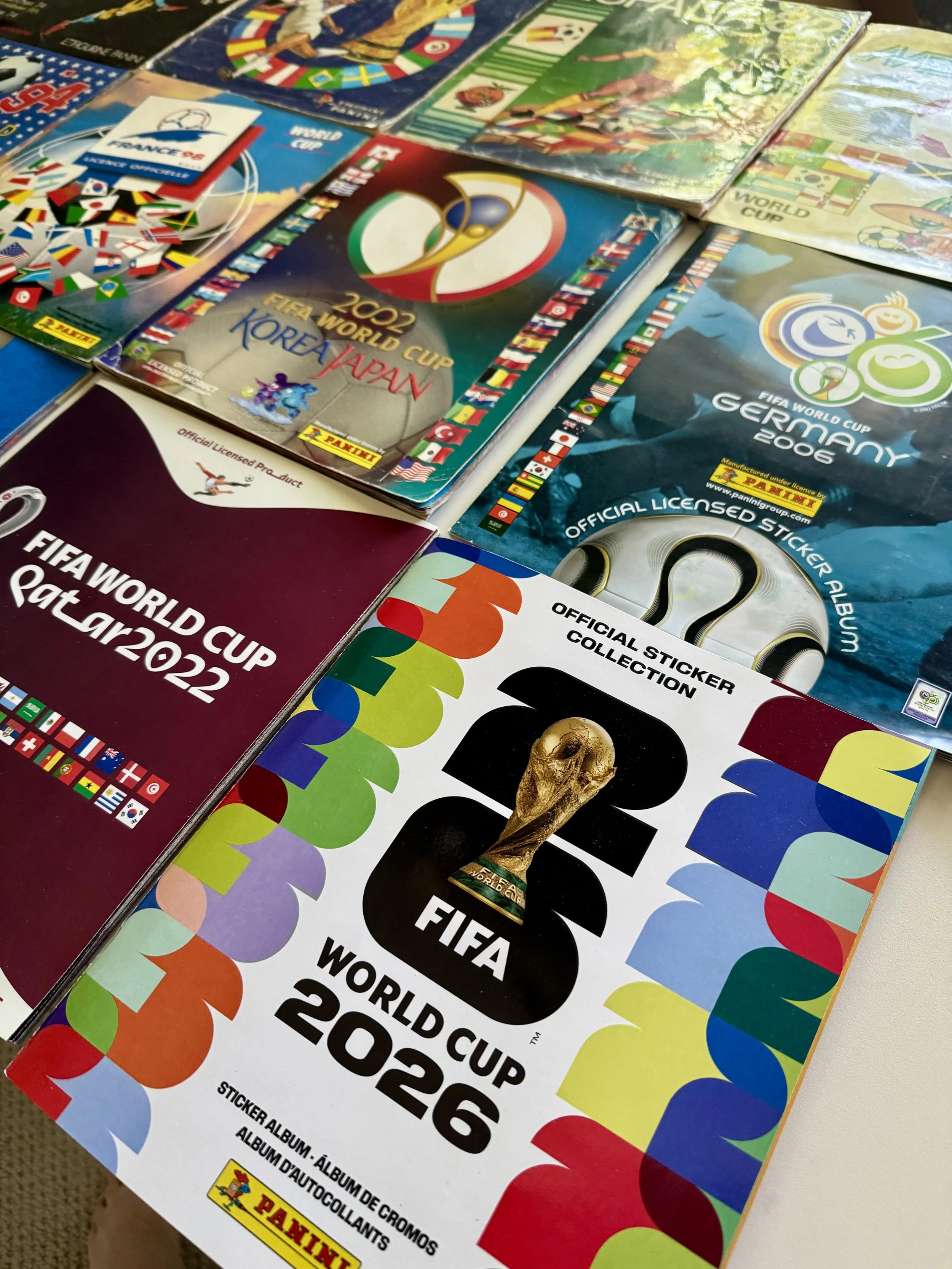
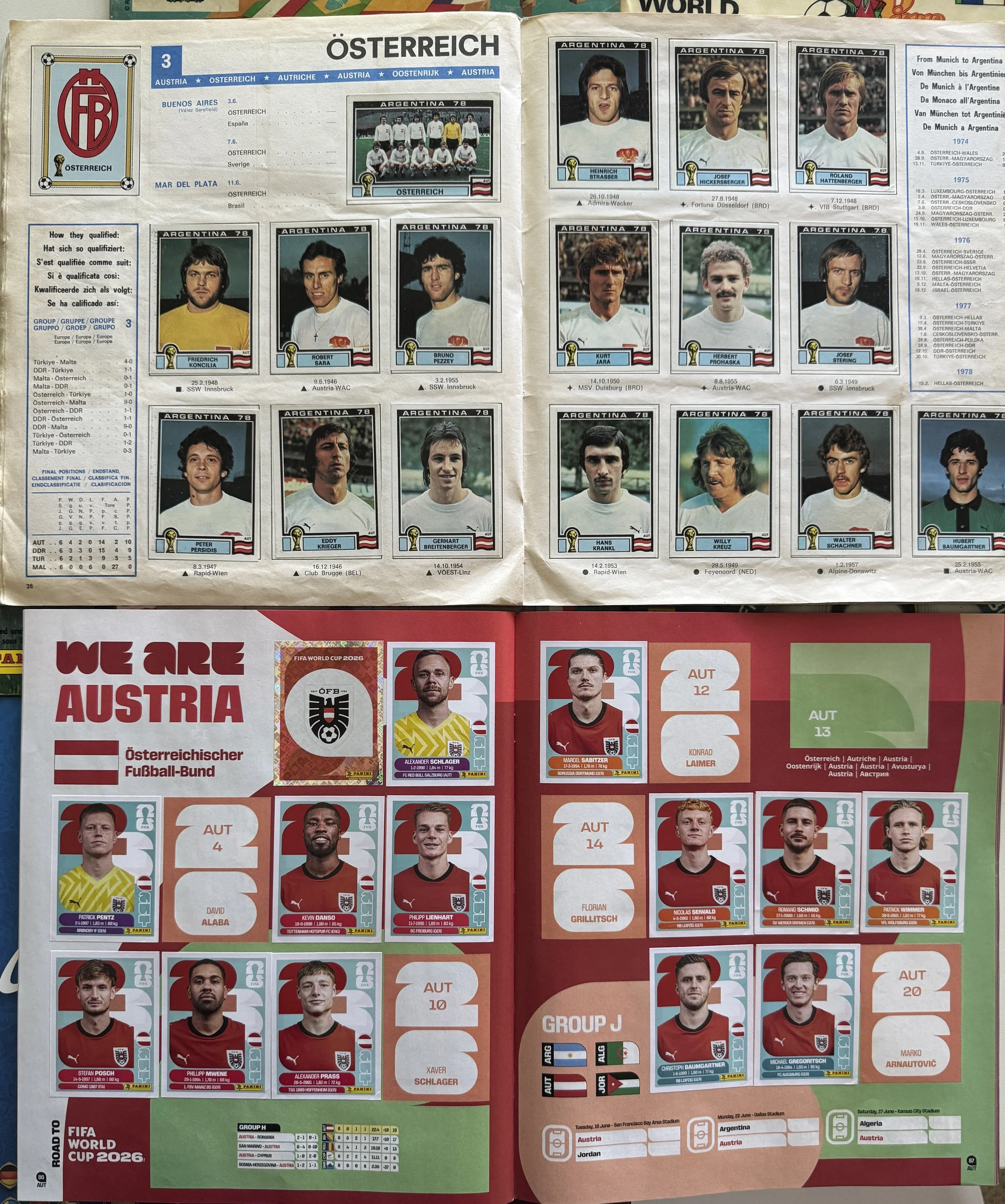
Fourteen albums. Fifty-two years. München 74 to USA-CAN-MEX 2026. The only one missing is 1970. My favorite three 1982, 1986 and 1990. Austria in 1978 and 2026
Four years later in Mexico, Maradona took the tournament and did not give it back. The Hand of God against England in the quarterfinal. Then the final. Argentina 3, West Germany 2. I was eleven. I watched it with the conviction that West Germany would come back because West Germany always came back. They did not. Maradona was too much. That final is still the best I have ever seen because it had everything. A genius. A team that would not die. A last goal that broke your heart or made your summer depending on which side of the Alps you lived on. (It made my summer)
Four years after that the World Cup went to Italy and so did I.
I was fifteen. My cousin Gerold and I got on a bus in Klagenfurt at seven in the morning. Six hours south through the Alps, across the border, down into Tuscany. Florence. Stadio Comunale. Austria against the United States. First round, Group A. I still have the ticket. 380 Schillings. That is about sixty-six dollars in today's money. Austria won 2-1 and the bus ride home took six hours and nobody slept because we were fifteen and Austria had won a World Cup match and the world was exactly as large and as promising as it should be when you are fifteen and your country wins in Florence in June.
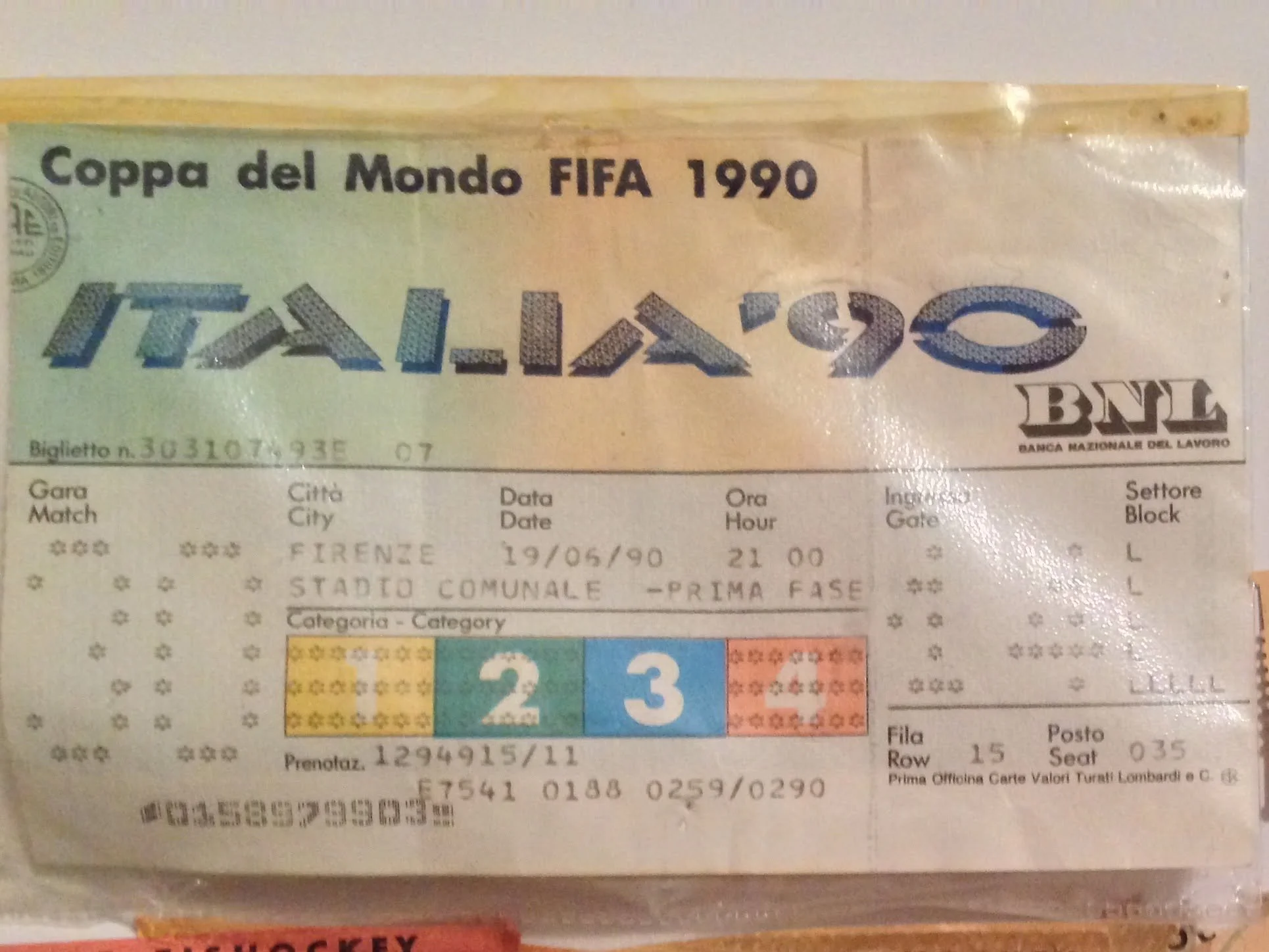
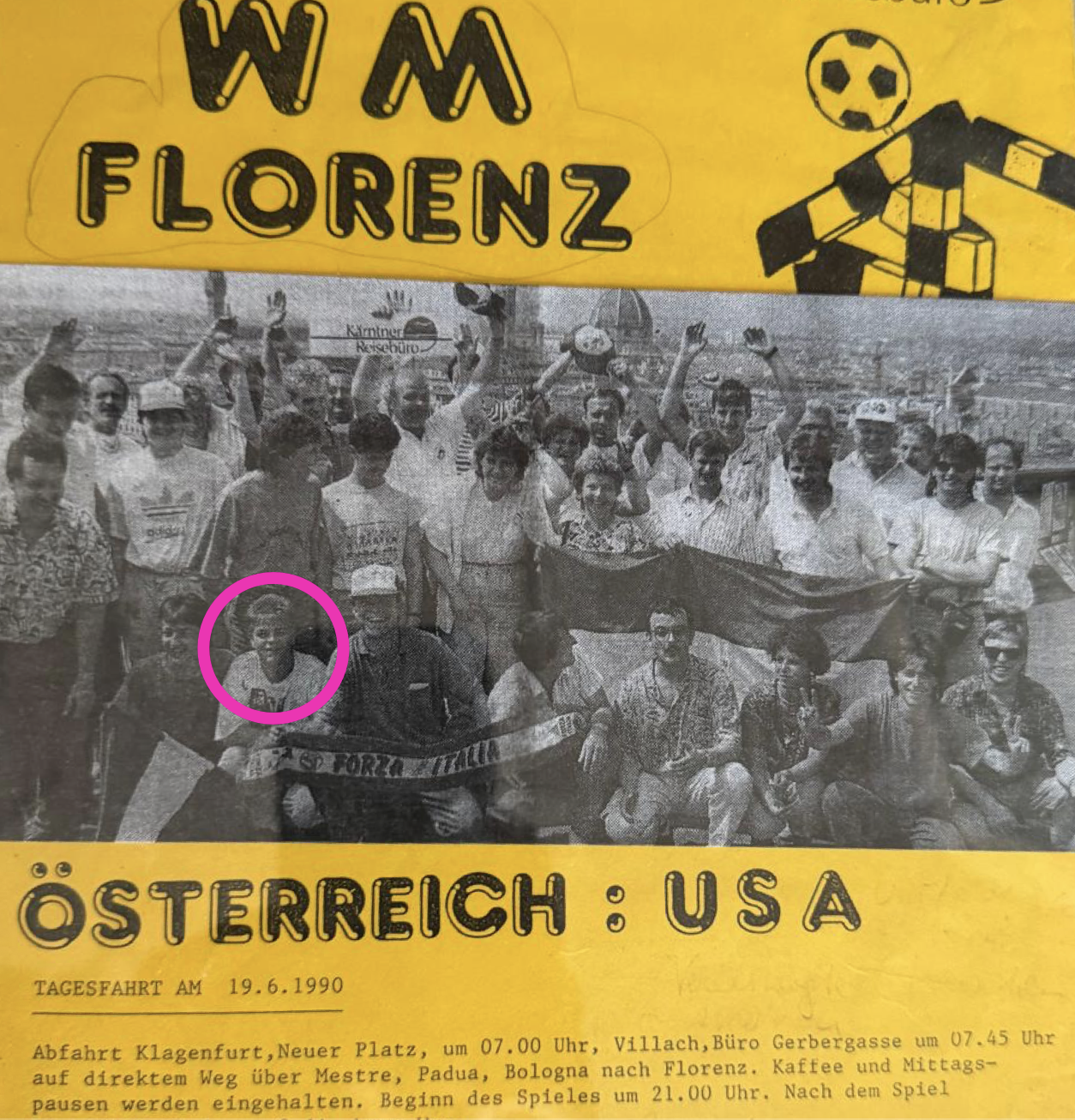
My ticket from Florence, Italy June 19, 1990. Row 15, Seat 035. Austria 2, United States 1. No cell phones not even cameras in 1990. The only photo I have is the one that went into the local newspaper.
1990 was the summer everything came together. I had just secured my apprenticeship in lithography for the fall. The beginning of a career. A whole summer of football ahead. The Blue Rider was still years away and the Arctic was not even a word in my vocabulary. I was a kid on a bus. The game was the only thing that mattered.
I have every Panini album from 1974 to 2026. Every one. Fourteen albums across fifty-two years. 1974 and 1978 I bought on eBay because I was not alive for 1974 and too young for 1978. The only one I am missing is 1970. The very first Panini World Cup album. It costs three to four thousand dollars now. I will probably never own it. But the rest sit on a shelf in my house and they are the closest thing I have to a complete autobiography. Each album is a summer. Each summer is a version of me. The seven-year-old with lawn-mowing money. The fifteen-year-old on a bus to Florence. The twenty-three-year-old watching in a bar in San Francisco full of Americans who did not care. The forty-seven-year-old watching alone on a laptop because the friends who used to watch with him live on a different continent.
But something has changed. And I do not think it is just me getting older.
The 2026 World Cup is forty-eight teams. Forty-eight. It was twenty-four when I was a kid. Then thirty-two. Now forty-eight. The Panini album has nine hundred and eighty stickers. Nine hundred and eighty. A seven-year-old mowing lawns cannot afford that. A grown man with a job can barely justify it. The economy of joy in 1982 was a pack of stickers and a summer afternoon. The economy of joy in 2026 is an investment fund.
And Panini itself is losing the license after 2030. The European Championship already went to Topps, the American card company. It was, by every account, a disaster. The stickers looked wrong. The feel was wrong. The whole thing was wrong in the way that only someone who grew up with Panini would notice and nobody else would care about. But I notice. And I care. Another thing that worked for fifty years, quietly, beautifully, replaced by something louder and worse.
The tickets. The cheapest seat to Austria against Jordan at Levi's Stadium in Santa Clara is one hundred and forty dollars. My ticket in Florence in 1990 was sixty-six dollars adjusted for inflation. More than double for the same round of the same tournament thirty-six years later. FIFA talks about the people's game. The people cannot afford the people's game.
The hydration breaks. I need to talk about the hydration breaks. Forty-five minutes. That is what football is. Two halves of forty-five uninterrupted minutes. No timeouts. No commercial breaks. Just the ball and the players and the clock. That is what made it beautiful. That is why the rest of the world calls it the beautiful game. Because it does not stop.
Now they stop it. Hydration breaks. Cooling breaks. Whatever FIFA calls them this week. It is seventy degrees. Seventy. These are professional athletes who have trained their entire lives. They can survive forty-five minutes without a sponsored pause. But the game is in America now and America cannot let a thing run for forty-five minutes without selling something in the middle of it. I love this country. I have lived here for twenty-six years. But the inability to leave a thing alone, to let a thing be what it is without monetizing the pauses, is the one cultural habit I will never understand.
This is why I cannot watch American sports on television. I love hockey. I played hockey. I cannot watch an NHL game on TV because the stoppages are unwatchable. American football is the same. The ratio of action to commercial is a crime against attention. Football, real football, was never like that. It was continuous. And now they are breaking it.
And then there is the phone.
I do not want to say this but I will. I am part of the problem. I watch a match now and within ten minutes I am looking at my phone. Texting a friend. Did you see that. Checking the group chat. Reading a comment. And while I am doing all of that, the game is playing in front of me and I am not in it. I am next to it. I am near it. But I am not inside it the way I was inside that stadium in Florence at fifteen when there was no phone and no group chat and no second screen and the only thing between me and the game was air.
The World Cup I fell in love with has not been stolen. It has not burned. It has been diluted. Slowly, deliberately, by people who understand the price of everything and the value of nothing. From twenty-four teams to forty-eight. From two hundred and fifty stickers to nine hundred and eighty. From sixty-six dollars to one hundred and forty. From forty-five uninterrupted minutes to forty-five minutes with a hydration break brought to you by someone who does not care about the game.
Monday, June 16th. Austria against Jordan. My second World Cup game in thirty-six years.
Schmid bent one into the top corner in the twenty-first minute and for a moment I was fifteen again. Austria leading in a World Cup match. The sound of twenty thousand Austrians in Santa Clara, organized, chanting, flags everywhere, as if someone had lifted a section of the Ernst-Happel-Stadion and dropped it into Silicon Valley. I have lived away from Austria for twenty-six years. I have never heard that many Austrian voices in one place on this side of the Atlantic. It was surreal in the best possible way.
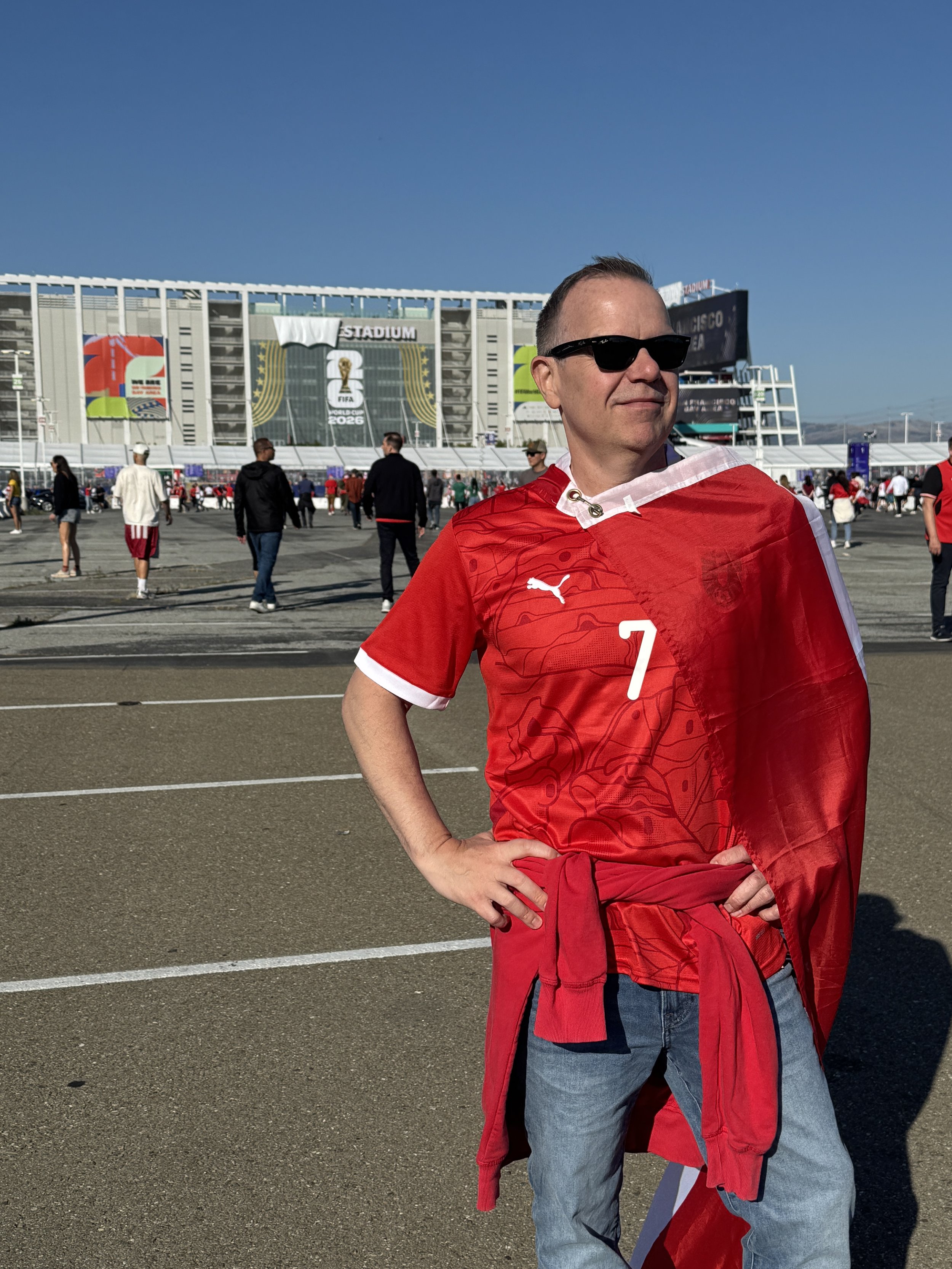
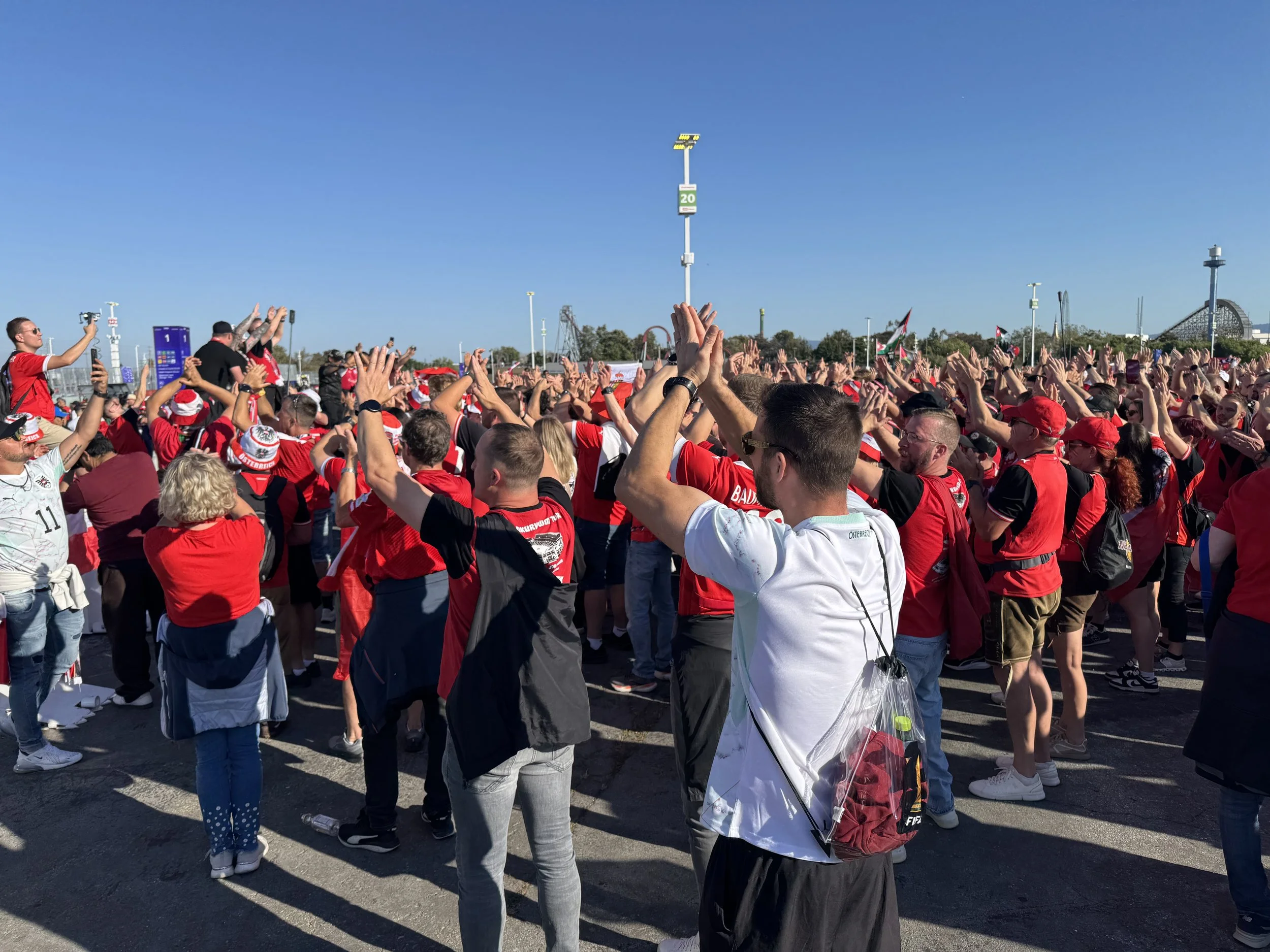
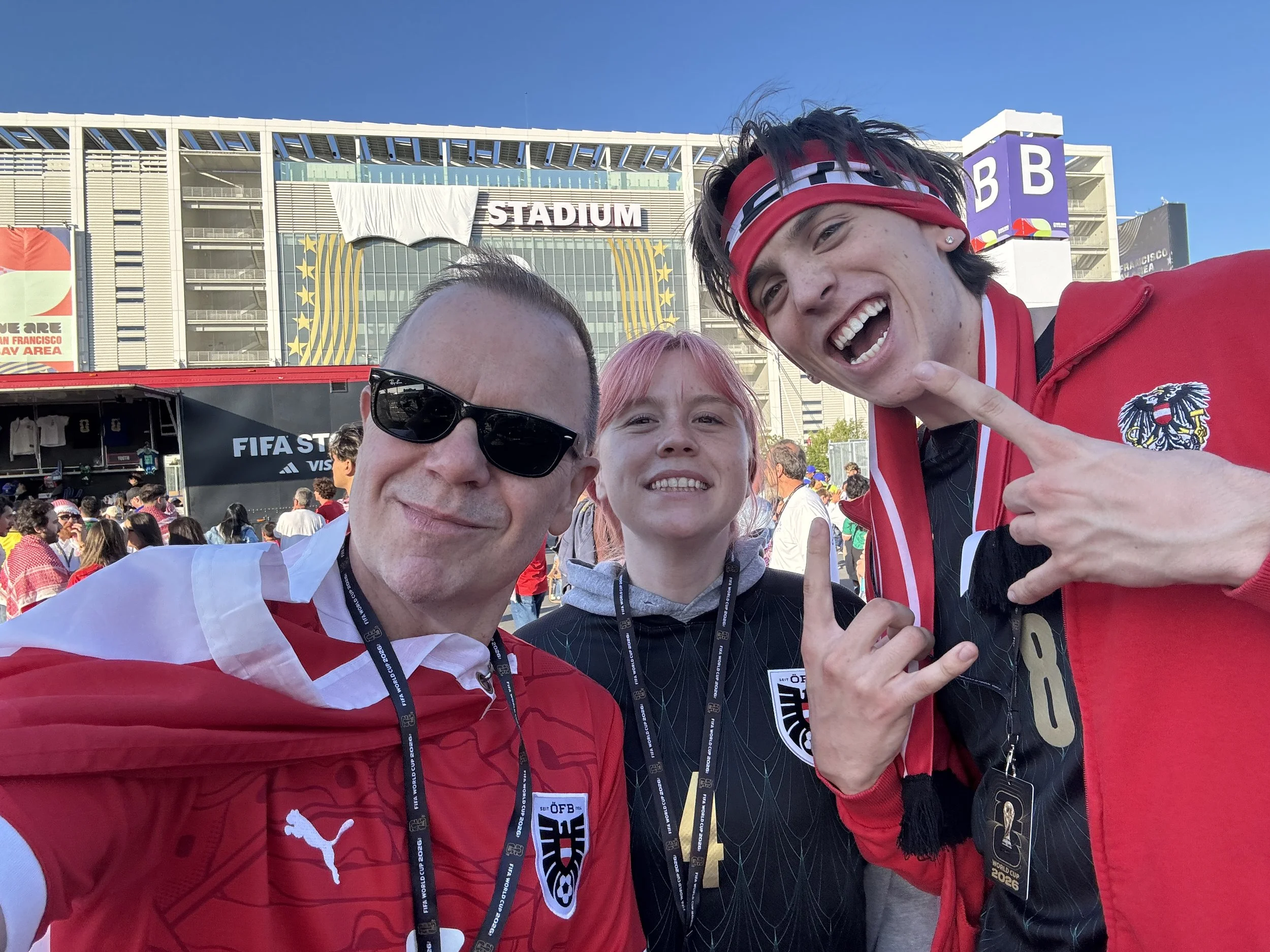
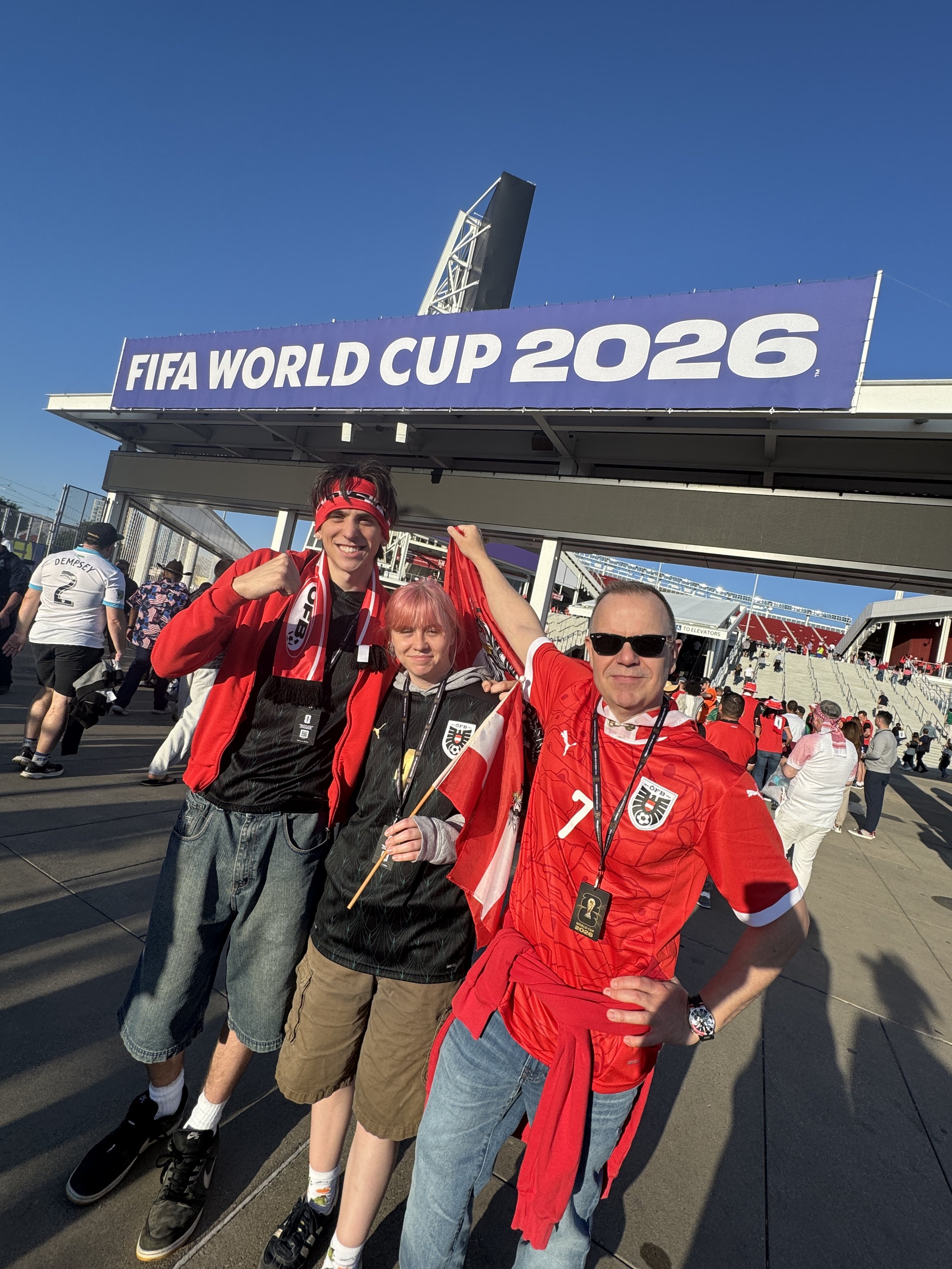
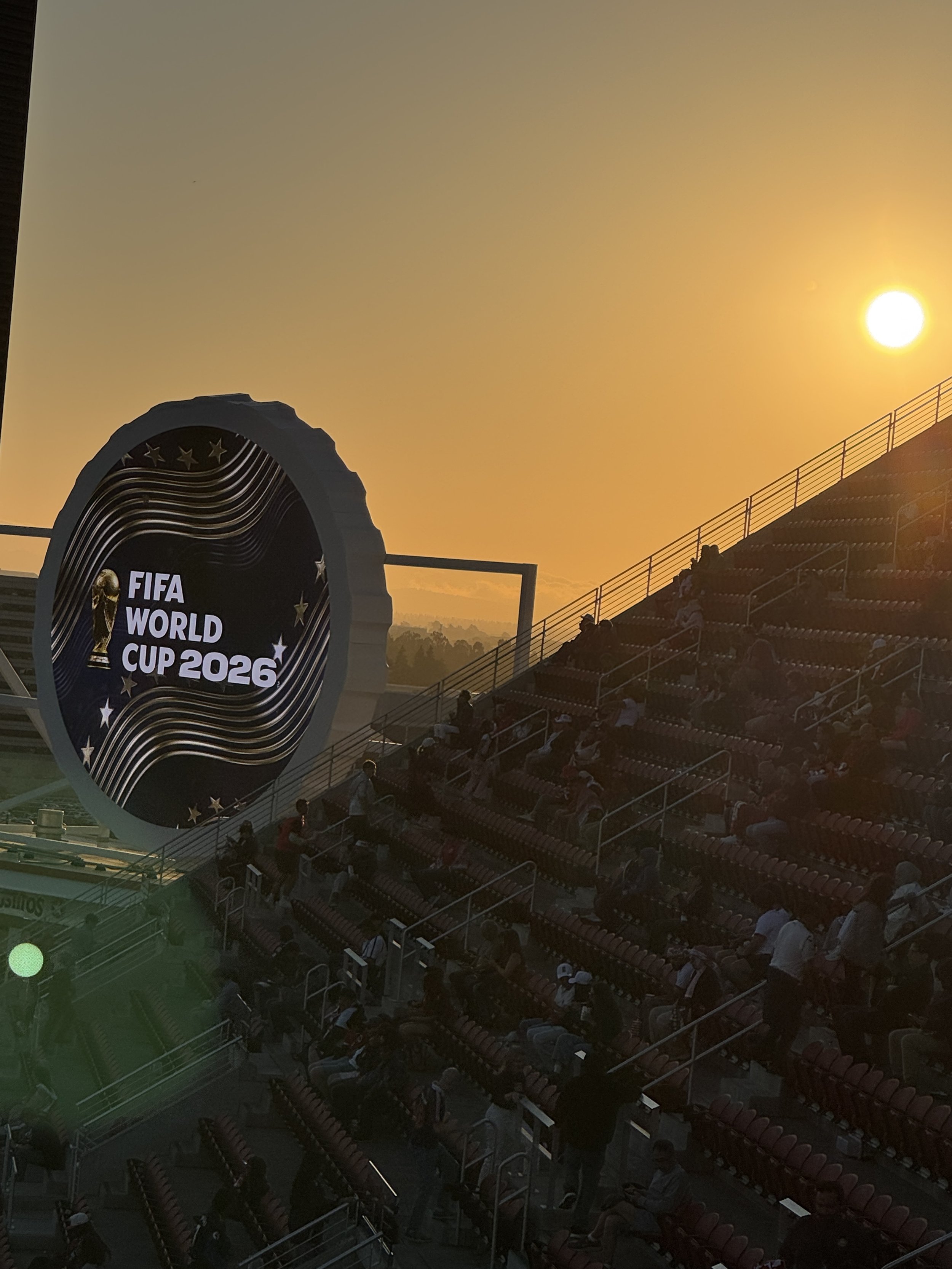
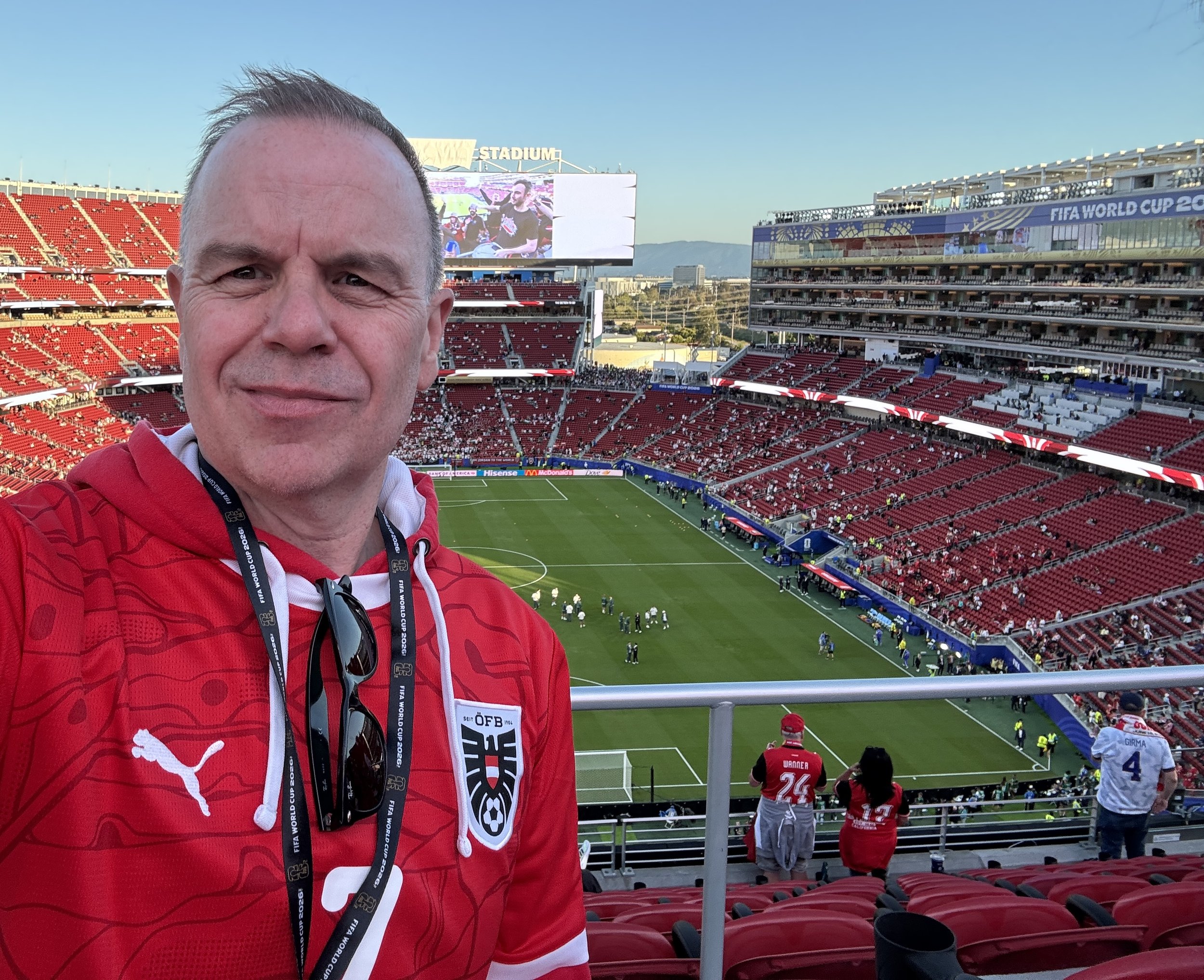
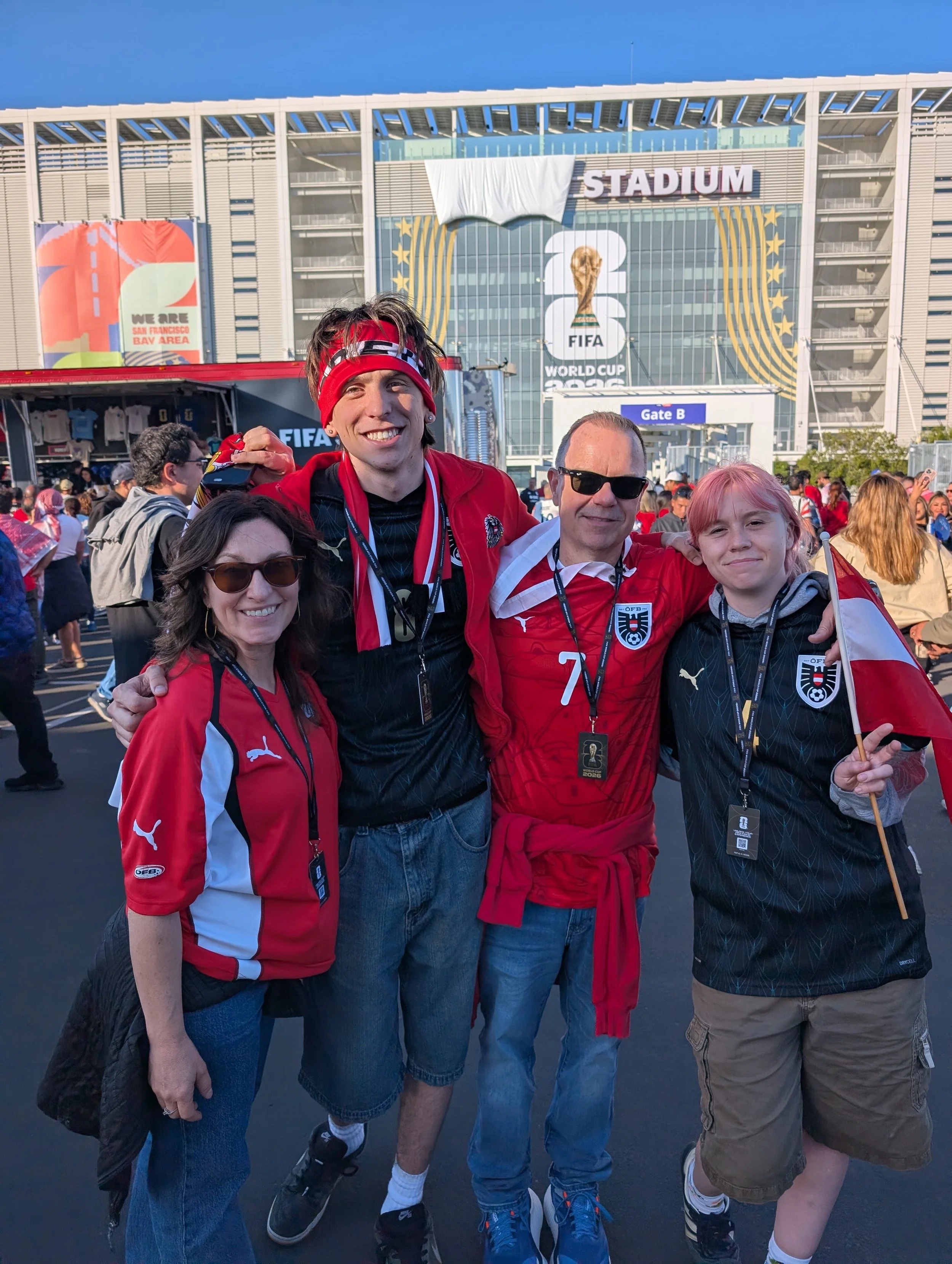
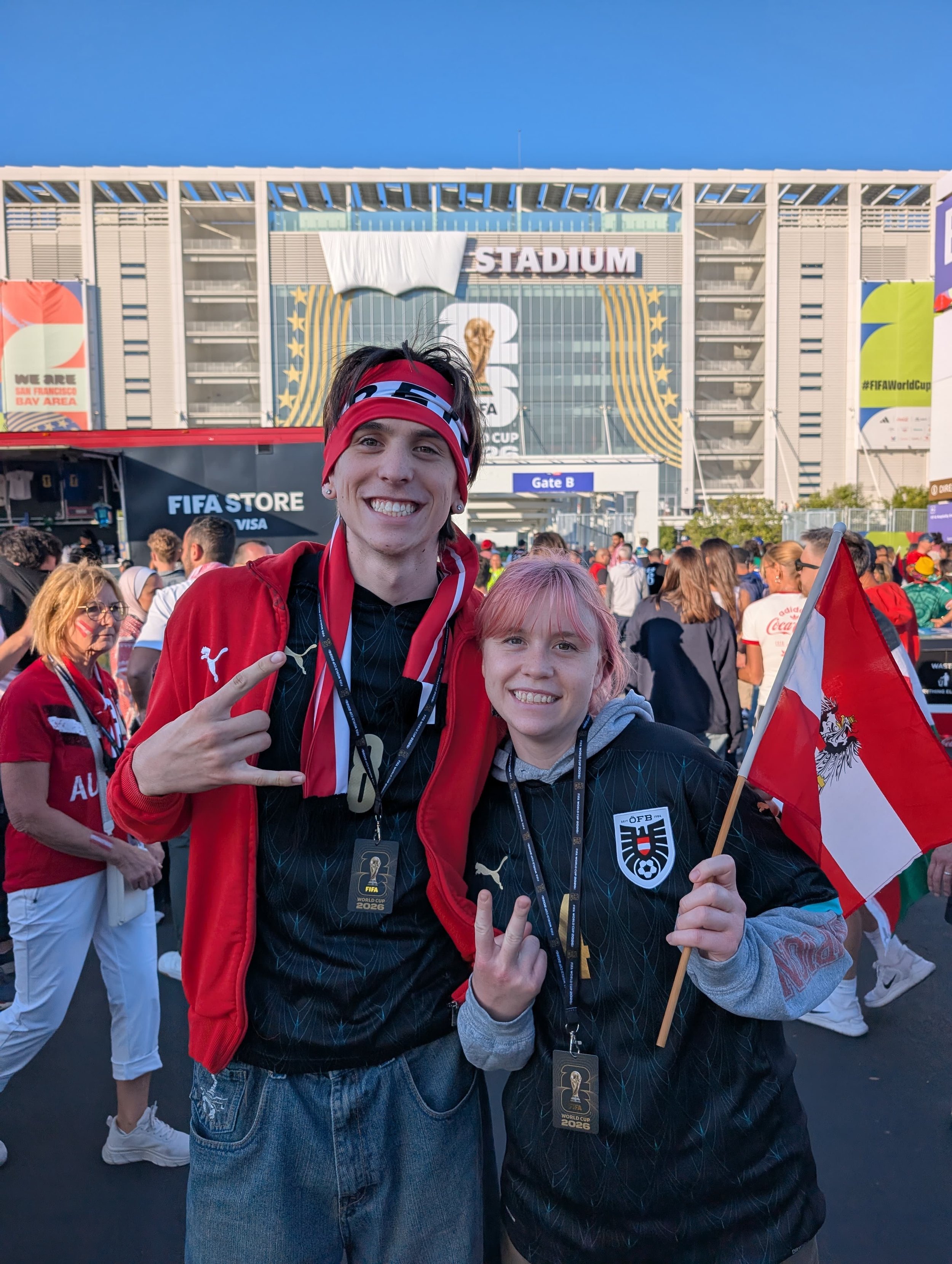
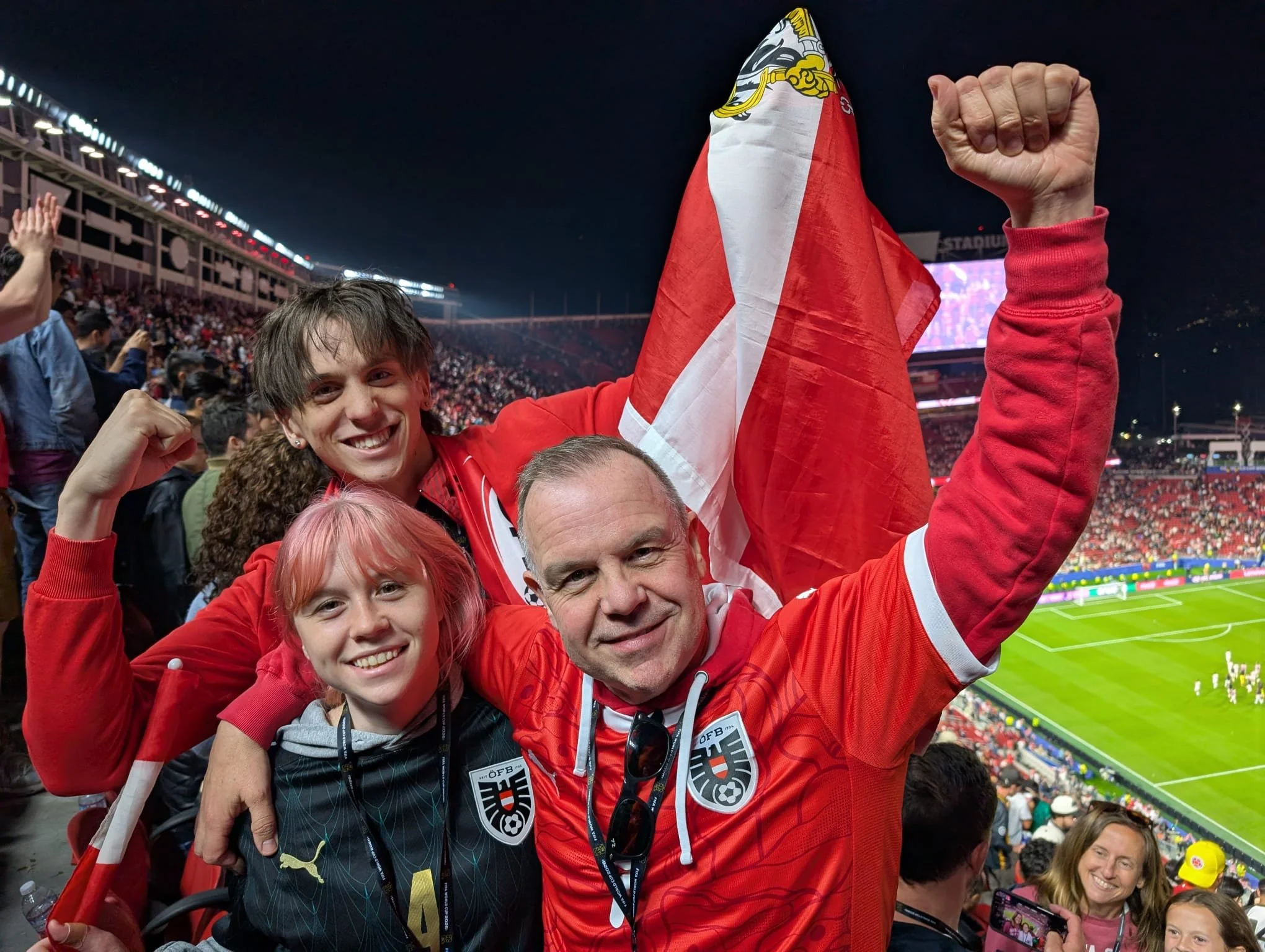
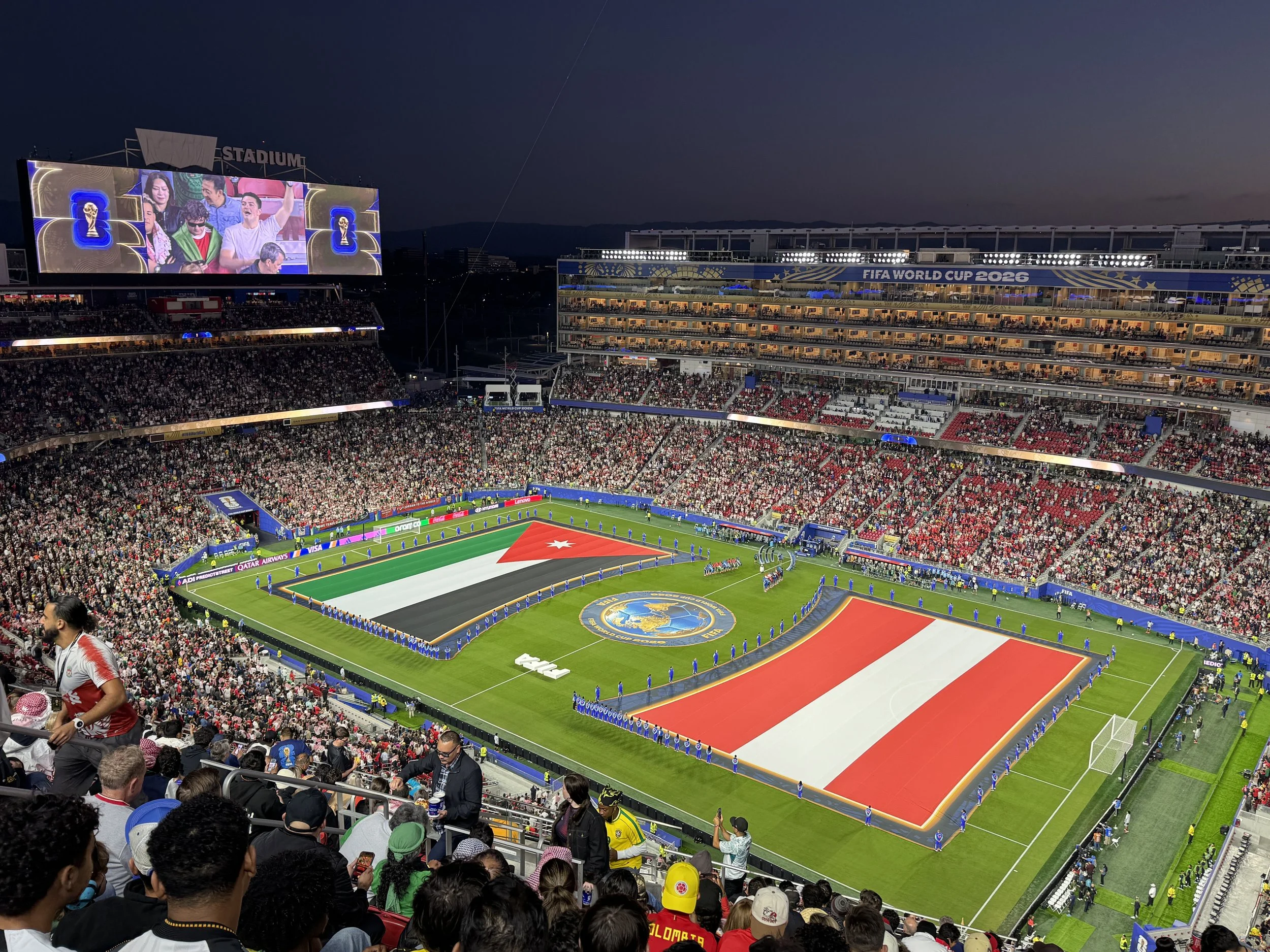
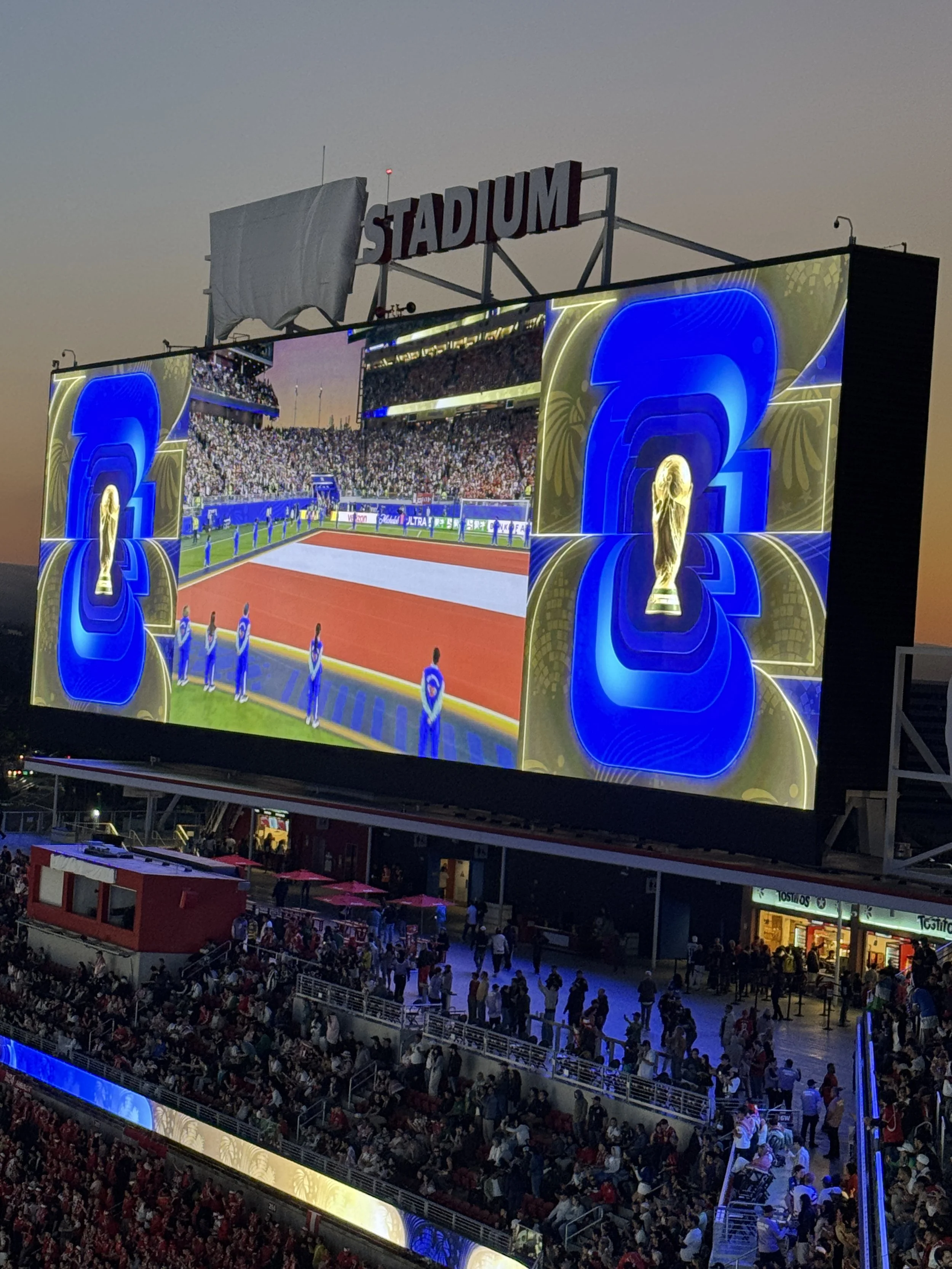
At the Game
Then Jordan equalized in the fiftieth minute. Olwan curled one in off the post. Their first goal in World Cup history. The stadium split. And I noticed something I did not expect. At fifteen, watching Austria concede would have been exciting. A challenge. At fifty, with my kids beside me, it was a heart attack. I wanted this for them. Not just the game. The win. The feeling I had on that bus home from Florence when nobody slept because the world was exactly right. I know I am not responsible for Austria winning. But I felt responsible for the experience. I wanted them to have a ten.
They got one. An own goal in the seventy-sixth minute. Then Arnautovic buried a penalty in the twelfth minute of stoppage time after a VAR review that took long enough to age me another five years. Austria 3, Jordan 1. First World Cup win in thirty-six years. I was there for the last one. I was there for this one. My kids were there for their first.
They were fully in it. No phones. Barely any photos. Just the game and the noise and the flags and the ninety minutes. That is what I wanted. That is what they got.
Then we left the stadium and the rest of the evening reminded me why I dread this place.
I had parked far from the stadium to avoid the hundred-and-fifty-dollar lots closer in. Smart plan. We walked out to find a cheaper Uber pickup. The app kept rerouting us back to the stadium. Every ride option funneled to the same surge-priced zone. The system is designed so you cannot escape it. Ninety minutes of standing in a parking lot refreshing an app. Ninety minutes. After ninety minutes we finally got a car. Eighty-five dollars for twelve minutes. A beer inside was twenty.
It is not just FIFA. It is not just Levi's Stadium. It is everything stacked against the person who just wants to watch a game. Uber, FIFA, the stadium, Panini, all of them want their pound of flesh. And it leaves a real aftertaste now. You cannot just buy a ticket anymore. The ticket comes with parking and surge pricing and platform fees and hydration breaks and nine hundred and eighty stickers. To use the language of the games my kids play: micro-transactions. Except there is nothing micro about them.
I took Niko to this same stadium ten years ago for Liverpool against AC Milan. The same thing happened. The Chronicle wrote about it this time. Trains shut down around midnight. Fans stranded. A sixty-eight-thousand-seat stadium with no exit plan.
Once we hit the freeway it was fine. But by then the night had lost ninety minutes it did not need to lose. The whole ordeal getting to my car took almost as long as the six-hour bus ride home from Florence in 1990. The difference is that in 1990 nobody slept because they were happy. Last night nobody slept because they were stuck in Santa Clara.
But the game. The game was a ten.
Some things disappear because they are stolen. Some because they burn. Some because they are diluted so slowly that by the time you notice, the thing you loved is still there in name but not in substance. The label is the same. The sticker album still says Panini. The tournament still says FIFA World Cup. But the thing inside the label has been emptied out and replaced with something more expensive and less real.
I have fourteen Panini albums on a shelf. Fifty-two years of summers. The 1982 album is the one I look at most. Two hundred and fifty stickers. Paolo Rossi. A seven-year-old who thought the world was as simple as a pack of stickers and a lawn to mow.
It was. For a while.
“The history of football is a sad voyage from beauty to duty.”