Entry 051: Day 15: Please Remember to Sign Off
Wednesday, 29 July 2026. Longyearbyen.
I did not sleep well. Fourteen days of being woken by Sarah saying good morning, good morning through the ship, and on the one morning there was an actual deadline my body decided to handle it personally. Off by nine with everything packed. I was up at half six. I showered, went up, and the only other person in the breakfast room was Karen, who had been talking to Adrian on the night watch and had been awake since three. Three in the morning is a phrase with no teeth up there, because there is no night to be in the middle of.
There was nothing to wait for. Bread, butter, jam. The hot buffet at eight was for other people and always had been. I took the coffee outside and Longyearbyen was doing something I had not authorized. It was sunny and it was warm and there were other ships in the harbor with people standing about on them. We left this place under low cloud in the cold with everything ahead of us and everything strange, and we had come back to the same water with the weather improved and nothing ahead of us at all. Fourteen days of an empty sea and now there were strangers tied up next to us. Two weeks earlier they would have been a fact about a harbor.
I brought my bags up and the crew carried them out, which was either kindness or logistics, since a Chinese charter was arriving at four in the afternoon and the ship had a schedule of her own. Sarah and Rhys and Lisa were finished. Beth was staying on for the next one, and so were Joachim and Victoria, so they were about to go straight back out with a boat full of people who did not know any of us. Joachim said something at the gangway that I have kept, which is that this was the first time he had seen the artists waiting for the bus instead of the bus waiting for the artists. Fourteen days of standing in a corridor failing to do a magnet board, and we peaked on the morning it stopped mattering.
So at 08:46 I went to the magnet board one last time and moved my magnet from IN to OUT.
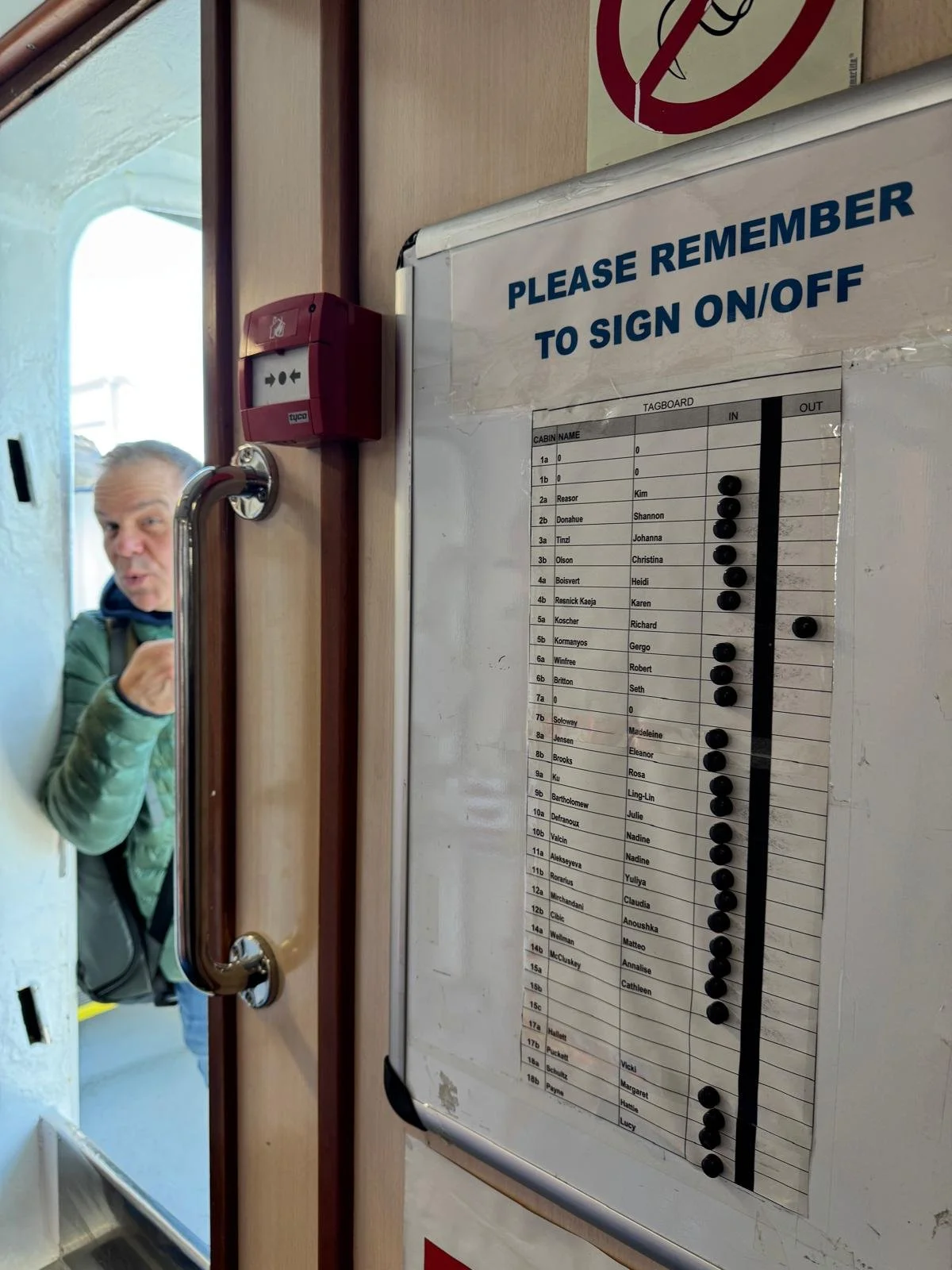
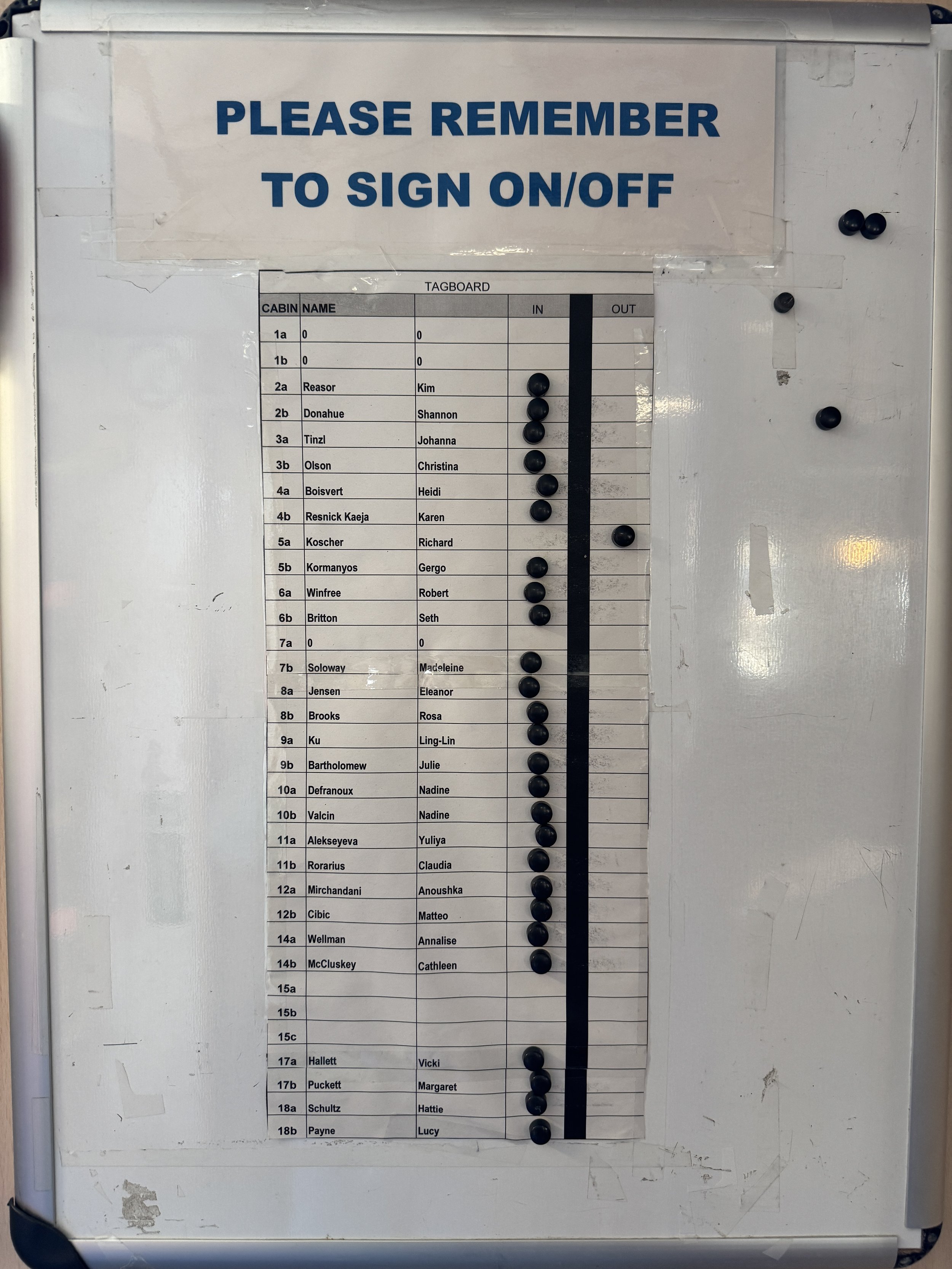
Then down the gangway, and here is where I need to try, because this is the part I have been failing to describe since July. There is a Donald Duck story I read as a boy. He is at the airport and he watches people arriving off a flight with miserable faces, and then he watches a different crowd come off looking delighted, and he books himself onto the flight the happy ones came from. Later he works out what he has done. The happy ones were happy because they were home. The trip was the misery. He should have booked the other flight, the one carrying all the sad faces, because the sad faces were the ones who had just come from somewhere good. I walked down that gangway thinking about a duck. I was one of the sad faces.
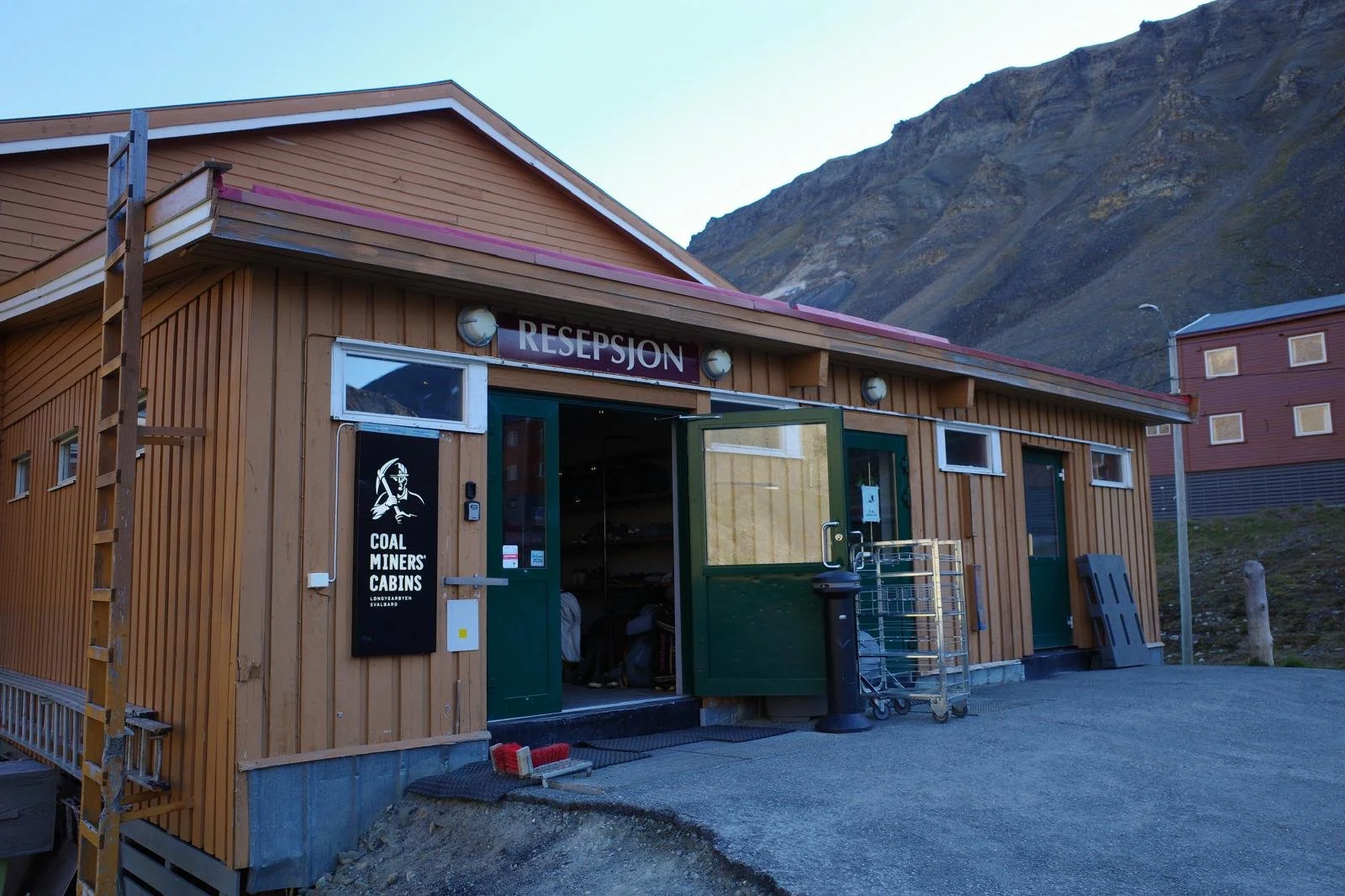
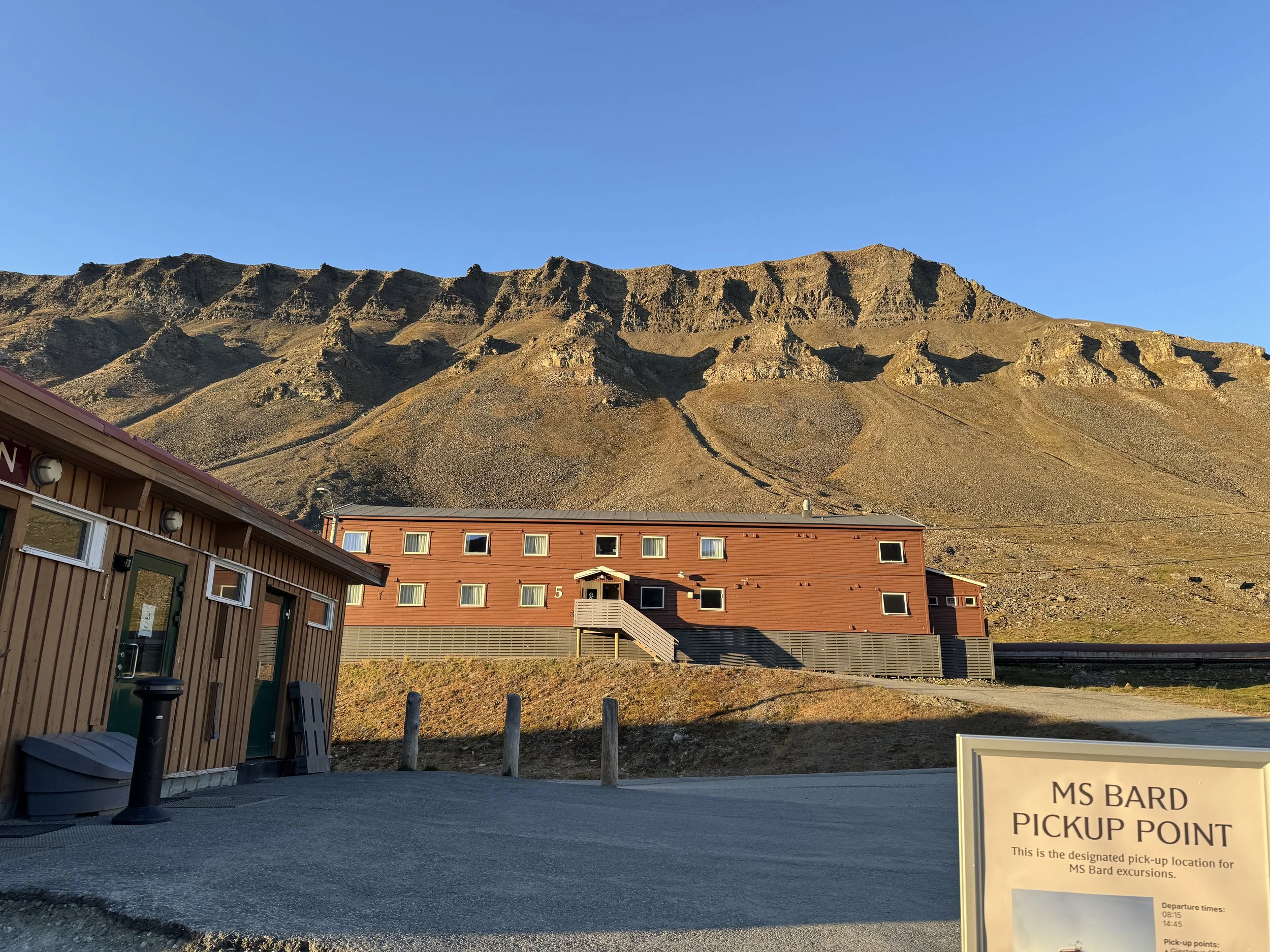
The bus took us to Coal Miners' Cabins, and cabin five turned into a room. Two beds side by side with floor between them, a window that opened, a bathroom down the hall that a person could turn around in. Gergő and I had spent fourteen days taking it in shifts to stand up. The whole place has the shape of a youth hostel and I mean that as praise, and I have already booked it again, which gives away more about the rest of this story than I intended.
There had been a sheet the night before. Bus to the Seed Vault, or walk. The Seed Vault sits on the hillside above the airport, the airport is a good way out of town, and the road up is unpaved and does not believe in going straight. I signed up for the bus. When we got up there it was mobbed, four coaches and a hillside of people, and Lisa said she had never seen it that busy. Nobody stays long, because there is nothing to do there. You look at a concrete wedge coming out of a mountain with a panel of mirrored glass at the top, and the plaque tells you it holds the largest safety backup of the world's crop diversity, a hundred and thirty metres inside the rock, at a constant minus eighteen, and that there is no public access. That is the whole visit. A door you cannot go through, in front of an airport, on a hill.
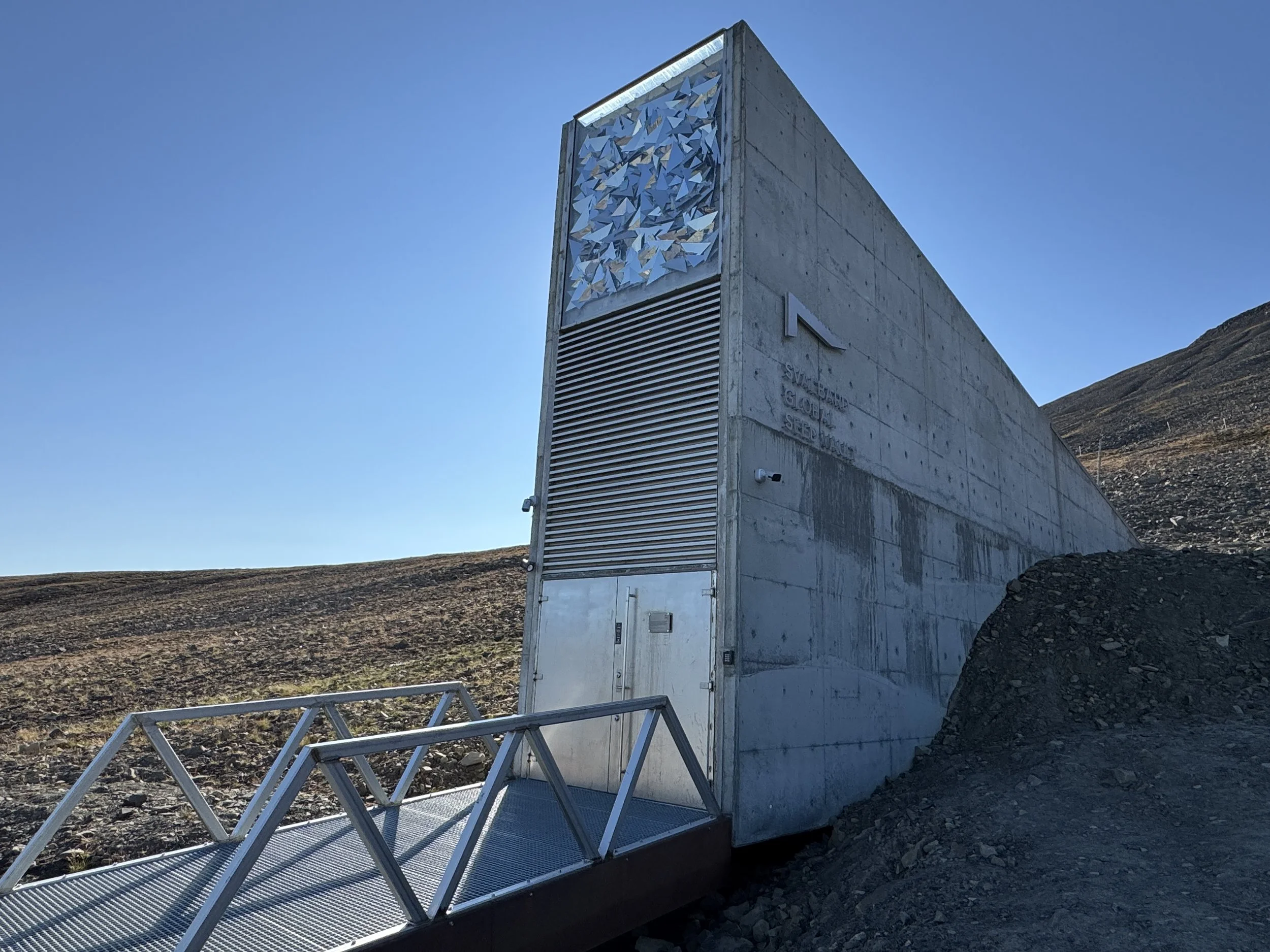
The Seed Vault
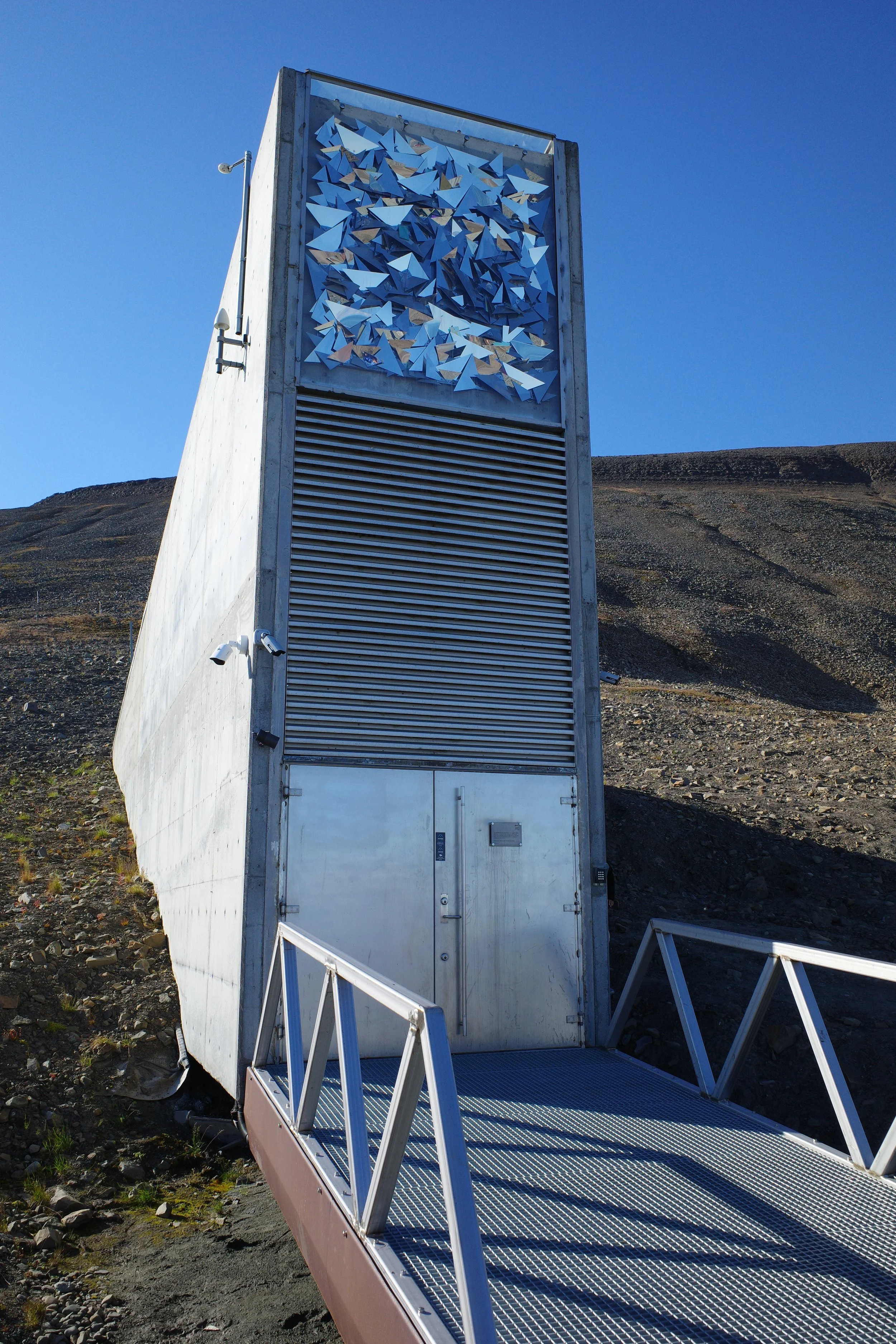
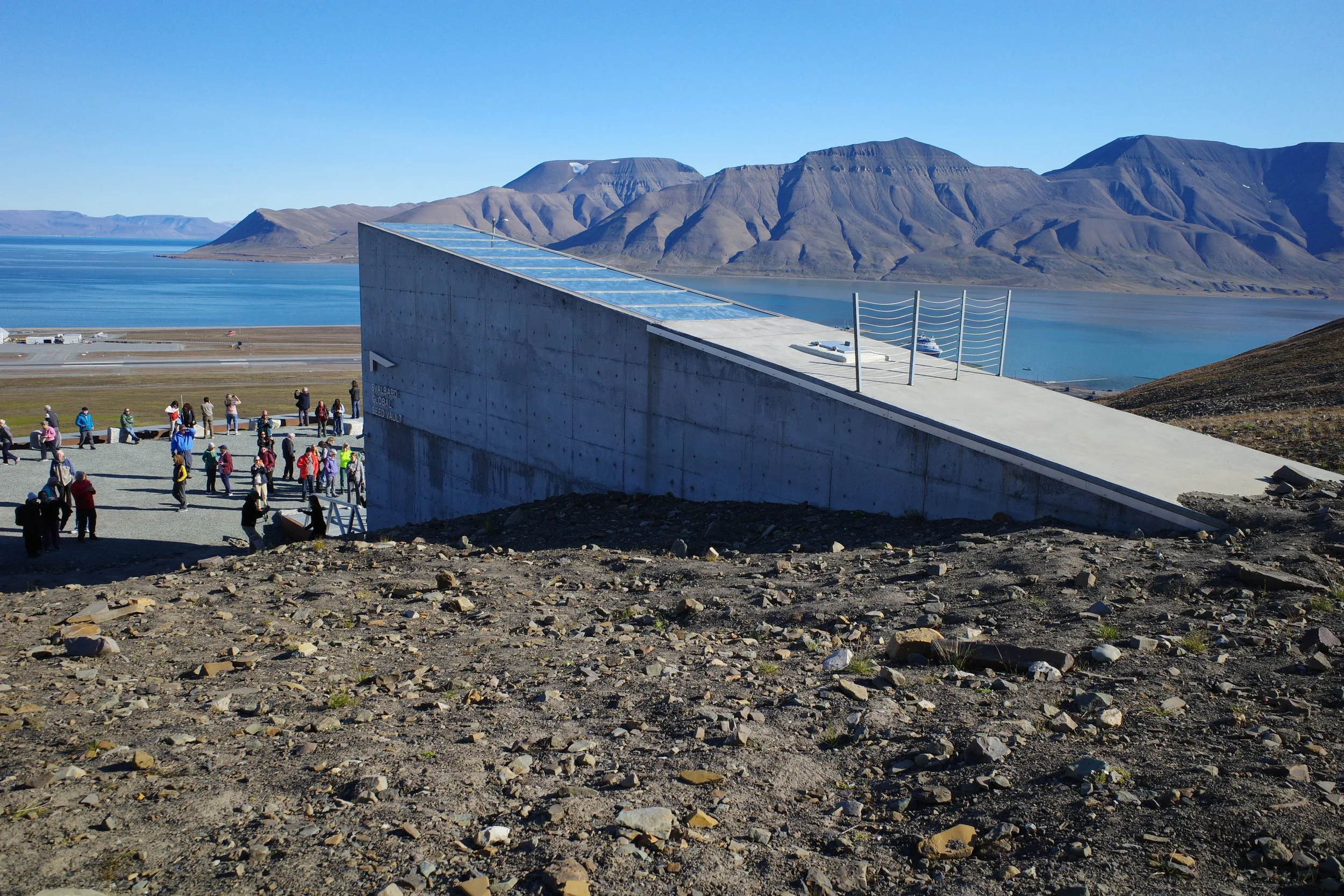
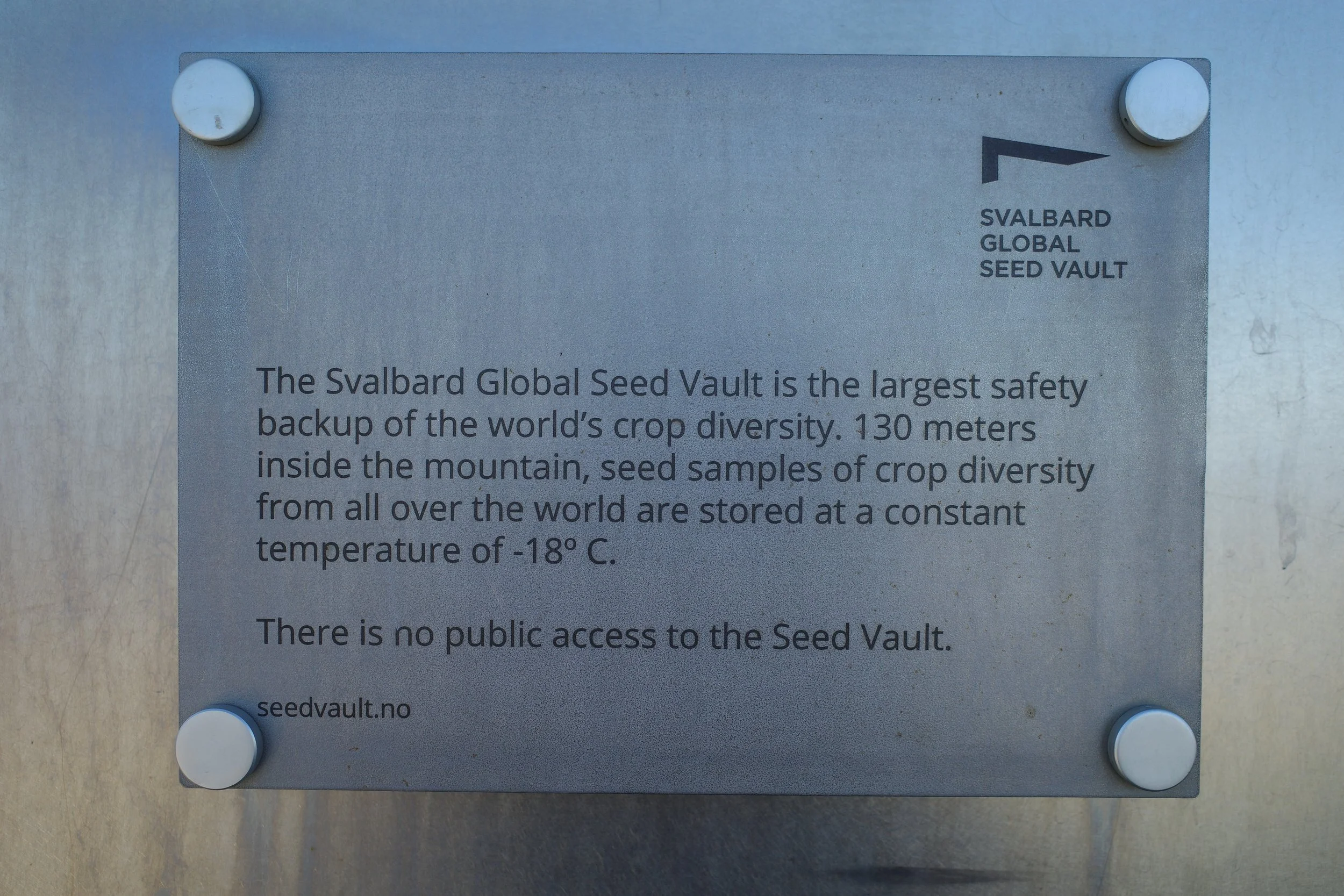
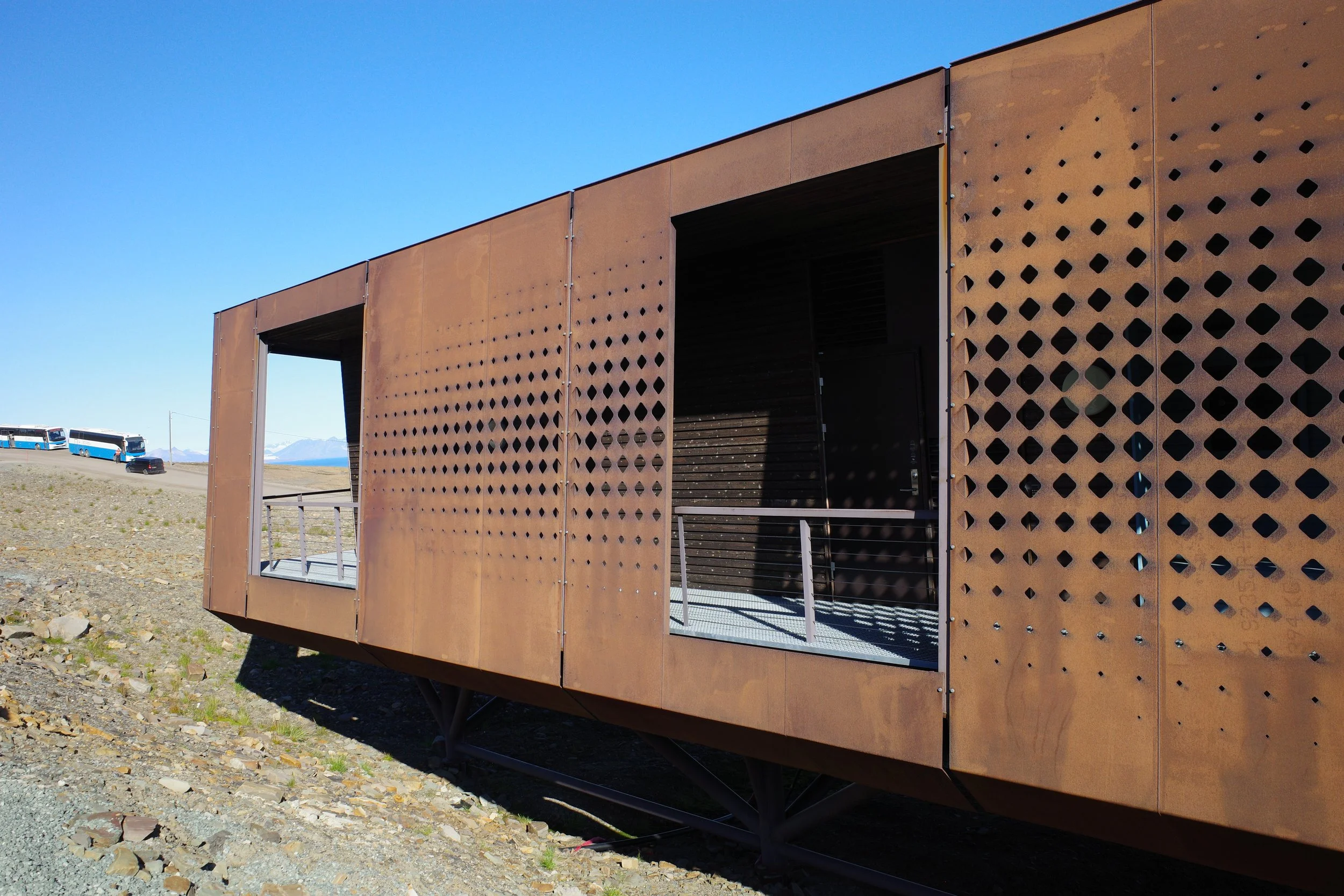
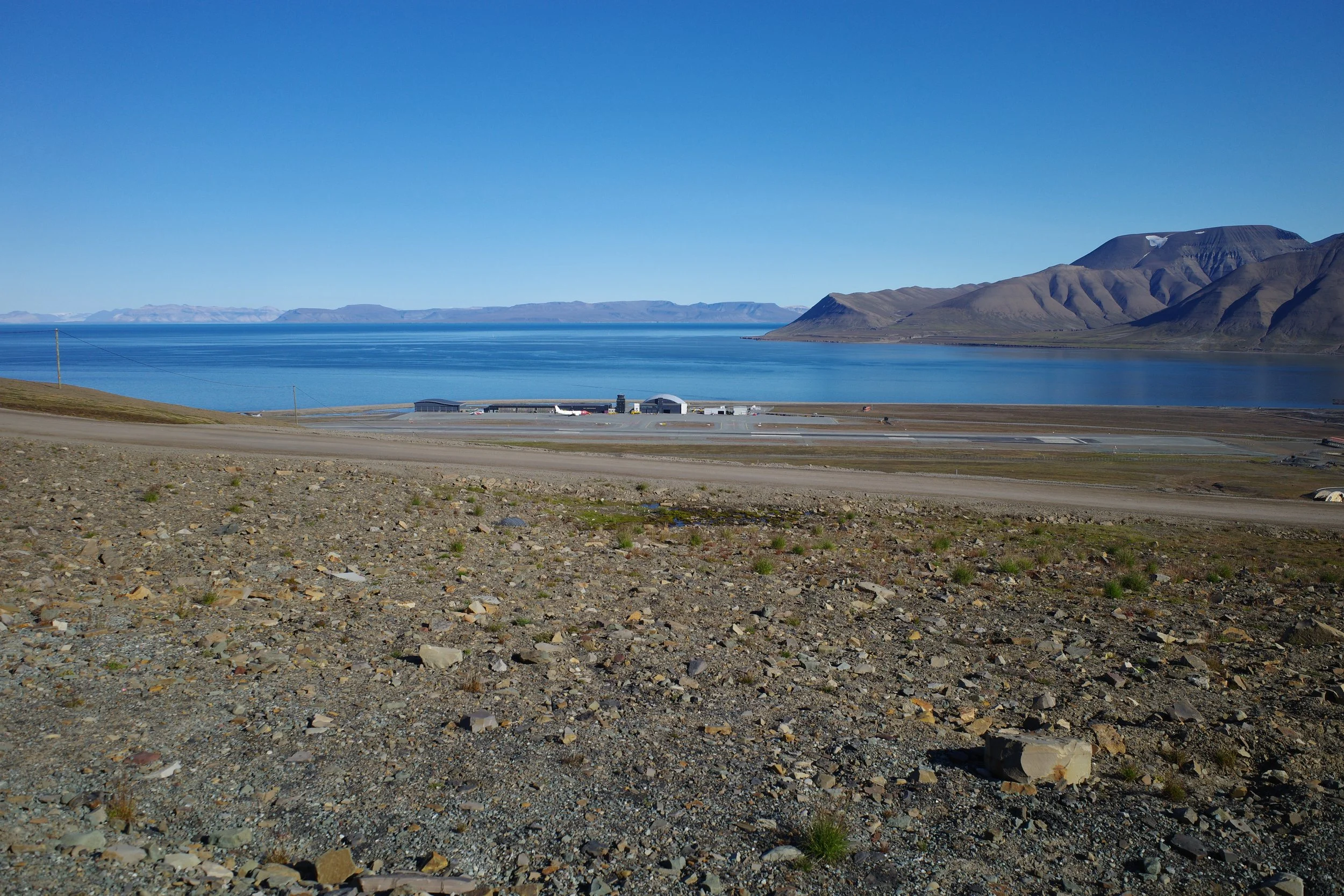
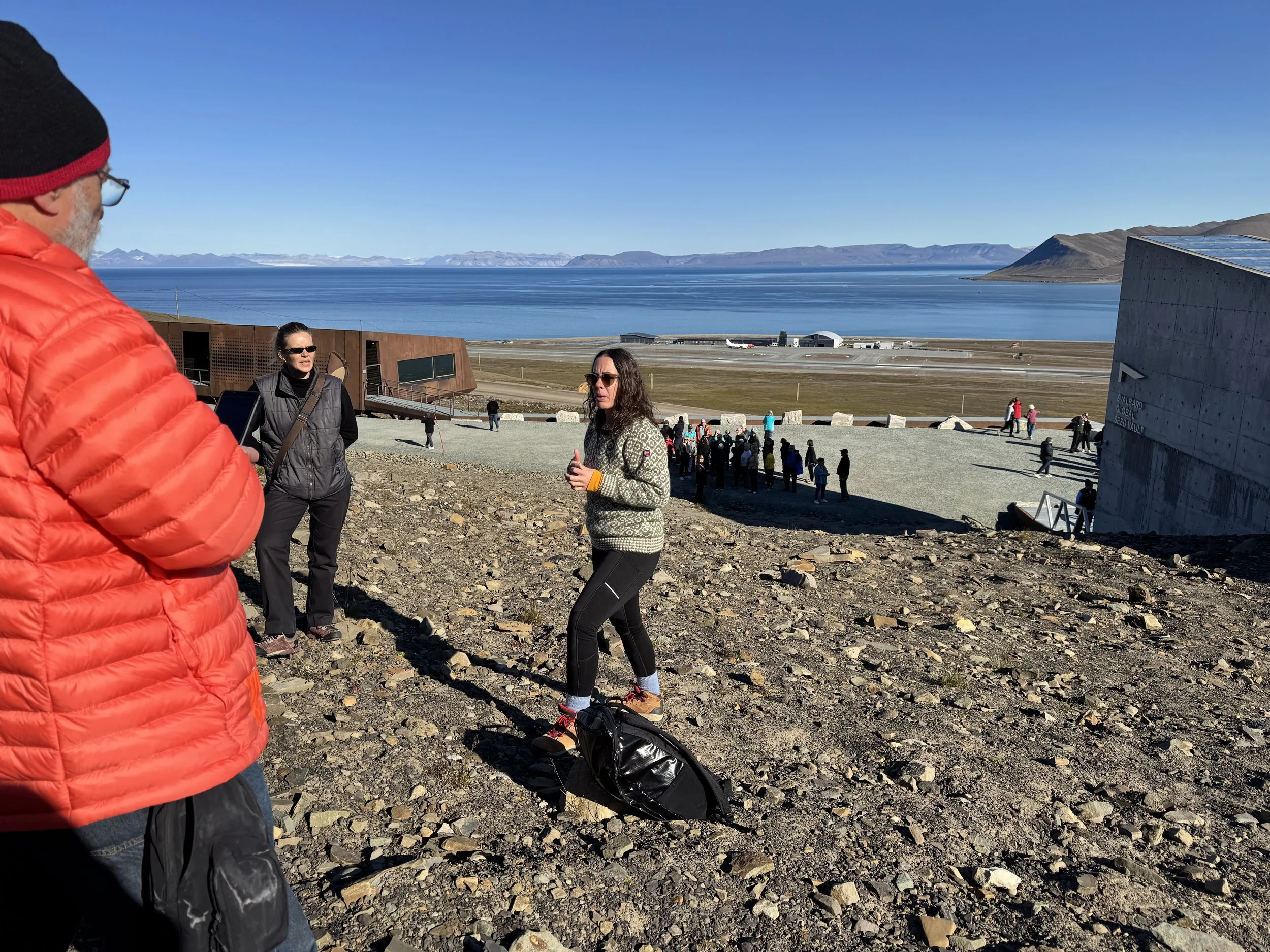
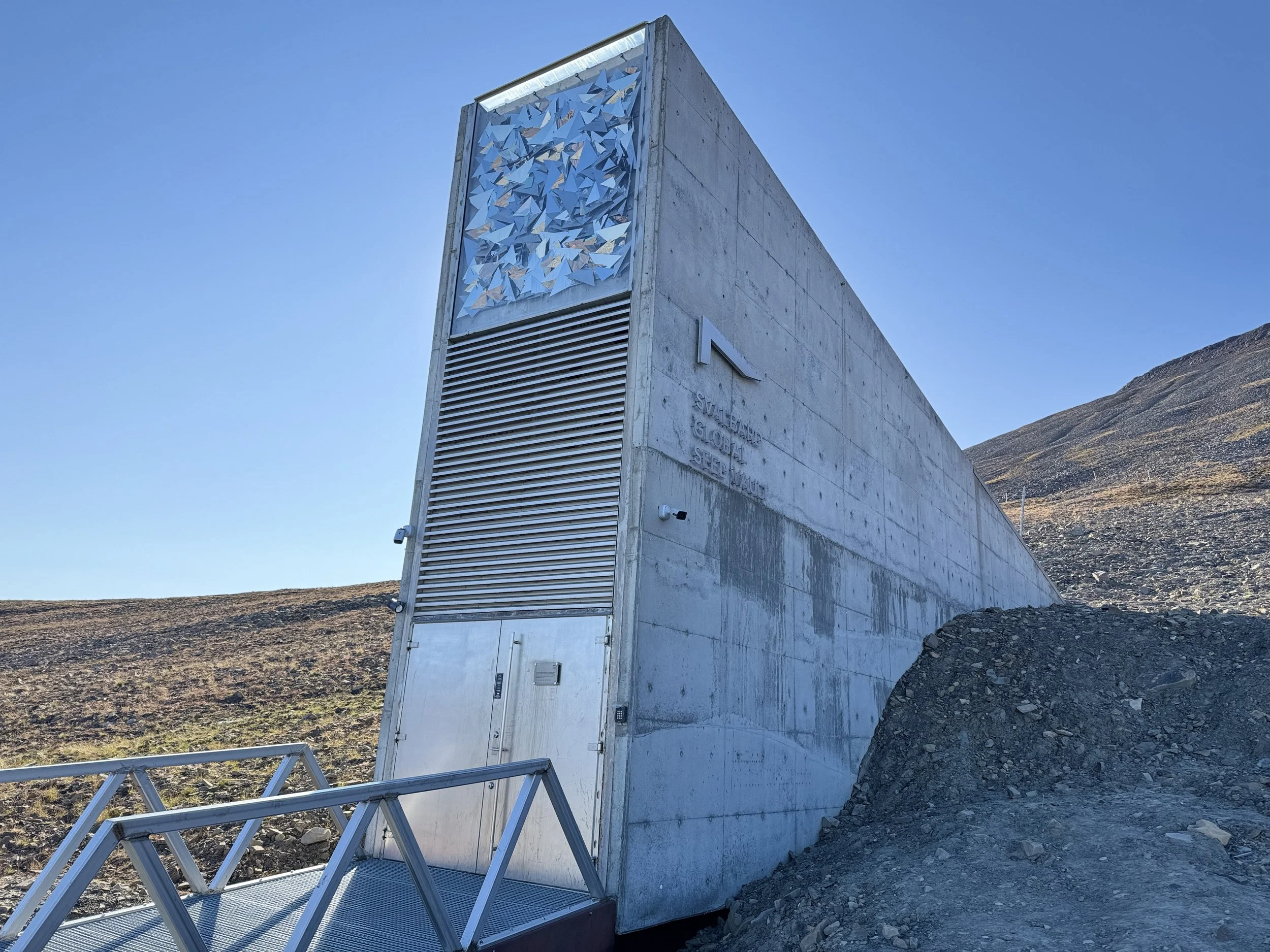
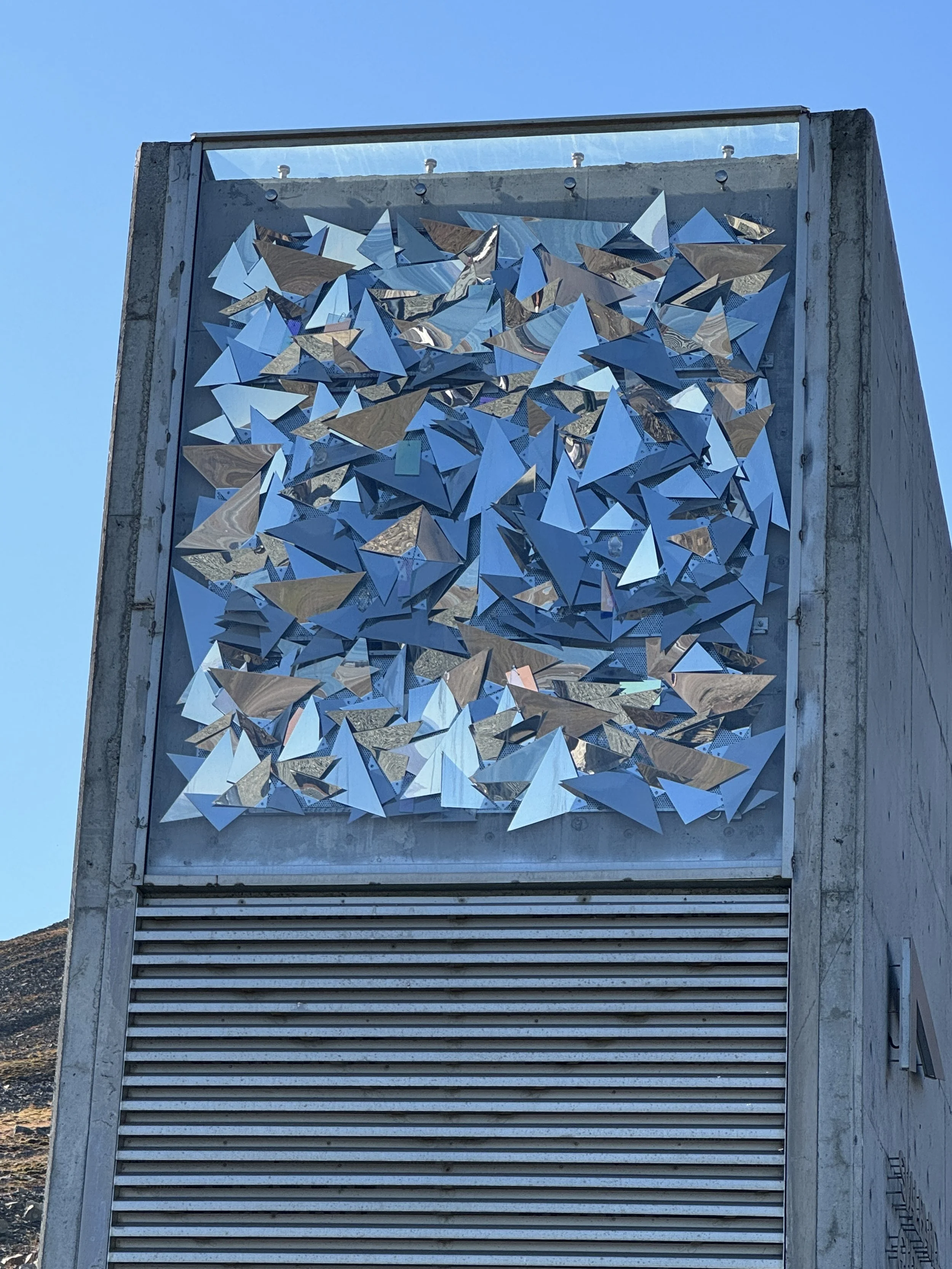
Photos: Christina Olson
We waited the coaches out and then Cathleen talked. She runs the Organic Seed Alliance. Seeds, agriculture, who decides what gets planted and by whom, and she stood on the gravel with the fjord behind her and the crowds draining away and told us what was actually inside that hill and why anybody bothered. On day one of this trip I wrote that she was the person laughing at a walrus in the museum, and I wrote that on our last day ashore we would stand together in front of the Global Seed Vault. I put that sentence down before I had any idea what the two weeks in between would contain. It turned out to be a promise.
Then town, and a lot of it, in no order I could defend. The supermarket. Station, where on day zero I had eaten a ham and cheese panini eight hundred kilometres north of Norway to a country song about a truck, and where I now had a burger and chips and a beer, which after fourteen days of a rotation of seafood paella, beans, fish balls and hot dogs tasted like something a government should regulate. The door still has the sign on it asking you to leave your rifle outside. The museum for a third time, but only the shop, where I found Christiane Ritter postcards I had walked past on day one, and a wristband with a polar bear on it, which will hold the position until the tattoo happens. Then coffee at the Husky Cafe, my favorite café at seventy-eight degrees north out of a competitive field of two, and a young woman on the next bench started talking to us. She is a guide as well, for a ship that carries a hundred people and needs ten of her. Her name is Emily. She knows Beth. Twenty minutes later we ran into Beth on the street and she already knew, because Emily had texted her. There are two thousand five hundred people on that island and I still do not know why I expected any of them to be strangers.
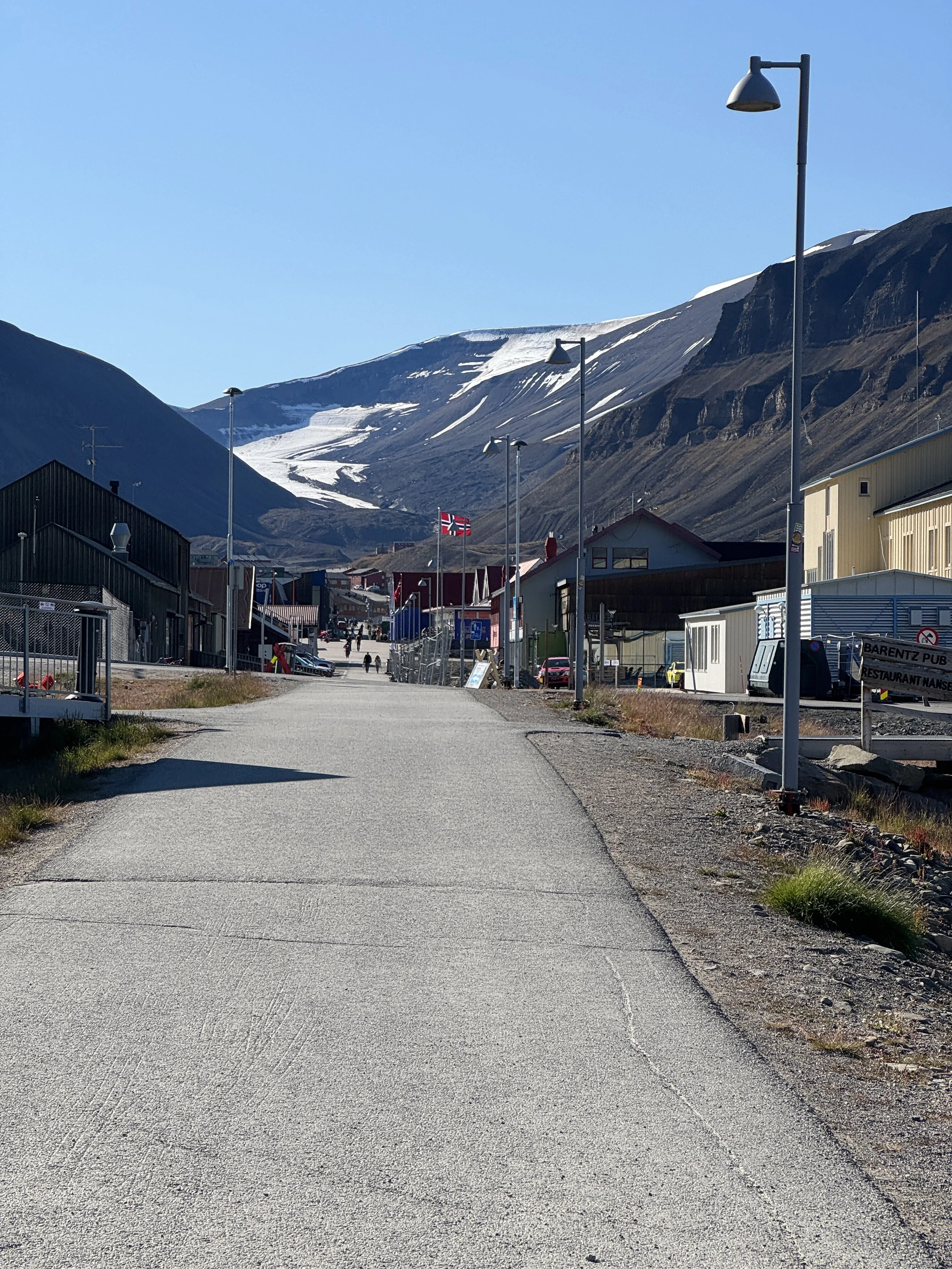
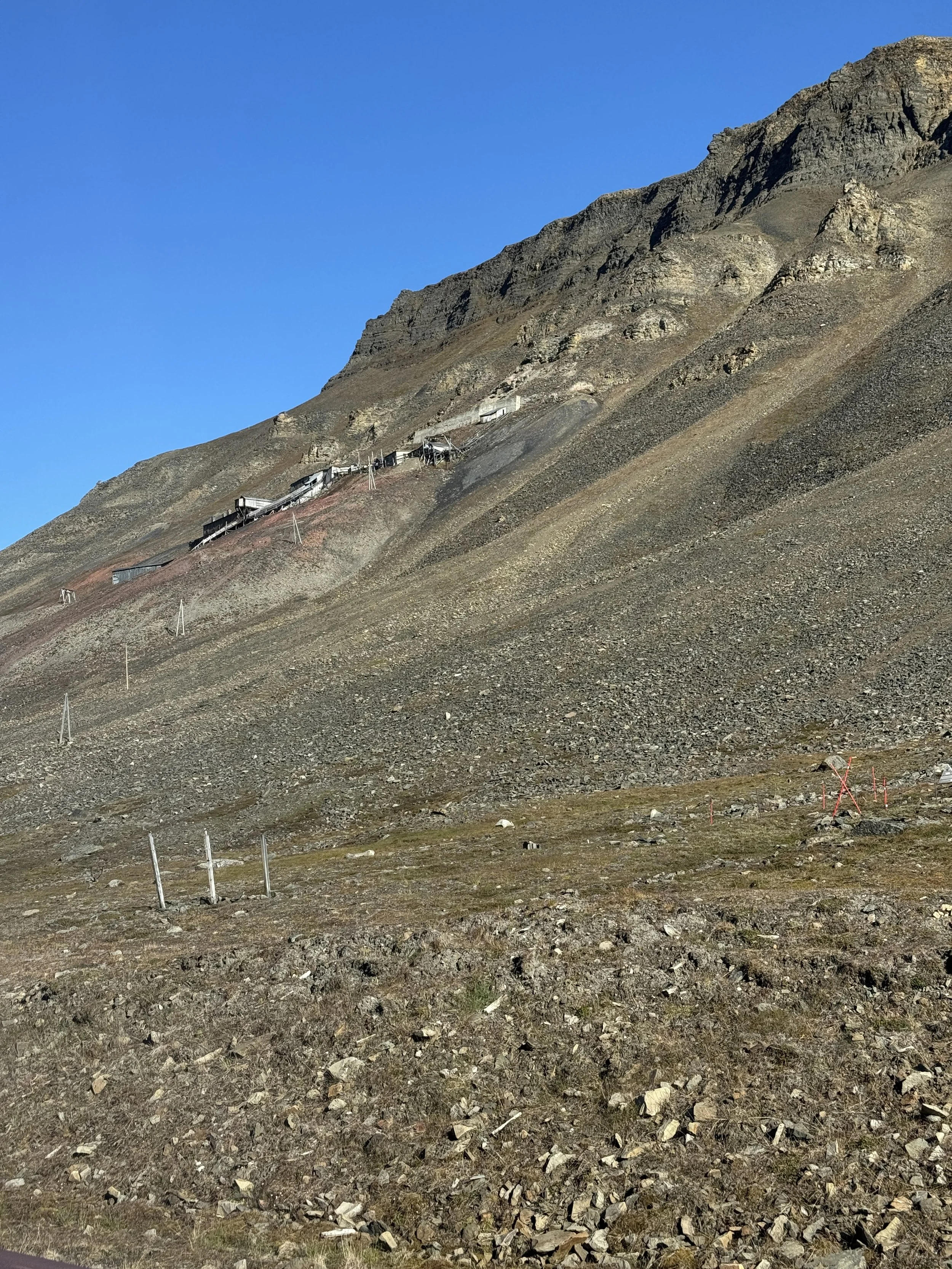
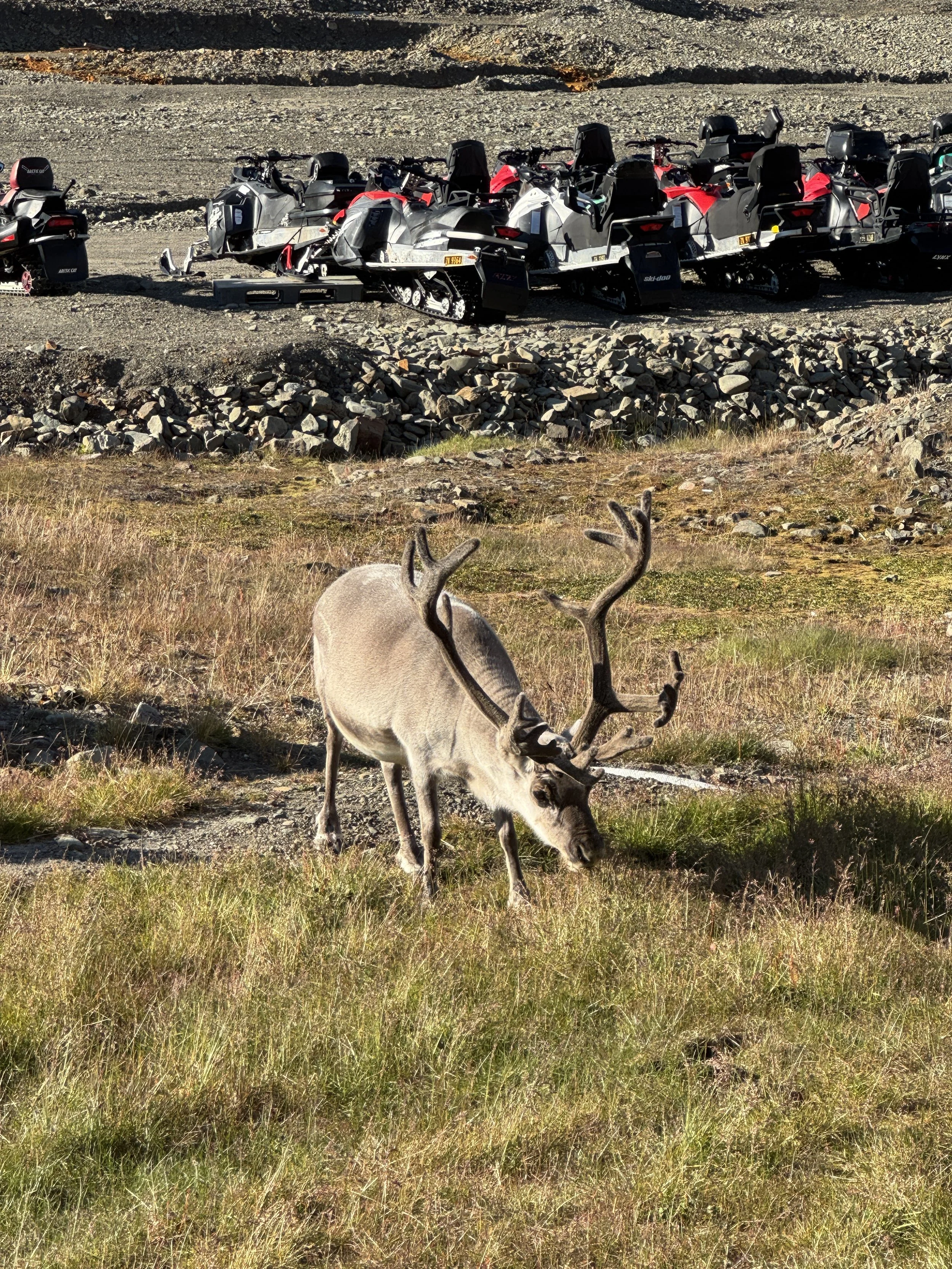
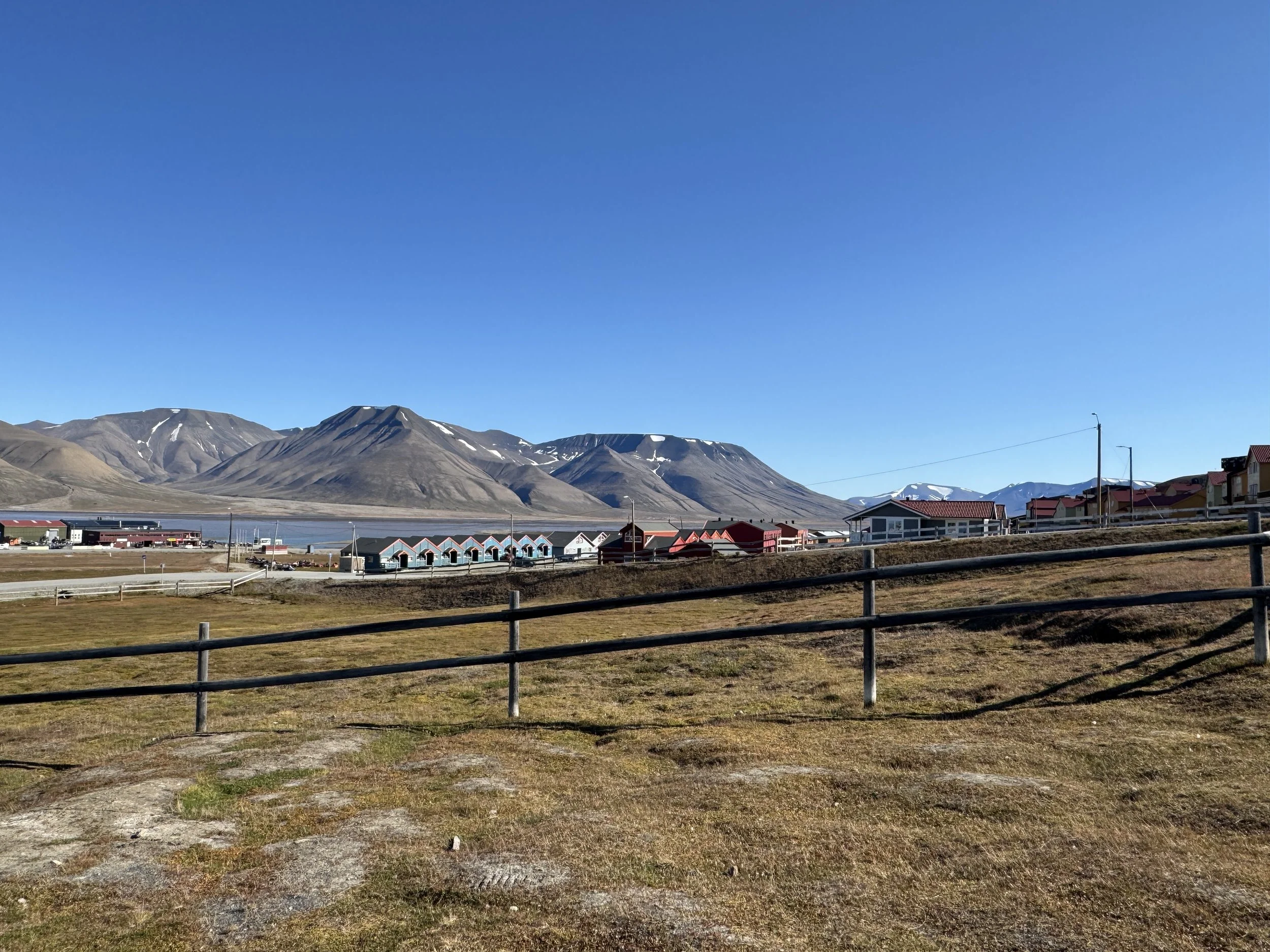
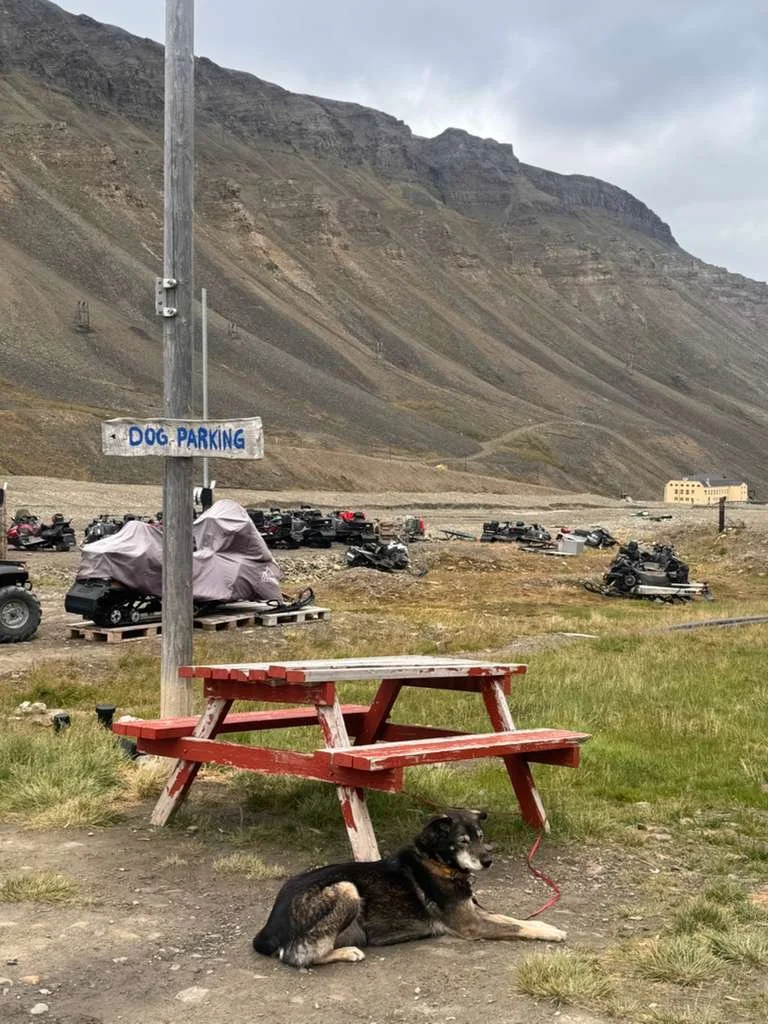
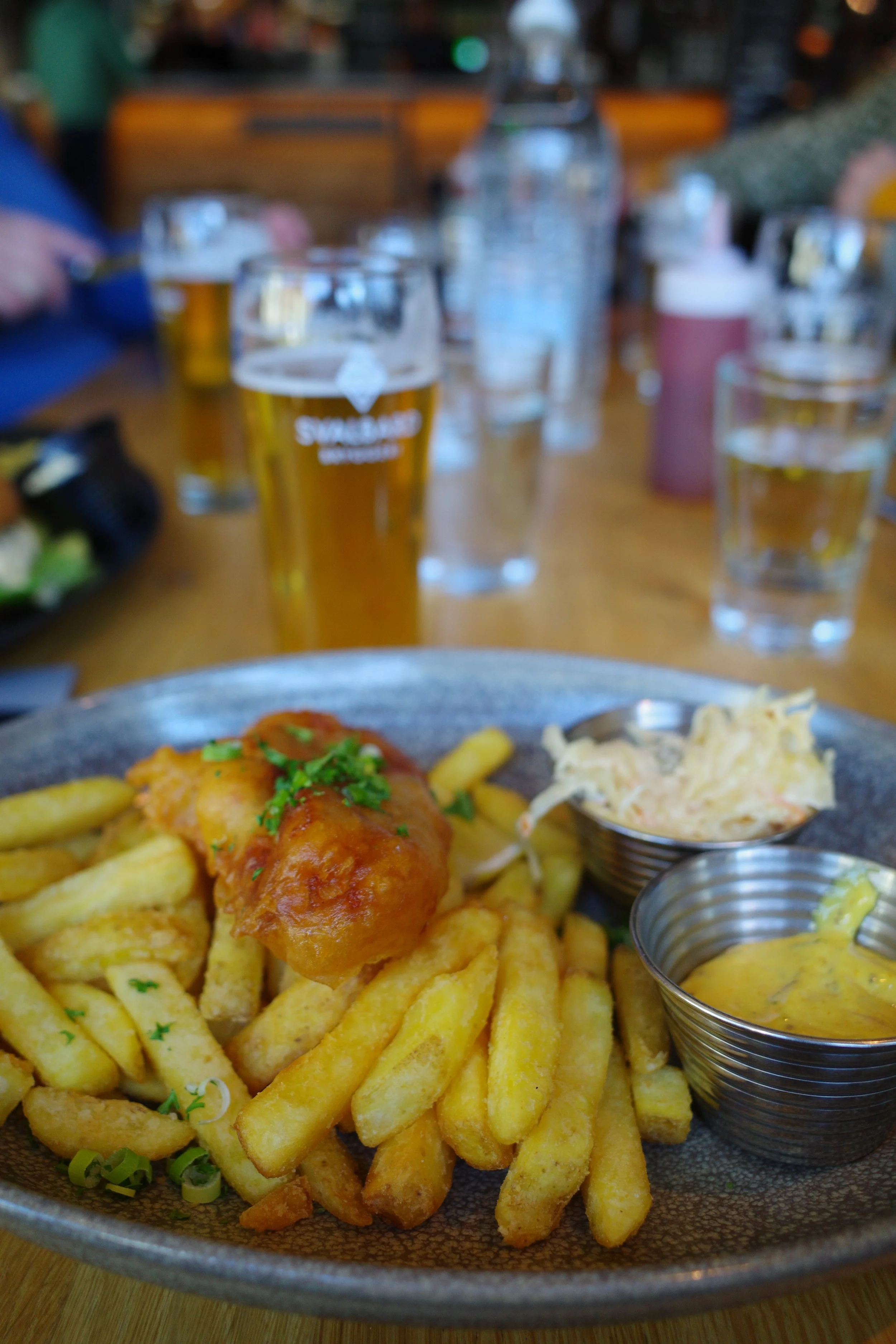
Photos: Christina Olson
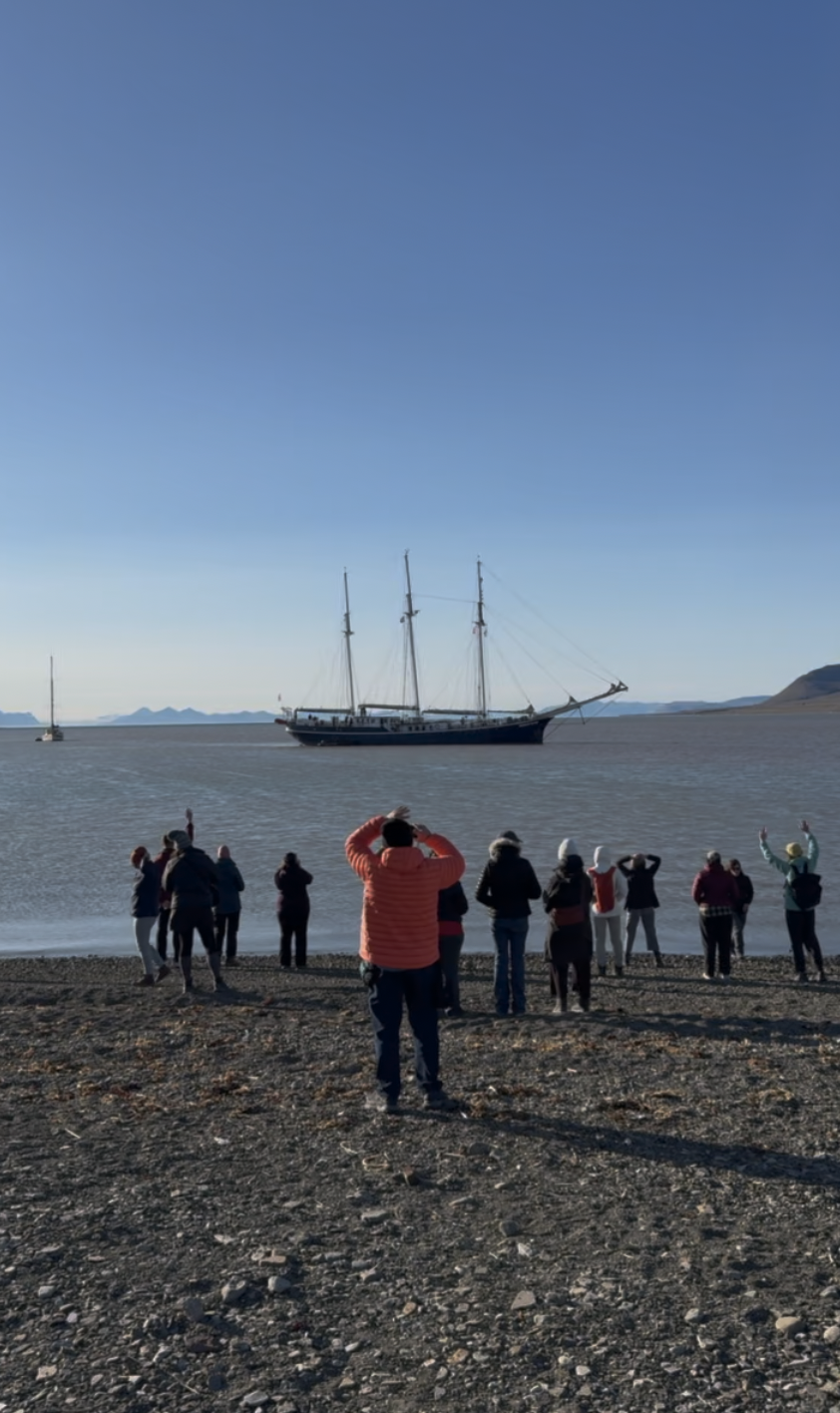
Back at the cabins I repacked, showered in a bathroom the size of our old cabin, and got my carry-on back from Sarah, who had been holding it since the morning we boarded. Then we called a cab down to the beach, which costs about thirty dollars to cover five minutes. Sarah had cooked. Christina and a few others had helped her, and it was set out on pallets on the gravel with the fjord in front and the stack for the fire built beside it, and I would put it above anything I ate in two weeks. We were still getting the fire going when the Rembrandt van Rijn came past on her way out. Everybody went down to the water and put their arms up, and she was already carrying the next group, and Beth was aboard, and she waved back. I stayed further up the beach. I could not make myself walk down to the waterline and I could not have told you why at the time. It was not that the ship was leaving. It was that I was not on it.
And that was the last of Beth, Joachim and Victoria. They took her straight back out with a whole new set of people while we stood on the gravel with our arms in the air. Fourteen days of being carried and fed and poured for by a crew who made none of it look like work, and the goodbye happened at half a kilometre, in silhouette, with nobody close enough to shake a hand. So it goes here instead. Thank you.
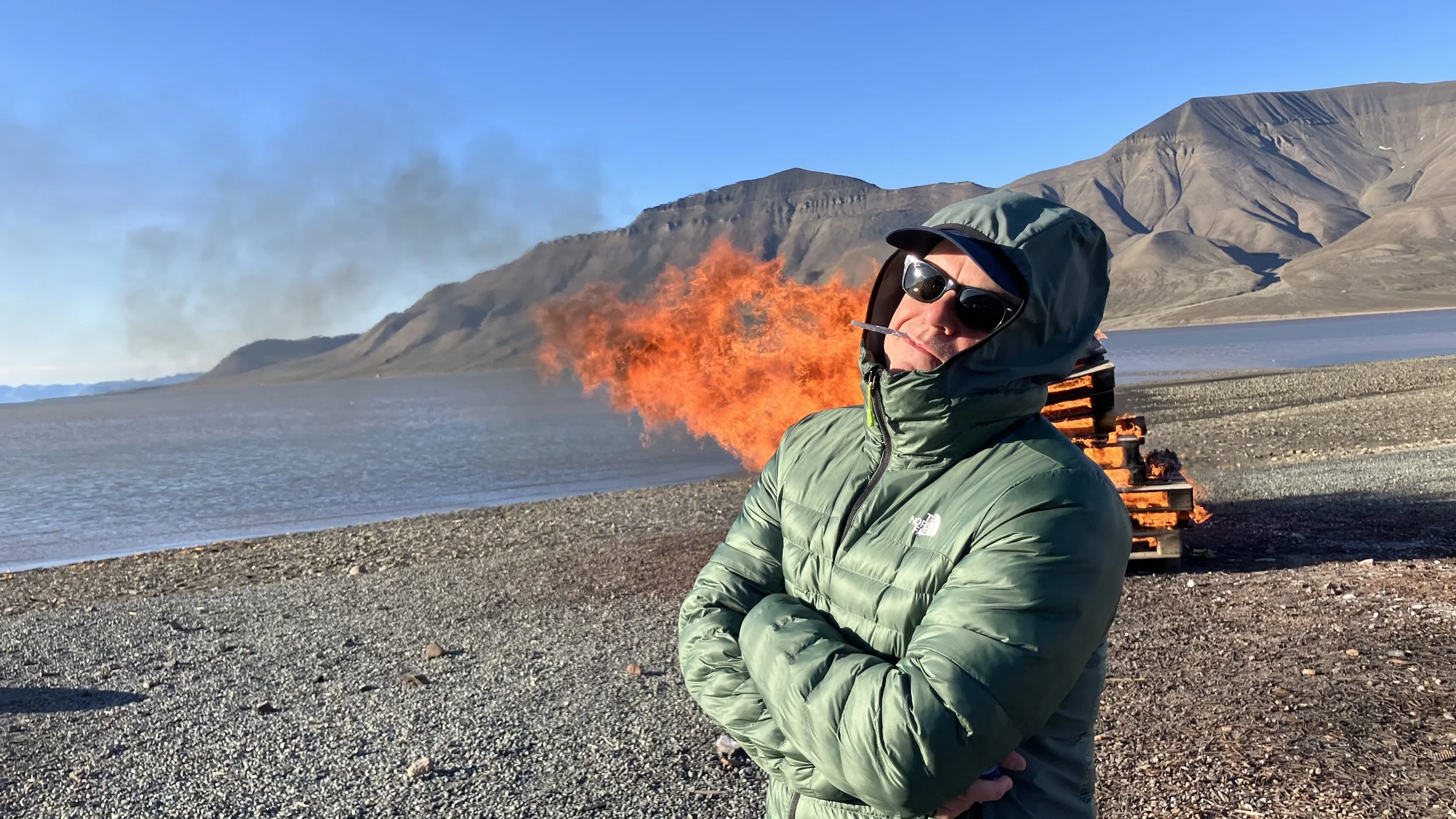
Photo: Maggie Puckett
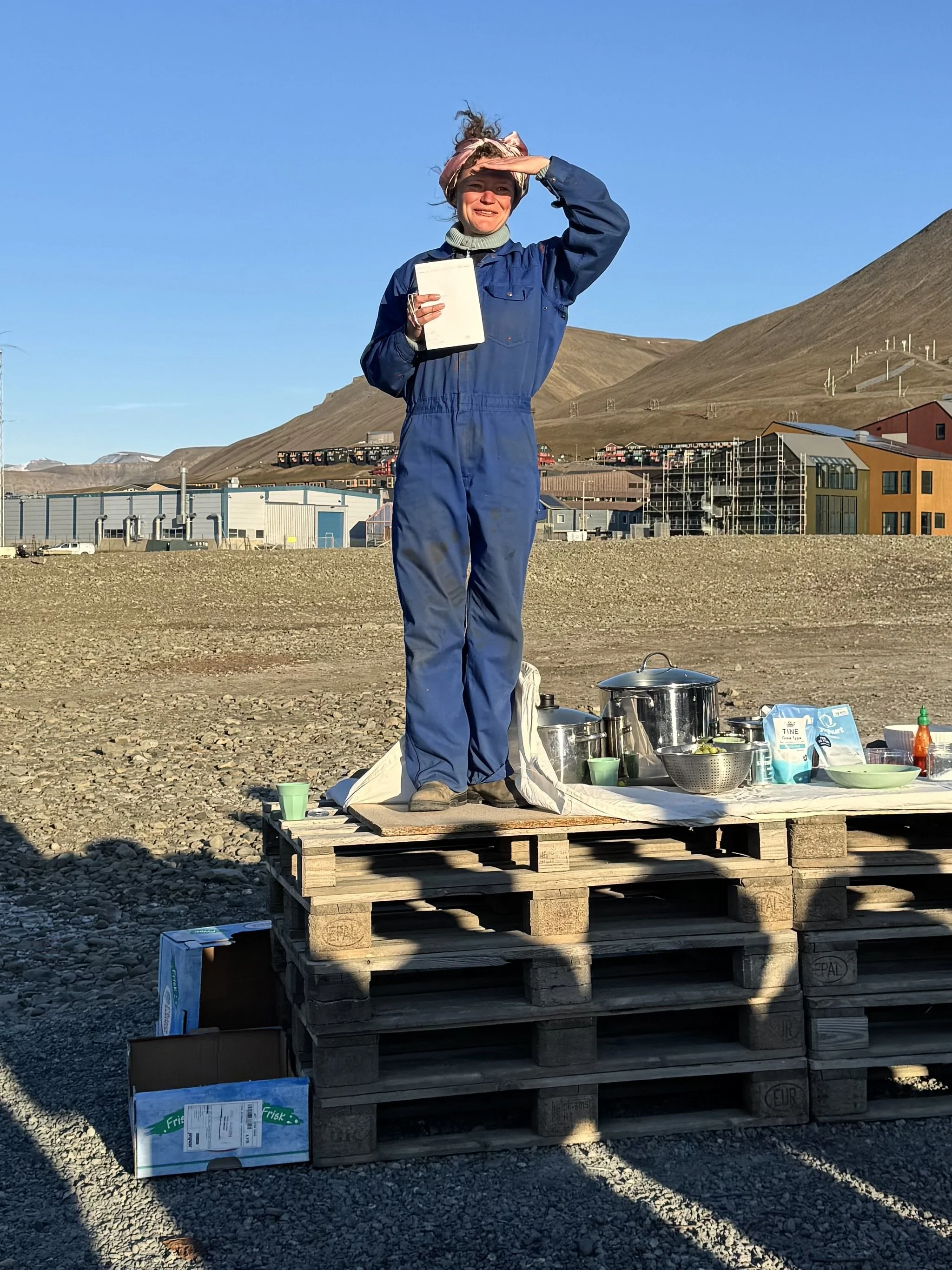
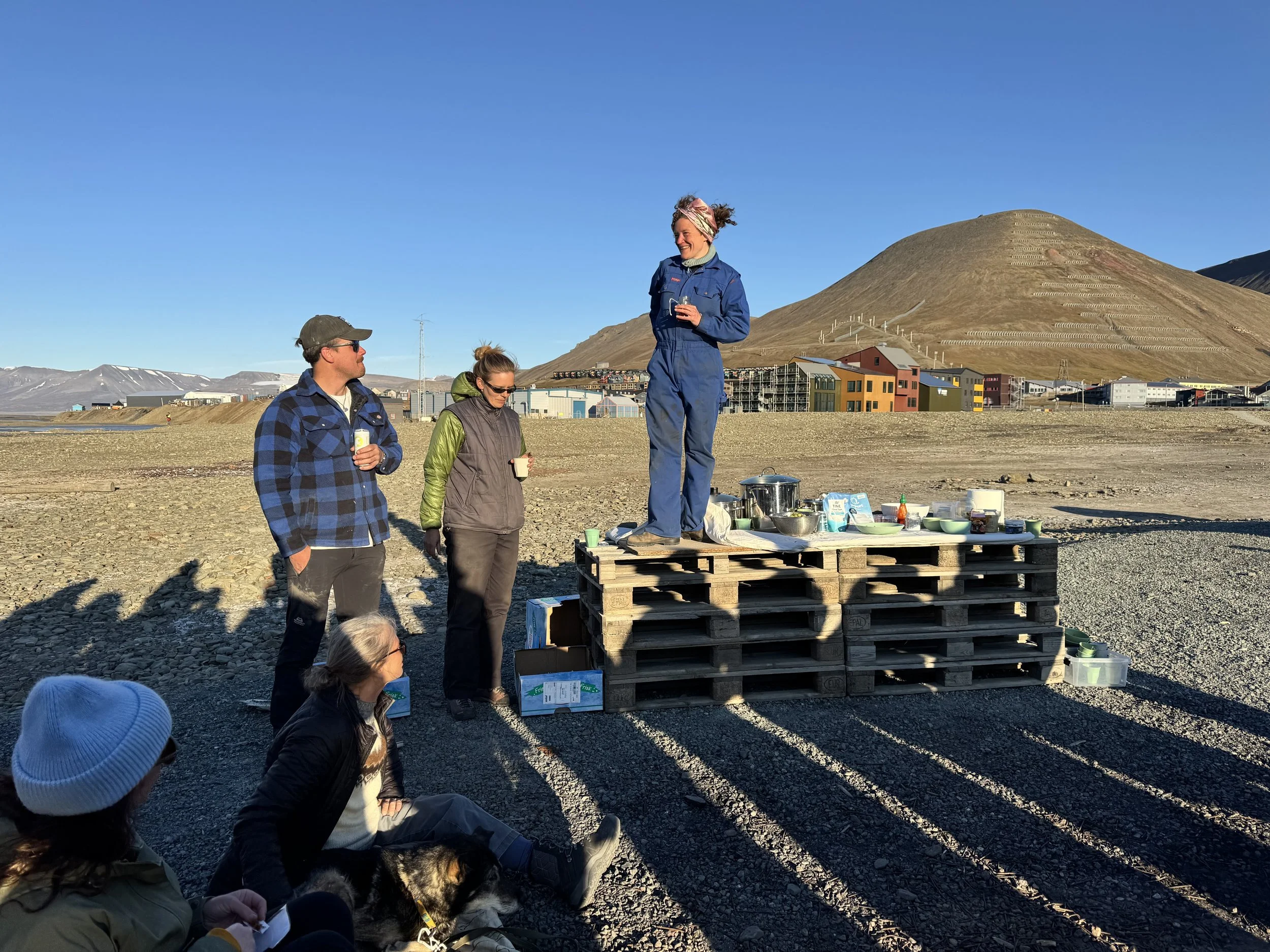
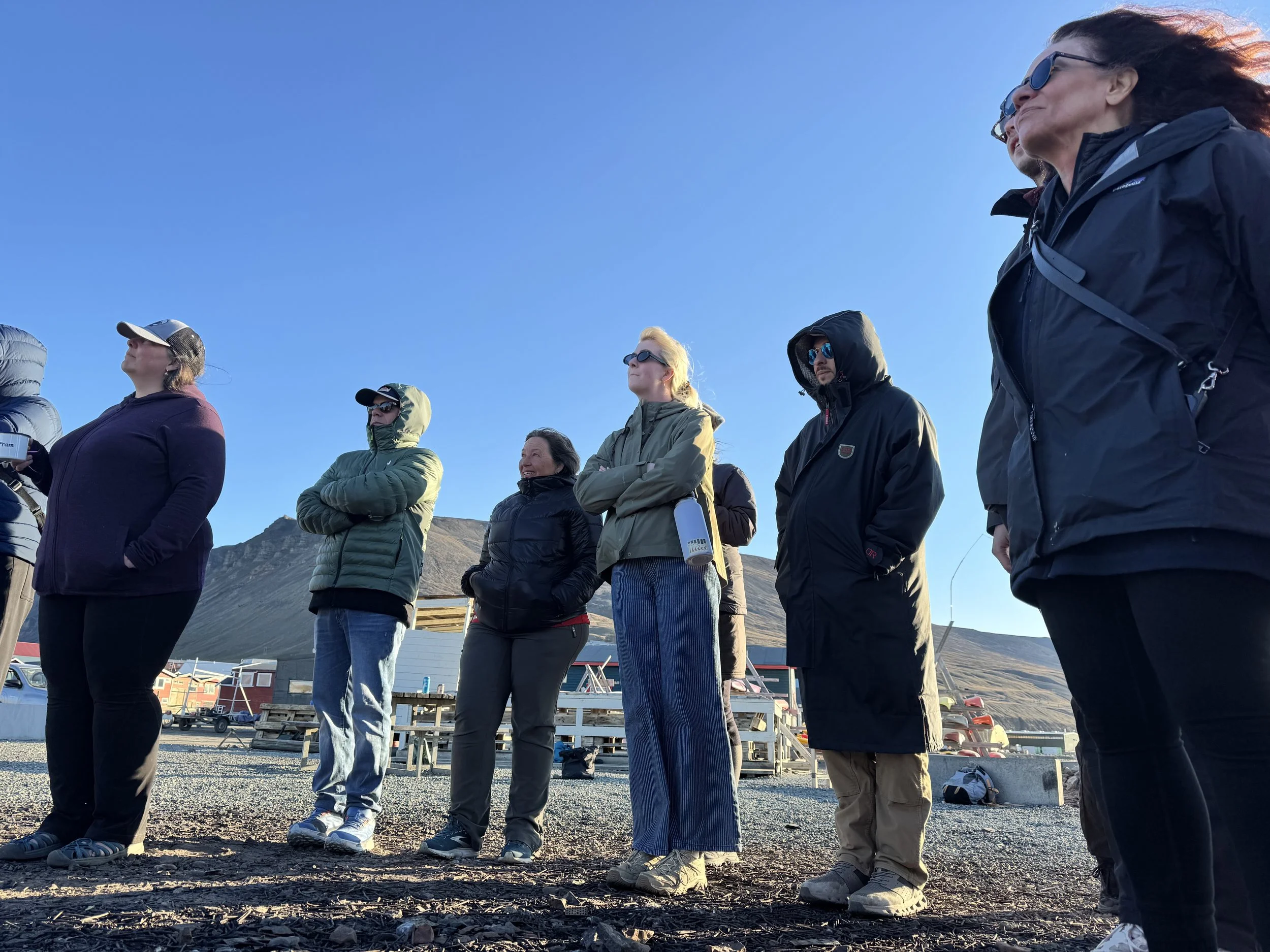
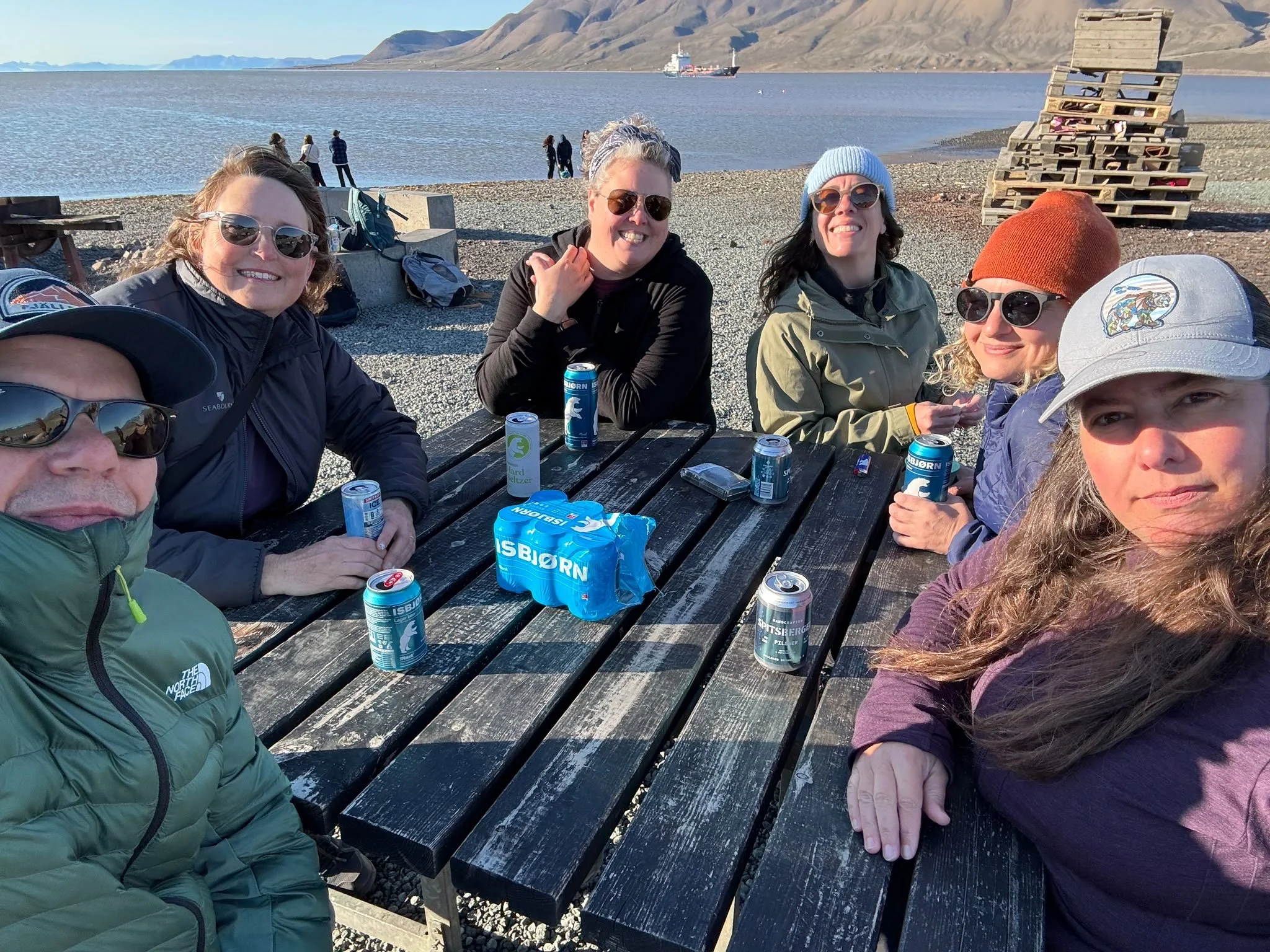
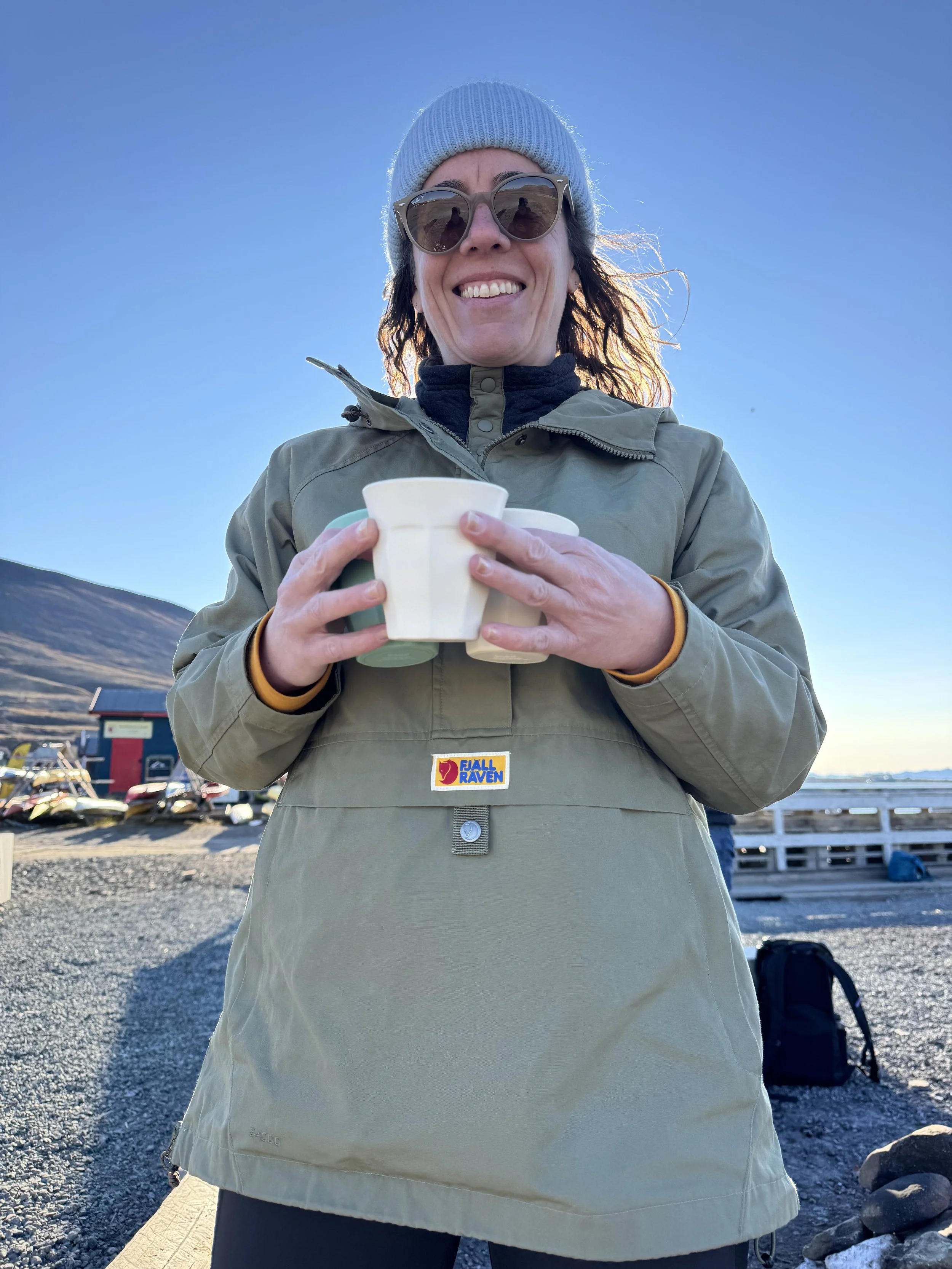
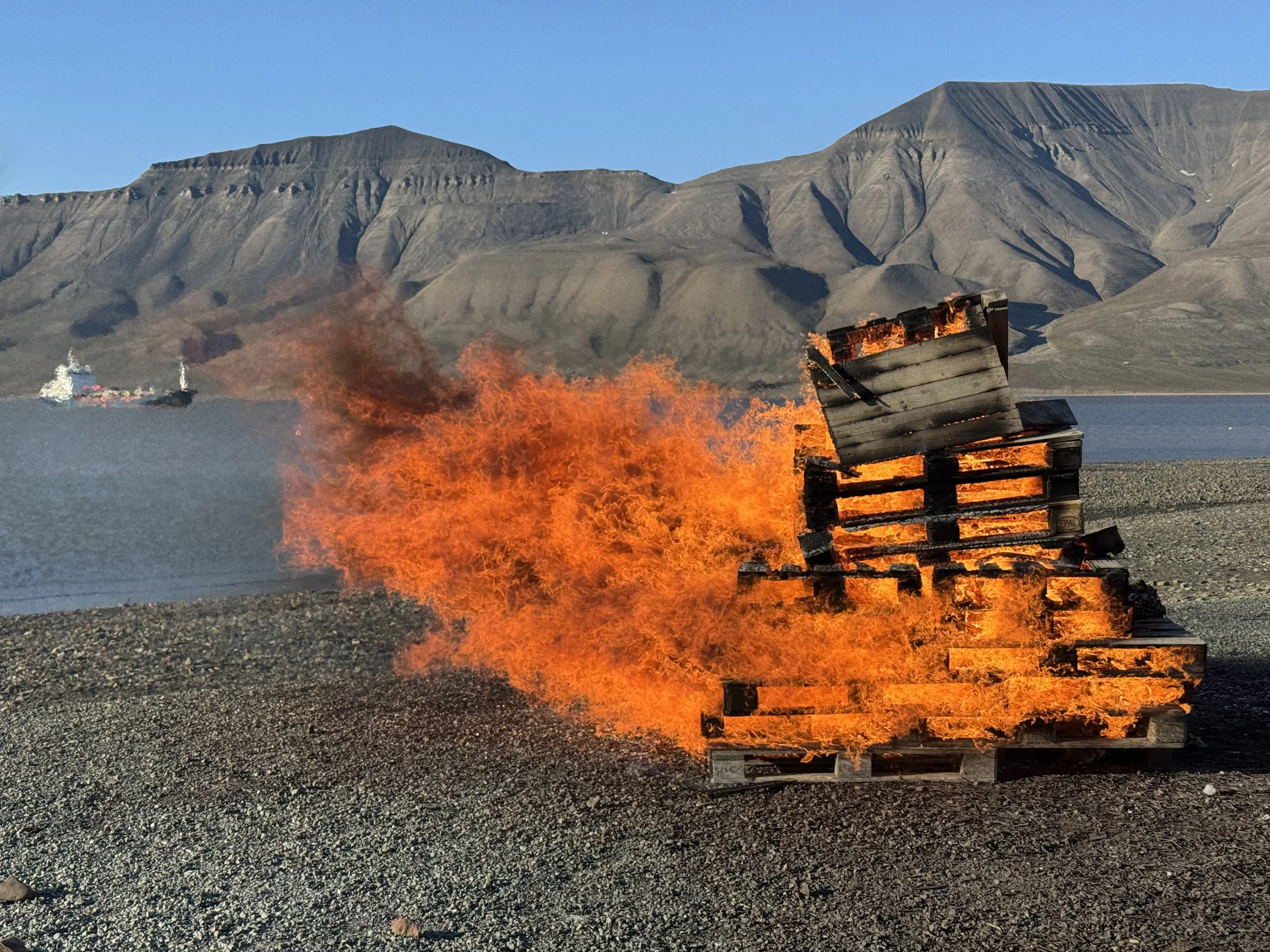
Photos: Christina Olson
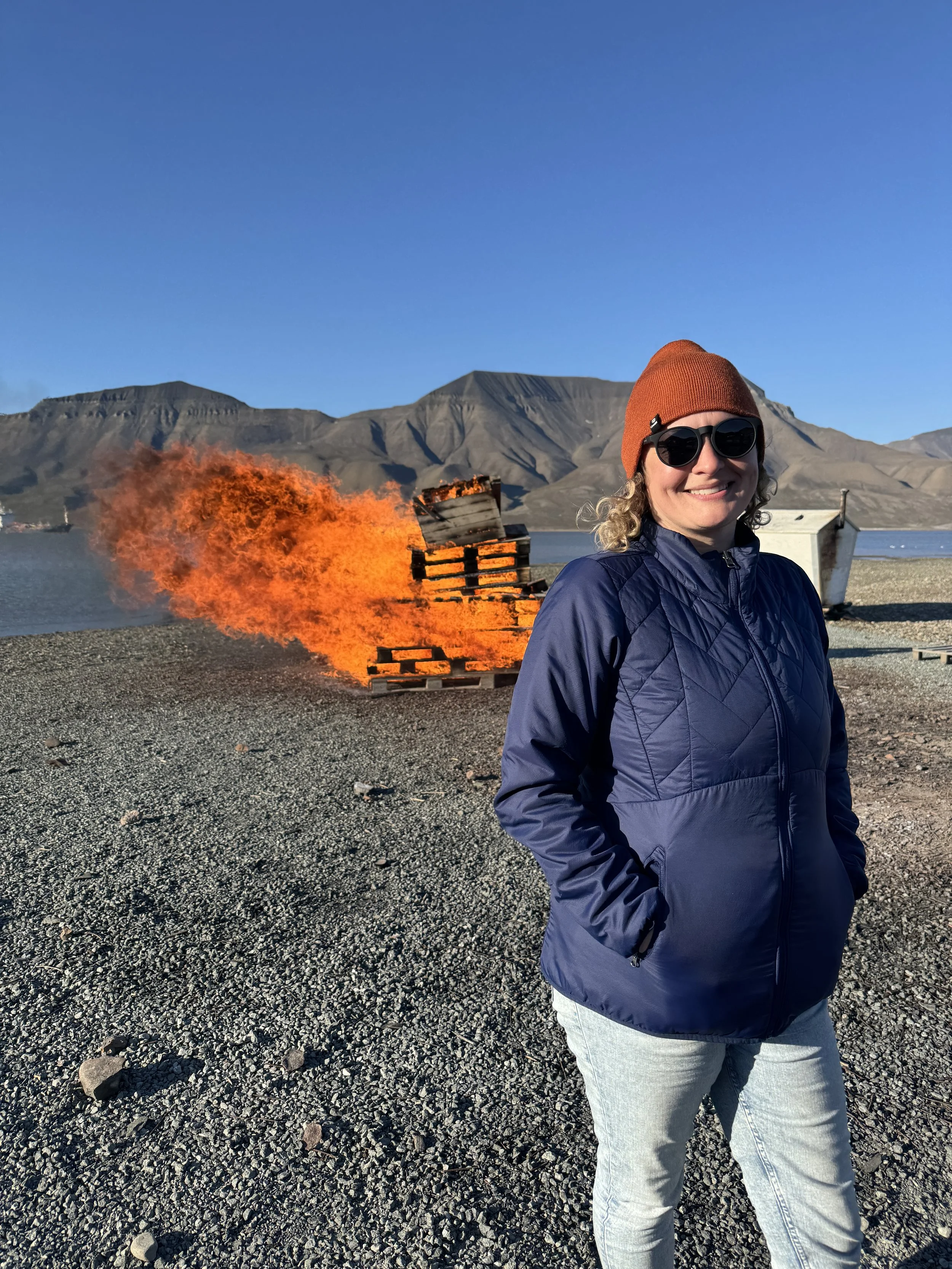
Lisa and Rhys got the fire going and it took hold of the pallets and threw a wall of orange sideways down the beach, and Maggie photographed me standing in front of it with my arms folded looking like a man who has just been told the building is insured. Then, at half past nine, Sarah stood up on the pallets with a few pages of notes and went through the entire voyage. Every landing, every glacier, every bear, every project attempted, in order, from a woman who had been running all of it and writing her own log at the end of each of those days. She has lived on Svalbard since 2012 and she moved there by accident. She works with photography, video and performance, usually alone with a tripod and a timer, which means every image of hers we saw that evening is one she also had to walk into and stand still inside. I described her at the end of the last entry and left half of it out. Patient. Gracious. A serious listener. Ten steps ahead of the room at all times and never once making anybody feel behind. I do not think this trip exists without her.
Photos: Christina Olson
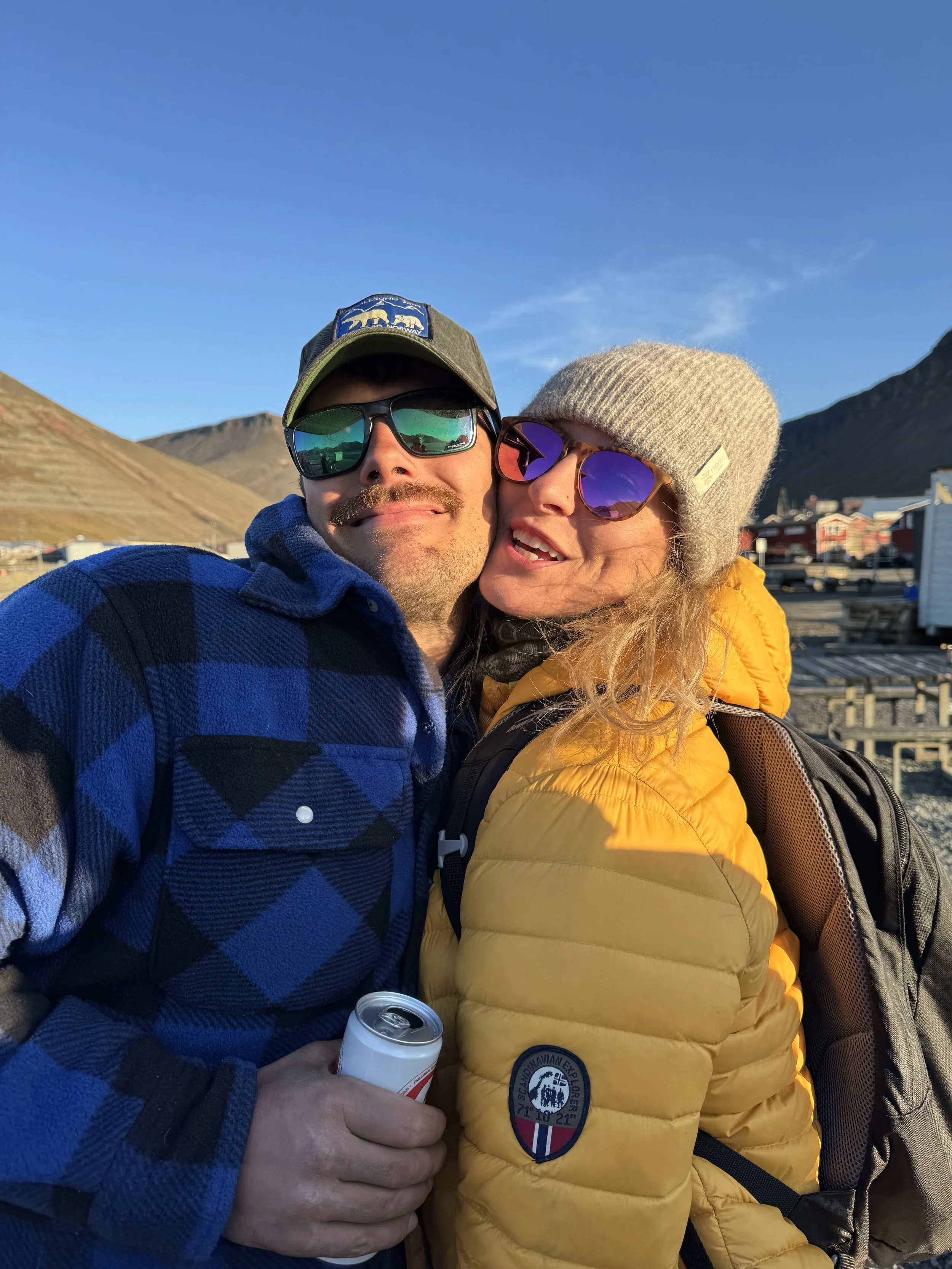
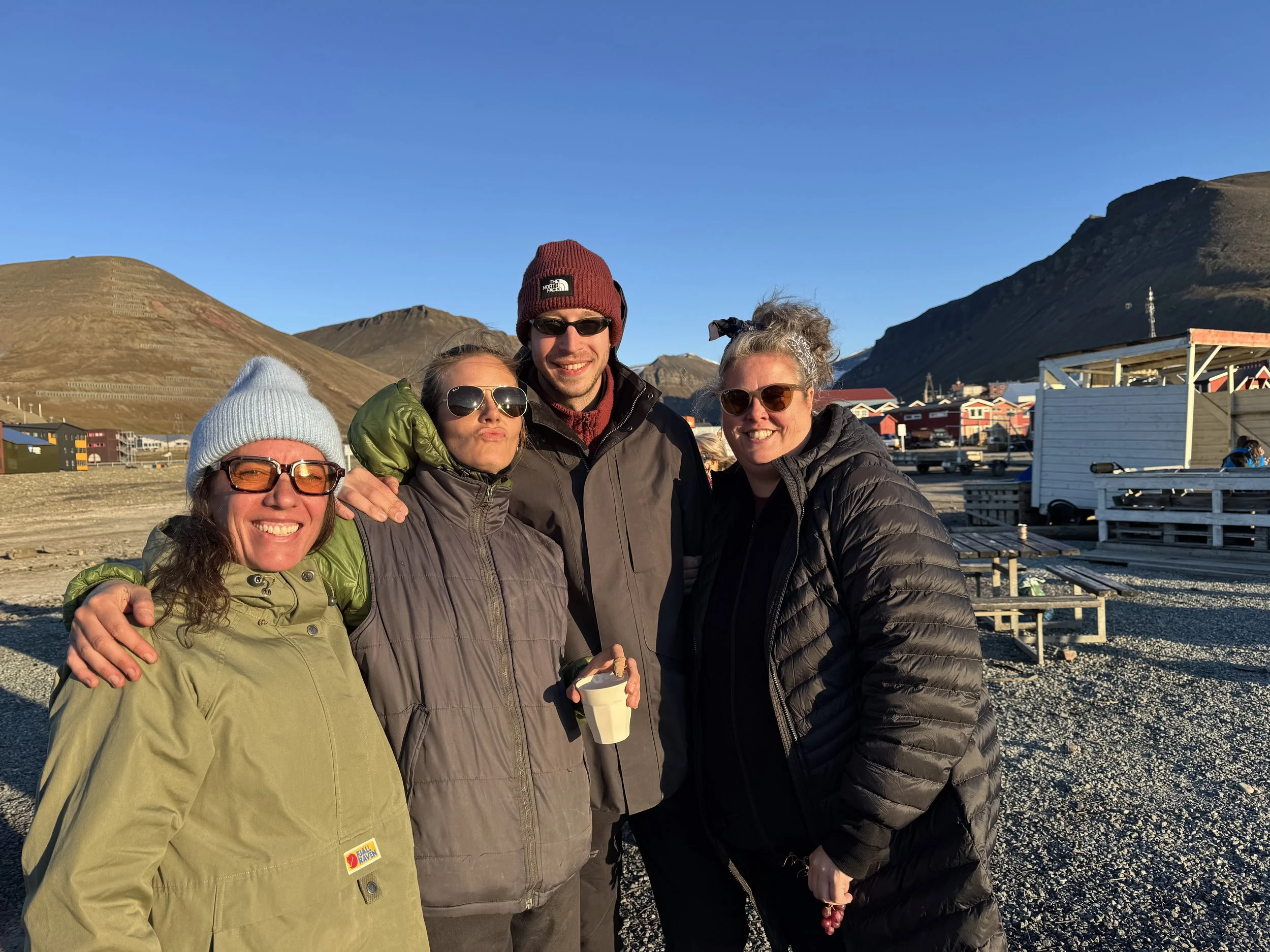
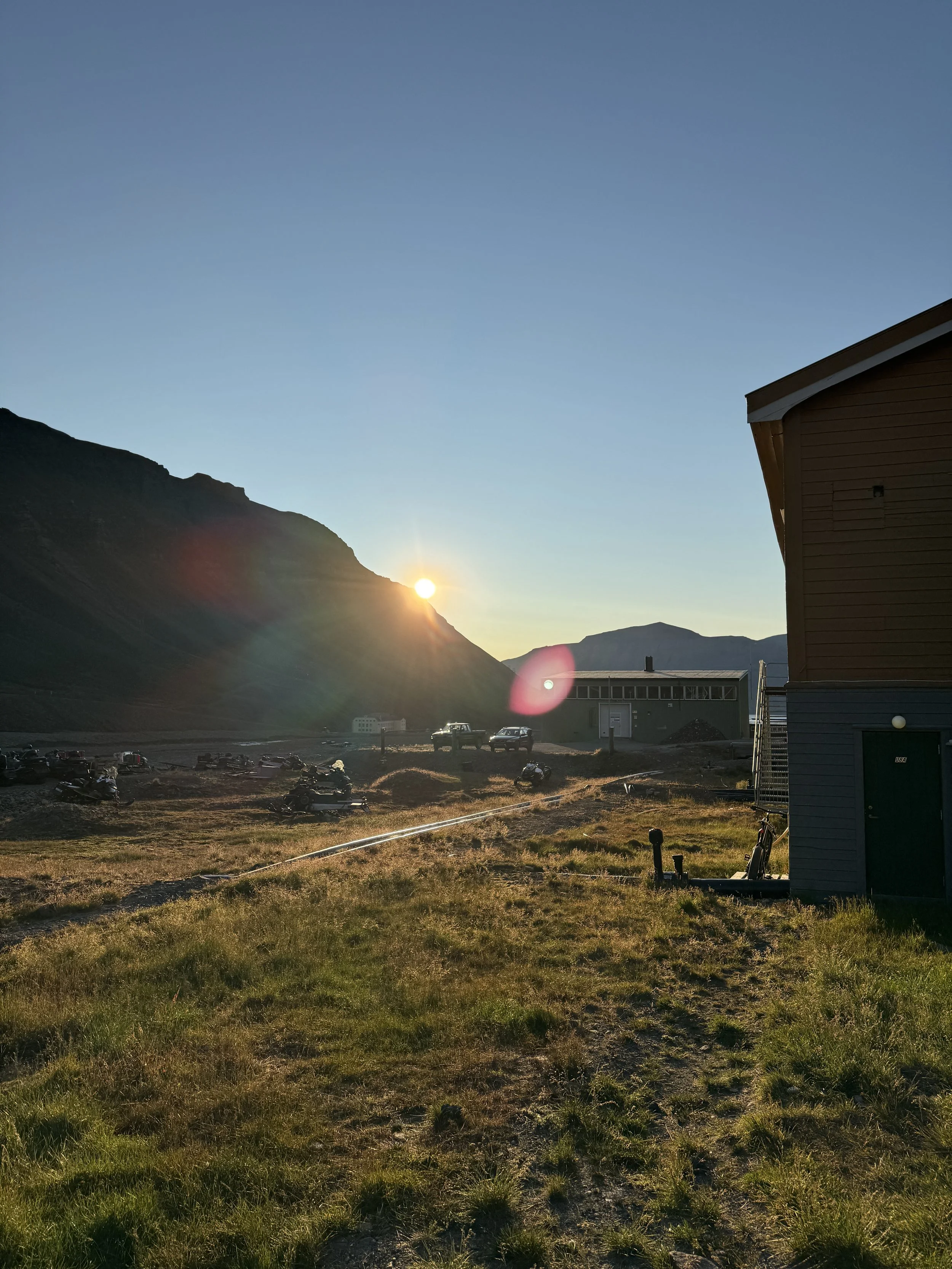
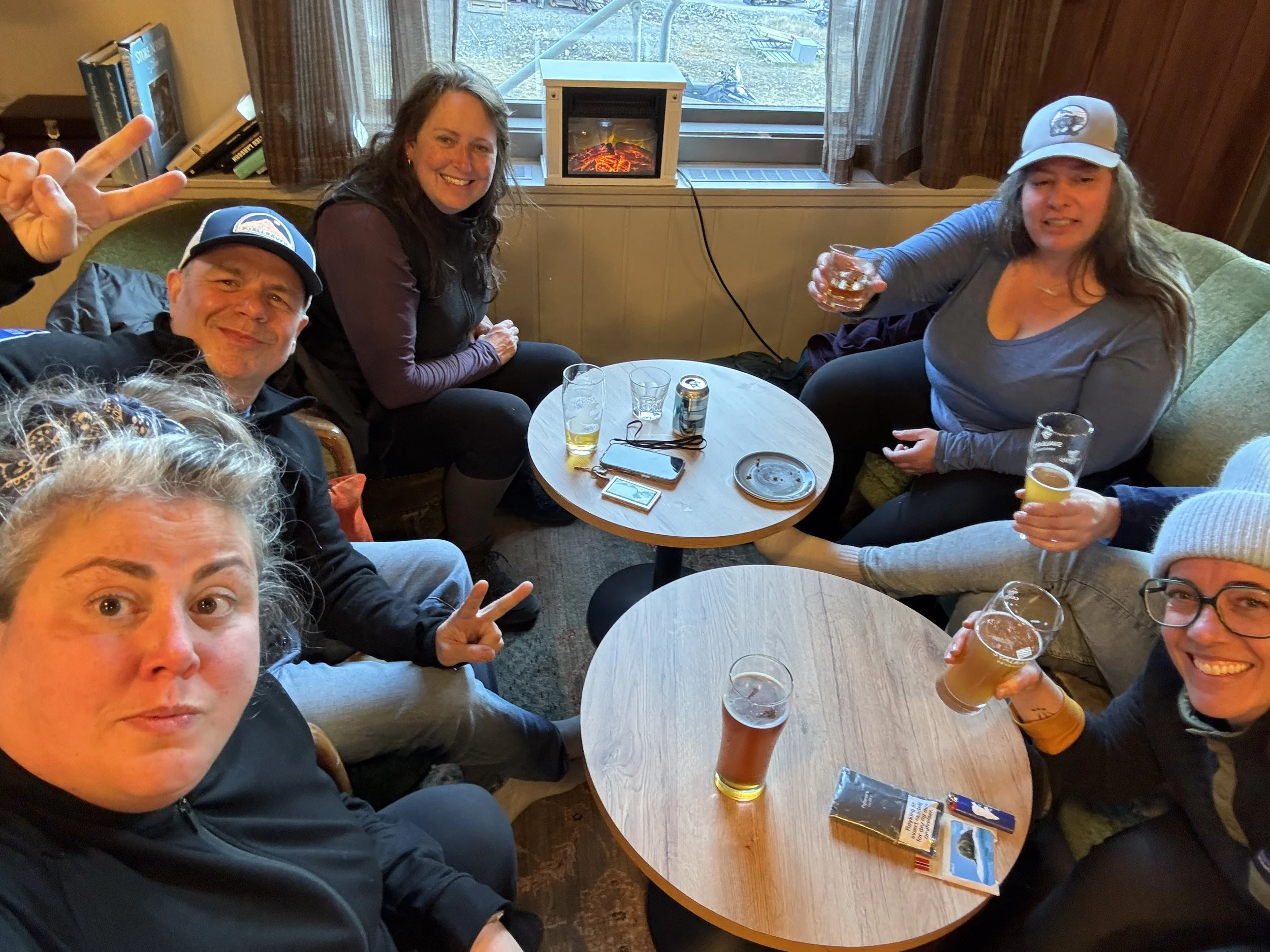
We went back to the cabins and I got ready for bed, and then Christina texted to say she was heading to the bar, so there was one more beer, and out of that one more beer came all of them. Vicki, Shannon, Maggie, Cathleen, Christina. Table two, on land, with a fake fireplace in the window and the last of the midnight sun trying to get round a mountain outside. At some point a group of tourists came in with their boots on. Two weeks earlier I would not have looked twice. I nudged Christina and said look, they have their shoes on, go and tell them. She is tall, and she stood up and went over and explained that this is not how it is done in Svalbard, and the boots came off at a speed I have only ever seen at airport security. The bar closed at one. Gergő was already asleep when I came in, which had not happened once in fourteen days, because he was always the one arriving after me. Even the sleeping order ran backwards on the last night. And the clock was running, because most of them flew at half ten, and breakfast was the last of it.
“Some memories are realities, and are better than anything that can ever happen to one again.”