Entry 027: The Pencil and the Speaker
I have been writing about painting for twenty-seven entries and have not shown a single brushstroke. This week, proof of life. A pencil. A sketchbook. The hand finally moving.
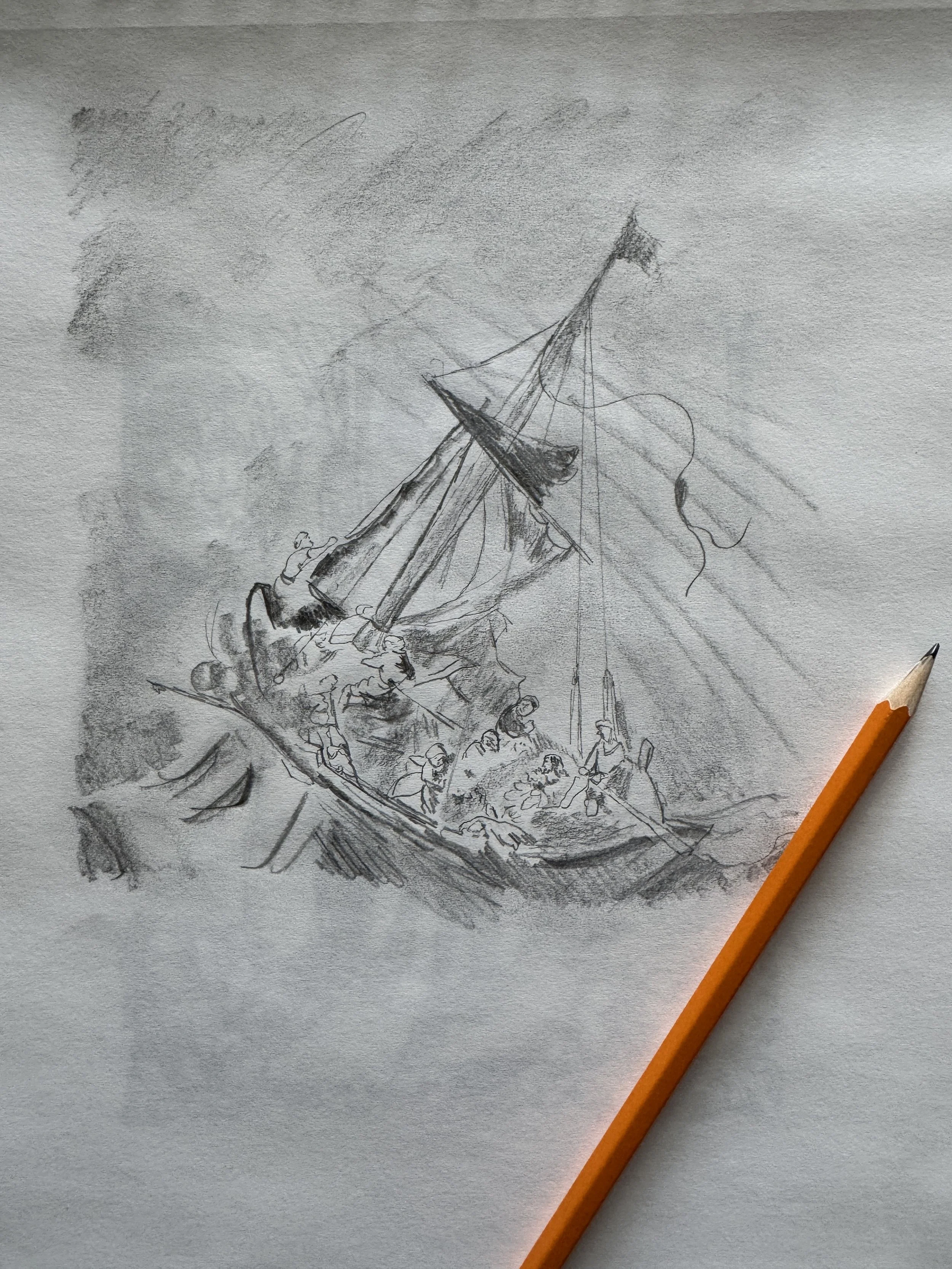
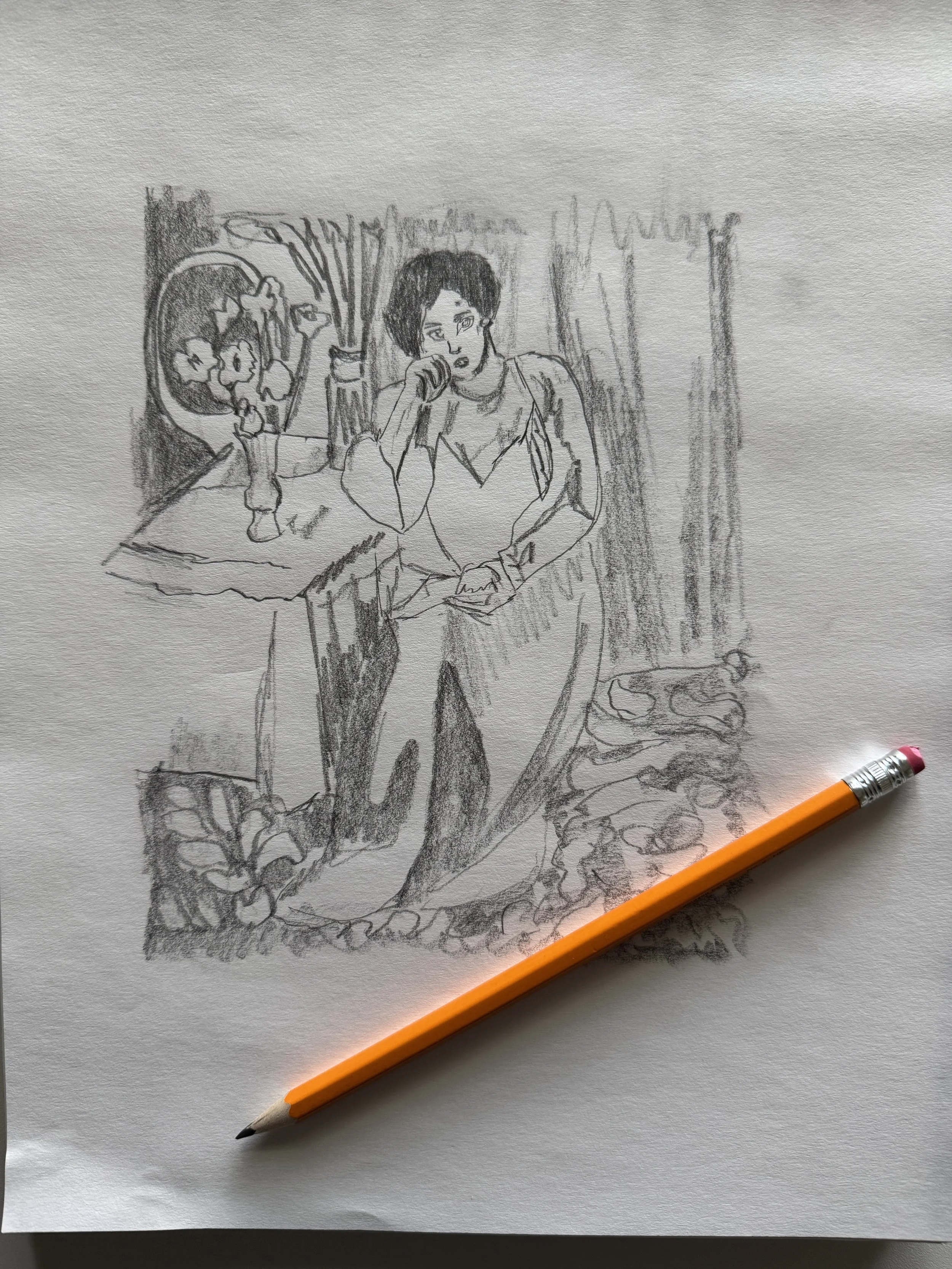
I started sketching the three paintings that sit at the heart of Ghosts of the Ice. The Rembrandt storm, the ship tilting into dark water, the men clinging to the mast. The Klimt, the woman suspended between knowledge and mystery. The Matisse, quiet and domestic, light falling on a reading girl in white and yellow. I have written about each of them in this blog. I have described them in words, traced their histories, followed them from studios in Amsterdam and Vienna and the south of France to the walls where they were stolen or the castles where they burned. But I had never drawn them.
Drawing is different. Drawing is not research. It is not narrative. It is a conversation between your hand and the thing you are looking at, and the conversation does not care about your opinions. The Rembrandt storm looked dramatic in reproduction. On paper, with a pencil, I realized the drama is structural. The weight of the bodies. The angle of the boat. Where the light breaks through. These are engineering problems disguised as art.
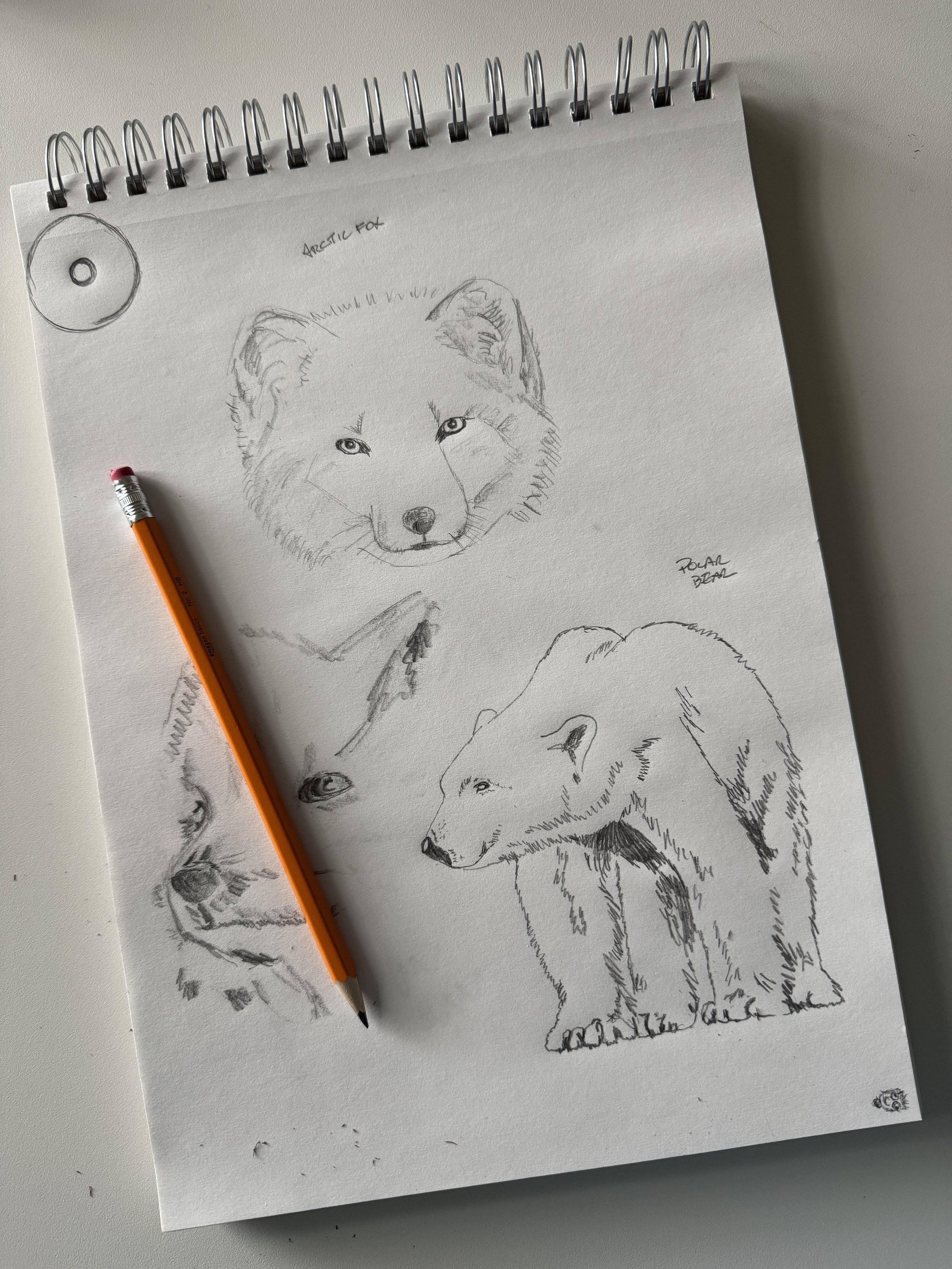
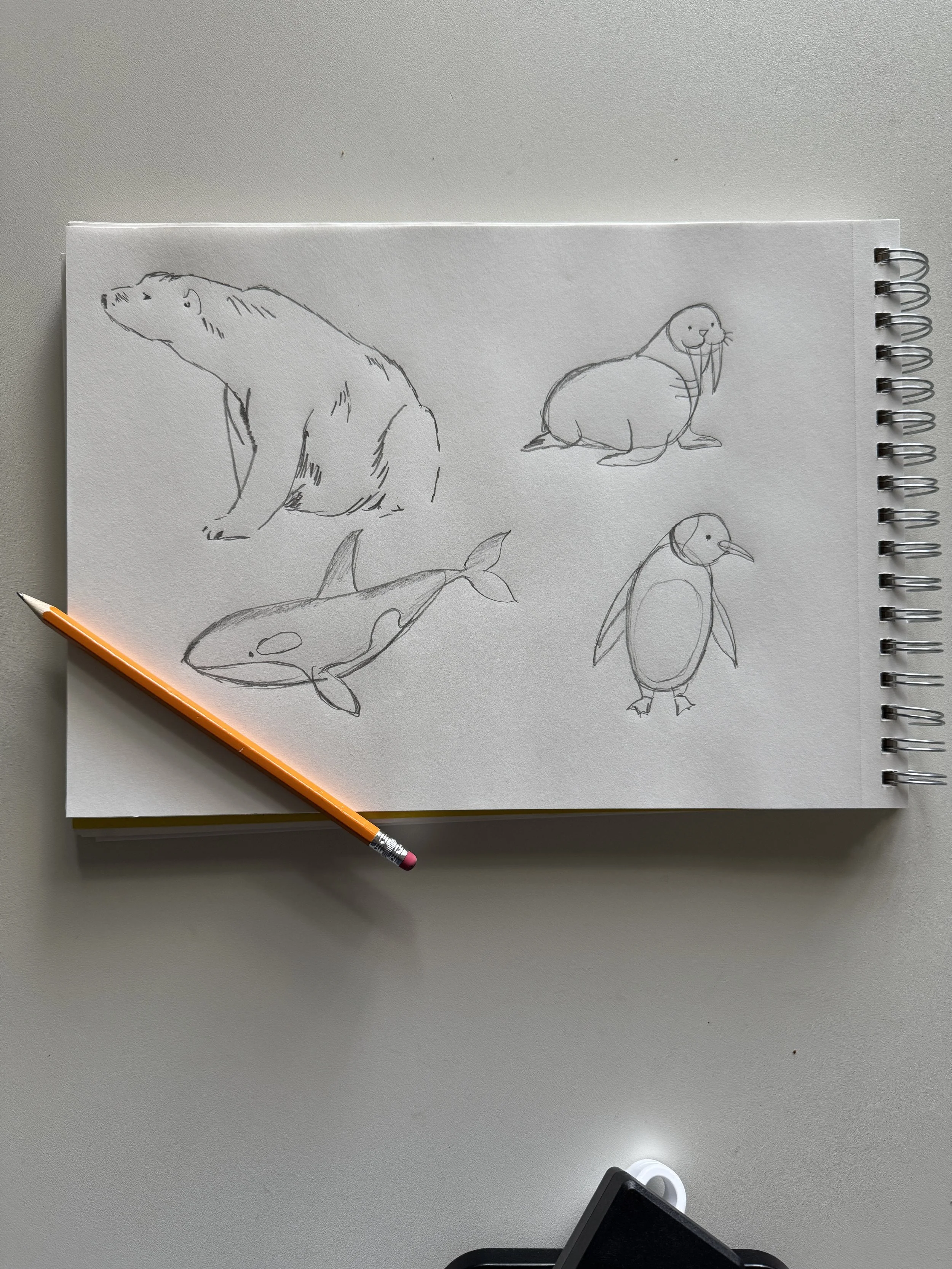
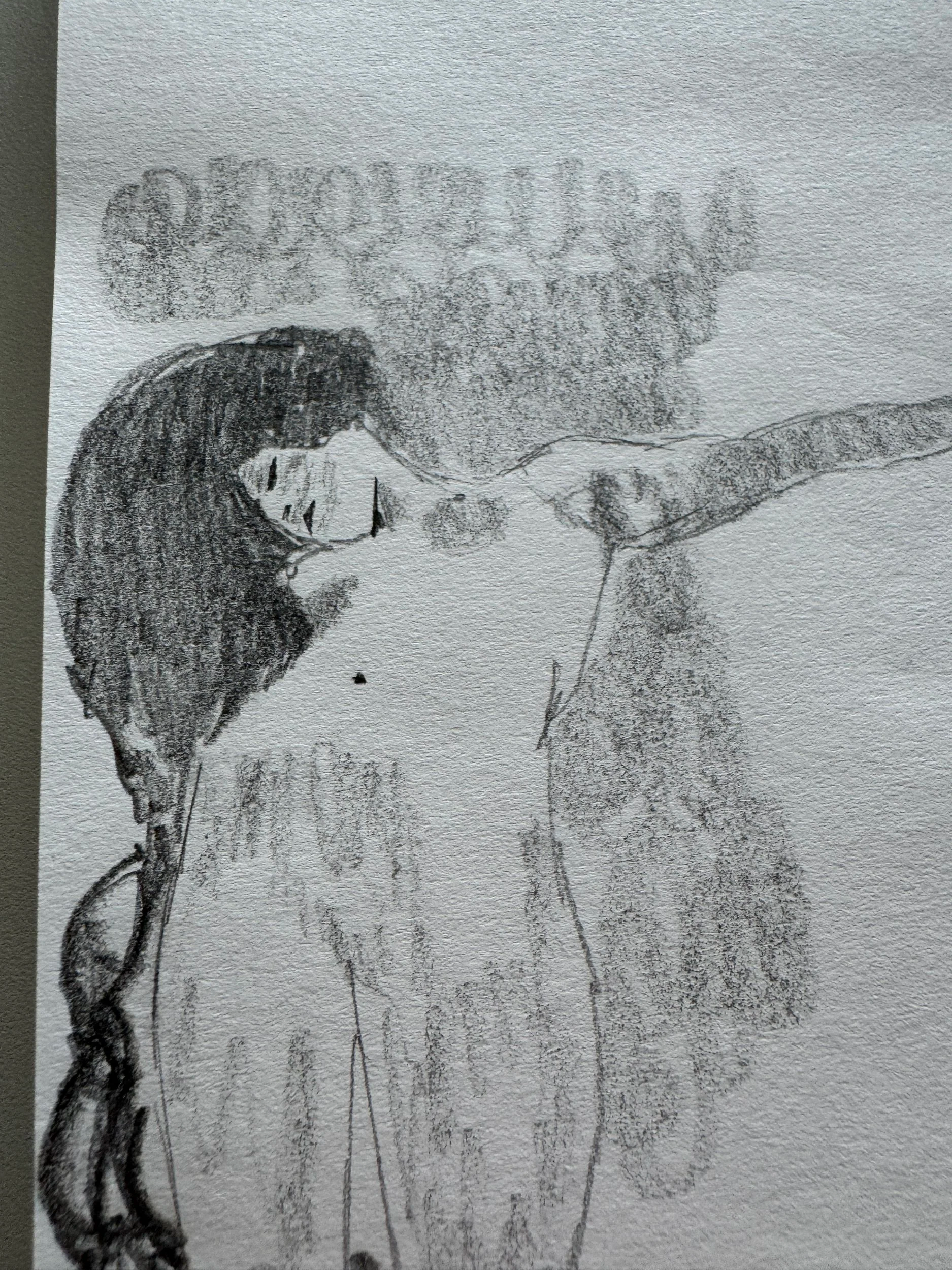
The arctic fox was easier. Or rather, the fox was honest in a way the master studies were not. I do not know what an arctic fox looks like in person. I have never seen one. I drew from photographs, guessing at the weight of the fur around the eyes, the way the ears sit, the expression that is not quite dog and not quite cat but something older than both. The polar bear I drew beside it has the same quality. I am rehearsing animals I have not met. Practicing for a place I have not been. Learning shapes in my living room that I will try to recognize from the deck of a ship.
There is music playing while I draw. There is always music playing while I draw.
I do not work in silence. I never have. The pencil moves differently depending on what is in the room. This is not a metaphor. It is mechanical. Tempo gets into your hand the way weather gets into your joints. A slow track and the strokes lengthen, the pressure eases, the shading becomes patient. Something faster and the lines sharpen. The decisions come quicker. You stop second-guessing the mark and just make it.
Right now the room is full of Iceland. Lúpína, a young Icelandic artist I discovered at Airwaves, makes dream pop with vocoder layers and lyrics in Icelandic that I cannot understand but can feel in the way you feel weather through a window. Ólafur Arnalds, whose piano and electronics sound like what the Arctic would compose if the Arctic had a conservatory education. Rakel, whose new album "A Place to Be" is the kind of music that makes you sit still and listen. She and I collaborated on "Graph Your Story," a short film that went on to win at several festivals. Rakelsvinylis worth owning. These are the sounds underneath the sketches. Not the Grönemeyer of my twenties. Not the Cave or the Florence of my thirties and forties. Something different. Quieter. Closer to where I am going.
Music has always been how I think. Not how I relax. How I think.
I saw my first concert at sixteen. Grönemeyer at the Praterstadion in Vienna, 1991. My most recent was U2 at the Sphere in Las Vegas. I saw U2 for the first time at the Donauinsel in Vienna in 1992, Achtung Baby tour, Fatima Mansions opening, Axl Rose walking on stage, drunk, during "Knockin' On Heaven's Door" one night after headlining the same venue with Guns N' Roses. Six U2 shows between those two nights. Achtung Baby. Elevation with No Doubt opening. The 360° tour with Lenny Kravitz, eighteen years after I first saw Kravitz at “Rock auf der Insel”, a festival in Vienna when I was seventeen. The Joshua Tree anniversary at Levi's Stadium. Then the Sphere, twice. Thirty-two years with the same band.
In between those bookends, 60 bands across 35 years. Six Grönemeyer shows, including one here in San Francisco in front of only 300 people. Four Florence and the Machines. Three Guns N' Roses, including the literal final European date of the Use Your Illusion tour in 1993 when I was seventeen and Slash was already halfway out the door. I saw Soundgarden open for Guns N' Roses two years before Superunknown made them enormous. I saw Faith No More on the same bill, weeks before Angel Dust dropped. I saw the Cranberries open for R.E.M. when Dolores O'Riordan was twenty-three and the world had not yet started counting her remaining years. I saw Michael Hutchence close a festival on a Sunday night, the original INXS lineup, four years before his death. That same weekend Leonard Cohen played a mid-afternoon set, six months before he disappeared into a monastery on a mountain for five years. I saw D'arcy Wretzky play bass for the Smashing Pumpkins, the original four, three months before the lineup broke and she eventually walked away from music entirely into a life on a horse farm in Michigan that she has never explained and does not seem interested in explaining.
I did not know any of those were the moments they were. That is how thresholds work. You only recognize them from the other side. D'arcy. Dolores. Florence. Herbert. Bono. All Wegbegleiter. Companions to me, unknown to them. They never knew I was in the room. They shaped it anyway.
There is a ticket stub framed on my wall from April 22, 1996. Bank Austria Halle, Vienna. Smashing Pumpkins. I was twenty-one. D'arcy was on stage and something landed in me that took years to understand. She was not performing connection. She was not asking to be seen. She was just there, in her own field, playing bass, and the room was different because of it. I kept the ticket. I framed it. Thirty years later I still look at it and feel the weight of a moment I was inside of without knowing what it was.
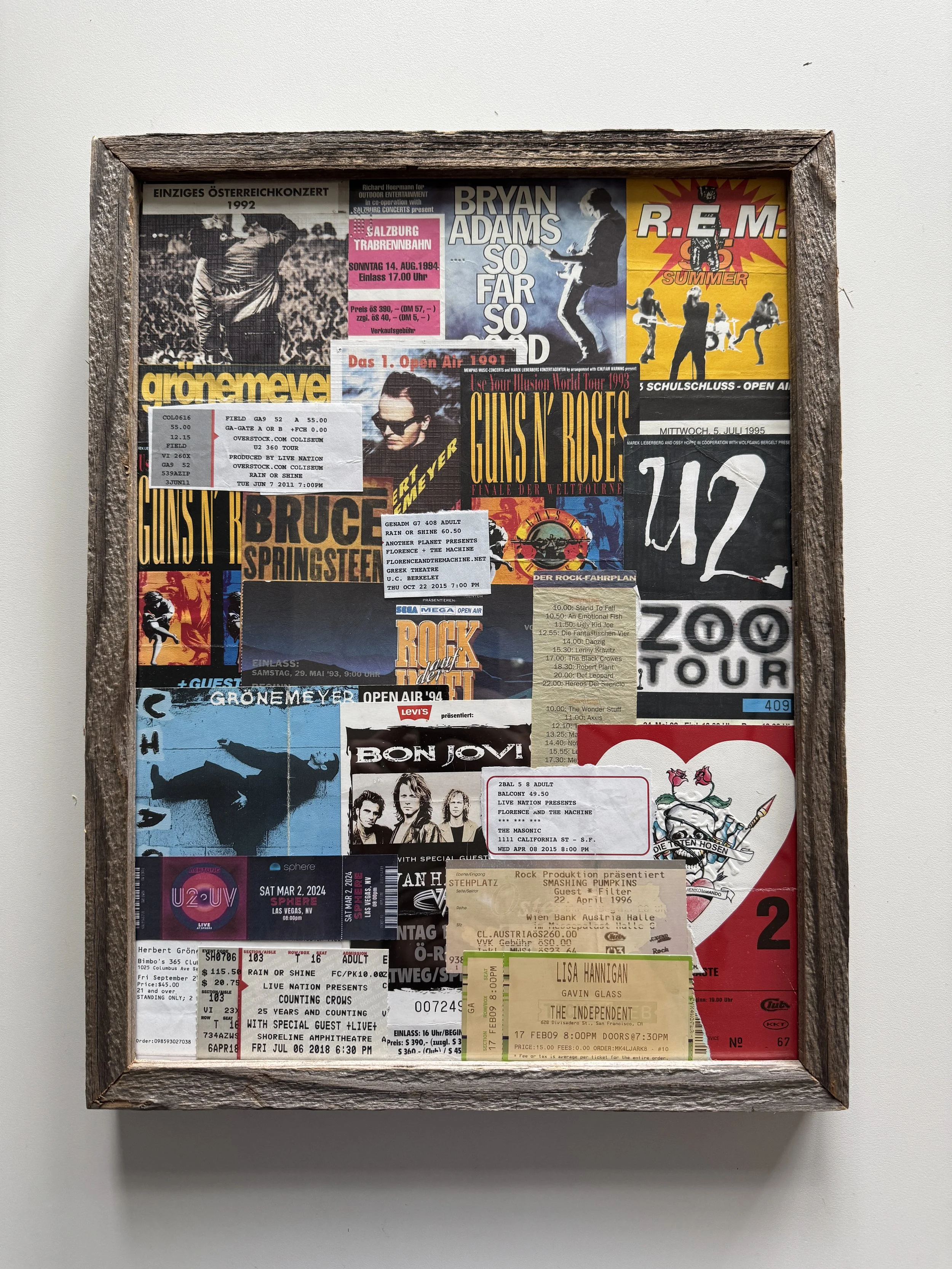
A snapshot of 60 bands across 35 years
I do that. I collect things before I know why they matter. Letters I kept for thirty-two years. Ticket stubs I framed without knowing they would become a timeline. Sketches of paintings that no longer exist, drawn in a living room in California while Icelandic dream pop fills the room. The grabbing comes first. The understanding comes later. Sometimes decades later.
The sketches are not finished. The paintings are months away. The arctic fox on my sketchbook page is an approximation of an animal I will meet in July. The Rembrandt storm is a study of a painting I will reimagine with pigments that disappear when you touch them. The Klimt is a tracing of a ghost that burned in a castle in 1945. Everything I am drawing has already vanished. The animals I have not seen yet. The paintings that no longer hang on any wall. The ice that will look different by the time I get there than it does in any photograph I could study now.
But the pencil moves. And the music plays. And somewhere between the hand and the sound, the work begins to tell me what it wants to be before I am ready to hear it.
Grönemeyer at sixteen taught me that music was a room you could walk into and become someone you had not been before you arrived. When I hear the opening piano of "Ich hab dich lieb" I am sixteen again, in love for the first time, and the hair on the back of my neck still stands. Nick Cave at twenty-one taught me that darkness could be beautiful if it was honest. Florence at thirty-nine, with Ella beside me at her first concert, taught me that the things I love are inheritable. Niko at the Sphere at seventeen, the same age I was at my first U2 show, taught me the inheritance runs both ways. Lúpína at fifty, playing through a speaker while I sketch an arctic fox, is teaching me something I do not have words for yet. Something about cold places and small voices and the particular courage of singing in a language most of the world will never learn.
The pencil and the speaker. That is the “studio” right now. No canvas. No thermochromic pigment. No ship. Just a sketchbook, a playlist, and the quiet work of getting ready for something I cannot fully see yet. The sketches will become paintings. The paintings will disappear with heat. And somewhere inside all of it, the music will still be playing. It always is.
“You see the world according to the light that is available to you.”