Entry 030: Twenty-Three Kilograms
When I was a kid, packing for a trip meant sitting in the back seat of the car. Done. My parents handled the rest. When I say parents I mean my mother. My only job on our annual drive to Italy was to make sure I had batteries for my Walkman, the right cassettes, and the money I had saved from mowing lawns so I could spend it in arcades every night. That was the full inventory. Batteries. Tapes. Coins. Everything else appeared in the trunk without my involvement.
The first time I packed for an overseas trip I was twenty-one. Florida. 1996. My uncle had a hotel and restaurant in Viktring called Haus Am Walde, later Cafe Key West. He took me to Miami and Key West. My first time in America. I brought everything I owned. Shirts I would never wear. Shoes for occasions that would never arise. My suitcase looked, according to my uncle, like a bomb had gone off inside it. I had no system. No compression cubes. No concept of layering or rolling or organizing by function. I was more concerned with eating my first Burger King hamburger, which in 1996 was a genuine event. Austria had McDonald's by then, barely. I remember my mother bringing me my first one from the city around 1991 or 1992, carrying it home like an artifact from another civilization. But Burger King did not exist. So when my uncle pulled into one somewhere on the Florida Turnpike, I treated it with the seriousness it deserved, which was more seriousness than I gave the suitcase.
Airlines did not charge for luggage then. I want to say that again because young people will not believe it. Luggage was free. You bought a plane ticket and the ticket included a seat and a bag and sometimes a meal and nobody asked you to pay extra for any of it. I still do not understand what we are buying now when we buy a ticket. Access to the aircraft? The right to stand in line? The opportunity to pay again for everything the ticket once included? I digress.
Becoming a father made me a packer. Not by choice. By necessity. When you travel to Europe with two small children you learn to think in systems. What goes in which bag. What they need on the plane versus what can wait. How many diapers per hour of flight time. What happens when the one toy that prevents a meltdown is in the checked luggage and the checked luggage is in Frankfurt and you are in San Francisco. You learn fast. You do not repeat mistakes. By the time my kids were teenagers I could pack a family of three for two weeks in Europe in under an hour. The suitcase that once looked like a bomb now looked like a diagram.
Packing for the Arctic is different. Not harder. Just higher stakes per item.
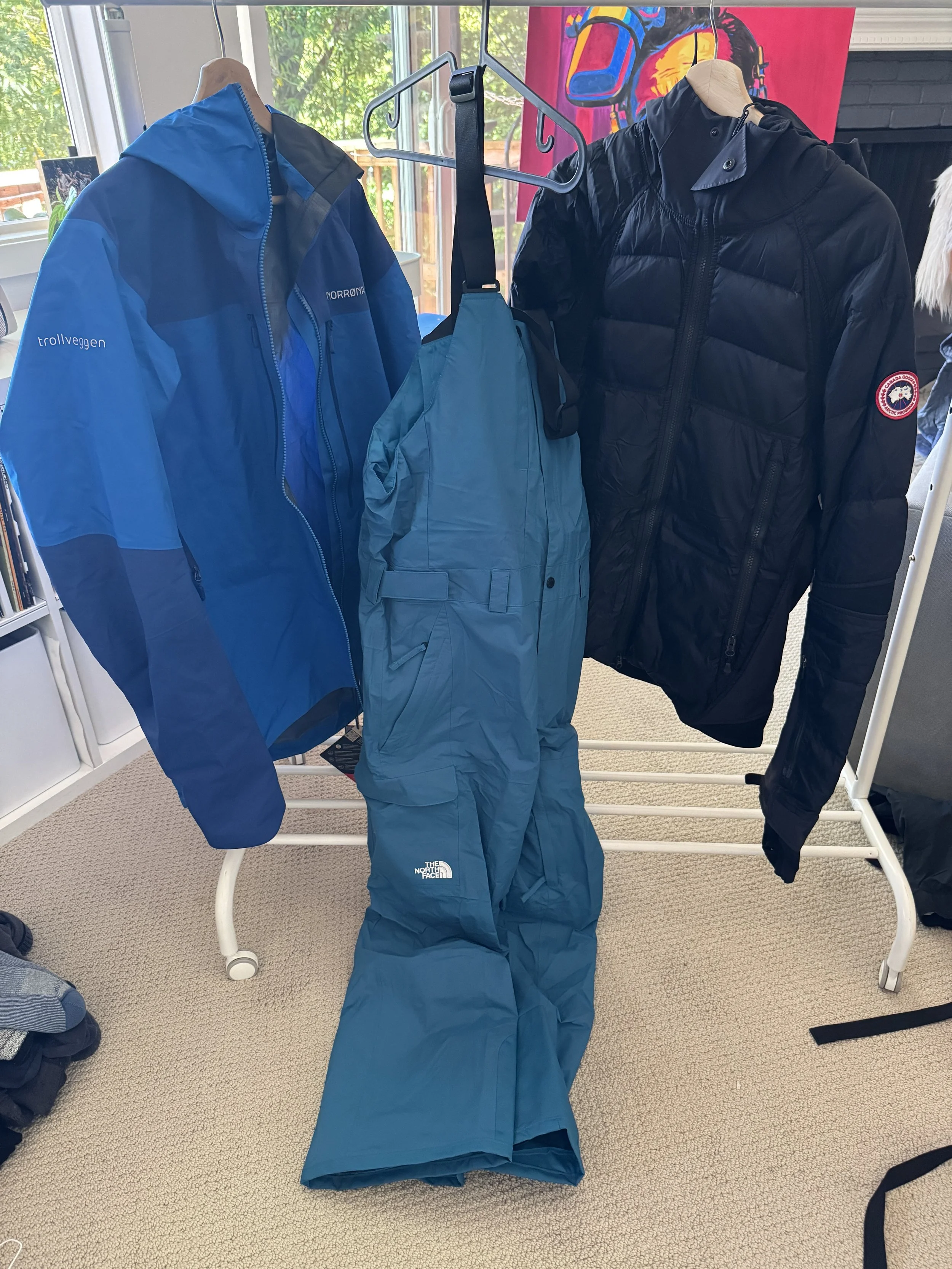
We received a planning document months ago. The rules are simple. Dress in loose layers. Anything tight will not be warm. The best materials are wool and technical synthetics. Think base layer, mid layer, outer shell. If you bring quality you will not need quantity. That last line became my operating principle. Buy fewer things. Buy better things.
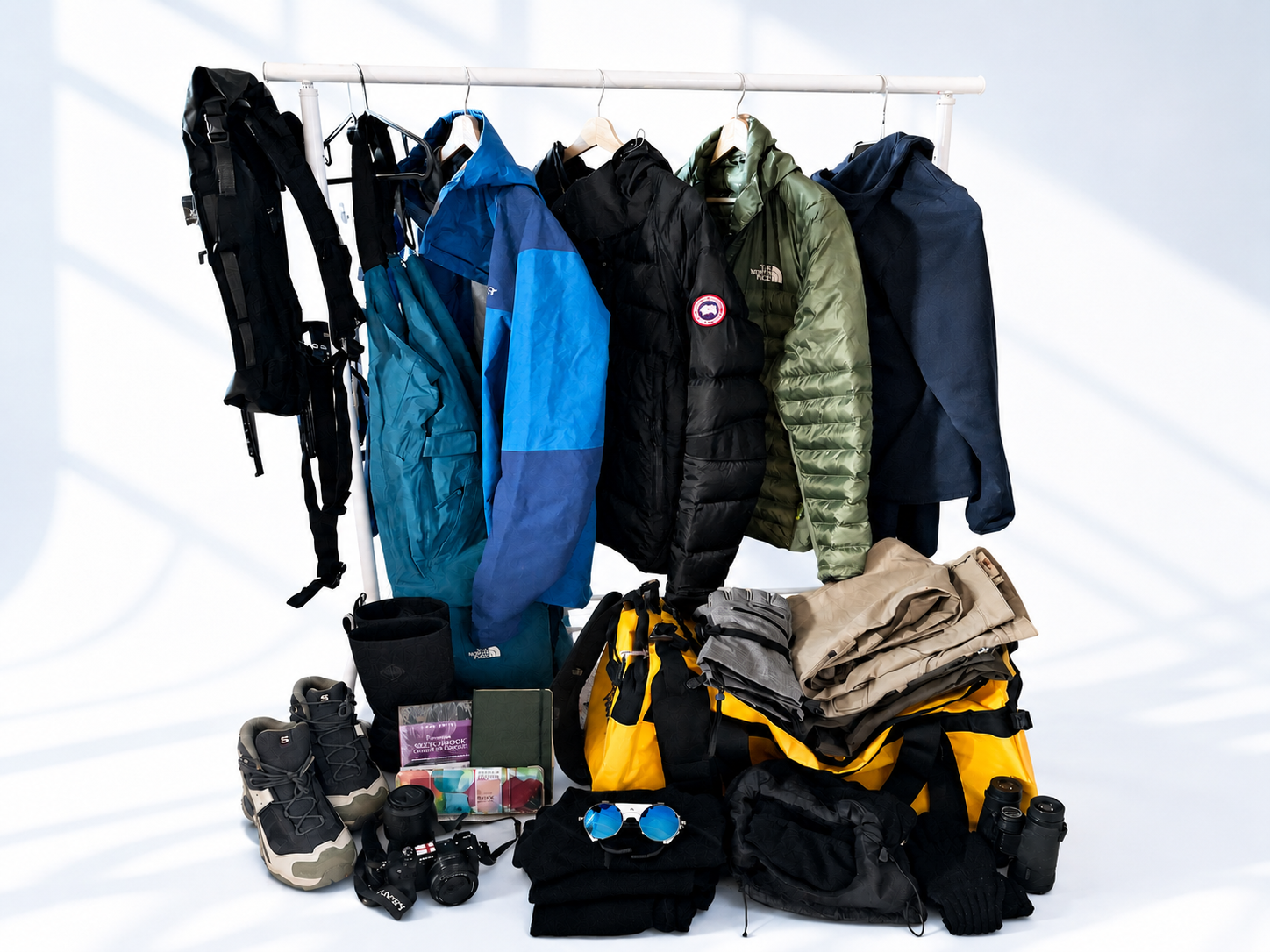
I started early. Black Friday sales. End-of-season clearances. Christmas deals. Some things I already had from years of hiking and winter travel. Mid layers. Down jackets. The merino wool base layers were what I needed most. I bought Merino.tech 320 weight zip tops and bottoms, 2 sets, enough to rotate through two weeks with hand washing in between. Lightweight merino tees for the ship interior.
Nothing fit on the first try. I ordered my size in everything and my size in nothing was correct. The merino tops felt like I was being vacuum-sealed. The Muck Boots were too small, then to big. The Salomons were too big then too small. Going to a store would have solved this except going to a store in 2026 means wandering a floor the size of a warehouse looking for a human being who can help, finding one, learning they do not have your size, and driving home to order it online anyway. I exchanged everything at least once. Some things twice.
The outer shell took the longest to figure out. You need a jacket that fits over everything underneath it. A merino base layer, a fleece mid layer, a down jacket, and then the shell on top of all of that. If the shell is fitted you cannot breathe. If it is too large it catches wind like a sail. I have a Gore-Tex Pro shell in a size large that fits over my down jacket with enough room to move my arms. Finding that combination took two returns and three months of patience.
Compression cubes changed everything. I will say this plainly. If you travel and do not use compression cubes you are wasting space. You roll the clothing tight, seal the cube, and what was a pile of thermal layers becomes a flat brick you can stack. My 95-liter duffel bag went from impossible to organized in one afternoon. Everyone should have them.
The duffel holds everything that goes on the ship. The airline limit is twenty-three kilograms. I weighed the bag on a bathroom scale. Twenty and a quarter kilograms. Two and three-quarter kilos of margin. That margin is the travel chess set, which gets cut first if the shelf space is too tight.
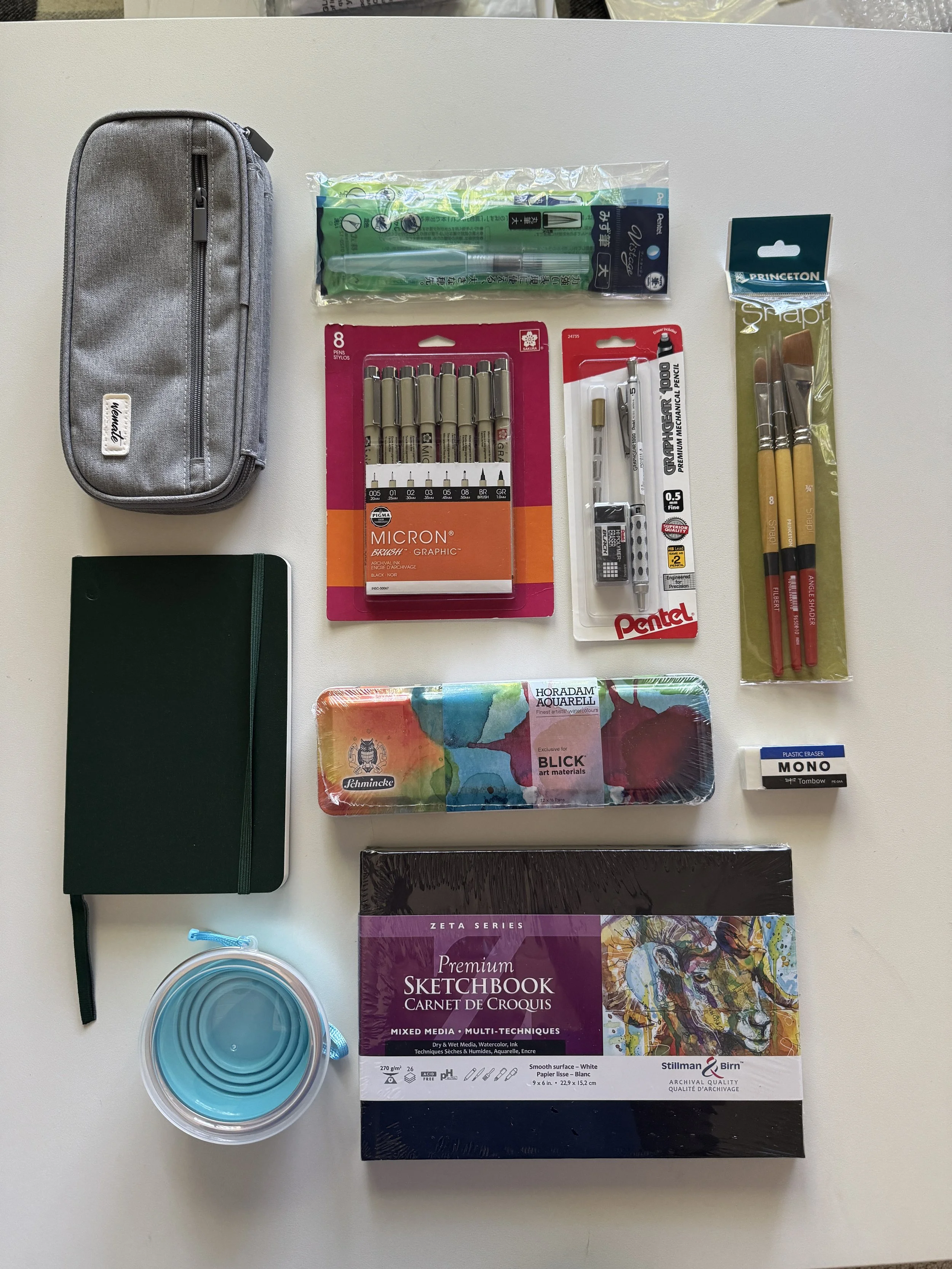
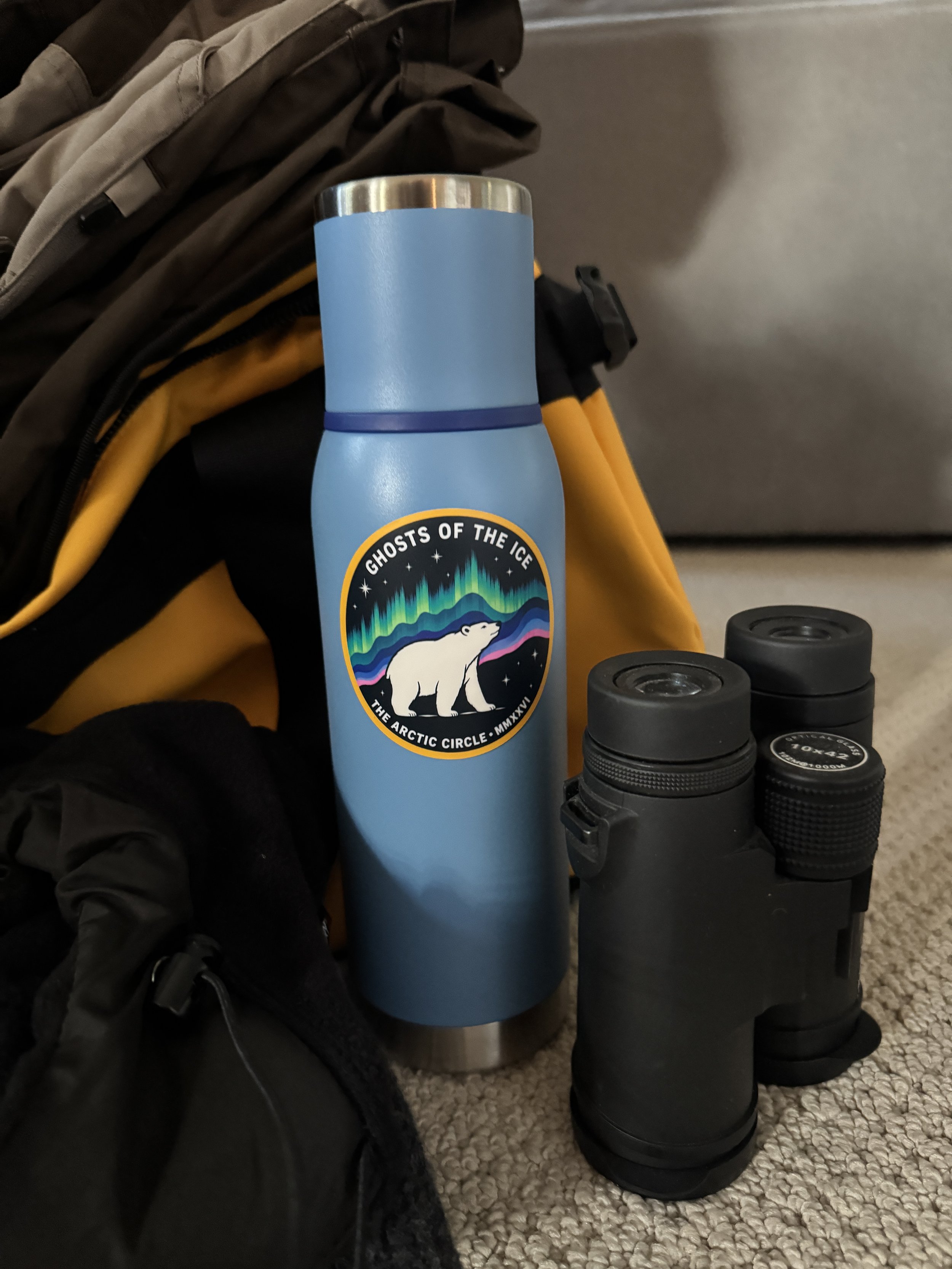
Here is what is in the duffel. Muck Boots rated to minus twenty for Zodiac landings. Salomon hiking boots for longer walks on shore. Five pairs of wool socks with five synthetic liners underneath. Two fleece hoodies. An Icelandic lopapeysa I bought in Reykjavik years ago, folded into a compression cube, coming with me because Iceland is where this whole thing started and the sweater remembers even if the wool does not know where it is going. Two down jackets. Waterproof bibs. Two beanies, a balaclava, a neck gaiter, a scarf. Gore-Tex outer gloves, liner gloves, midweight gloves. Glacier sunglasses with side shields because the Arctic reflects light from every surface including the ones you are not looking at. Binoculars. A headlamp. An insulated water bottle (with a Ghosts of the Ice sticker on it). A sketchbook, pencils, watercolors, brushes, micron pens, a water cup that collapses flat. A green notebook for words.
Small vials. Five of them. For whatever the expedition allows me to gather. Sand, sediment, small particles that might find their way into the paintings later. The ice itself I cannot keep. But maybe what sits beside it.
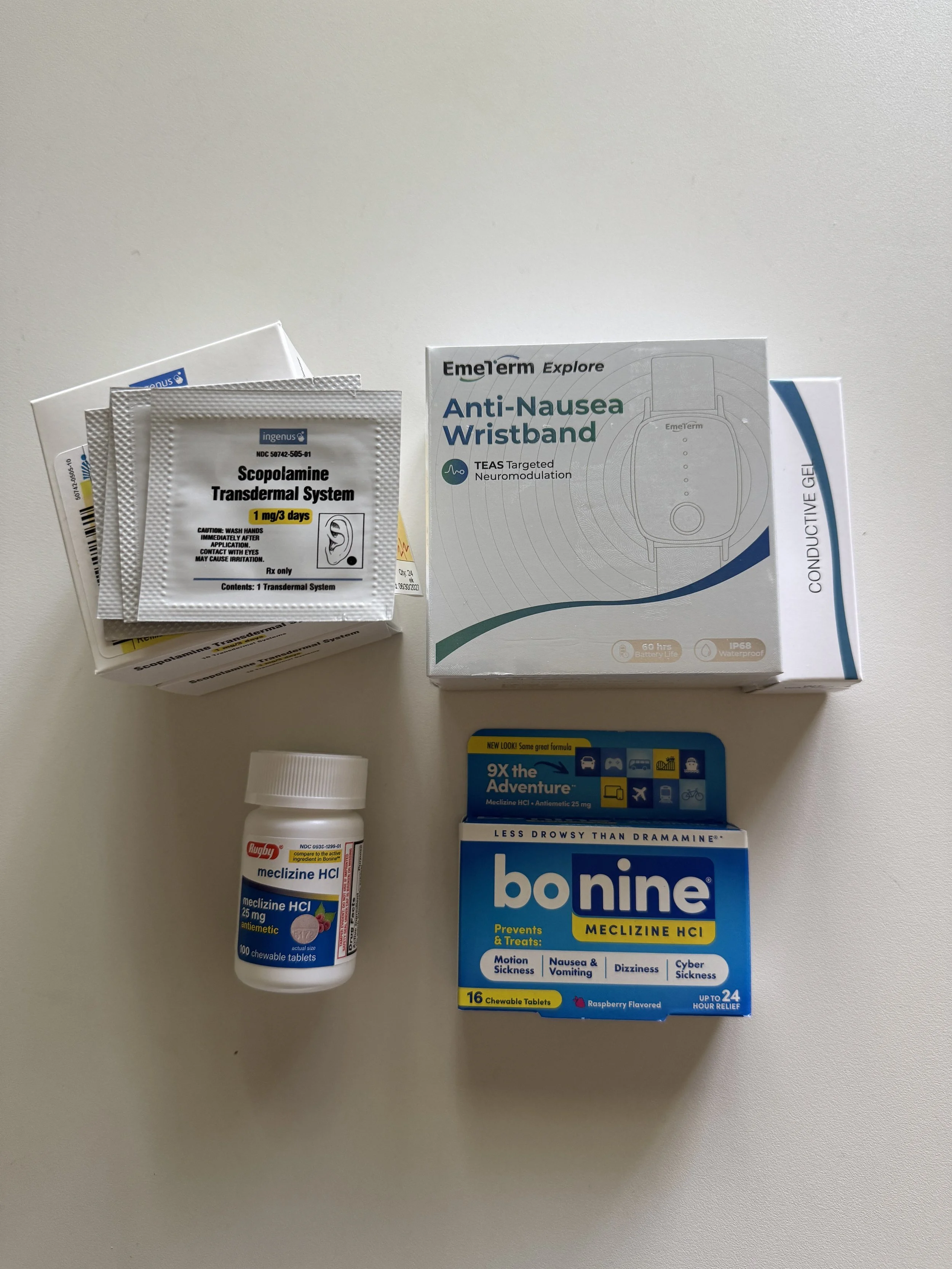
Seasickness provisions. Three kinds. Scopolamine patches that go behind the ear and release medication through the skin for seventy-two hours. Meclizine tablets as a backup. And an EmeTerm wristband that sends electrical pulses to the median nerve to suppress nausea. Three strategies for one problem. I get seasick. I have always gotten seasick. On ferries, on fishing boats, on a dive boat in Honduras where I fed the fish afterward (If you know what I mean). The Rembrandt van Rijn is a small sailing vessel in open Arctic water. I am not taking chances.
A sleep mask because the sun will not set for the entire trip. Ear plugs because the cabin is shared. Lip balm and healing ointment because the Arctic is a desert and the air will strip your skin. Sunscreen, mineral-based, natural products.
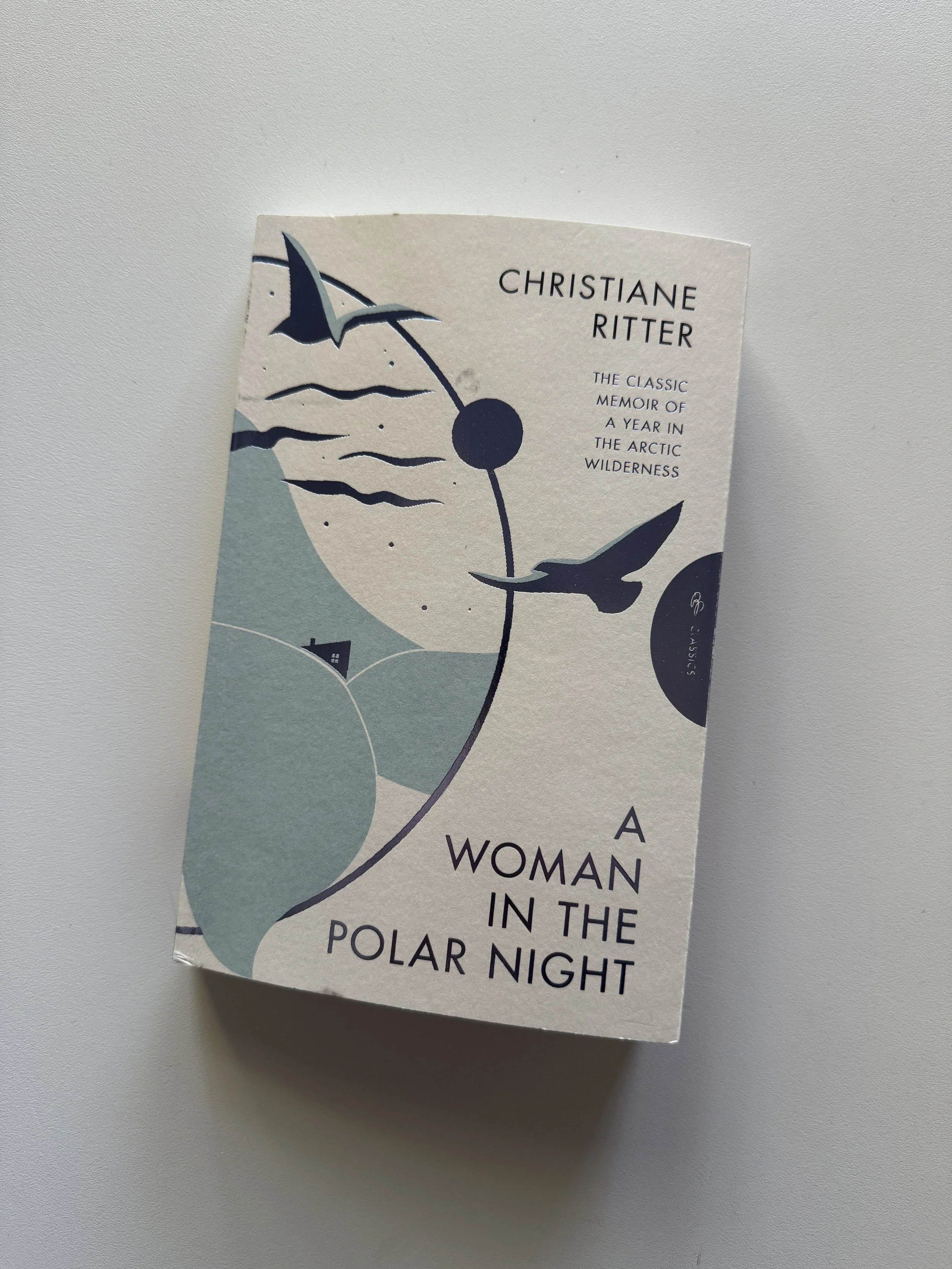
Playing cards. Phase 10. The chess set if it fits. A Woman in the Polar Night by Christiane Ritter. An Austrian painter who went to Svalbard in 1934. She is the only person in my bag who has been where I am going.
The carry-on backpack holds the electronics and travels with me through Austria and Denmark before the ship. Sony a6000 with two lenses, five batteries, a triple charger, and more memory cards than I will probably need. A Zoom audio recorder with a windscreen. A mini tripod. A power bank. A laptop. An EU power strip because the ship runs on 220 volts and I have more devices than outlets. The DJI Osmo Pocket 4 I am picking up in Vienna ordered through the EU store because it is not available in the US.
I thought about bringing a GoPro. I decided against it. Two cameras is enough. The Sony for photographs. The Osmo for video. Adding a third means dividing attention three ways and doing none of them well. I would rather be present with two than distracted by four.
Travel insurance. Emergency contacts filed. Passport checked, valid past October. Offline maps and podcasts loaded on my phone for the ship. The Ghosts of the Ice album, downloaded, ready to play through a speaker in the cabin if my cabin mate will tolerate it.
Twenty-three kilograms. That is the weight of everything I need to survive, work, sleep, sketch, record, and stay warm at 80 degrees north for sixteen days. It is also the weight of a mid-sized dog. I keep coming back to that comparison. Everything required for the most important trip of my life weighs less than a Labrador.
When I was twenty-one I packed like a bomb had gone off. At fifty I pack like a man who has moved nineteen times and learned that the space you leave empty is worth more than the space you fill. The compression cubes help. The discipline helps more. Every object in that duffel earned its place by answering one question. Does this serve where I am going.
The duffel is yellow. It sits by the door. Five weeks out and it is ready. I am not sure I am. But the bag is.
“The more you know, the less you need. ”