Entry 029: Thirty Strangers on a Forty-Nine-Meter Boat
In 2020 I started a journal. Not a diary. A chart. Pencil on paper, one line per day, a number from one to ten. Nothing else. No explanation. No story. Just a number that said how the day felt when I turned off the light.
Most days in New York that year were fives. The pandemic had ground the city to a standstill. Ground Zero of the whole thing. I sat inside and waited for it to pass. Millions of people doing the same thing in the same city, alone in their apartments, rating their days without knowing it. Five. Five. Four. Five. Six on a good one. Five.
At the end of the year I looked at the chart. Months of pencil marks in a small notebook. A landscape of mediocrity with two peaks. Two tens. The only two in three hundred and sixty-five days.
The first was the day Herbert Bauernebel and I ran the entire Central Park loop. Ten kilometers. Herbert and I go back to the NEWS Verlag in Austria. We left the country at the same time, him to the East Coast, me to the West. Twenty years later we ran Central Park together on a day when the city was empty enough to feel like ours. I had run half marathons before. This was not the longest distance. But it was the first time I ran that park with someone who knew where I came from, and the first time New York felt like it belonged to me instead of the other way around.
The second was the day I sold a painting to Stefan Schnabel. The lion. It was not my first painting sold. But it was my first painting sold in New York, and New York made it different. Stefan was a friend. The sale happened the way real ones do, without ceremony, without a gallery taking forty percent, just two people who trusted each other standing in front of a canvas.
Two tens in a year. Both firsts.
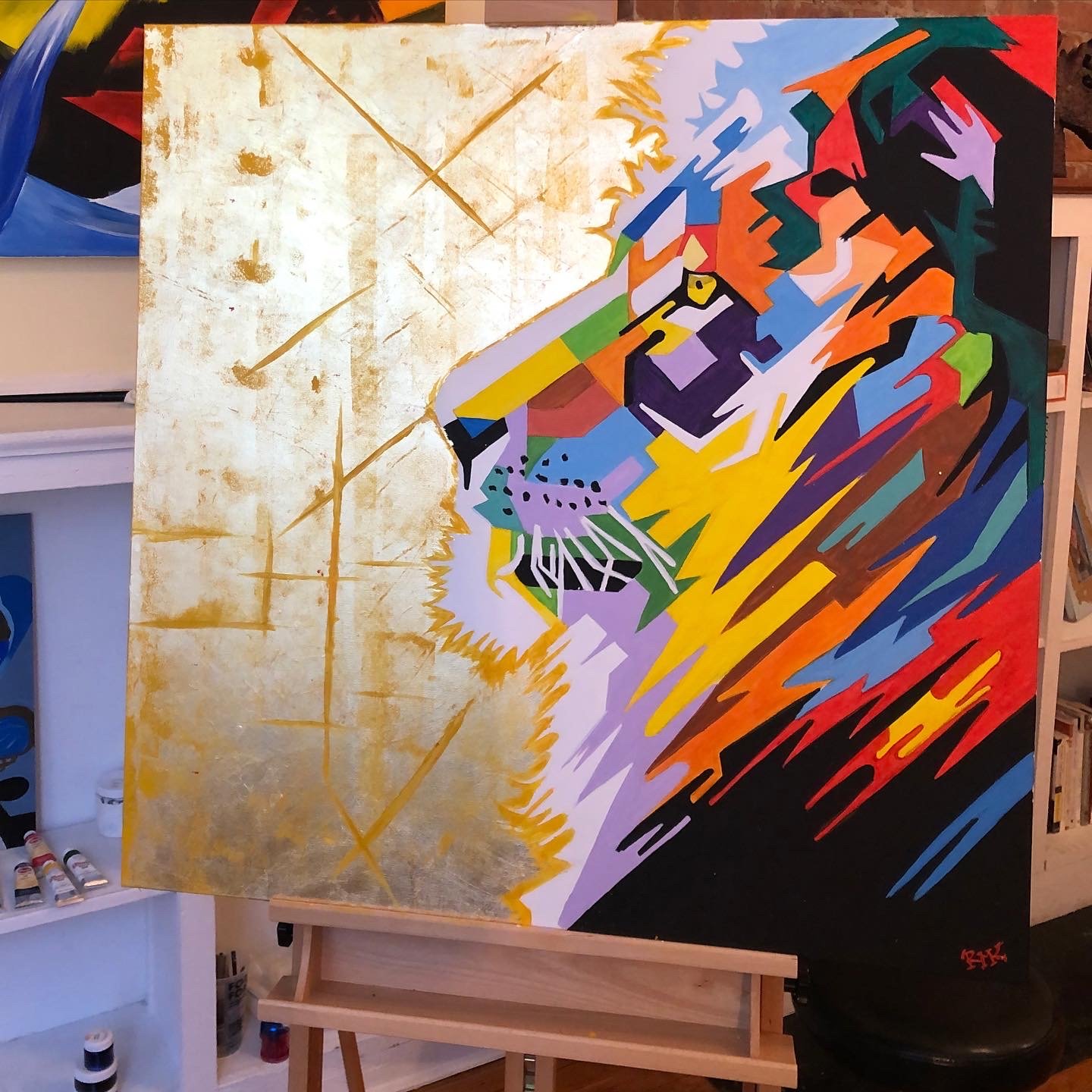
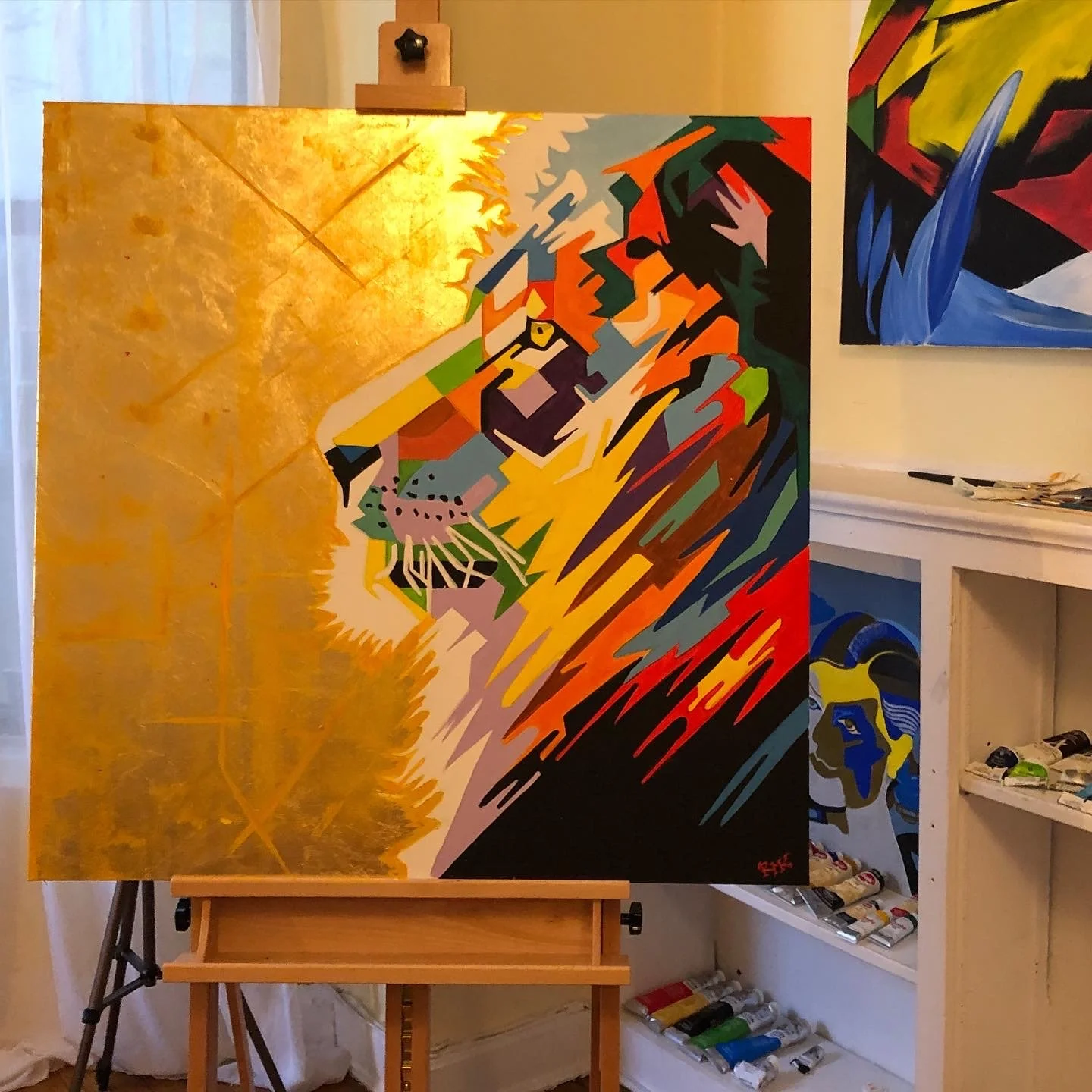
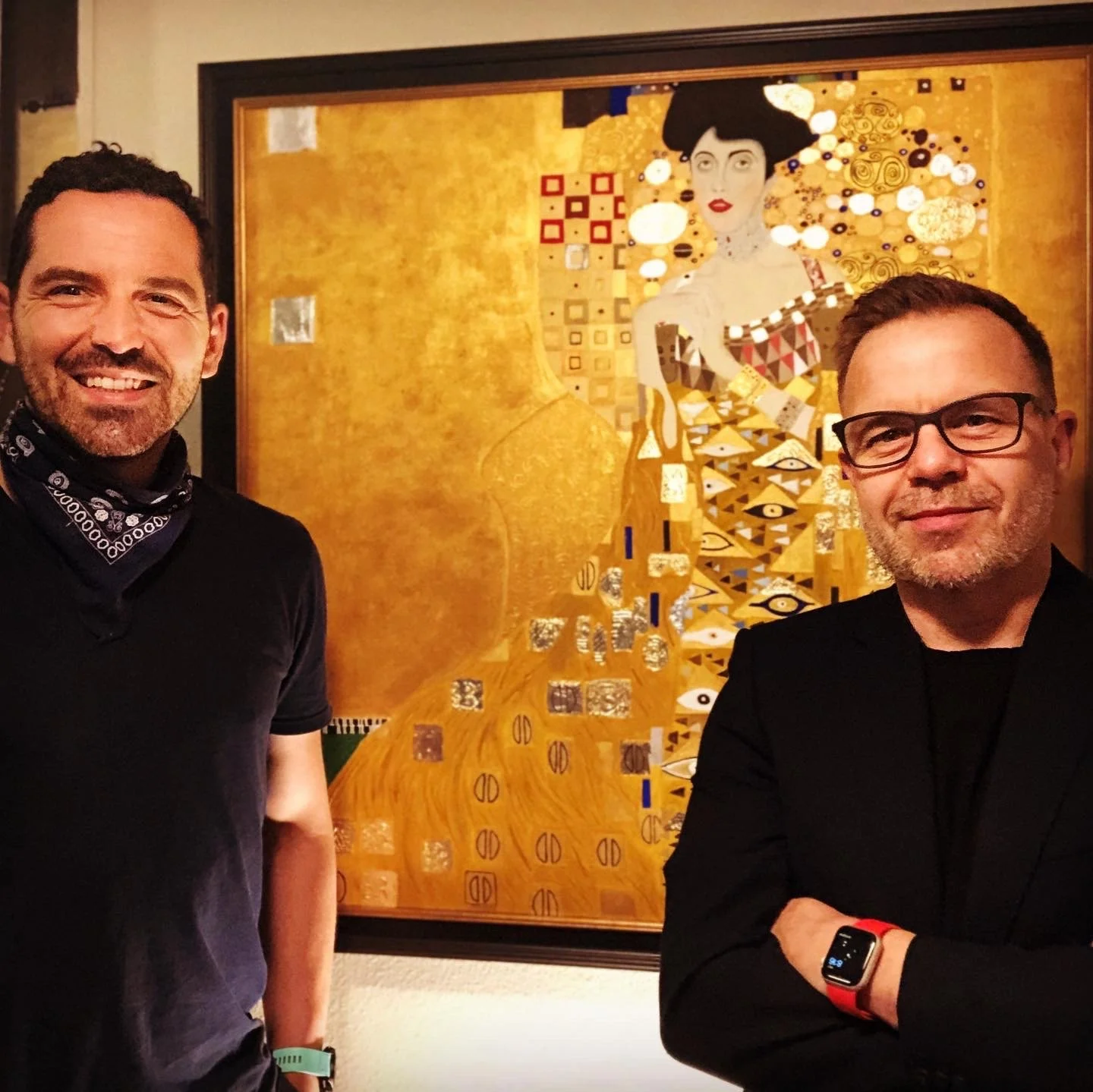
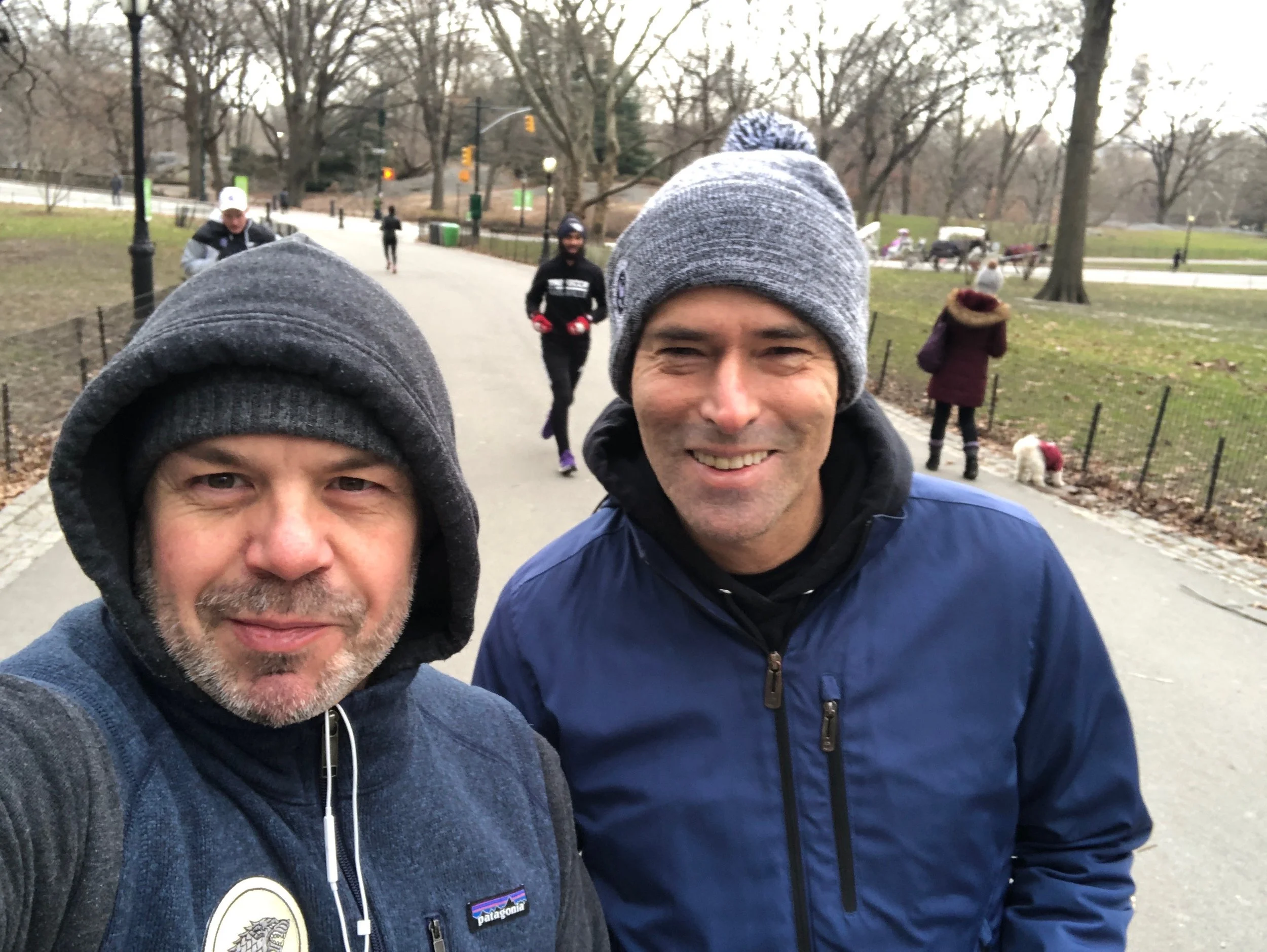
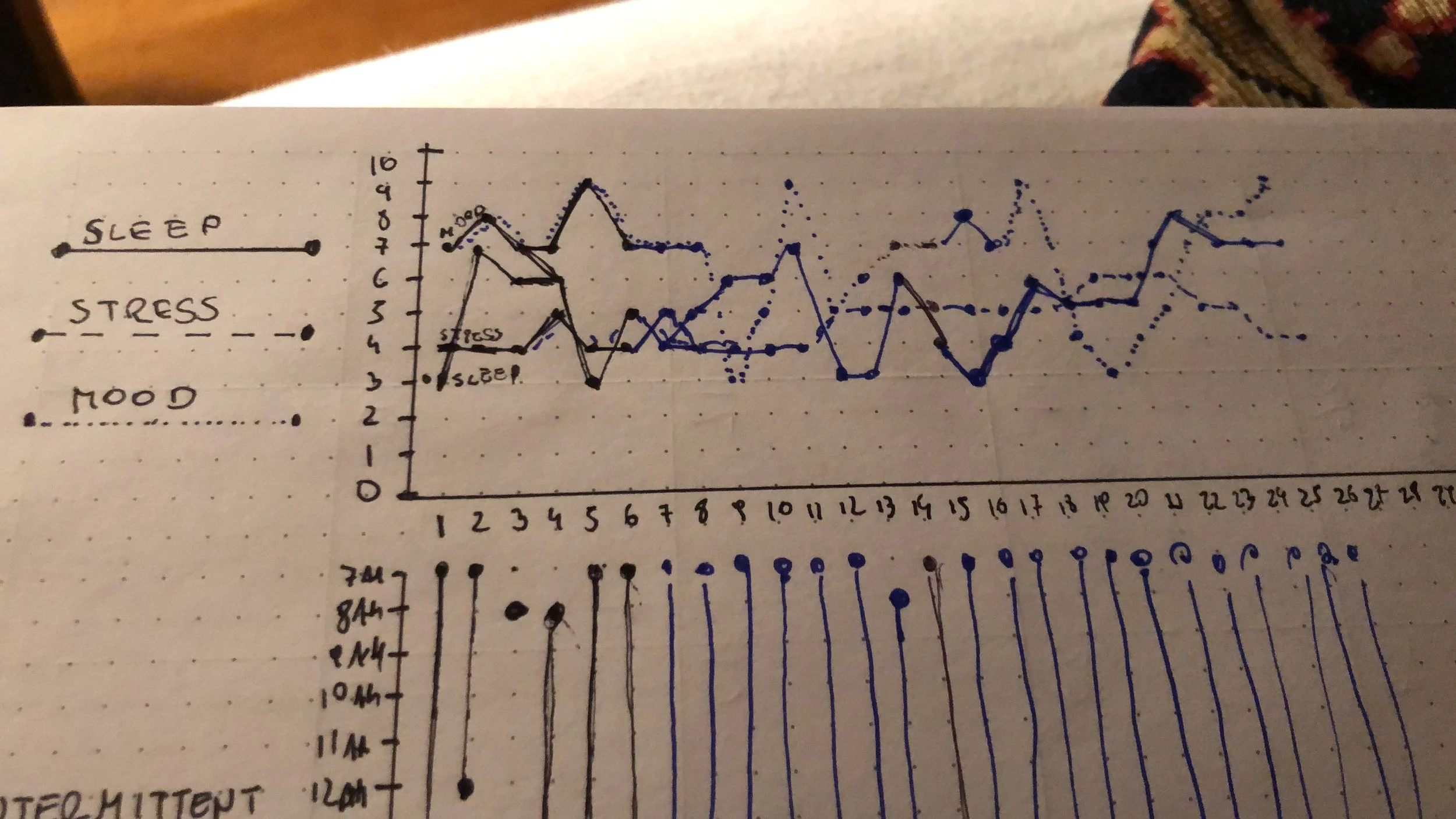
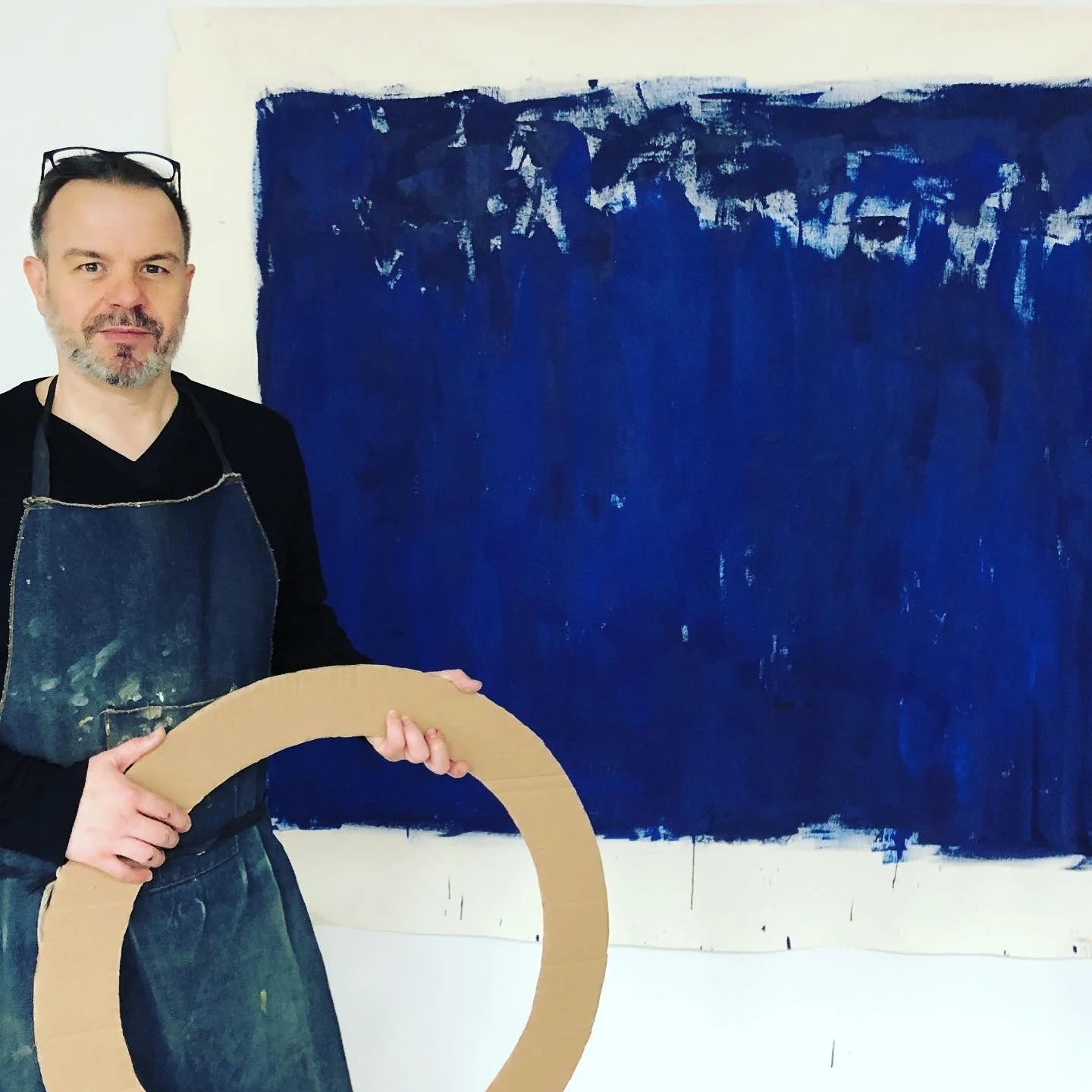
New York, 2020. The golden Lion. Stefan Schnabel and I in front of Adele. Herbert Bauernebel and I in Central Park. The daily tracker that taught me what a ten looks like. The art Studio in LIC.
I kept the journal going. The pattern held. The days that reached ten were always days I did something I had never done before. Not something big necessarily. Not something anyone else would notice. Just something new to me. Walking into the U2 Sphere for the first time. Standing in a room with two hundred and fifty people watching Herbert Grönemeyer at Bimbo's in San Francisco, a man who sells out forty-thousand-seat stadiums, playing a club the size of my living room. Those were tens. And they were tens because no amount of repetition replicates what the first time does to your nervous system.
The older you get the fewer firsts you have. As a child every day is a first. Every door you open, every food you taste, every street you walk down. The world is a machine that manufactures wonder because you have never seen any of it before. At fifty the machine slows. You have seen most of the doors. You have tasted most of the food. The streets start to repeat. You have to work harder for a ten. You have to go further. You have to put yourself somewhere your body has never been and trust that the unfamiliarity will do what repetition cannot.
In six weeks I will board a ship I have never set foot on, with thirty people I have never met, and sail to a place I have only imagined.
The forum for the expedition opened this month. One by one the artists and writers and scientists have posted their introductions. I read each one from my living room in California. Someone is recording vanishing soundscapes. Someone is making a film that moves from Iceland through the Arctic to Japan. Someone is writing a book about how law and politics collide at the edge of the world. Someone is composing music. Someone is documenting Arctic plants as witnesses to environmental change. Someone is a choreographer tracking how her body moves through freeze and thaw and decay. Someone has spent twenty years teaching polar bear ecology. Someone is bringing casting materials to take impressions of glacier ice. Someone is making cyanotype prints in twenty-four-hour Arctic sunlight. Someone is building a surreal crime-scene installation inspired by the midnight sun.
I am bringing thermochromic paintings that disappear when warmed. I am one of thirty projects. On a forty-nine-meter boat, that proximity changes everything.
The expedition will be off-grid. No cell coverage once we leave Longyearbyen. Limited satellite Wi-Fi. Text-only emails on a good day. No live blogging. No streaming. The program has been off-grid for eighteen years and they want to keep it that way. After almost a year of writing this blog every week, the writing stops and the being begins.
I thought that would worry me. It does not. It feels like relief. For two weeks I will not think about uploads or formatting or whether the entry is too long or too short. I will not check the analytics. I will not wonder if anyone read it. I will just be on a ship, looking at ice, sketching animals I have rehearsed on paper, listening to thirty strangers talk about work I never knew existed. Whatever I bring back will become the next chapter of this blog. But for two weeks the chapter writes itself in silence.
The first morning on the ship. I have tried to picture it. The romantic version is peace. Open water. Cold air. The sound of nothing but the hull and the wind. The realistic version is that it could be storming. Raining. I could be leaning over the rail with a patch behind my ear and regretting every decision that brought me to 80 degrees north. Both versions are firsts. Both would be tens.
That is the thing about the journal. The tens do not care whether the day was beautiful or difficult. They care whether it was new. Whether your body was somewhere it had never been. Whether your hands were doing something they had never done. Whether the person next to you was someone you had not yet learned how to talk to.
Thirty strangers. Thirty projects. A forty-nine-meter boat. No internet. No schedule I control. No door I can close that is entirely mine.
This is a ten. I know it before I get there. And that might be the rarest kind of first. The one you can see coming but still cannot imagine.
“For here there are no days because there are no nights. One day melts into the next, and you cannot say this is the end of today and now it is tomorrow and that was yesterday.”