Entry 028: Horsepower
The first time I jumped out of an airplane I was twenty-two years old. It was 1997. Czech Republic. The Pink Skyvan. I do not remember deciding to do it. I remember standing at the open door of the plane and realizing that the decision had already been made by some part of me that did not consult the rest.
I jumped 650 times after that.
That number sounds like a hobby. It was not a hobby. I competed in skysurfing for Team Austria at World and European Championships. I came to the Free Fly Festival in Lake Tahoe in 1999. I worked at the X Games in 2000. Skydiving opened doors I did not know existed and put me in rooms with people who understood that the space between the plane and the ground was not empty. It was the most alive place in the world. What I loved most was the community. To this day I am still friends with many of my fellow jumpers. Those were deep friendships that last. When you arrived at a drop zone it gave you a glimpse of how the world could be. United. No borders. No race. No religion. United by one goal. Jumping out of airplanes. No one cared where you came from or what you did for work or who you were. I jumped with Don Swayze at the X Games. Patrick's brother. No one cared.
I stopped when I became a father. That is the whole explanation. You do not throw yourself out of airplanes when two small people need you to come home. Responsibility is not the opposite of courage. It is a different form of it. I put the rig away and did not look back. Not because I stopped wanting to jump. Because I wanted something else more.
If you’re curious what skysurfing looked like, here’s my old promo video from the late ’90s.
A decade later I bought a Ducati.
Different machine. Same principle. Something powerful underneath you, answering to your hands and your weight and the small corrections you make without thinking. I rode it through San Francisco, up the hills, splitting lanes on the commute, which in California is legal and in practice is the closest thing to skydiving you can do on the ground. I went to MotoGP races at Laguna Seca and Austin. Watched Valentino Rossi do things on a motorcycle that should not be possible at those speeds. Then I came home and rode my own through traffic and felt a version of the same thing, smaller, slower, but real.
Riding a motorcycle makes you present in a way that nothing else does. Inside the helmet your senses sharpen. You smell everything. The exhaust from the bus ahead of you. The restaurant on the corner. If someone in the car beside you is smoking. You see everything. The pothole. The oil slick. The driver putting on lipstick. The one eating a sandwich with both hands at forty miles an hour. You are the most alert version of yourself because the alternative is the ground.
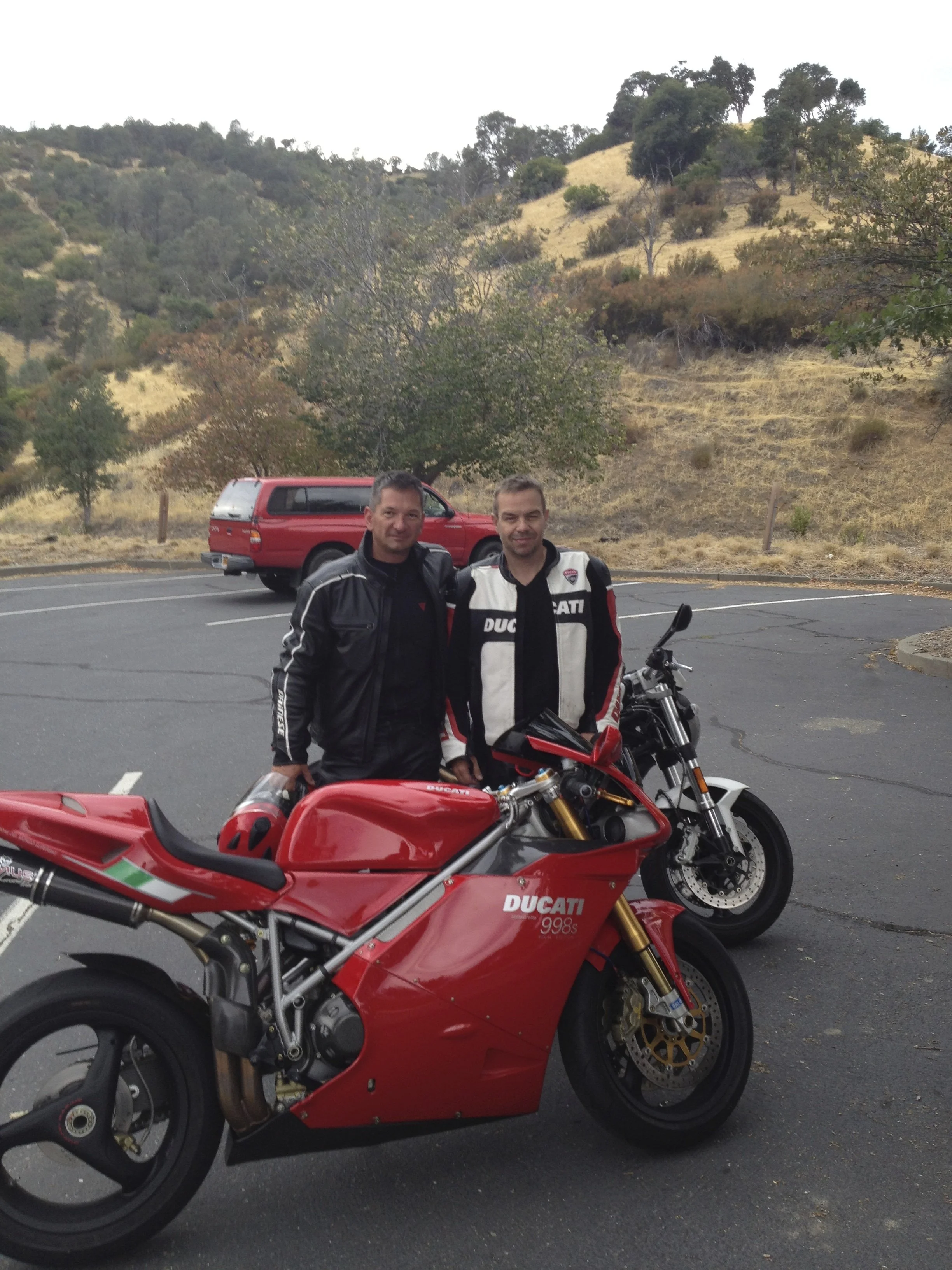
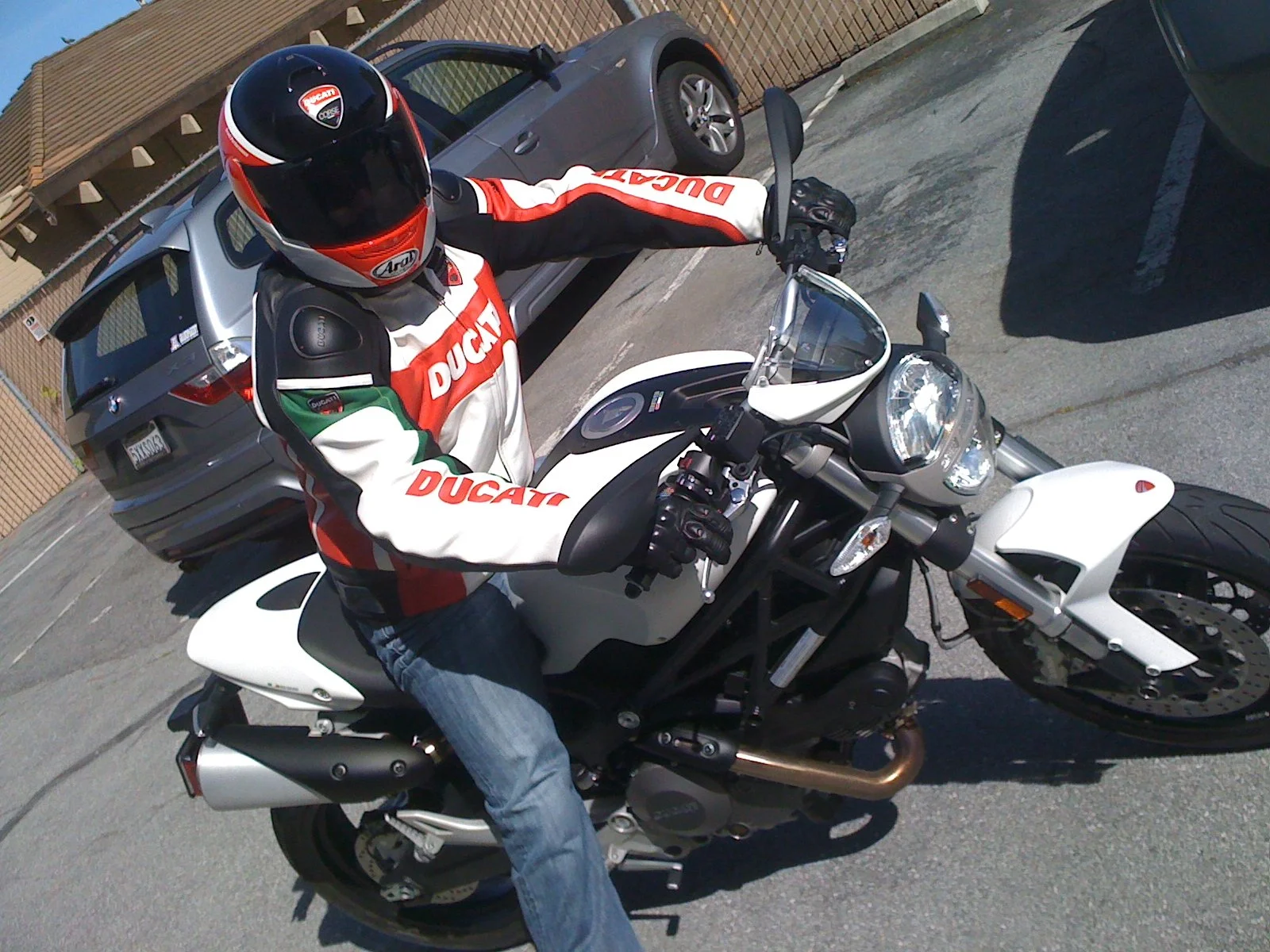
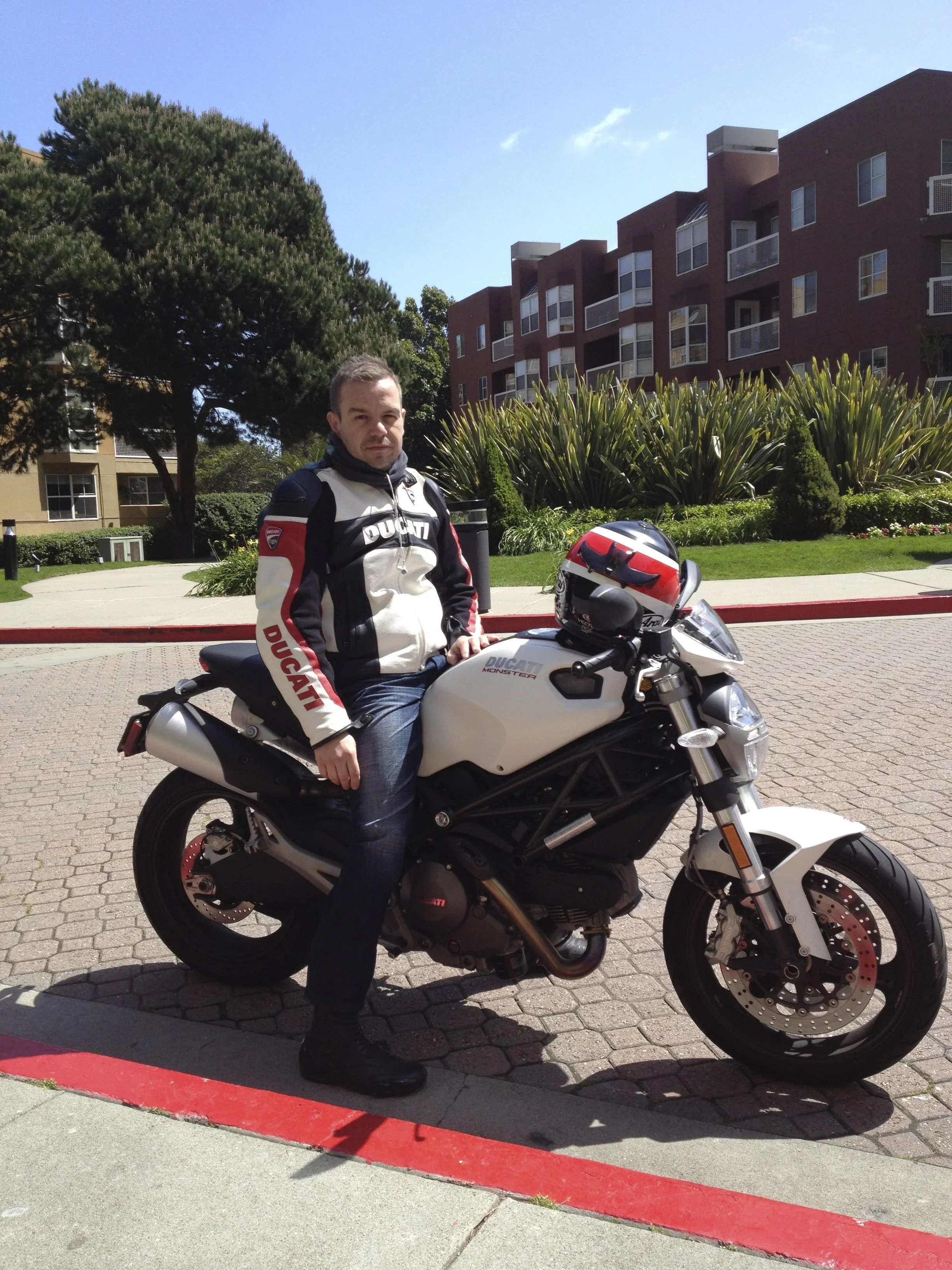
I rode from 2008 to 2014. Six years. I stopped because of texting. Not my texting. Everyone else's. The roads changed. Drivers stopped looking. Splitting lanes, which was the entire point, became a gamble I was no longer willing to take. The Ducati went the same way the parachute went. Not because I fell out of love with it. Because the conditions around it made it untenable. Fatherhood took the sky. Distraction took the road.
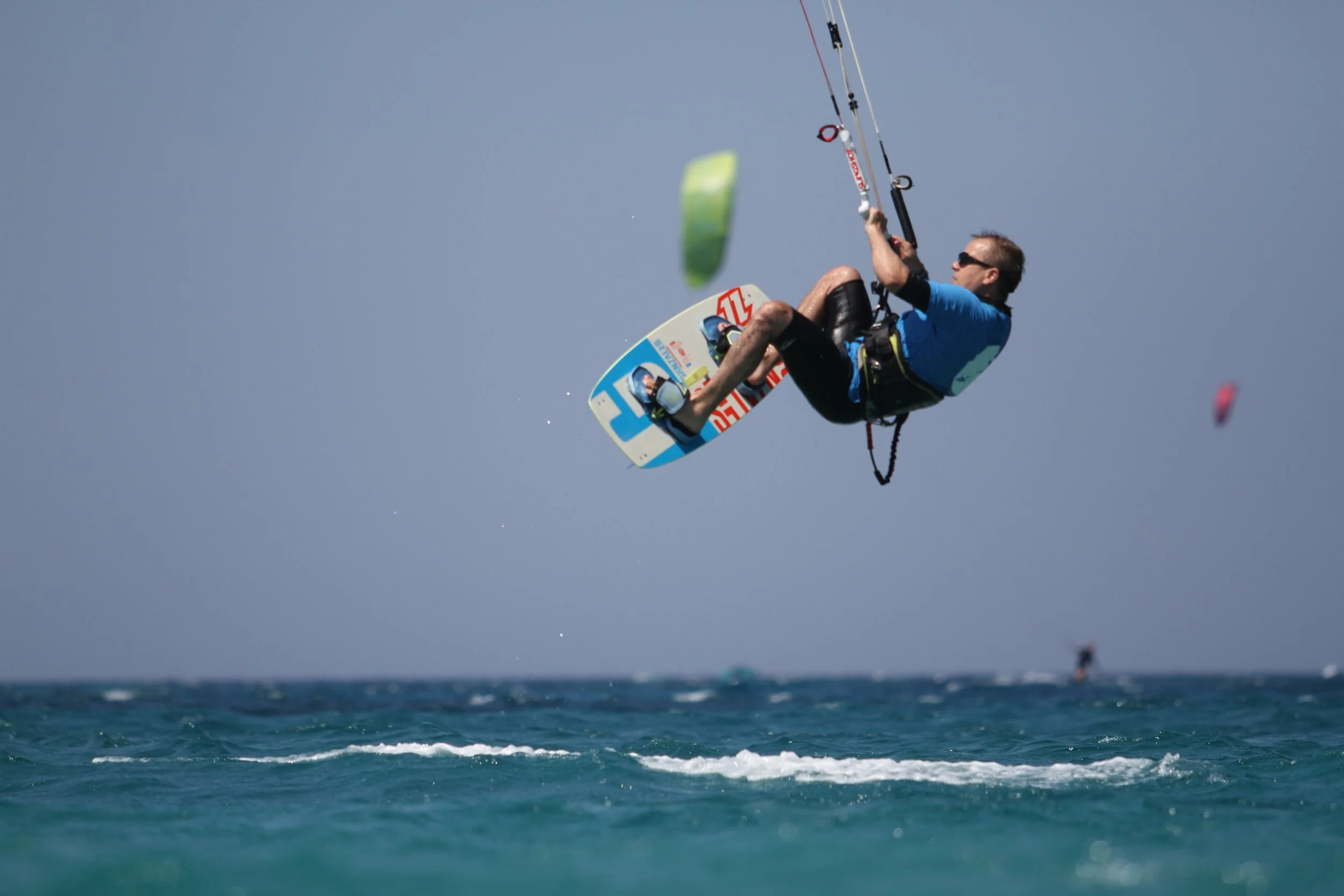
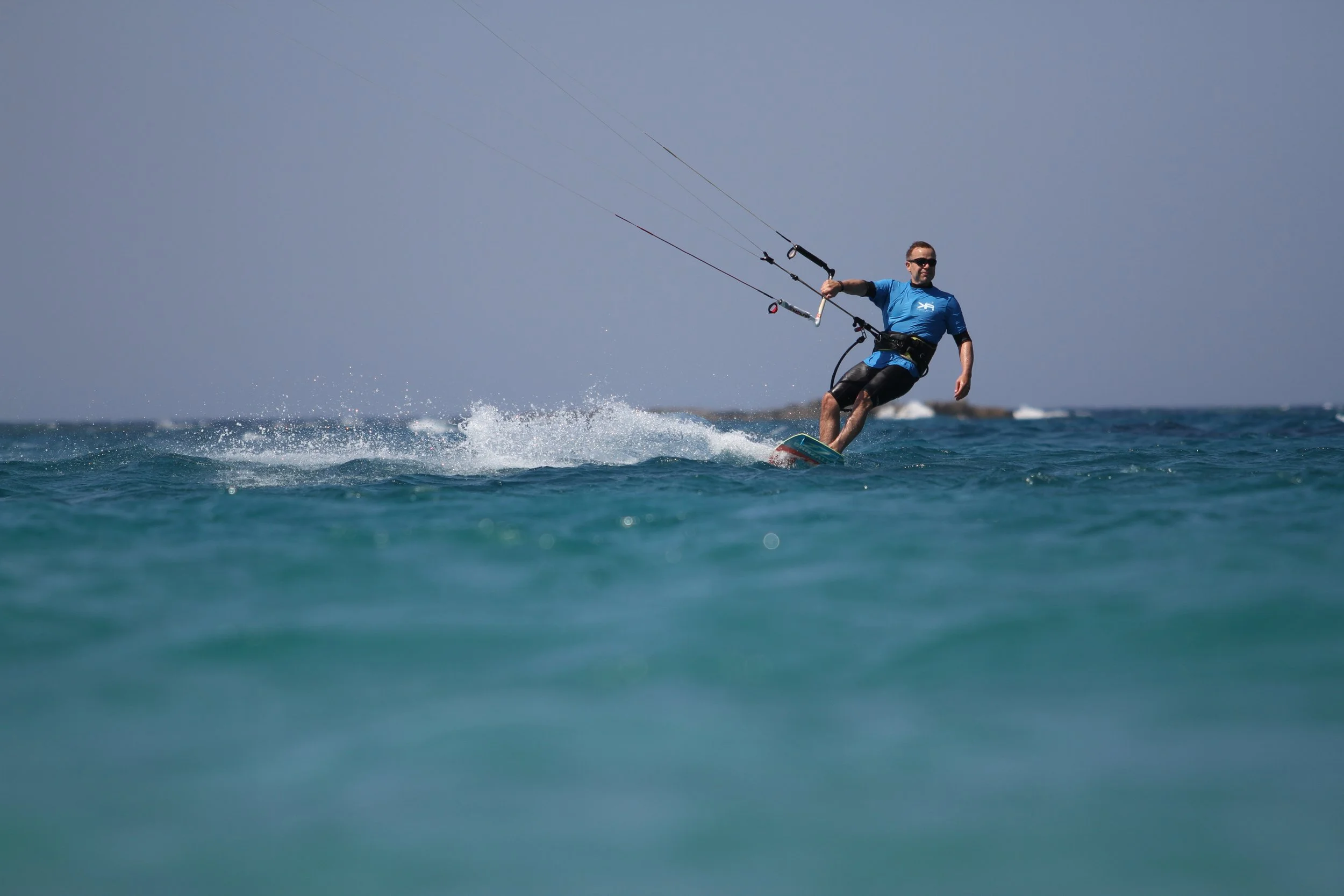
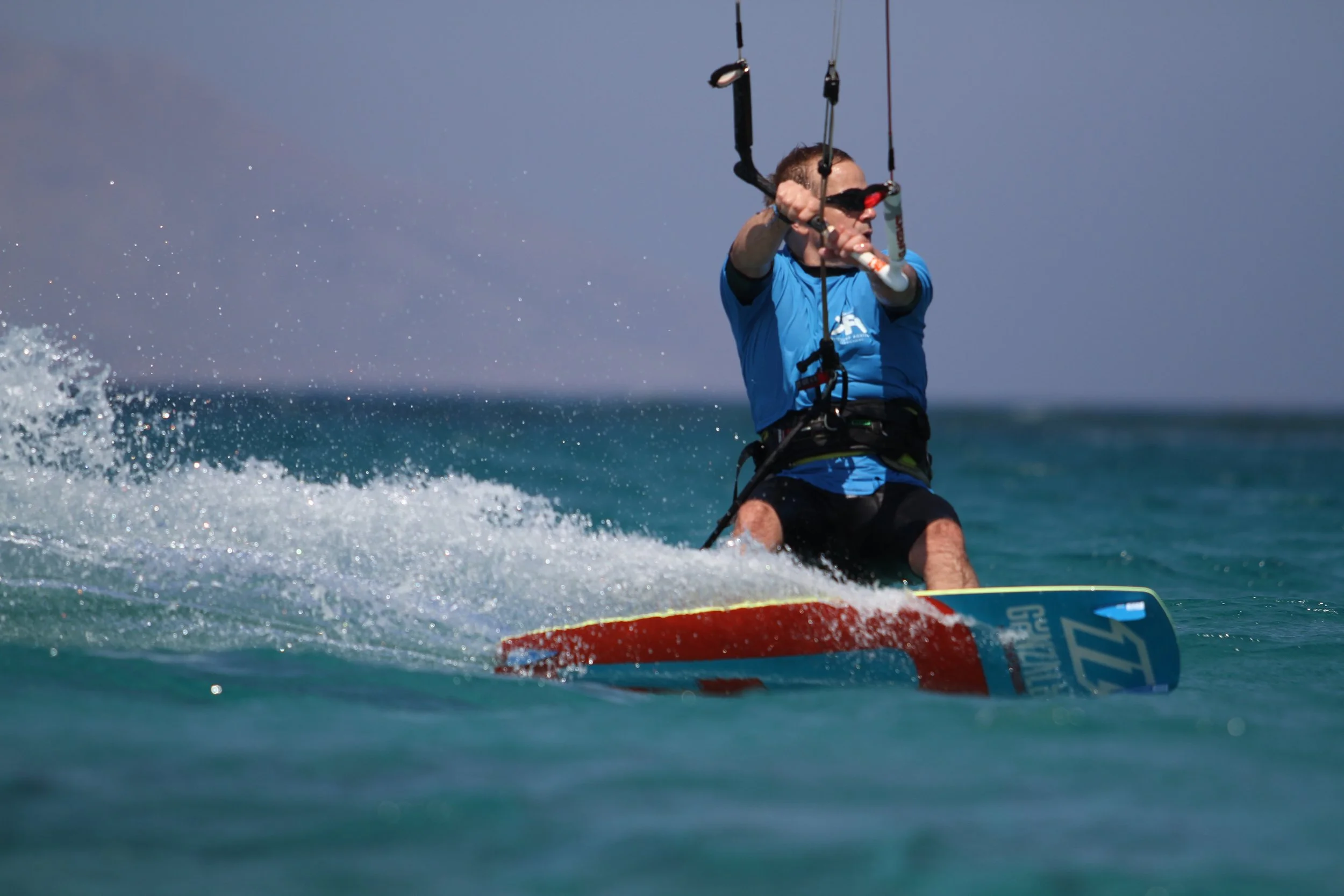
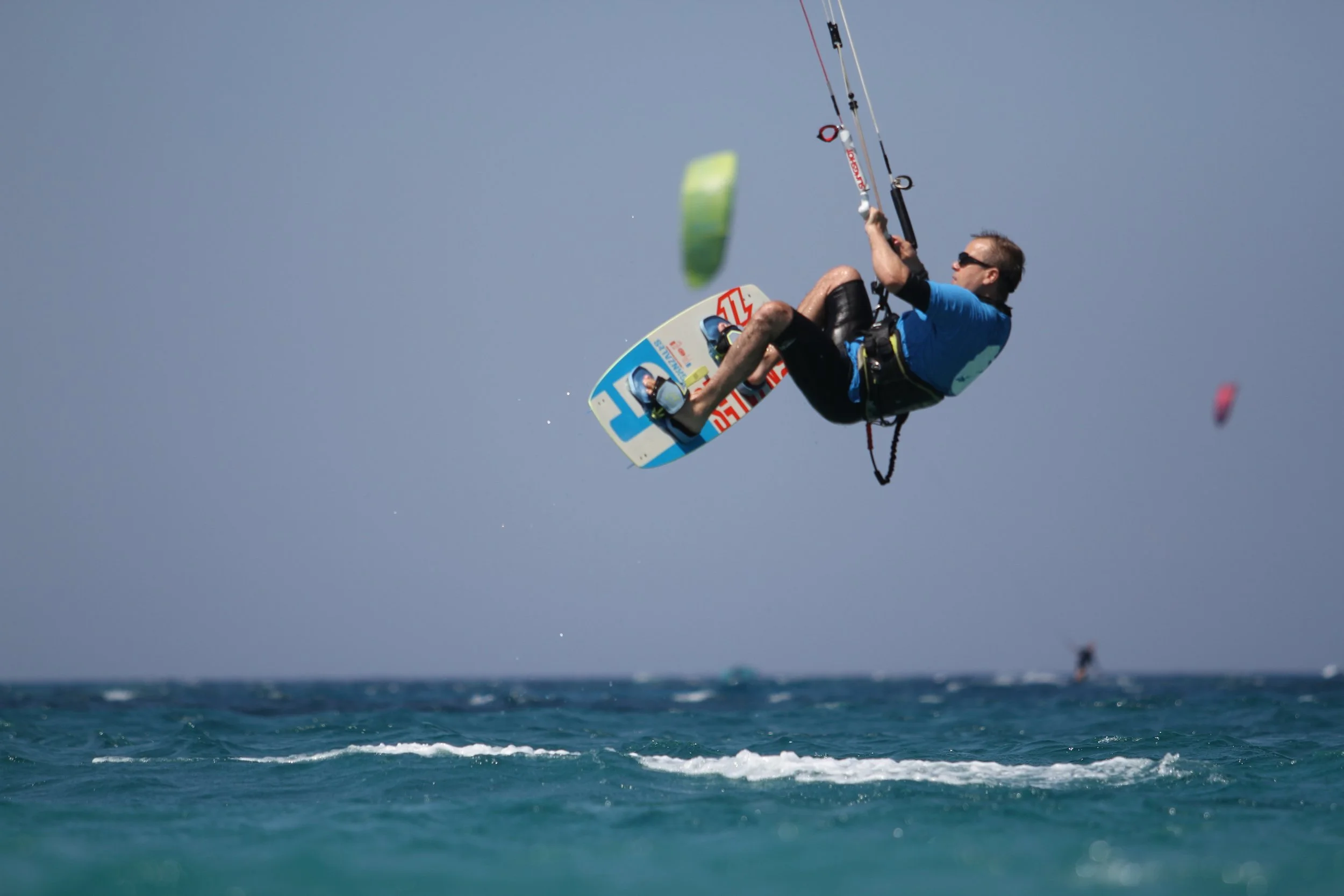
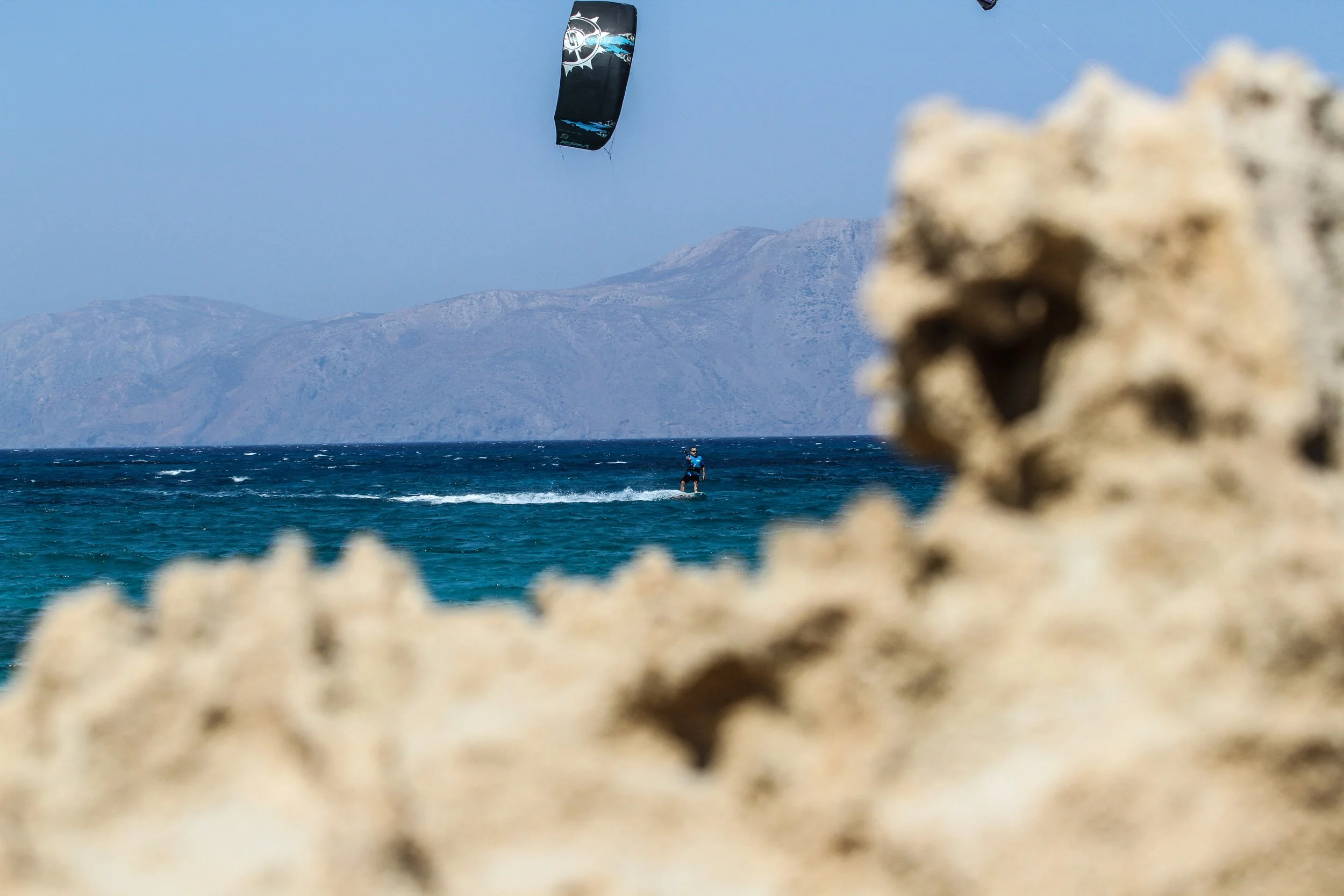
In between I went to Costa Rica and learned to kitesurf. 2012. A different kind of horsepower. The wind pulling you across the water, the board underneath you, the kite above you making decisions about speed and direction that you think you are controlling until a gust reminds you otherwise. Like skydiving it opened a world. New friends. New perspectives. Christoph, an Austrian living abroad in Costa Rica, became a lifelong friend I have visited many times since. I kited in Honduras, in Greece, in the Bay Area. Another machine that demands presence. Another community built around something most people think is crazy. Another thing that carries you.
At fifty I got on a horse.
I had always respected them too much to try. Christopher Reeve fell off a horse and never walked again. That fact lived in my head for decades as a perfectly rational excuse to stay on the ground. But I had been painting horses for years by then. Franz Marc's horses. I had gone to Kochel am See in Bavaria, stood in the Franz Marc Museum, studied the blue and yellow and red animals he painted before the war took him at thirty-six. I painted five or six of his horses myself. The Tower of Blue Horses. The large blue ones with their necks bent into shapes that are not anatomically real but are emotionally exact. I learned the way a horse holds its weight, the line of the shoulder, the mass of the haunch, the way the head drops when the animal is calm. I learned all of it with a brush before I ever touched one with my hand.
The first time I sat on Sage, a horse at a stable run by Andrea who is also Austrian, I understood something I had not expected. The power underneath me was not mechanical. It was alive. It breathed. It made its own decisions. The Ducati went where I told it. Sage went where he wanted and allowed me to suggest alternatives. That negotiation, between what you want and what the animal beneath you is willing to do, is a different kind of presence than skydiving or motorcycling. It is slower. Quieter. But it asks for the same thing. Trust.
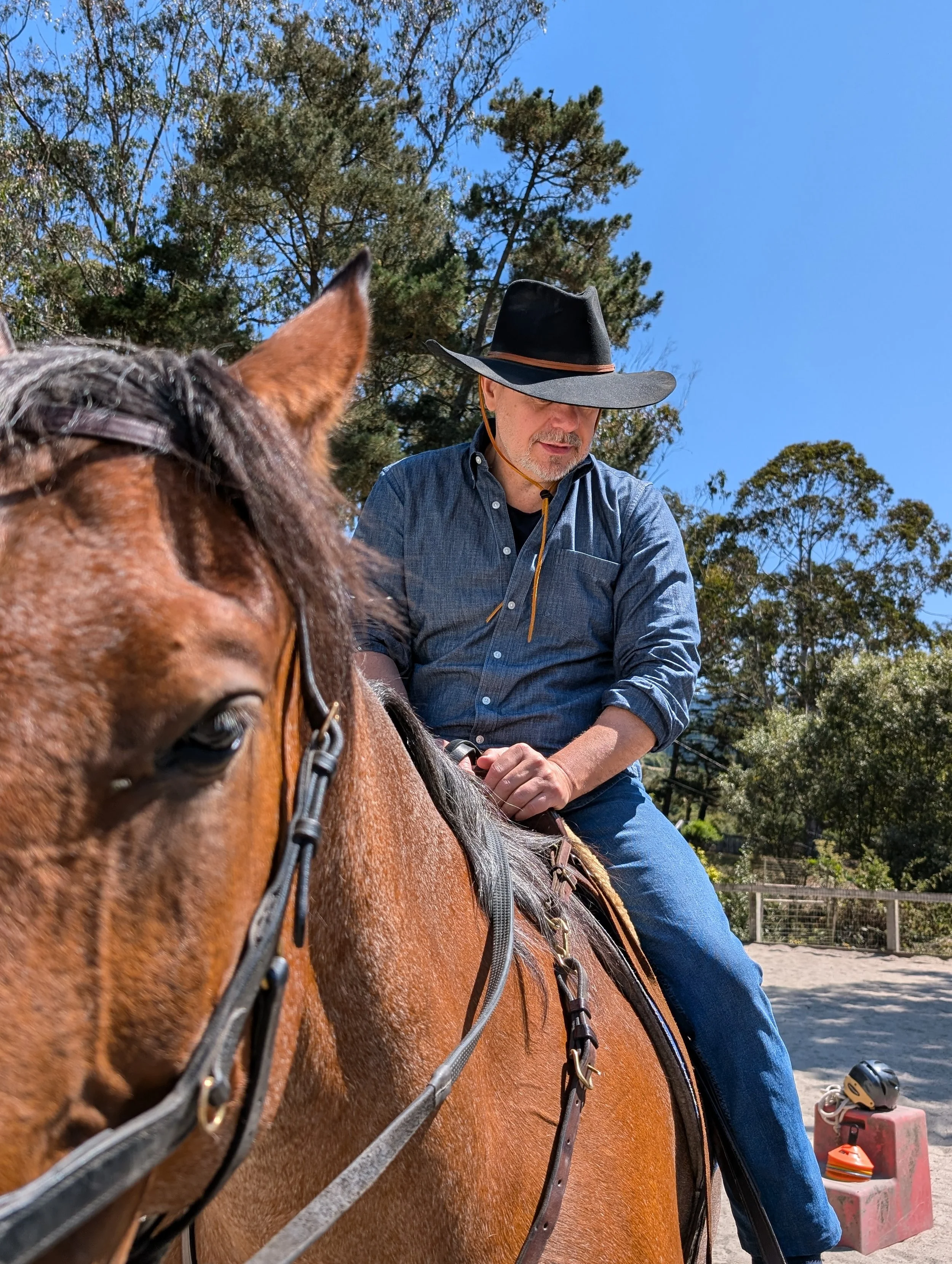
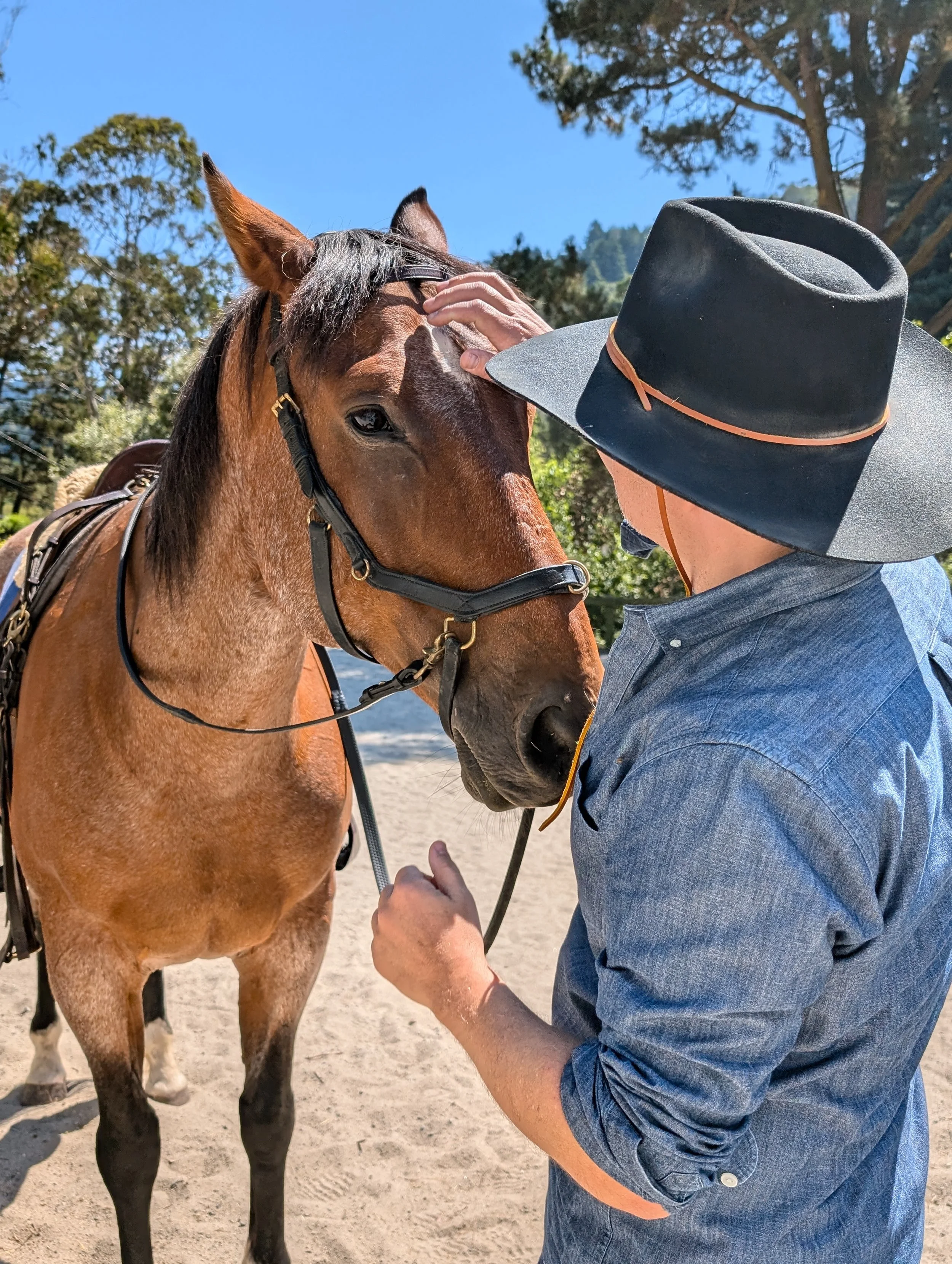
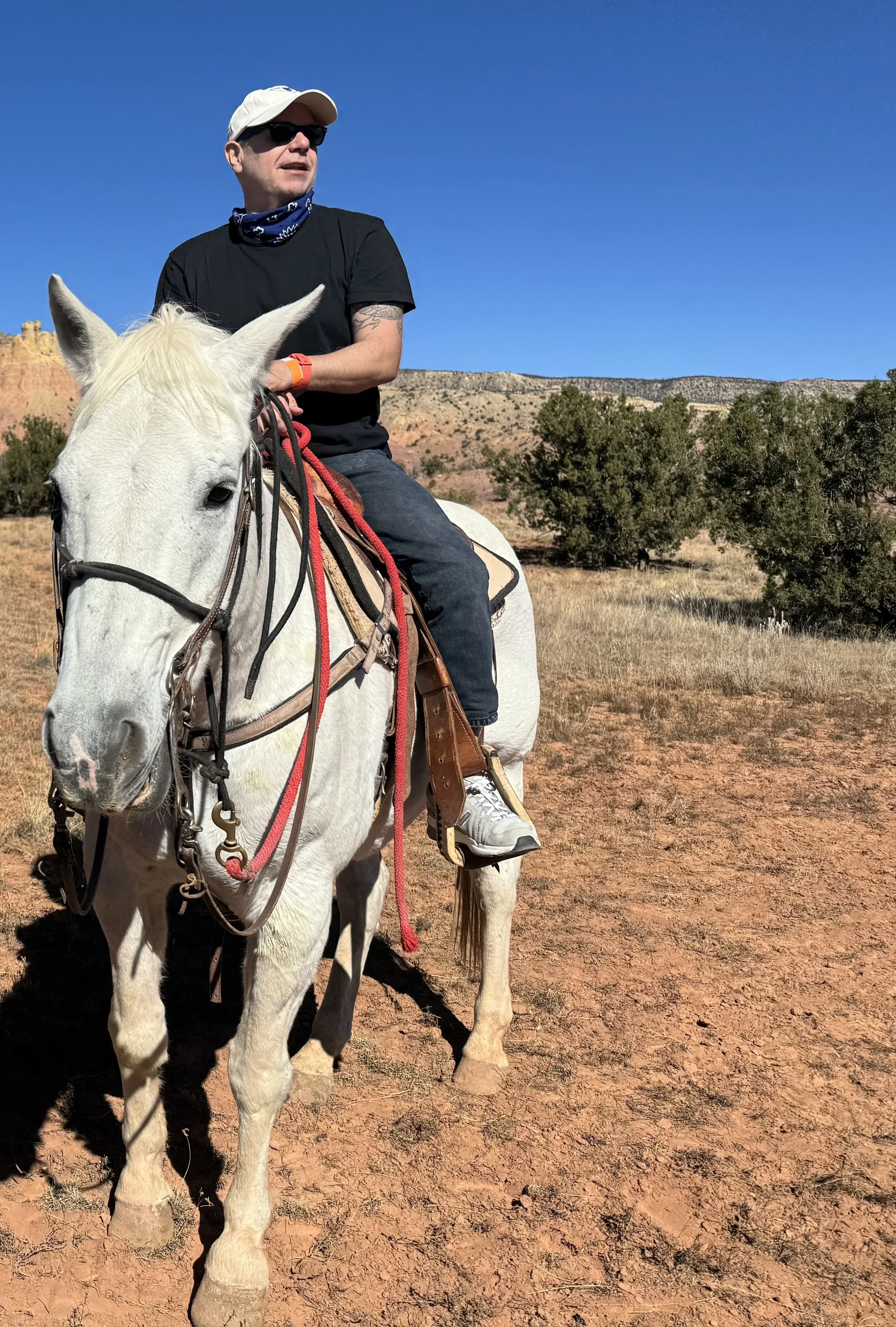
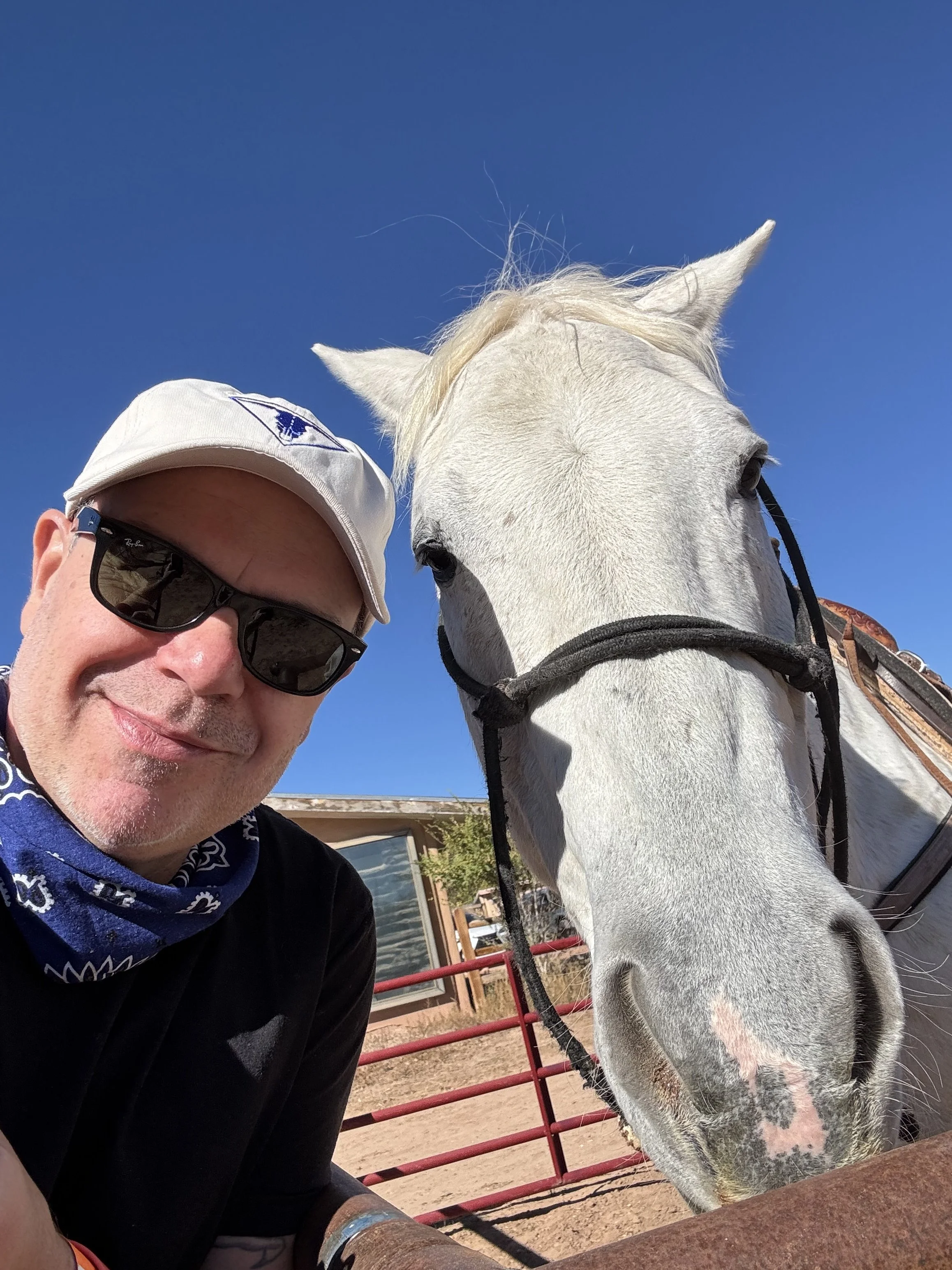
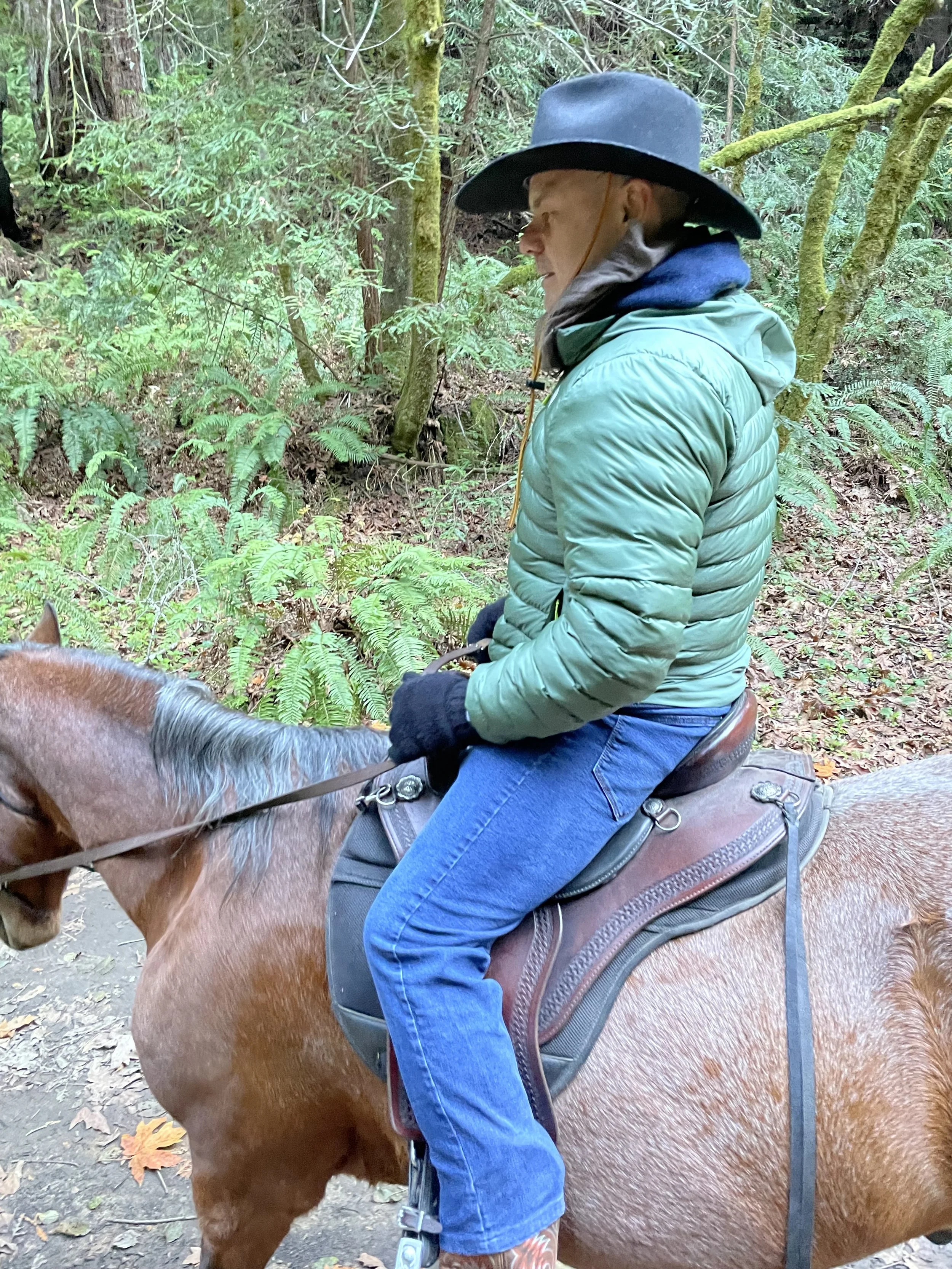
Sage and Big Guns
The best moment came when I graduated to riding out on a trail for the first time. Half Moon Bay. All that horsepower underneath me, the same word we use for engines but here it was literal, breathing, warm. It felt like the Ducati in a way I had not expected. The same sense of something powerful carrying you forward. But the world responded differently. People you pass on a trail wave and smile when you are on a horse in a way they never do when you are on a motorcycle or in a car. Something about a person on an animal disarms the stranger. You are moving slowly enough to be seen. You are vulnerable enough to be trusted. The horse does the work of introduction that you could never do on your own.
Last October I rode a horse named Big Guns at Ghost Ranch in New Mexico, through the landscape where Georgia O'Keeffe painted. I wrote about that trip in Entry Eight. The desert light. The bones and the sky and the colors that do not exist anywhere else. O'Keeffe's country on horseback. That was the moment I understood why she stayed.
I have been carried by four machines in my life. A parachute. A motorcycle. The wind. A horse. Each one demanded total presence. Each one I eventually stepped away from or stepped into for different reasons. The parachute because I became a father. The Ducati because the world around me became too distracted. The horse because at fifty I was ready to be scared again. Seek discomfort.
In eight weeks I will step onto a fifth. A wooden sailing vessel called the Rembrandt van Rijn, forty-nine meters long, headed for 80 degrees north. I will not control it. I will not steer it. I will stand on the deck and let it carry me to a place I have never been, through water I cannot predict, toward ice that is older than anything I have painted or jumped over or ridden through.
Every machine that has carried me taught me the same thing. The fear is not the obstacle. The fear is the beginning. The moment you step out of the plane. The moment you lean the Ducati into the curve. The moment the wind takes you places. The moment the horse starts moving and your body has to decide whether to fight or follow. The moment the ship leaves the dock and the only direction is north.
You follow. You always follow. That is what the fear is for.
“Angst macht den Wolf größer, als er ist. (Fear makes the wolf look bigger)”