Entry 036: Day Zero, The Bear on the Belt
Four in the morning in Copenhagen. The bags were already gone. You can check luggage the night before at that airport, so I had, and by the time I reached security the frame was somewhere under the building on a belt I could not see. A wooden frame with heating coils soldered into the back and ten small fans. On a scanner it looks like a bomb. Nobody stopped it. Nobody asked. A year of imagining that conversation and it never came.
Two days before, in Svendborg, I had plugged it in. Stella Maris, a room with a view I could have looked at all afternoon, and I sat on the bed and pressed the button and watched the bear begin to go.
It did not go all the way.
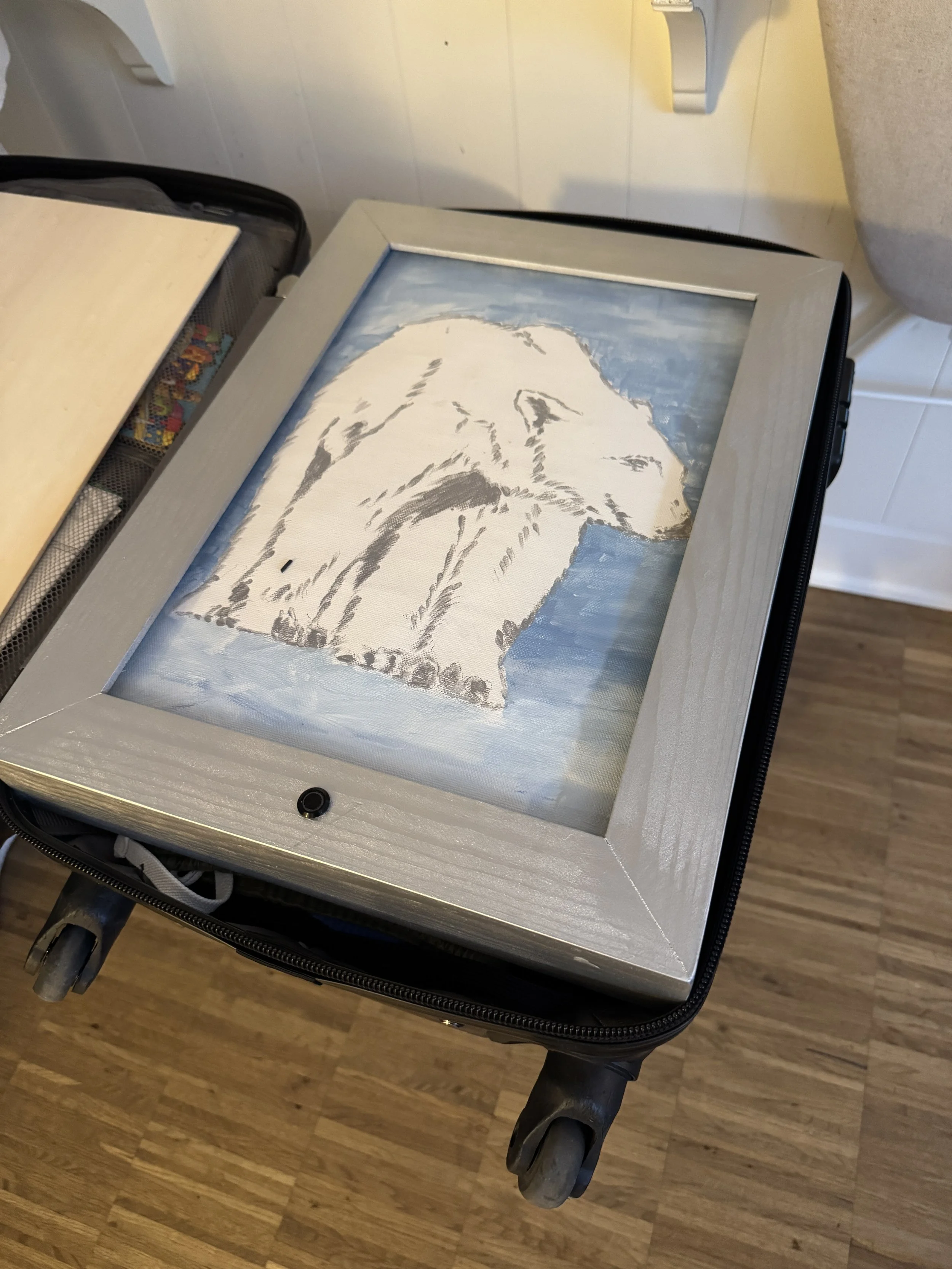
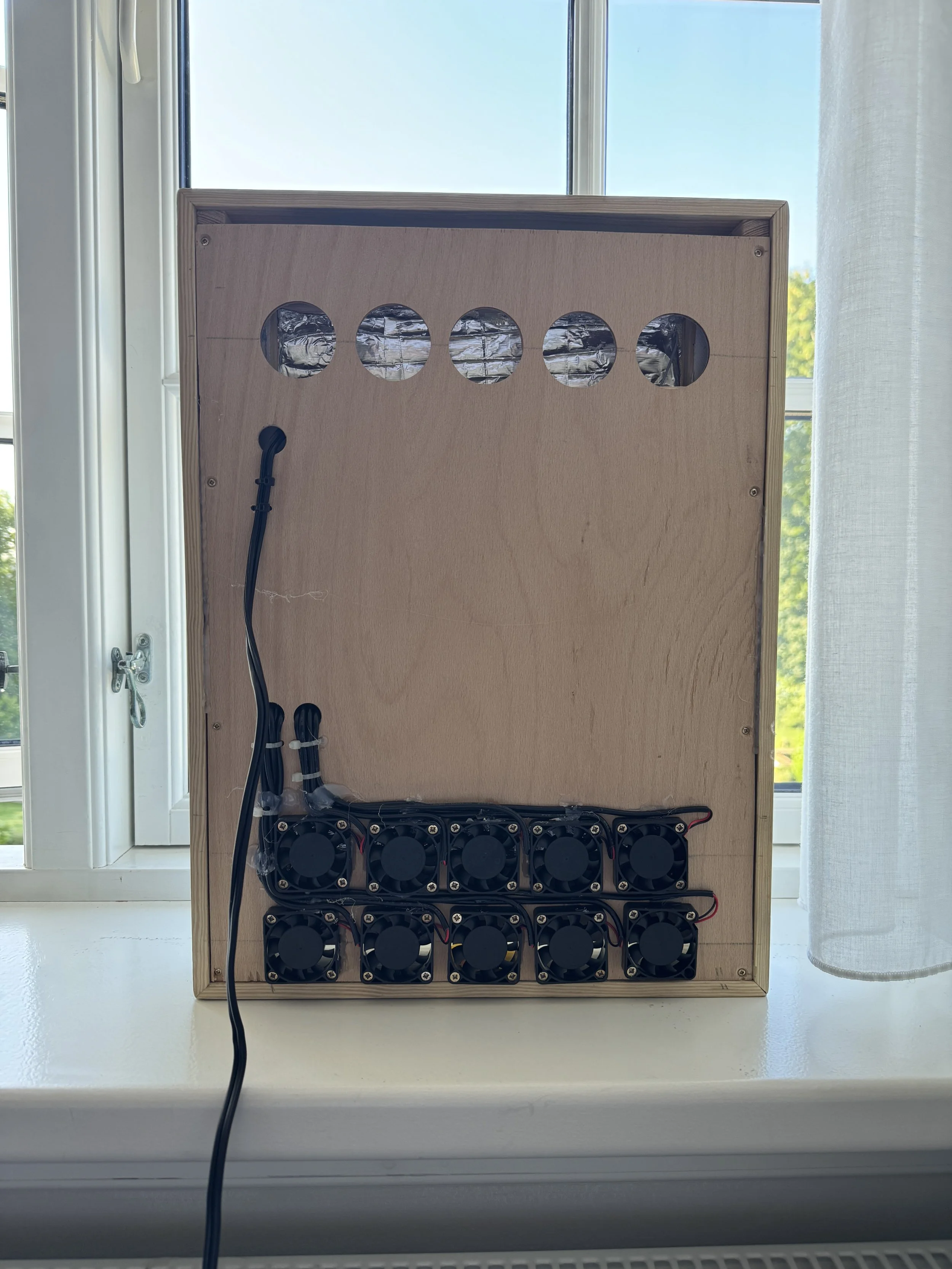
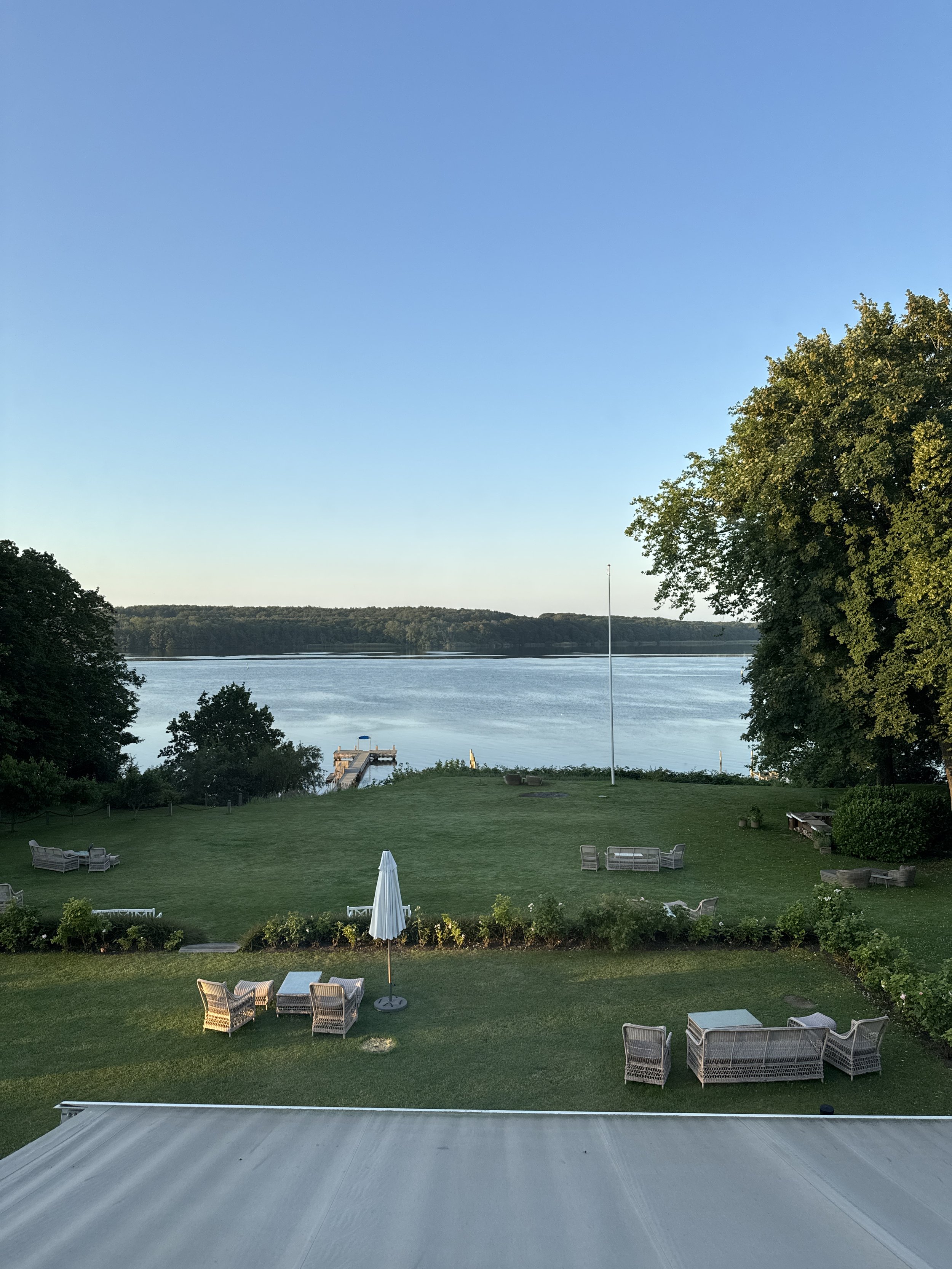
In Vienna, it had disappeared completely. Here it stopped somewhere short of it. I looked at the window and thought about the draft coming off the water and decided that was probably it. I packed the frame and went to bed.
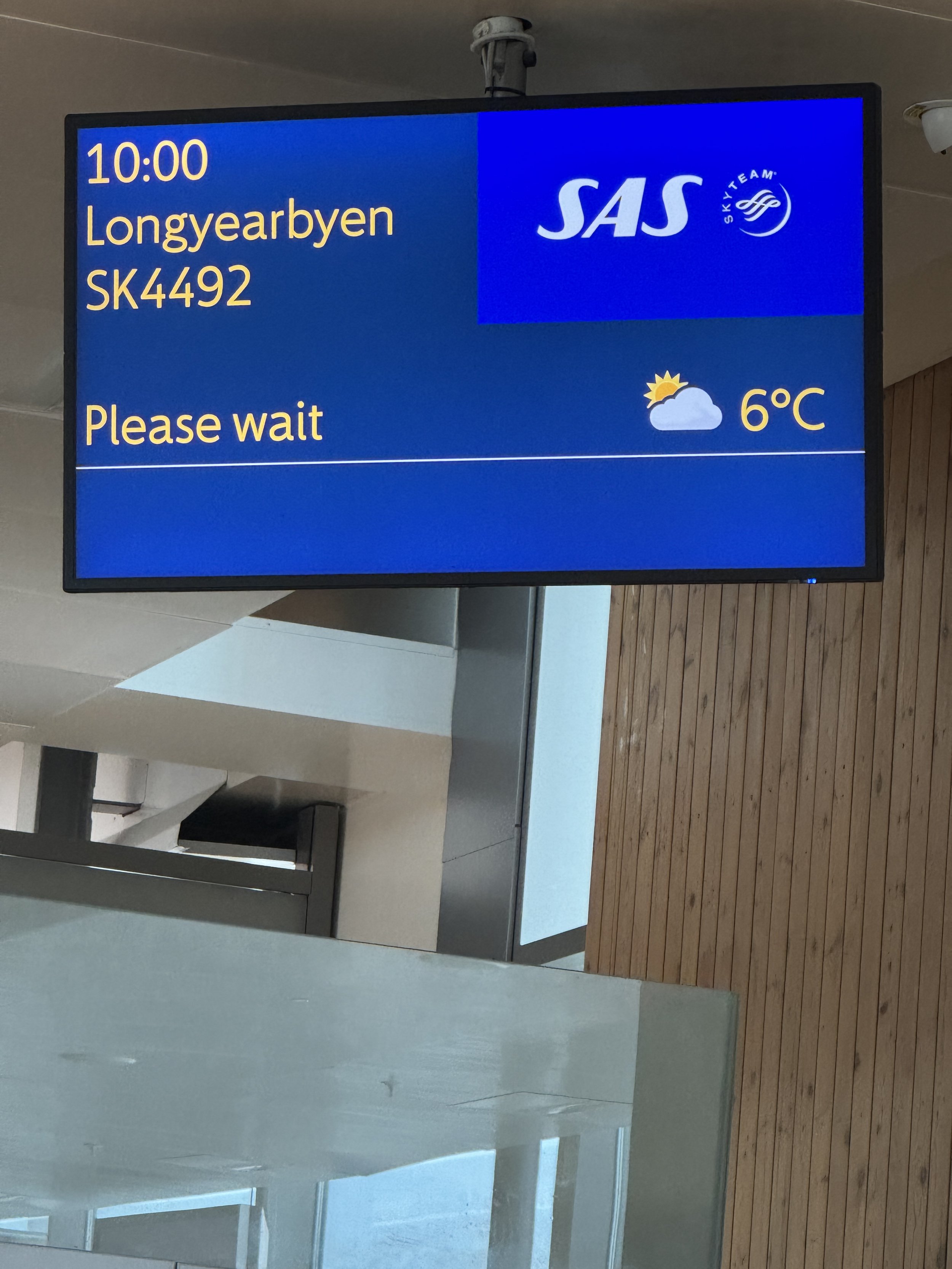
Copenhagen to Oslo is an hour. Then ninety minutes of sitting with coffee. Then SK4492, ten o'clock, Longyearbyen. The board in Oslo carried the weather at the far end. Six degrees. That number sat there in the middle of July like a message from another country.
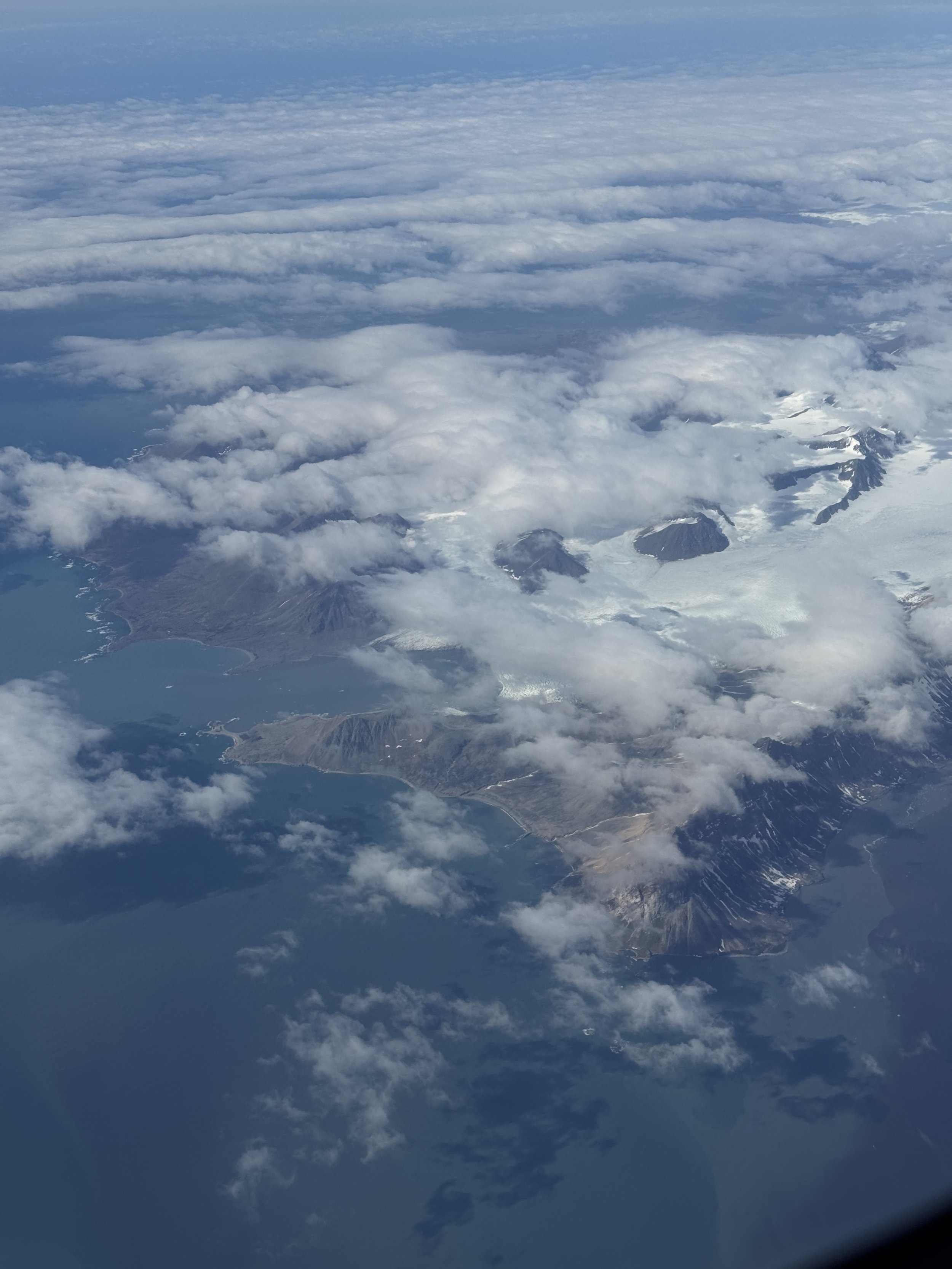
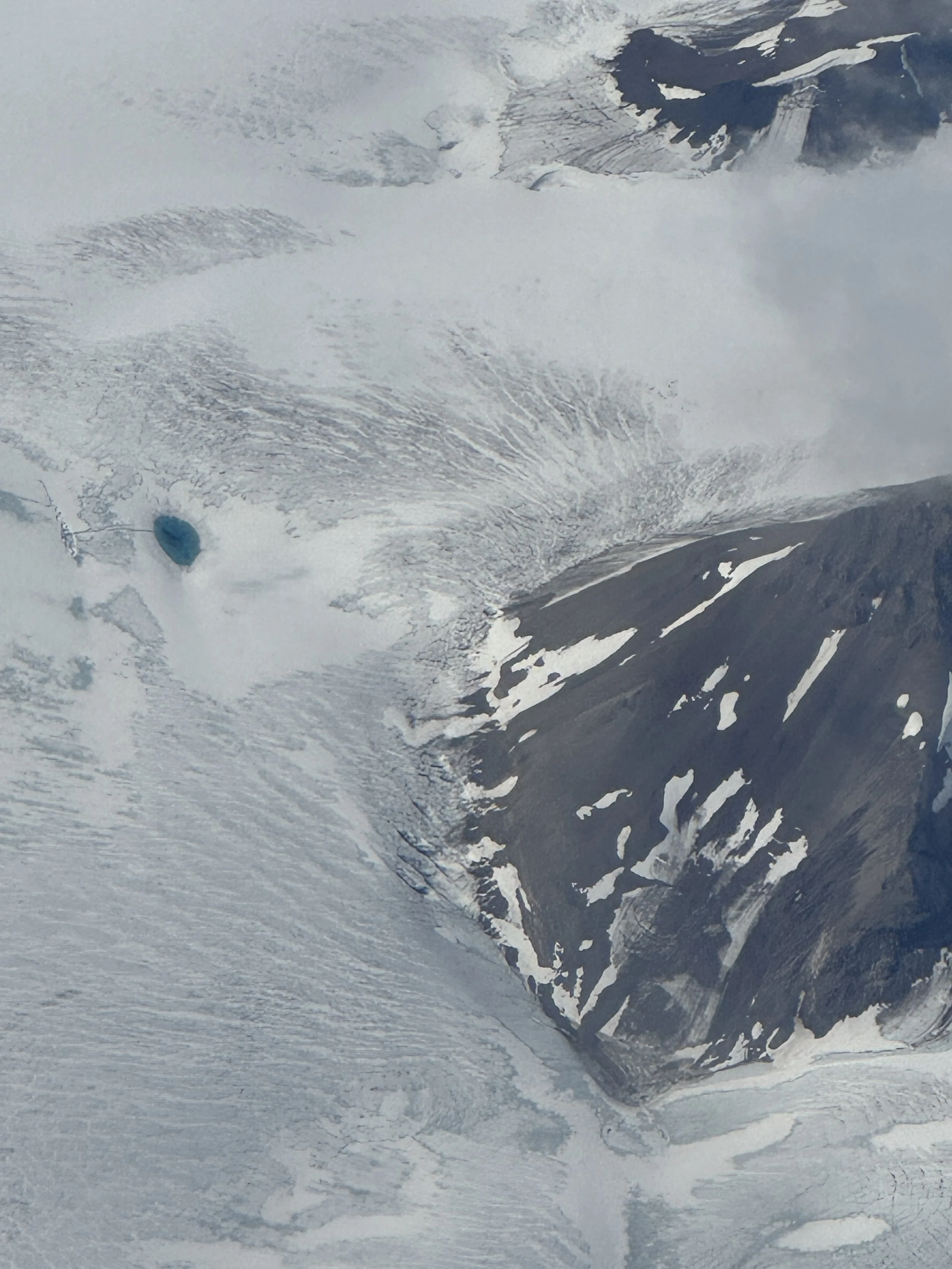
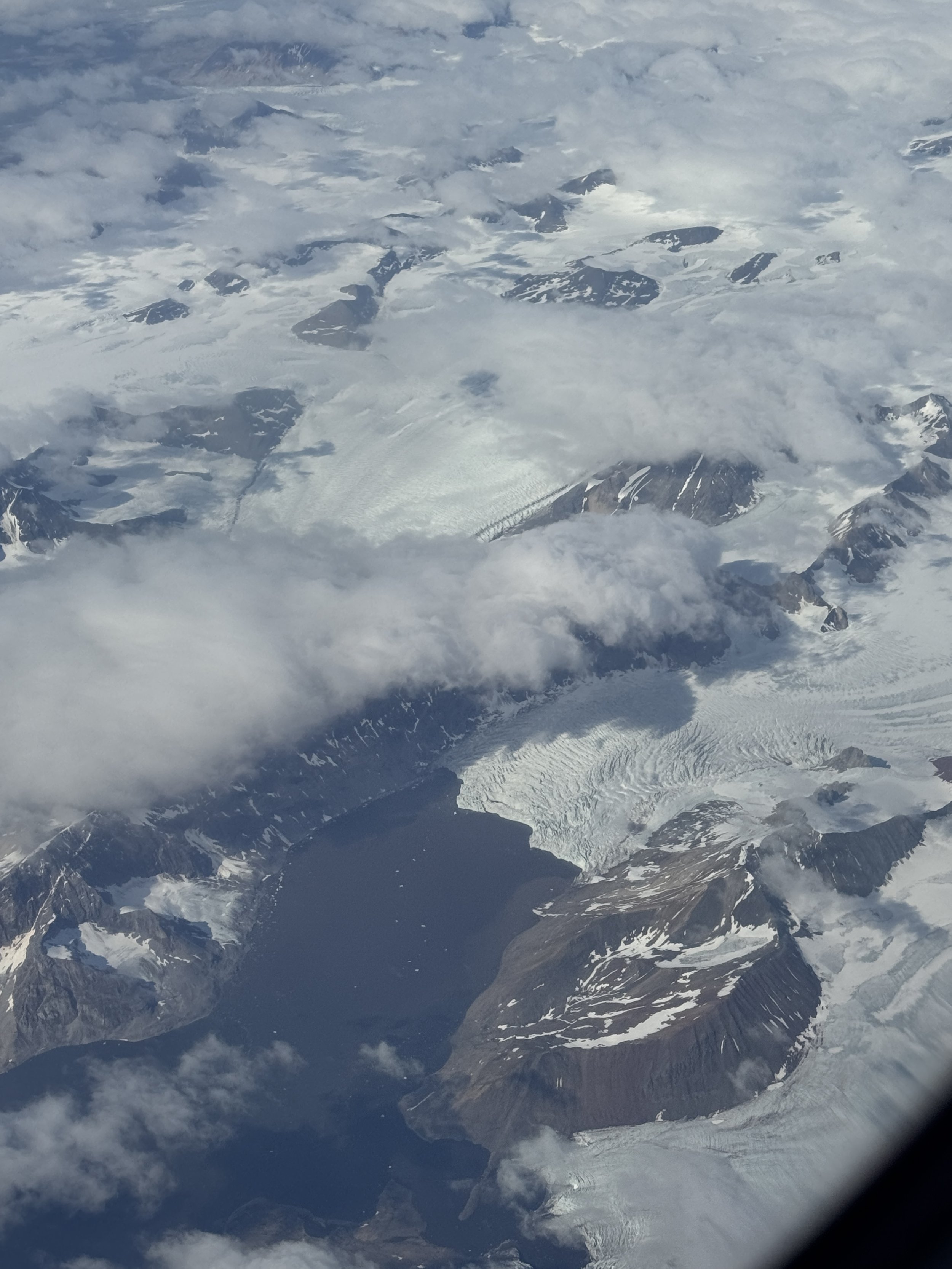
The plane was full. Completely full, every seat, on a flight to a town at seventy-eight degrees north. I had pictured something emptier. It is the same feeling I had in Iceland ten years ago, the moment you understand that the remote place you have been imagining has been on other people's lists too. An hour out, the cloud broke. Drones need a permit up there and almost nobody has one. We had been told not to bring any. So the only footage I will ever have of Svalbard from the air is what I shot through the window with the lens against the plastic. Coastline first. Then more coastline. Then the glaciers. They were the first I had ever seen from above, white rivers running down between brown ridges and out into black water, ice scattered loose in front of them where the fronts had given way. On one of them a small pool of meltwater sat in the middle of all that white, and it was the blue that people assume has been adjusted afterwards. I filmed until we were over land. I could not put the camera down.
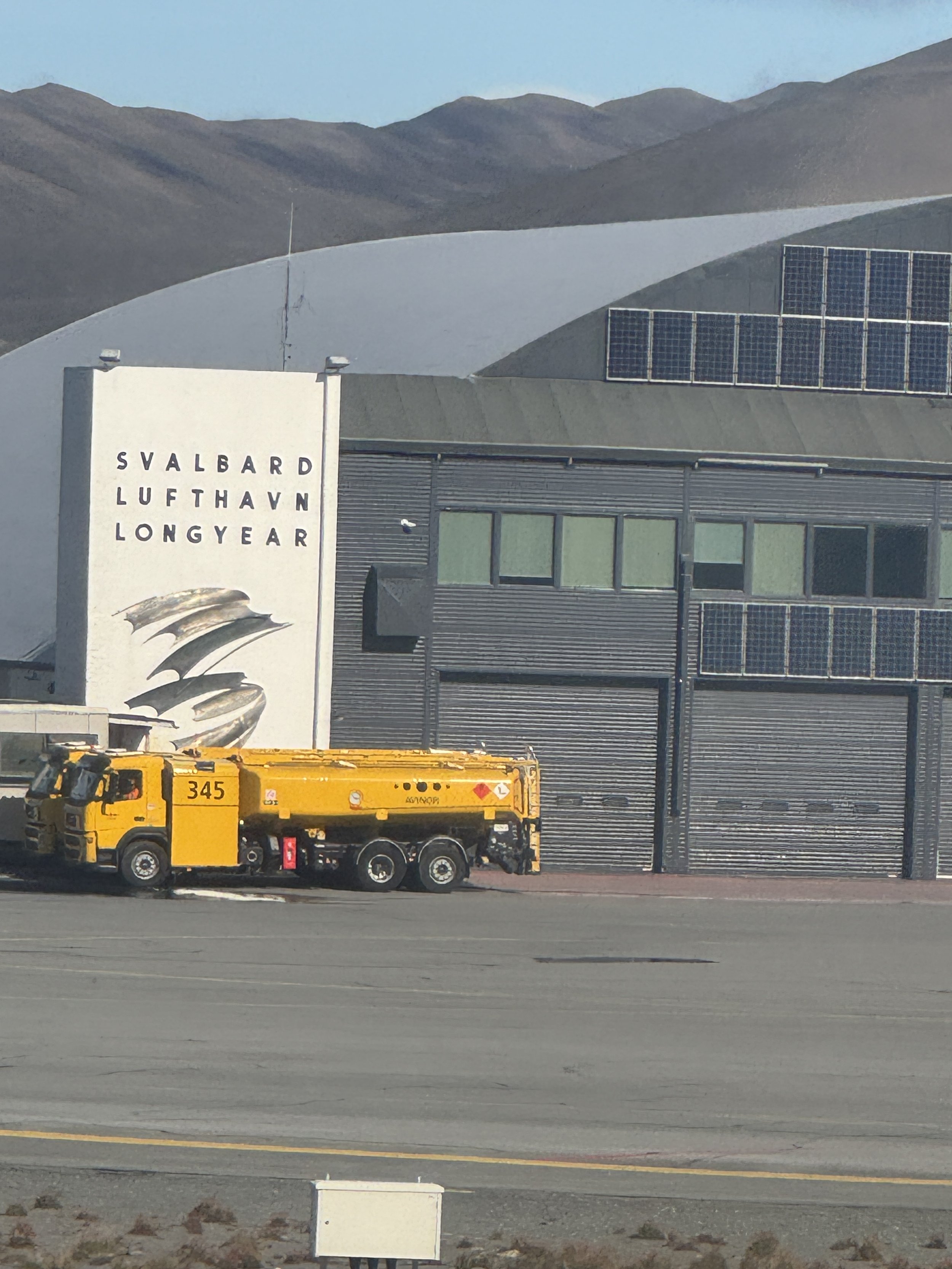
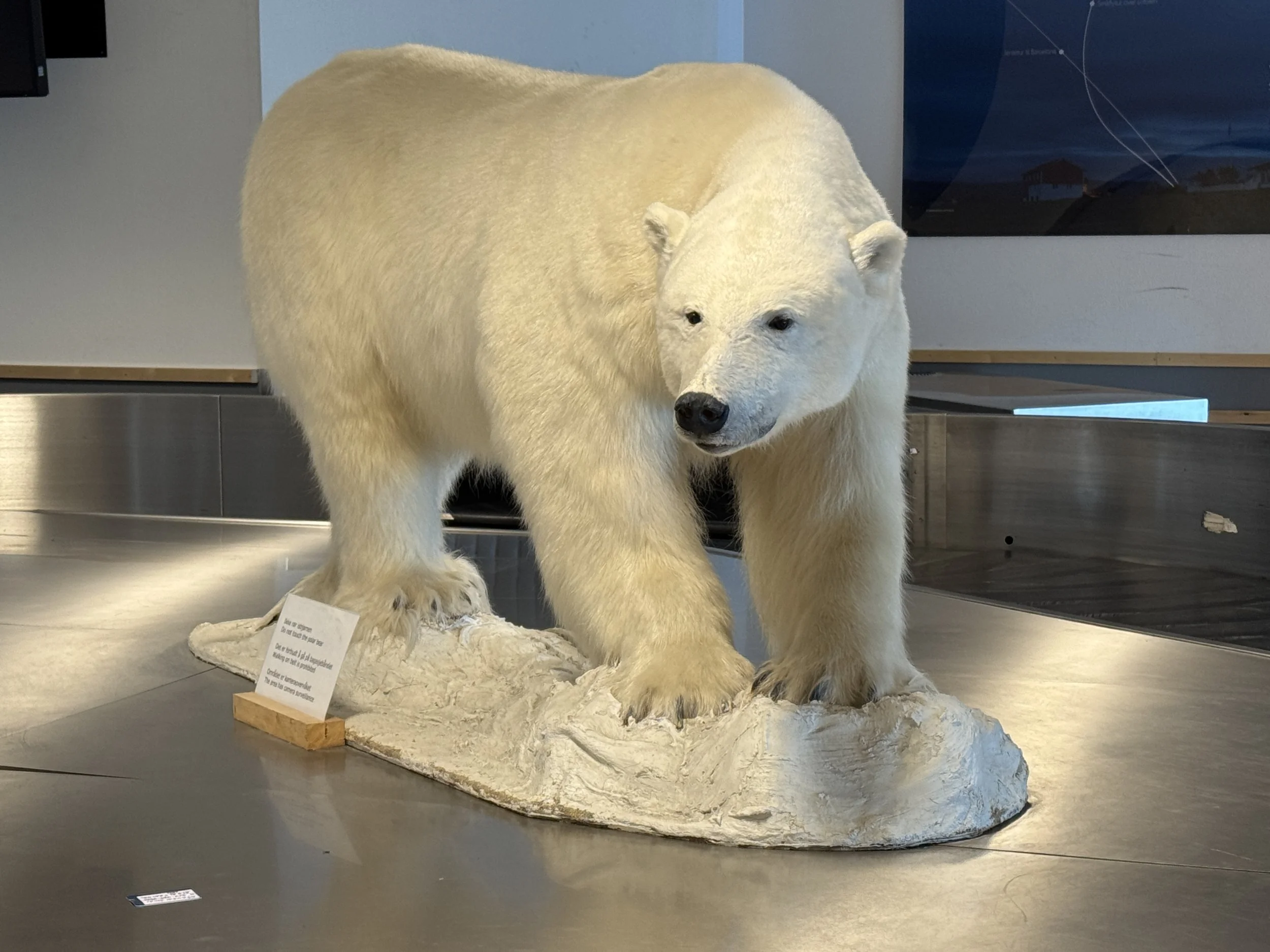
The airport has one baggage carousel. Standing on it, on a plinth of white plaster, is a polar bear. Not a photograph. A bear, mid-stride, going nowhere on the same belt that brings your luggage. It is the first thing Svalbard shows you. My bag came around and the frame was intact. Then I saw Sarah's smile from across the hall, over a small sign that said Arctic Circle, and everything I had been writing toward for a year turned into a person standing in a room.
We waited for two more. Hattie and Lingh-Lin. Karen turned out to have been on the same flight the whole time, which none of us had known. Four of us, one guide, a van.
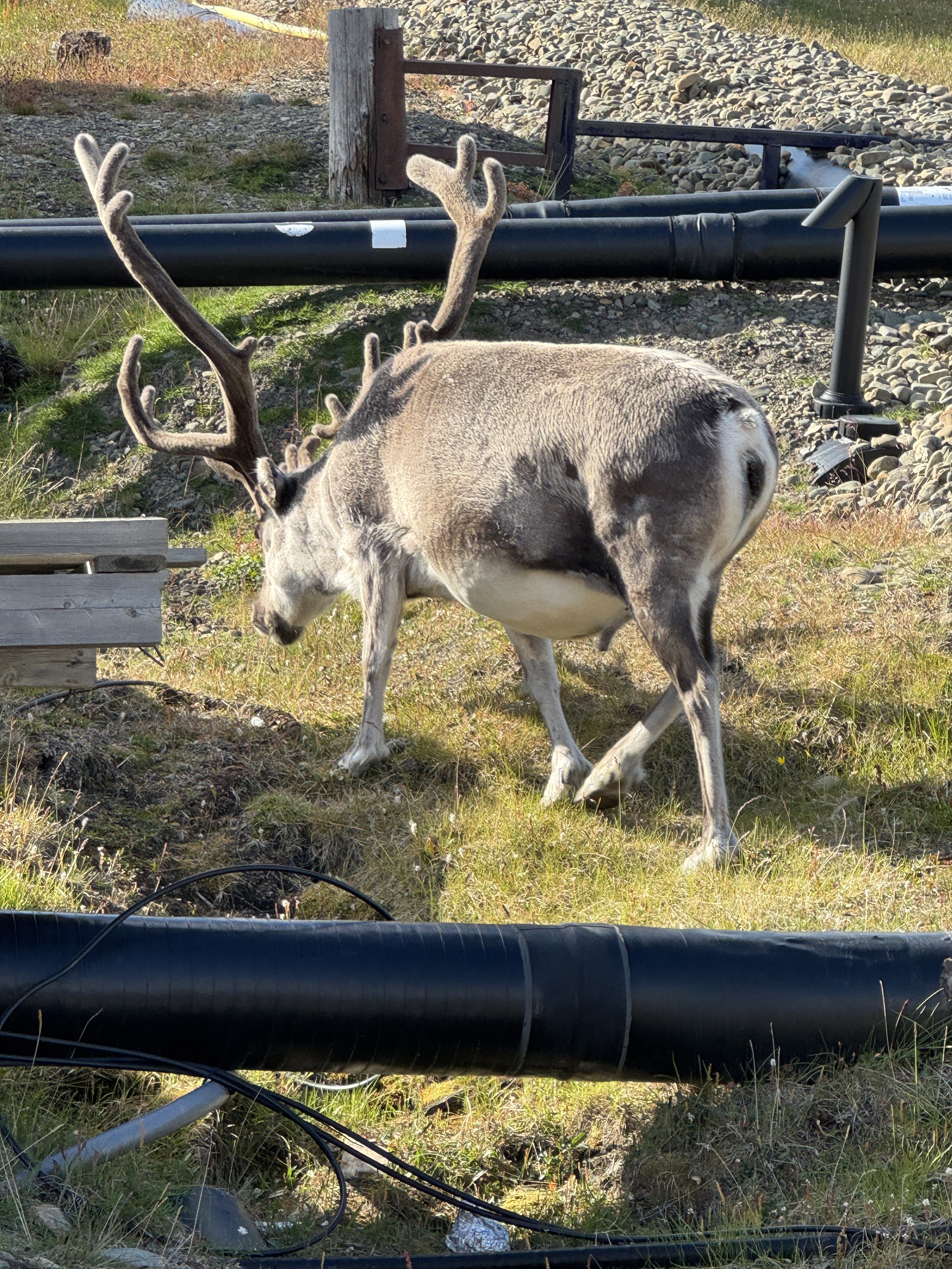
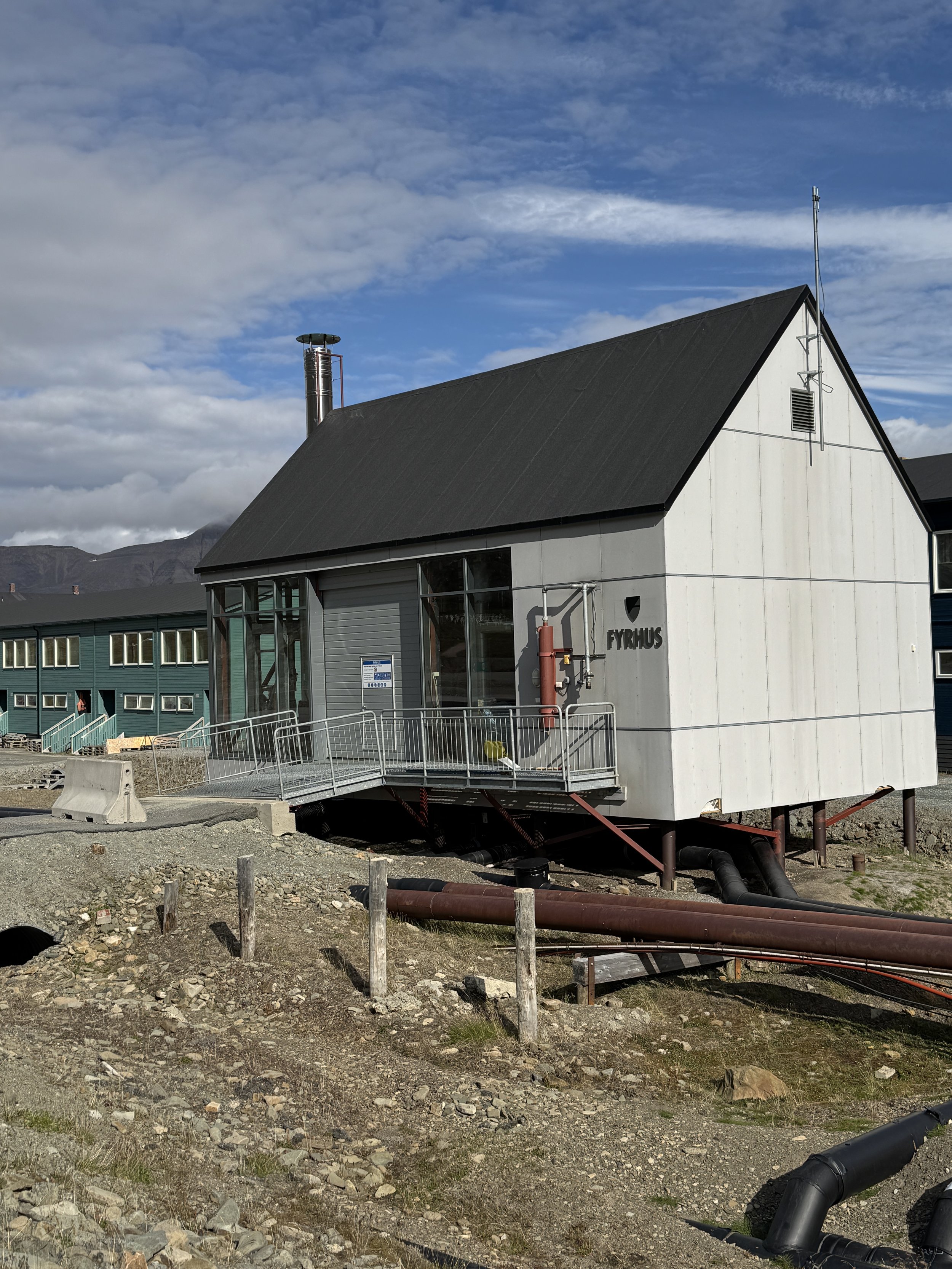
On the road in there was a reindeer. She saw it before we did, our driver, and she pulled over and let us out. She did not have to do that. We stood on the gravel and photographed an animal grazing between two black pipelines with cables coiled on the ground beside it, and I thought I was seeing something rare. Reindeer turned up in town almost every day after that. It never stopped being good. The pipes run above ground because the ground is frozen. Permafrost freezes and thaws and pushes back up whatever you bury in it, so the water and the heat travel overhead, on stilts, through the middle of everything. A town wearing its plumbing on the outside.
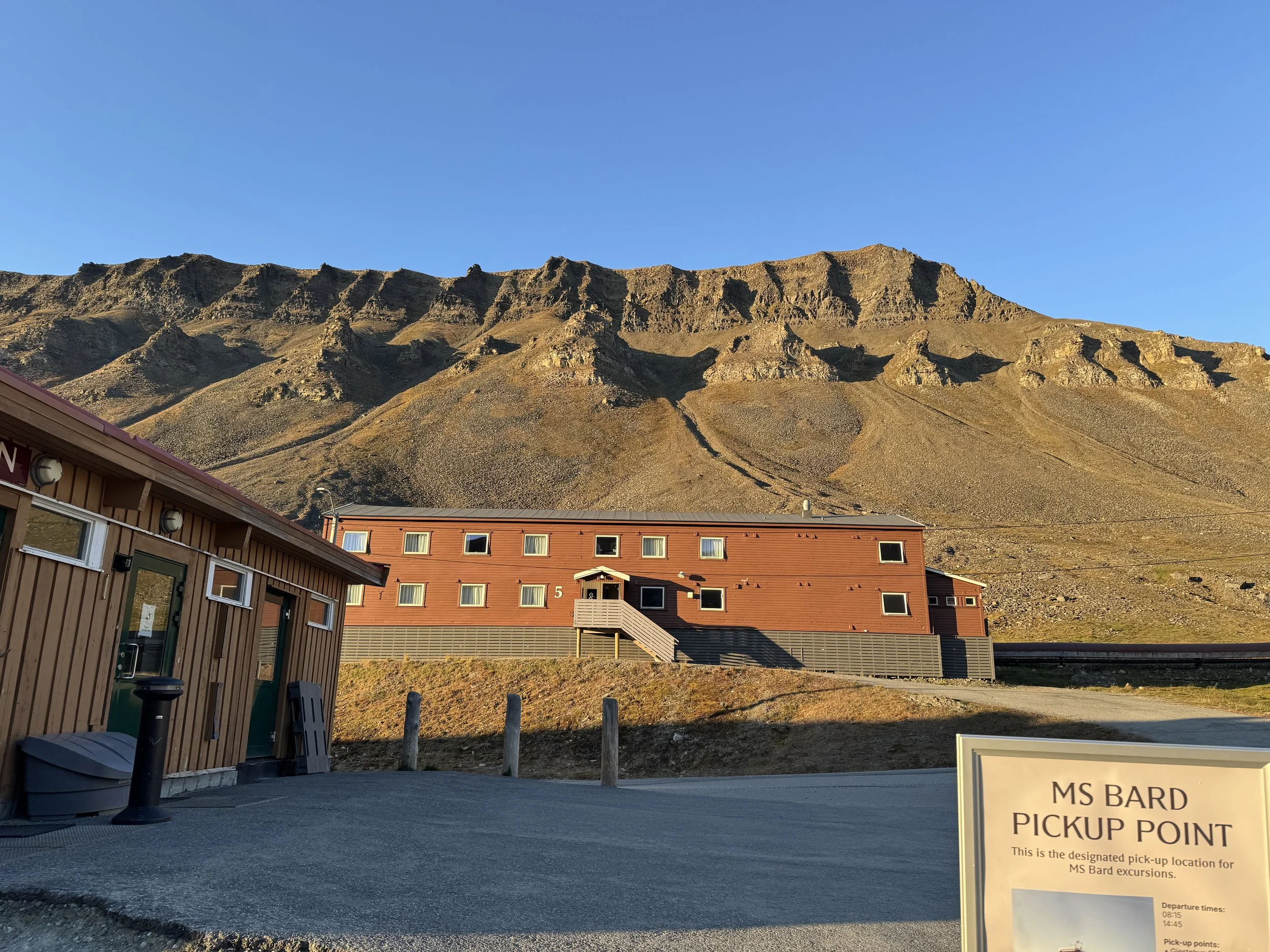
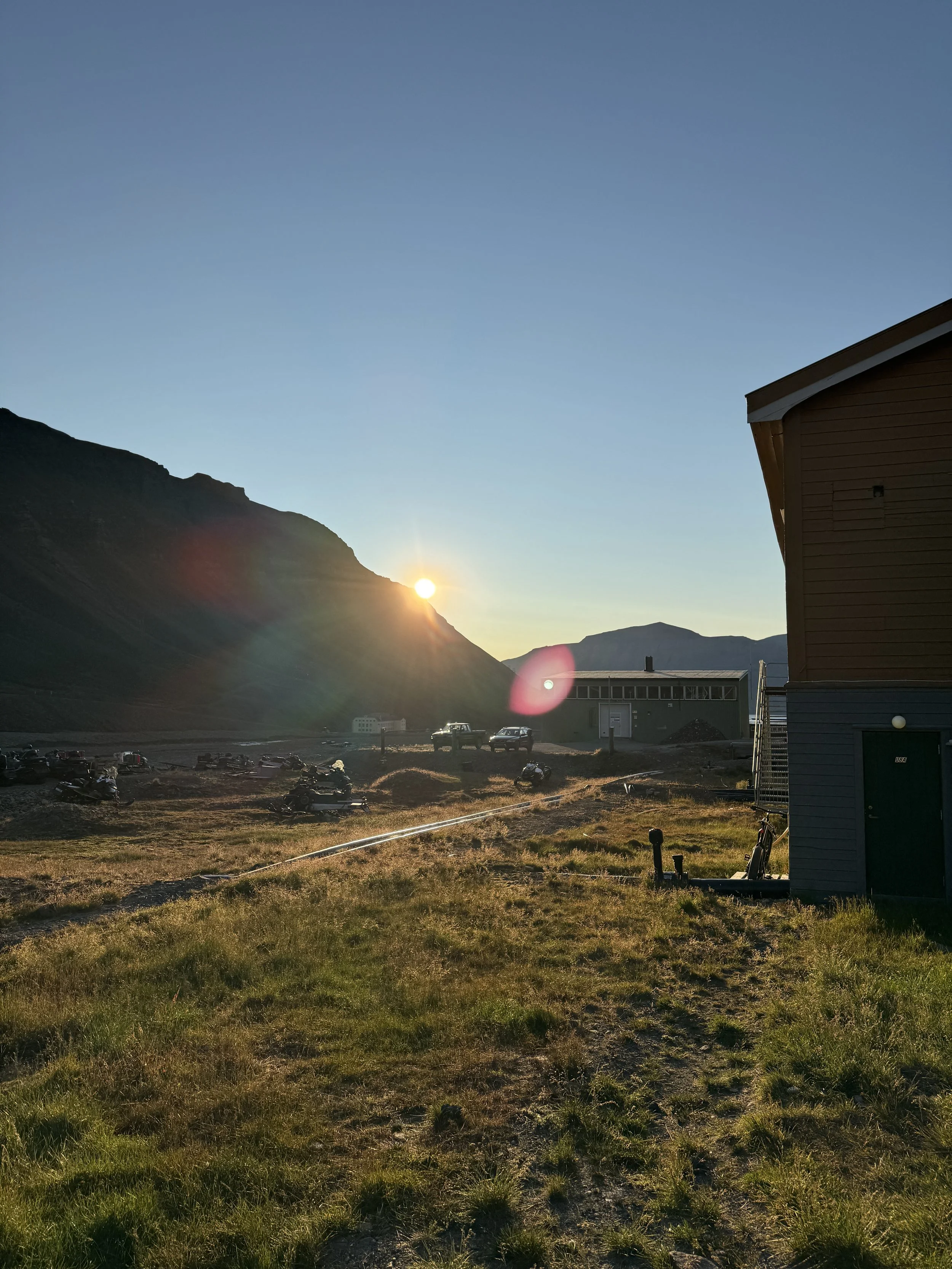
The Coal Miners' Cabins sit at the top of the valley in Nybyen, on the edge of the polar bear safe zone. Two-storey barracks, put up in 1946 and 1947 for the men who worked Mine 2, after the war took most of the town. They are up there because the mine was up there. Now they are a guesthouse with rooms down long corridors and bathrooms shared between them, and the people who run it could not have been warmer.
At the door you take off your shoes.
Everyone does. The library, the museum, the hotels. It began because miners came down with boots full of coal dust and nobody wanted it inside. The mines are closing now. The habit stayed. A whole town still keeping the manners of an industry that is ending.
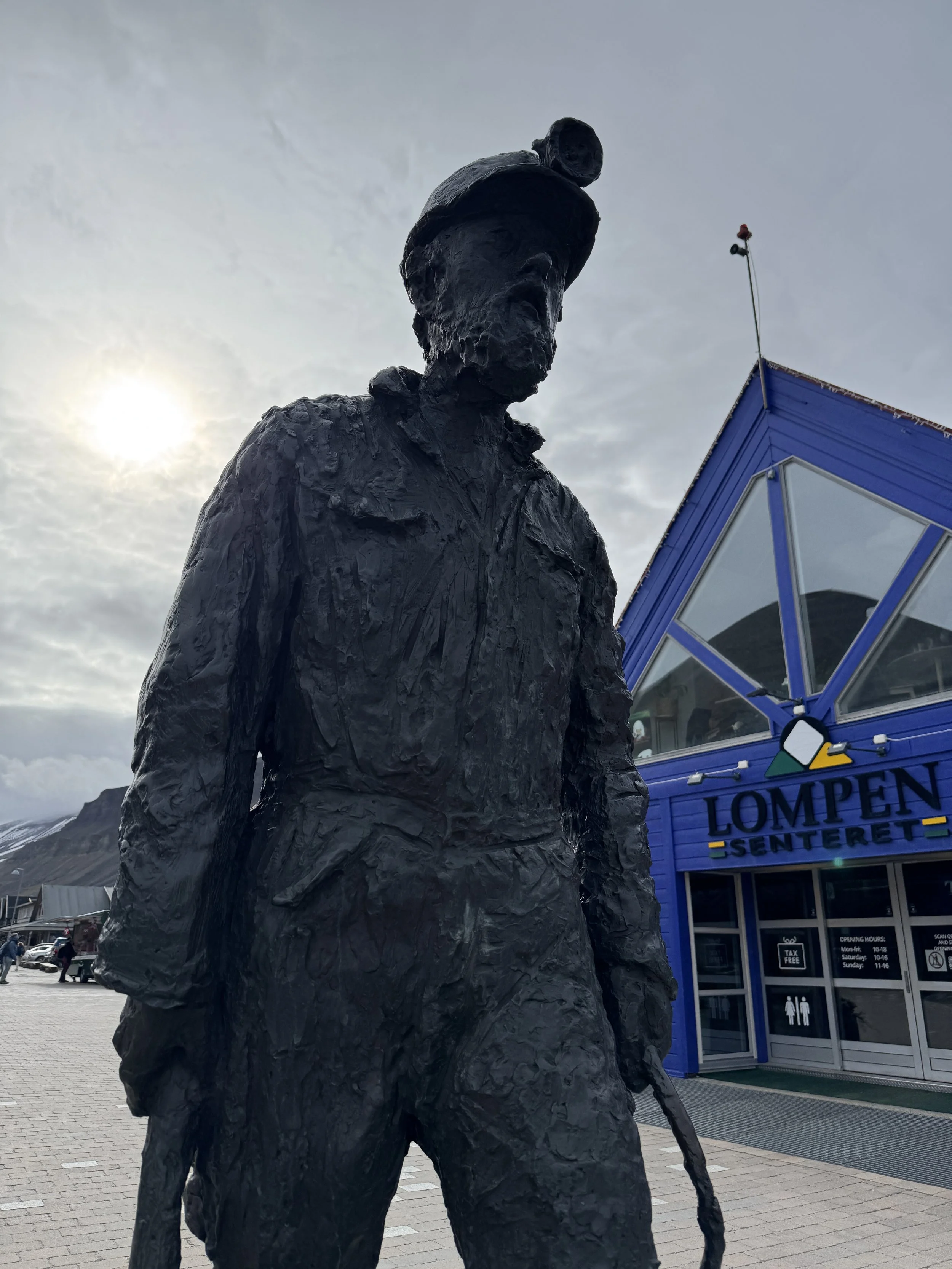
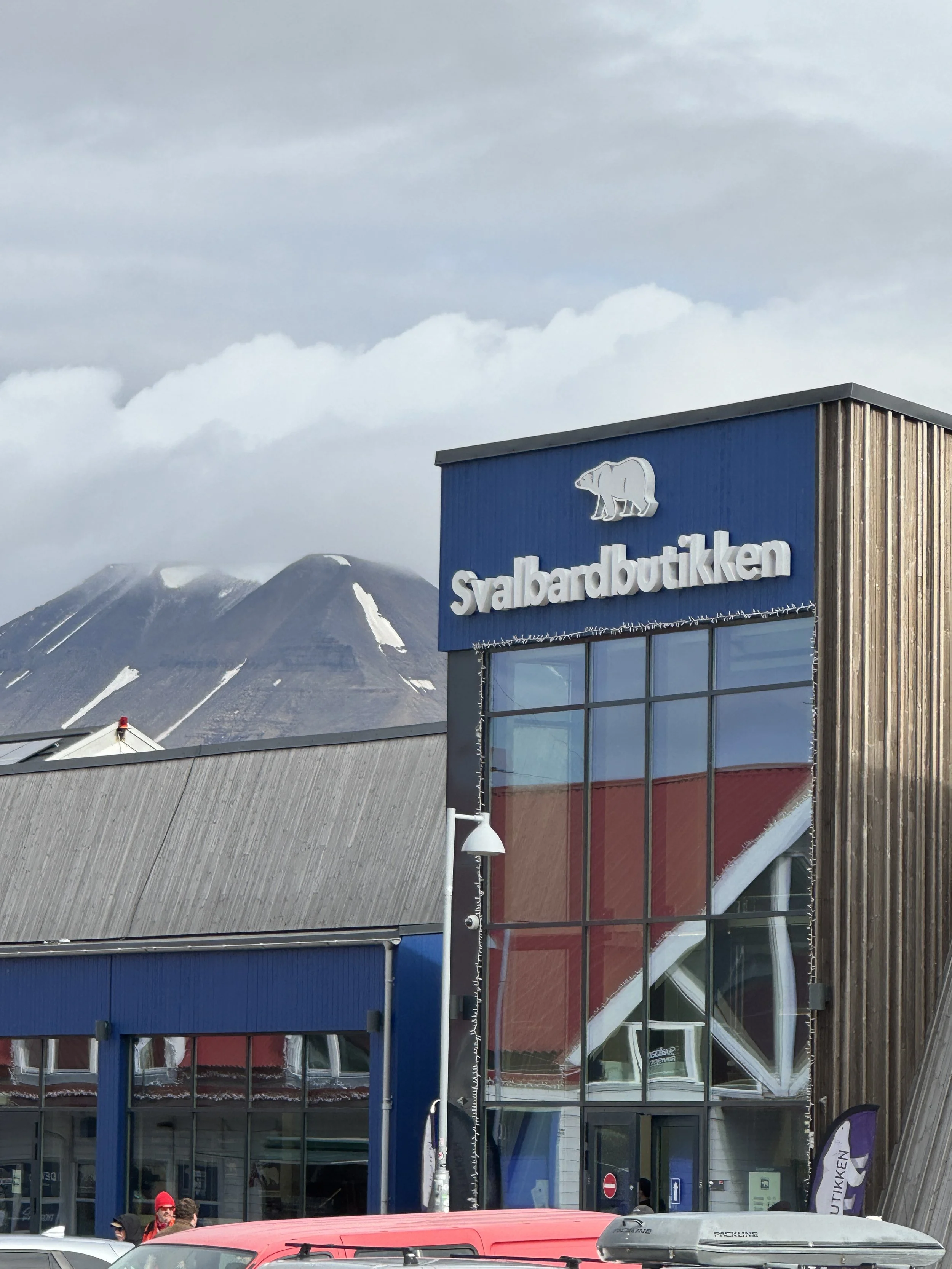
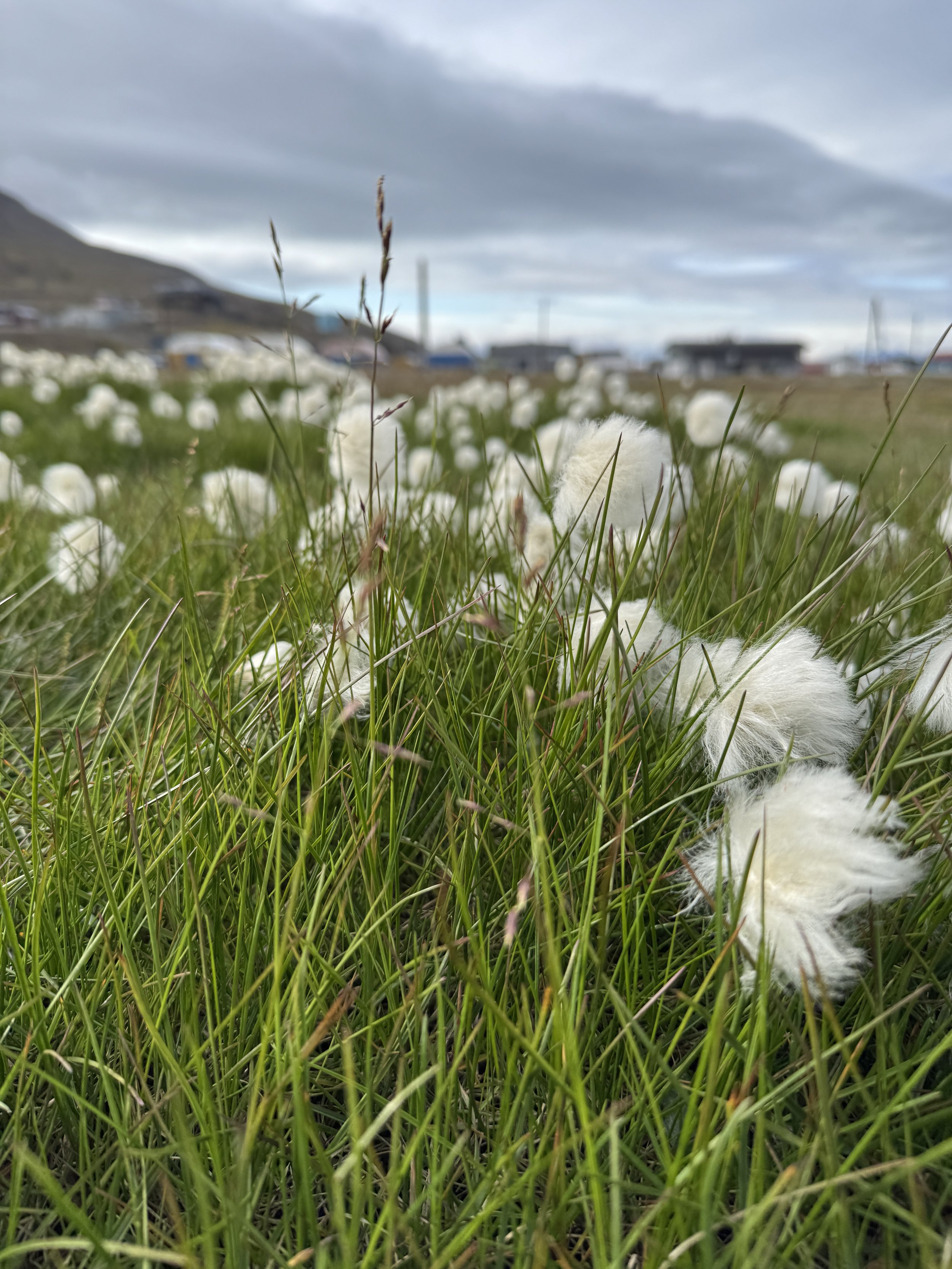
Check-in was three and we were early, so the four of us walked down. Ten minutes downhill into town. A different ten minutes coming back. Longyearbyen in July looks like a ski resort with the snow taken away, buildings shaped for weather that is not there, brown scree above the roofs, the whole valley open to the light. The stores were busy with people buying the things they had not managed to pack. Somebody found a dry bag. We had been told to get whatever we still needed and people were getting it.
We ate at a place called Station. Burgers, fish and chips, American country music playing. Eight hundred kilometres north of the Norwegian mainland and I was eating a ham and cheese panini to a song about a truck. I laughed about it and ate the whole thing. I ordered a beer called Isbjørn. Polar bear. It was excellent. Then I bought a magnet and shirts for my kids, and we climbed back up with the wind against us, and I stopped pretending the walk was easy.
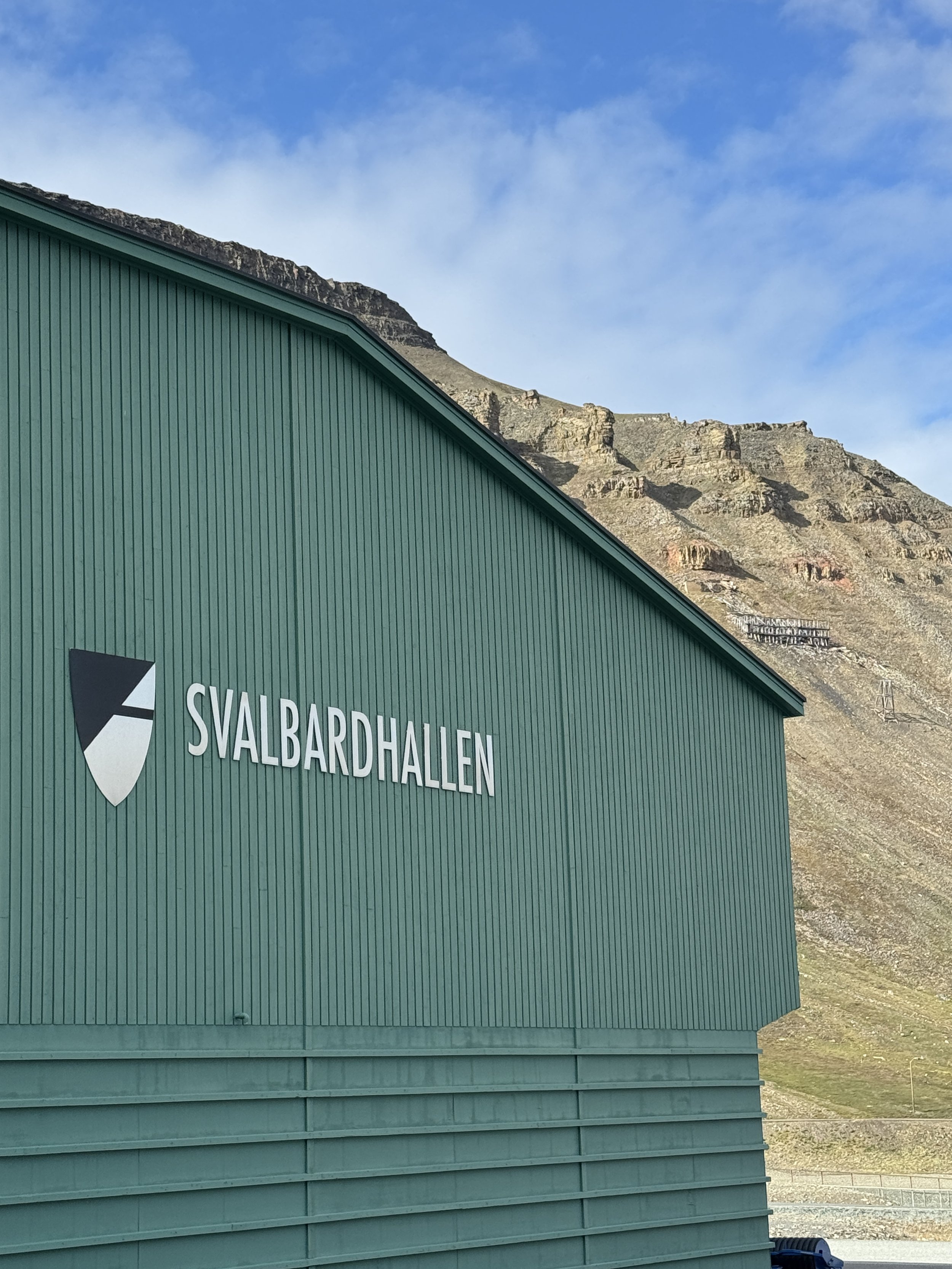
At three I met my roommate. Gergő was already in the room. Hungarian, born in Serbia, a composer and a jazz musician, somewhere past six foot two, which happens to be exactly my son's height. He was very warm and welcoming. We got along instantly and carved out our own routine over the next two weeks. Two beds. No bathroom. Small. I have not said goodnight to a stranger in a shared room since I was twenty.
I unpacked and repacked, then went down to the bar, where there were stickers and patches, and I bought several. I have wanted an Arctic patch since I was eight. Then I opened the green notebook and wrote the first entry. Four in the morning. Security at five thirty. Waiting at six. Times and nothing else, because I had no idea yet what the rest of it would be.
Dinner was in a room beside the Spitsbergen Artists Center, which was the miners' old store, and which is the only open-call residency in Svalbard. I did not know that then. I have thought about it since. Sarah brought lentil curry she had made herself and it was the best thing I ate that day. She came alone, the other guides still ahead of us. We went around the room with our names and our projects, and then the questions started, and they did not stop. Everyone had them. She answered all of them. Patiently. Afterwards we talked. Introductions. Warming up. That was the first time I met Johanna, the other Austrian on the boat, and I told her how much her work impressed me. I did not know then that I would end up part of it, or that I would film her kneeling on floating ice with water on every side of her.
I looked up and it was almost midnight.
Back at the bar I found Cathleen and Shannon. We had a beer, and then another. Some people you have to work your way toward. These two I did not. Within an hour it felt like something that had already been going for a while, and fourteen days later it was. Half past twelve we called it. Breakfast at nine, Sarah said. Meeting at eleven. Bus to the harbour at half three. It’s getting very real.
I walked back to the room in full daylight, got into a bed under a window I had no way to darken, in a barracks built for coal miners, with two bags by the door holding a painting I hoped was only sulking about the draft.
The sun did not go down. It went around. Tomorrow, the ship.
“Adventure is allowing the unexpected to happen to you.”