Entry 037: Day 01: The Pole in the Room
Sarah told us at dinner that the cabin would be small. You will see it and think it is small. It will be small. You will get used to it. She does not oversell things. I had worked that out already. So when she said small I understood she meant small, and I carried the word around the next day like a stone in a pocket.
Breakfast opens early at the Coal Miners' Cabins and I was there at eight. Bread, butter, jam. Gergő came down later. That was the arrangement for the next two weeks. Neither of us proposed it. It simply arrived on the first morning and stayed. I get up. He does not.
Checkout was eleven, so the rest of the morning was people in corridors with half-packed bags. Sarah cancelled the eleven o'clock meeting. She had told us what we needed and saw no reason to say it twice. Bus at half three. The day in between was ours, so we walked down into town again, second time in two days. Café Huskies first, northernmost café in the world, two huskies on shift at a time and a room full of people. The ratio runs against you. Nobody minded. You get a coffee and you wait your turn.
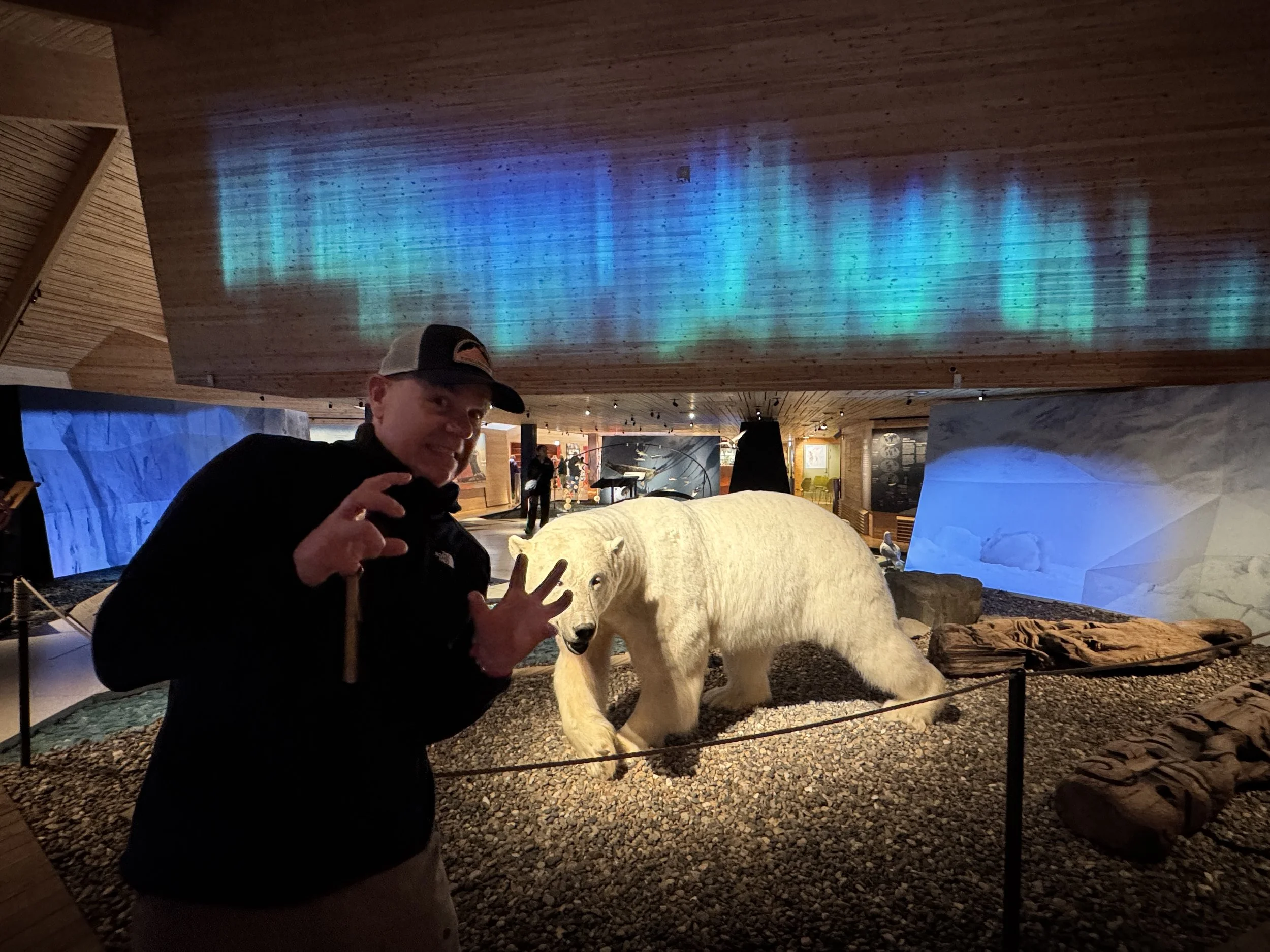
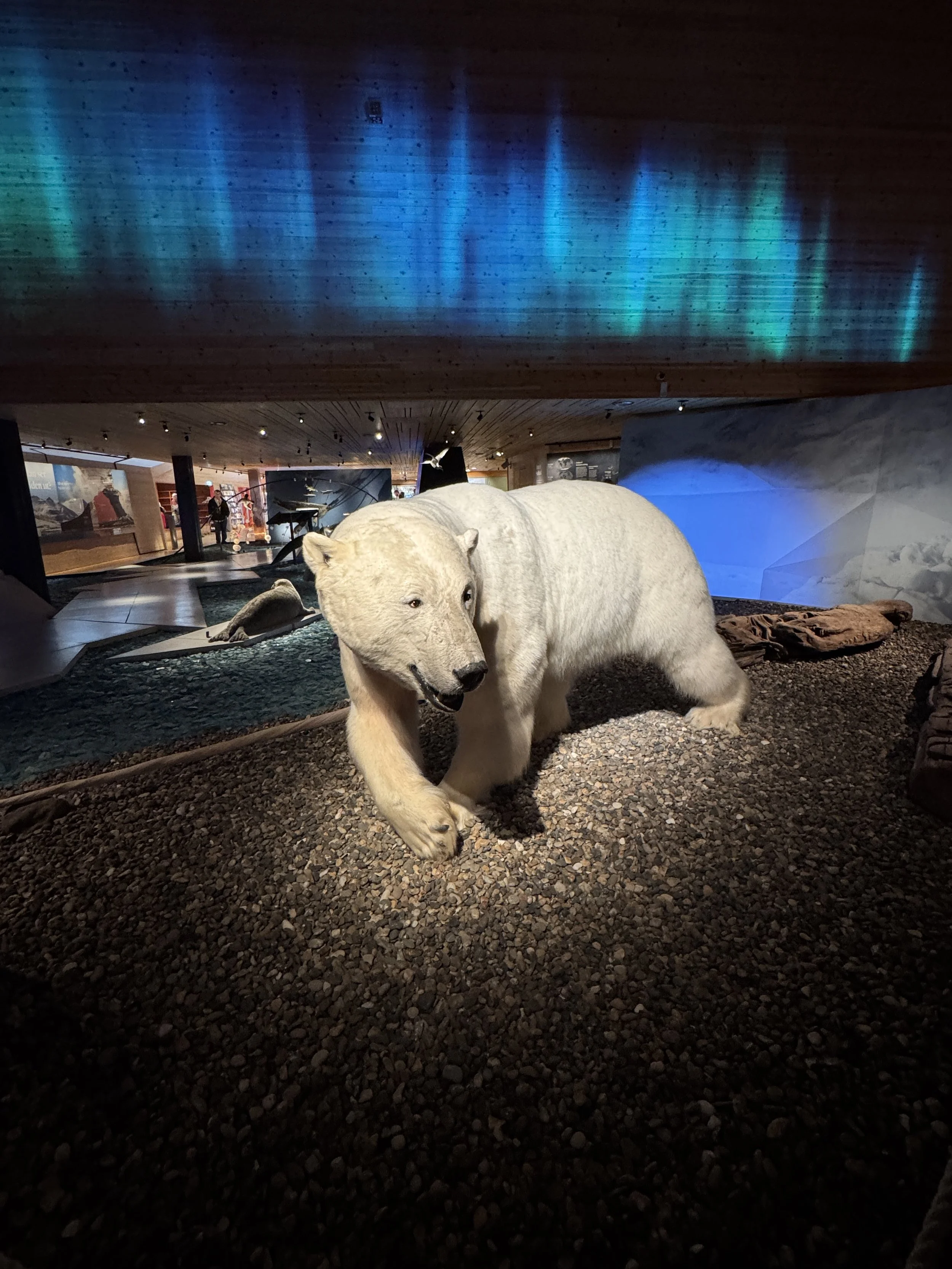
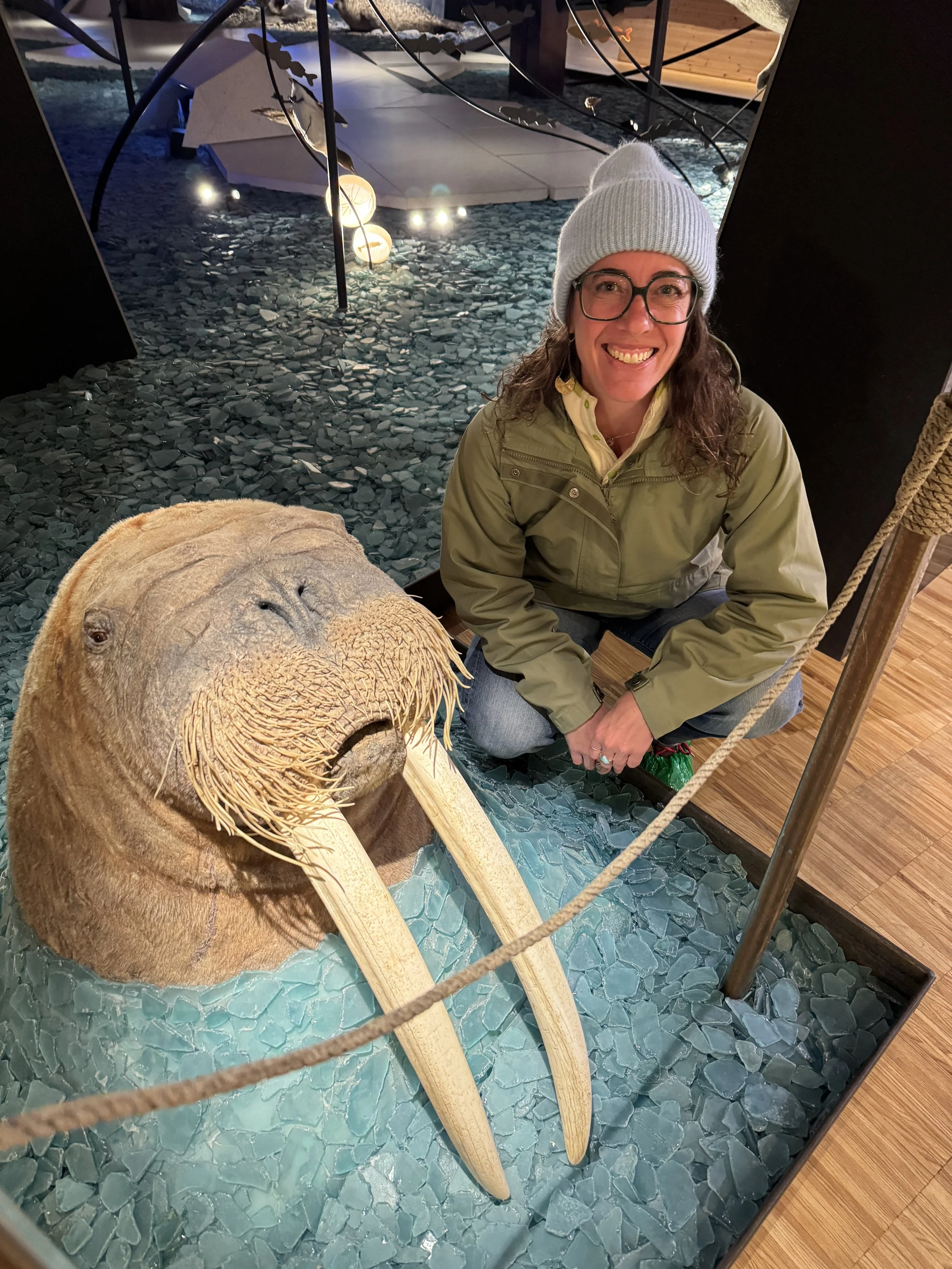
Then the Svalbard Museum, which is better than it needs to be. Taxidermy everywhere. Another walrus. Another bear. Cathleen crouched down beside the walrus for a photograph, which put the matching tattoos back on the table. That had come up at the bar the night before and had never been in doubt. Polar bear for me, walrus for her, our favourites, no negotiation required. Neither of us has dropped it. Cathleen runs the Organic Seed Alliance. Seeds, agriculture, the systems that decide what gets planted and by whom. A week later she would give a talk about it on the ship, and on our last day ashore we would stand together in front of the Global Seed Vault. None of that had happened yet. She was just the person laughing at a walrus.
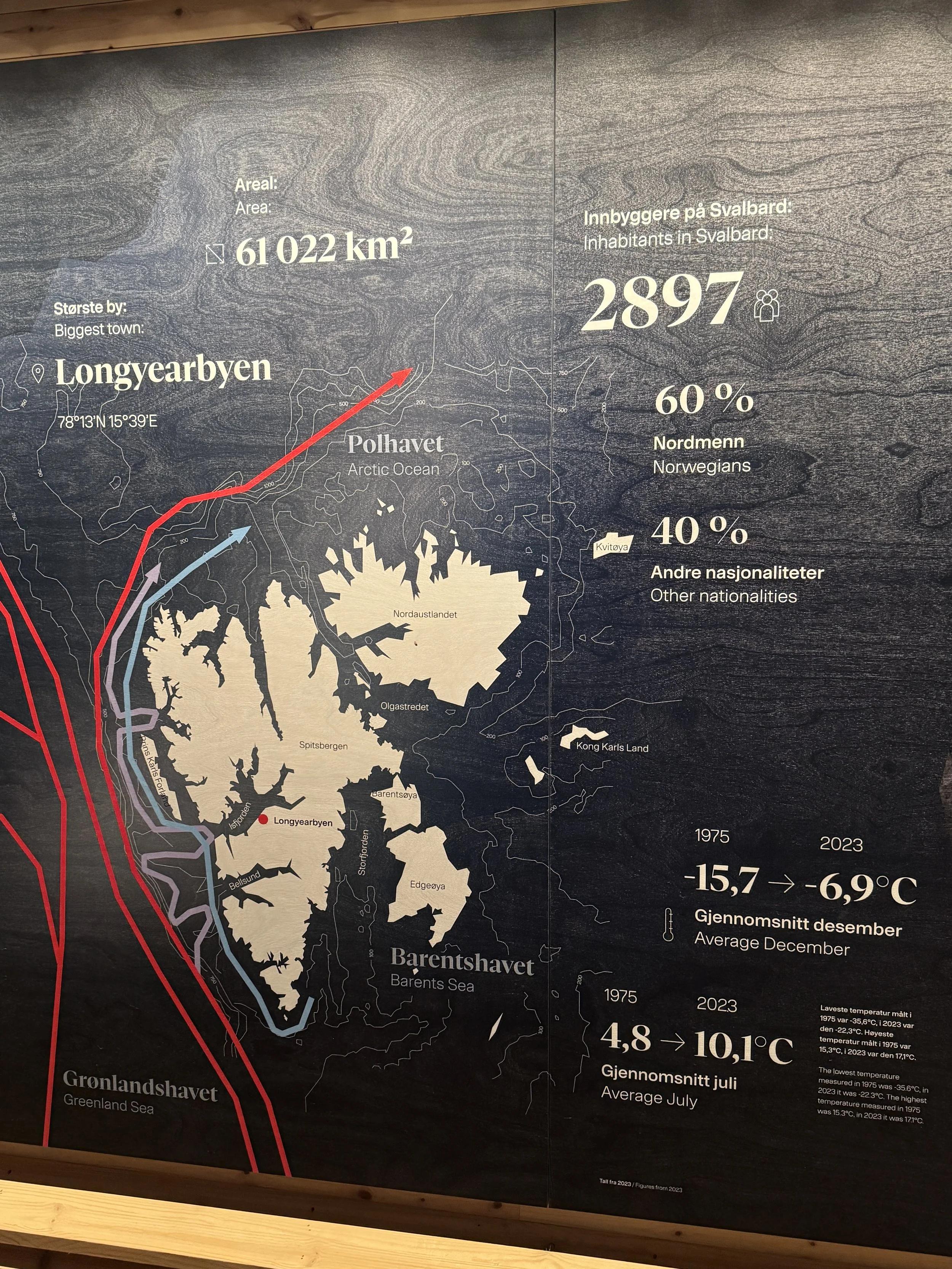
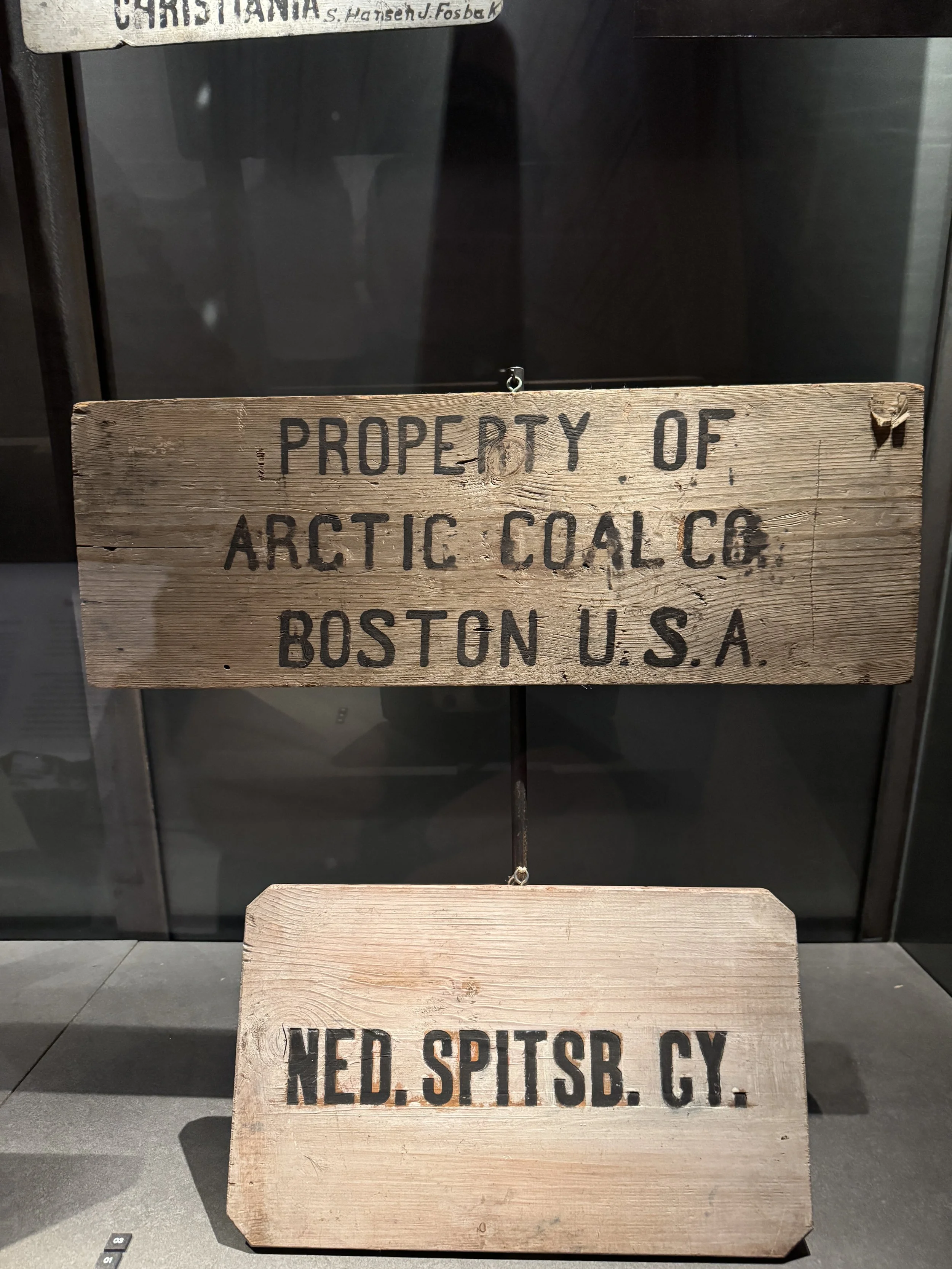
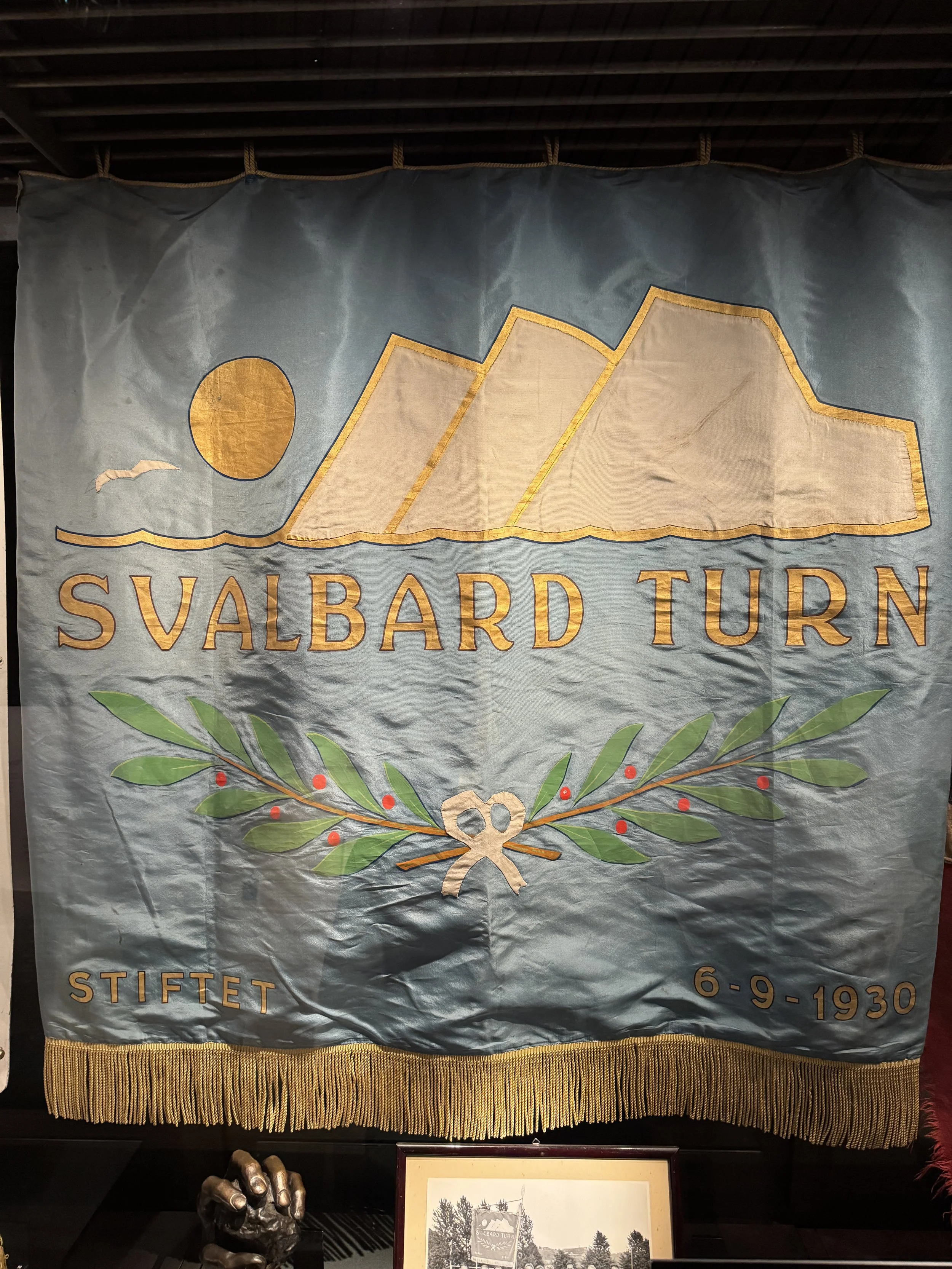
There is a wall in that museum with numbers on it. Area. Population. Nationalities. Then two pairs of temperatures. December average, 1975 against 2023, minus 15.7 to minus 6.9. July average, same span, 4.8 to 10.1. Nine degrees of December gone inside a single lifetime, printed between the population figure and the map. No argument attached. Nobody standing next to it explaining. There is also a plank in a case that reads PROPERTY OF ARCTIC COAL CO, BOSTON U.S.A. The town is named for a coal magnate from Michigan. Seventy-eight degrees north, and the founding document is a piece of wood from Boston.
On the walk back I told Cathleen I needed another Svalbard shirt. She could not tell whether I was joking. I was not joking. The stand was giving away a small wooden bear with every shirt, so I bought two. I didn't know it then, but these shirts would come in handy later. Lunch at Station, same place as the day before. Then the supermarket, because I had a theory. You do not want to be on the ship on day ten with no chocolate. That is how riots start. Day ten was a presentation day. I was right.
Back up the hill by half two. Gear ready. Sitting by the bar with whoever else was ready. This is where Christina and I first met. Christina was funny inside of a minute. Some people can do that. Most cannot. She writes poems, and she writes them next to scientists. She was poet-in-residence at a paleontology exhibit once, making poems out of other people's fossils, which is a way of saying she has spent a career standing beside people who measure things and coming away with something they could not carry out themselves. Shannon was sitting across from me like we had been at the bar last night, which we had. She has spent most of her career in bear conservation. She ran the Great Bear Foundation. She has been teaching polar bear and Arctic ecology field courses in Churchill, Manitoba for almost two decades, going out onto Hudson Bay every autumn as the sea ice forms. She made a documentary about Chuck Jonkel, one of the first polar bear biologists.
Then the bus came and the day changed. Walking down into town it had been a day out. On the bus it was not that any more. Every small question I had been carrying for a year arrived at once and formed a line. The room. The bathroom. Fourteen days. Twenty-eight strangers.
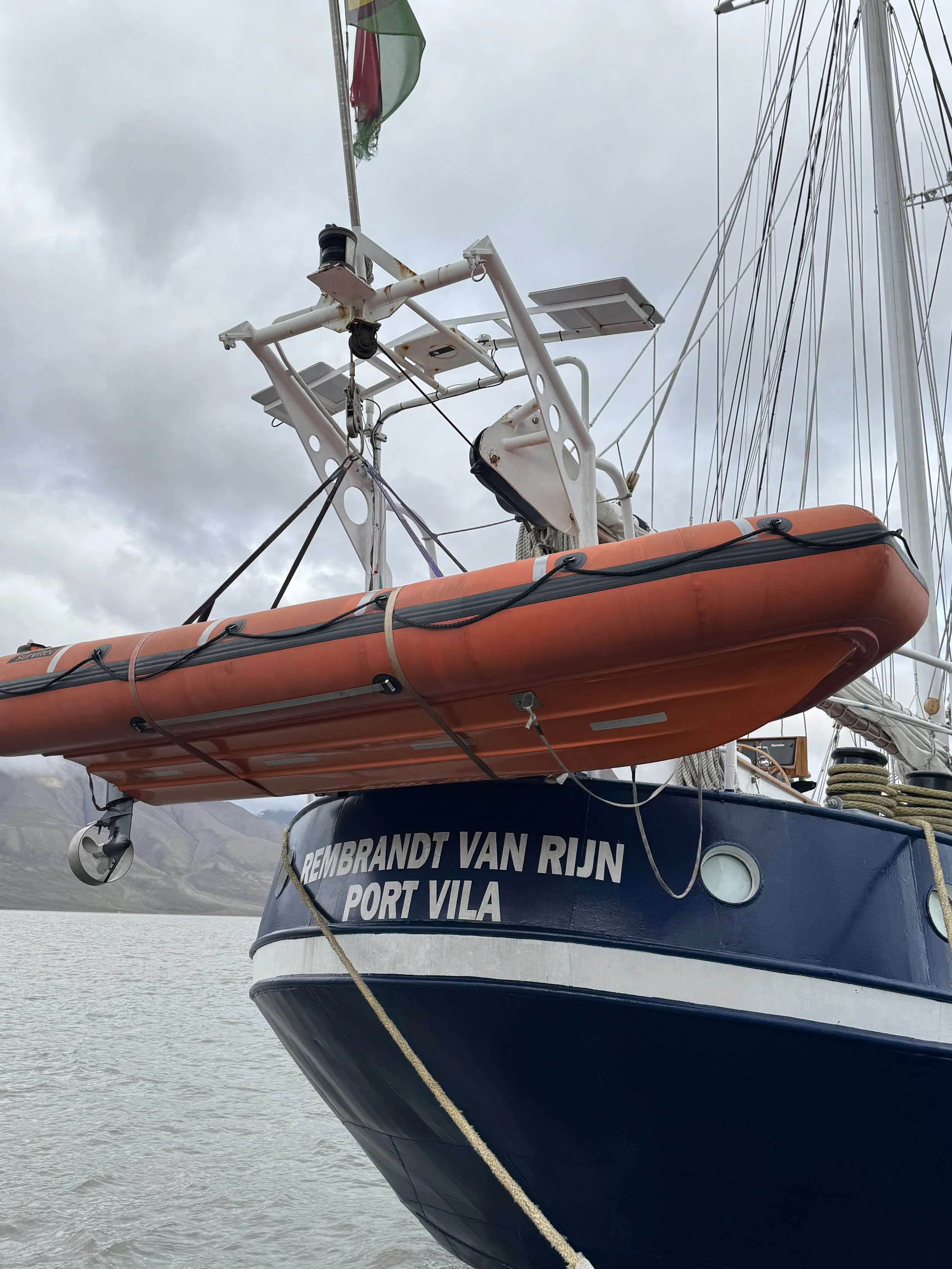
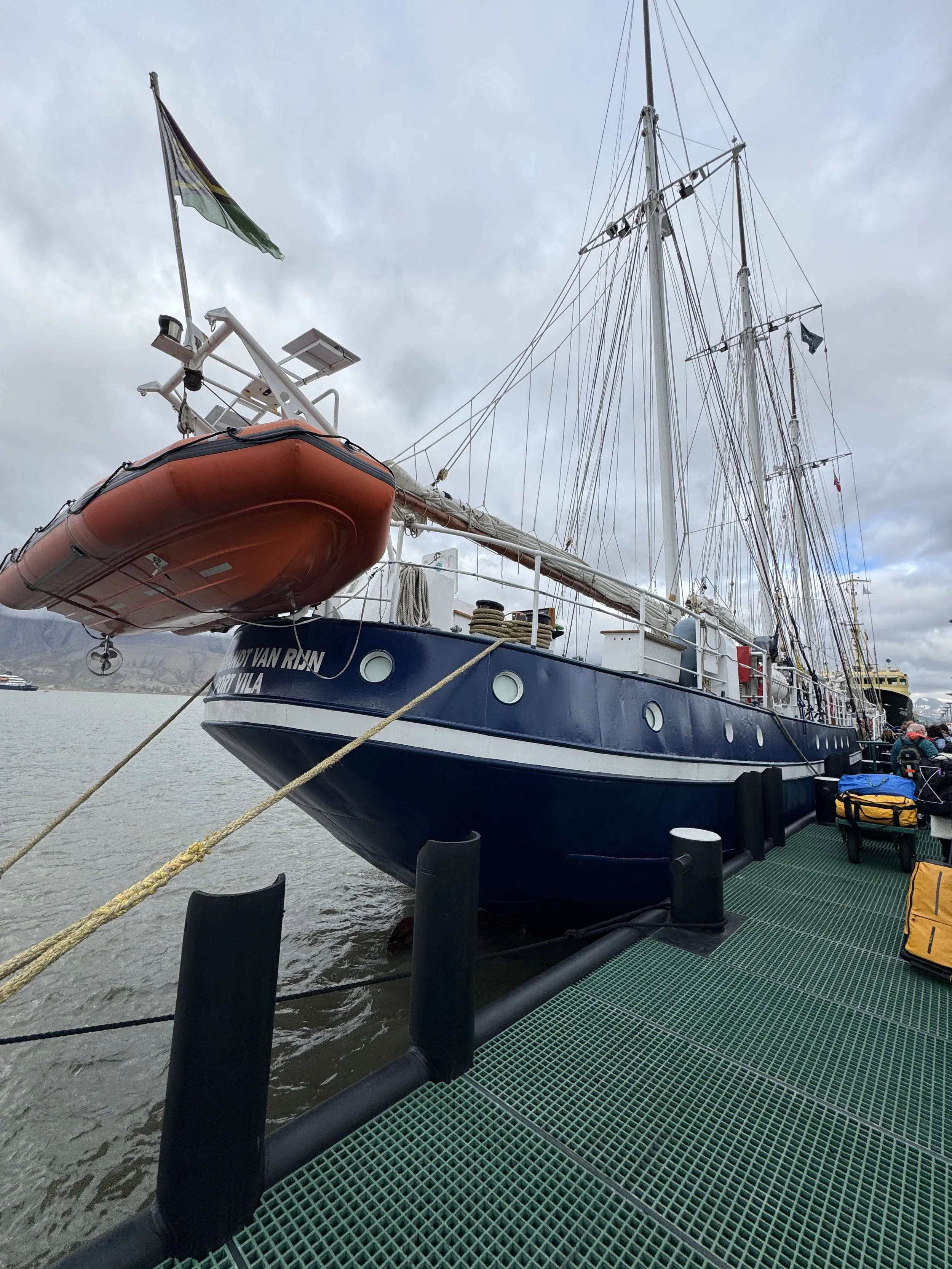
We got out at the harbour and walked the pontoon with our gear, past masts and hulls and other people's boats, and there she was. A year of photographs. Several people said she looked smaller than they expected. I thought the opposite. She looked bigger. Blue hull, three masts, orange tender lashed across the bow, the name on the stern with the port of registry underneath. REMBRANDT VAN RIJN. PORT VILA. A Dutch schooner in the Arctic registered in Vanuatu, which is a fact you can chase or leave where it lies.
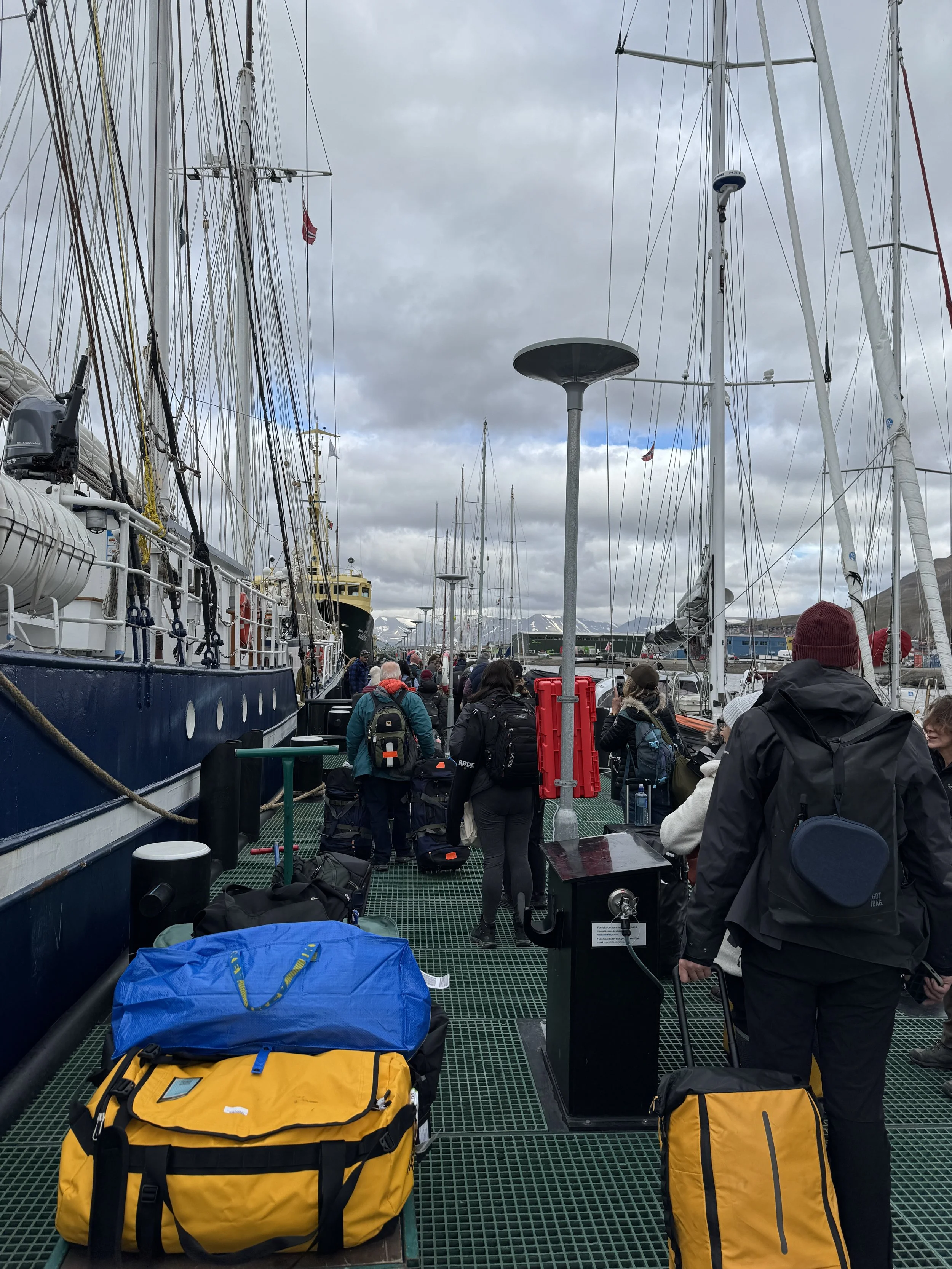
Boarding was one at a time, names checked, gear handed up. Beth, Lisa and Rhys were there with Sarah, and inside two minutes Beth and I worked out that we have a friend in common. Steffi, who guides in Svalbard and Antarctica and was not on this boat. It is a small profession at this latitude.
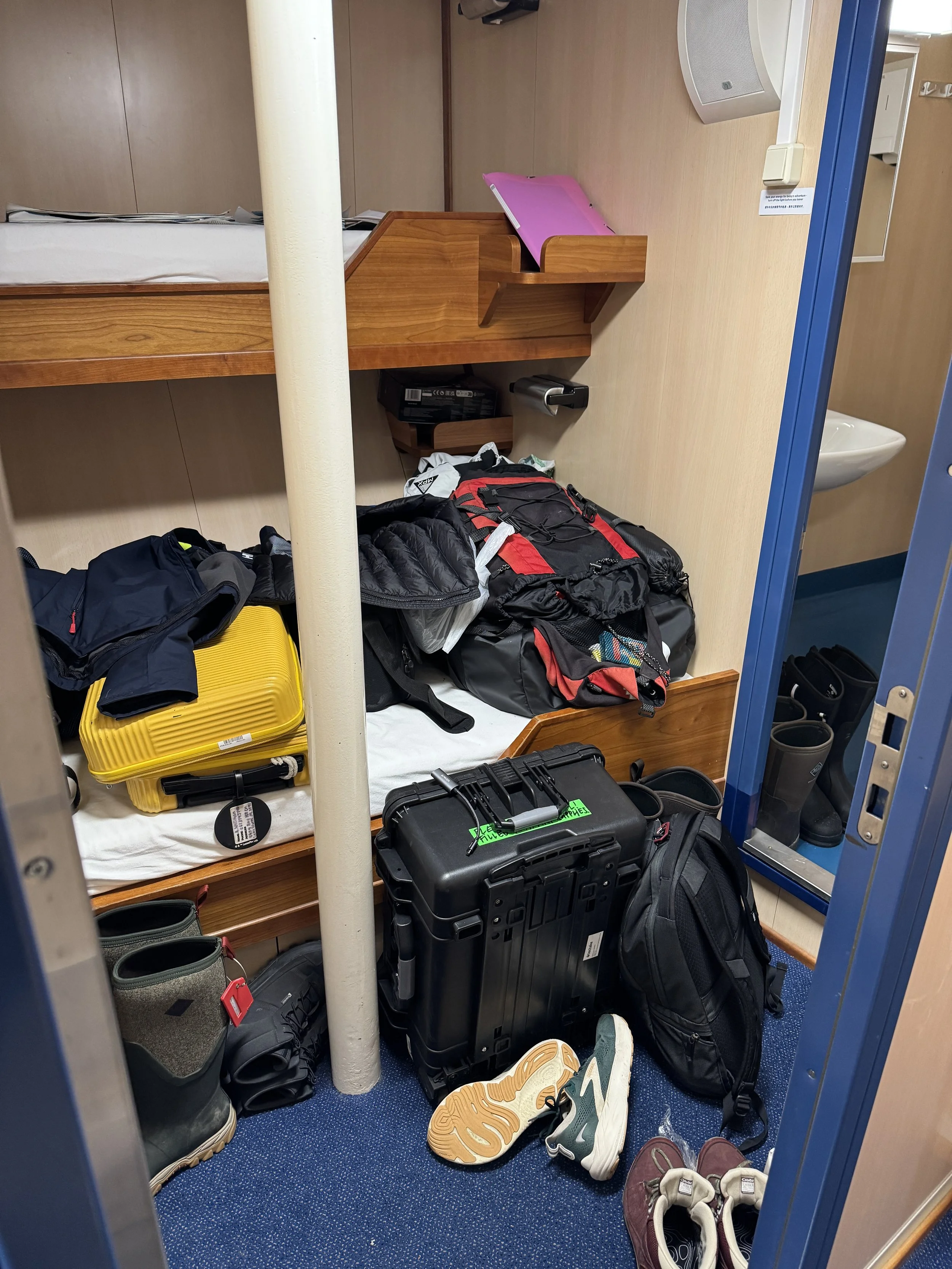
Then Gergő and I found Cabin 1. There is a pole in the middle of the floor. Not against a wall. The middle. A white column running deck to deck straight through the room, and arranged around it two bunks, a sink, and whatever was left over. The cabin is in the bow, so the walls converge and the room narrows to a point behind you. No window. We stood in the doorway, two grown men, one of them six foot three, and neither of us said anything. Sarah was right. Thirty seconds in that doorway and every anxiety I had carried for a year had somewhere to live.
I went up and asked whether we might have Cabin 5, which was empty and holding equipment. Beth and Sarah said yes and did not make it a discussion. Slightly bigger. Not much. But rectangular, and rectangular beats area. I took the bottom bunk. Gergő unpacked first and came out. Then me. There is room for one person at a time. My duffel did not fit anywhere at all, and the cabinet is shared and not big enough for one, so I slept beside four compression bags for fourteen nights.
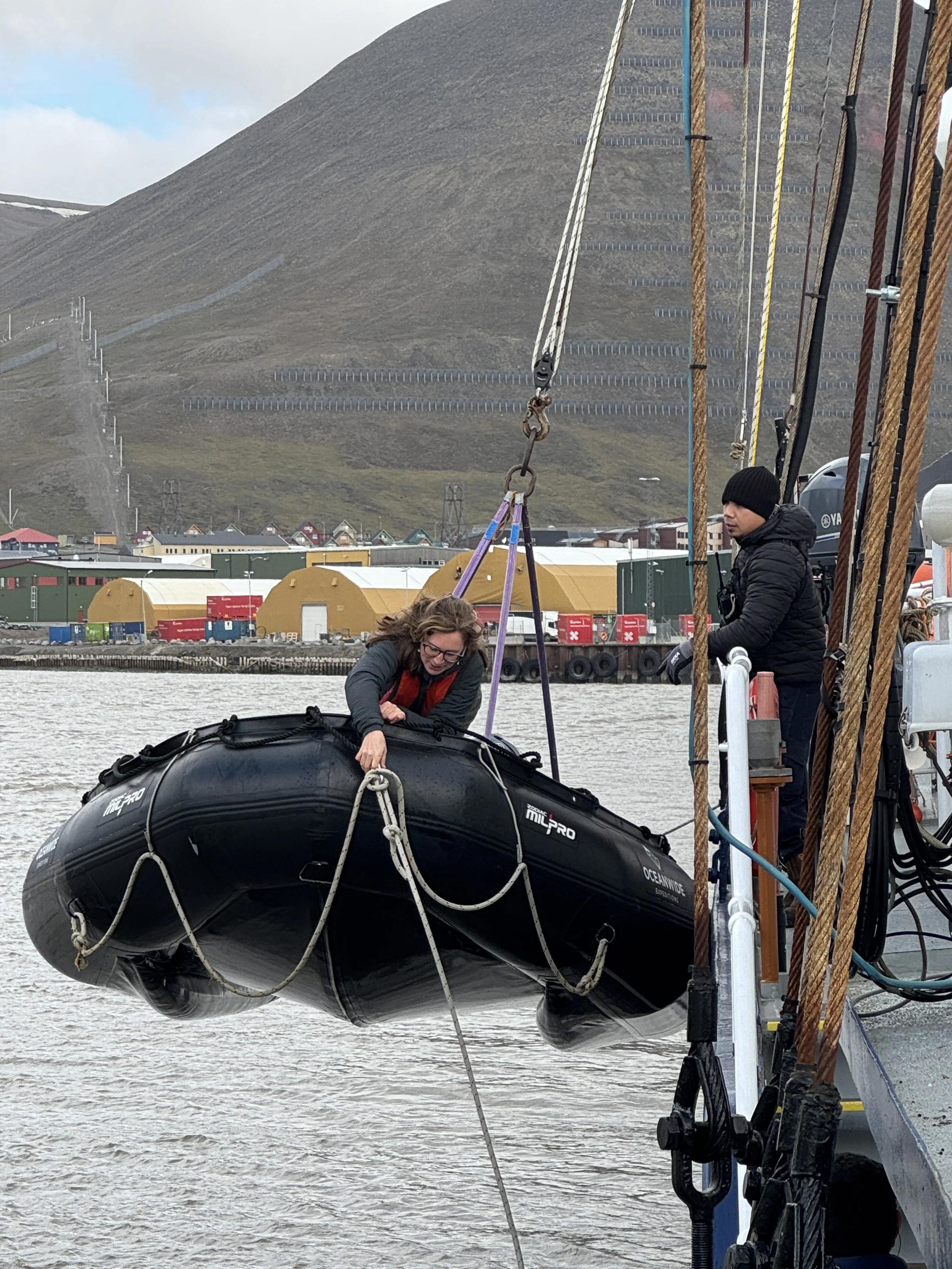
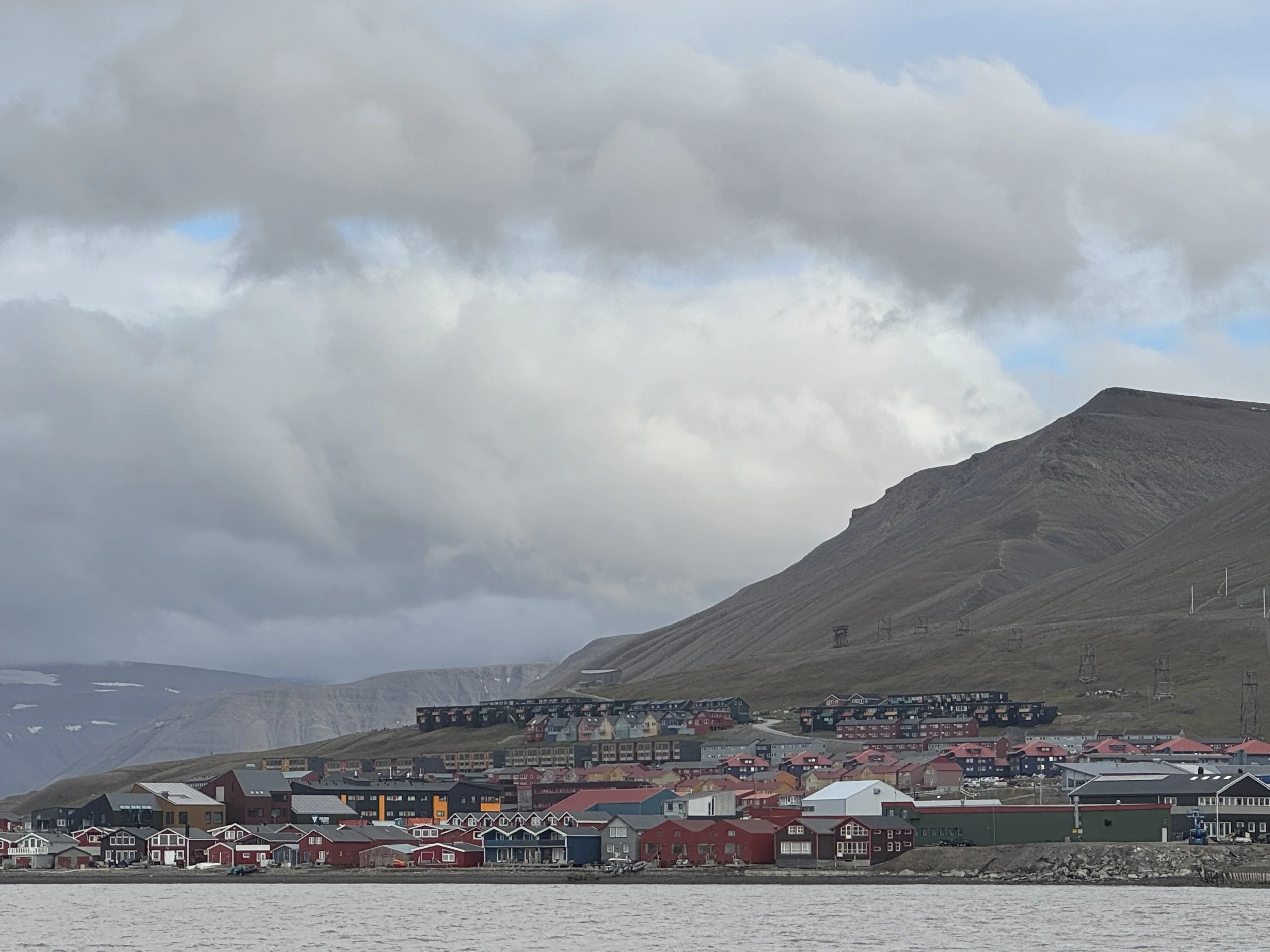
Somewhere in there I came up on deck and we were already moving. Beth was going over the side into a zodiac while it hung in the sling, the crew holding the lines, and behind her Longyearbyen was getting smaller. The coloured town stacked up its brown slope, the mine towers strung down the hillside, everything I had walked through twice in two days now a thing seen from water. Everyone was on deck. Everyone was asking questions. Nobody knew anything yet and the energy was high because of it.
One berth was empty. A visa had not come through. We stayed near town that night in case she made the morning flight, which is why we went up Tempelfjorden and not somewhere further out. She never made it. Twenty-eight instead of twenty-nine. There was safety training, and the crew, and Joachim at the helm, and the magnet board by the gangway that tells the ship whether you are aboard or ashore, which becomes important later and looked like nothing at the time.
We went round the room with our names. Sarah pointed at me and said I was the one who had commented on every introduction post on the forum. She meant it warmly and it landed warmly. I had missed three. Two of those went up while I was already travelling to Europe. Once you commit to a thing like that you are stuck with it.
Then back on deck. Water flat. Light going nowhere. A puffin came past the hull. They fly like they resent having to. Wings going far too fast, feet trailing, the entire body committed to a bad idea. I got the camera up and got one frame, head-on over the water, the sea gone soft behind him. Superpuffin!
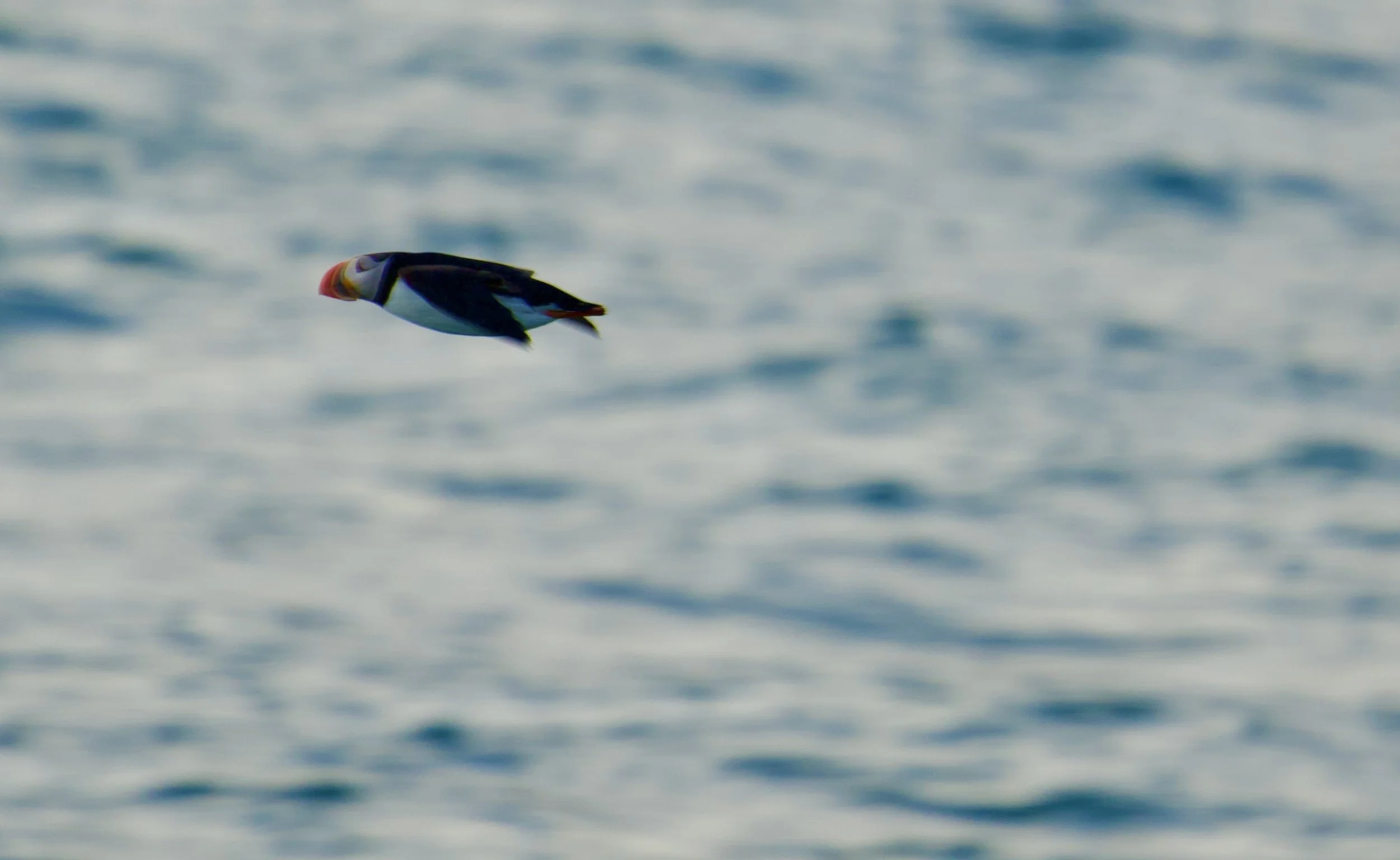
Superpuffin
It will not beat my son's puffins. Nikolas and I sat among them on Mykines in the Faroes a few years ago, a whole afternoon, and he came home with pictures I still think about. Close work. Quiet. Patient. Mine is a bird going past a boat looking like Superman. I laughed out loud on deck and I would take it again tomorrow.
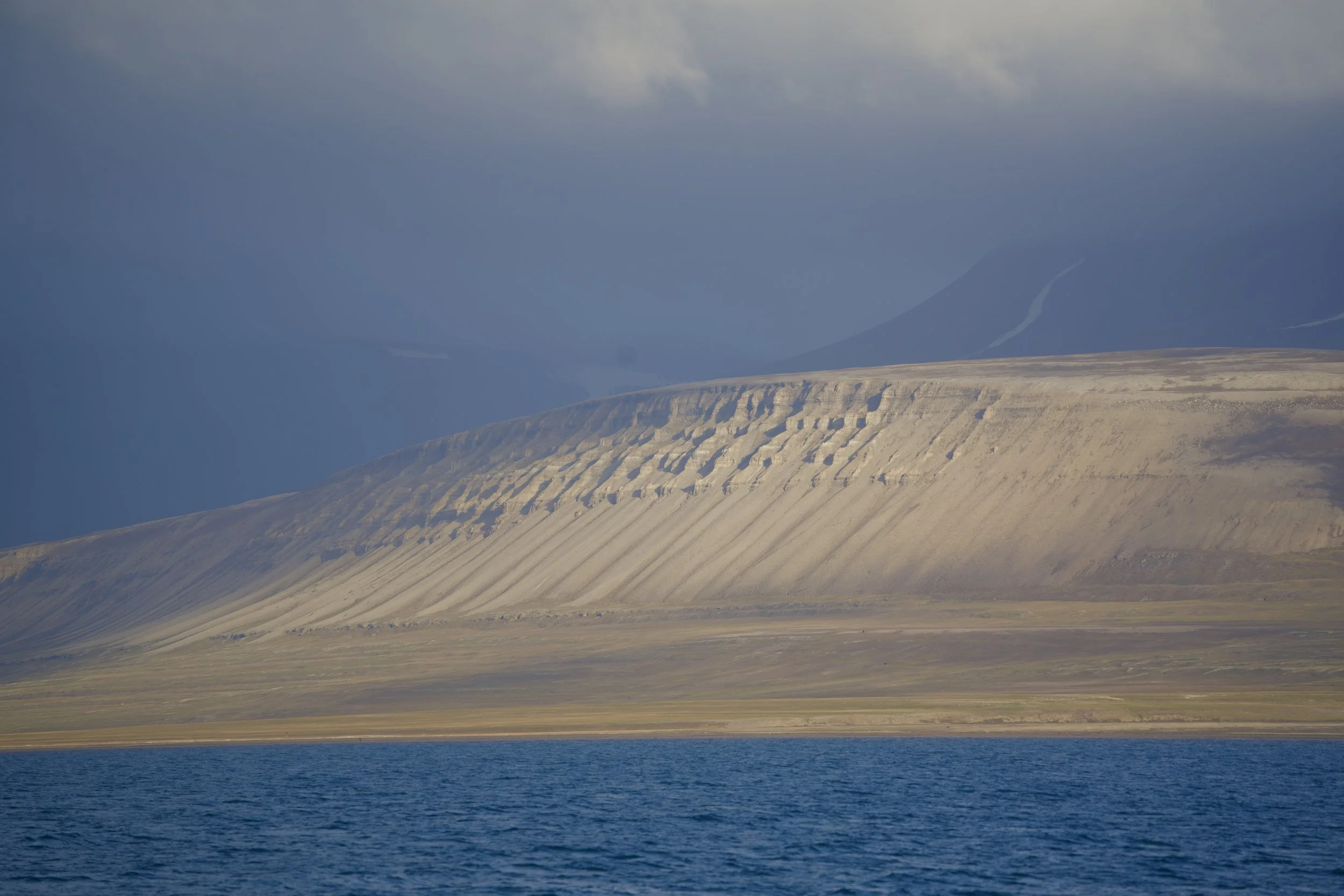
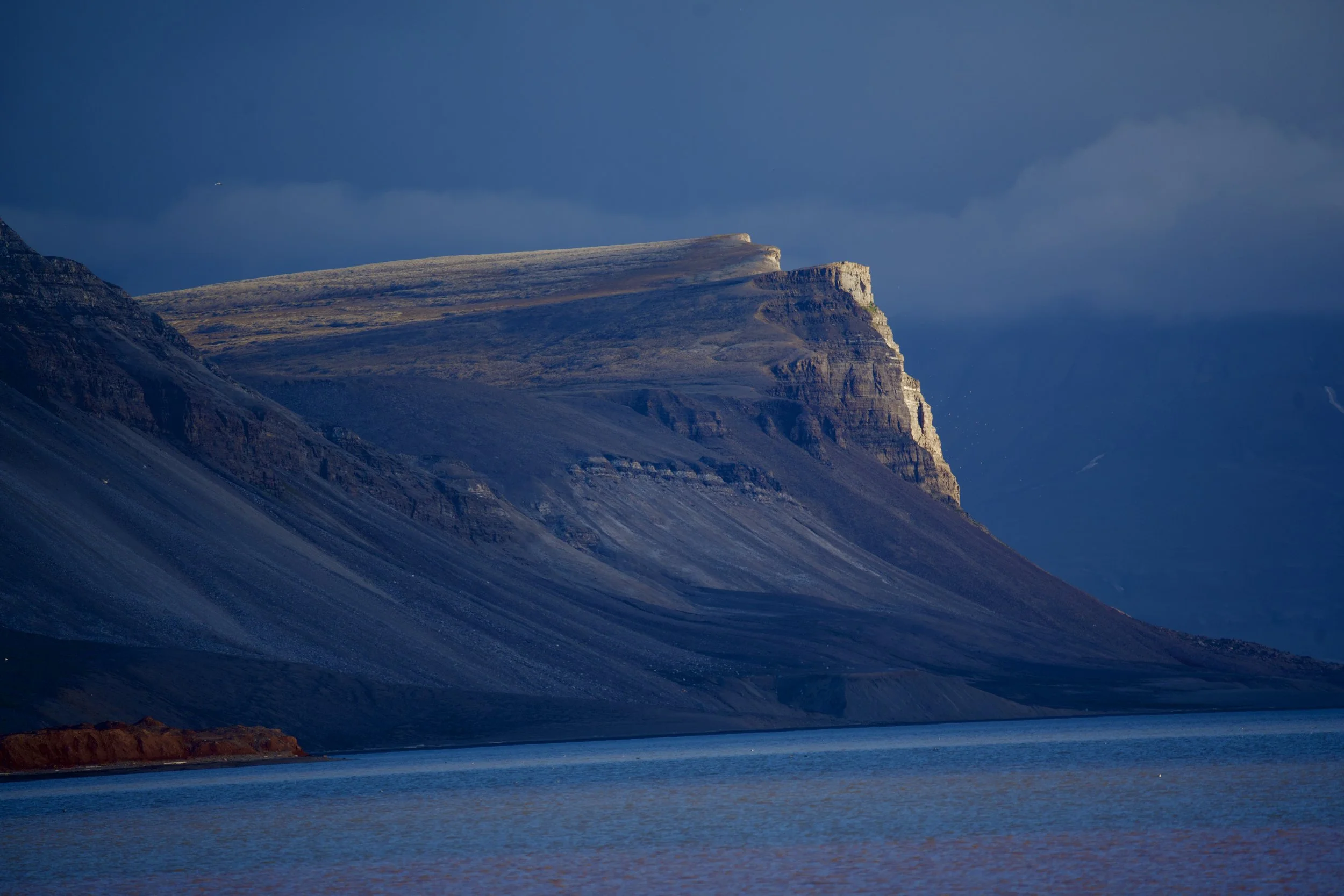
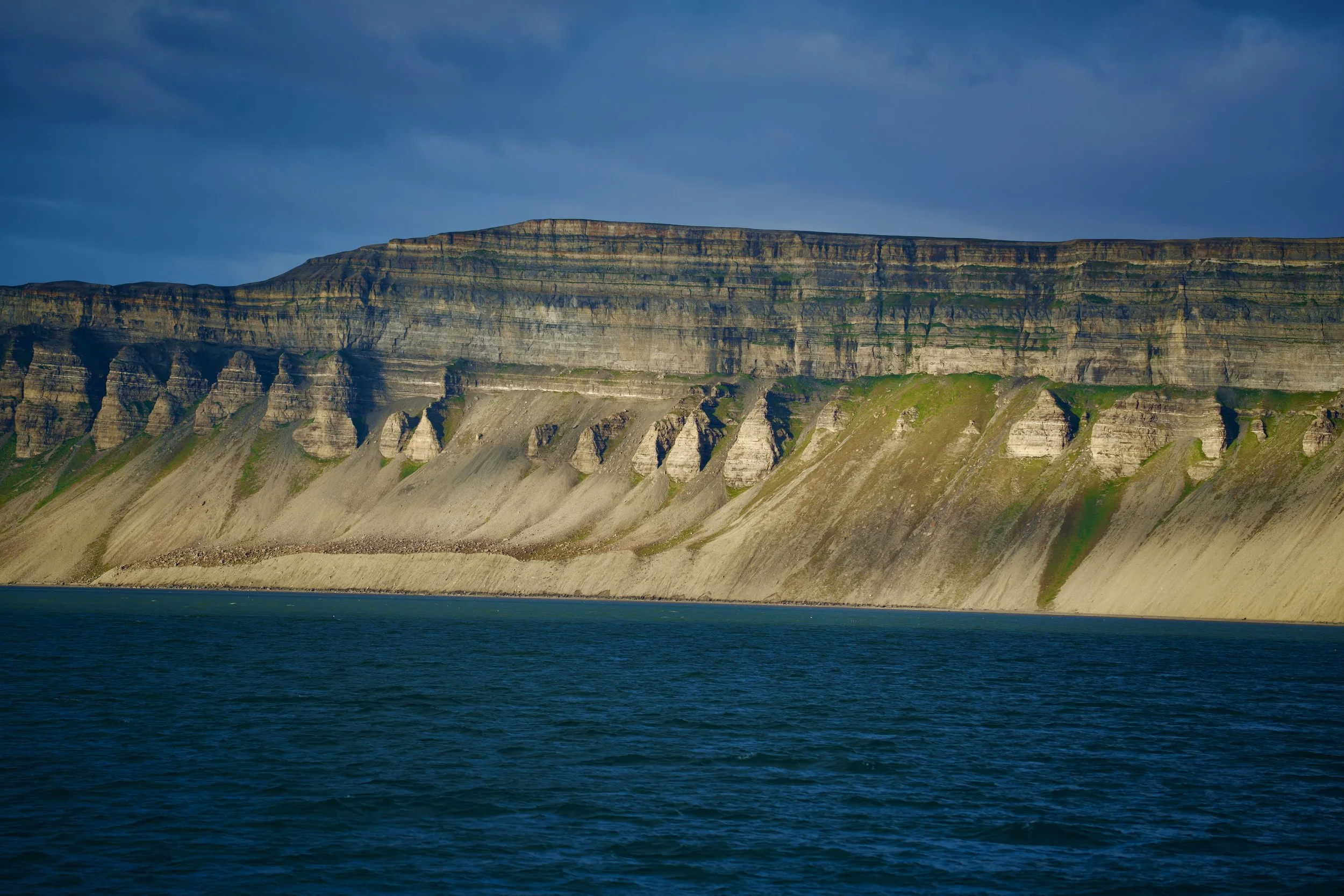
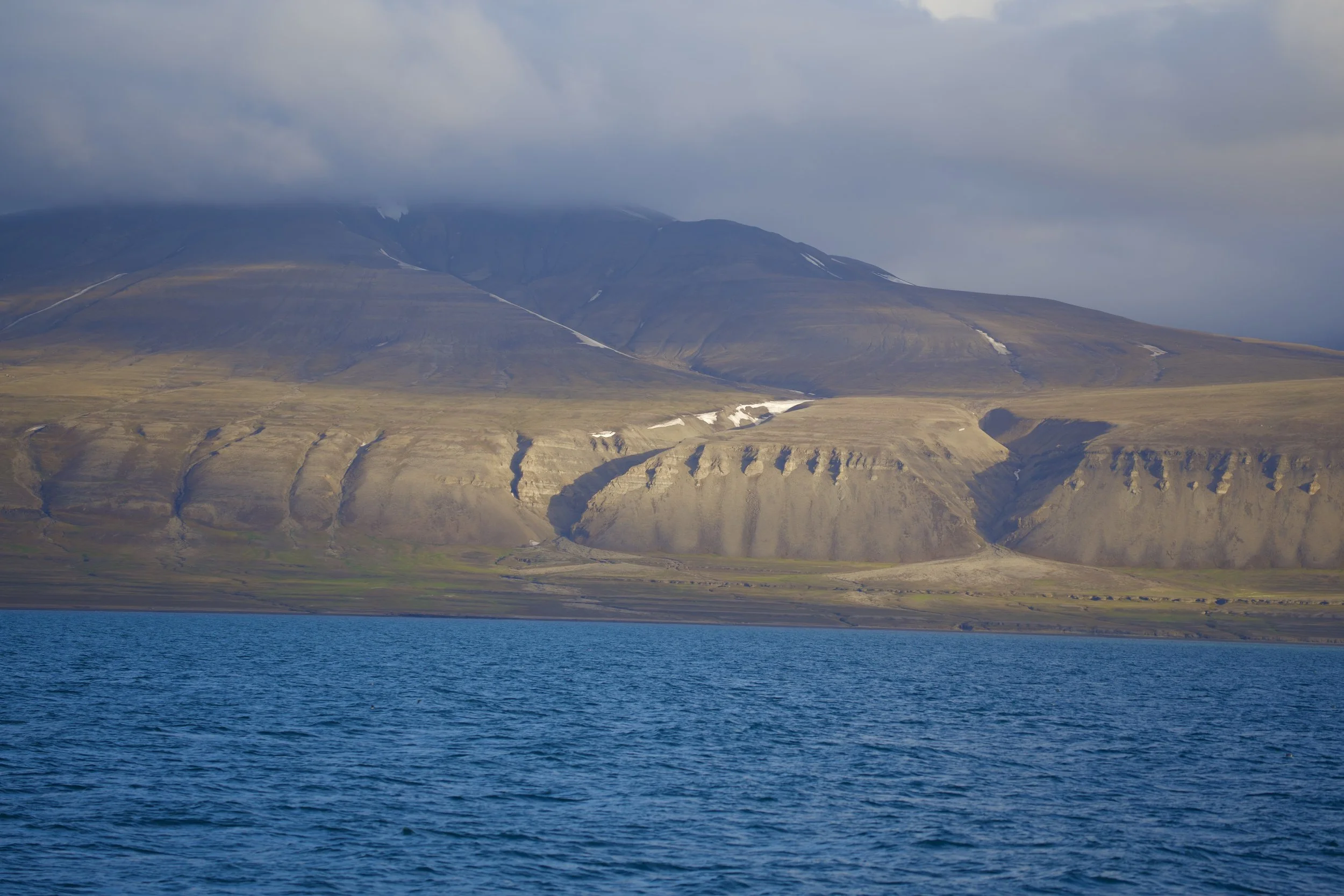
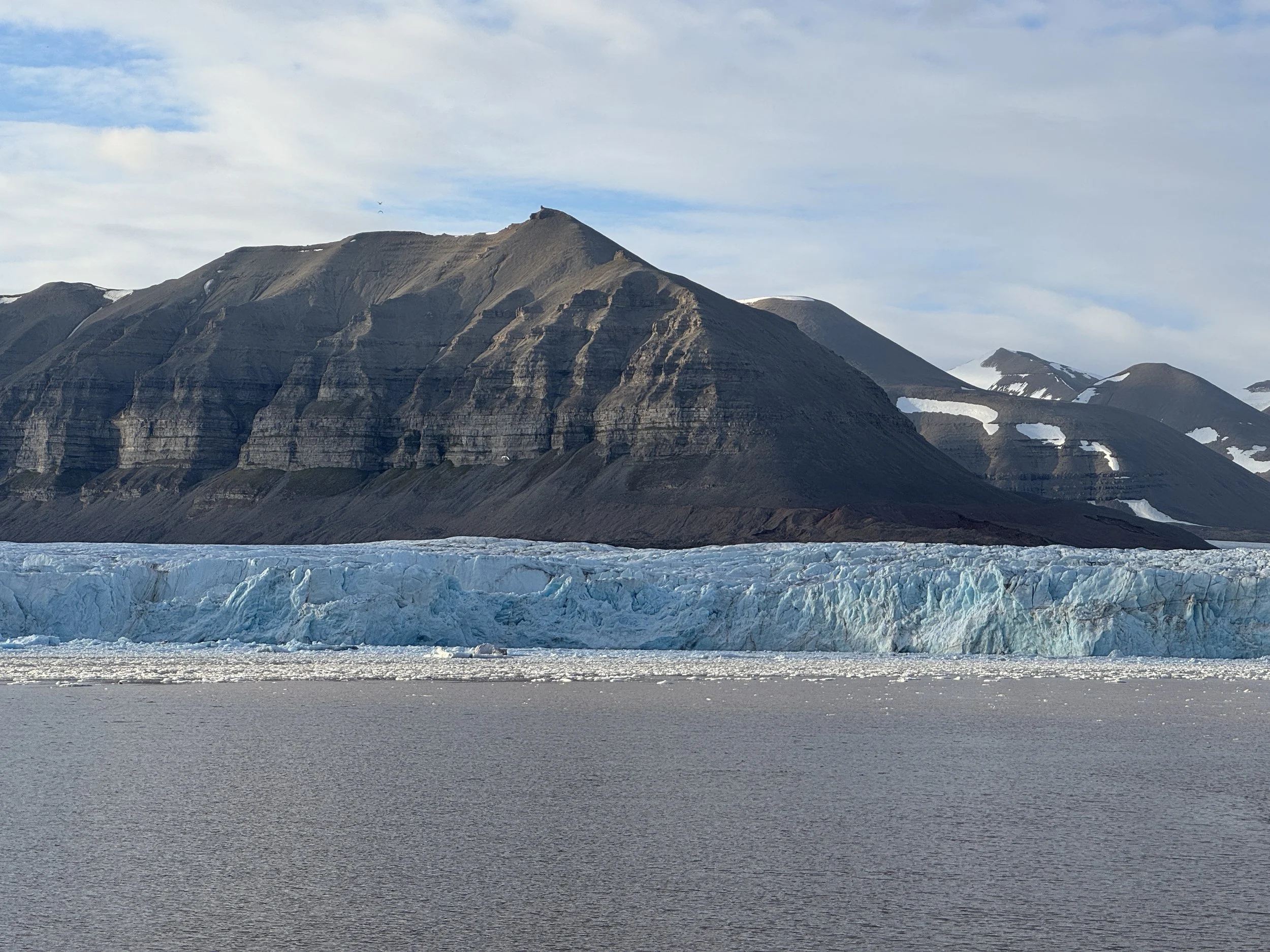
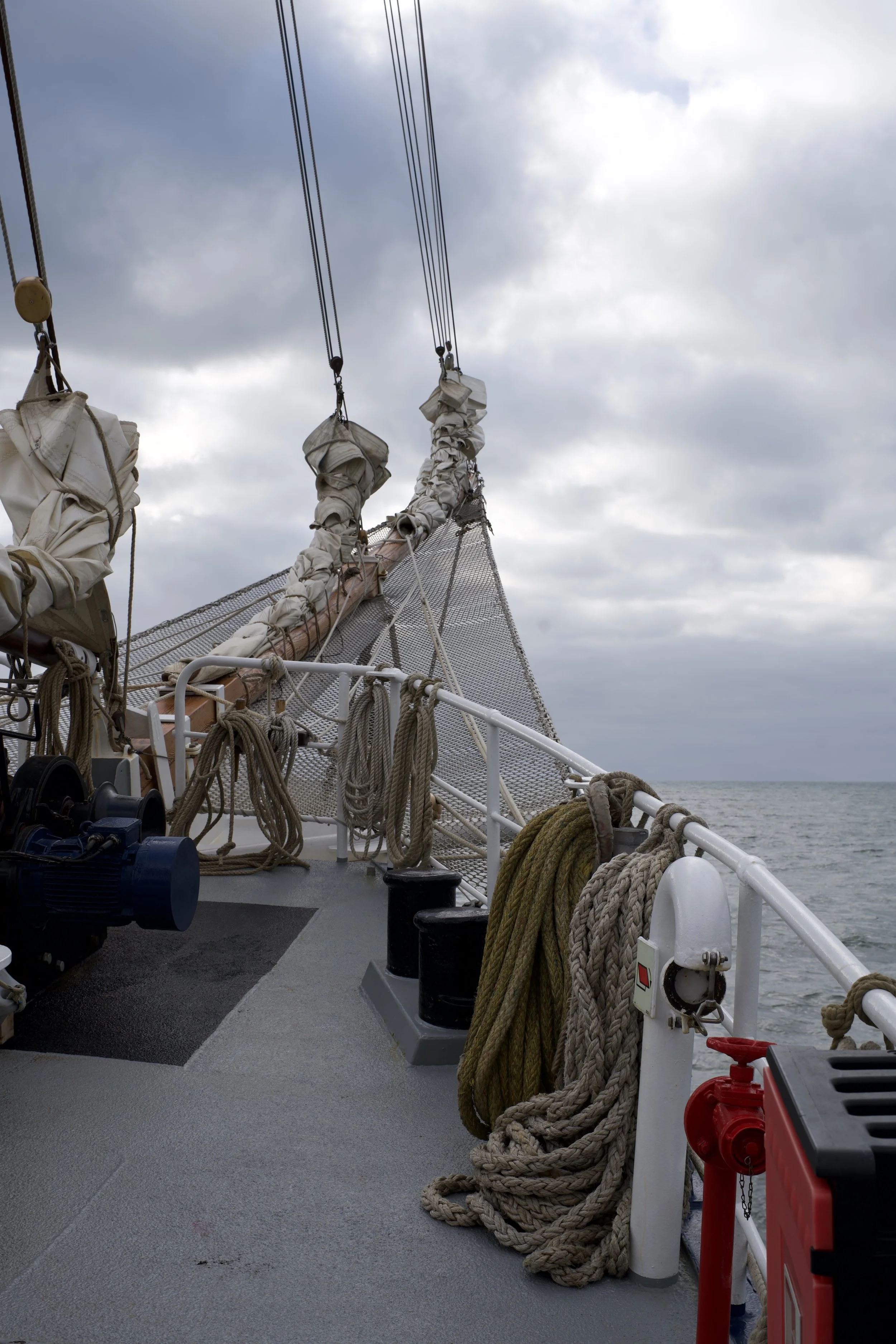
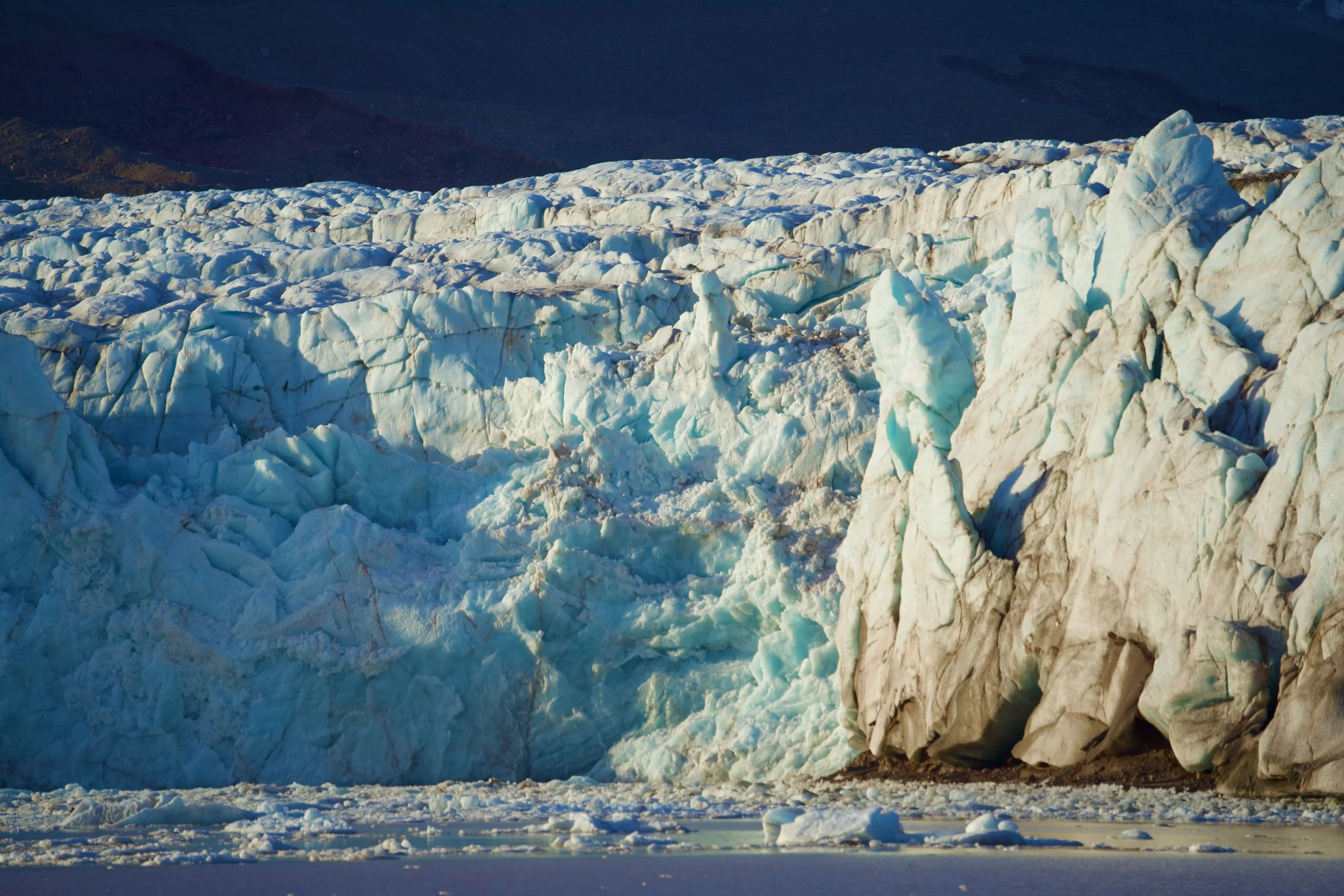
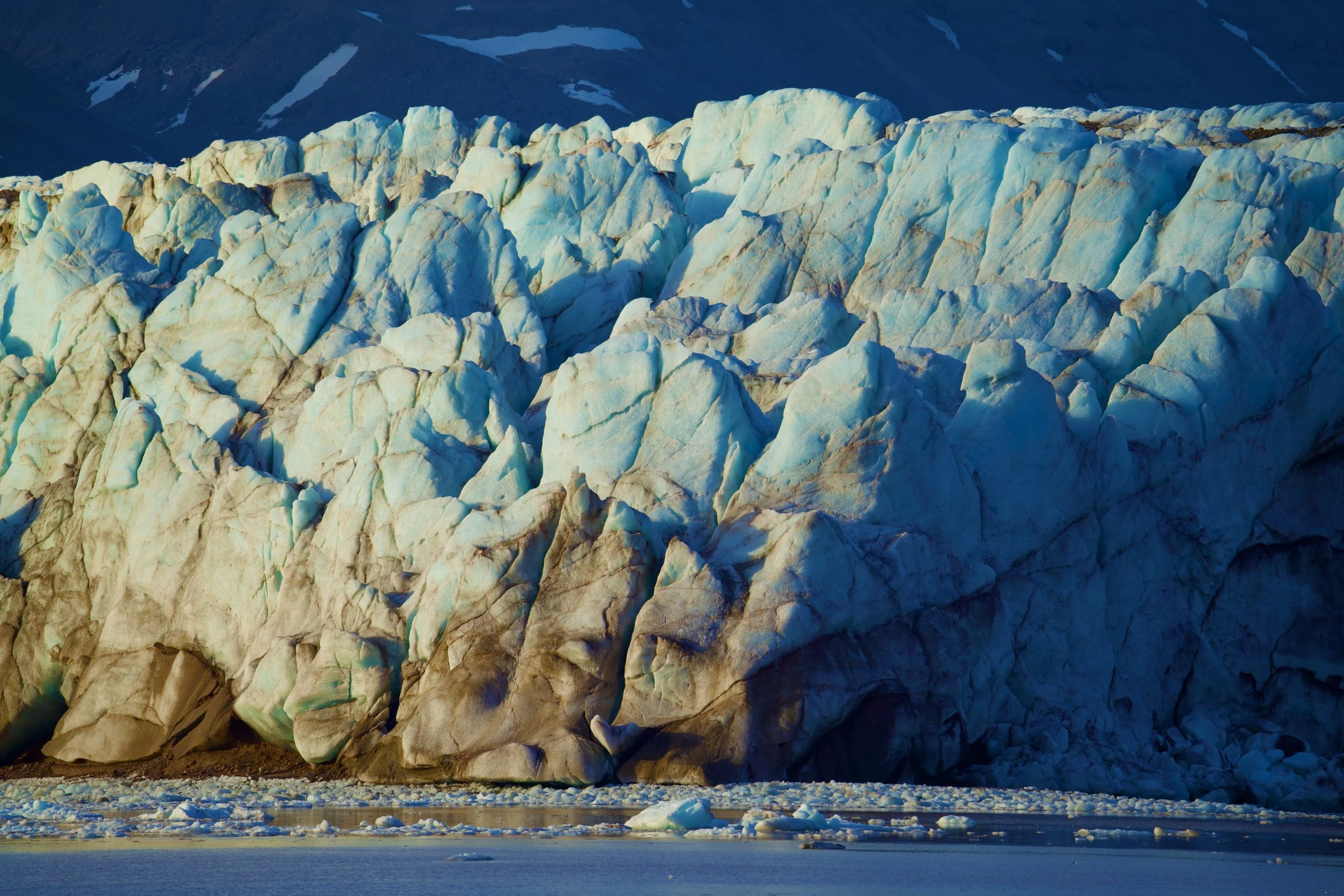
Then the first ice. Then the first glacier at eye level, which is not the same animal as a glacier from a plane window. Tunabreen. A wall across the head of the fjord. Blue where it had broken open, brown where it had brought the mountain down with it. We anchored in Tempelfjorden, 78° 13,7' N, 015° 36,8' E, and the chain ran out off the bow with the sail furled above it.
Dinner, was. The day had been long. Twenty-eight of us at the tables and most of the names still not stuck. I went to bed early. The bar was ten steps away and everybody knew where it was, but the evening beer had not become a thing yet. That took a few more days.
The cabins sit below the waterline. The sea is on the other side of the hull, level with your ear. It is not violent. A soft wash. A long steady hush. Closer to rain on a roof than to weather. It puts you under in about four minutes.
Then, somewhere in the middle of the night, the boat moved. Not much. A slow roll. Another. Then it settled. I lay in the dark of a windowless room in the bow and worked at it. We were at anchor. There was no wind. There was no swell in that fjord. Nothing out there was moving.
Small room. Small ship. Small hours.
Something a long way off had let go, and it had come across the water to find us.
I did not know that yet. Joachim told us in the morning.
“One learns from the sea how little one needs, not how much.”