Entry 038: Day 02: Good Morning, Good Morning
At 07:45 the speaker came on and Sarah said good morning. Then she said it again, slower. We are in Tempelfjorden. A word about the weather. Breakfast is in fifteen minutes, eight o'clock, see you up there. Good morning. Three of them. Two at the front and one at the back, like bookends around the day she was handing you. I never got up before her. Not once in sixteen days, except the last one. At home I have been awake at half past five for years and I have made my peace with it. On that ship I slept like a child, and I think it was the water, the small constant work of it under the hull all night, the boat correcting itself in the dark. Her voice was my alarm and I came to want it. When the trip was over she sent us a message with her voice in it, and there is more in that message than the greeting, but the greeting is the part I play back. I still have mine.
At eight Victoria called breakfast. Gergő was starting to move. I was already dressed. We had been lying in front of Tunabreen since half past nine the night before and the ship had not moved a metre in ten hours. You wake up already there. Whatever you were going to see, it was outside and it had been outside all night, waiting for you to open your eyes.
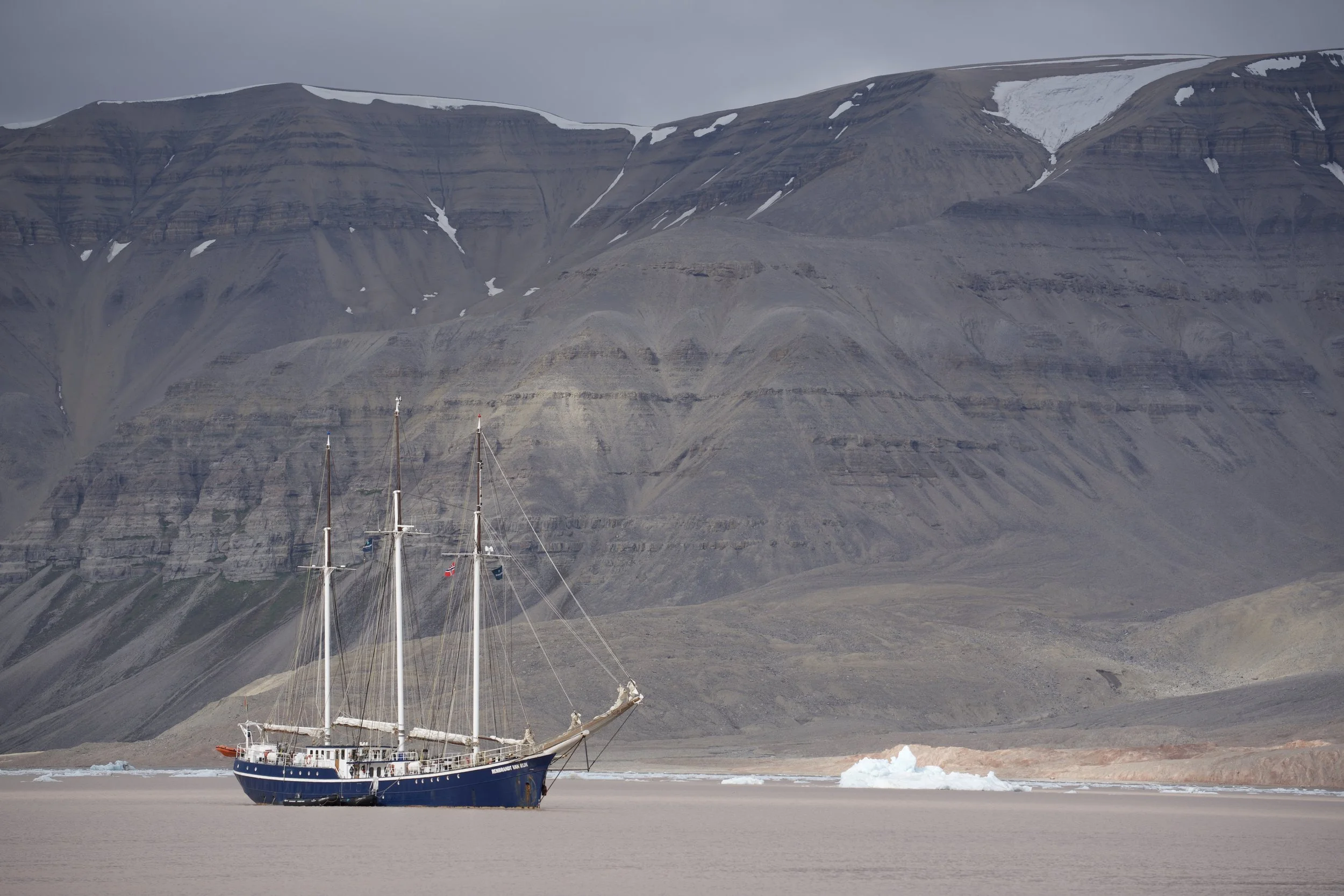
Tempelfjorden
The morning meeting is Sarah and Team alone. This one ran long because Joachim was in it, and Joachim was in it because of the boats, and because he had the answer to the thing the whole ship had been carrying since the middle of the night. The glacier calved. Tunabreen let go of a piece of itself in the dark and the water carried the news down the fjord and found us at anchor and moved forty-nine meters of steel under thirty sleeping people. No storm. No engine. No sea monster.
Then she explained how a landing works, and we went down to get dressed, and it took forever. It took forever because it was the first time. The layers, the jacket over the layers, gloves, camera, dry bag, the thing you forgot that is in the other bag. By the end of the trip we could do it in minutes. We got faster every day, and there was a morning coming when that mattered more than anyone standing in that corridor understood. By the gangway there is a board with our names on it and a magnet beside each name. You move your magnet out when you go ashore and you move it back when you return. That is the entire system, and it exists so that nobody is left standing on a beach in Svalbard while the ship sails to the next fjord. Some people took it seriously and worked at it. There was still not one day in sixteen when somebody did not forget.
Life vests, the small ones for the zodiac. Joachim had something to say before we went out. Under sail the vest stays on. Always. If you go over the side, by the time they have turned the ship and come back they are not rescuing you. They are recovering you. The water does not give you long enough to be found. He said it the way you would read a tide table, no pause after it, straight on to the next item. Not a warning. Arithmetic. Then out on deck to wait, because the guides go first. They always go first. They take the first boat with the rifles and they walk the ground and they look for bears, and only when the site is clear does anyone else get into a boat.
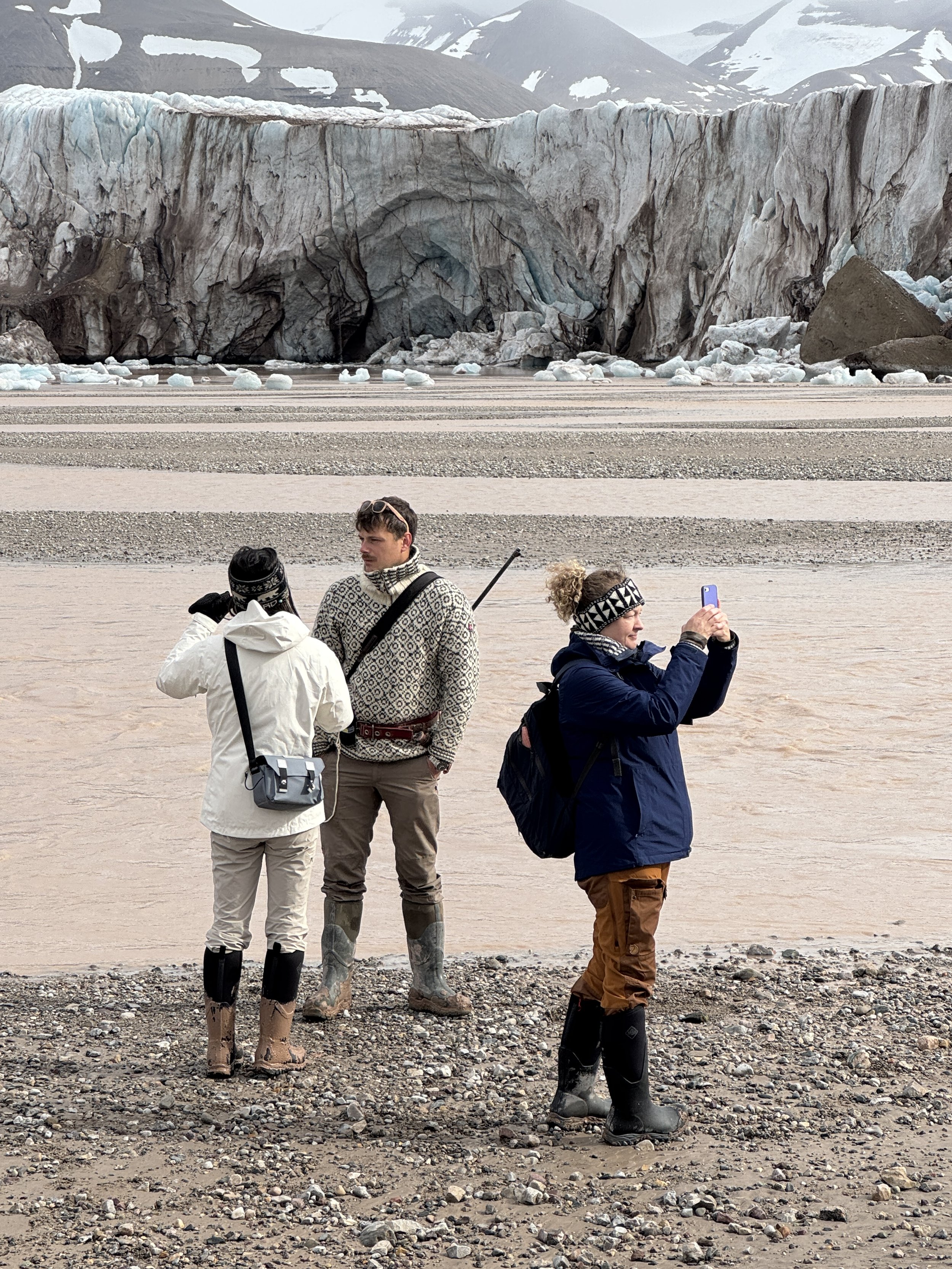
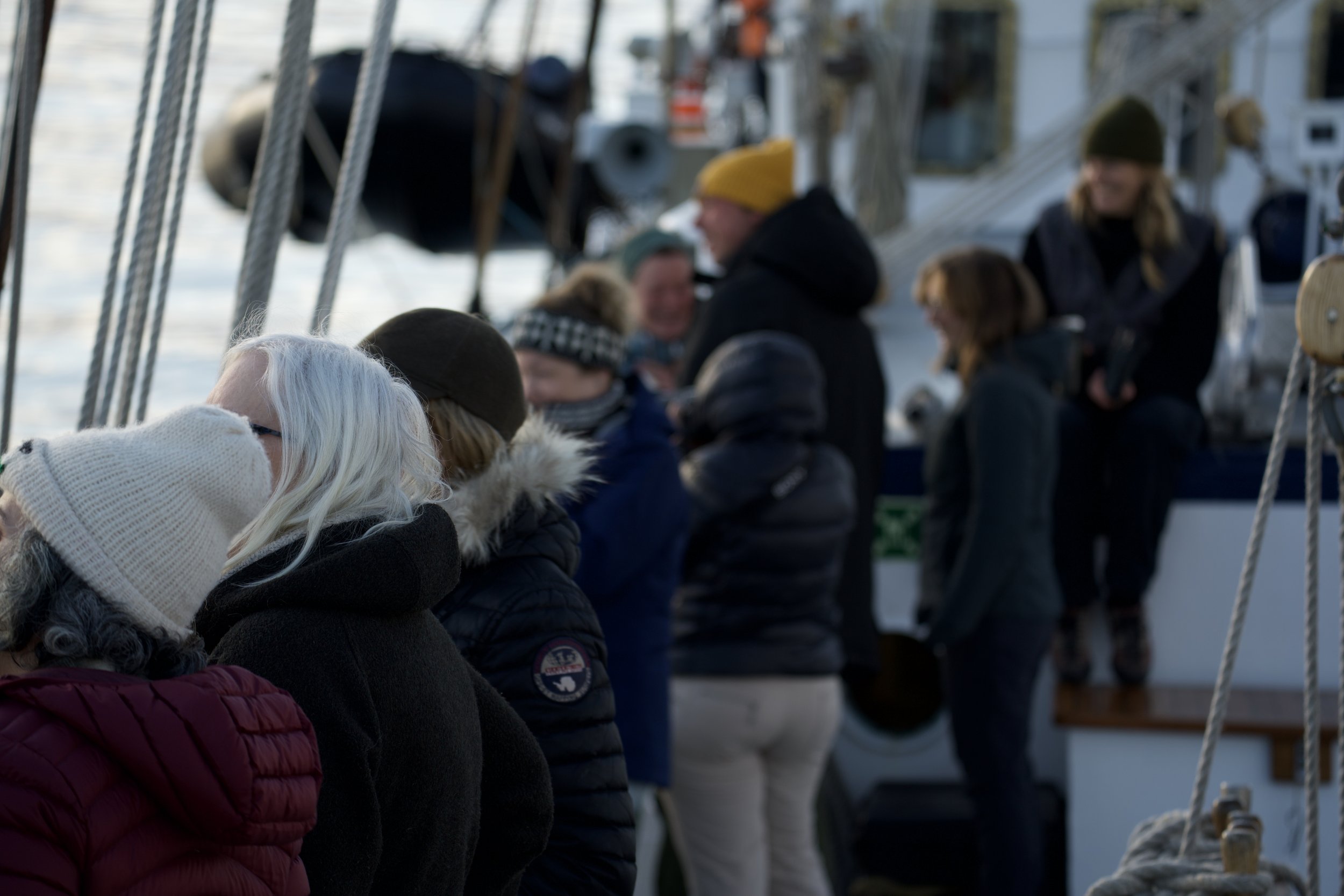
You board a zodiac backwards. Turn your back to the sea, down the stairs, and someone takes hold of your bag. One step to the ladder, one step to the boat, you take your bag, then sit. Eight or nine to a boat. Twenty-eight of us, so three loads, back and forth. The beach was four hundred and thirty meters from the ship. You could have thrown a stone most of the way. Getting out is the reverse and better. You face the driver, swing your legs sideways, and stand up in ankle deep Arctic water in the boots you were told to buy and now understand. On land the rifles go in one place and our bags in another, some distance apart, so that nobody reaching for a camera comes up holding a firearm. Nobody moves until everyone is ashore. Then Sarah gathers us on the stones and gives it again, the perimeter, what you can walk to, what you can put in your pocket and what stays where it is. Up on the ridge two of the guides are already standing where they can see us and everything behind us.
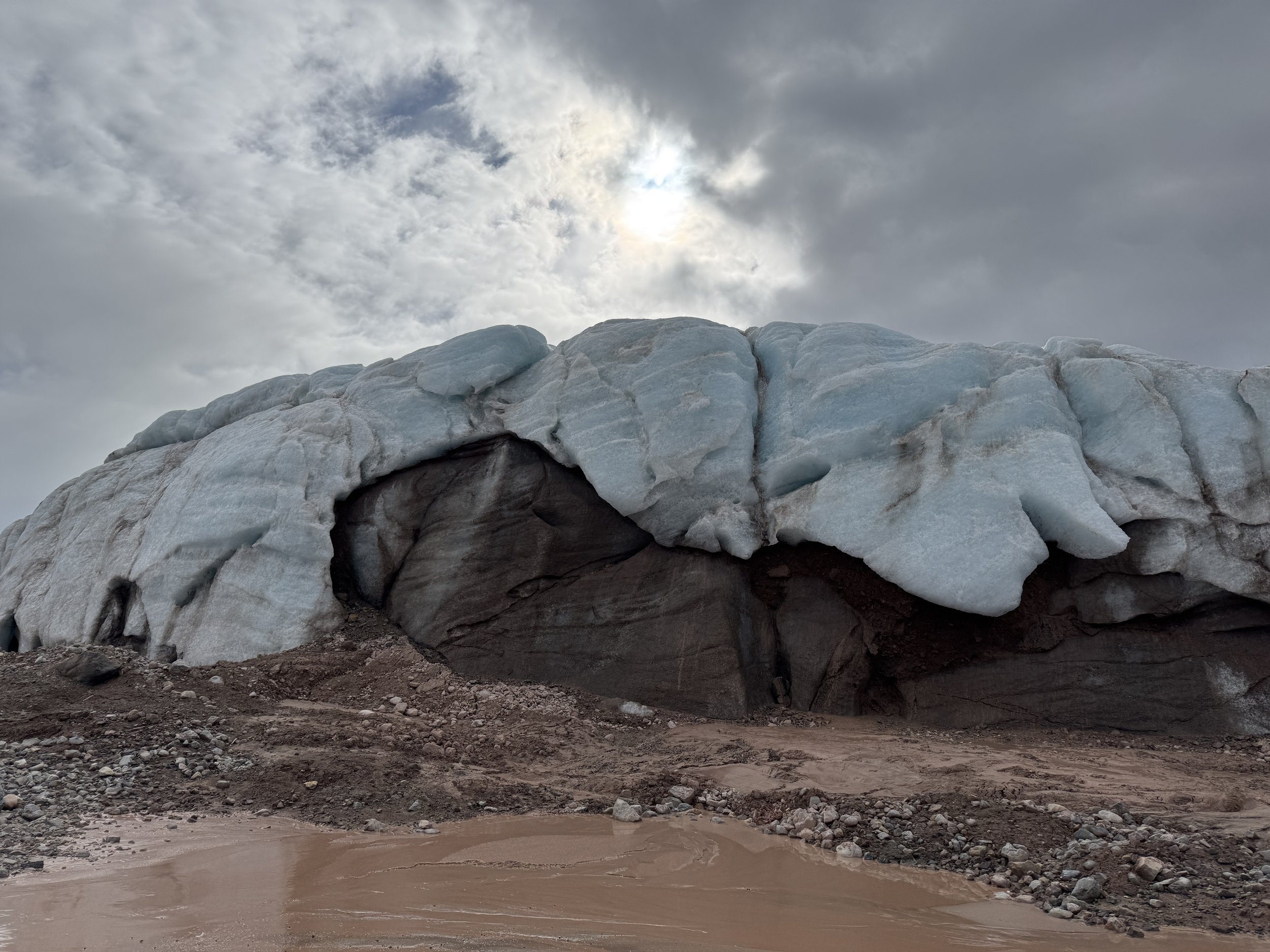
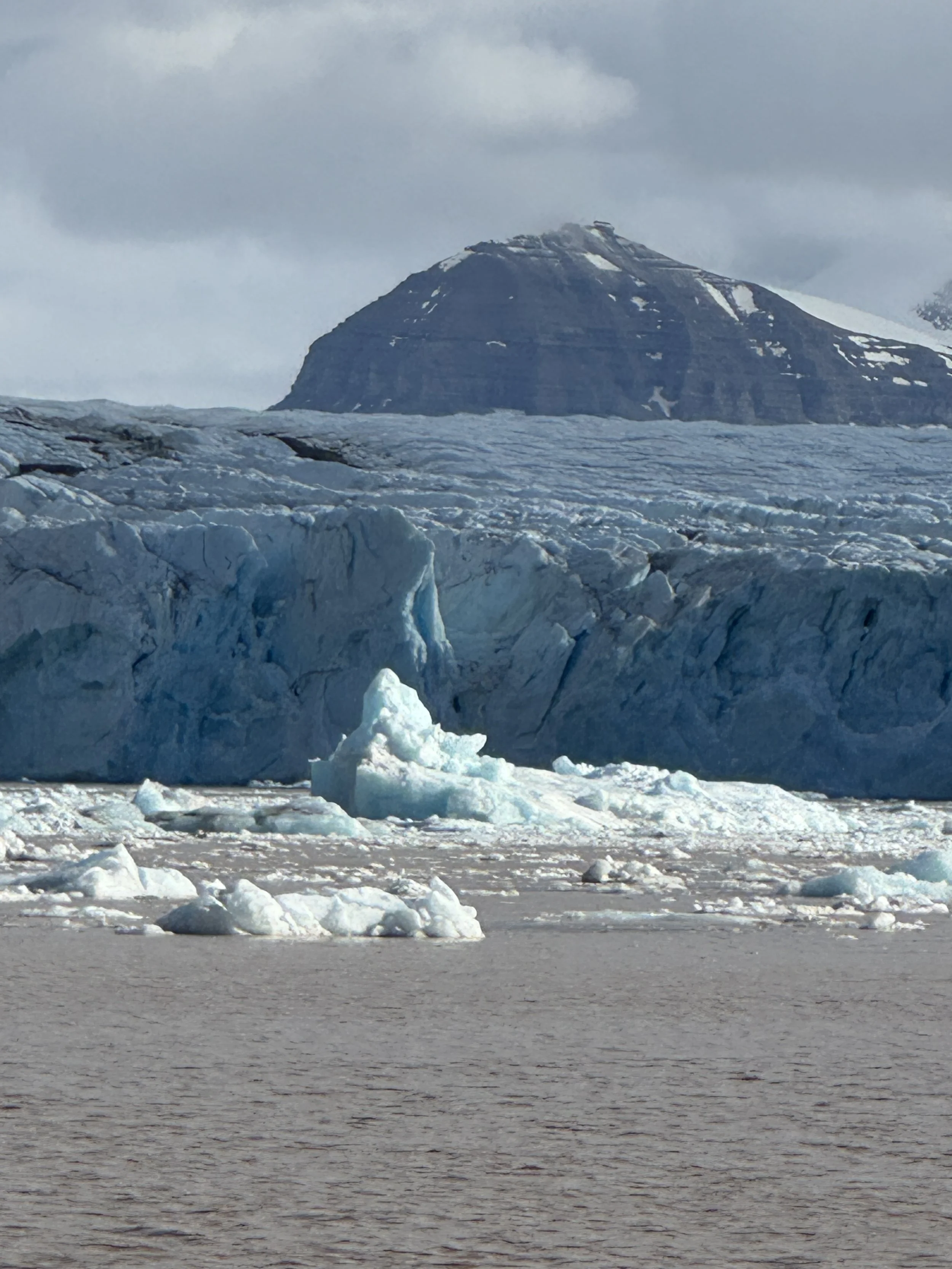
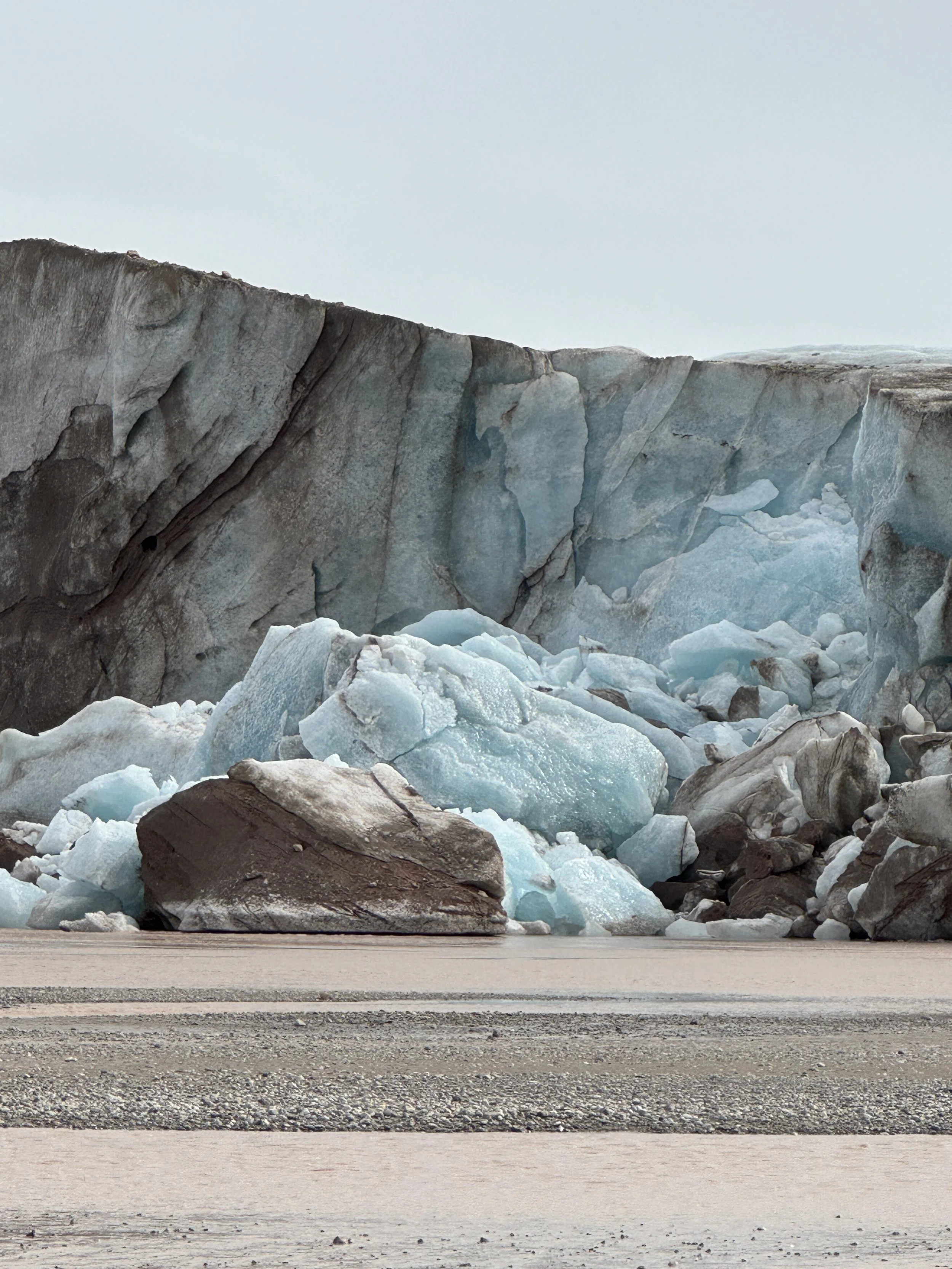
And then you are in a brown valley. The river ran the color of milky tea and the gravel ran grey and the mud ran red brown and the whole plain was braided with meltwater going nowhere in particular. A few shades of the blue you come here carrying in your head. The ice was right there, fifty feet of it, grey on top and streaked through with the mountain it has been eating for a thousand years, blue only in the broken places where it had come apart. It was a strange, enormous, patient thing to be standing in front of on your first morning.
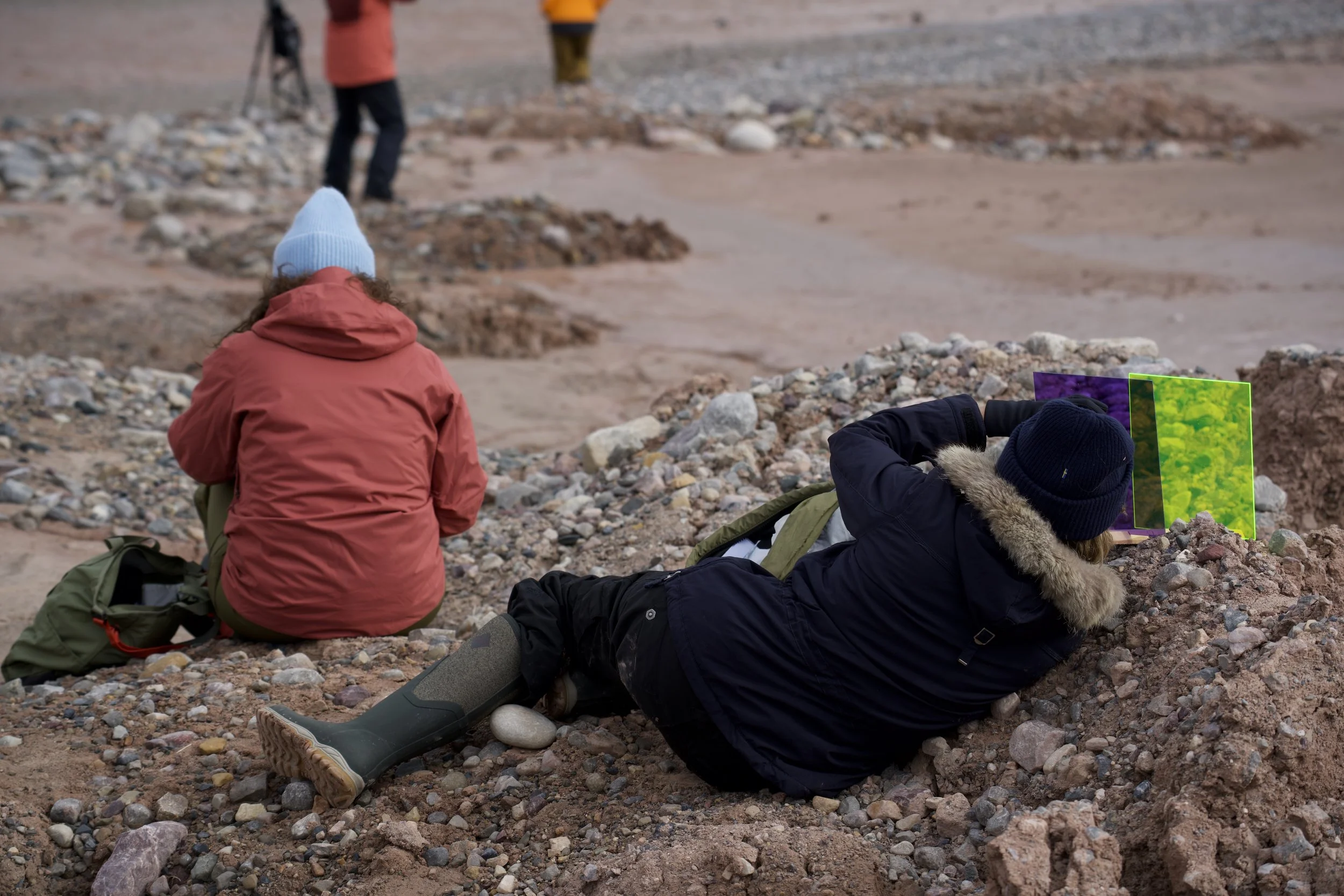
People went out in every direction inside the perimeter. Someone set up a tripod. Someone sat down and wrote. One artist lay flat in the gravel holding up two panels, one violet and one neon yellow. I took the Osmo and the Sony and photographed the group and the ship, and then I stopped and sat down and did nothing. That is when I heard it. Thunder. Not near, not sharp, a long low collapse that comes across water and arrives in your chest before your ears have filed the paperwork. Ice off the front of Tunabreen. It happens again while you are still deciding whether it happened at all. It goes on all day the way weather goes on all day. The place with the least to look at was the first place that ever spoke back to me.
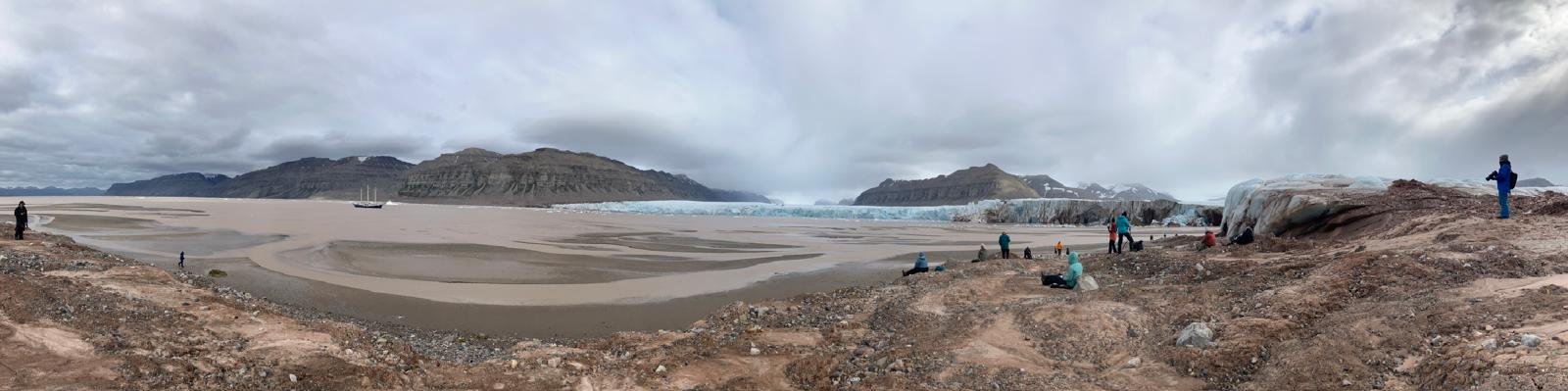
Photo: Maggie Puckett
Two hours. Back in the boats, up the ladder, magnets in. At twenty past twelve the anchor came up for the first time in fourteen hours and we went north along the face of the glacier, and I ate lunch while it went past the windows, and by ten to two we were anchored again three kilometers up the front. After lunch Sarah briefed the second landing and I did not go. Four of us stayed aboard. It is the only landing I missed. I wanted a shower and I wanted my gear stowed where my hand could find it, because that morning my hand kept finding the wrong thing. I wanted an hour to understand where I was. I got it, it was the right call, and by evening I wished I had gone. That is why I never missed another one. They came back exhausted and delighted, in that order. Sarah had taken some of them on what she calls a long hike, which means no talking, no photos and no questions. There were fossils. They stayed there.
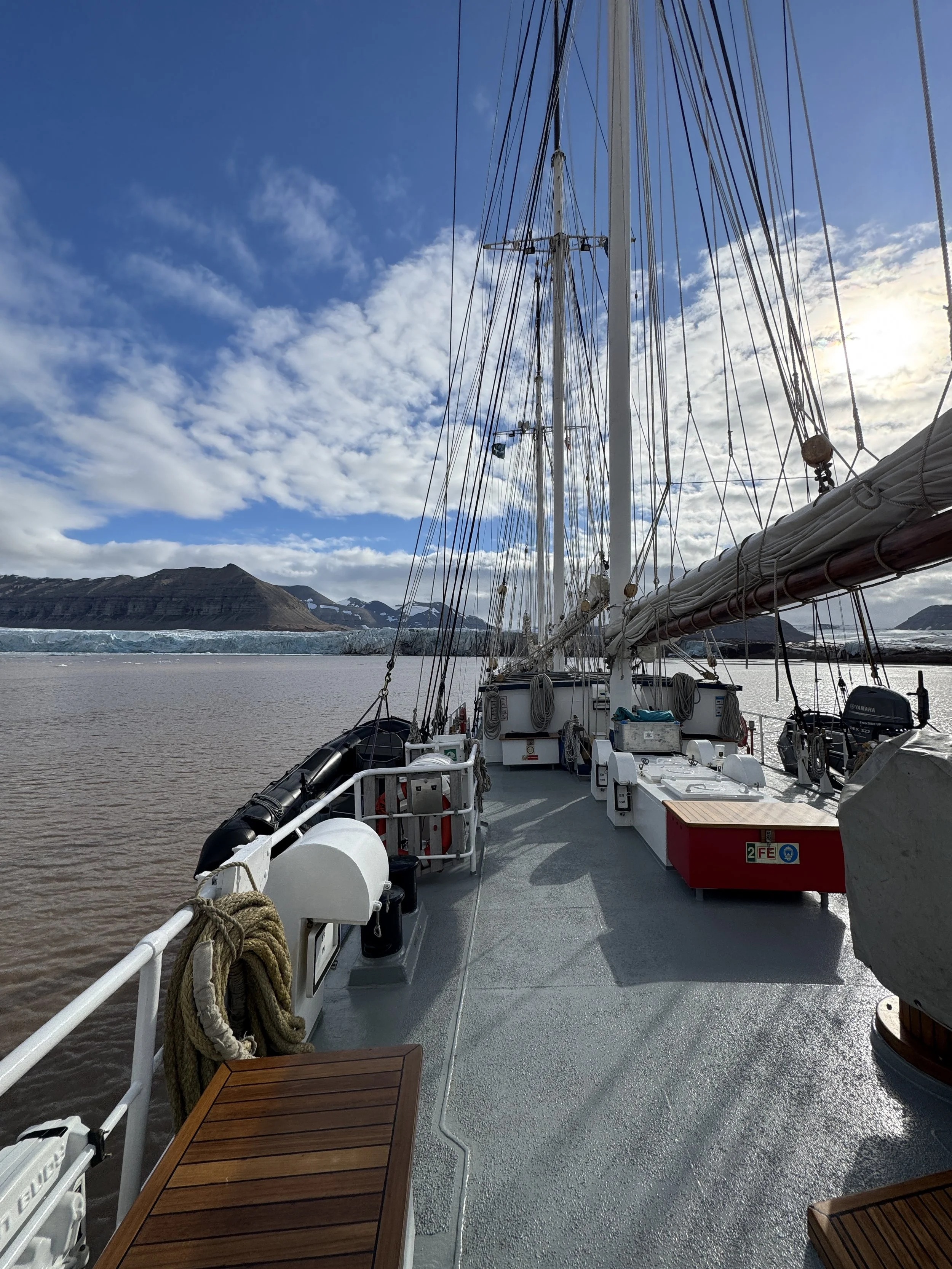
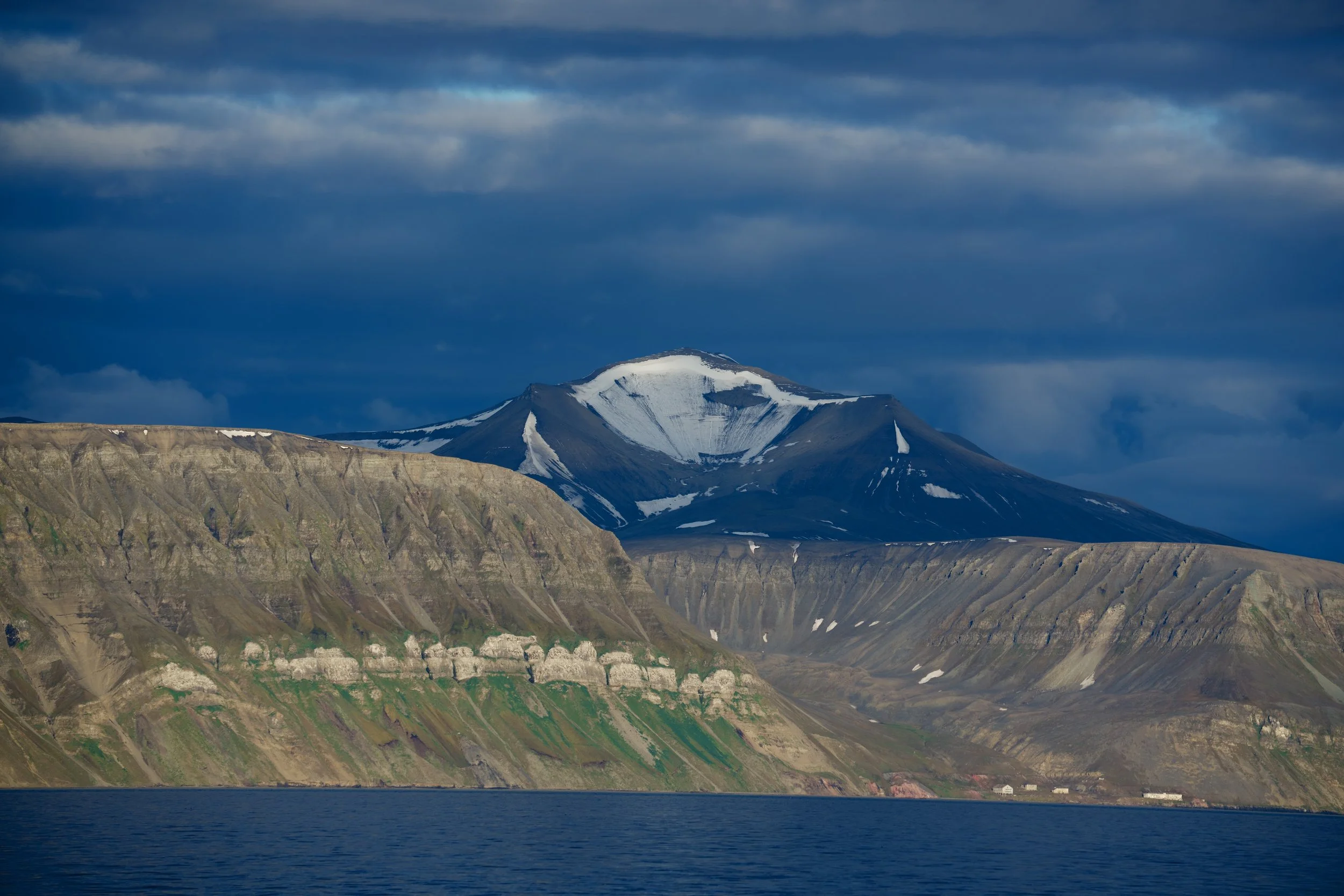
At ten past five the anchor came up again and did not go down for thirty hours. So dinner at seven was the first meal of the trip taken while moving, eight knots down Tempelfjorden with the light going long across the water and the plates sliding half an inch and back. This is the night the table happened. Cathleen, Shannon, Christina, Vicki, Maggie, me. Nobody assigned it and it kept reassembling for two weeks. Cathleen brought Maggie over and that is how I met her. She works in clay. She has cut a whole whale into sections and stood them in a row with a harpoon head driven through the hollow middle and the sea painted on the inside of the animal, and there is ghost net tangled in the tail, and the head still has its eye. The body of work is called Arctic Mania, and it is all this place. In 2019 a collection of her work was archived in a vault in the permafrost, beside the Seed Vault. She had work in this ground before she ever stood on it. She was the only one of us who had done this before, and she told us that on her trip they never got around Svalbard and never saw a single bear. Not one. So at that table nobody knew yet which kind of trip this was going to be. Every bear I had seen up to that night had been stuffed. Nobody had told us that this group, the one Sarah would later call the wild ones, were bear magnets.
After dinner we went round the room and everyone said what they had come here to make. I talked about Ghosts of the Ice. There is a story attached to that table with Maggie at the center of it. Agatha Christie is all I say. It starts tomorrow.
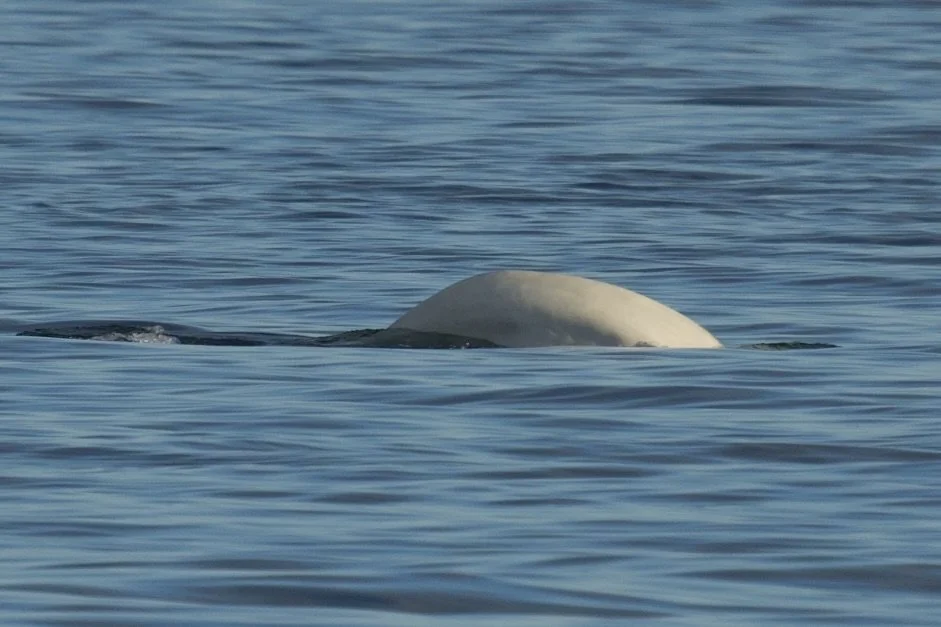
Then the speaker again. Whales. The ship came off her course at twenty past midnight and turned north, and Joachim had the engine off and we were drifting. Belugas, far out. Three white marks on grey water, so small you doubted yourself, and then the sound. That soft hard exhale across open water, arriving with no body attached to it. Everyone on deck and nobody talking. She drifted for thirty-five minutes and then took hold of herself and went on. They were the furthest away anything ever was on that whole expedition. We did not know that. We stood there thinking this is what it looks like, and it turned out to be the smallest version of it we would get.
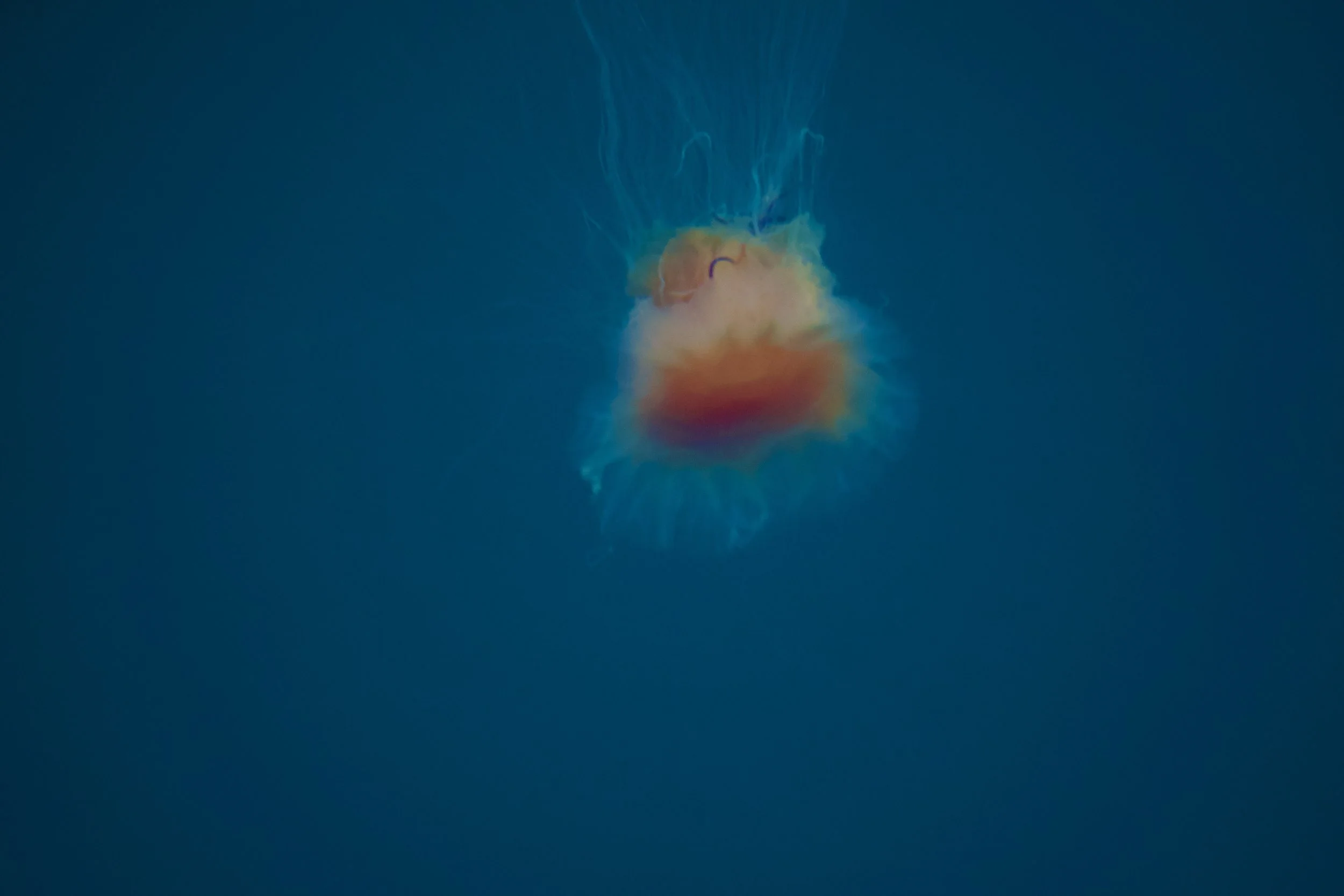
At some point in those forty-seven minutes I stopped looking out and looked down. A lion's mane was hanging beside the hull, orange, slow, all that hair. It had been there the whole time.
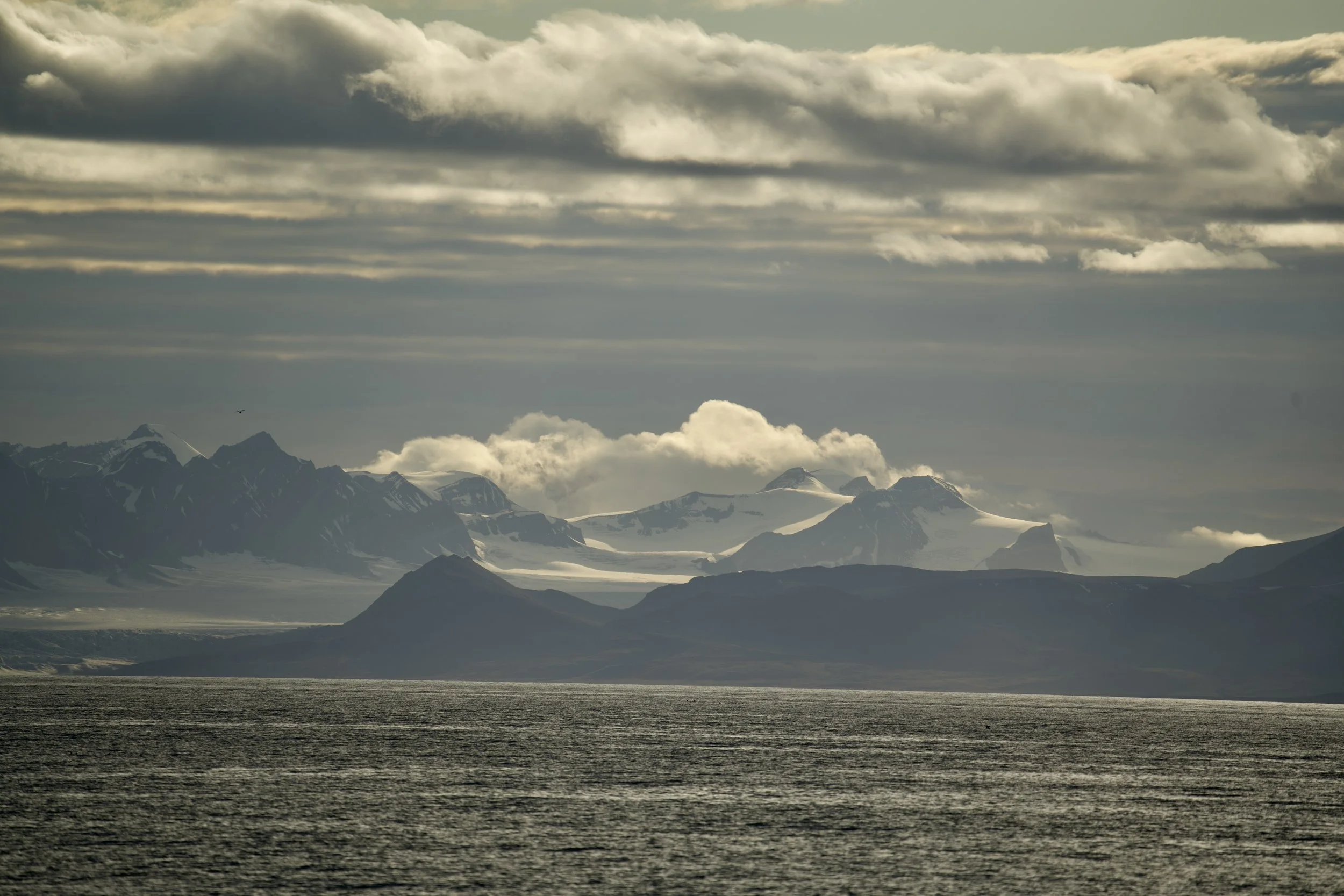
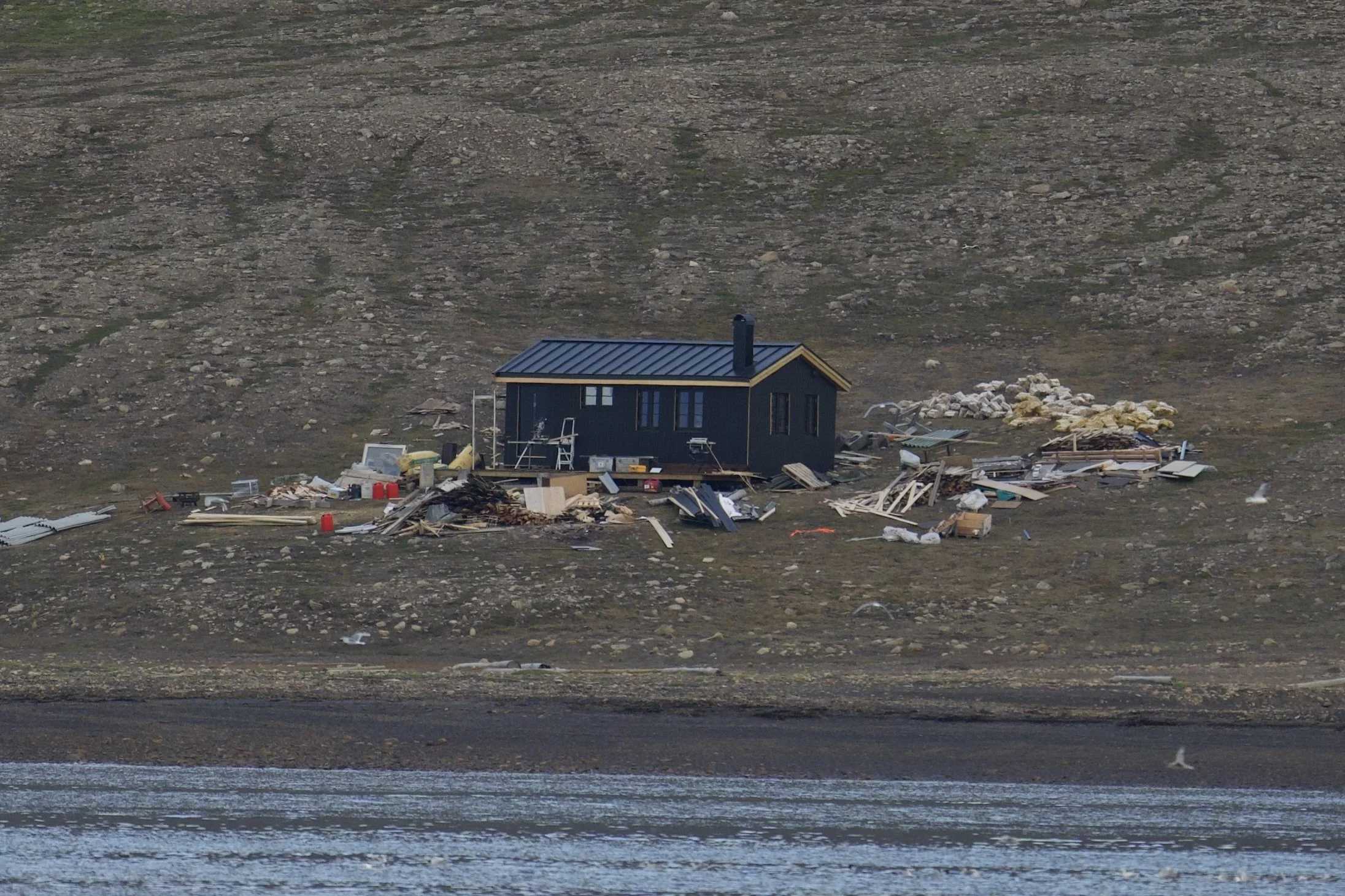
That was the thing about that day, and it took me the rest of the trip to see it. It was the best day so far. Every day was. Each one arrived looking like the top of the mountain, and then the next one came.
The captain had been round at dinner to say the wind was coming and he needed hands in the small hours. Gergő put his up. I went to bed, and some time after that he was up and moving, loud enough to come through earplugs. A little after two the sails went up. West out of the fjord and south down the open coast, and the sea took hold of us, and through the wall I heard for the first time what that does to people. No anchor went down that night. First time. The ship just kept going.
“How inappropriate to call this planet Earth when it is quite clearly Ocean.”