Entry 039: Day 03: No Ground
The captain had said three in the morning. It turned out to be four, which on a boat is not late, it is weather. Gergő had put his hand up at dinner and now Gergő was getting dressed. I heard him go. I did not go with him. There is a version of this where I pull on boots and take a line in my hands at four in the morning off the west coast of Spitsbergen, and it is a very good version, and somebody else lived it. Then through the wall I heard our neighbours being sick. I am not going to say who. The sails were up, the hull was doing something new, and behind a few centimetres of steel somebody I liked was having a night. You lie there and you start counting. Am I next. Is that a feeling or is that just the boat.
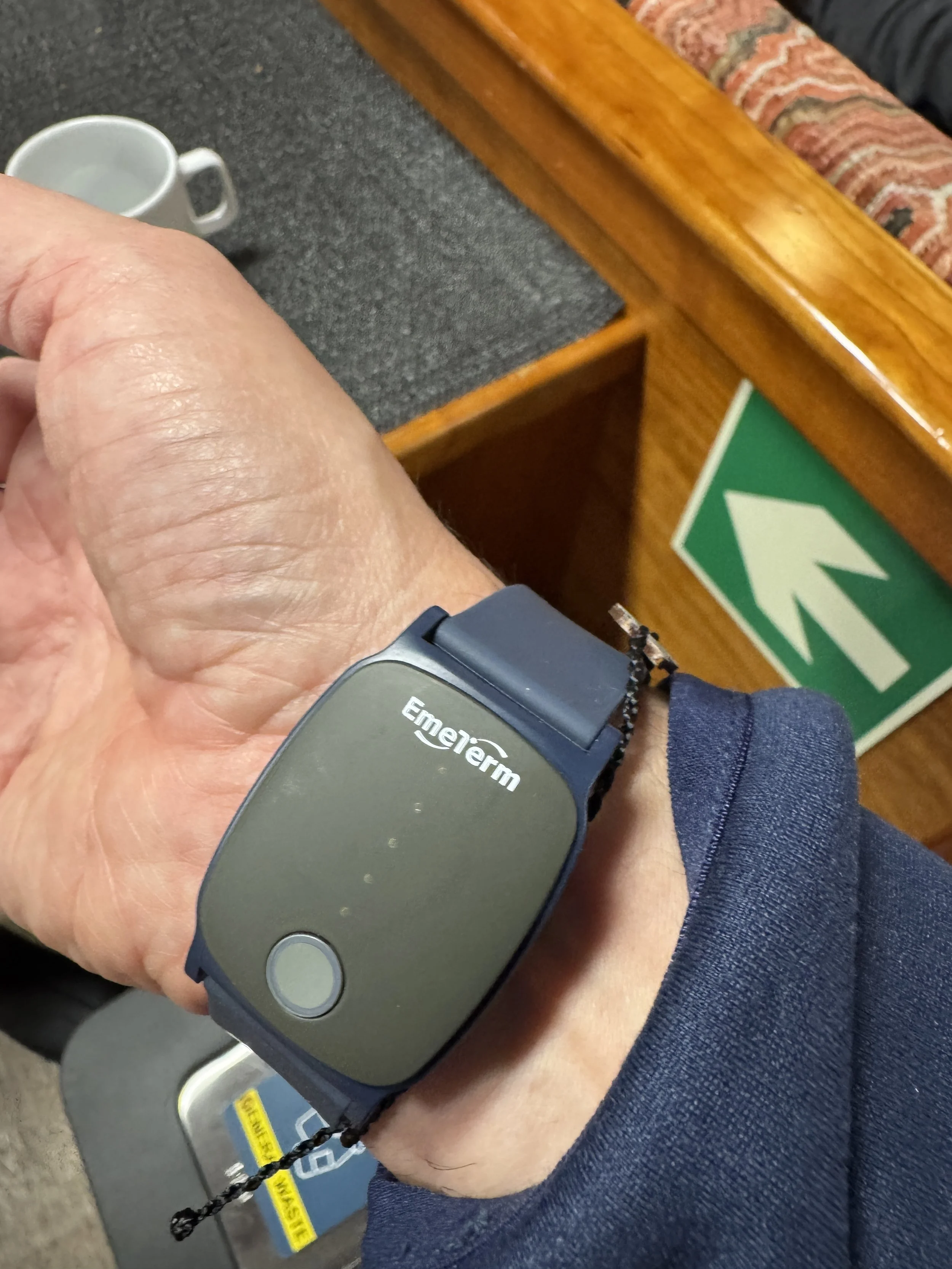
Here is the useful part. In 2001 I went whale watching in Monterey Bay and got so sick that I have arranged part of my life around never doing it again. So before this trip I asked my friend Julia, who has sailed to Baja, and then I did what she said and nothing else. Bonine, chewed, three hours ahead, every morning. A Reliefband on the wrist, which sends a small electrical pulse through the nerve and looks exactly like a second watch. Somebody made fun of me for wearing two. I explained it. Then they wanted one. And sixteen patches from my doctor, which is a preposterous number of patches for one man. I used one. The rest went to other people, and Ling-Lin got most of them. Terrible ratio. I would buy sixteen again. All three worked and I never got sick, not once, not for a minute, and I went up to breakfast hungry, which after the neighbors felt close to rude.
I came out on deck at eight and she was still under full canvas. I have jumped out of an airplane and I have jumped out of a hot air balloon and they are not the same thing. Out of a plane you are thrown. The aircraft is doing a hundred and something and it hands you to the air like a problem it no longer wants. Out of a balloon you step off and the world lets you go. That is the difference between engine and sail. The engine pushes. The wind takes. There is a sound the canopy makes when the slider comes up, and there was a version of it in the rigging all morning, and the water went down the side of the hull the way water goes when nothing is forcing it. Rauschen. Es ist dahingerauscht. I looked for the English and there is no English.
By half past eight the wind was going, and an hour later they took the sails in, and this time I was on the lines. Beth and Sarah and Adrian working, me winding rope. So the record shows I slept through putting them up and turned out for taking them down. Everything on that ship is volunteer. Nobody makes you. You get to pick which half of the job you are the kind of man who does. Then the engine came back on and stayed on for nine hours.
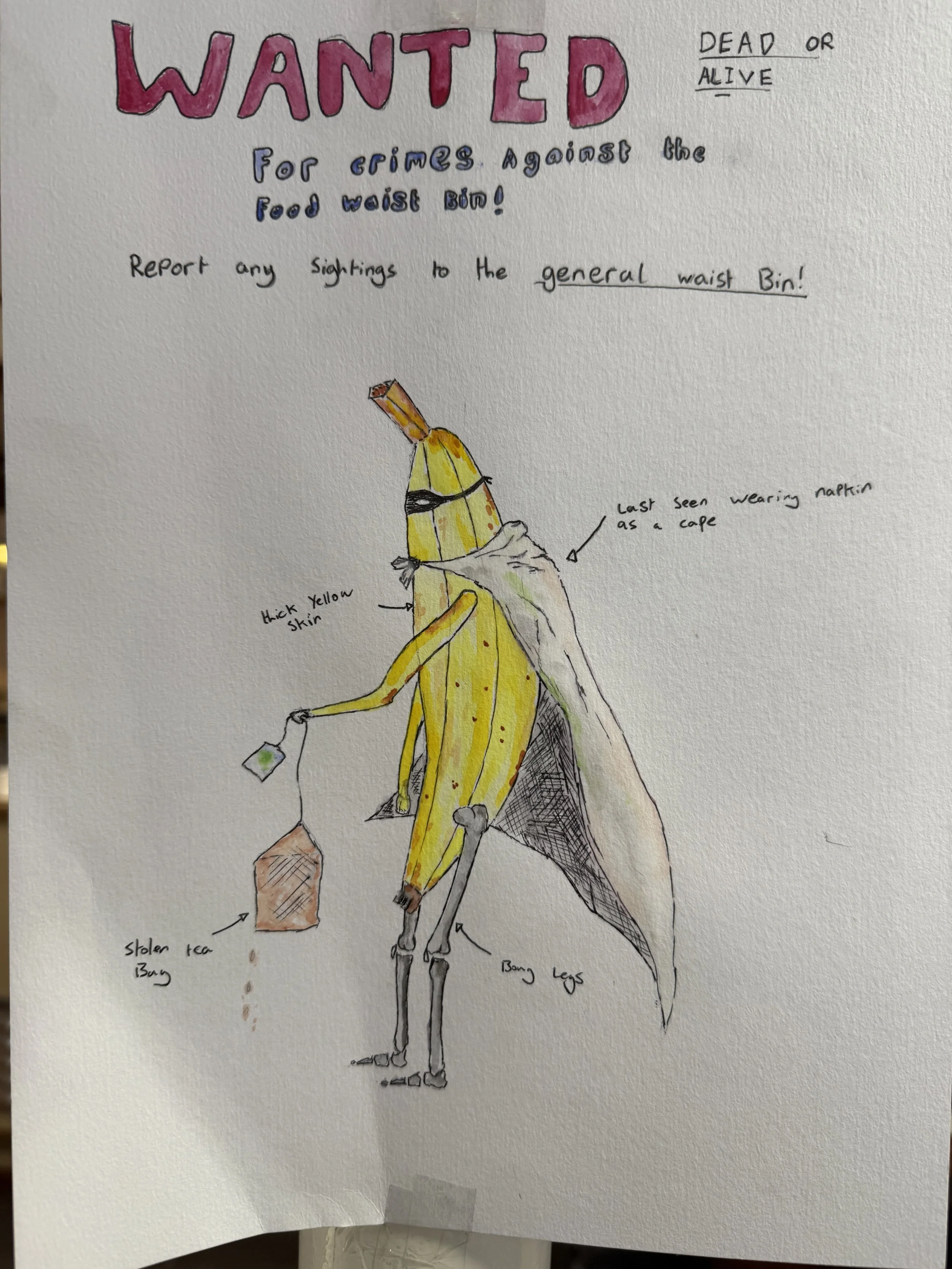
After breakfast Sarah told us about the food waste. Some of us had been putting things in the wrong bin. She explained it again without theatre, the way she explains everything, and twenty-eight adults sat there working out how much trouble we were in. The answer came later, in watercolour. WANTED, DEAD OR ALIVE. For crimes against the food waist bin. Report any sightings to the general waist bin. The suspect is a banana in a domino mask wearing a napkin as a cape, holding a stolen tea bag, standing on a pair of bones, and every label is one more thing that does not belong in that bin. Thick yellow skin. Bony legs. He built the criminal out of the evidence. Rhys is not one of the artists. Rhys is a guide. A ship with twenty-eight artists on it, and the man with the rifle answered the recycling talk with a painting.
The morning was portraits. Sarah put us in front of a backdrop one at a time and worked through everybody in order so the crew could learn our faces, and the sheets went up where all of us could see them. She asked me twice to take the hat off. My hair had opinions. The hat stayed on and Sarah let it go. Every person on those sheets came out looking like themselves, which is the whole trick.
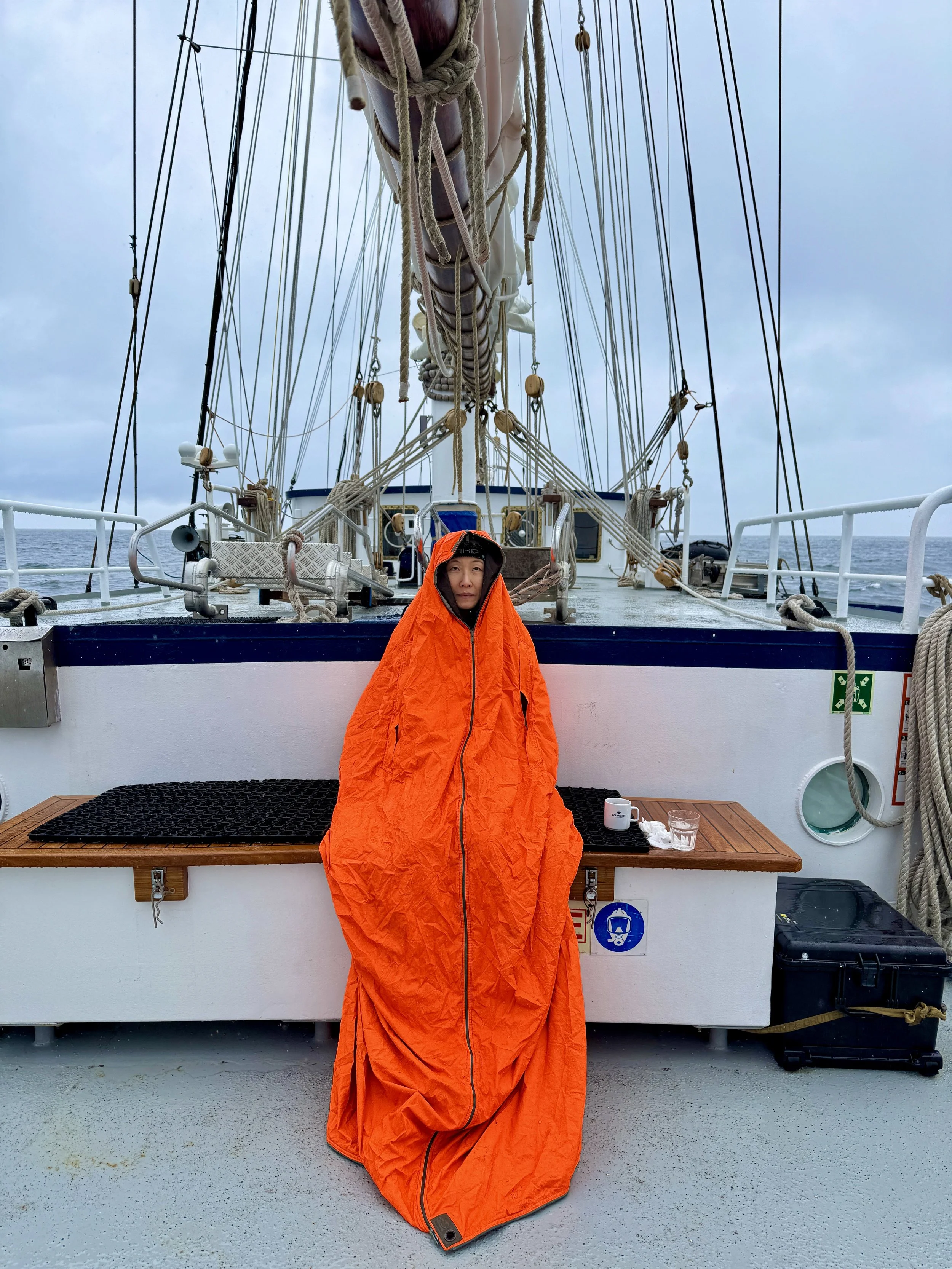
Later I found Ling-Lin on deck in a bright orange survival bag, zipped to the chin, only her face showing, with a mug and a glass of water beside her. She had been unwell since the small hours and I gave her patches, then and again after. Ling-Lin is a sculptor. She teaches at Oberlin, she trained in Texas and Virginia, and before that she took a law degree in Taiwan. She came to Svalbard to build a crime scene. Her words. Architecture and familiar objects at the wrong size, fragmented body parts, things hidden inside other things, light running through all of it. It comes out of Insomnia, the Swedish film, where a detective loses his grip in a place where the sun will not set and daylight becomes the whole argument about exposure and secrecy. She came north for light that does not switch off. She also brought a handheld 3D scanner, and it comes back into this later, pointed at my face.
She did not sleep our first night in Longyearbyen. Not one minute. At breakfast she was worried rather than amused, but she could see the shape of it. She had flown to the Arctic to make work about a man who cannot sleep in endless light, and the light started with her on night one. One more thing about the scanner, which I only worked out later. It needs shade. Point it at anything in direct sun and it gives you nothing, so she had to wait for cloud, or work indoors, or shelter it with her own body. The one material she came all this way for is the thing her instrument cannot survive.
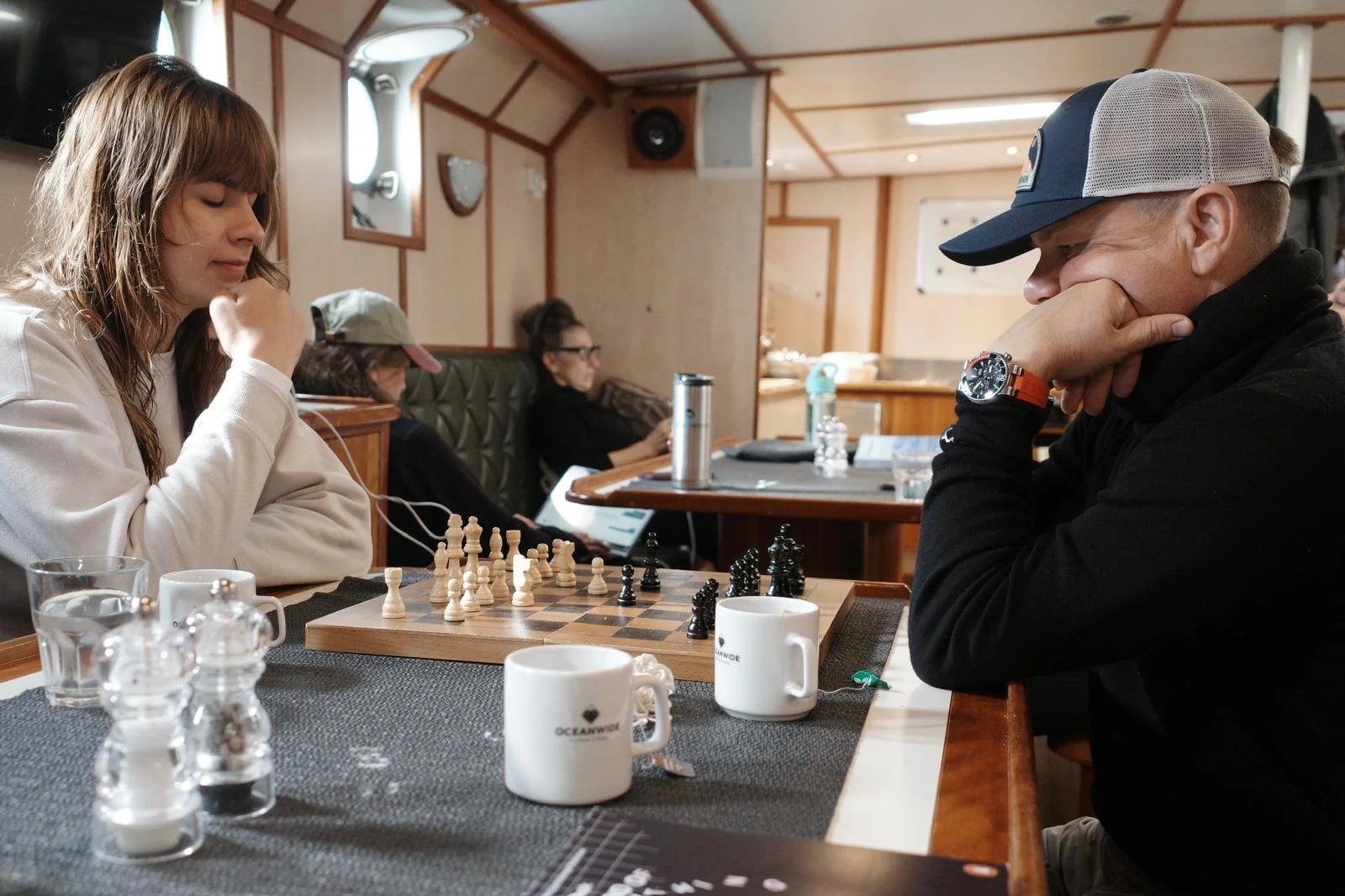
Lunch, then grey water and no land close enough to matter. Yr, the Norwegians call it, the fine suspended stuff that soaks you without agreeing to be rain. I backed up cards, sorted files, had a shower, went out and shot the coast going past. Nine hours of engine and not one identical minute of it. And I played chess with Annalise. She set up her pieces, and around the middle game she mentioned she had been chess captain at school, which is beautiful timing and I respect it. It went long. It was going somewhere. Then dinner was called and we agreed a draw, and I have decided to leave it there.
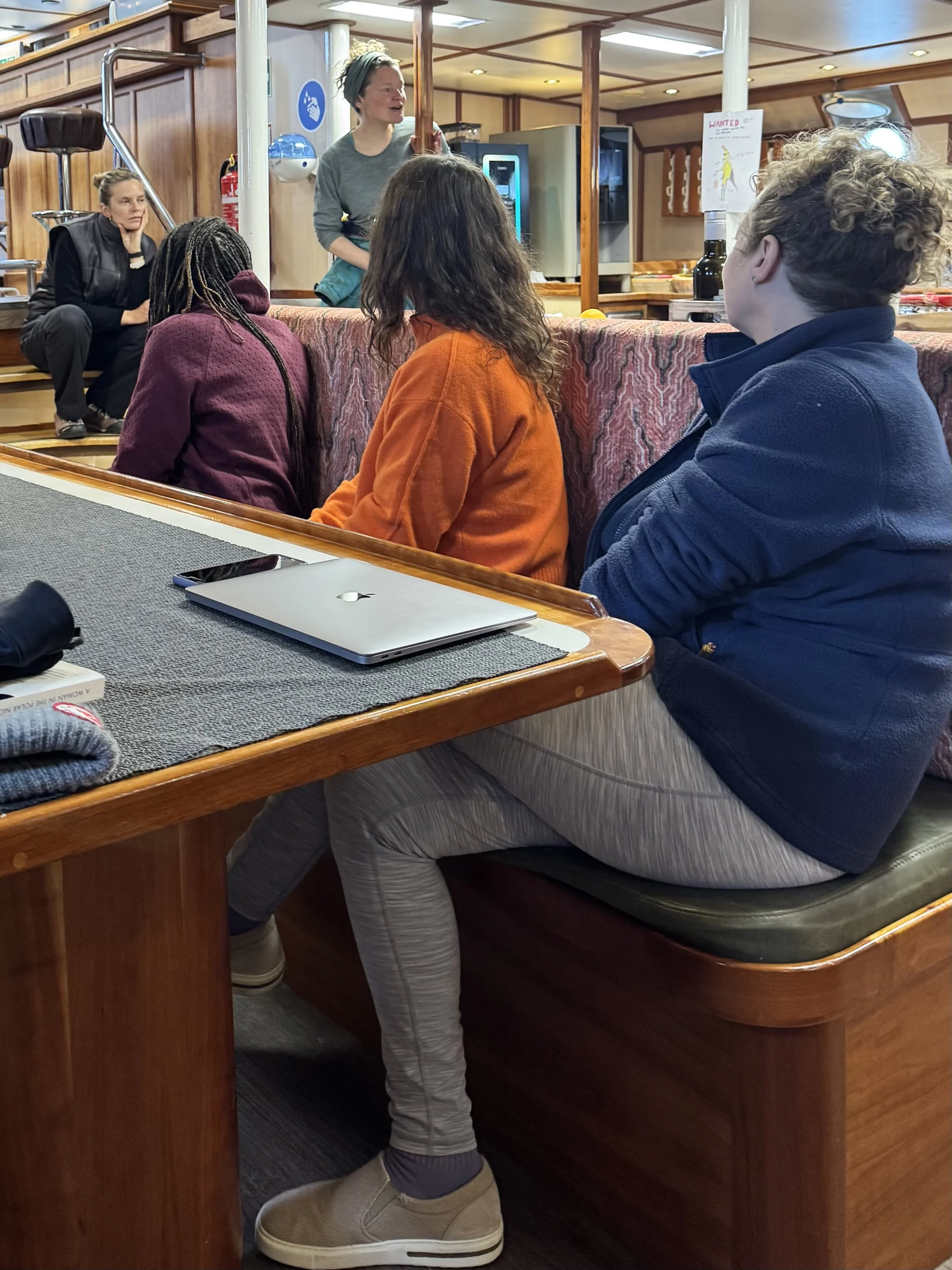
At four Sarah gave a talk on the history of Svalbard and Spitsbergen, warm room, at sea. I sat through all of it and kept almost none of it, so I asked around afterwards. Maggie had the naming, that the archipelago was Spitsbergen first and Svalbard after. Christina had the shape of the room, that it turned into the guides talking about their own lives and then into Norwegian citizenship politics. Two people handed me back my own afternoon. The hour I lost was the one about who gets to belong to a place.
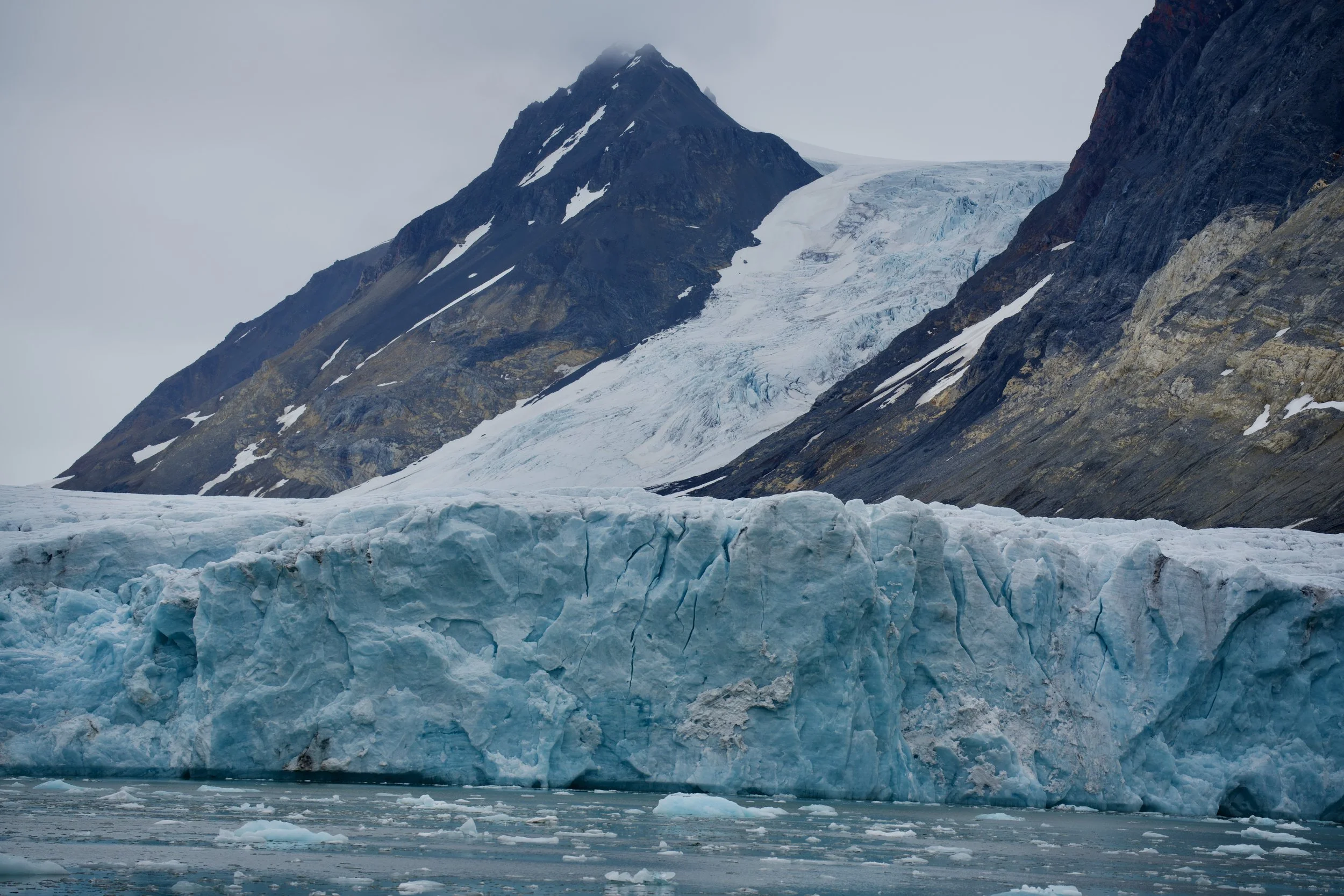
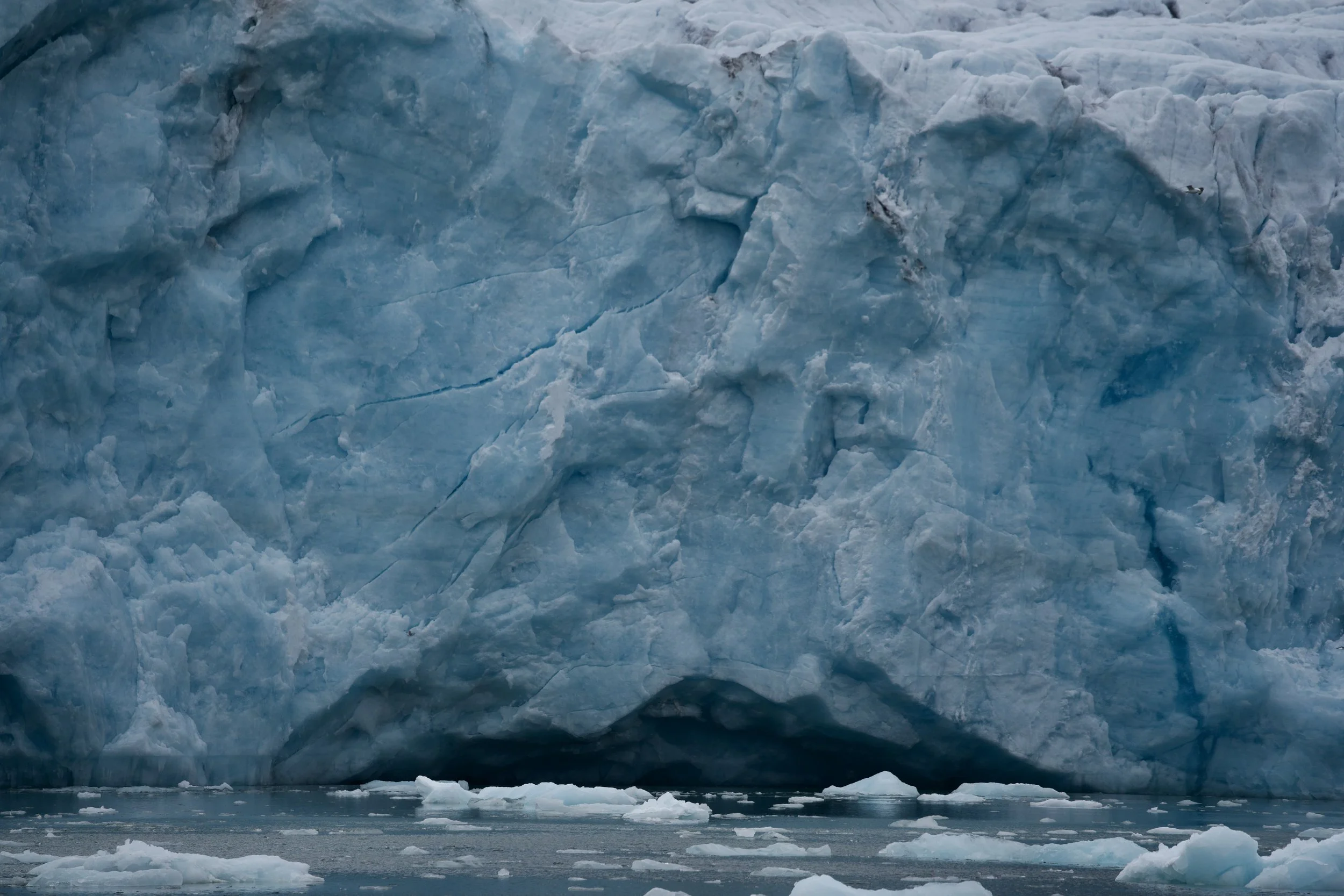
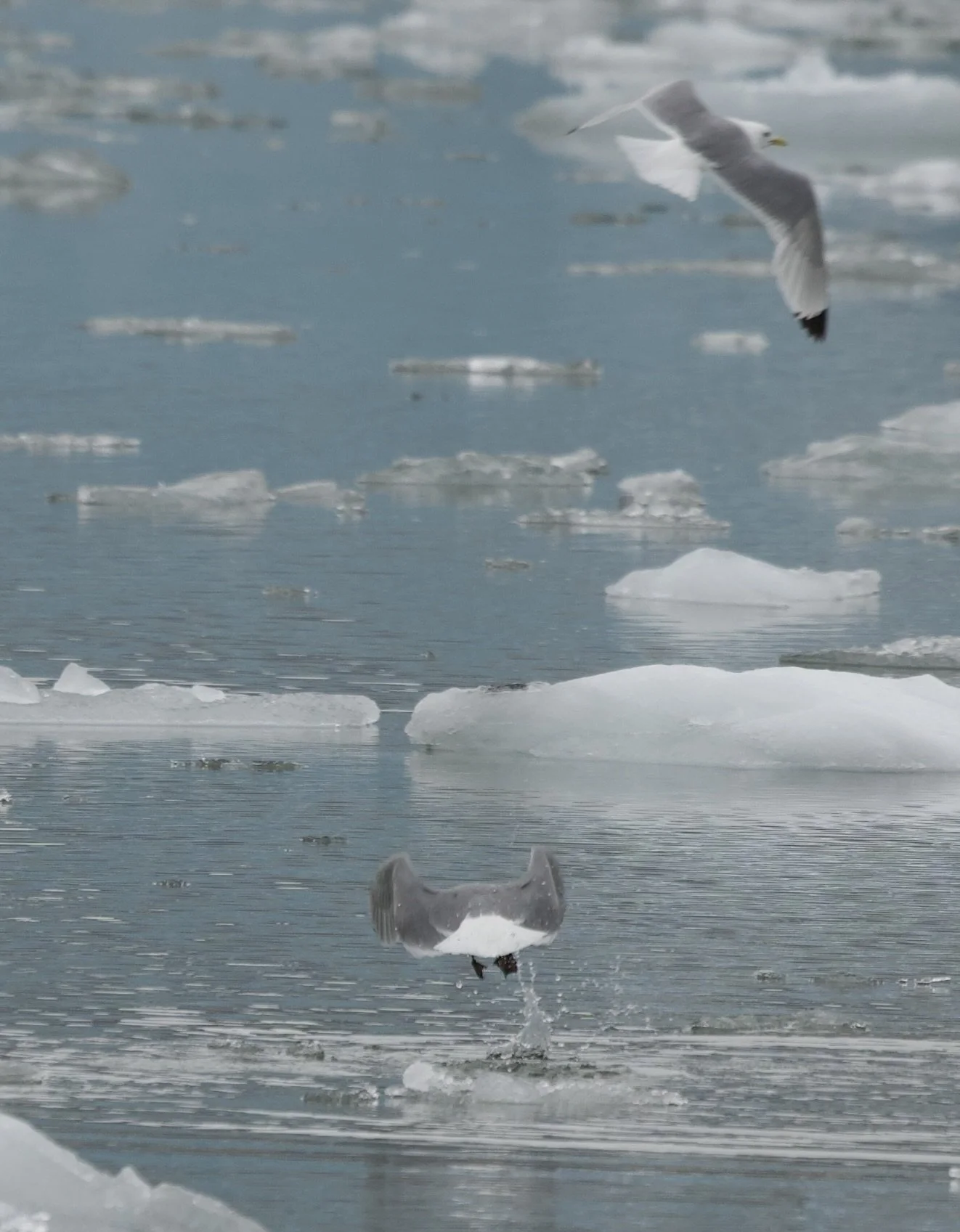
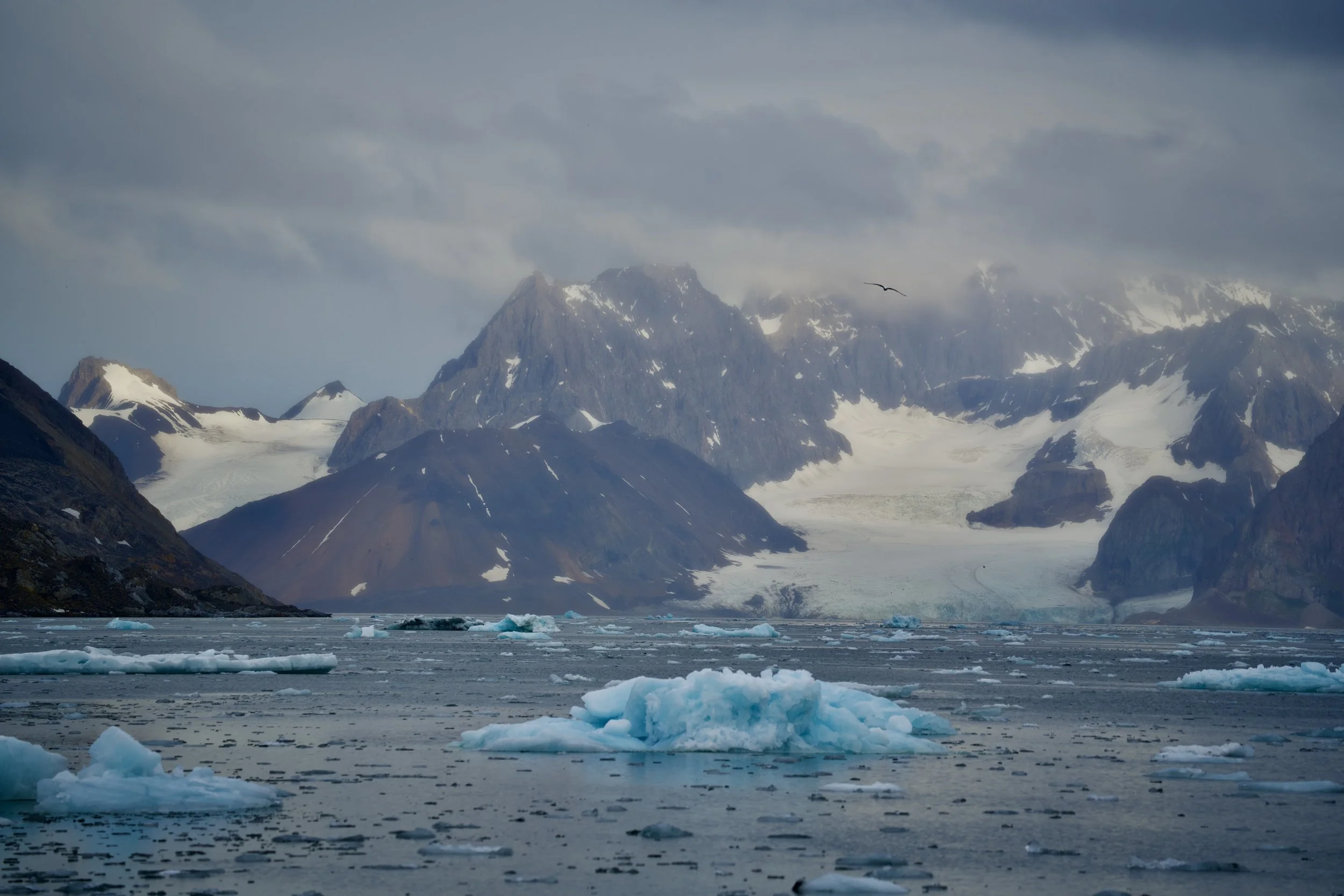
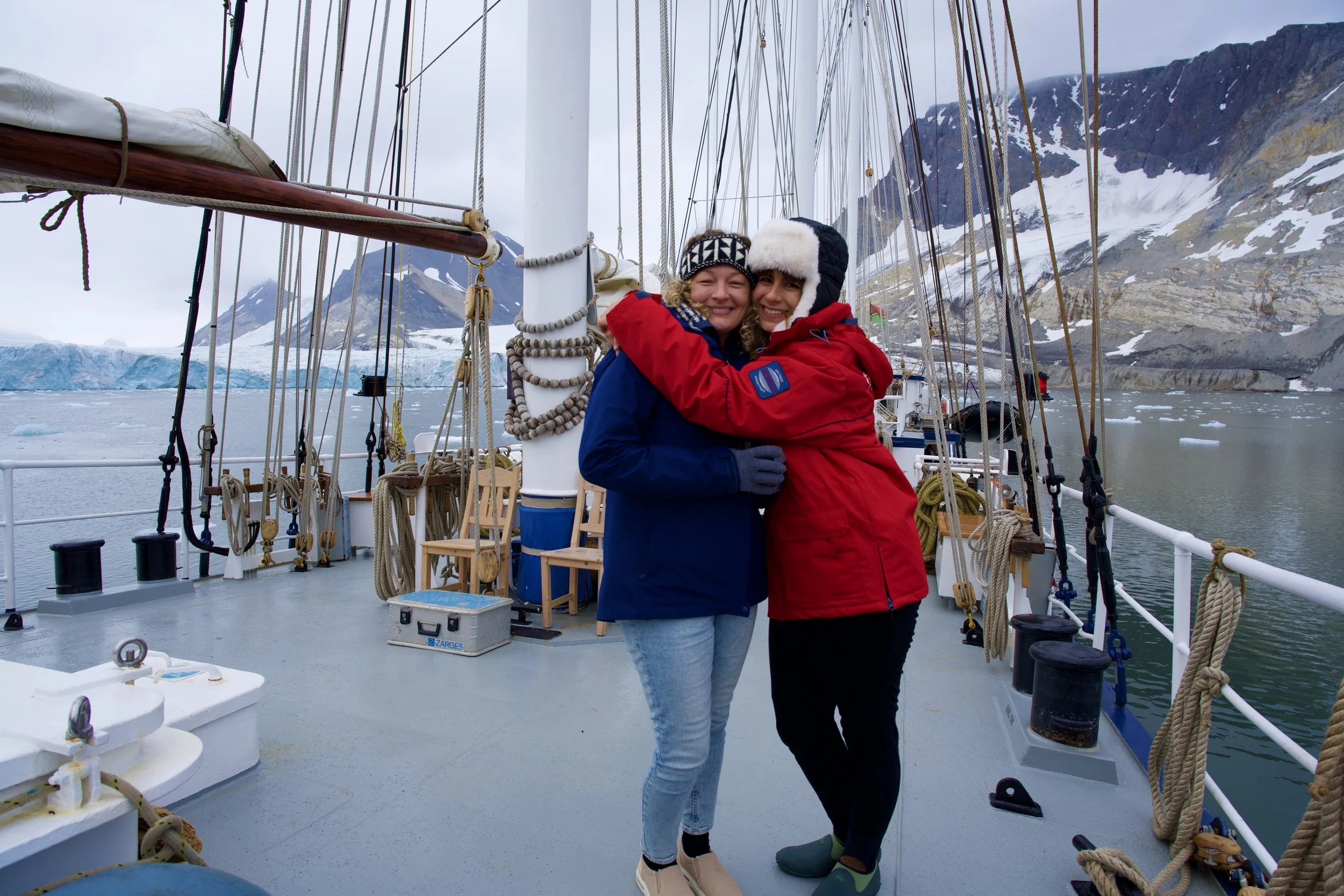
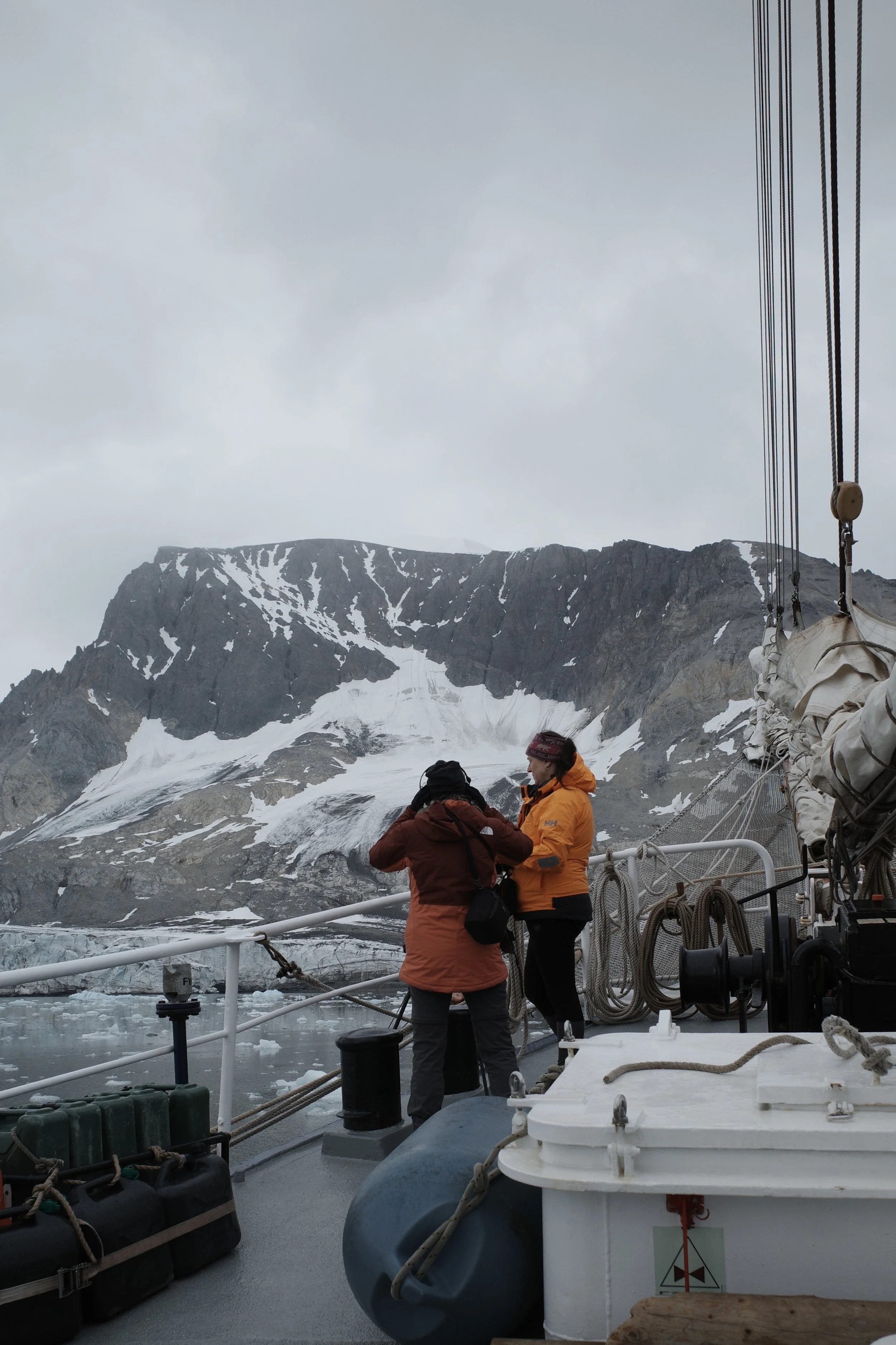
Dinner, and then Burgerbukta. She went into Vestre Burgerbukta in the evening, stopped in front of Paierlbreen, and stayed stopped for nearly two hours. Nobody went ashore. Nobody had been ashore all day. The ship parked in front of a wall of ice at the southern end of Spitsbergen and let all of us look at it for as long as we wanted. People at the rail with cameras. Vicki out there with her recorder, standing very still, catching what a place sounds like when nobody talks over it. Brash ice going down the hull, and a kittiwake coming up off the water with its feet still trailing.
Photos: Christina Olsen
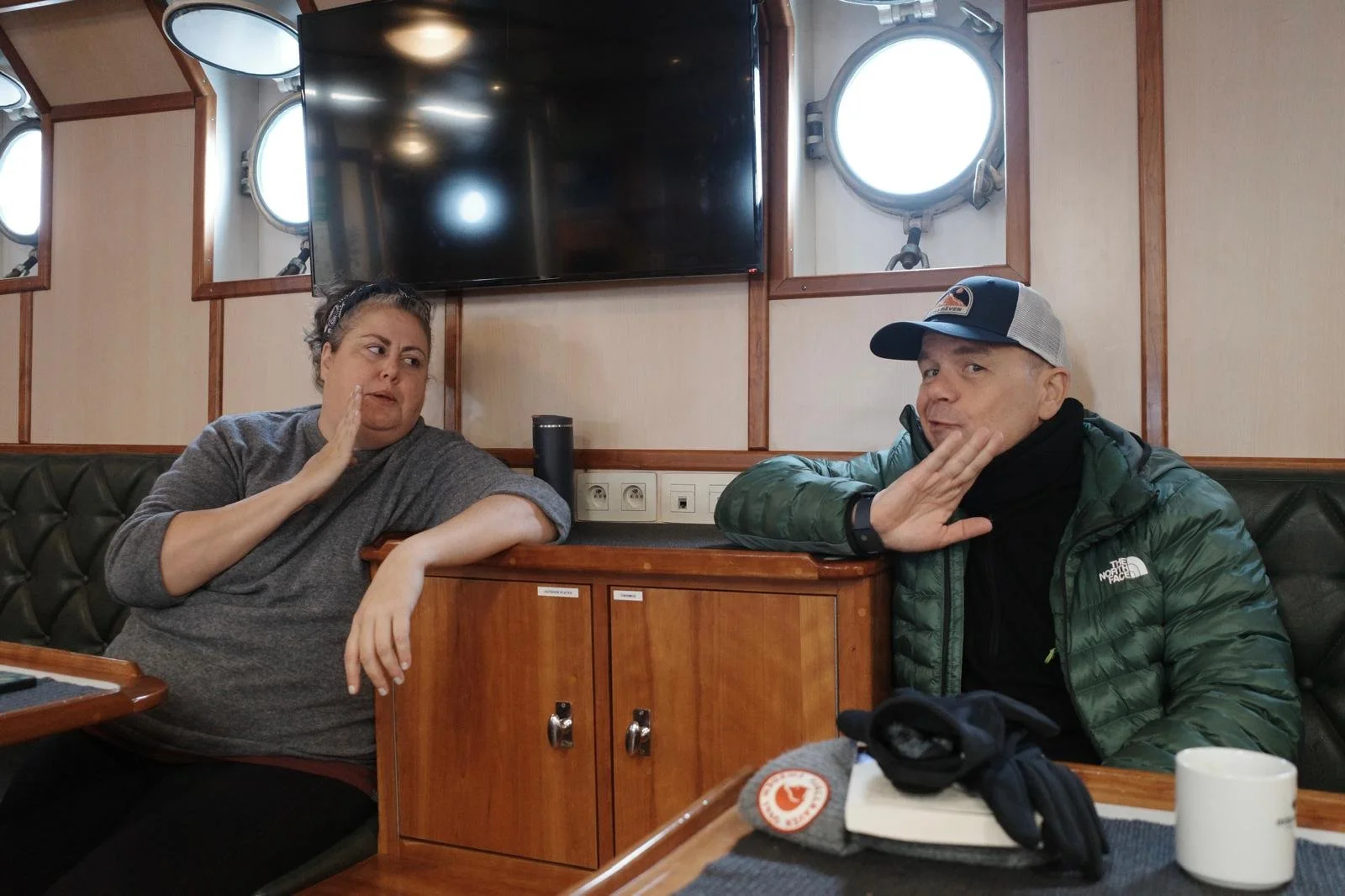
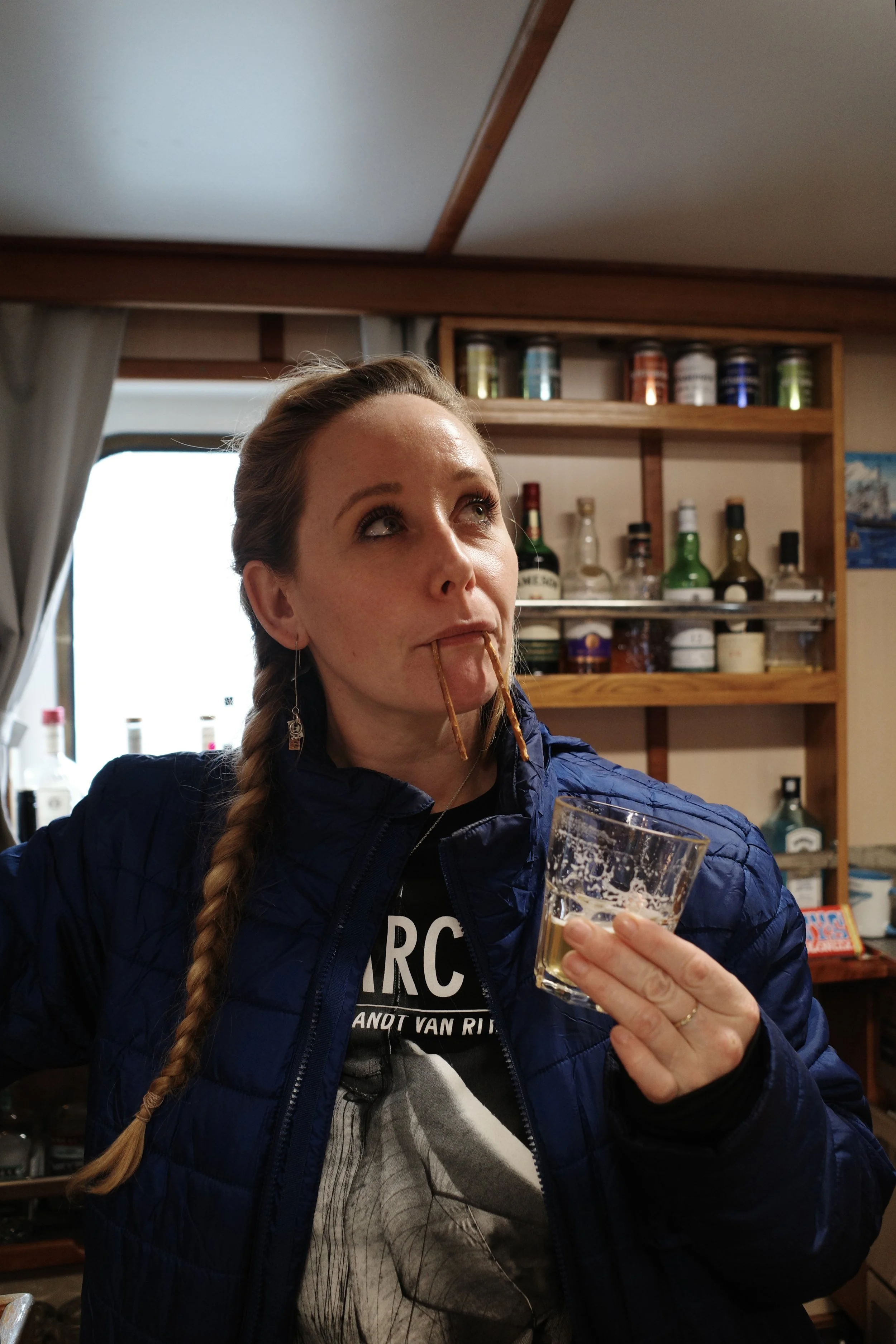
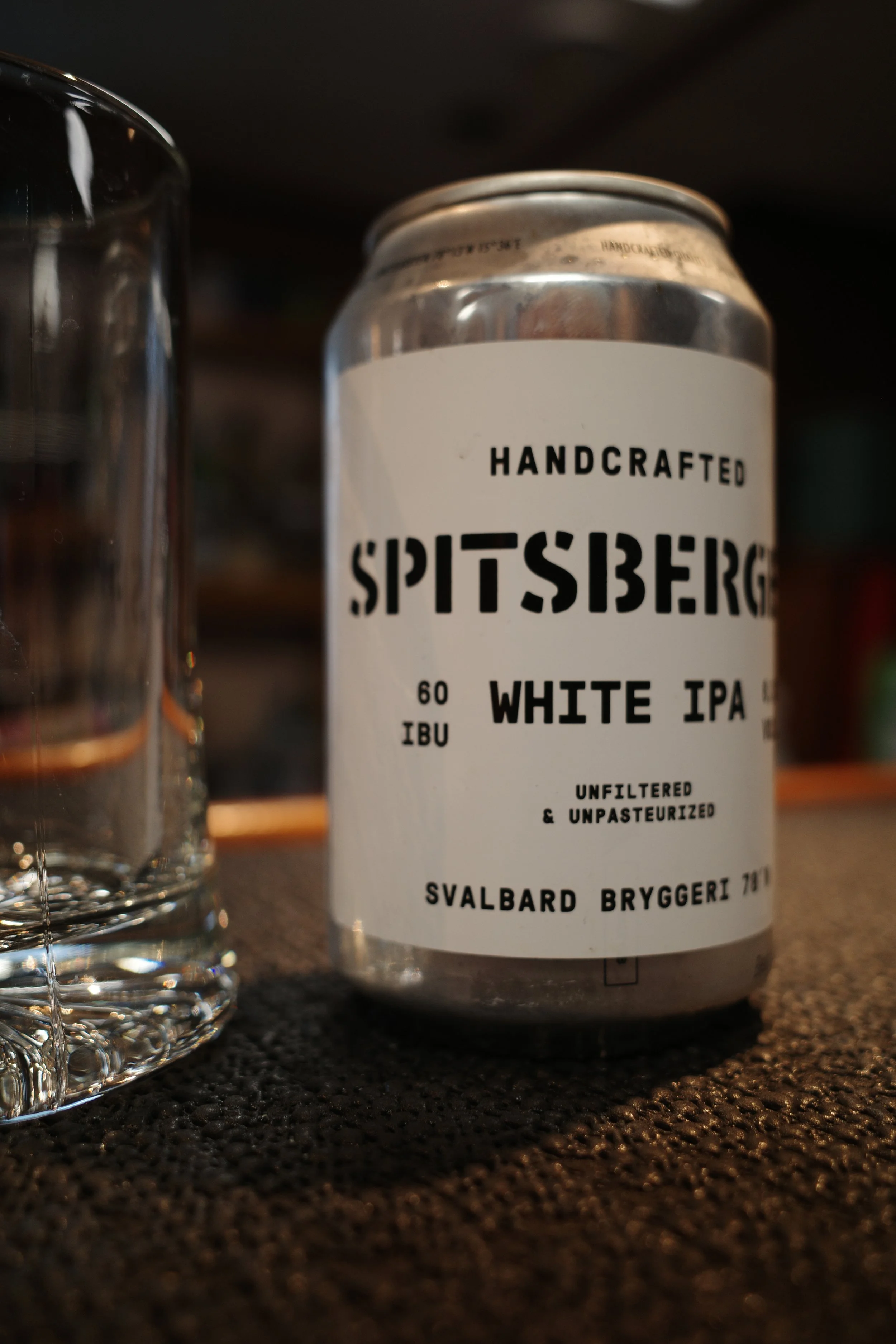
Inside, at the same time, a chess board and the bar, which had been open every night and which we found for the first time on this one. We had a lot of time that day, so Christina and I planned a murder. There were no rules and it was never going to be solved, and we were on a ship in a fjord with a glacier outside the window, so obviously somebody had to die, and we picked Maggie. It ran for days before expiring the way the best jokes do. Maggie was delighted. Maggie considered it an honour and still does. Christina is the fastest person I have ever sat across from and I have told her she should be doing stand-up, and she said the thing about me is that I can keep the beat. I thought, everyone at that table could keep the beat. That is what happened there. The beer was Spitsbergen. I had the Pilsner, then and after.
The anchor went down in Wibevika, in Hornsund, and did not come up again. Seventy-four kilometres, more than any other day of the expedition, the whole west coast of Spitsbergen from the top of it to the bottom. Two days out of sixteen had no ground under anybody's feet, and this was the first one. Nobody landed and nobody found anything. The ship went from one end of the map to the other and took us with her, and for five hours of it the engine was off and she did it the way she was built to.
“The sea, once it casts its spell, holds one in its net of wonder forever.”