Entry 040: Day 04: Ice Is Right
Good morning. Good morning. Then Tempelfjorden is behind us and we are in Hornsund, and the weather is the weather, and breakfast is in fifteen minutes, eight o'clock, see you up there. Good morning. Three of them, every day, and I never once got tired of it.
This was the first morning of the trip where the ship was already where she was going. The anchor had gone down in Wibevika the night before and she had not moved a metre. You come up the stairs and it is all still there, unchanged, waiting, and it has been waiting for eleven hours while you slept. There is something restful in that which I did not expect.
Breakfast ran on a rotation of three. Hot dogs, pancakes, bacon and eggs, round and round for sixteen days, and I ate none of it. I eat bread, butter and jam in the morning and I have done for as long as I can remember, which turned out to be a competitive advantage. The hot food takes time. The bread is already there when I came up before 8am. I was fed and out of the way while better women and men were still waiting. I did try the pancakes once and found them very flat, and I have doubts about that syrup that I am not able to prove.
At quarter to nine Sarah split us in two. The sound people were going out in a zodiac to a different glacier, Kvalfangarbreen, to record it from the water. Vicki and Karen and some others. The rest of us were going up onto Wibebreen.
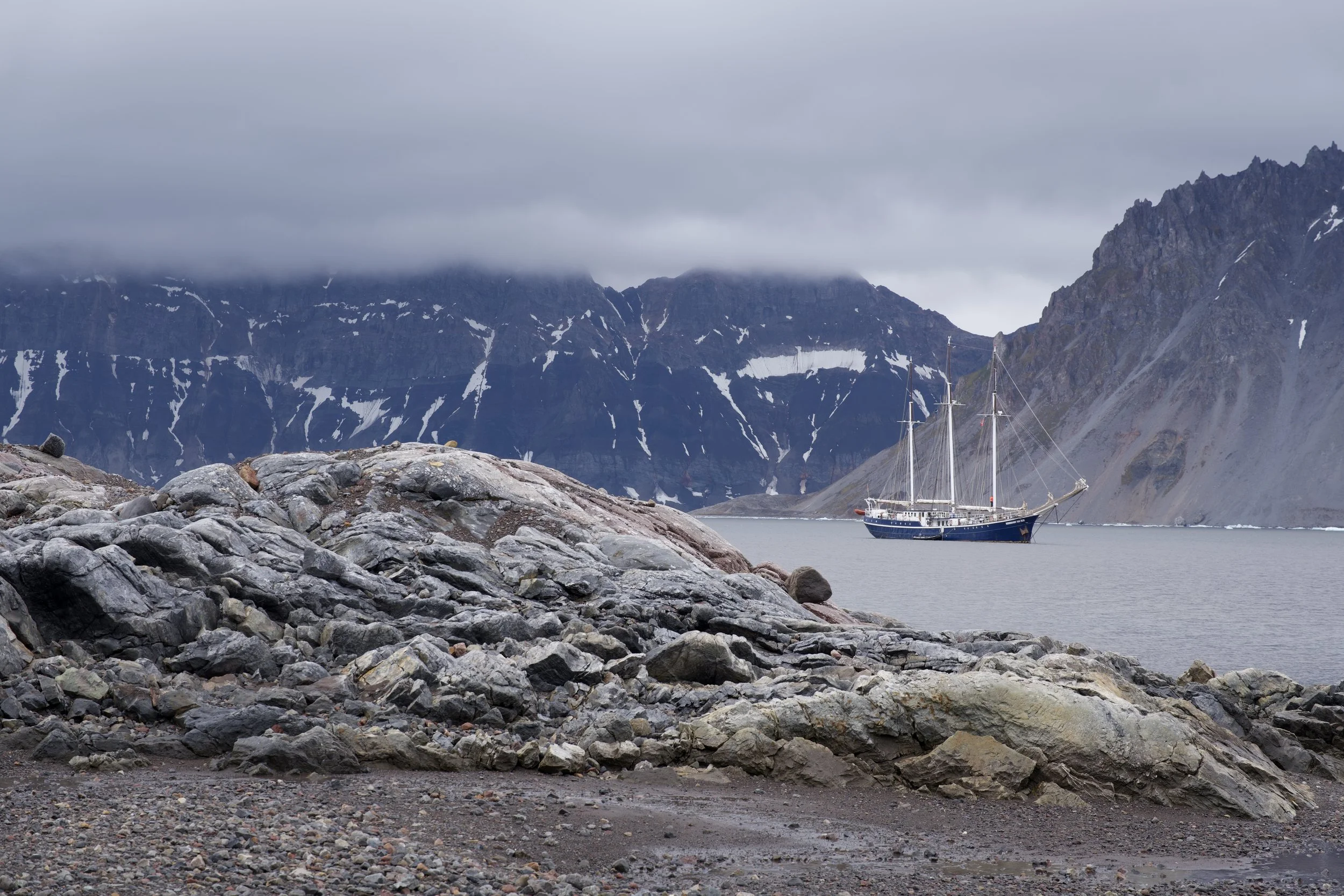
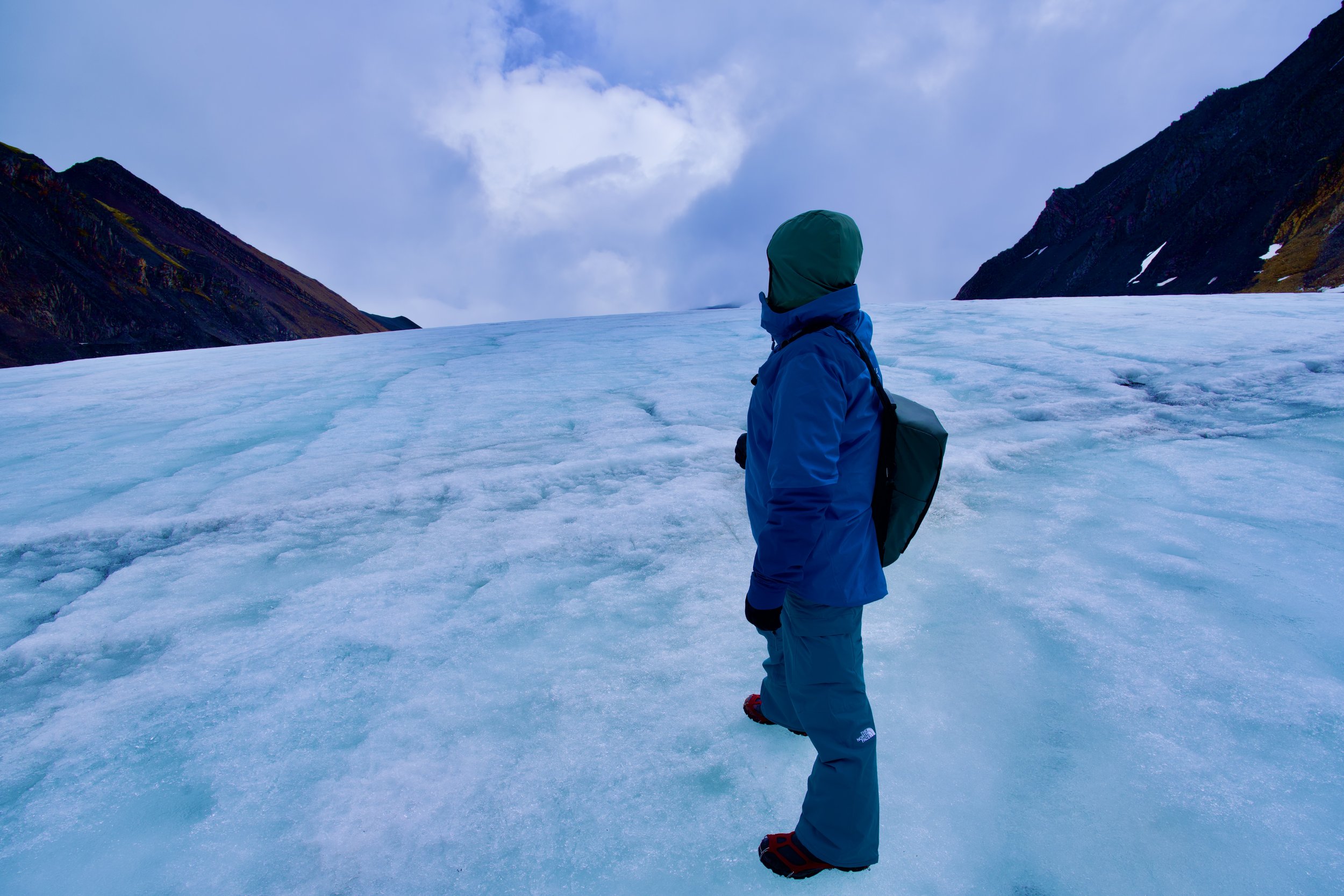
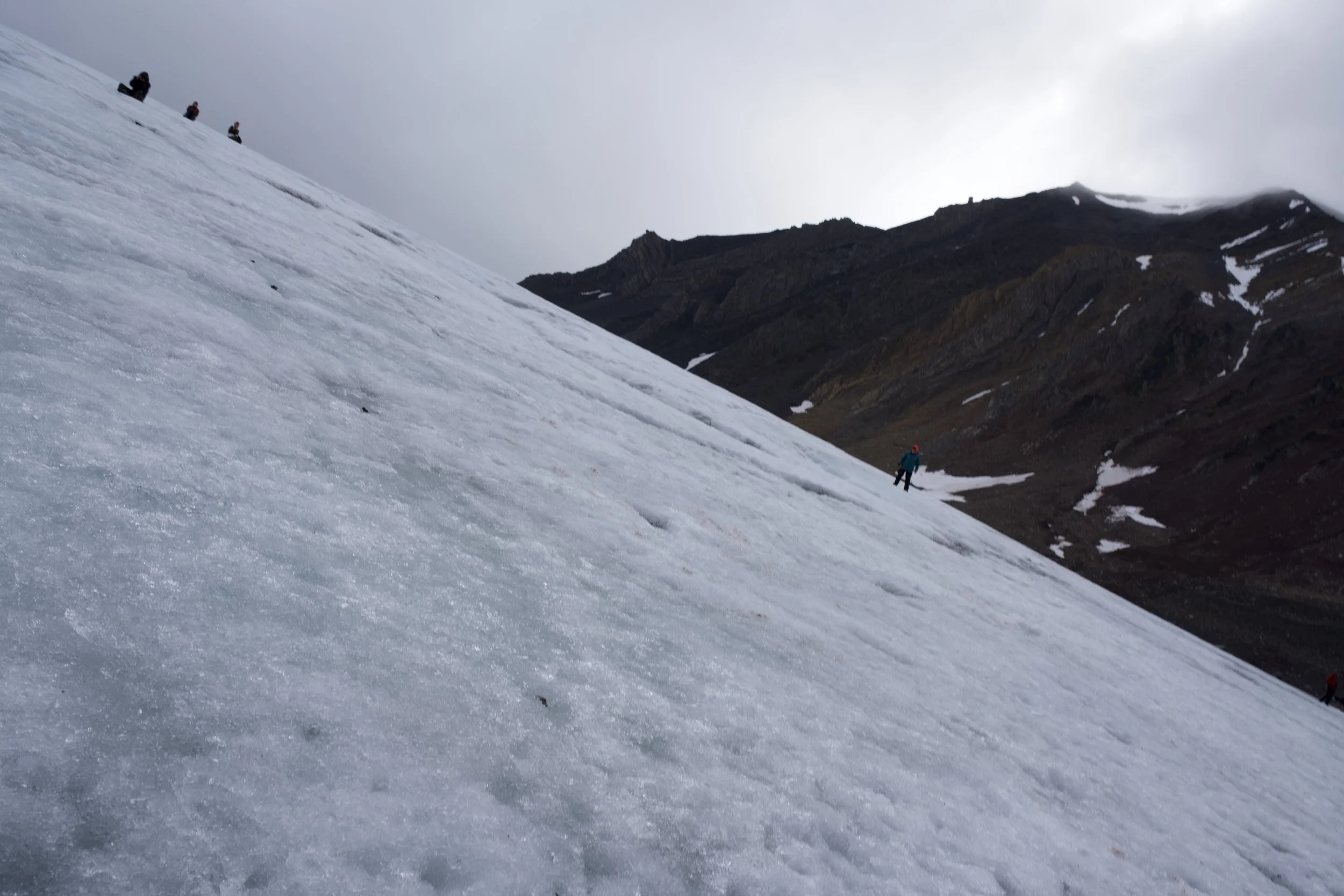
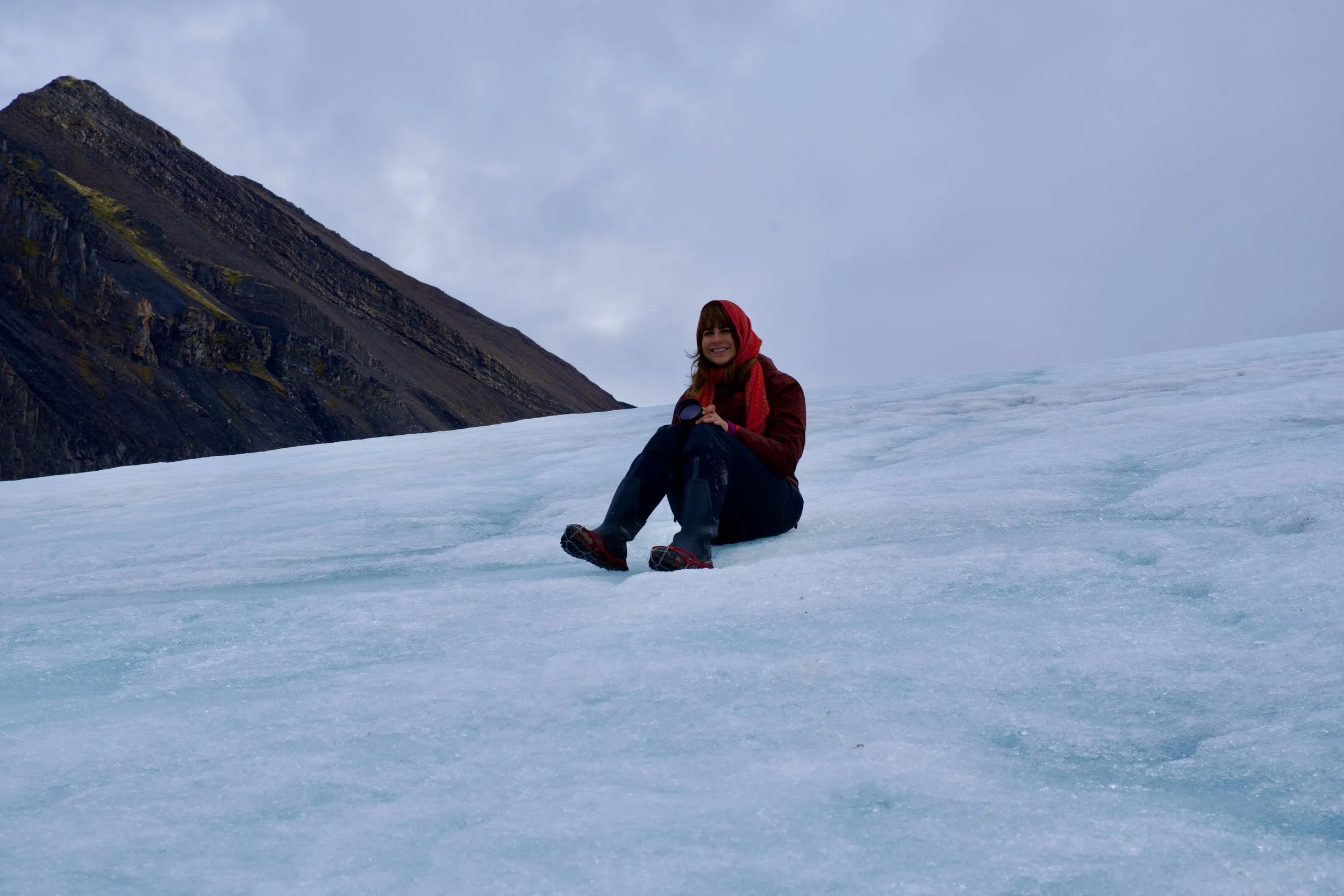
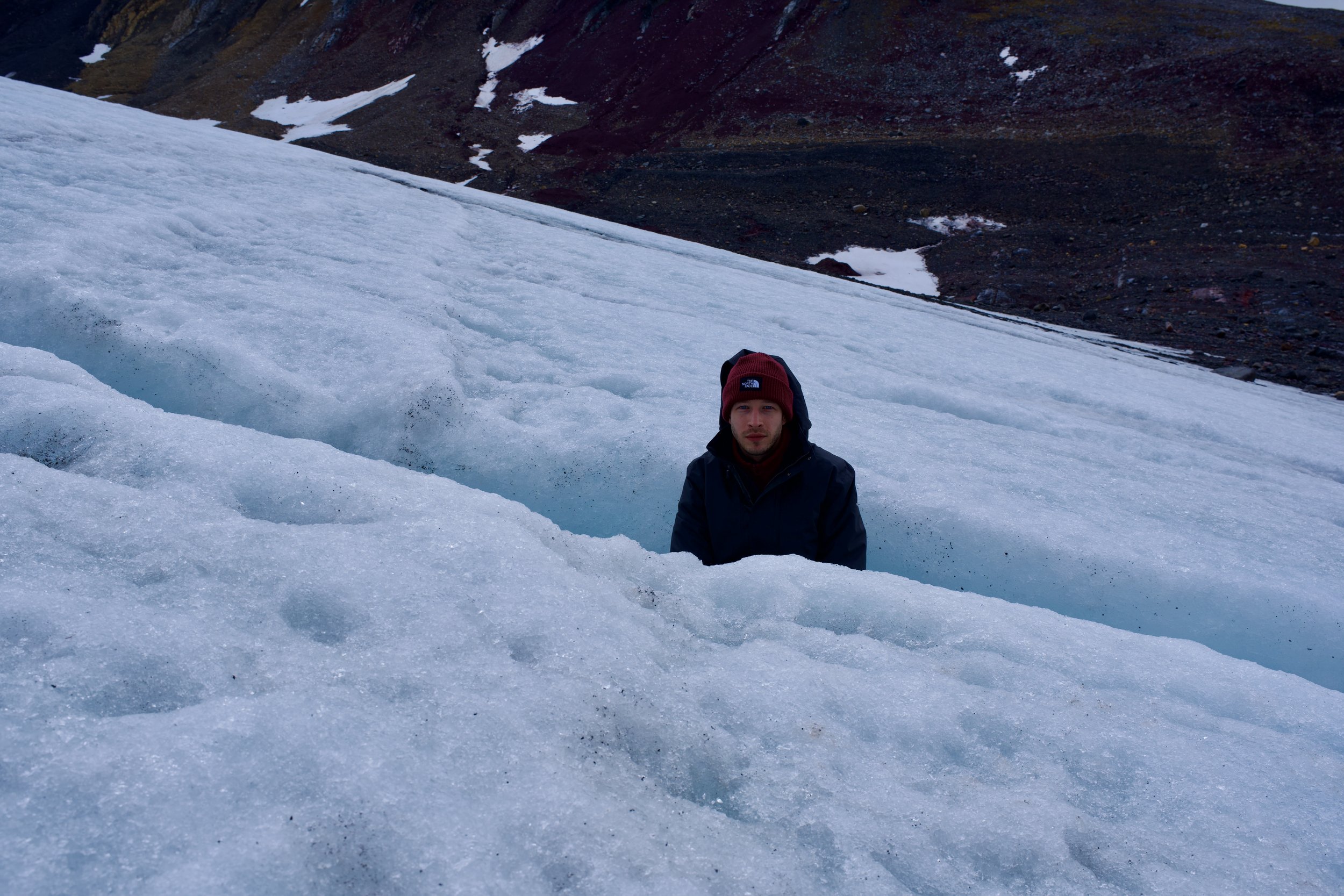
On the beach Rhys handed out cleats and explained them, and they are simple in the way that good equipment is simple. Metal and rubber, and they stretch straight over the boot, tyre chains for a person. The rules came with them. Put them on only when you reach the ice. Take them off when you are back on gravel. Do not walk on the glacier without them, at all, ever. Wash them in a stream when you are done, and there was no shortage of streams.
Then twenty-some people walked up onto a glacier.
It was steep. Steeper than it looks in any photograph I took, and it went up and away until it met the mountain, and everything under our feet was bare ice. Grey and white and pitted, hard as a road, running with water. That was the thing I had not prepared for. There was water everywhere. Channels cut down into the surface, some of them a hand wide and some of them wide enough to stand over and look into, and all of them moving, and you could hear it going under you and beside you and away downhill toward the sea.
I noticed I was steering myself. Every time I crossed a patch of snow I found my feet taking me back to the ice within a few steps, and I did it without deciding to. I found out afterwards that this is exactly right and that it has a reason. Late in the summer a glacier goes bare, and once the snow is gone every crack in it is visible. Snow does not fill a crevasse. It lies across the top and hides it. What looks like the softer ground is the ground that kills you, and the hard grey stuff that hurts your ankles is the stuff you can trust. I had no idea. My feet did.
Some People Walk on a Glacier Rhys dances on it. Cleats and all.
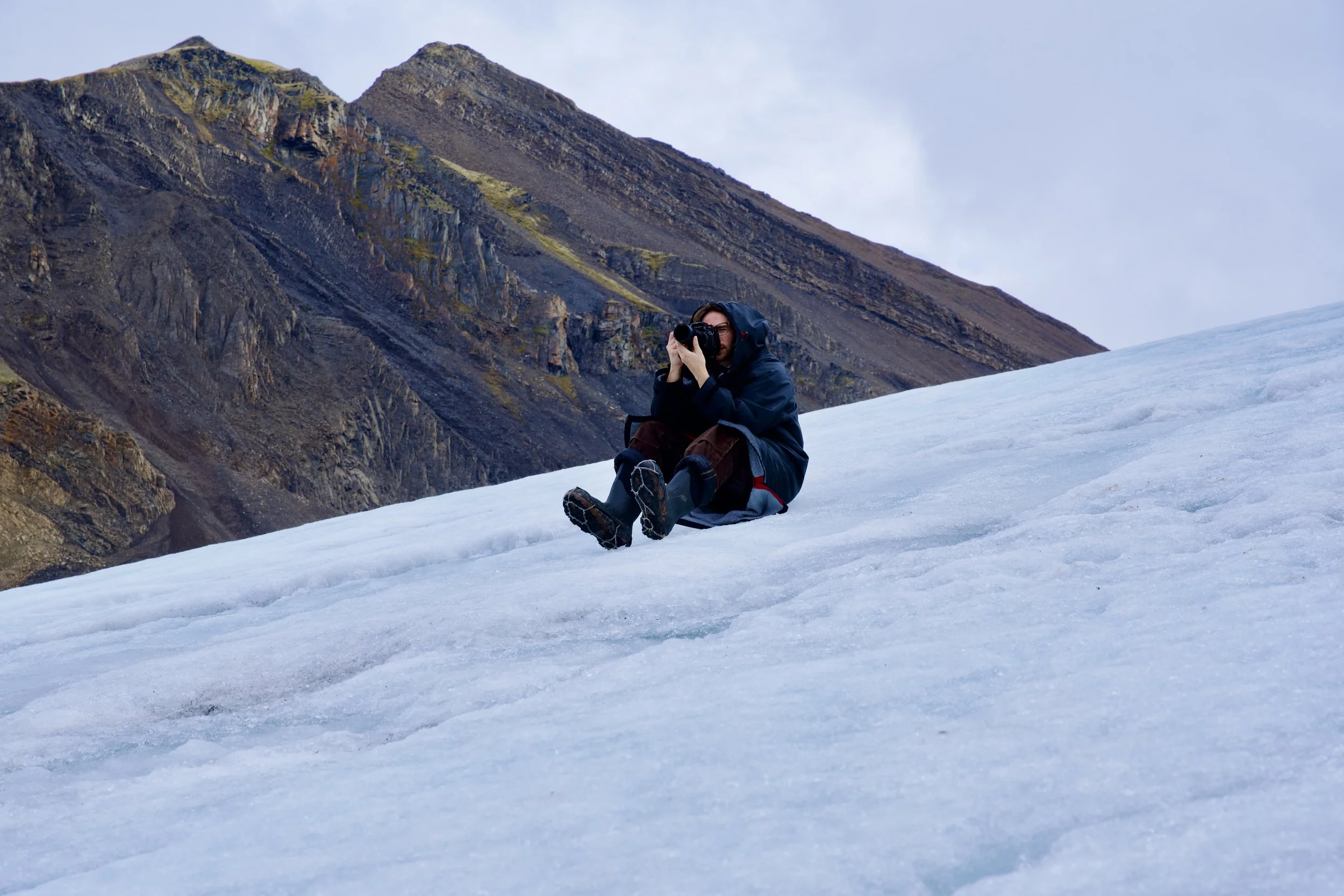
People went out in every direction and did what they came to do. Some sat down below the steep part and sketched. Some wrote. Gergő climbed down into a crevasse until the ice was at his chest and then looked up at me with an expression of complete satisfaction. Seth sat straight down on the slope with the camera up and worked. Seth has just finished an MFA in photography, makes photographic sculptures on glass and paper, and does macro work, close and small, and here they were on the largest single object any of us had ever stood on. I liked watching that. A person who looks at little things, handed the biggest one available, and still going in close.
I took photographs and film and then I stopped and looked at it.
A glacier is alive. That is not a metaphor and I do not offer it as one. It moves, it cracks, it carries rock, it makes water and sends the water away, and it makes noise doing all of it. And it is leaving. We had come a very long way to stand on a thing that is going, and we were standing on it, and the irony of that did not pass me. I do not have a resolution for it. I was there. It was beautiful. It is smaller now than it was when I stood on it. All three of those are true.
Play for sound!
Coming back is a system as well. You put your life vest on. That is the signal. Somebody at the top of the ice sees a vest going on down at the shore and starts thinking about coming down, and then another, and when there are enough of you standing at the water in red they send a zodiac. The vest does the talking.
Lunch, and I backed up cards and cleared them, which is a chore I did every single day of that trip and would do again, and then the ship moved a few kilometres down the sound and we went ashore a second time.
Hyrneodden.
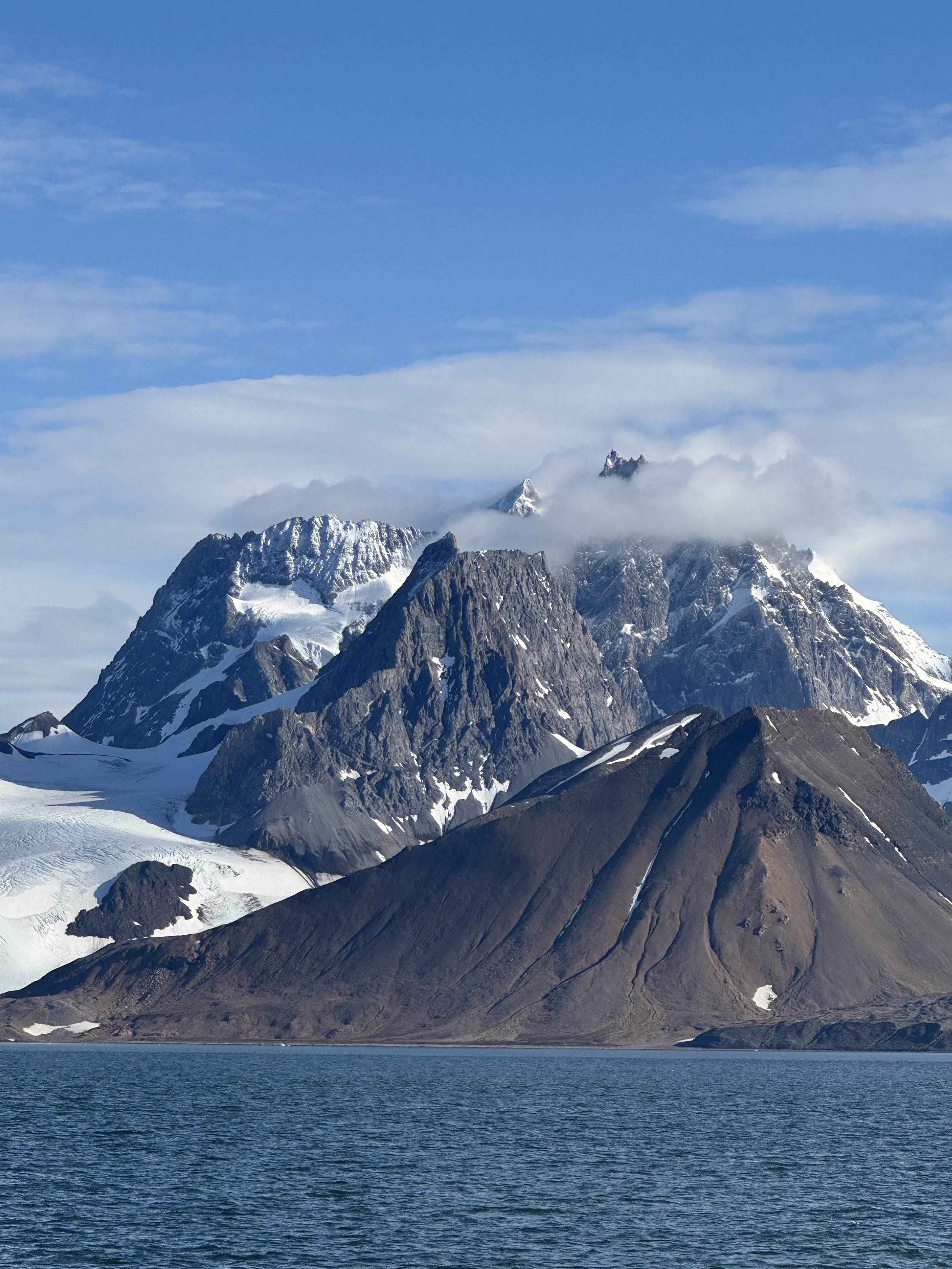
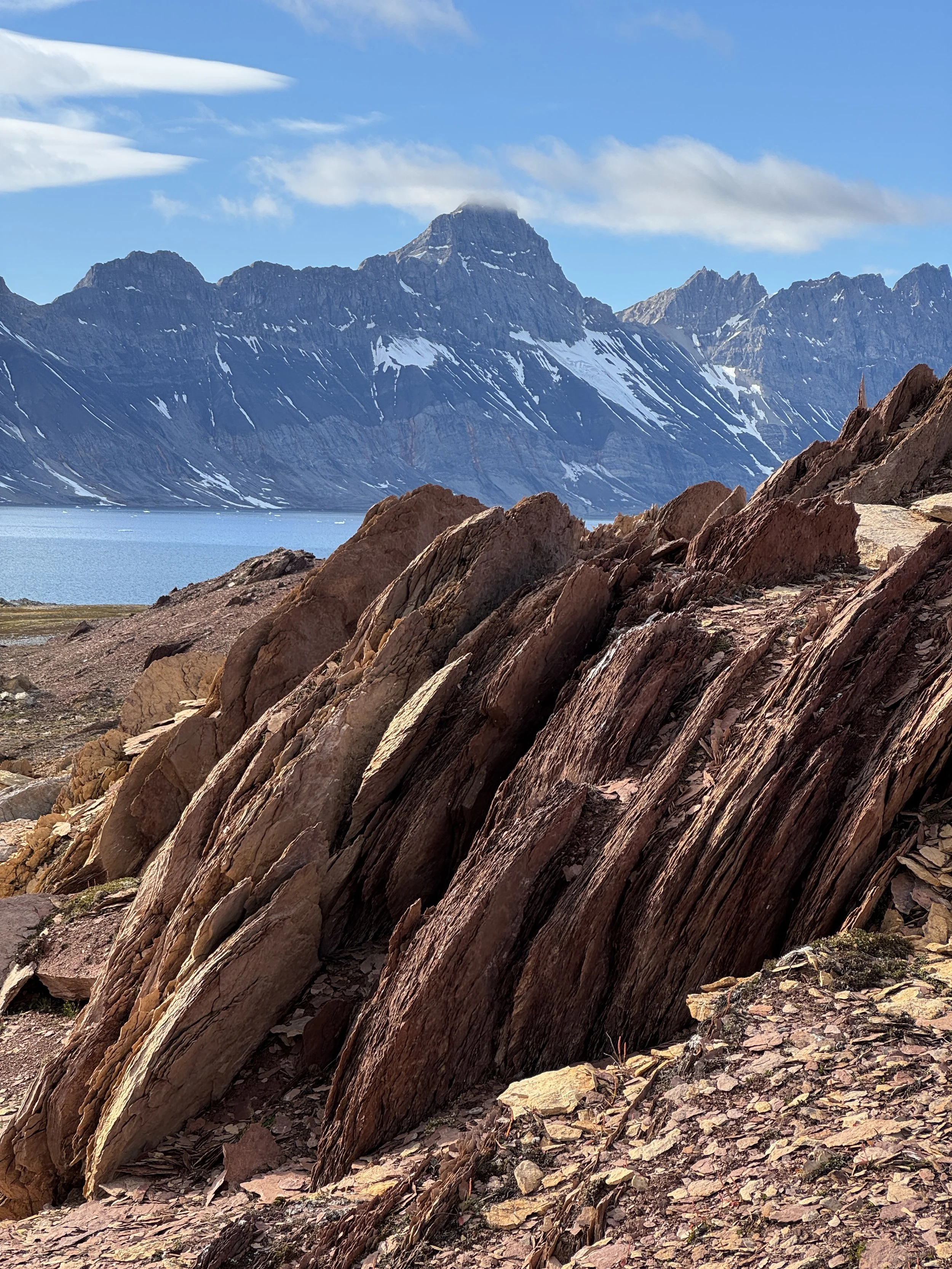
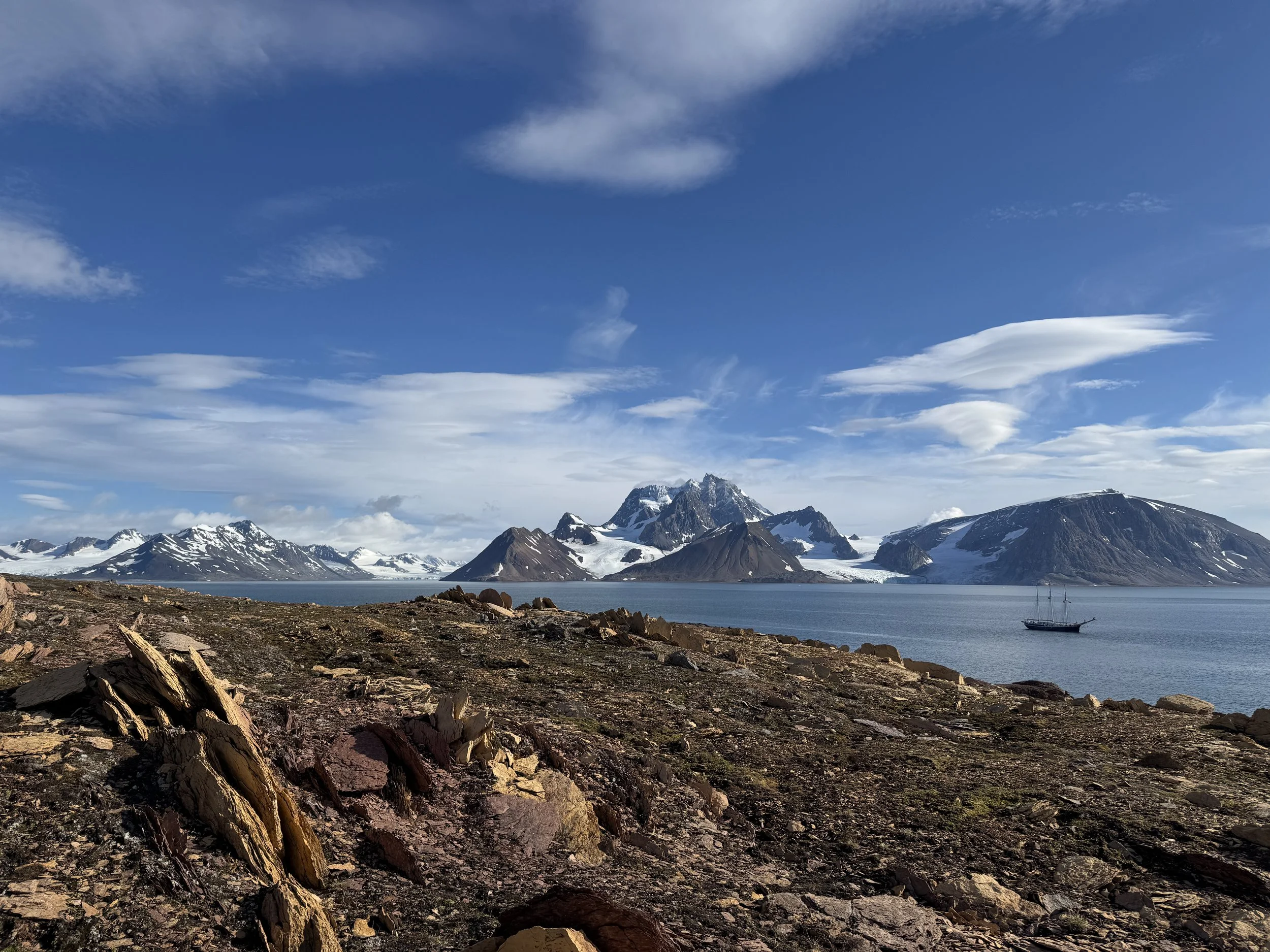
I have been trying to describe this place since July and I keep landing in the wrong century. The rock stands vertically. Beds of red and yellow slate pushed up on end and eroded into fins and blades, standing out of the ground in rows, with black scree above and the fjord below and a wall of white mountains on the far shore. It looks made. It looks like somebody built it for a story about a cold kingdom. Every other landscape I had seen up there lay down. This one stood up.
Sarah offered three options, which she did most days. Stay at the landing site. Take the short walk. Take the long walk. The long walk means no talking, no questions, no photographs, and it is genuinely for people who came here to move. I took the middle one, and I want to be honest about why, because it is not romantic. On the first day, getting into the cabin, I bent too fast into a very low cupboard and did something small to my knee. Nothing serious. But that knee has flared on me before, on the rowing machine at home in the months of getting ready, and I was four days into sixteen. There were eleven days ahead of me and every one of them had a landing in it. So I paced. Middle walk, uphill, good view, no heroics. That is a decision I would make again and it is the reason I was still walking on day fifteen.
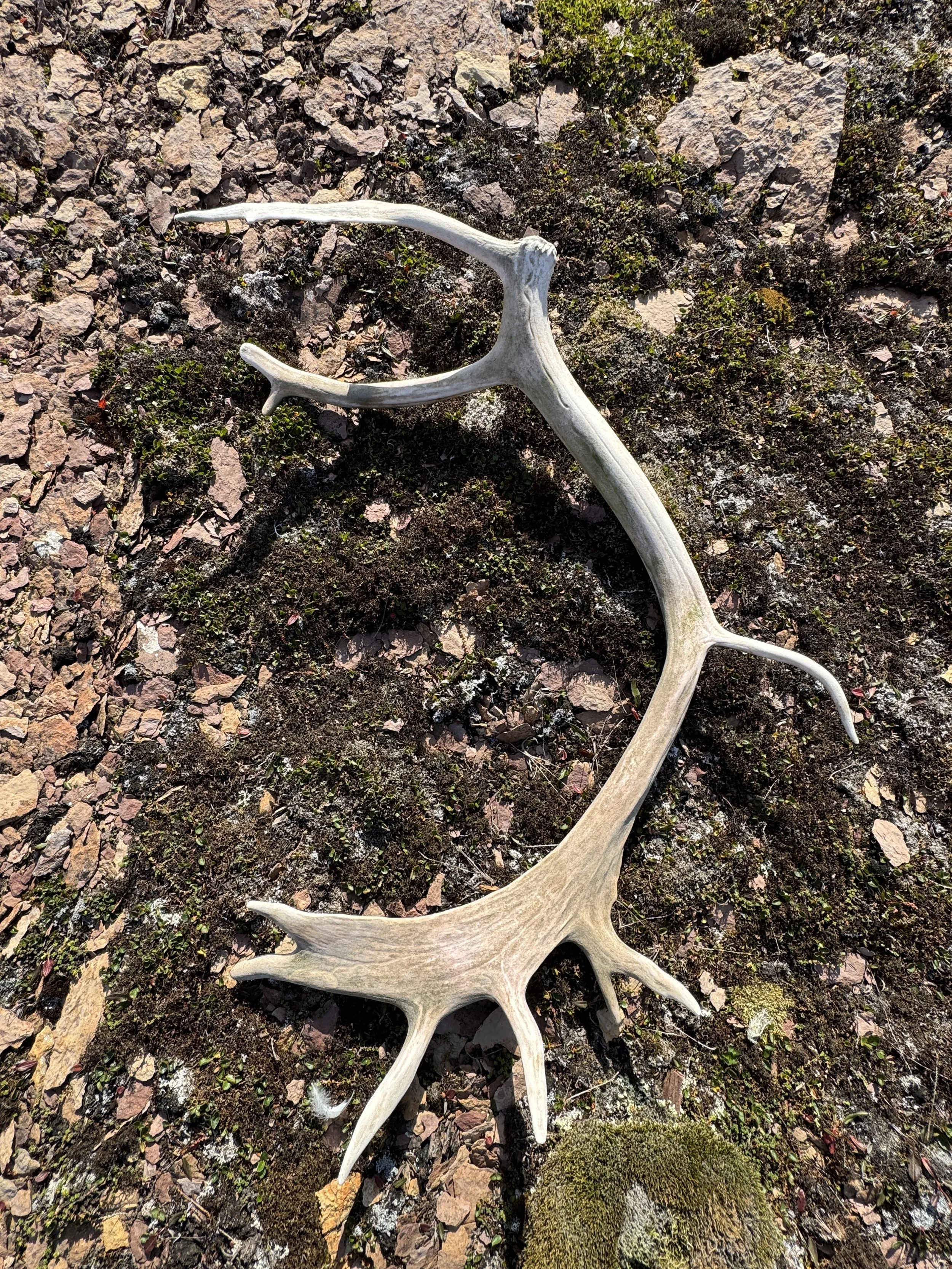
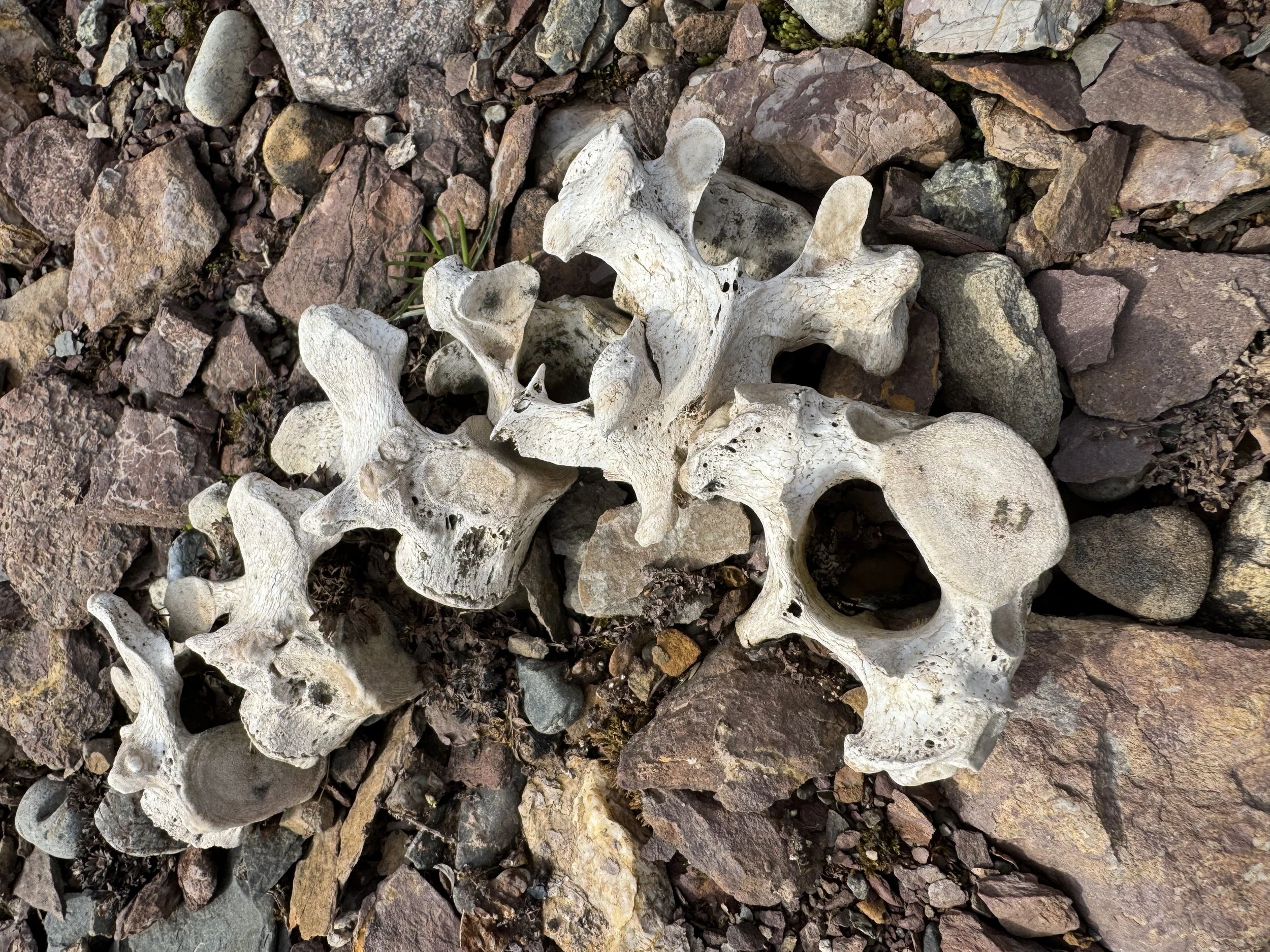
Up there we found things. A run of vertebrae lying in the scree, chalk white and roughly in the order they came out of the animal, with a single green shoot growing up between them. Half an hour later, a reindeer antler, both beams still joined, lying on the moss. Nobody touched either one. You look, you photograph, you leave, and there is something clean about a place where that is simply understood.
And then I found a polar bear in the rocks.
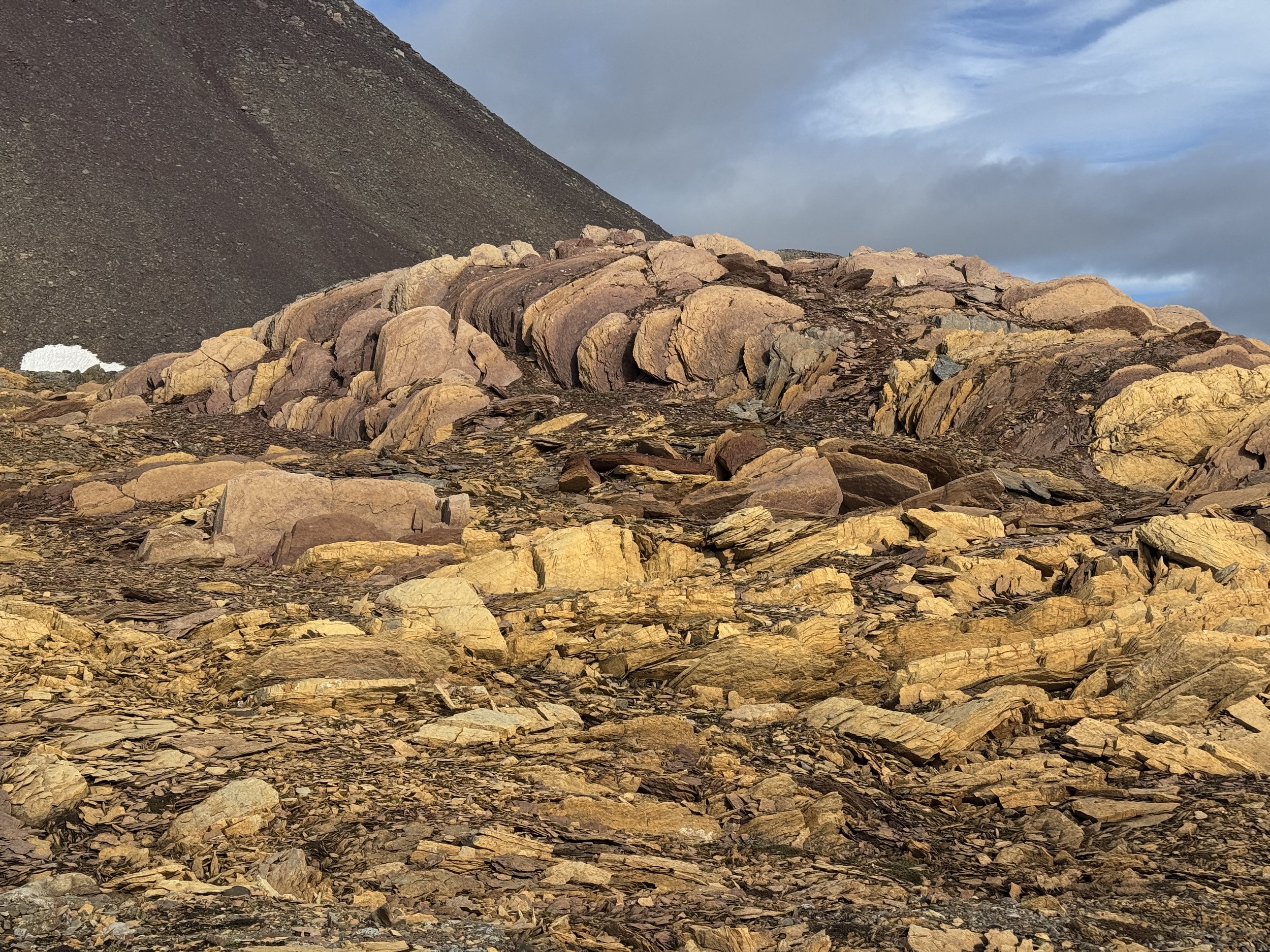
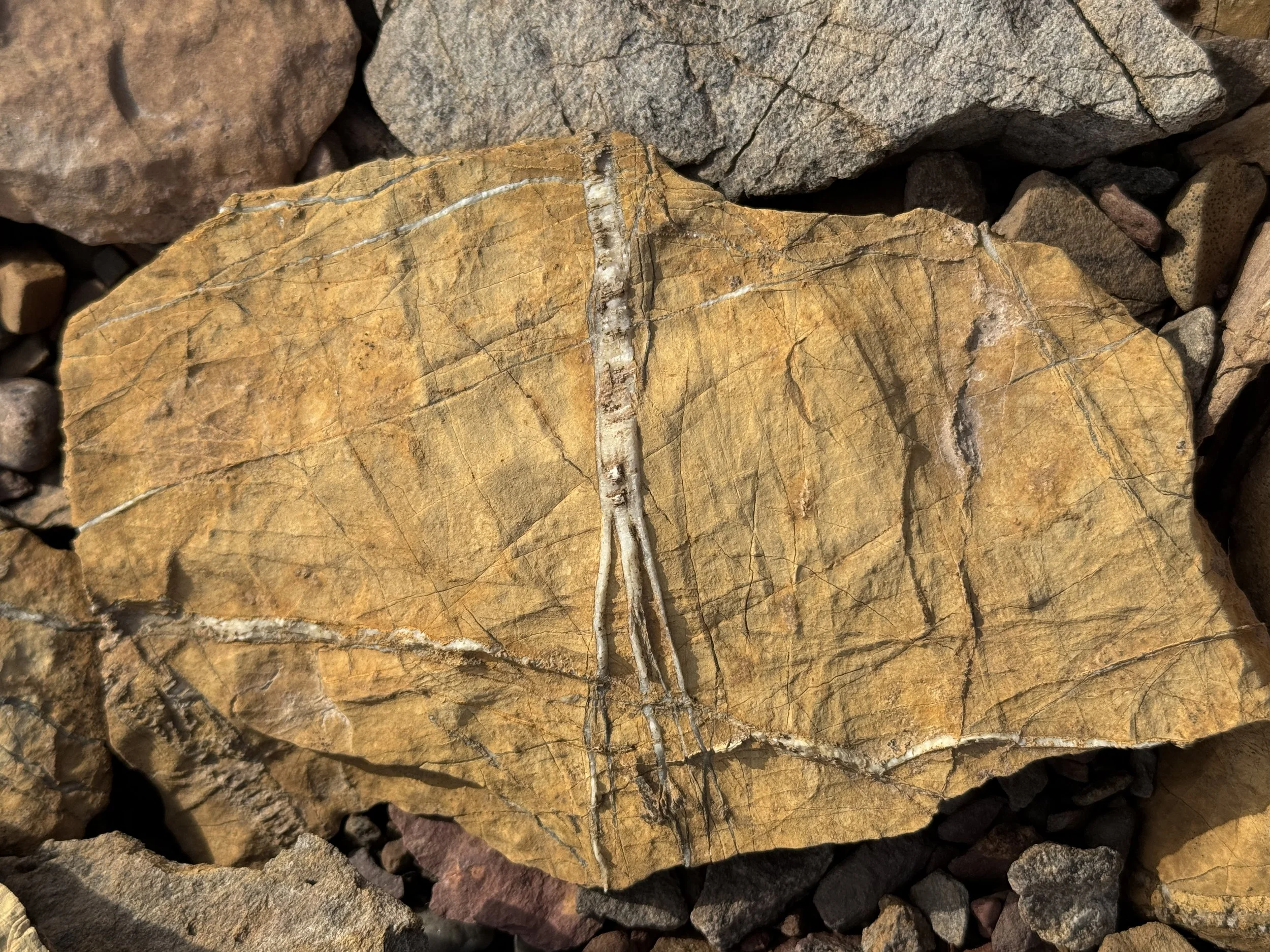
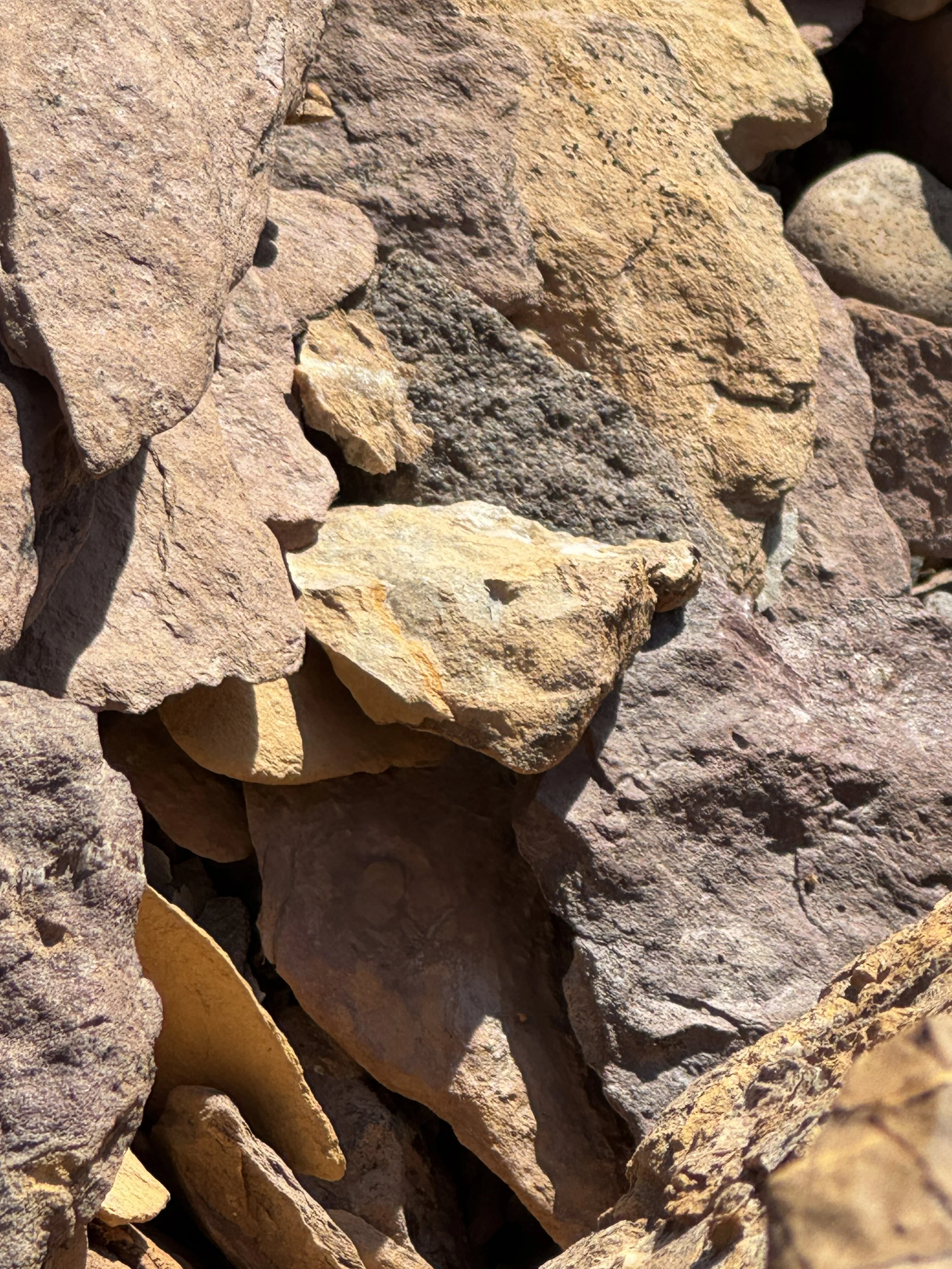
A wedge of yellow stone with a dark line for an eye and a snout coming to a point, lying nose down in the scree. I stood and looked at it for a while. At that stage the only bears I had ever seen was stuffed and standing on a baggage carousel or in the Svalbard Museum. It would be another few days before I saw a real one, and I did not know that yet, and I had started finding them in the ground. This turns out to matter later. There is a bay further into this trip where the stones were telling us something, and I am going to give that its own entry when we get there, because it happened and I still cannot entirely account for it.
I sat down with my sketchbook and drew the bay. First time on the trip, and I should have started sooner. Then I tried something. I had picked up a soft dark stone that looked like coal, and I put a flat stone under the page and rubbed the dark one over it to see whether the ground would print itself through. Frottage, with a beach for a plate. It gave me a pattern and nothing else. No usable mark, no edge, no line. I put it in the pile. Sometimes you try a thing in the field and the field says no.
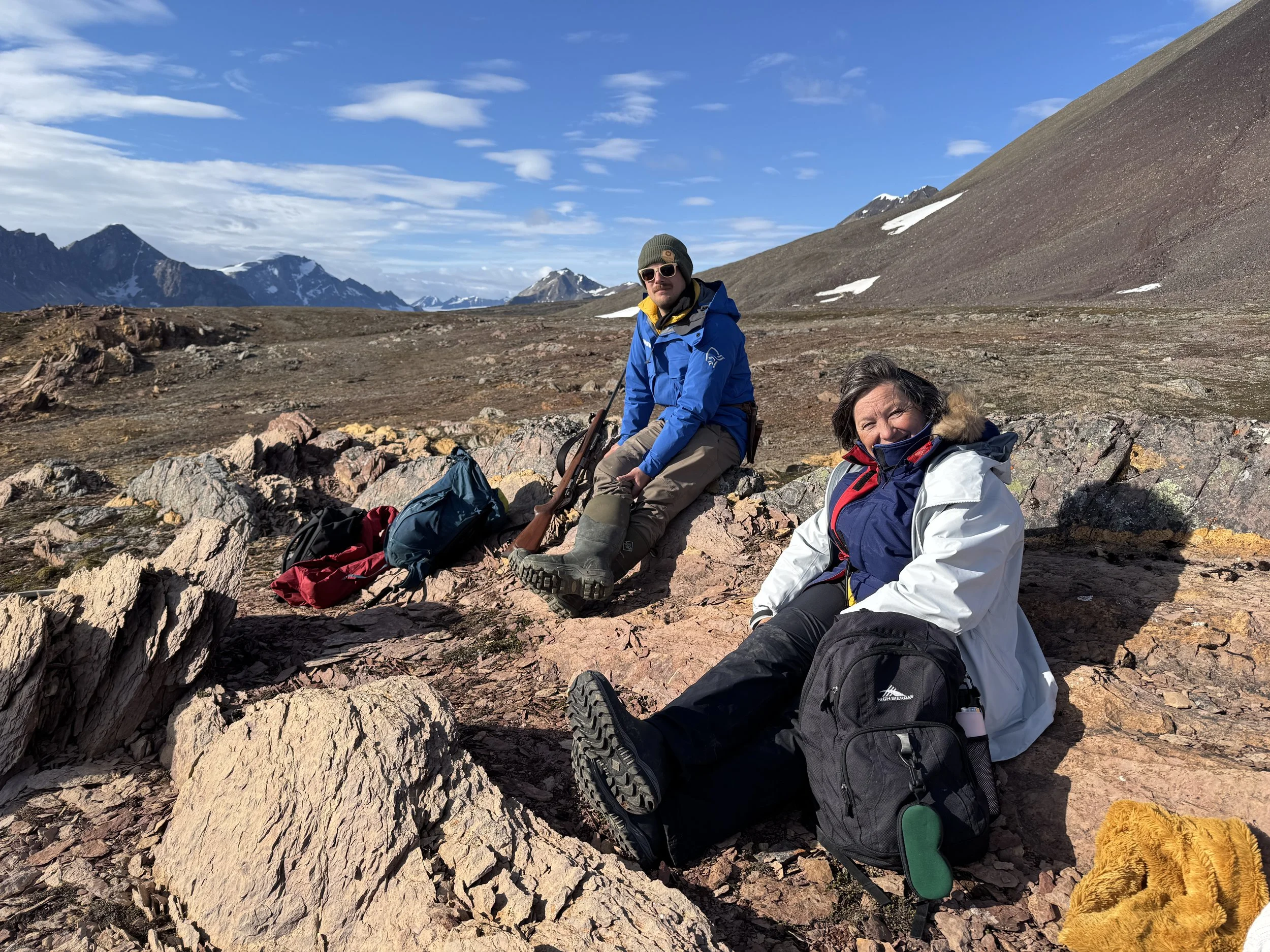
Then the sun came round and got warm on my face and I put my head back and closed my eyes, and the sun took me. Half an hour. Maybe a little more. A proper afternoon sleep on a rock at seventy-seven degrees north, with the whole of Hornsund in front of me and a rifle somewhere up the ridge, and I woke up slowly and had no idea for a second where I was. It is one of the best half hours of my life and I did nothing whatsoever to earn it. Cathleen took a photograph of me lying there. I did not know until later.
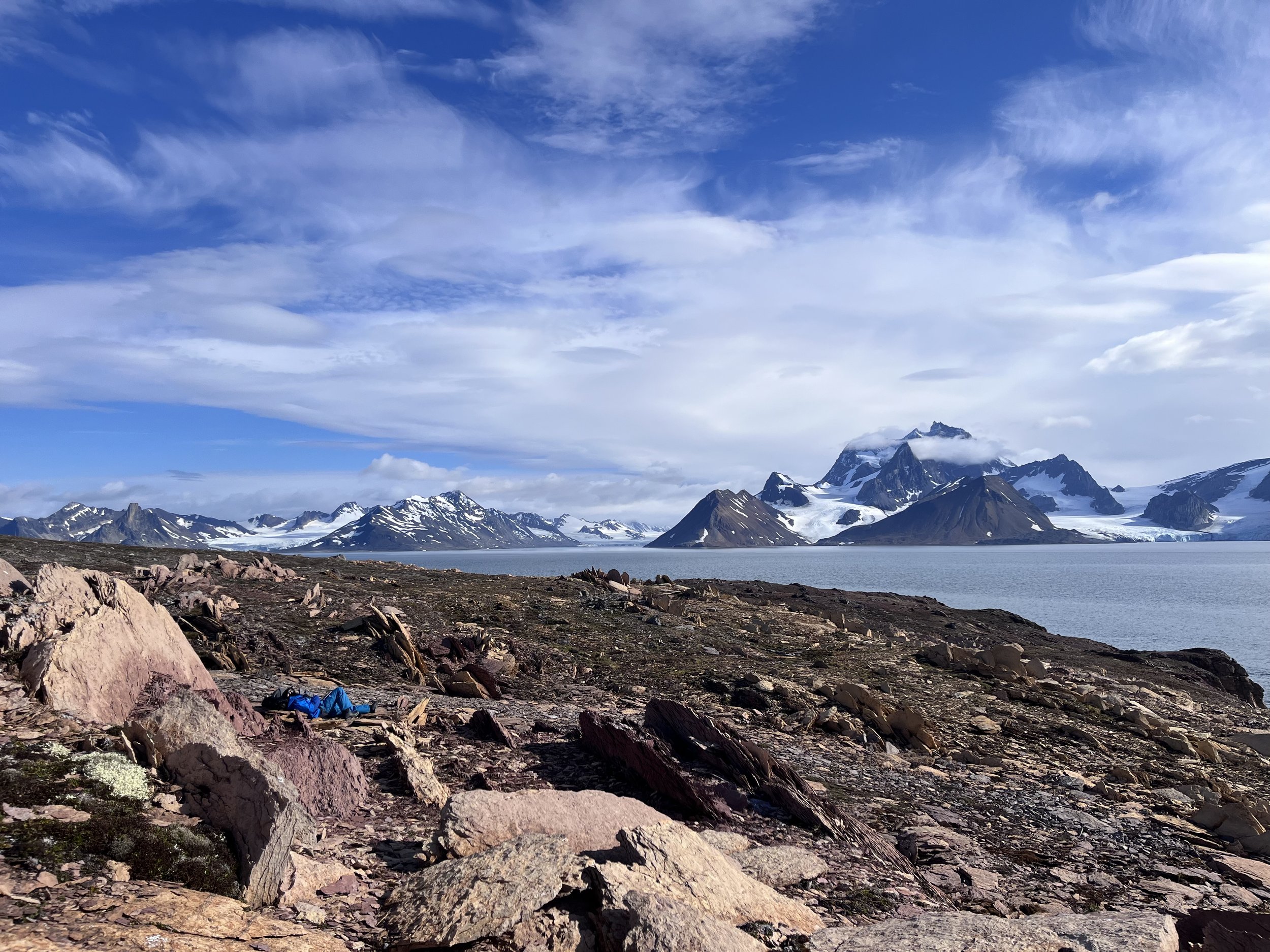
Photo: Cathleen McCluskey
Back to the zodiacs, back aboard, dinner. Then chess with Ling-Lin, and I did not lose that one either, and the next, and I noticed something starting to happen at that point. Word gets around a small ship quickly. People had begun to say no. I would ask, and there would be a pause, and then a very polite no thank you. By the end of the trip I was down to about three willing opponents and none of them were sure why they had said yes.
Then the bar, second night in a row, and this is the night it became the thing it stayed. Not a party. Six of us up there most evenings, the same faces, a beer and a chair and the light not going anywhere. Snacks came out on their own rotation, nuts and pretzel sticks and, on the good days, potato chips. There was no music at the bar. That came later, on deck, and that is another entry too. Christina got the last of the green IPA.
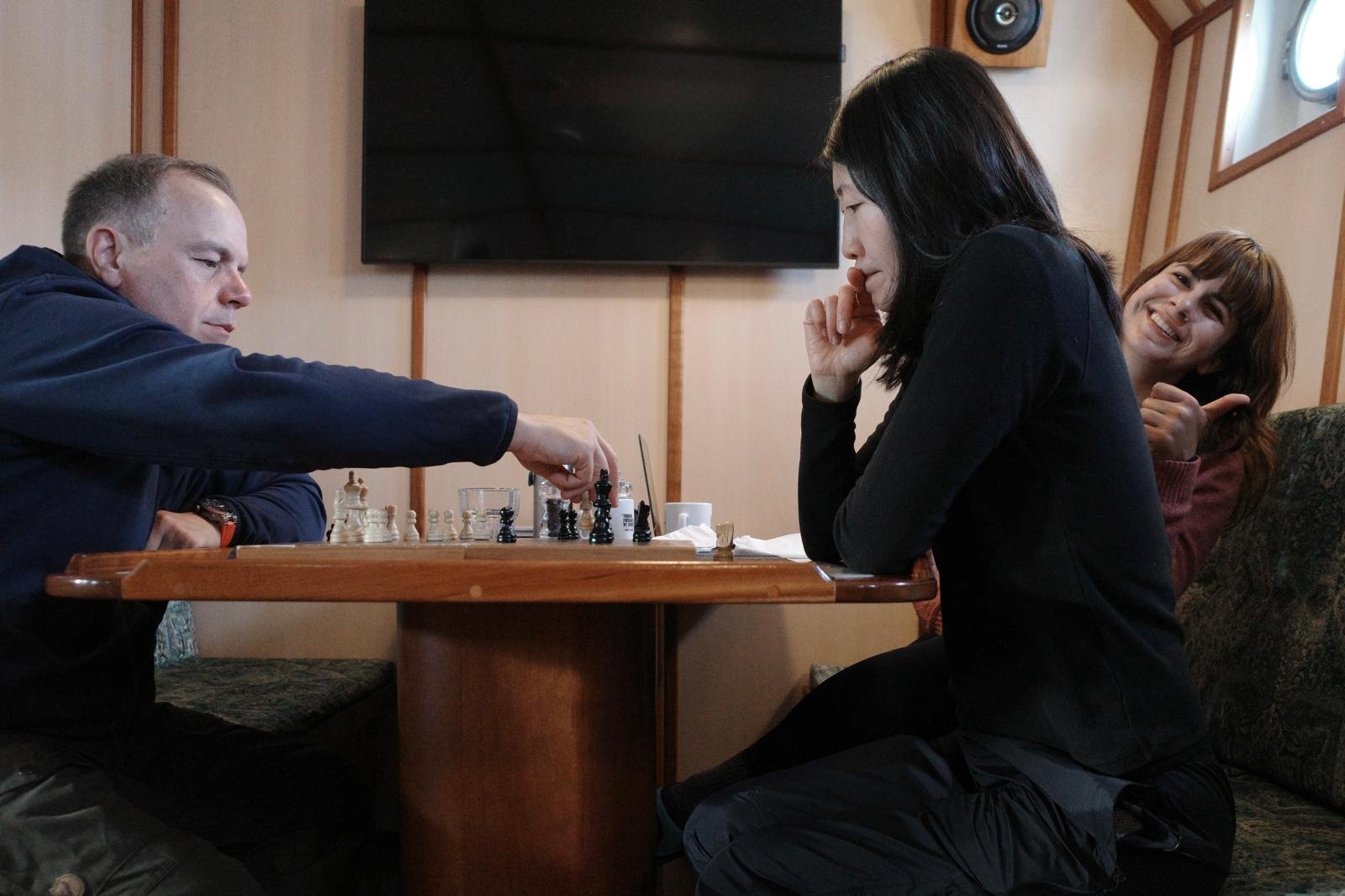
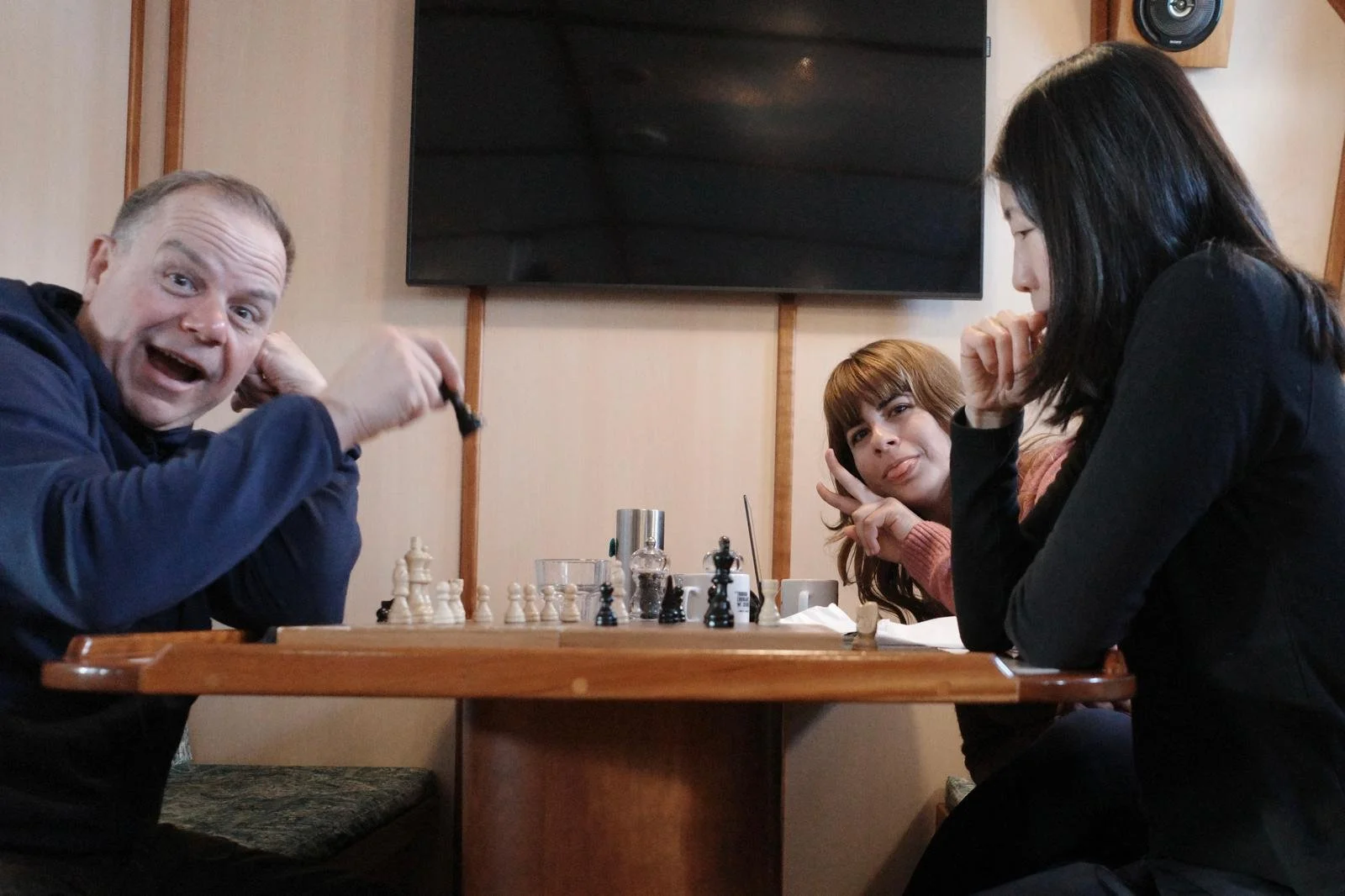
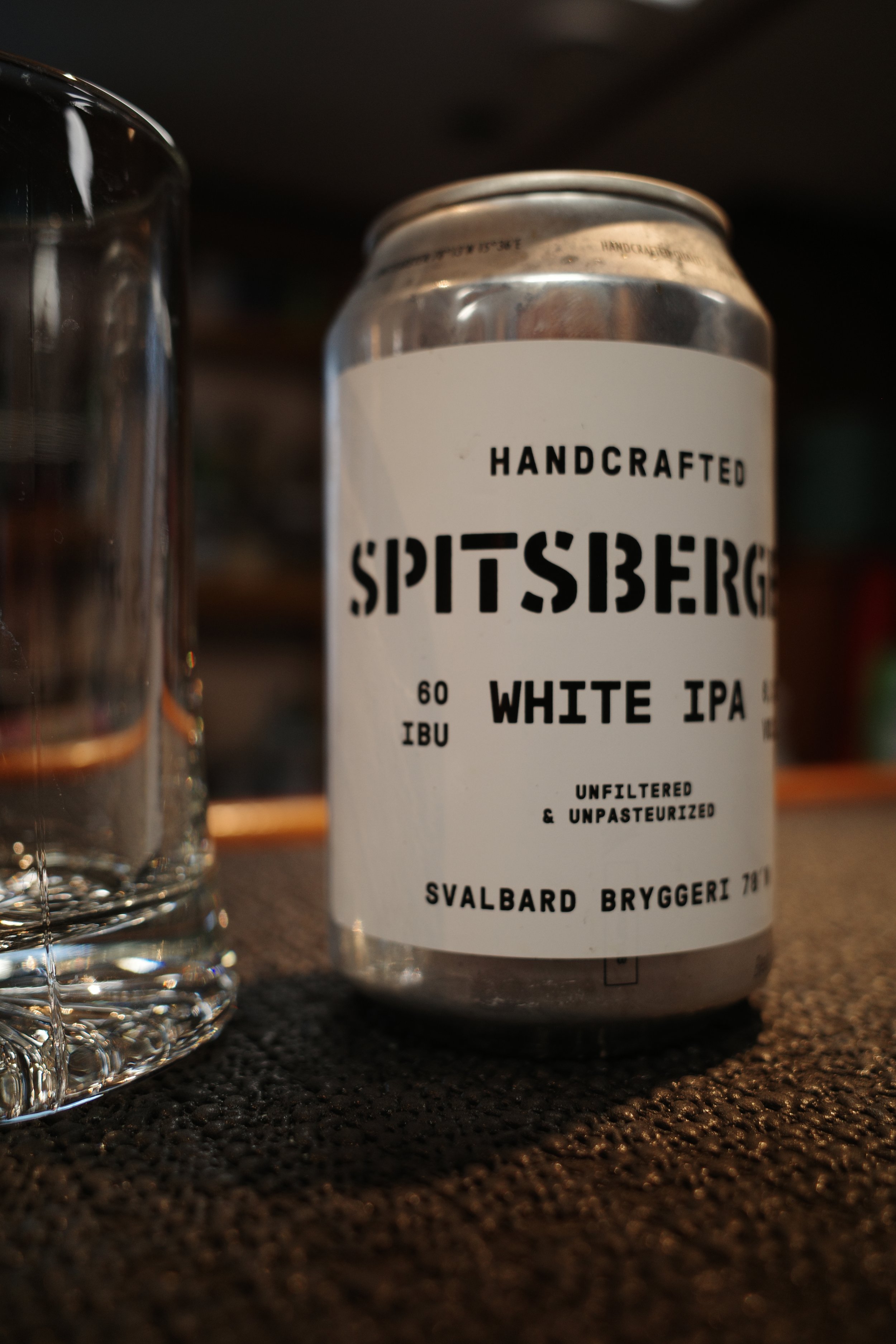
Photos: Christina Olsen
The anchor went down at Hornbreen and stayed down.
Thirteen kilometres. The shortest day of the whole expedition. Yesterday the ship ran seventy-four and nobody set foot on anything. Today she barely moved and we were on the ground twice, first on ice and then on stone, and both of them were as good as anything I have ever stood on.
“In every walk with nature one receives far more than he seeks.”