Entry 041: Day 05: The Evidence
There was a sheet. It went up the night before and it asked one thing. If you wanted a place on a zodiac in the morning, write your name and write what you were doing. I wrote filming. Nothing else. Two of us out of twenty-eight did that. Everybody else wrote two things, or three, or four, because everybody up there does two or three things.
Gergő was up late and saw the list before bed. I had gone down earlier, so I came up in the morning and found my name and his name and nothing under them. Karen joined us once she saw how light the boat was going to be. Three of us. Sarah told me later she wished more people had picked one word, because a boat is easier to build around a verb than around a résumé. I got lucky. That is most of what happened that morning.
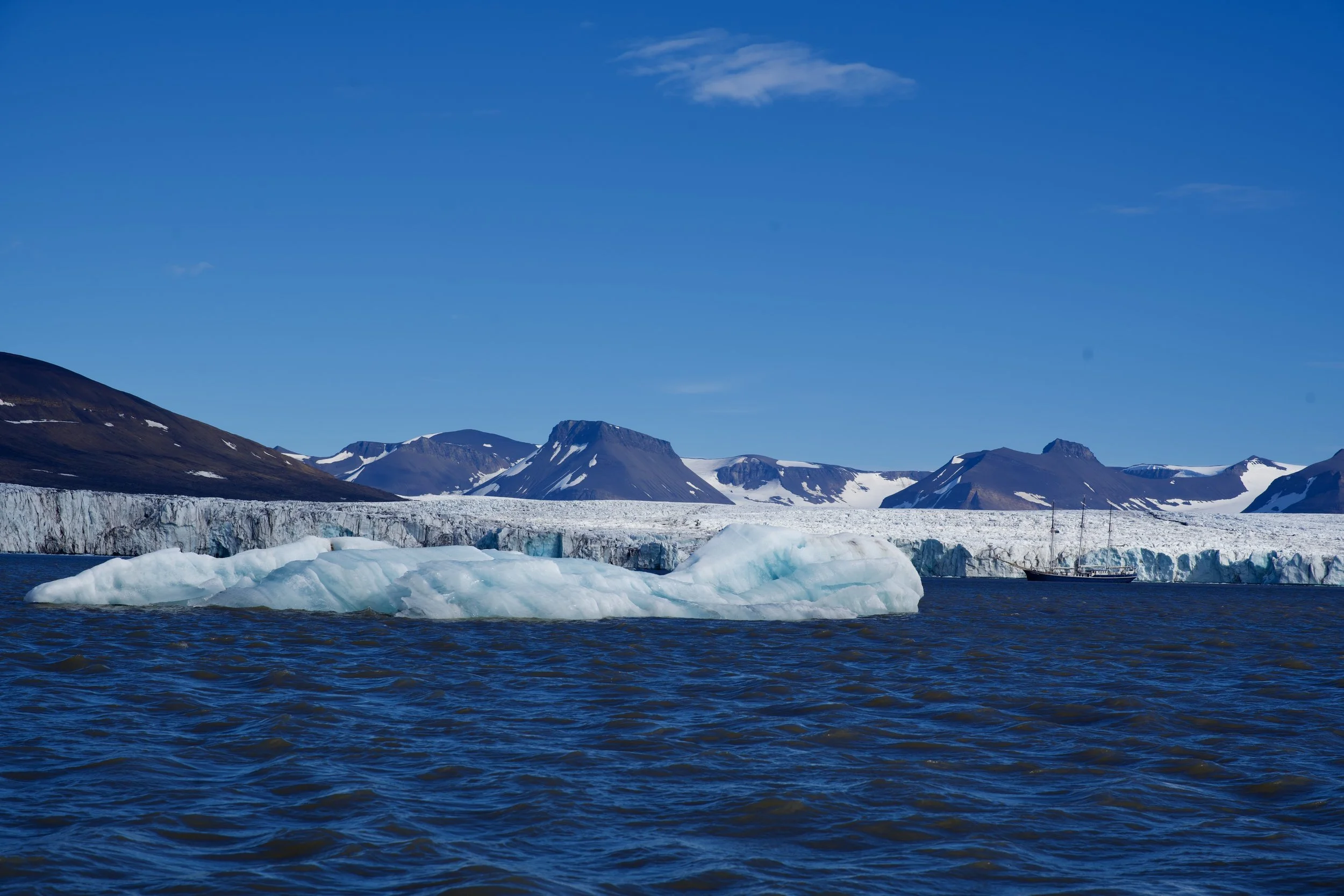
We were anchored in Brepollen. The name means the glacier bay and it is the innermost end of Hornsund, with six glaciers coming down into it from every side. The ship had not moved in eleven hours and would not move for two more. You come up the stairs and you are standing in a bowl, and the walls of the bowl are ice. Three zodiacs went out at half nine. Ours had three artists in it and Sarah at the tiller.
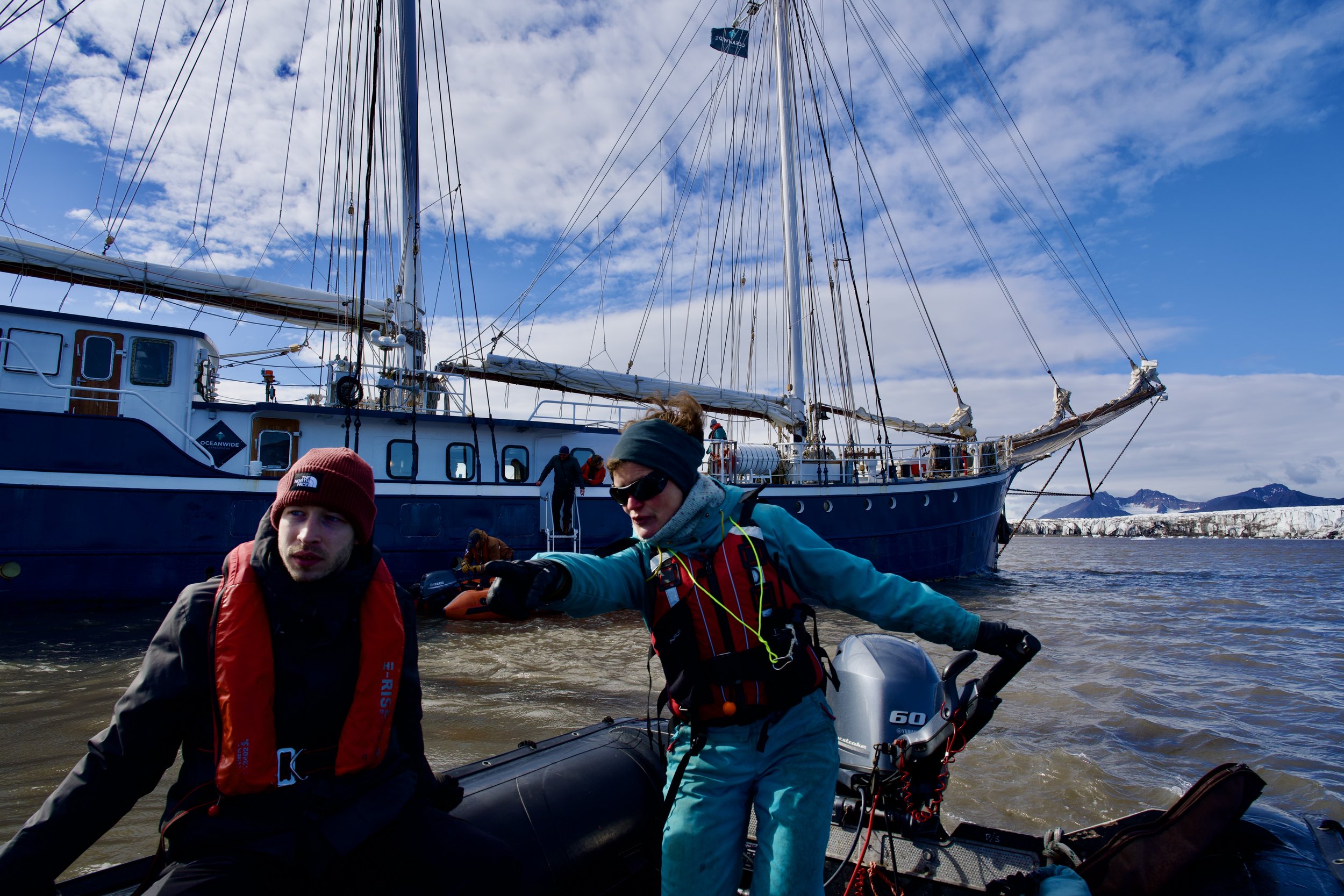
Gergö & Sarah in front of the Rembrandt
Watching Sarah drive that boat was one of the best things I saw in sixteen days, and I already thought she was extraordinary before I got into it. She would bring us in toward a berg under power and then cut the engine, and then there was nothing. The boat carried on its own weight. It went the whole way around and she steered and that was all of it. No motor, no wake, nobody talking. I had a camera up and a horizon that stayed level and I never once had to ask for either of them. She did it again and again for ninety minutes, along the front of the glacier and back along it, and I still do not know how.
Here is what I did not expect. I had only ever seen the front of an iceberg. You assume the back is the same. It is not. The far side was covered in shallow scoops, hundreds of them, hand sized, as though something had gone over the whole surface pressing thumbs into it.
They are called scallops. They are not made by sun. They are made by moving water. Turbulence melts the ice unevenly, the unevenness feeds itself, and you get a repeating pattern five to twenty centimetres across. And they only form inside a window. Water between five and seven degrees. Sarah logged the sea that day at six.
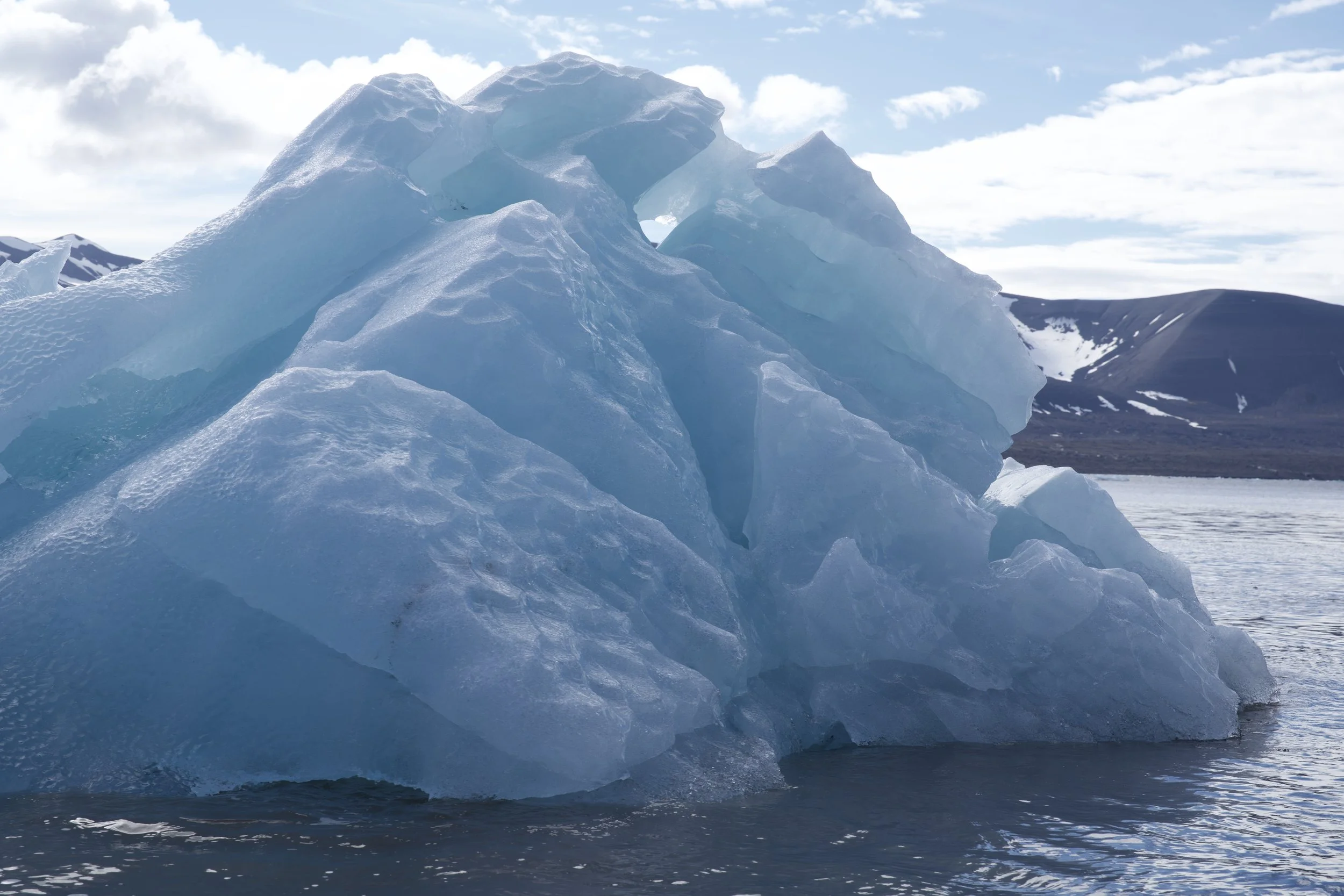
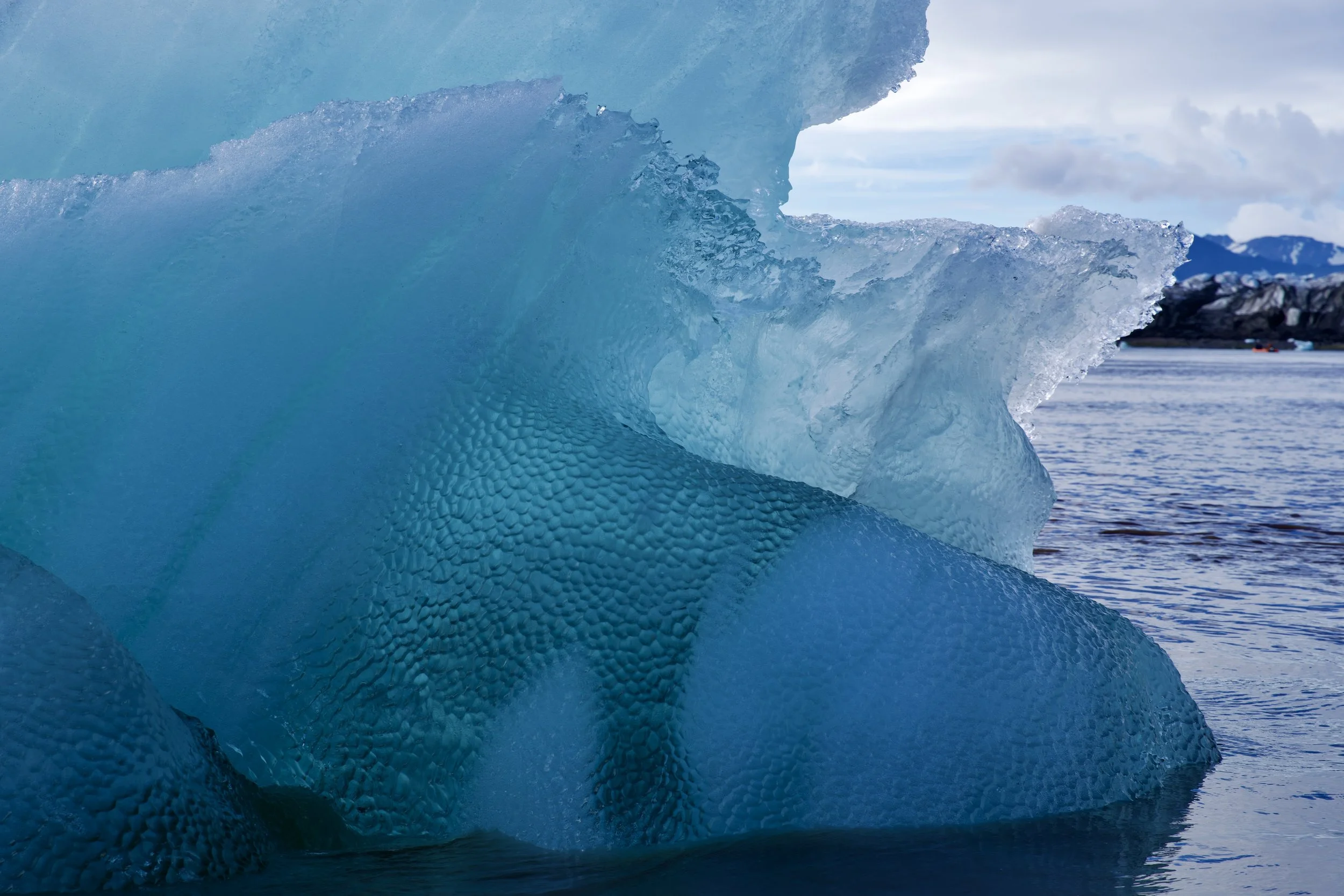
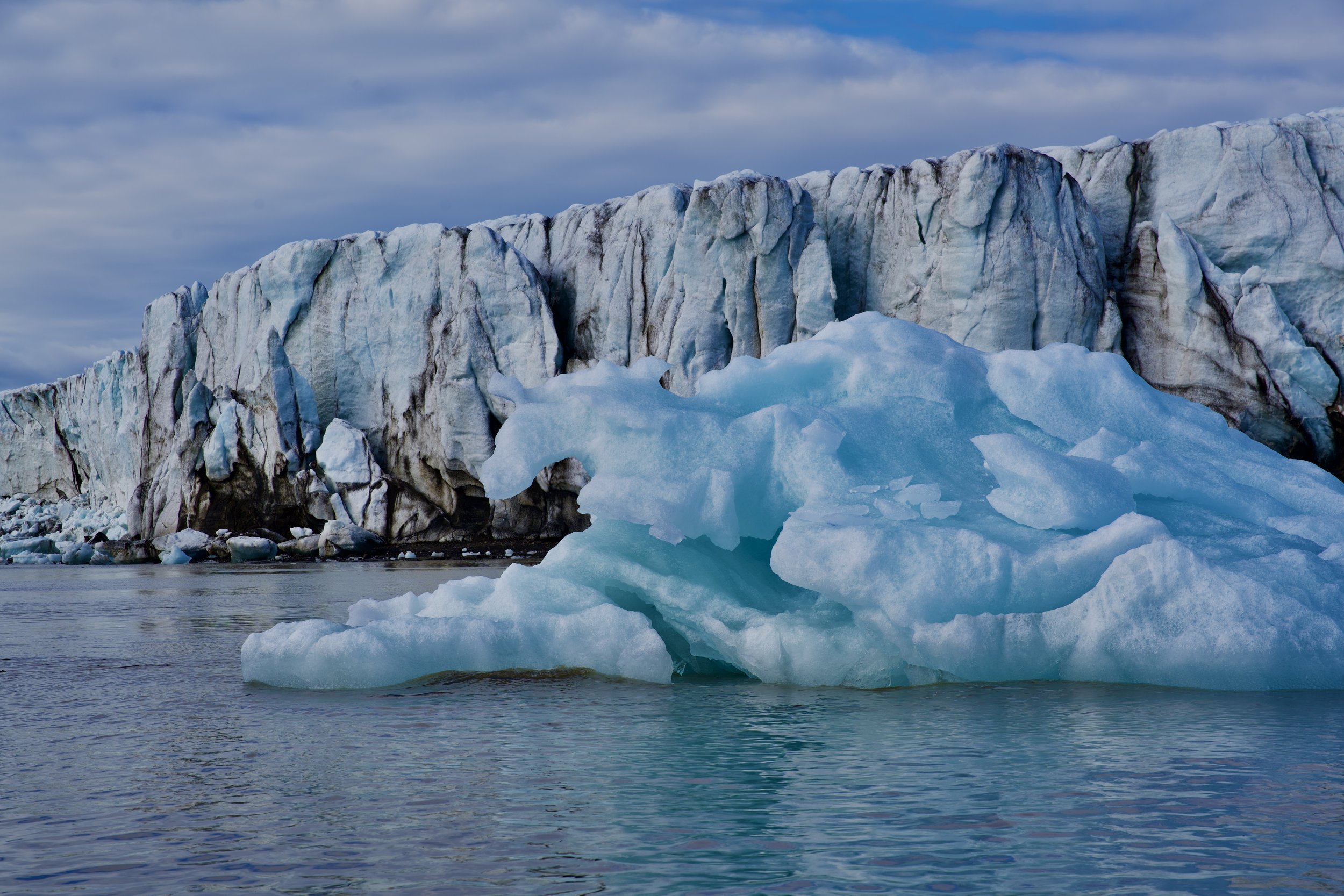
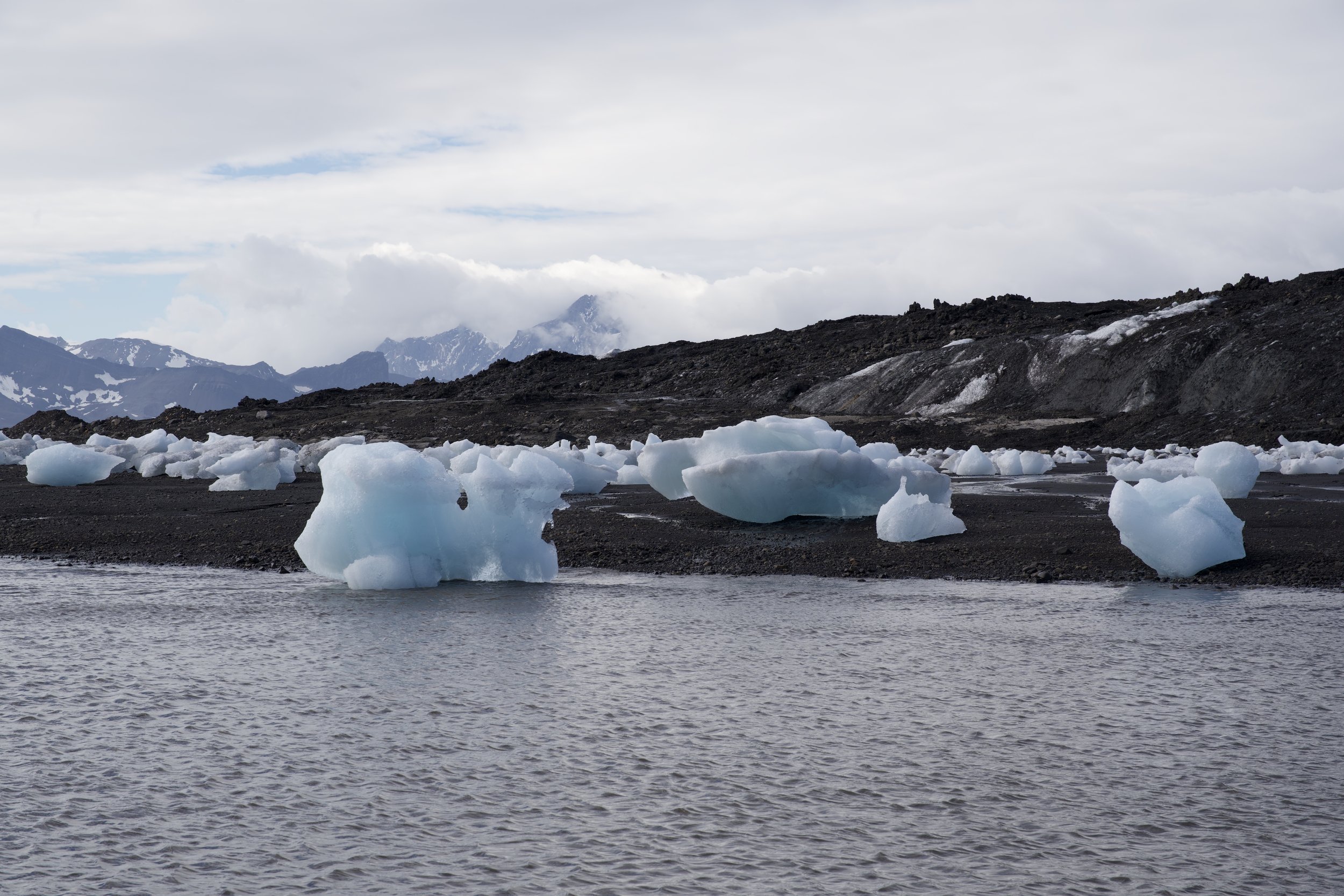
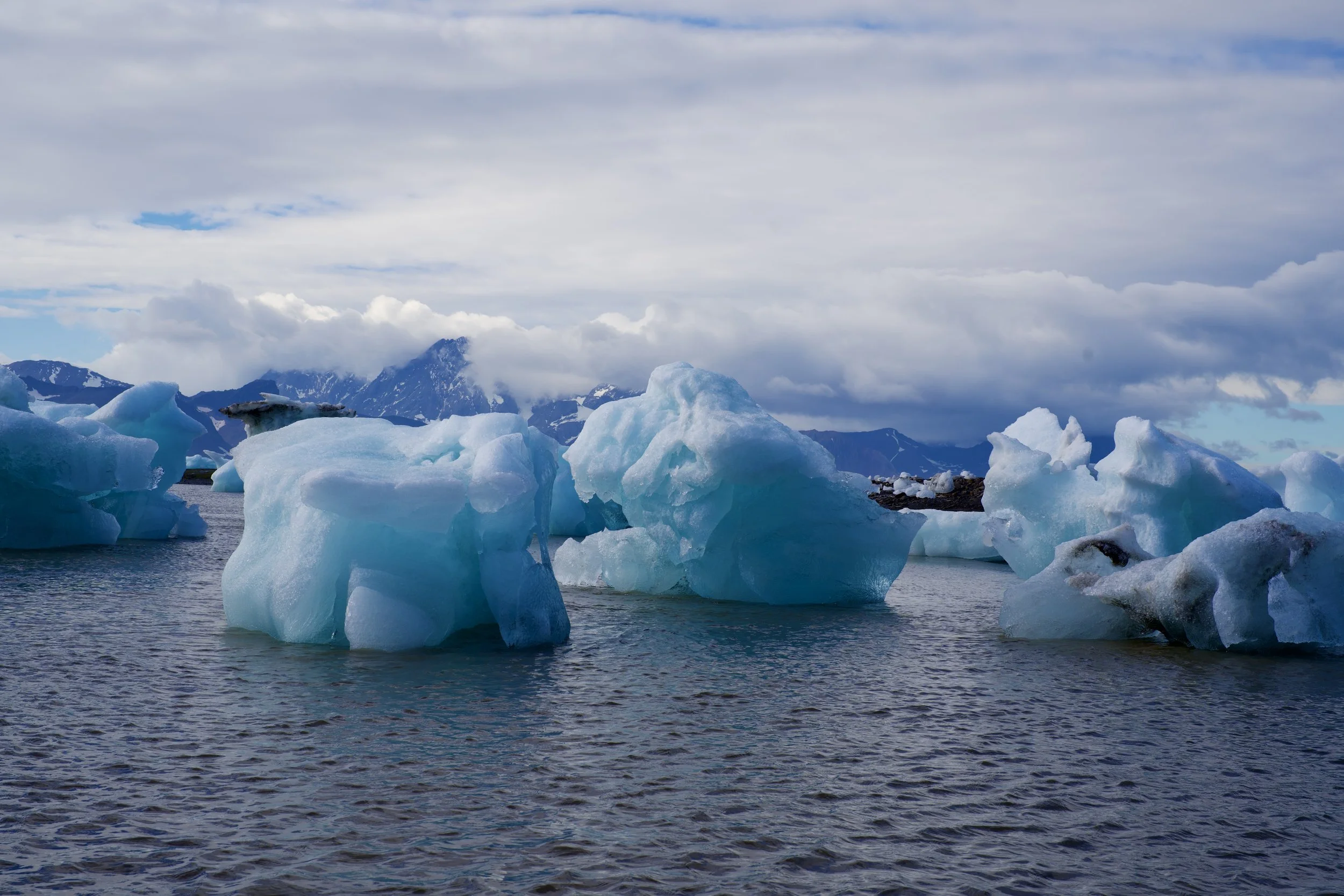
I spent a morning filming a pattern that exists inside a two degree band, on a day when the water sat in the middle of it. I found that out a few weeks ago, sitting at a desk in California.
Then there is the sound. Get close to a small floating berg with the engine off and it crackles. Continuously. It is a fireplace. That is not a comparison I went looking for, it is the first thing your head hands you, and it stopped me. I was sitting in the middle of the Arctic listening to a fire. It has a name. Bergy seltzer. The ice is full of air that got caught when the snow fell and then squeezed by everything that fell on top of it afterwards, and some of those bubbles sit at twenty atmospheres. When the ice melts they let go, thousands of them, one after another. Submariners hear it. Sonar can pick it up from a hundred miles away. So the crackle is old air. It has been in there since long before anybody now alive, and it comes out beside your ear sounding like a living room in winter.
Now the part I took longest to understand. Hornbreen and Hambergbreen sit back to back. Together they are the wall between Hornsund and the Barents Sea, and that wall is the only reason the southern tip of Spitsbergen is still attached to the rest of it. Sørkapp Land is a peninsula because of ice. That system has lost between a third and half of its volume in a hundred years. It cannot build back. If it keeps going the way it is going, the wall opens, the two seas join, and Sørkapp Land stops being a peninsula and becomes an island. Sarah had a page pinned up where we could all see it. Two aerial photographs of the same ground. 1936 above, 2018 below. She has been coming back here for years and she put it there so nobody had to take her word for anything. In the 1936 frame, three of these glaciers are one unbroken front. They are three separate glaciers now. That night we sailed around Sørkapp. We went around the outside of a peninsula that is only a peninsula because of the ice I had spent the morning pointing a camera at.
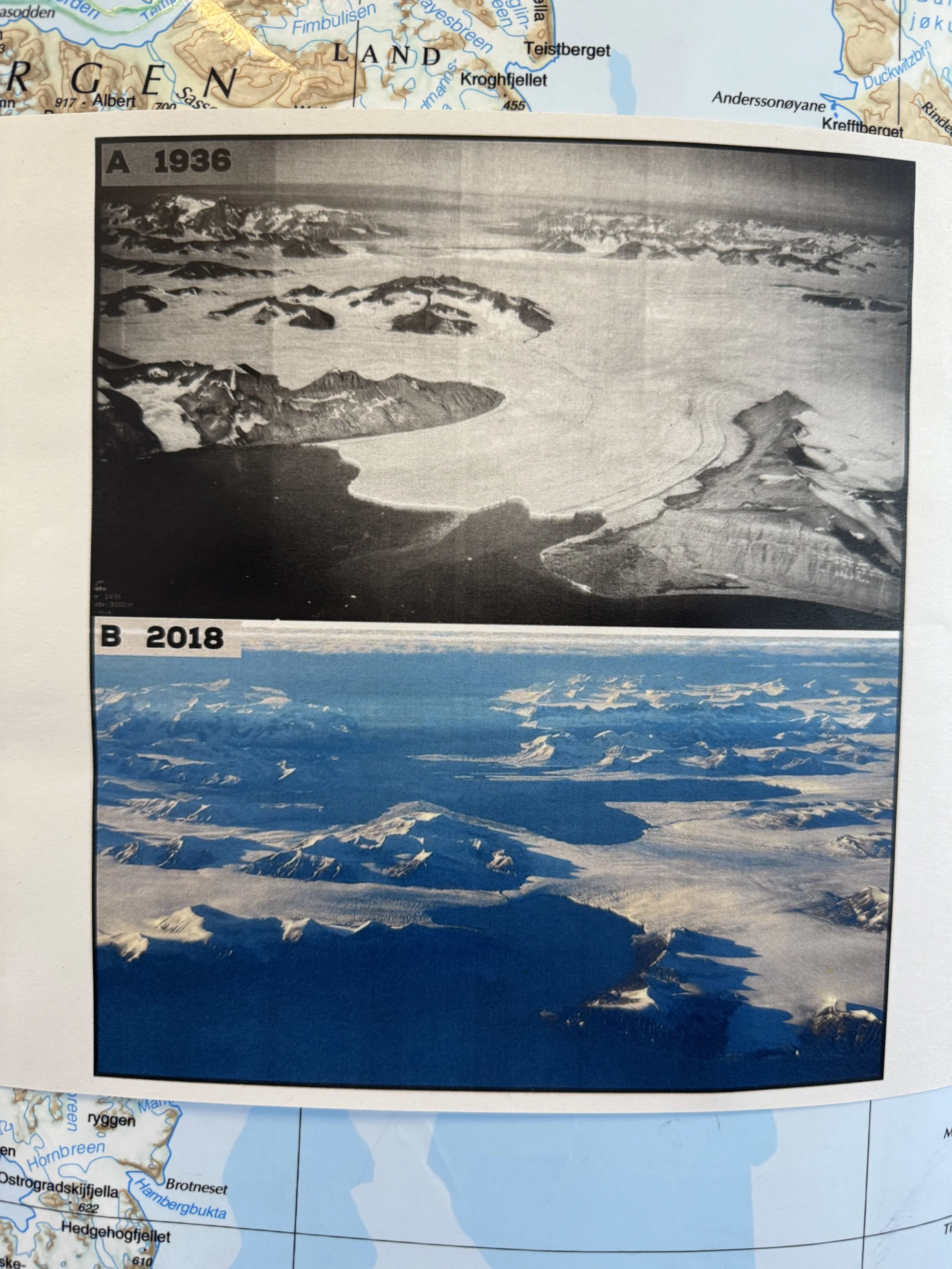
1936 above, 2018
The second round went out at quarter past eleven in fuller boats. I heard afterwards that in one of them somebody had firm views about where to go and was generous with them. I have never been so pleased with one word on a piece of paper. Lunch. Cards backed up. And then a plate. Kim and Bob had put real ice on a plate and stood plastic animals on it. A walrus. A seal. A penguin. An octopus. A narwhal half buried at the back. And a hand lettered sign on a toothpick that said SAVE THE ICE. We had each been asked to choose one animal. I chose the narwhal, because after polar bears it was the thing I most wanted to see. I am not going to be clever about that sign. It was a room full of grown artists playing, and there was a penguin in the Arctic, and the ice was melting the entire time we looked at it.
Anchor up at twenty-five to two. Anchor down at Treskelen at two minutes past three. Treskelen is the headland at the mouth of Brepollen. We had spent all morning inside the bowl and now we were standing on the doorpost of it. Long walk, middle walk, and a perimeter that moved along with us. I took the middle again, with Lisa. We had not gone far along the shore when we found the jaw. A polar bear's lower jaw, broken, lying on grey shingle. Two cheek teeth still seated in it and the canine fallen out beside it. White. In perfect condition.
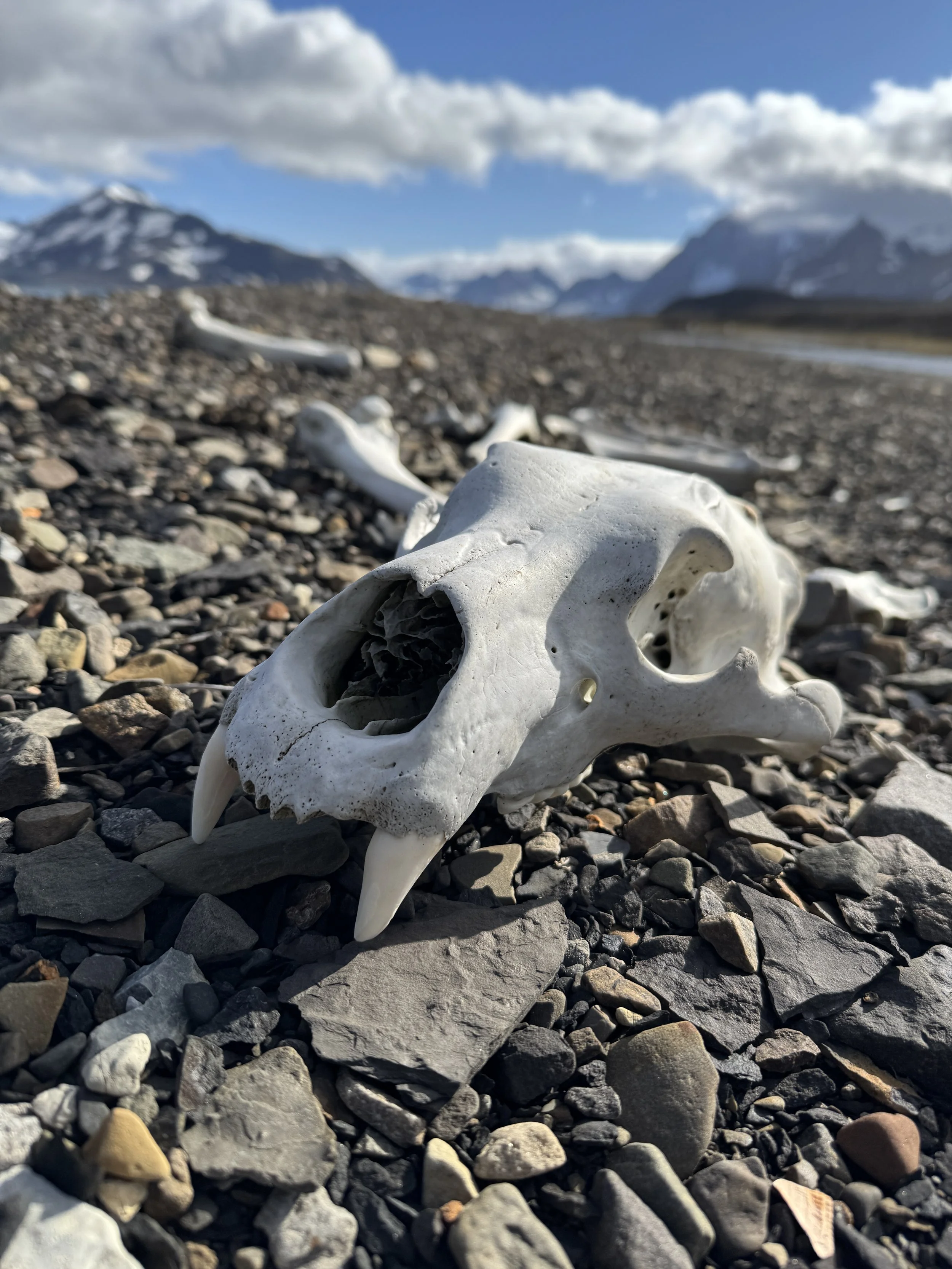
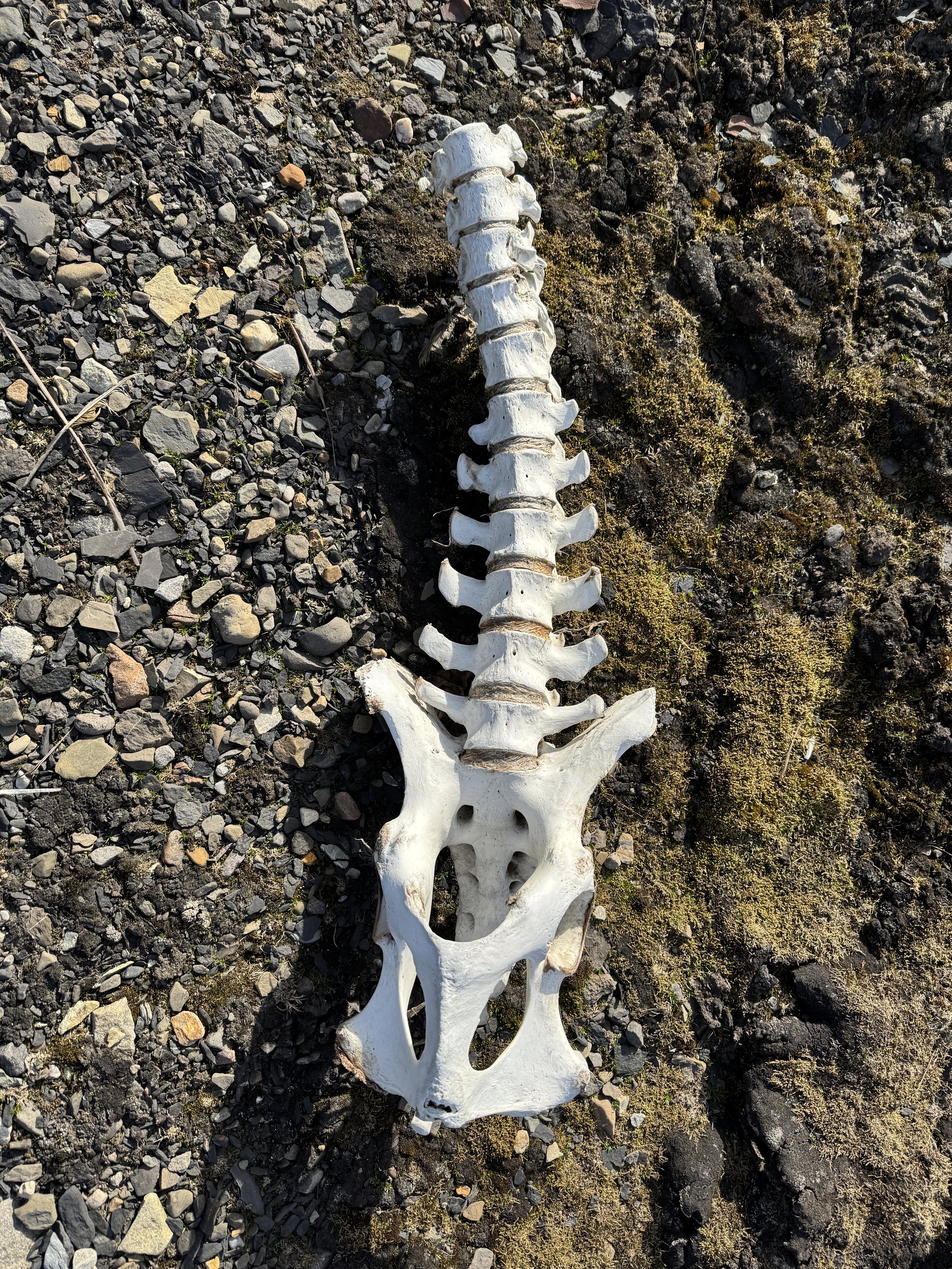
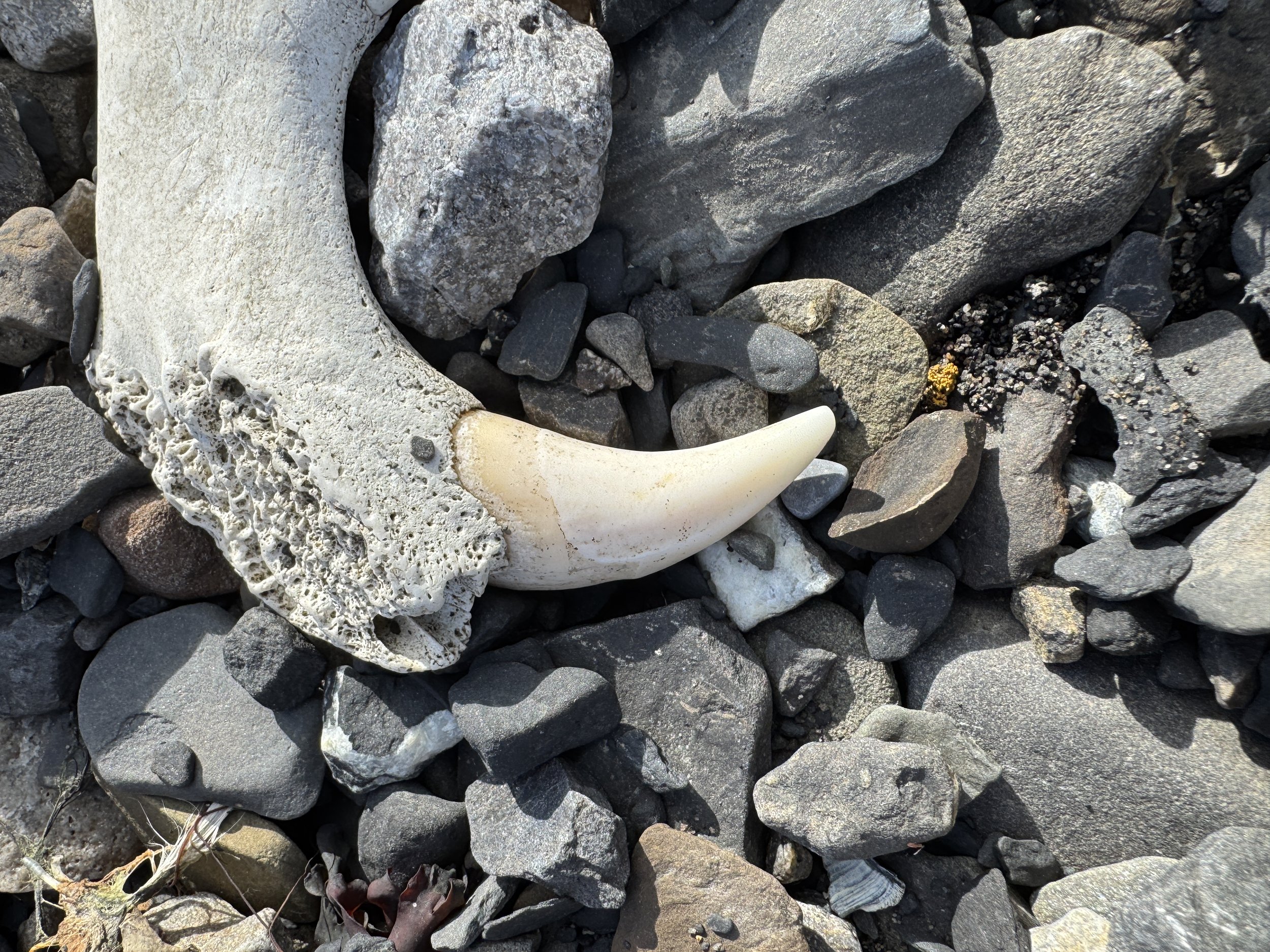
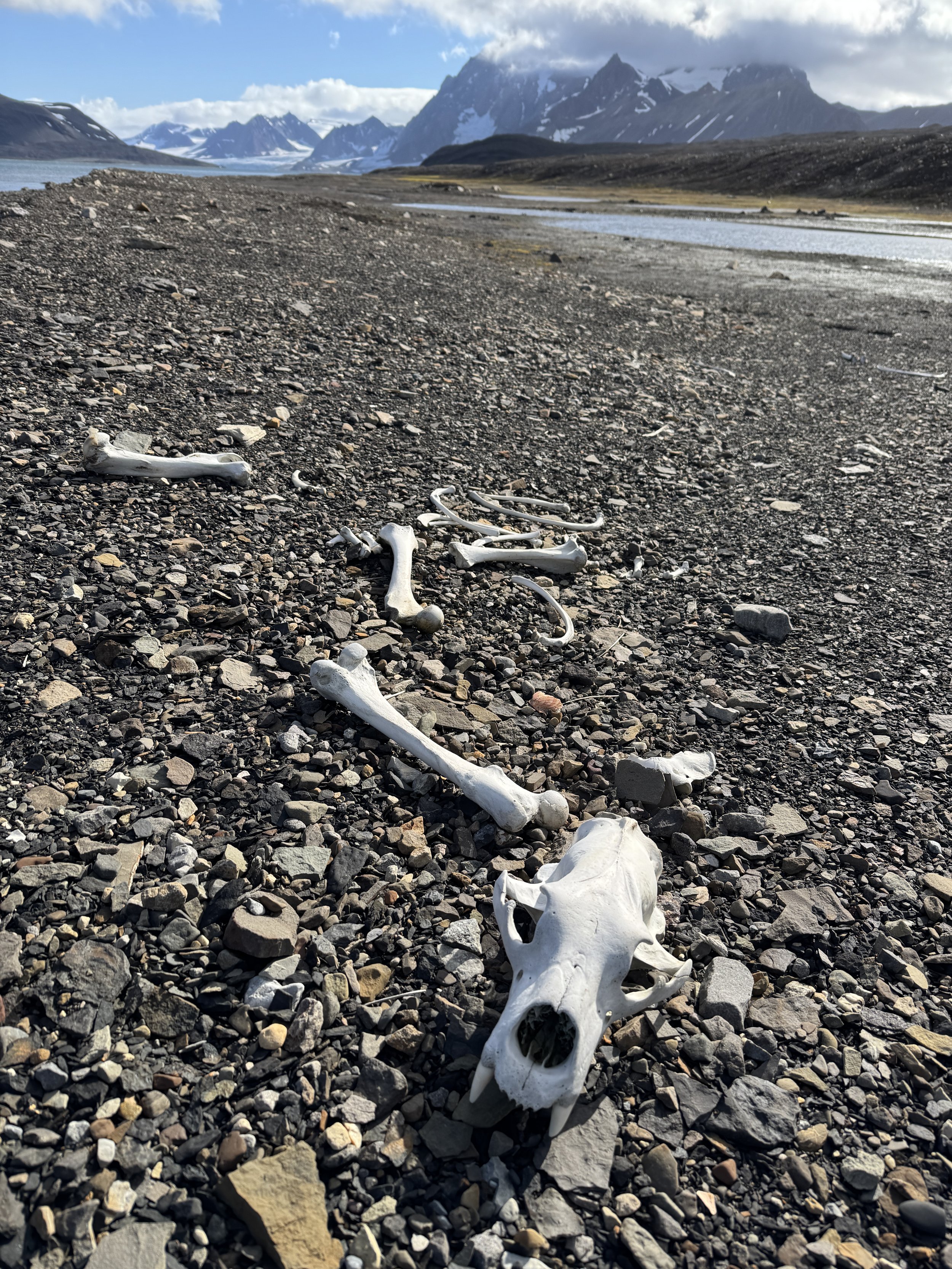
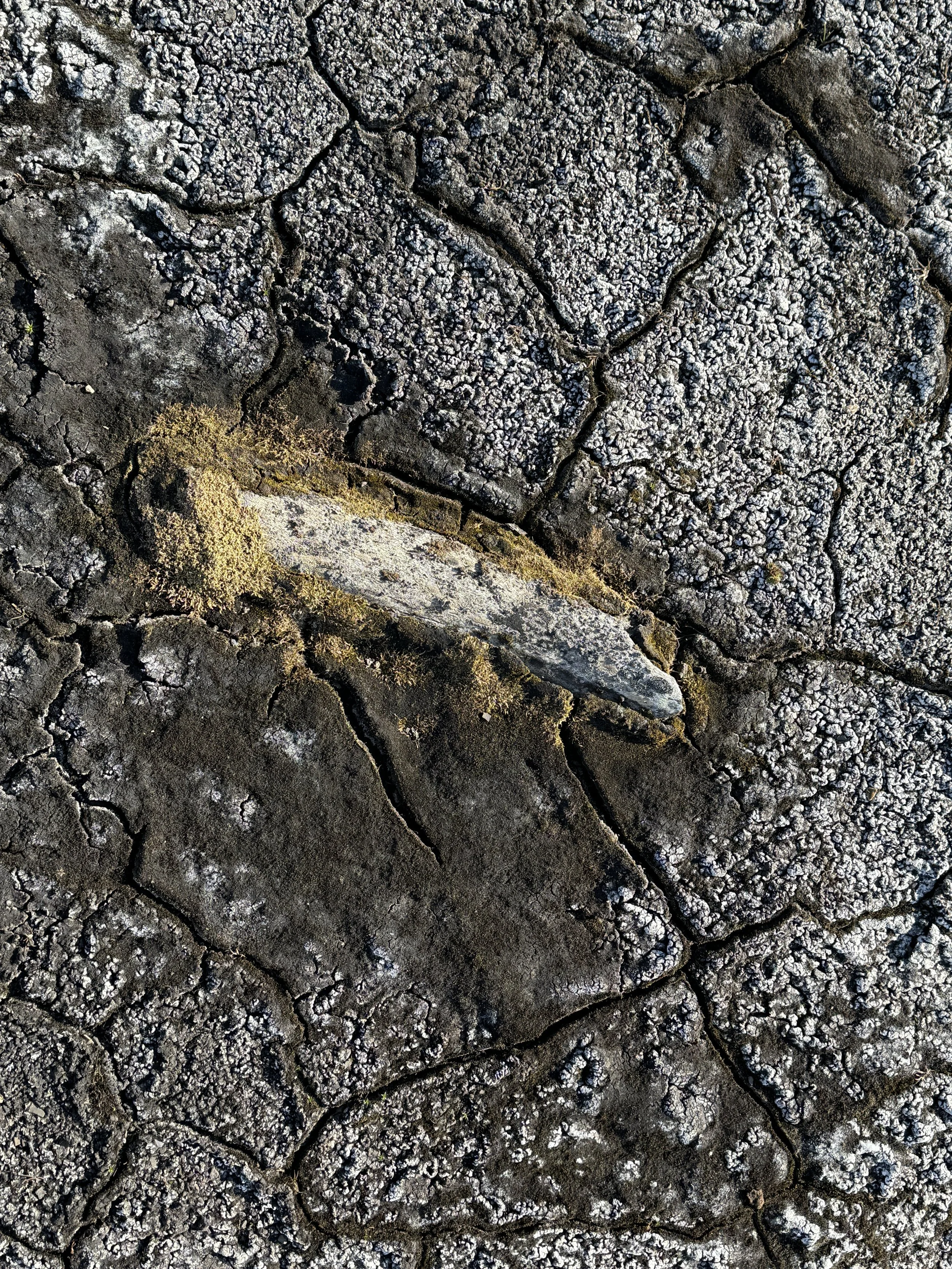
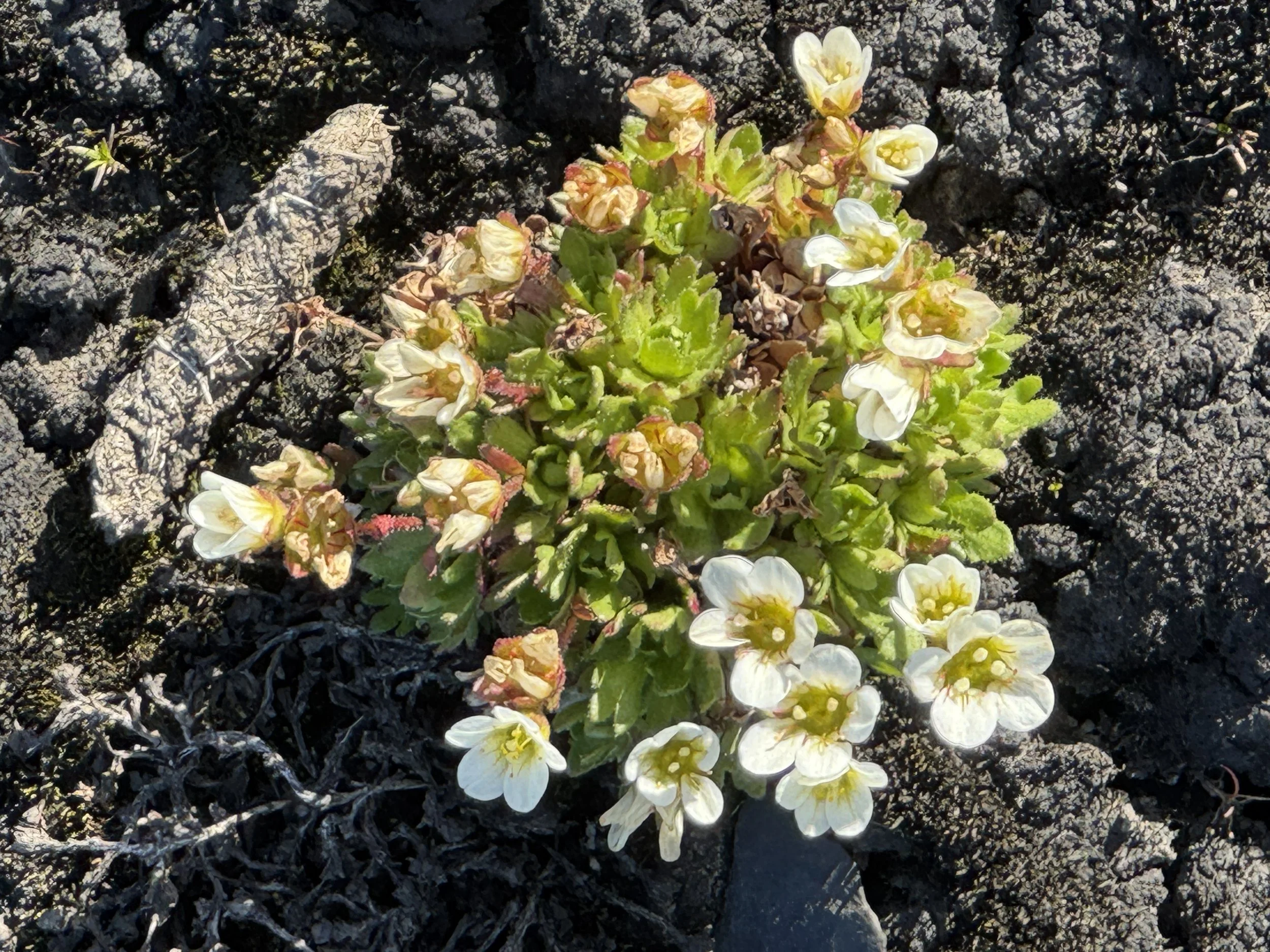
A few metres on, the skull, both upper fangs still in. Then the spine, still hooked into the pelvis. Then the rest of the animal going away down the beach in a line. Ribs, a femur, all of it laid out like a diagram somebody had prepared. There was a second skull on that stretch too, a different animal entirely. Long thin beak, small teeth running all the way down it, dozens of them and all the same size. Nothing that eats seals has a mouth like that. Nobody touched any of it. That is the rule up there, and by the fifth day it had stopped being a rule and become the way you behave. And then the prints.
In wet grey mud, front paws and back, a whole line of them going somewhere with purpose. Five toes and a pad, pressed clean. A day old. Maybe two. I have film of them and it still does not look real to me. I started the joke right there on the beach. The guides always go ashore first. So obviously they lay the bones out and press the prints in before the rest of us land, for our benefit. It went round the walk and then round the boat and then round table two at dinner, and it got better every time, because everything on that beach really was arranged too well. (Joking of course) I had seen a stuffed bear on a baggage carousel. I had found one in a rock at Hyrneodden. Now I had a whole one in pieces and a set of footprints a day old. Maggie came in 2024 and saw no Bear. Standing on that shingle I understood for the first time that it was possible to go home with only the evidence.
Then we went up. The wind kicked in on the climb and kept kicking. Hard enough to lean into. The day before I had put my head back on a rock and slept in the sun for half an hour, and on this one there was nowhere on the whole headland to sit down. From the top you could see the bay and the boat and the mountains all at once. And on my left was Mordor. I do not know what else to call it. I had the Lord of the Rings theme going in my head from the moment we started walking and I could not get it out, I was humming it the whole way up, and standing on that ridge I was waiting for Frodo to come over the rise. That music stayed in my head for ninety minutes.
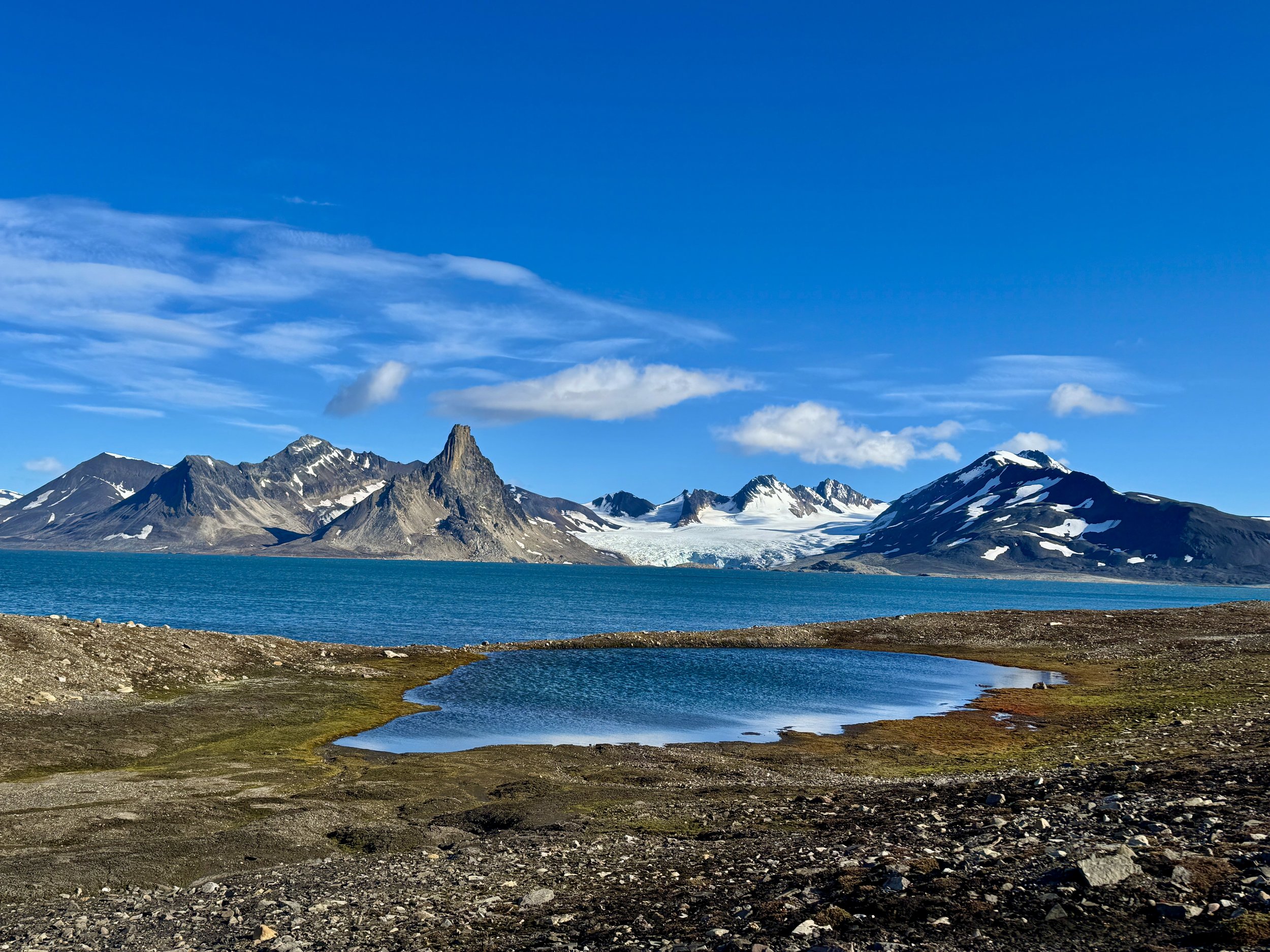
Mount Doom I mean Orodruin
Then back down to the beach where the stationary group was waiting. Anchor up at eight minutes to seven. After dinner both Joachim and Sarah stood up. Rough seas tonight. We will be sleeping at forty-five degrees. Half of you sleep against the wall and half of you hold on, and at four in the morning it swaps. Two people came to me for patches. Then I put one on myself, which I had not done once in five days, and went up and had a beer. The usual six. At twenty to nine the main and the schooner went up reefed. At ten to nine the fore stay sail and the inner jib went up, the engines went off, and we left Hornsund doing seven knots into two and three metre water. It was everything they had promised. You lie there and the ship goes over and comes back and goes over. Gergő had a rough night of it and handled the whole business with more consideration than I would have managed, and he was up and fine in the morning. At four the boat came about and the wall changed sides. They had said four. It was four.
I never did see a narwhal. Not that day, not in sixteen days, not once. I picked one off a plate because it was the animal I wanted second most, and the animal I wanted most had walked that same beach within a day of me, and what I came away with was its jaw and its skull and its spine and its feet.
“Have you seen the snow leopard? No! Isn’t that wonderful?”