Entry 049: Day 13: Let the Grass Have It
Monday, 27 July 2026. Sarstangen, Camp Heaven, Dahlbreen.
Breakfast ran to a schedule and so did I. Coffee, bread, butter, jam, and then outside. I walked out on deck and looked across the water and something on the spit was not sand. I went back in for the camera and met Sarah coming the other way and told her there were walruses out there. Ah, she said. You spotted them already. They were the whole first landing and she had them saved for the briefing.
The sound was calm and overcast with the sun coming through in patches and lighting up Prins Karls Forland on the far side. The water at that spit was eight degrees, the warmest of the entire voyage, six degrees warmer than the bay we had spent the previous afternoon in watching a glacier come apart. We went the whole way round an archipelago and the sea got warmest on the way home. There is a rule here that anything with an engine stays a hundred and fifty metres off a walrus haul-out. Read it and it is a law about engines. It has nothing to say about feet. So the ship anchored where the law put her, three guides took us in well down the beach, and everything after that was walking.
Thirteen days had worn the zodiac transfers down to nothing, everybody in and out in order without much said, and it went that way for every person that morning until it got to Bob, who went off the side and into the water to the knee. He caught the rest of himself before it followed. He was offered a ride back to the ship. He said no, and then he walked that entire spit with a boot full of the Arctic and never mentioned it once. Impressive, I would have taken the ride. I am confident about that. I like to be a lot of things but cold is not one of them.
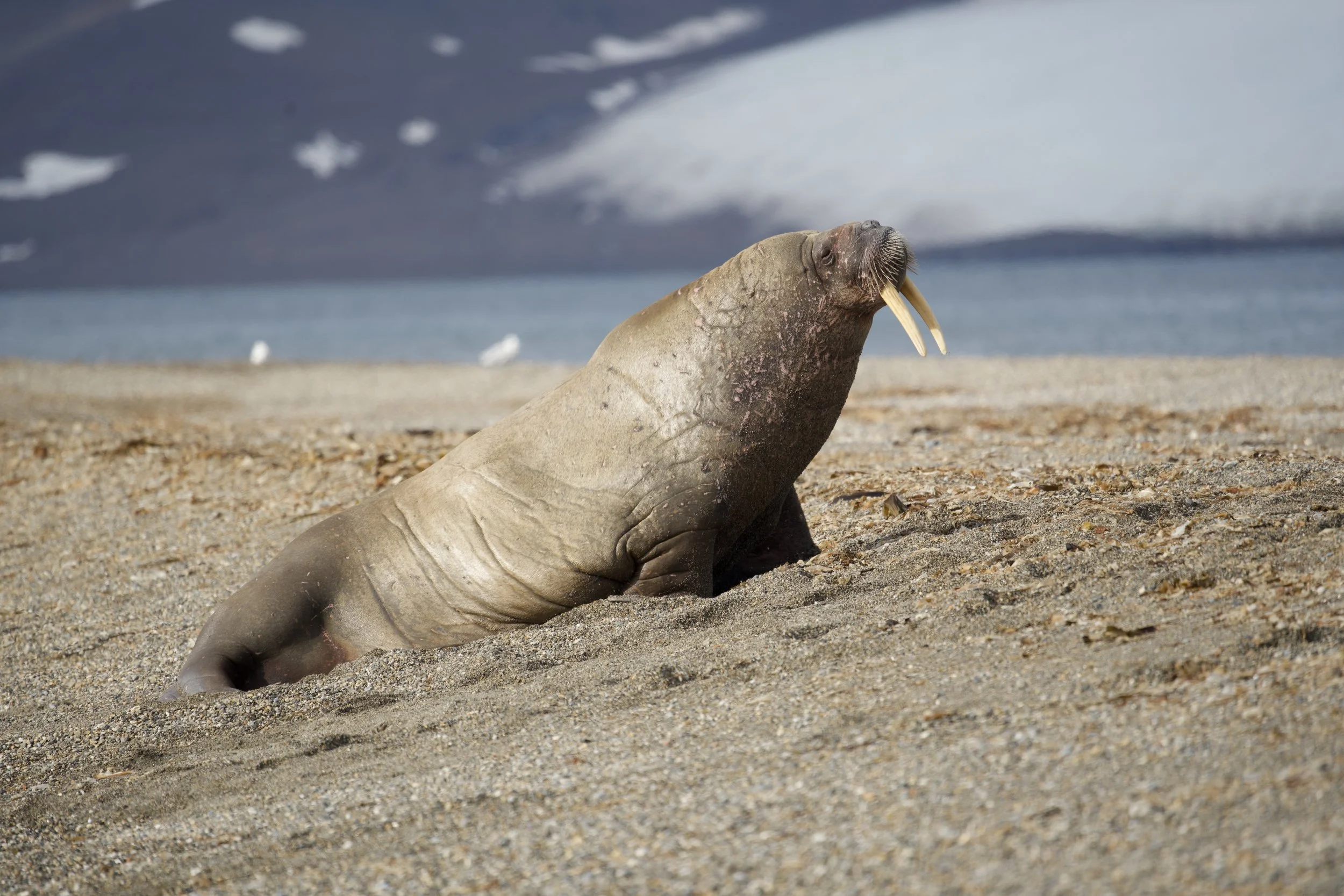
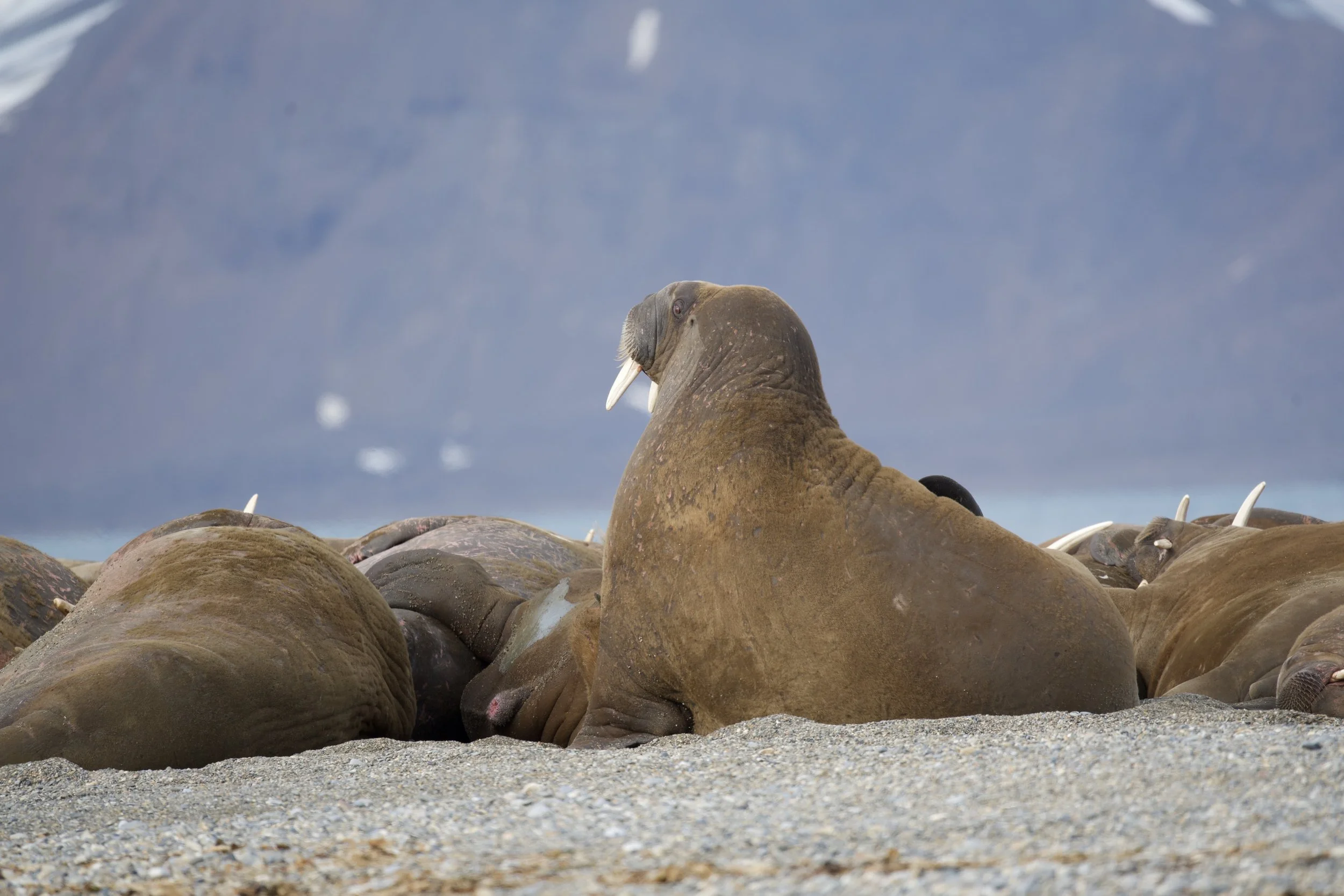
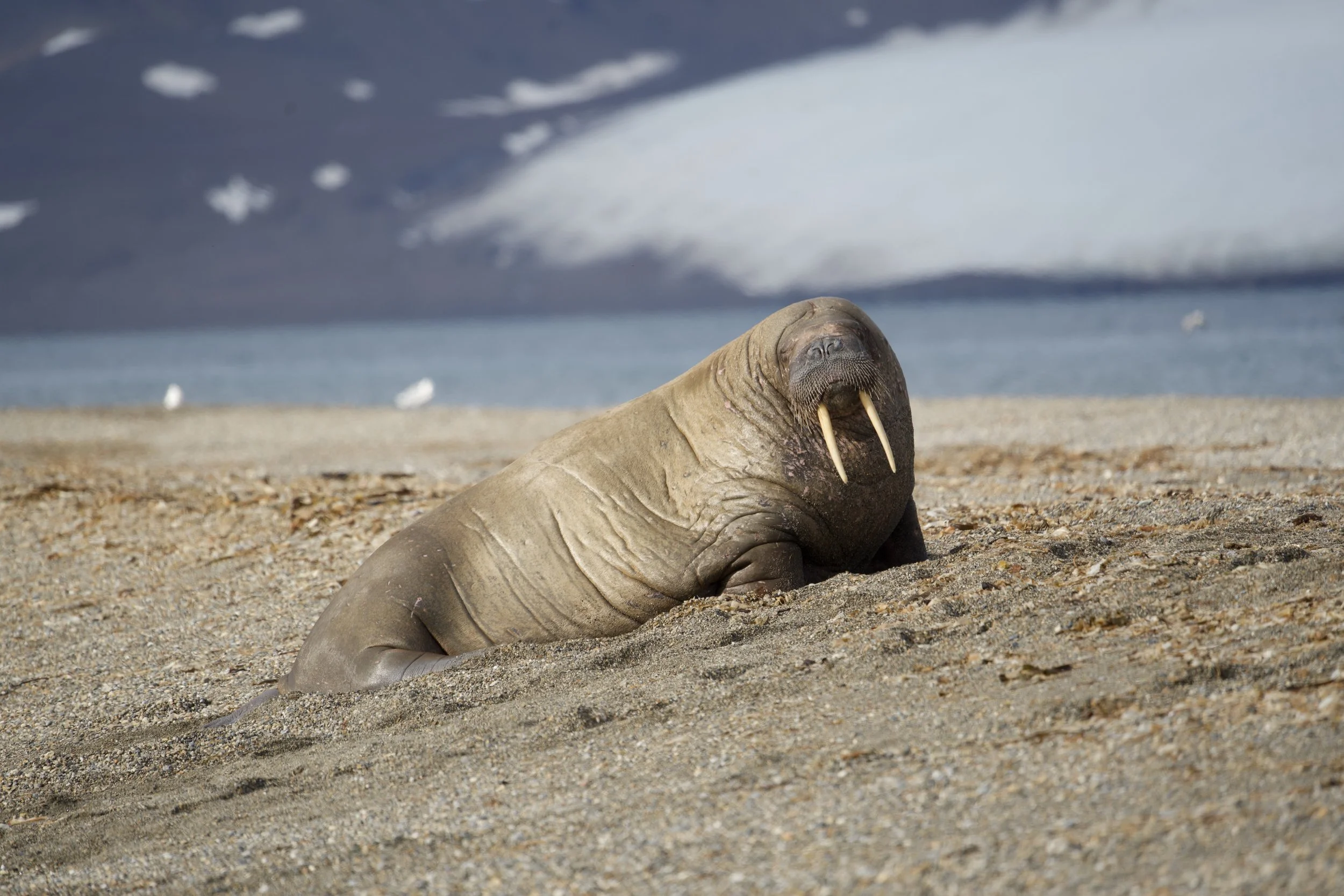
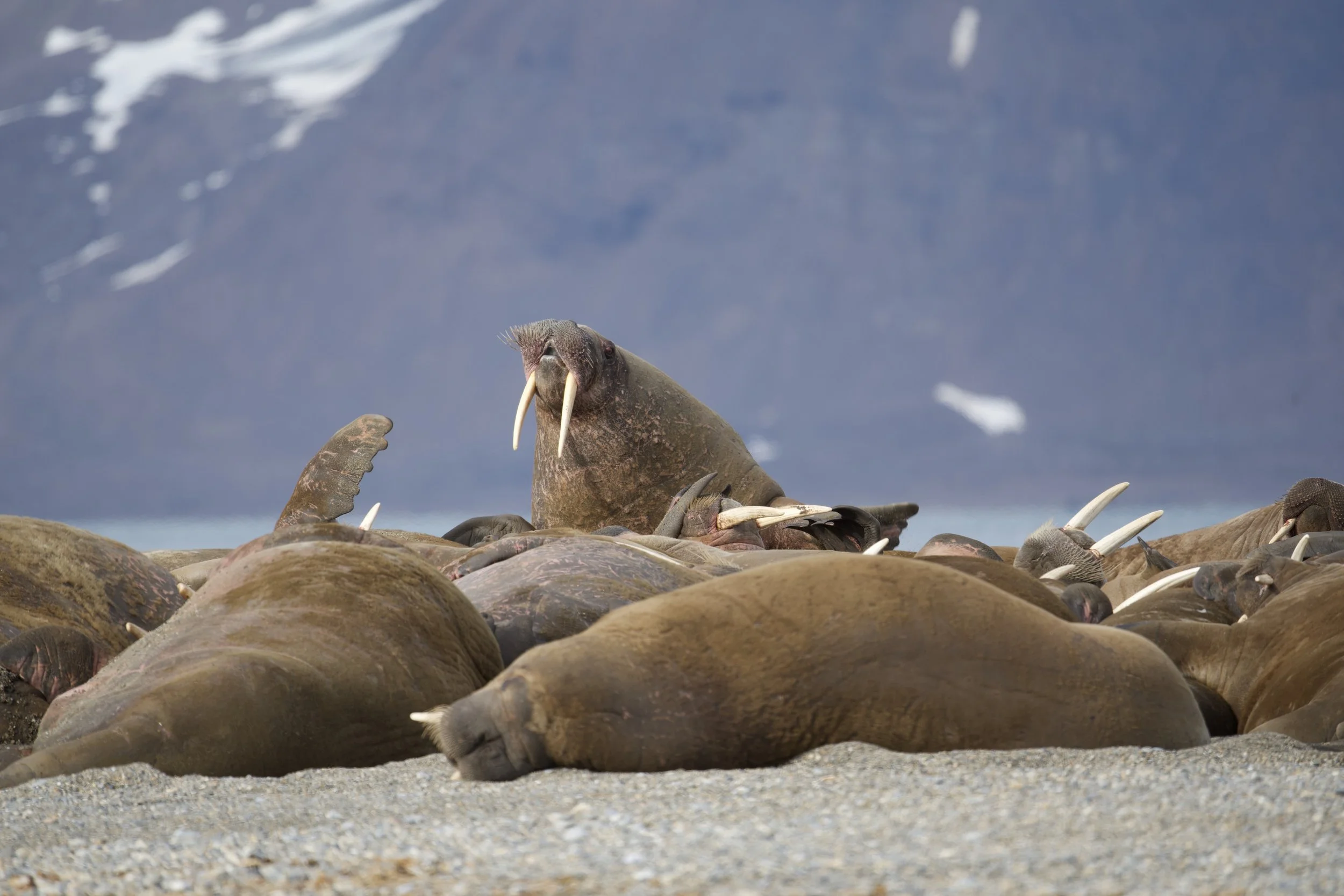
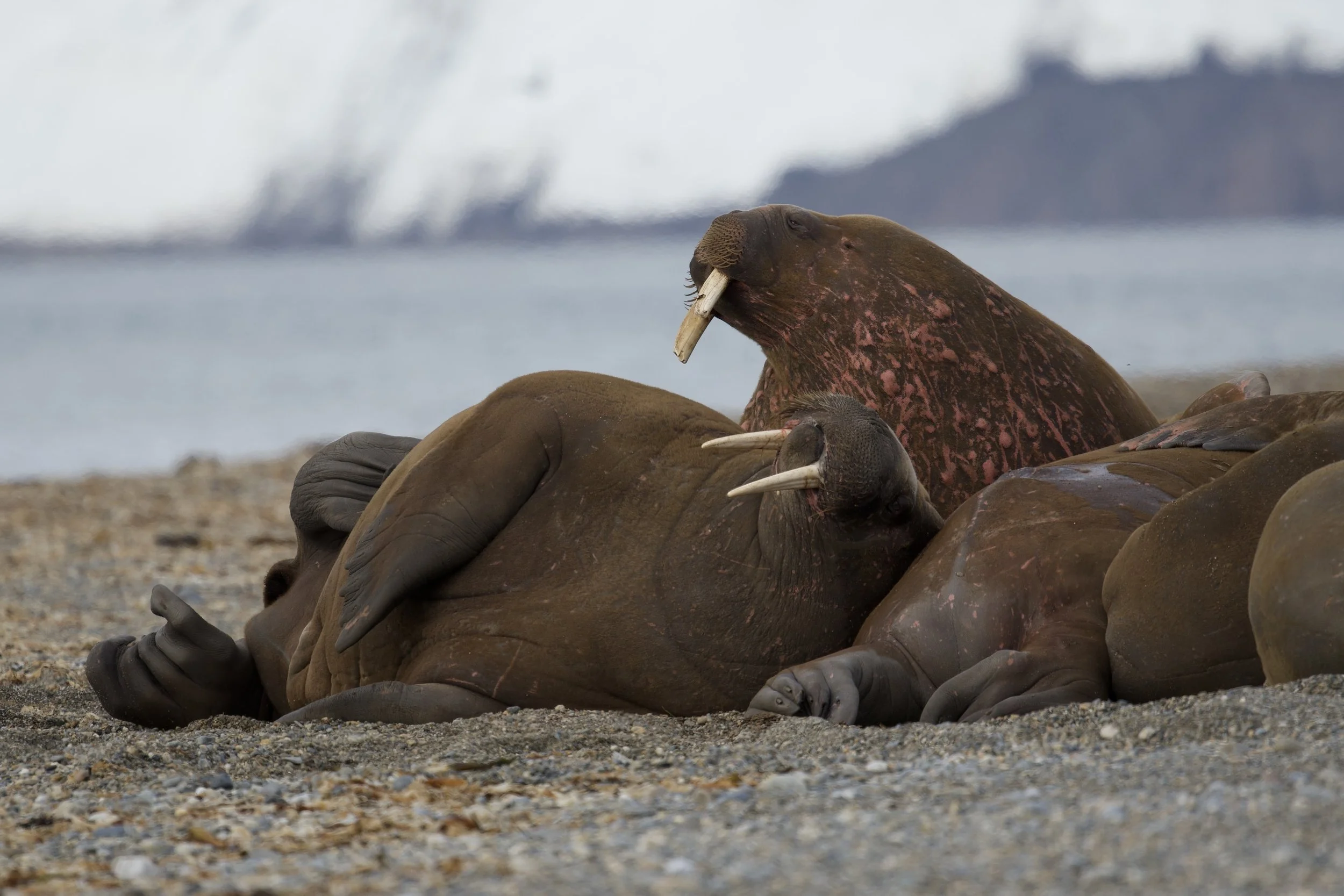
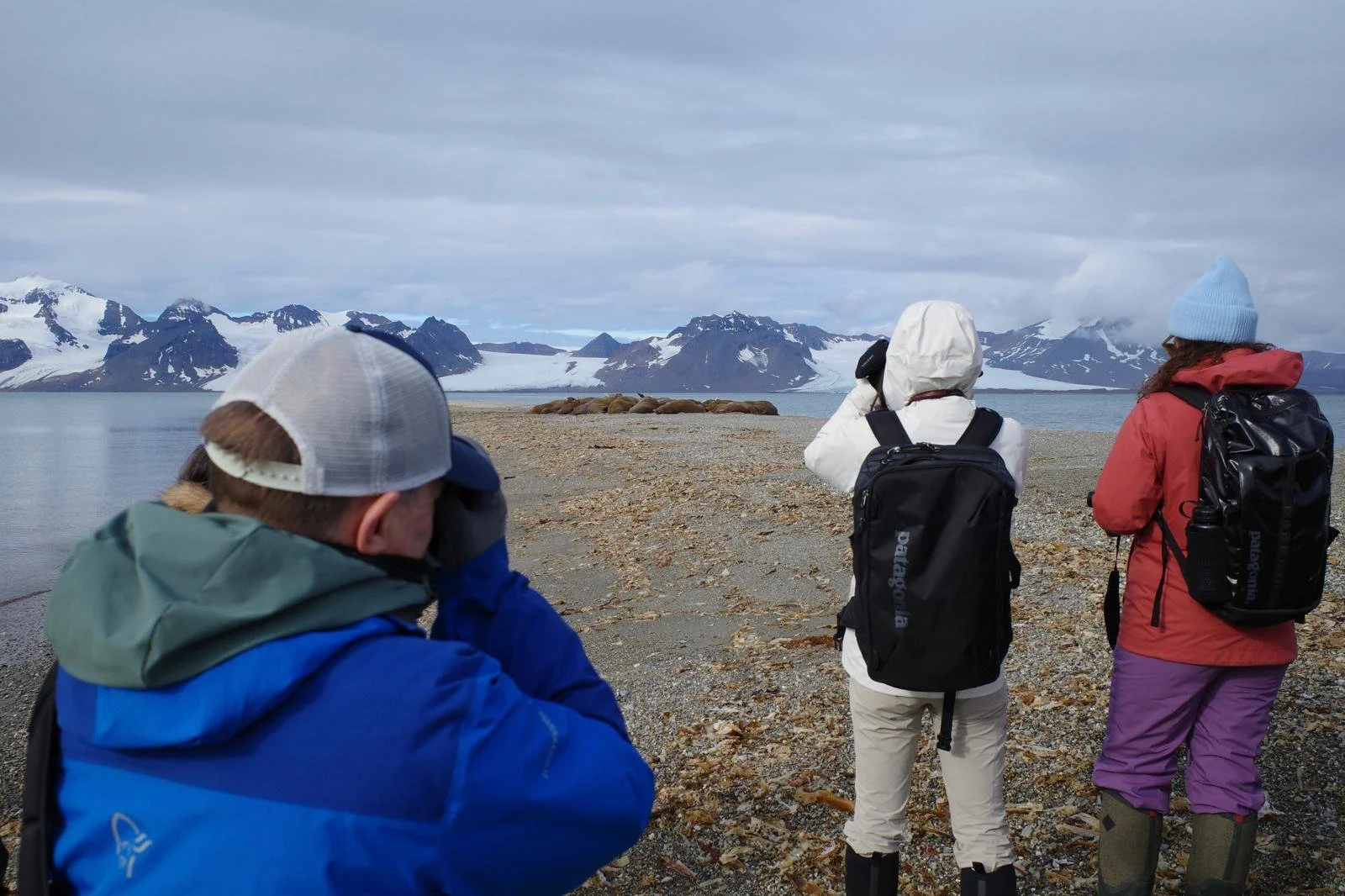
The morning before, on Ytre Norskøya, Sarah had put thirty of us into single file and walked us up a hill and back down in one line because the ground could not take any more feet. Twenty-four hours later she spread us across a sandbar and let us advance on the largest animals in the archipelago. Not a line. A wall. Thirty people in bright waterproofs moving forward together over open sand at a pile of sleeping walrus, three guides on it, closing the distance. From their end of that beach it must have looked like the opening of something historical. They could not have cared less. A few heads came up and you could watch the assessment being made, which took about as long as deciding whether to answer a doorbell. One or two began the honest work of getting up, an enormous quantity of animal gathering itself and organizing the effort, and then reaching the obvious conclusion, which is that it weighs a tonne and a half, the sand is fine, and whatever is coming can come. The head went back down onto another walrus. We kept walking. We got close, and then closer, and nothing happened. One of them lay on his back with both tusks pointing at the sky and his flippers out, and I have decided not to speculate about his evening. Everybody got their pictures, and nobody needed a big lens to do it.
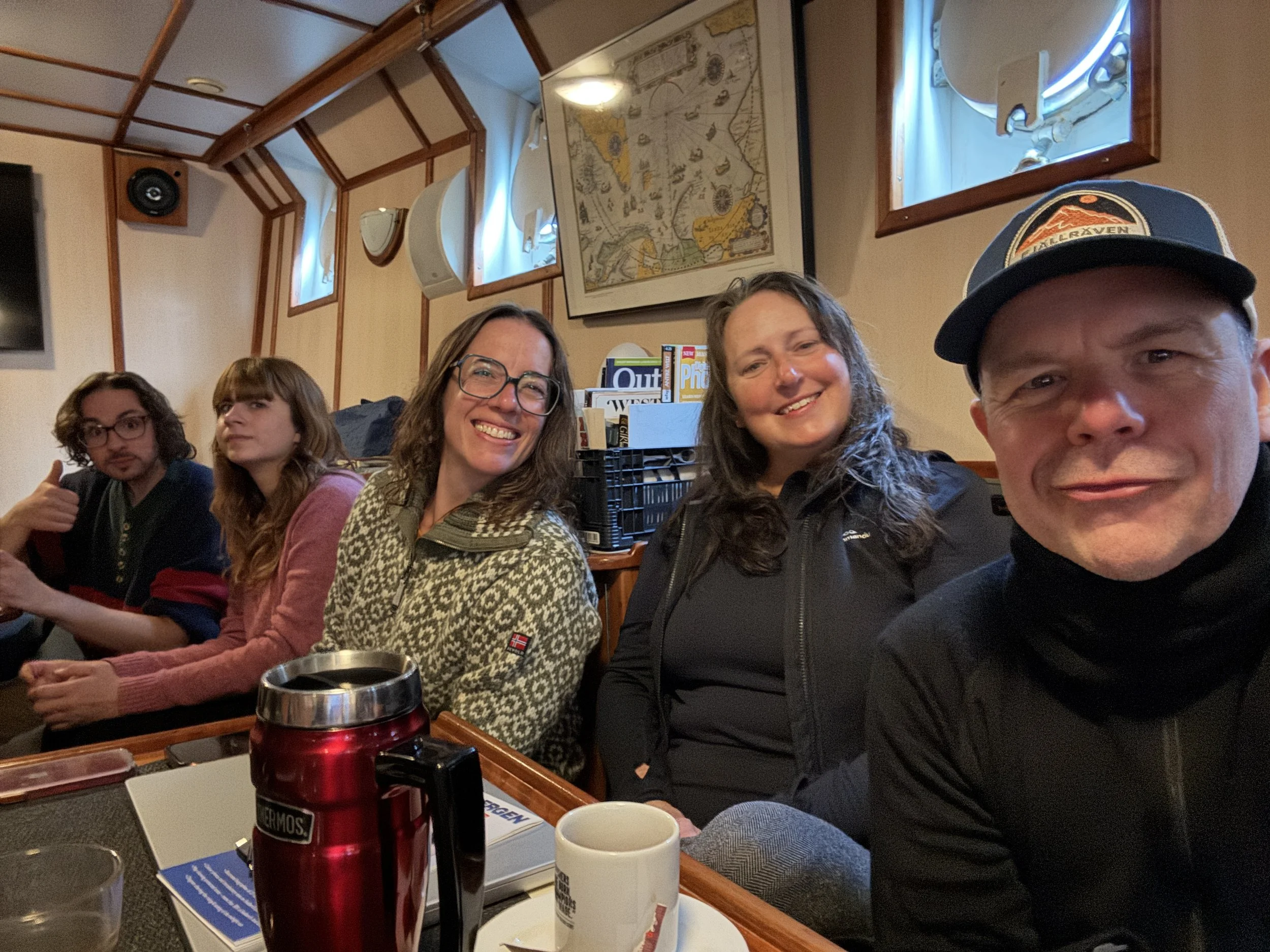
The ride back was short because the ship was sitting right there. Lunch, and then presentations, and Eleanor was my favorite of the round. The day before I had walked past her whole practice laid out on a table. I wrote about it on Day 12. Then I did something I had not done since the fifteenth of July, which was point the camera at the inside of the boat. Sarah's day sheets, written out by hand in blue and green every night. The chart taped round the pillar with our route going onto it as we went. The bar. Cathleen, Vicki, Seth, Annalise and me around a table. I had thousands of frames of ice and four of the room where all of it had been talked about.
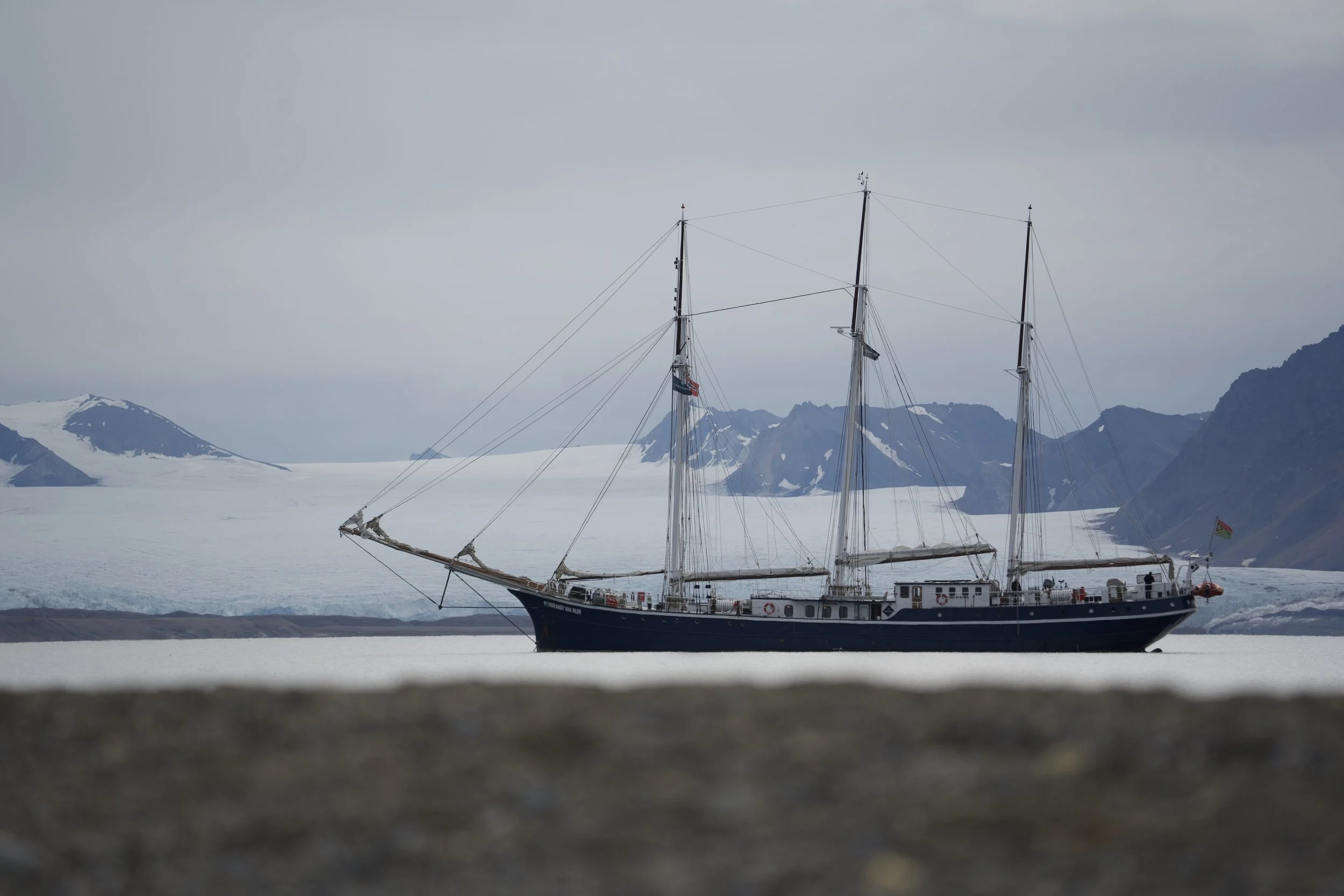
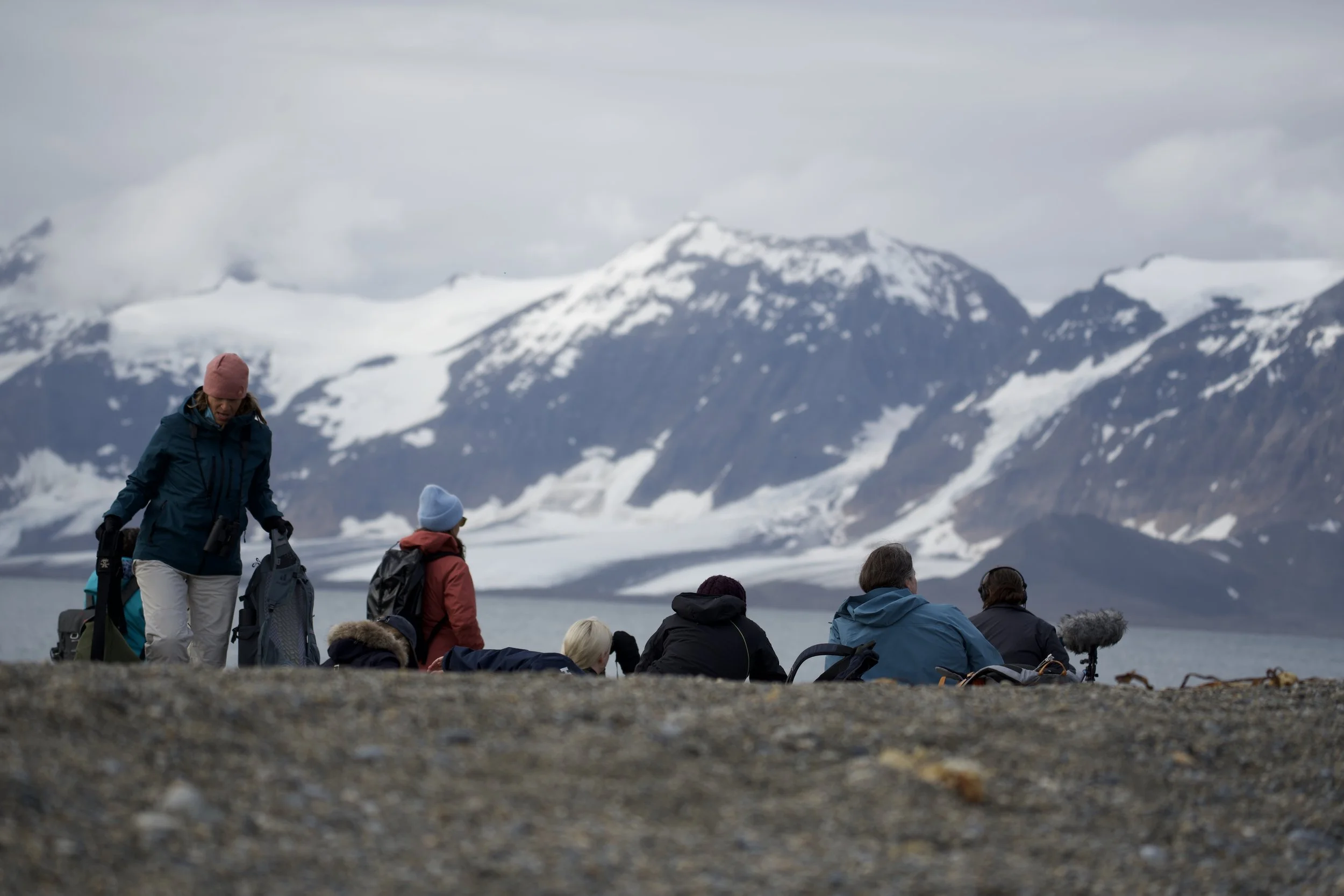
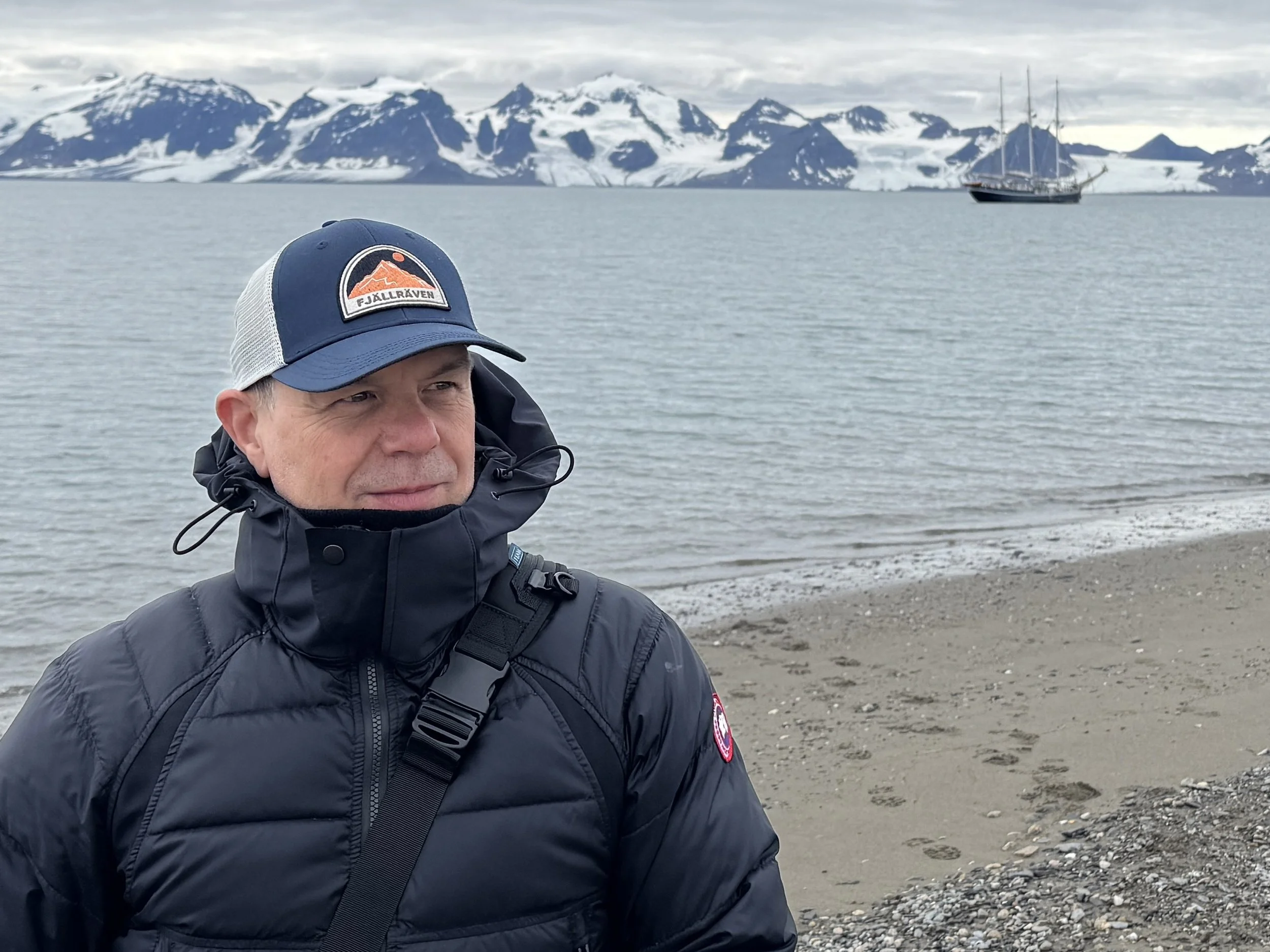
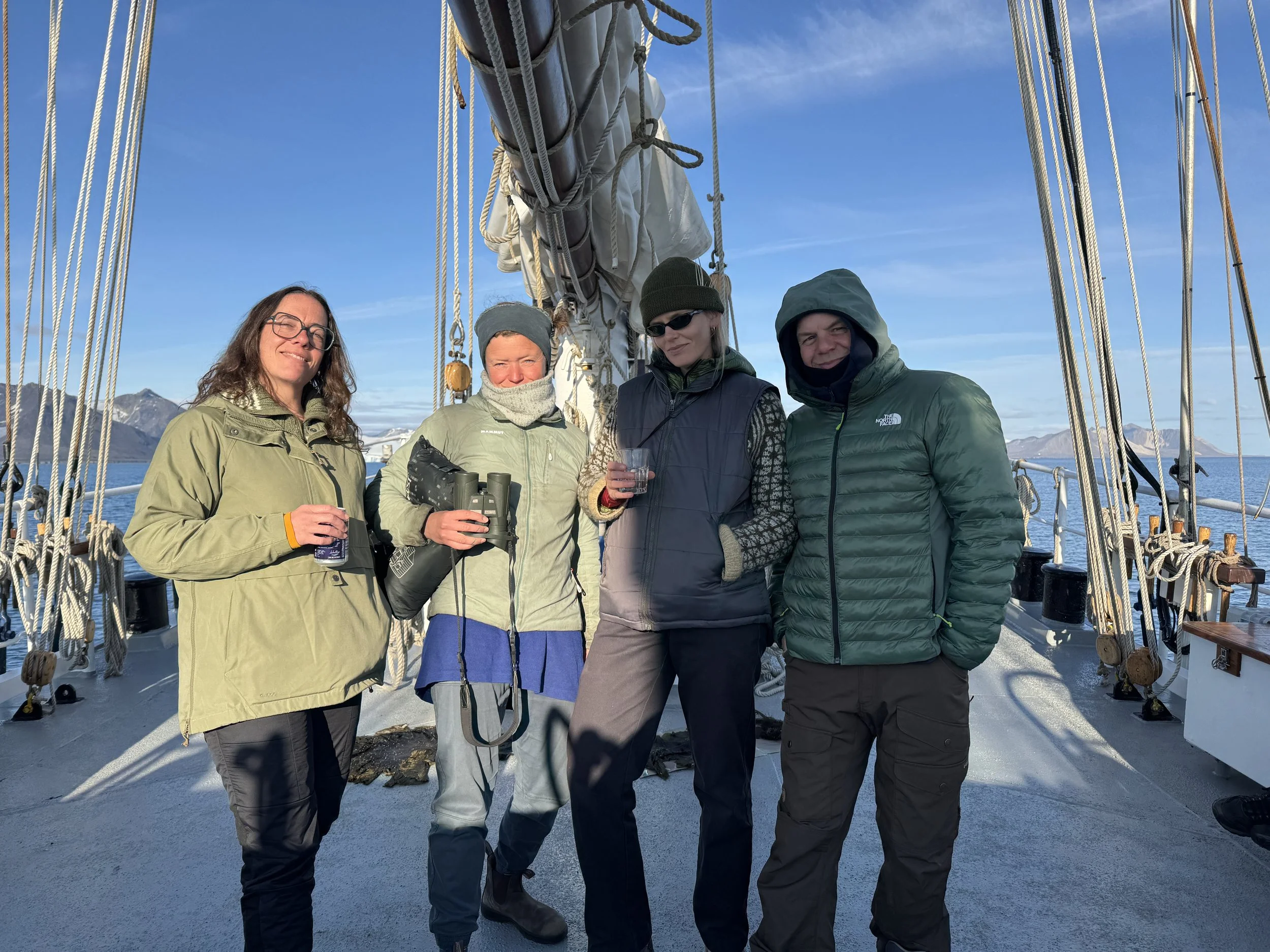
Camp Heaven in the afternoon, and whoever put that name on the chart in 1912 was not making a joke. Old moraines in long humps behind the beach, lakes caught in the folds between them, Aavatsmarkbreen coming down into the water beyond, the ship at anchor in front of the ice with the light going long on it. The camera got turned round on that beach. I asked for it, which after two weeks of pointing it at everybody else felt strange to do. Cathleen took one with my own camera, which is the correct way to be photographed by a friend. Gergő took some and has still not sent them.
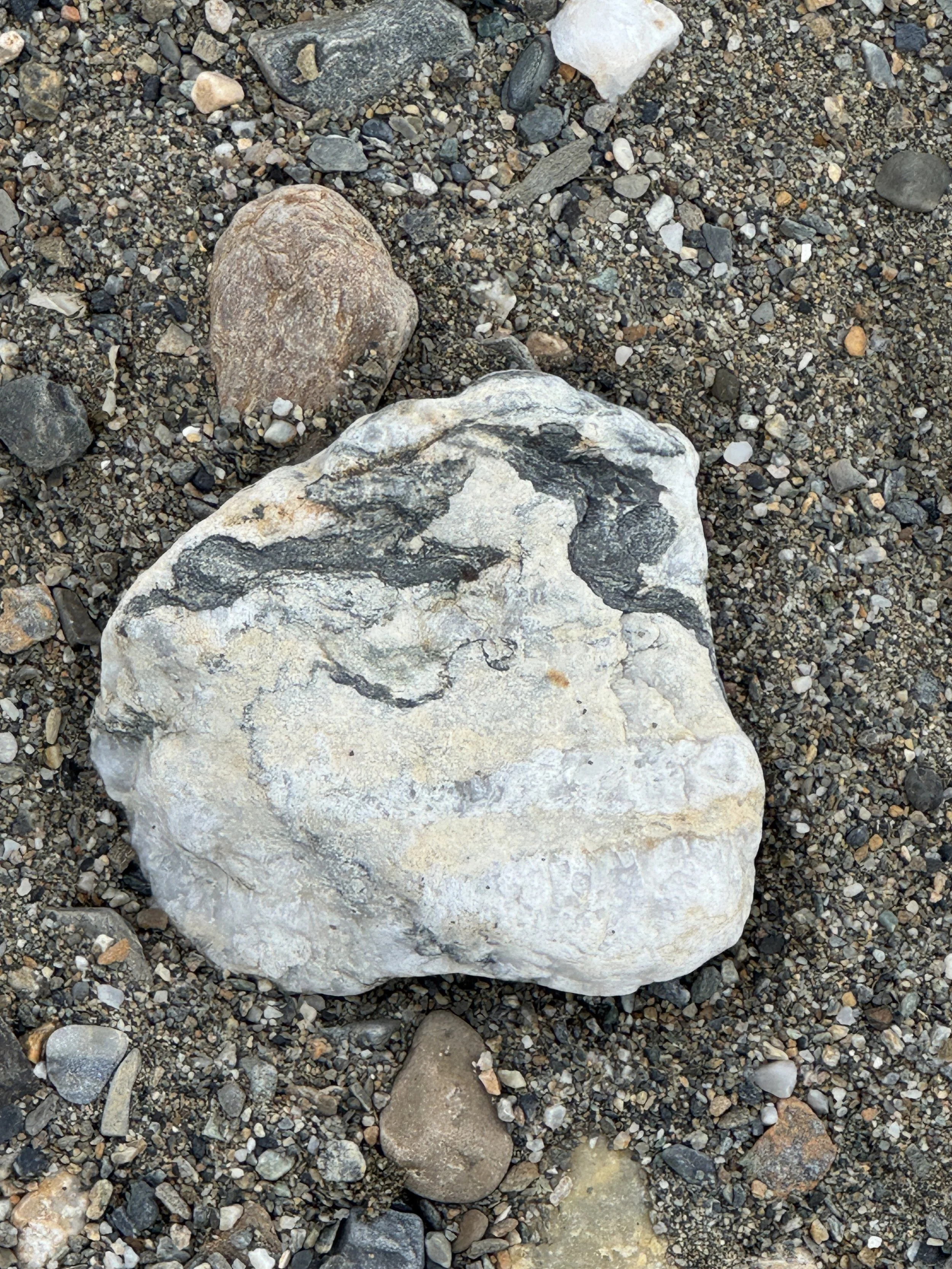
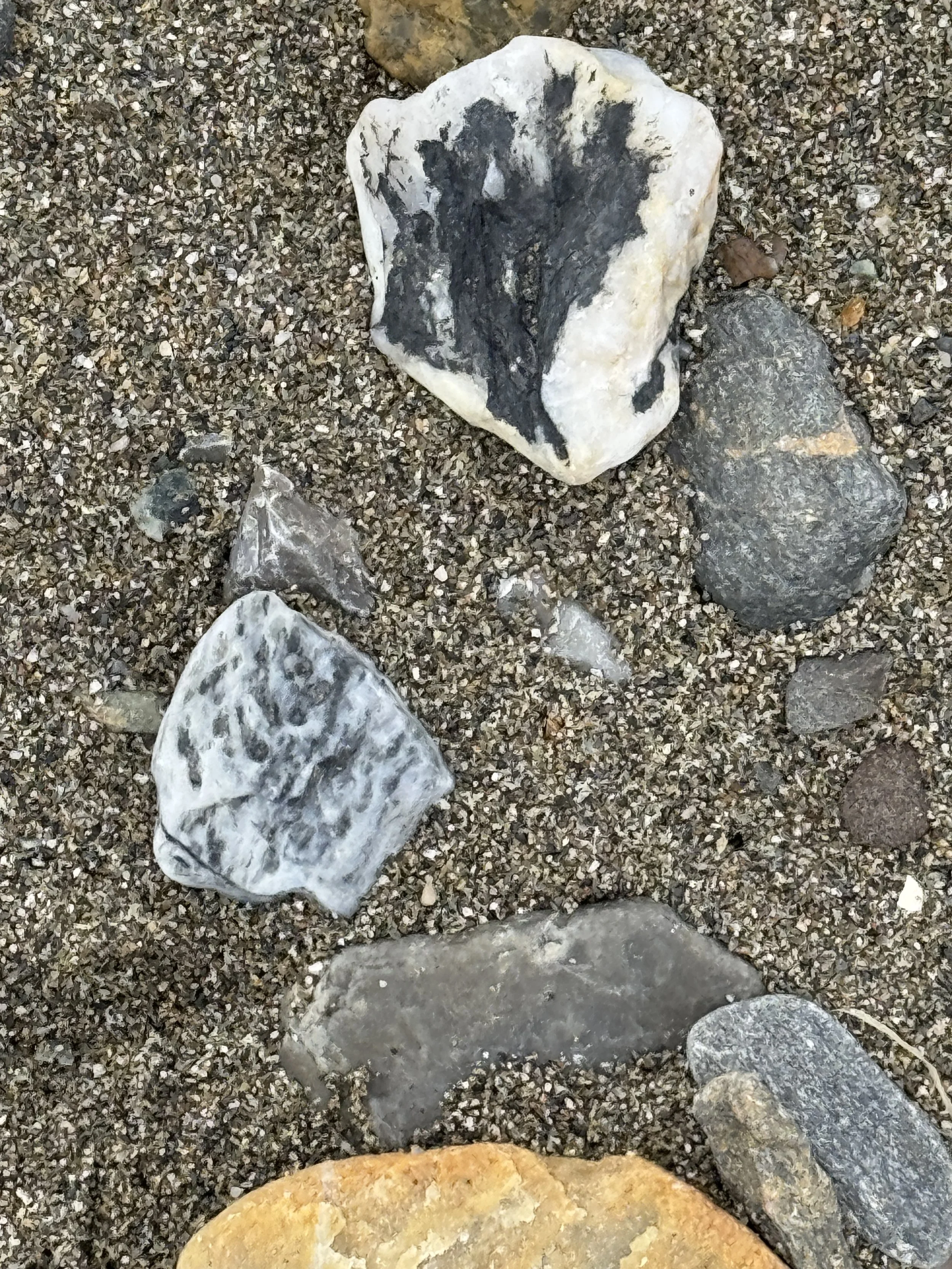
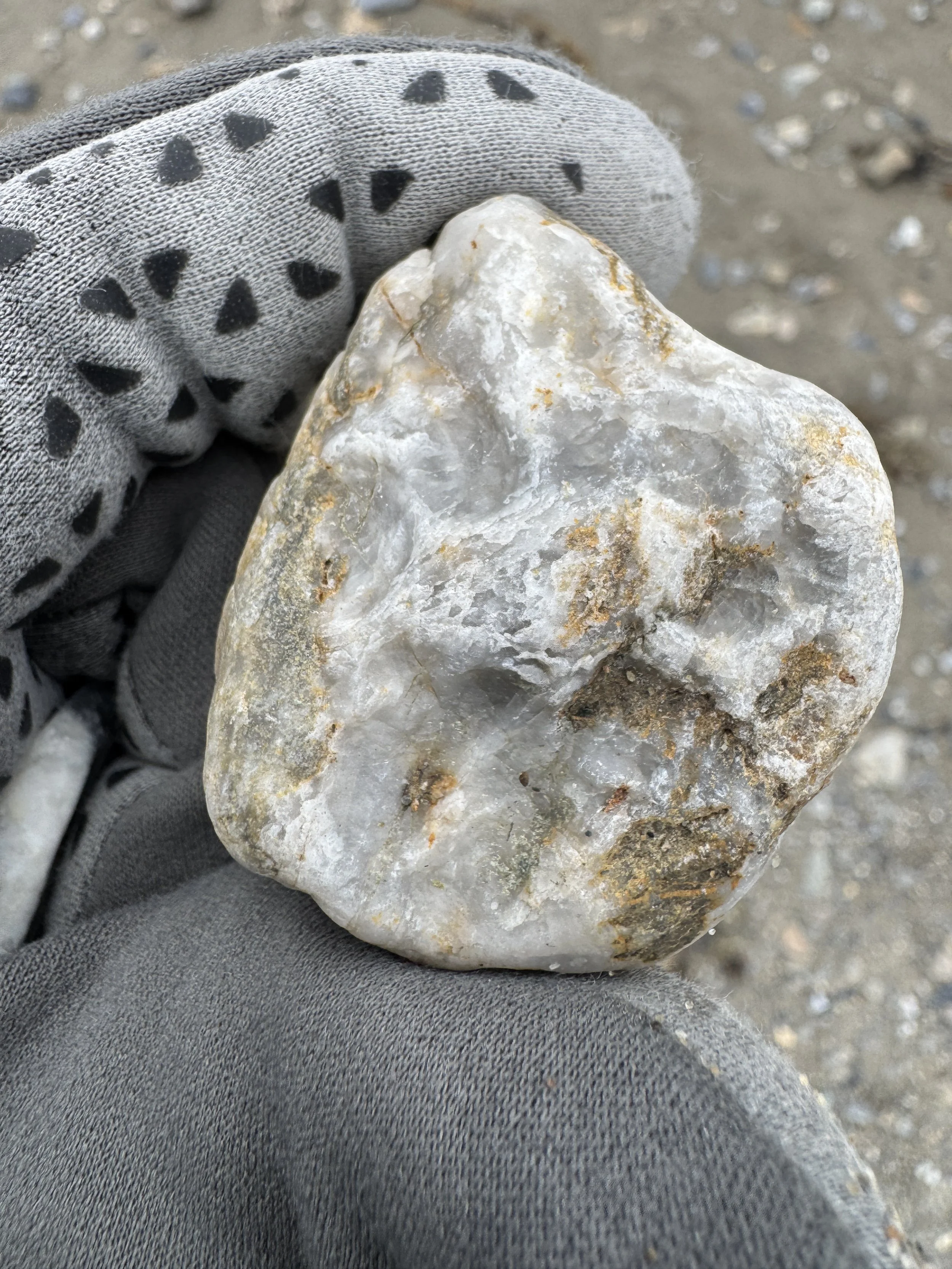
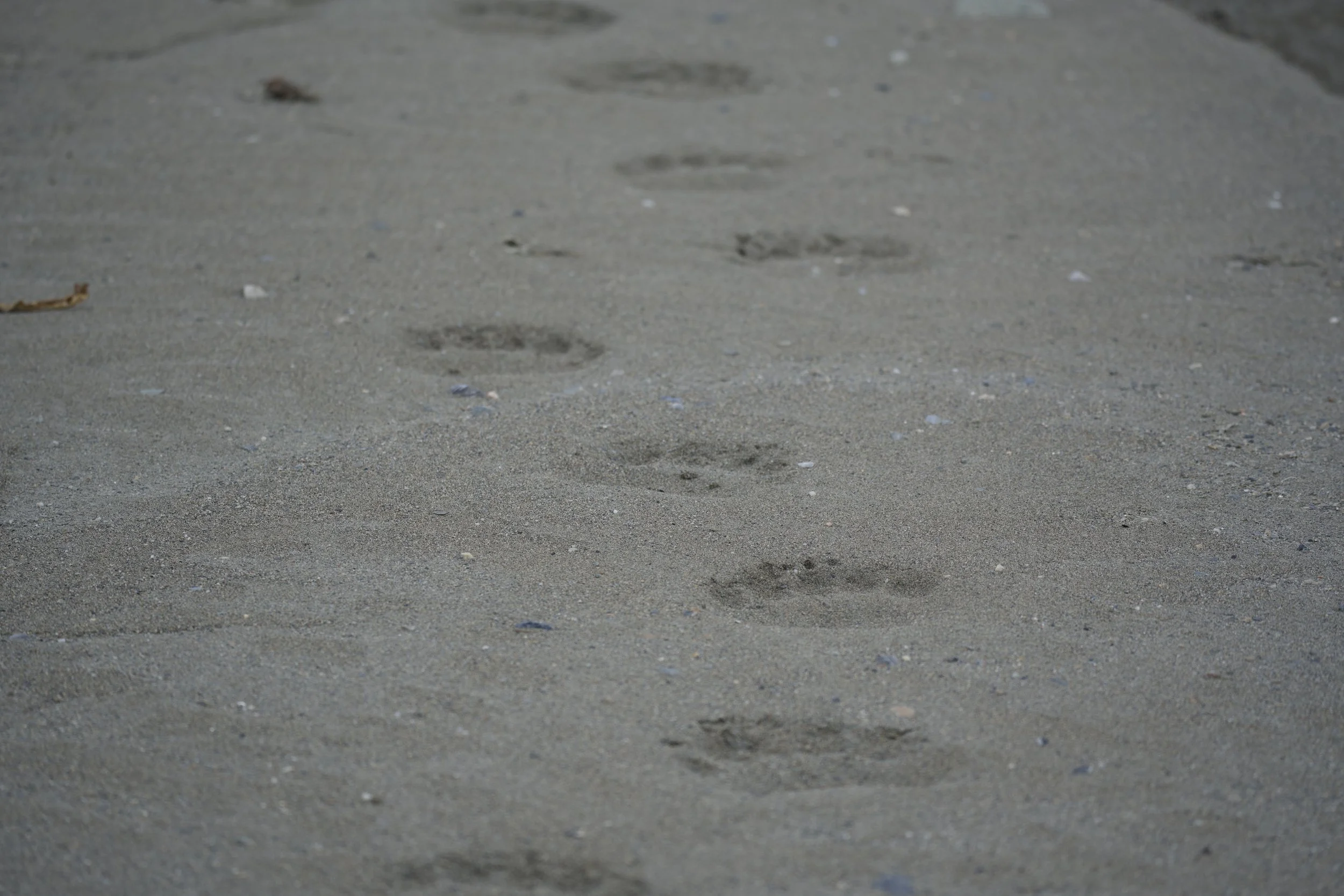
Four minutes ashore the ground handed me a stone. Pale, two dark shapes on it, side by side, facing the same way. Seals, I thought. The second came up behind it, a white cobble with a paw across the face in black, four toes and a pad, edges as clean as print. Then we crossed the sand and there were the real ones, front and back in wet ground, running up the beach ahead of us with nothing on the end of them, which is the condition of every set of bear tracks I have found in this country. In the last entry I called a paw stone that paid out inside a day the fastest the stones had ever worked. That record lasted thirty-six hours. Two stones and a set of prints inside ten minutes, on the second to last landing of the voyage. I have three theories. One is that two weeks of hunting for animals in rocks, on a coastline made of rocks, in a place full of animals, will produce a spectacular run. One is that they knew the chance was closing and saw no reason to draw it out. And one is that none of this began until a beach that thirty-two people spent a day calling Witches Bay, where I photographed a bear in a rock at twenty past ten and three of them came out of the sea at five to eleven.
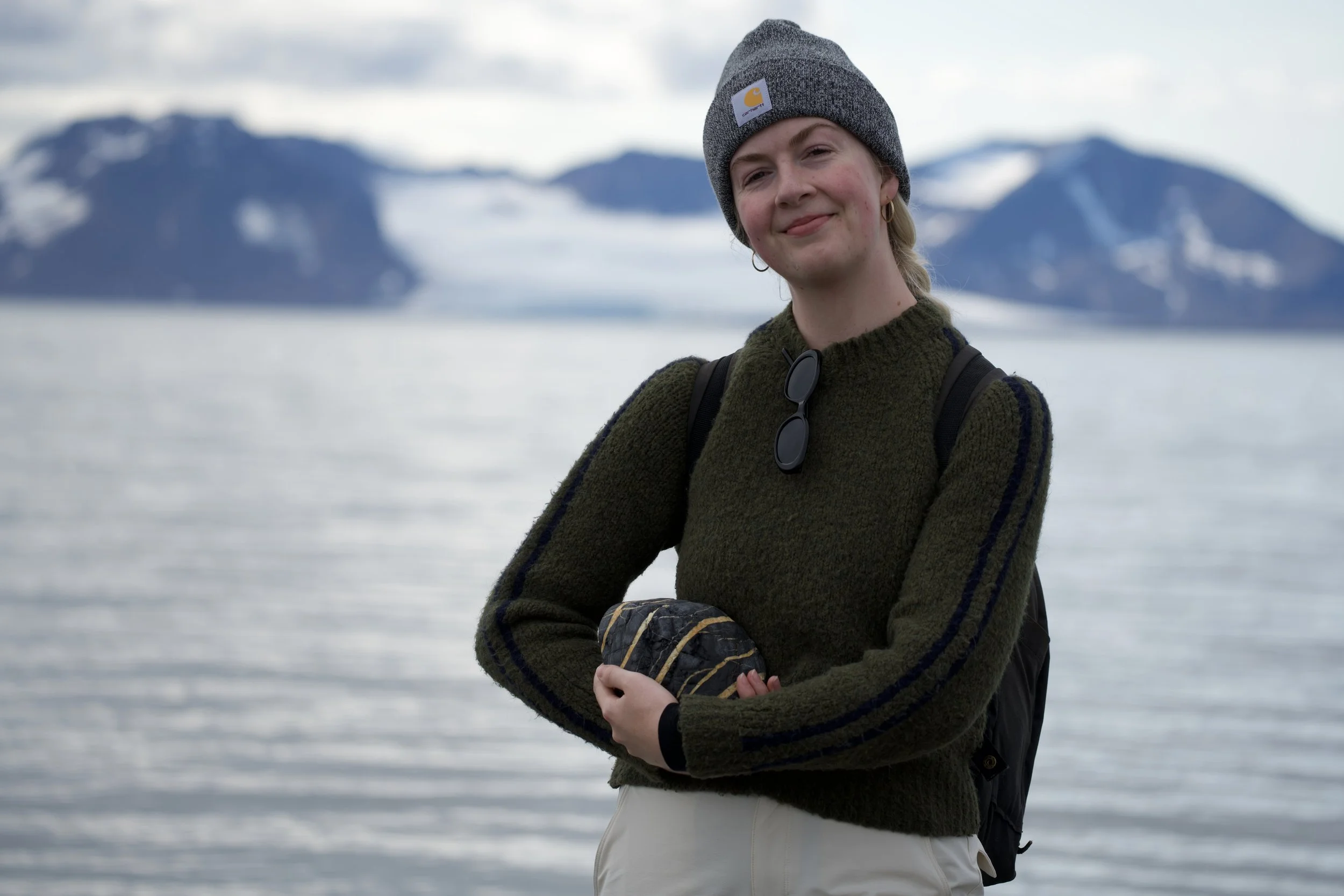
Eleanor, Cathleen, Hattie, Sarah and I took the long walk, and Jeroen came with us, who is crew. The crew get out when they can, which makes sense four seconds after you think about it and had not occurred to me once. He came back down carrying an antler. Hattie was the first person I met on this trip, at the airport on day zero, and by the first lunch we had established that we are both Game of Thrones people, which is a thing you settle early with somebody you are about to spend sixteen days with. So when she came over the moraine holding a black stone the size of a rugby ball with gold running through it in seams, neither of us had to say much. Dragon egg. I took the photograph and she put it back where it had been sitting for ten thousand years. Higher up there are old stone structures I walked straight past without understanding. Cathleen knew. She is reading A Woman in the Polar Night as well, and she was twenty pages ahead of me, and she asked what page I was on because if I had got there I would already know. Fox traps. Being told what you are looking at by somebody twenty pages ahead of you in the same book, in the country the book is about, is a specific pleasure and I recommend it.
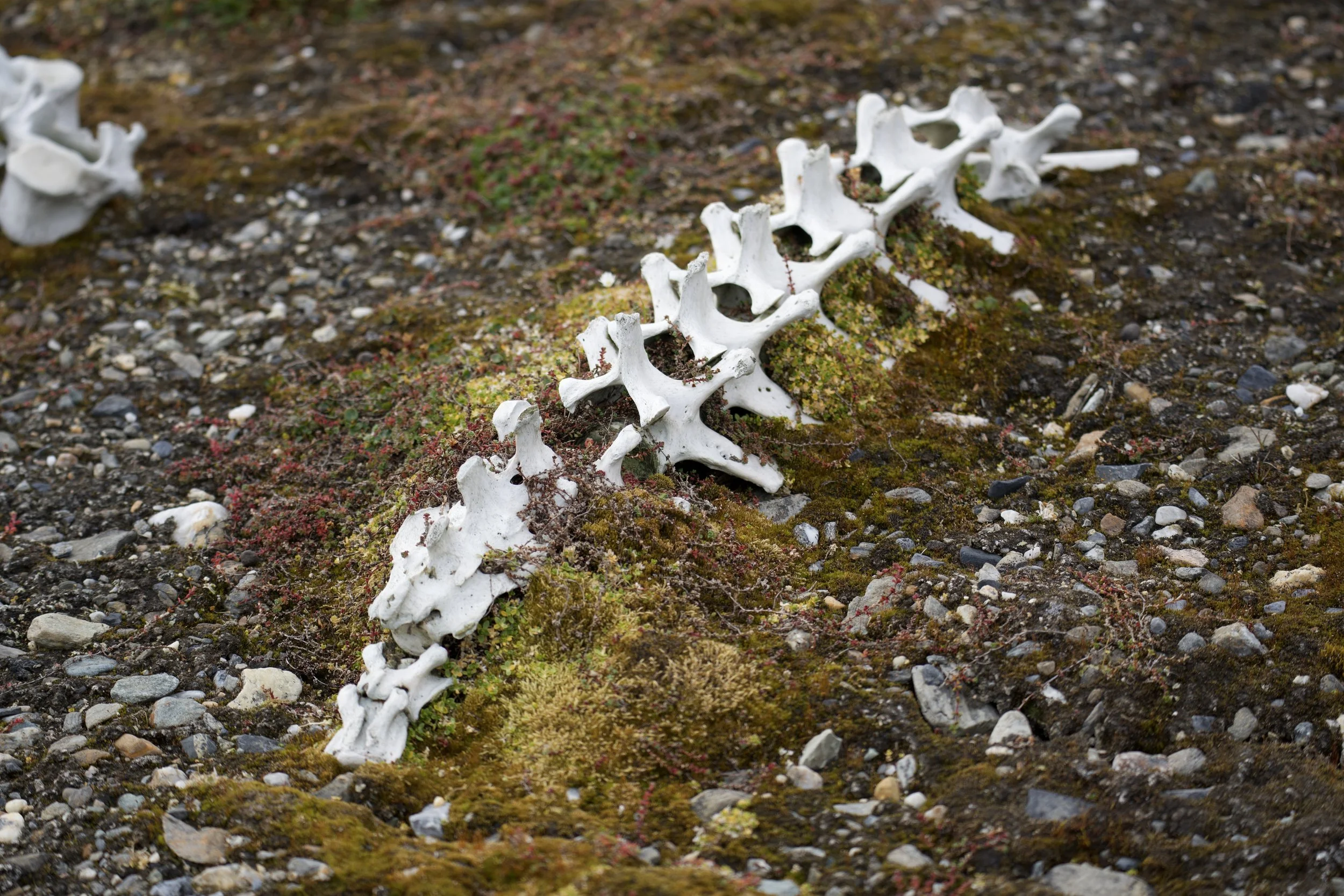
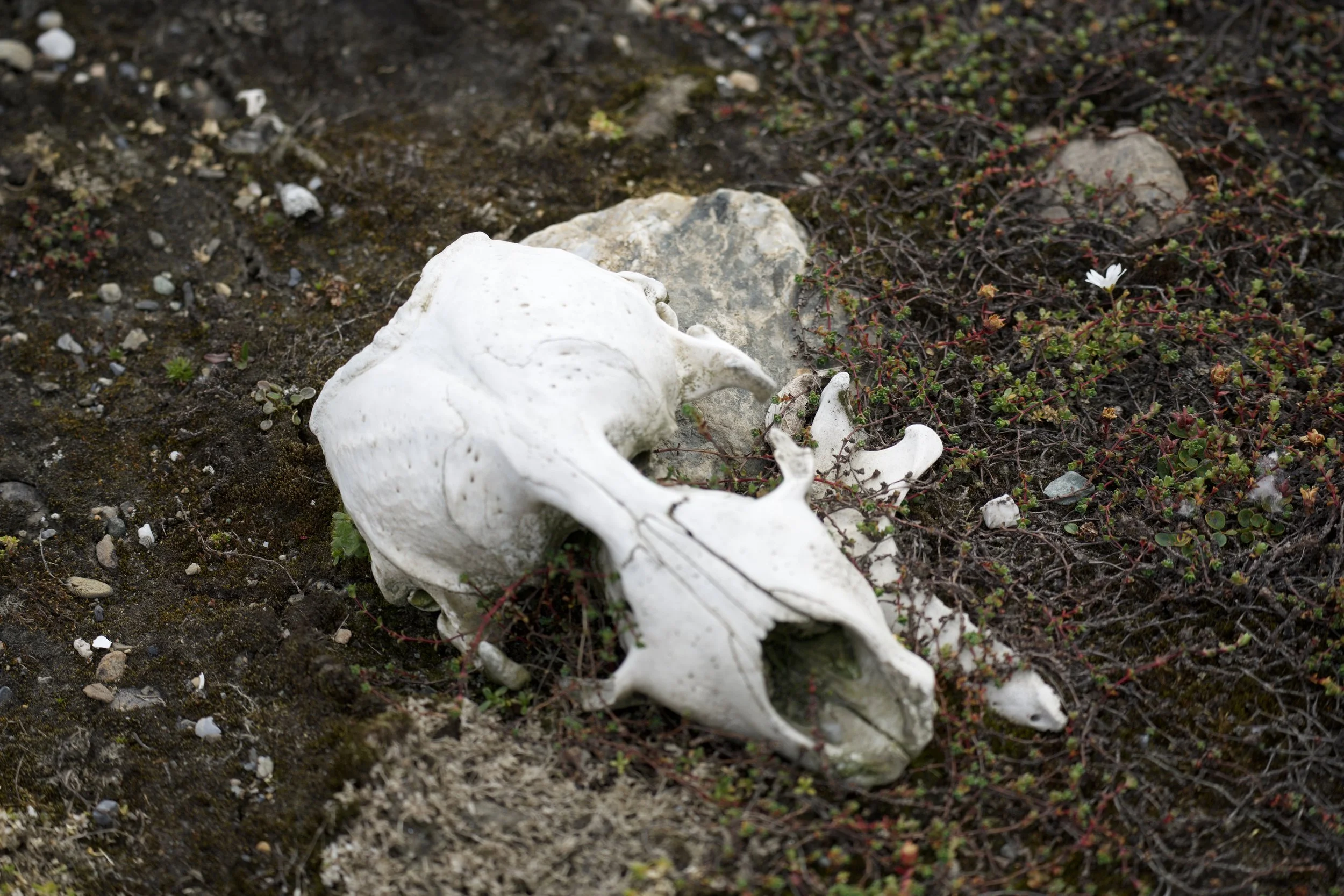
That tundra is full of the dead. Reindeer skulls sitting up out of the moss, a spine laid out in a curve so tidy it looks arranged, antlers going white where they dropped. I had been seeing it since the fourth day and saying nothing about it. All my life I have wanted to be cremated, and the reason is childish. I am afraid of being put in the ground and waking up. I have never argued myself out of that picture and I gave up trying somewhere in my thirties. Burn me, done, no box. Then I spent two weeks looking at bones with things growing out of them. Fifteen per cent of Svalbard carries continuous vegetation and sixty per cent is under ice, and the rest is gravel, and when an animal goes down into that gravel the ground around it turns green and stays green, out to about two metres, for years. The moss and the lichen lose ground there. Grass takes it over, and it takes more than a year to start, because at first the site goes backwards and then it turns. I have been taking from this planet without a pause for fifty years. Food, fuel, flights, paint, canvas, a berth on a ship burning diesel to carry me to the top of the world so I could look at it. The one transaction I had planned to close out with fire turns out to be the only one running the other way. So I have changed my mind. Put me in the ground and let the grass have it, and if I do wake up, at least I will be useful.
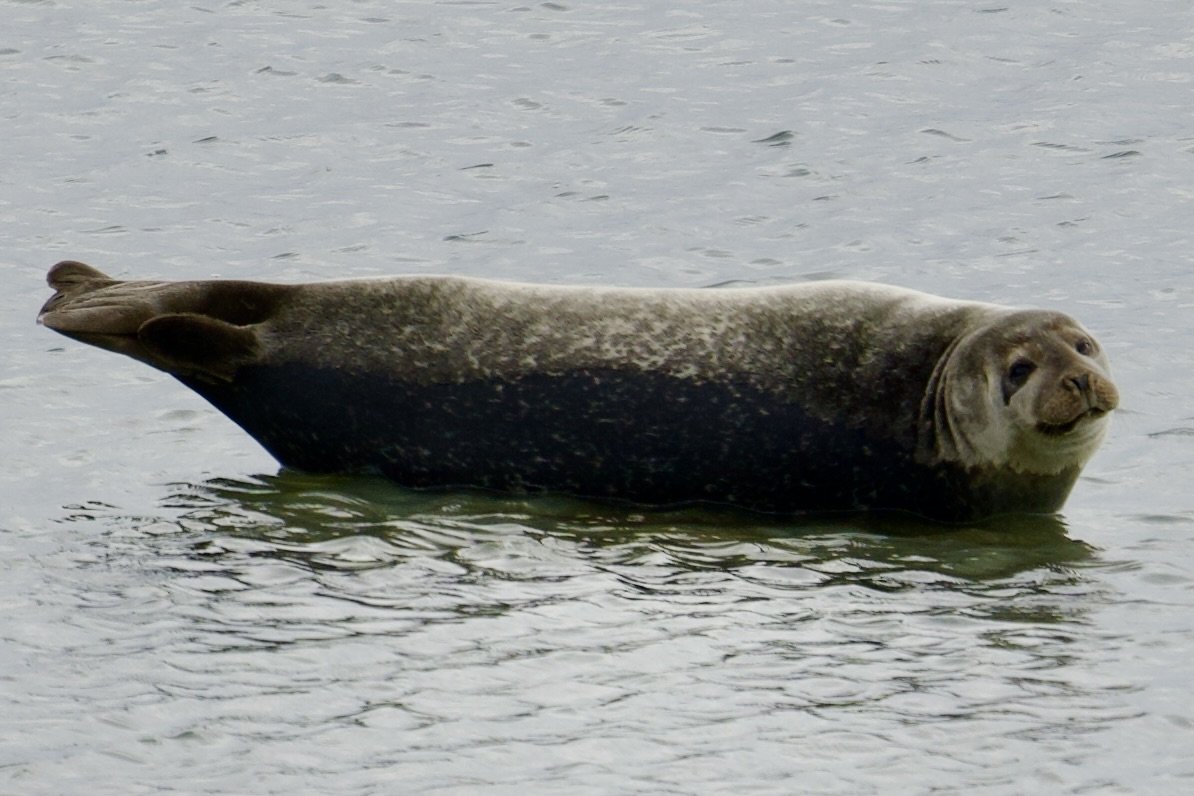
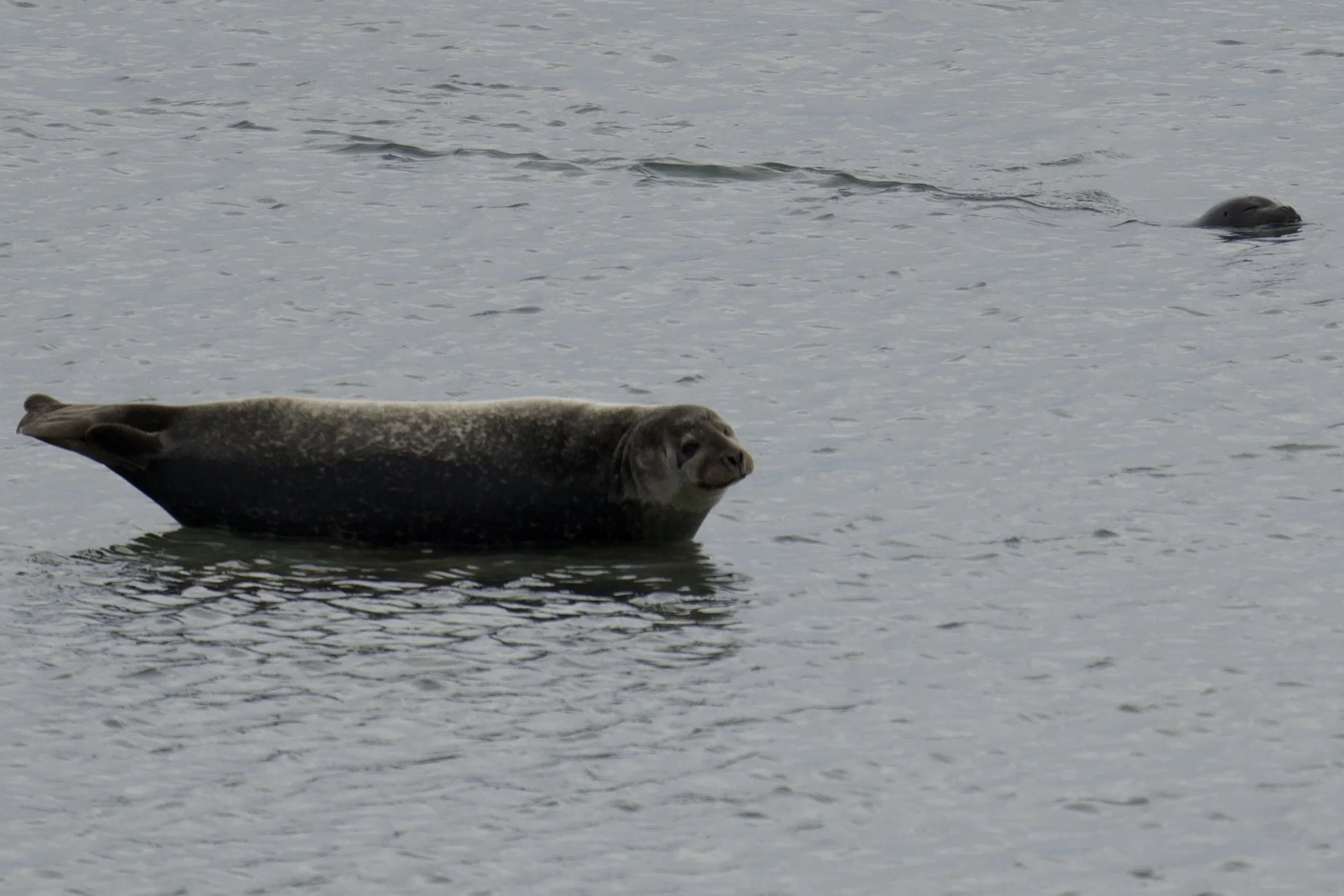
The seals came in on schedule, which on the thirteenth day is not news and the stones were right once again. One had hauled out onto a rock in the shallows and was sitting on top of it, balanced, arranged, as though a person had put him there and stepped back. The rock was too small for the job. The second went round and round it in the water, up on one side and then the other, wanting on, being ignored by an animal with its whole attention committed to the work of not falling off. Two dark shapes on a pale ground, side by side, facing the same way. I had photographed that arrangement in a stone an hour earlier and left it lying on the beach. The stone was right.
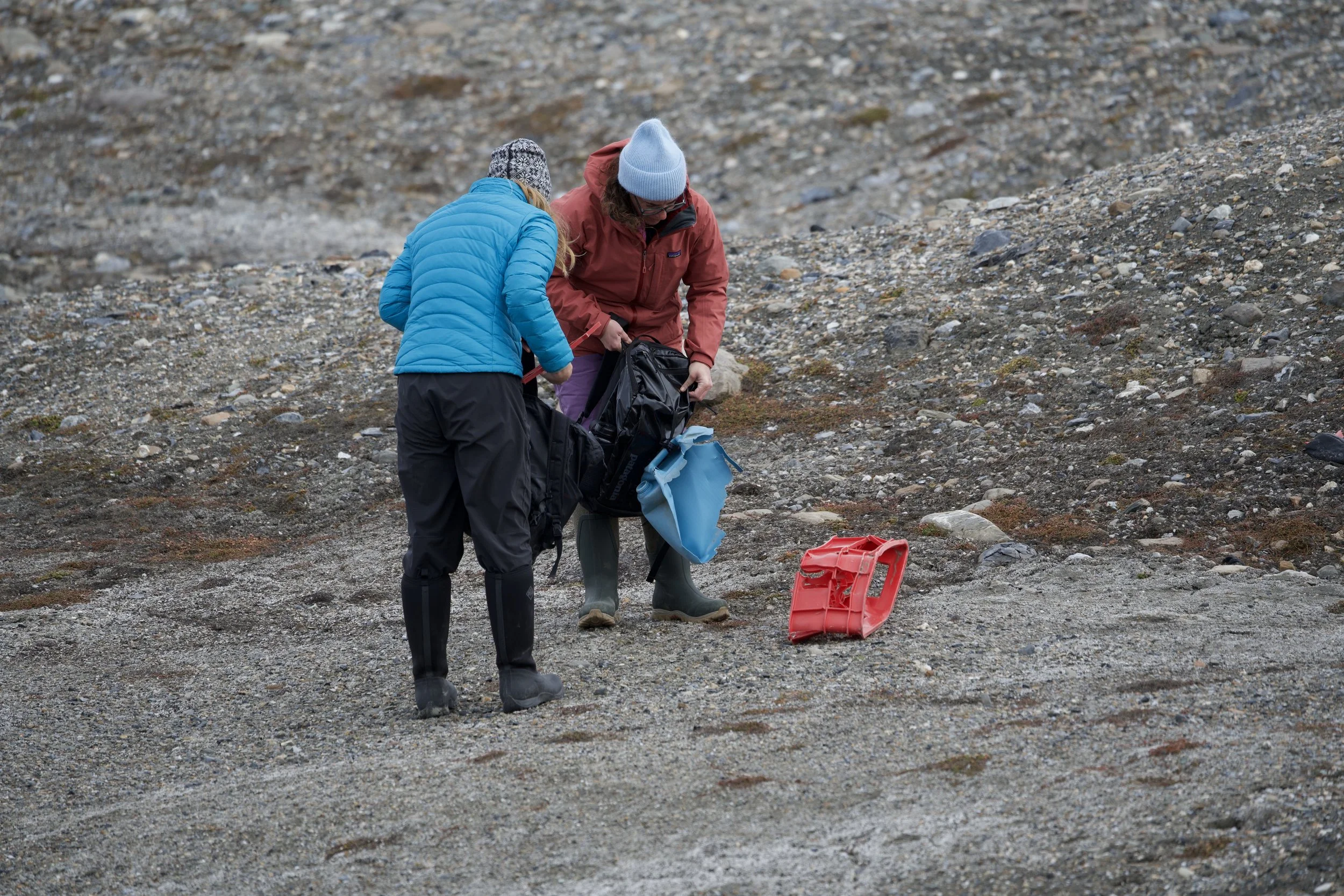
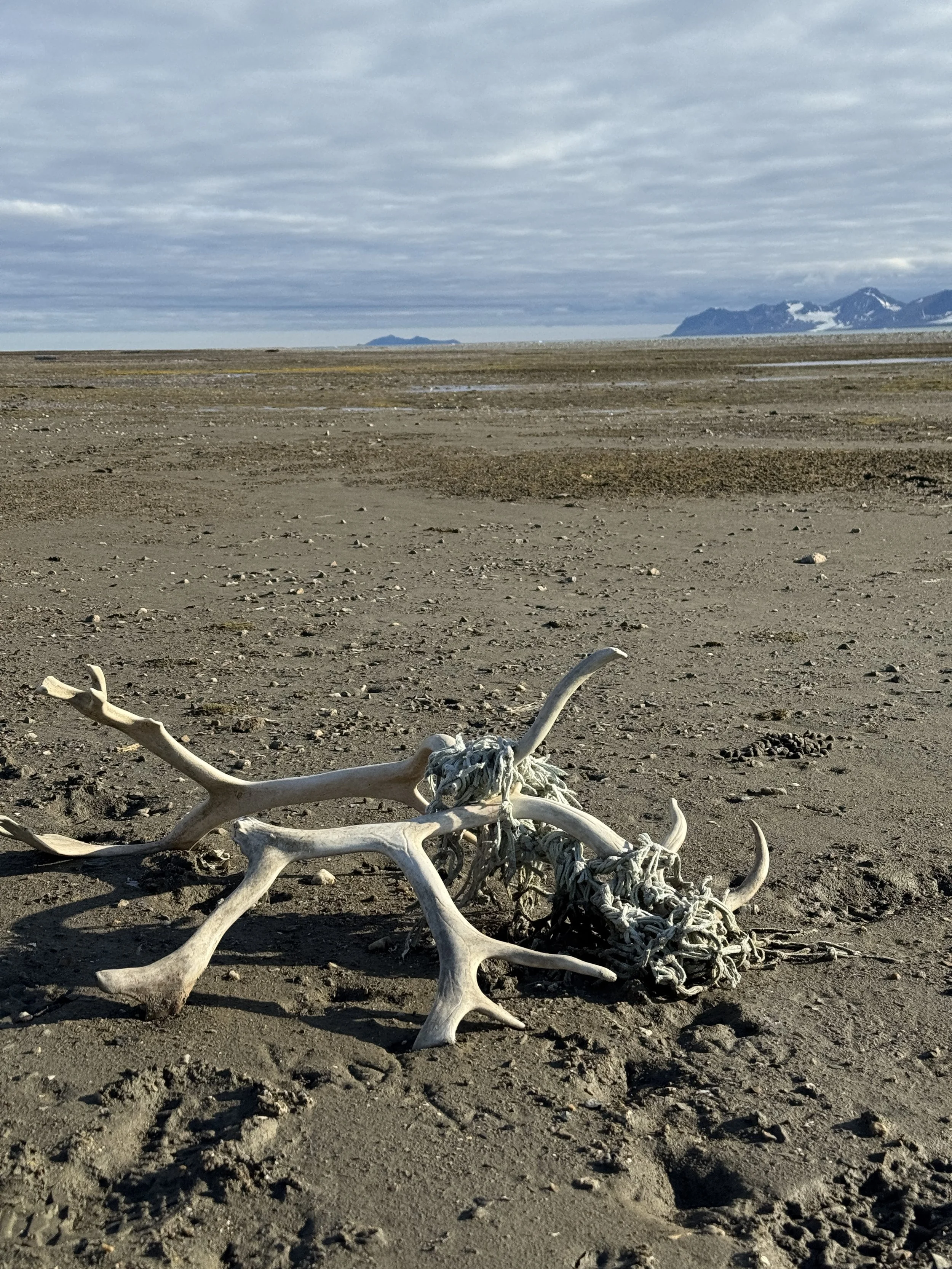
That beach carried more plastic than anywhere else we landed, and the walk picked up what it could carry and put it in their packs. Close to the zodiac we found a shed set of antlers on the sand with a knot of green fishing net wound tight through the tines, the way ivy goes through a fence. Something walked around wearing that. It had been lying there long enough to lose the head that carried it and the net was still on it.
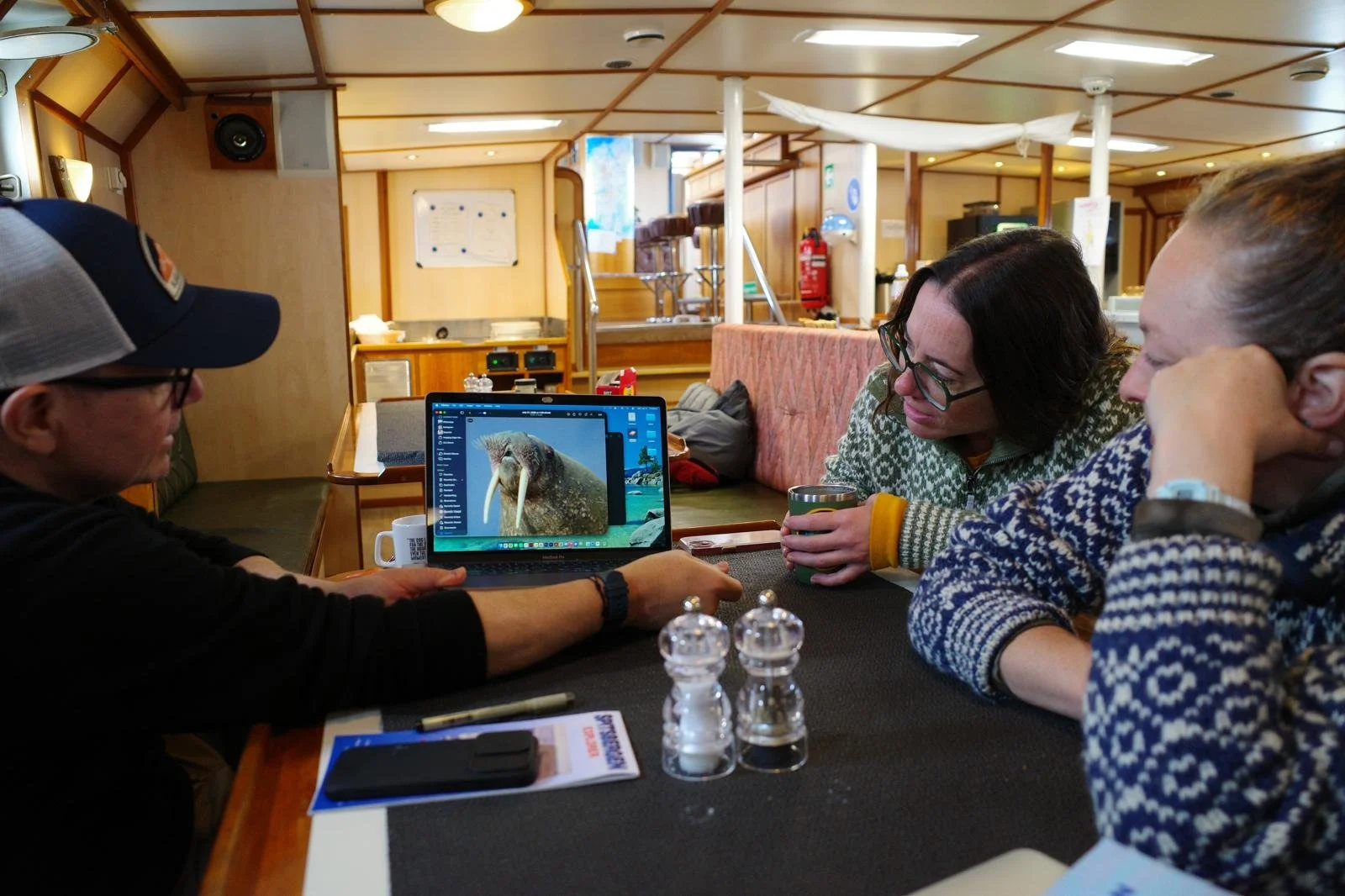
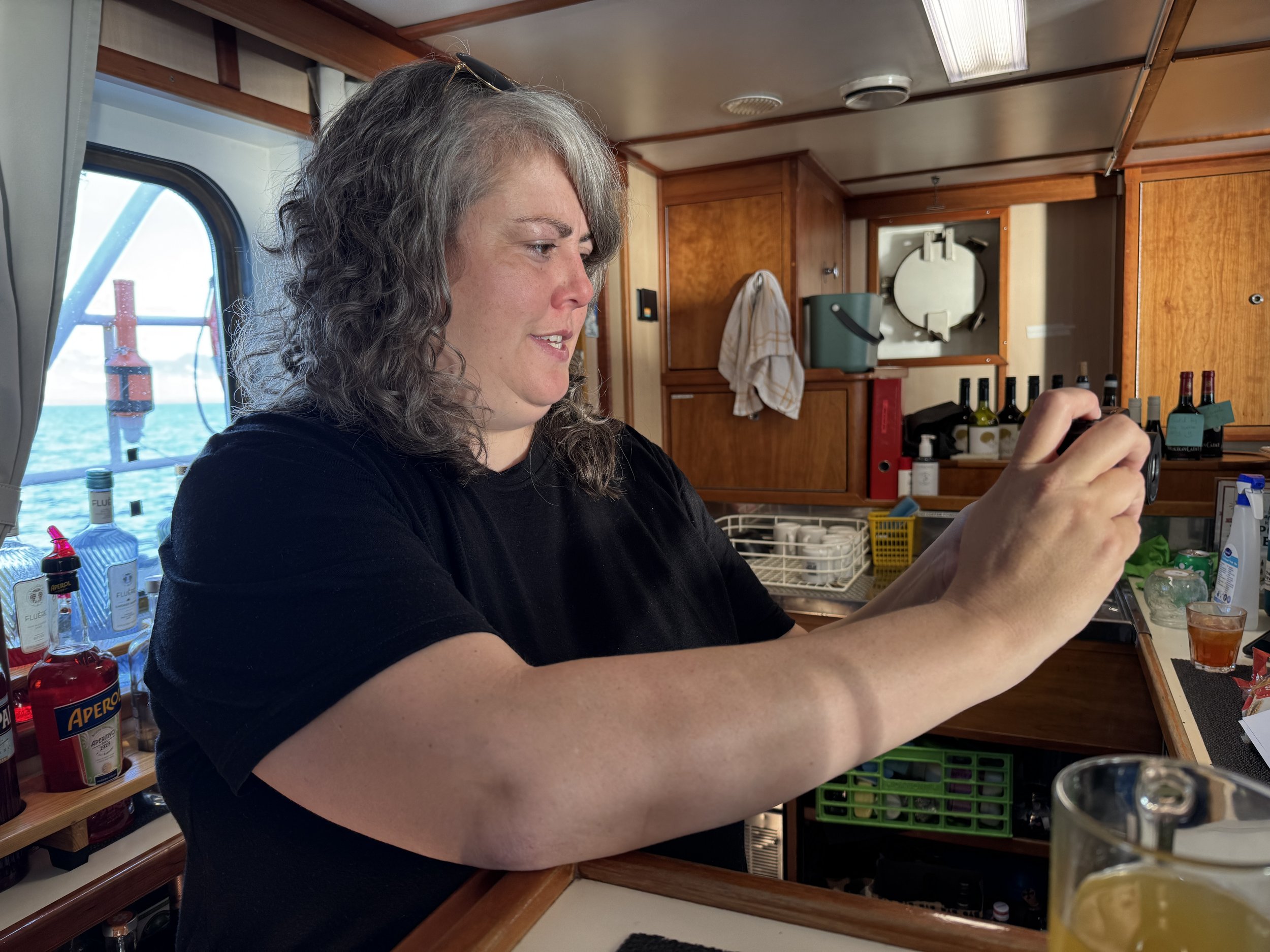
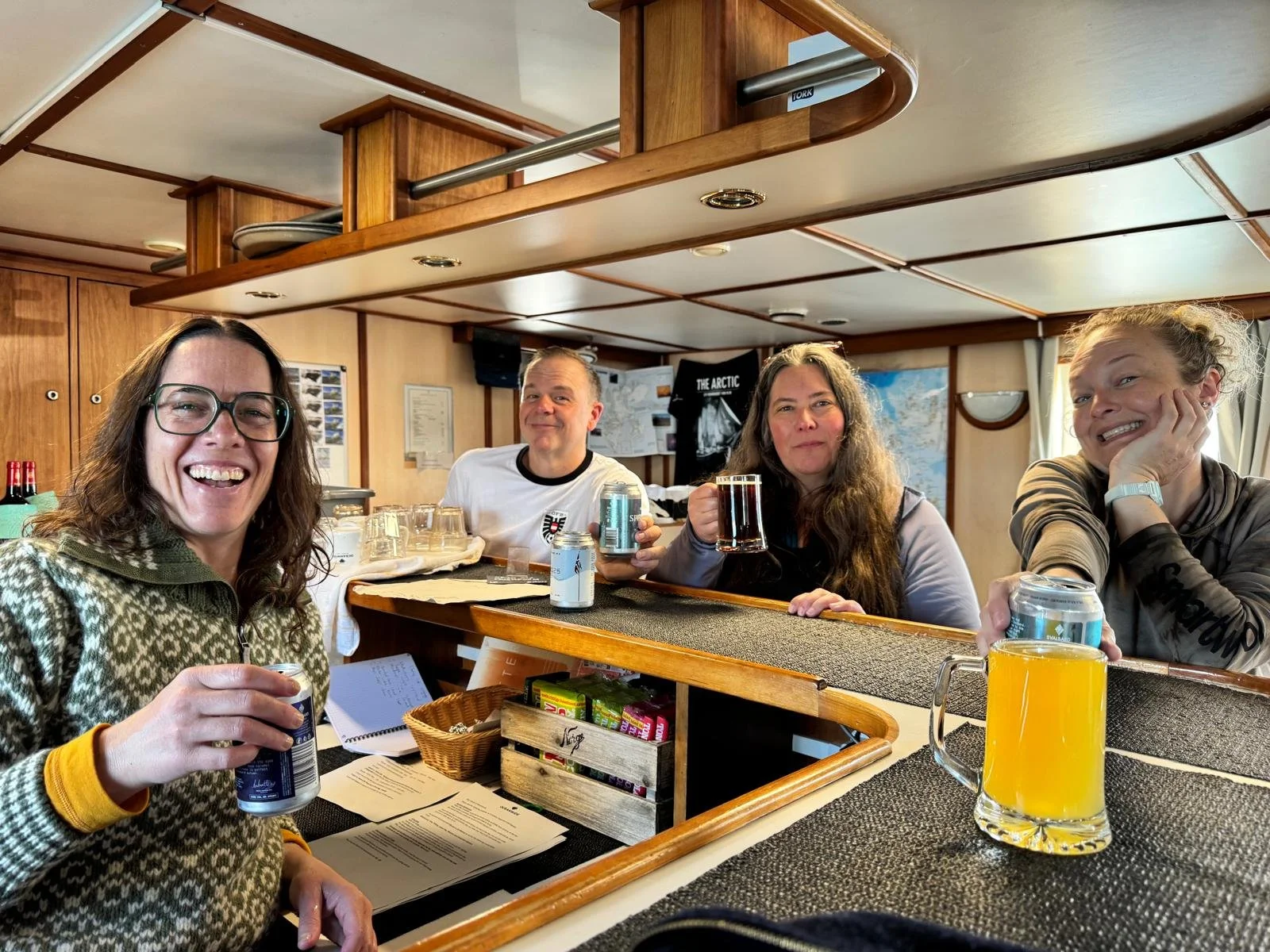
Back aboard, everything softened. Cathleen and Maggie came over to look at the walrus frames on the laptop while Christina photographed the three of us doing it. The bar ran on trust. When Victoria was elsewhere you poured your own and wrote your name on a sheet with whatever you had taken beside it, and the whole thing was totalled at the end of the voyage, which is a system that works in one kind of place and it is the kind where everybody has to look at each other at breakfast. Christina got behind the bar and poured, and Shannon and Cathleen and Maggie and I stood along it for a good while.
Then somebody carried the ship's speaker up on deck and everybody put a song on, which is thirty people taking turns and is the opposite of a playlist. And on a wooden deck at seventy-eight degrees north, at anchor in front of Dahlbreen, with a glacier standing over the bow that was still working, I danced to Ice Ice Baby. Vanilla Ice. 1990. In front of a glacier. I did not fight it for a second. My head knew every word of that song and my body had not been told it was 2026, and the gap between those two facts was available to anybody on deck who wanted it. (You read this far, so you have earned the video. Email me the secret word VANILLA and I will send you a link) There was another song that just played in my head. People dancing in front of a working glacier at the top of the world, and R.E.M. had the caption ready in 1987 and even put the feeling in the title. It ran until two in the morning. The sun did not set, because it does not up there in July, but it went behind a mountain for a while as though it were thinking something over, and then it came back out, and that is when we went to bed. It’s the end of the world and we knew it.
“In nature nothing exists alone.”