Entry 048: Day 12: One of a Thousand
Sunday, 26 July 2026. Flathuken, Ytre Norskøya, Fuglefjorden.
The intercom came on at the wrong time. Sarah calls the morning meeting at quarter to nine, every day, and this was not quarter to nine. Nikola, one of the engineers, had a bear near Flathuken. I looked up from the table and the table was already looking at me, and nobody had to say anything, because by the twelfth day the table knew that I go and get the camera.
The afternoon before, up on Kinnberget, I had found a paw print in a rock. Photographed it, left it where it was, walked on. That is the whole practice and it has been running since Witches Bay. A bear in a rock and then a bear. A seal in a rock and then a seal. A whale in a rock and then a whale. This one paid out in under a day, the fastest the stones have ever worked, and I am aware of how that reads coming from a grown man.
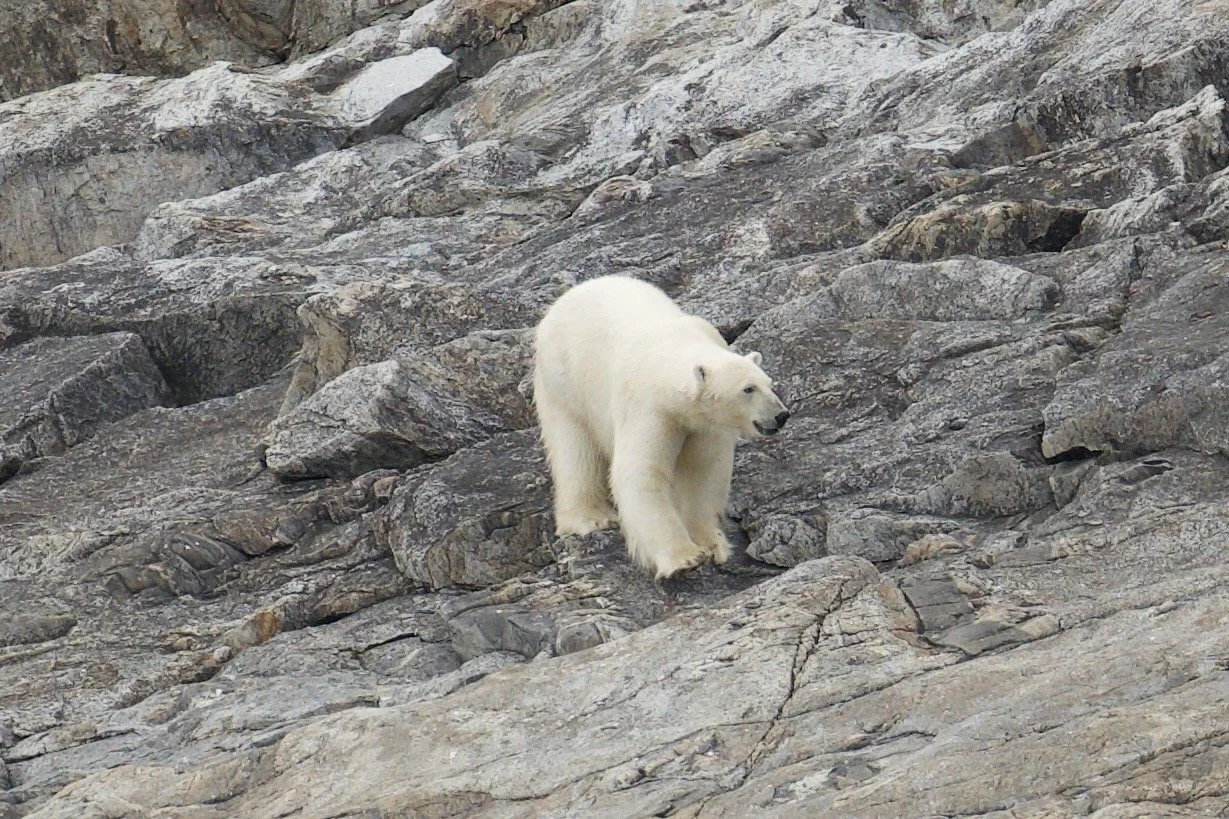
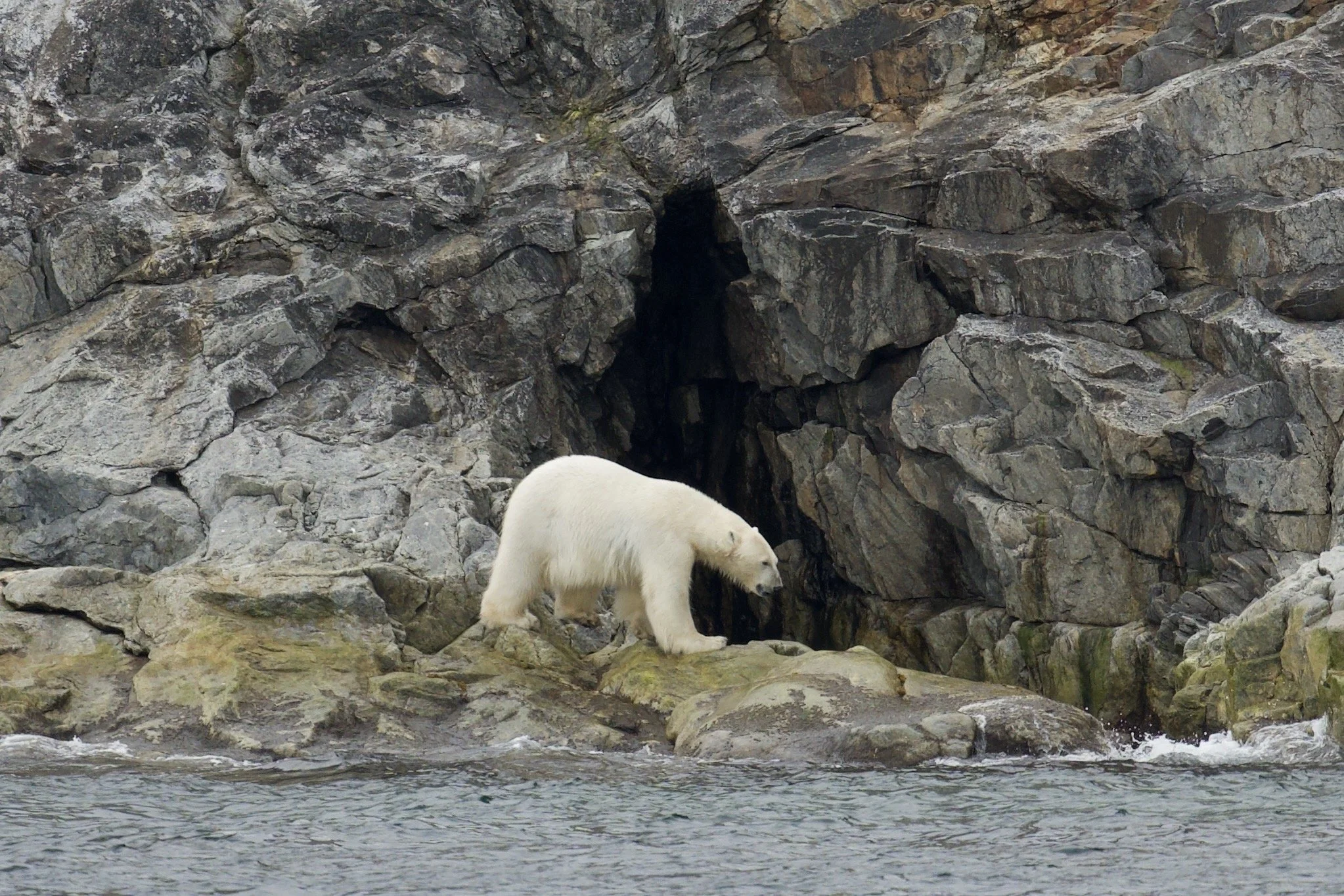
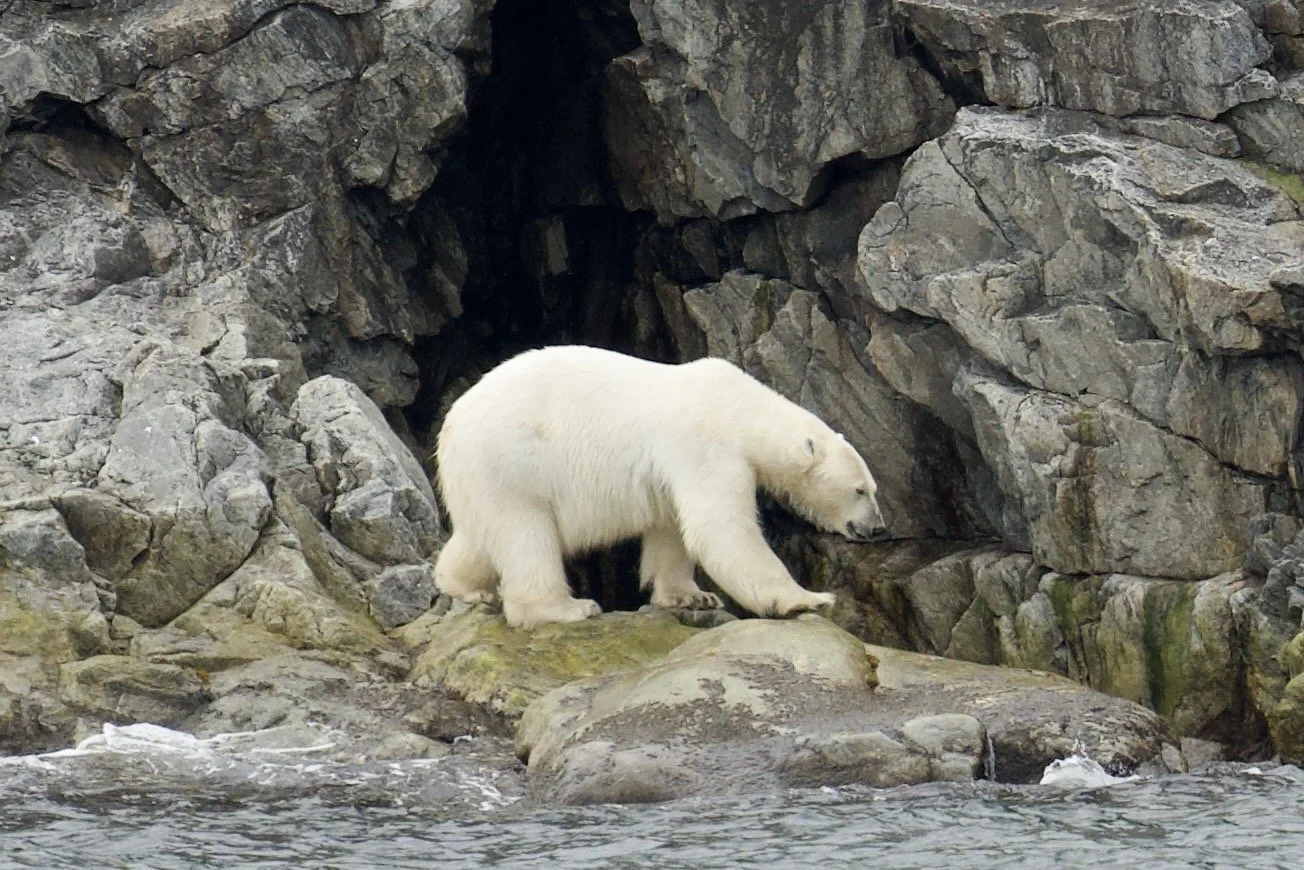
What surprised me was the deck. On Day 07, the first bear of the trip, everyone came up at once and the rail was full. This time about half of us bothered. Twelve days in, a bear at distance had become something you could finish your coffee about. I went up fast, and I would have gone up fast on day sixteen, because I have not once managed to be casual about a polar bear and I hope I never will be. She was moving along the shore when I got there, stopping to sniff, lifting her head at the ship. She knew we were there. A polar bear finds a seal from a kilometre out and through a metre of packed snow, and we were closer than that and had spent the morning cooking hot dogs. There were plenty left over. If she had asked, I believe we would have found a way.
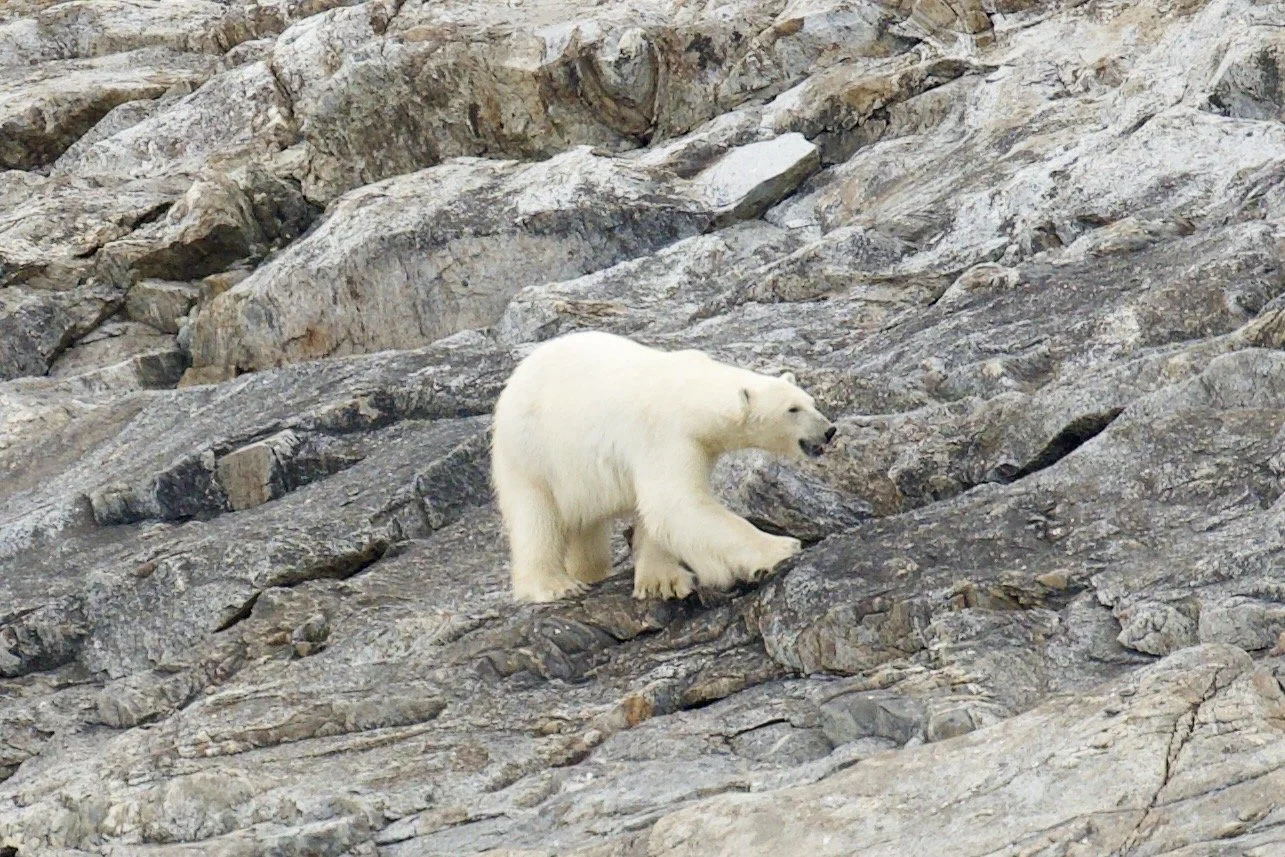
Morning Bear
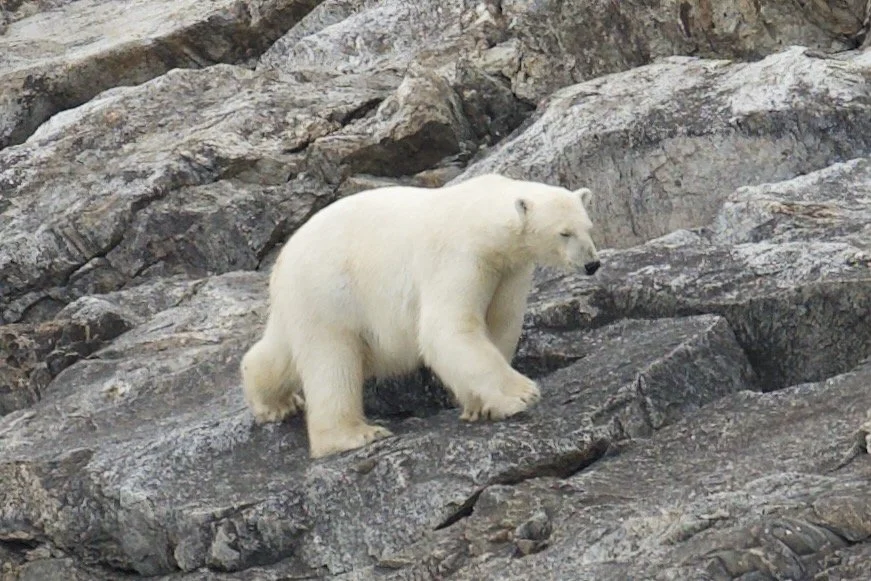
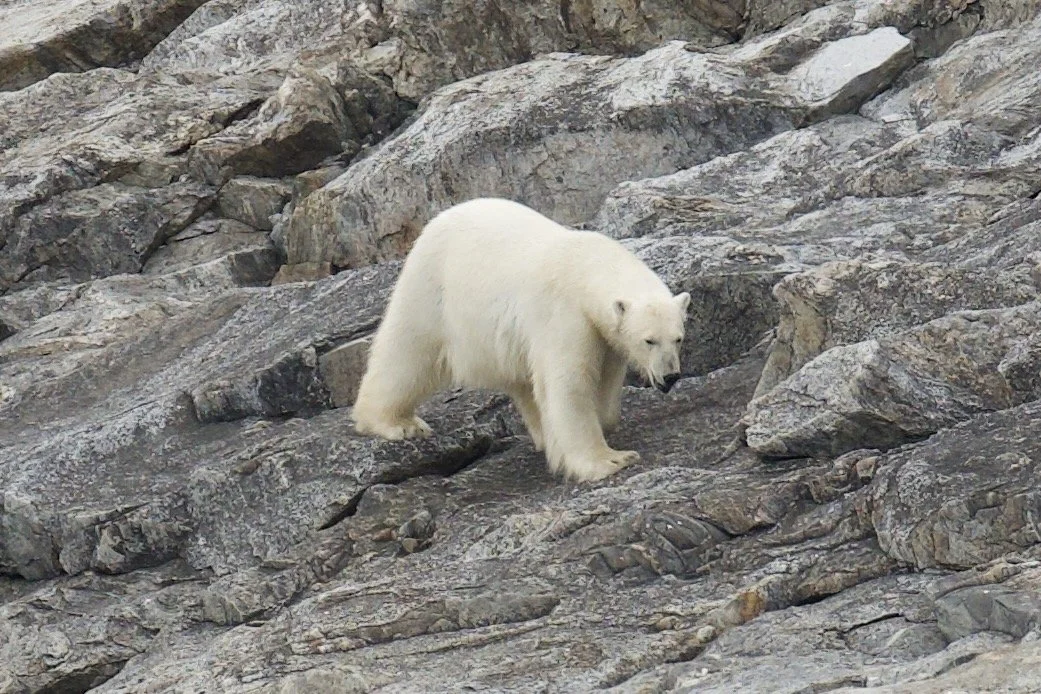
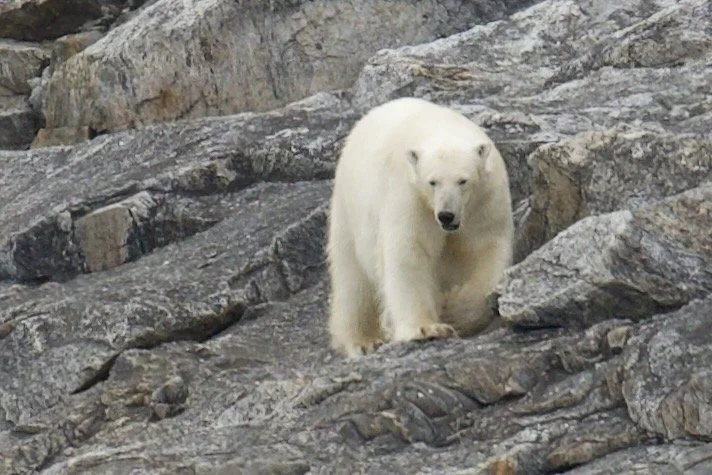
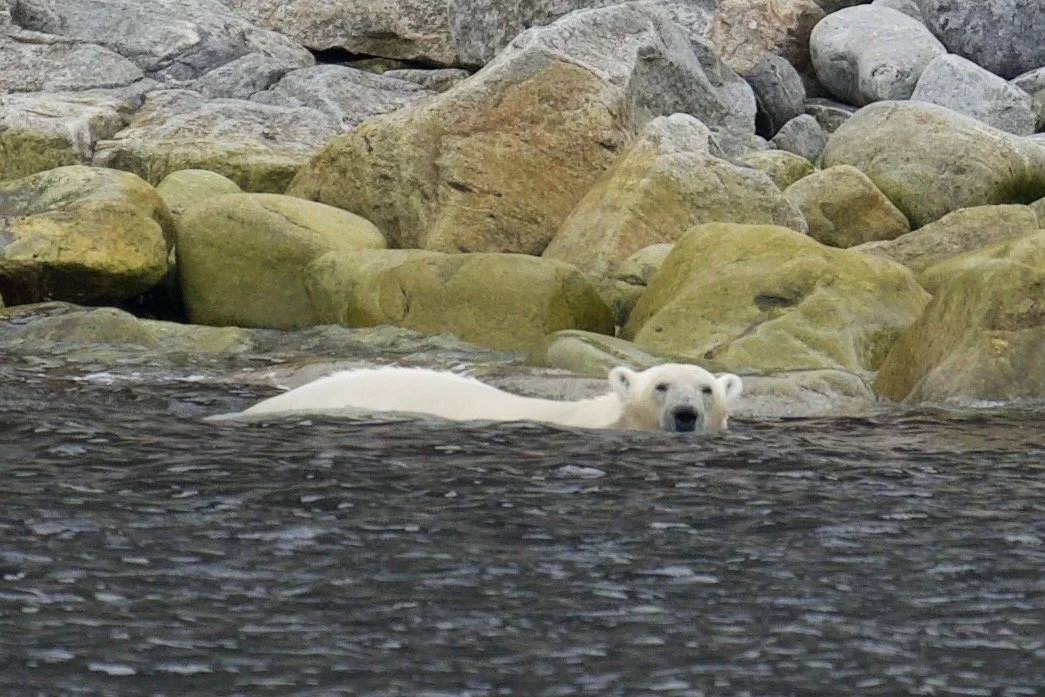
Ghost With a Nose
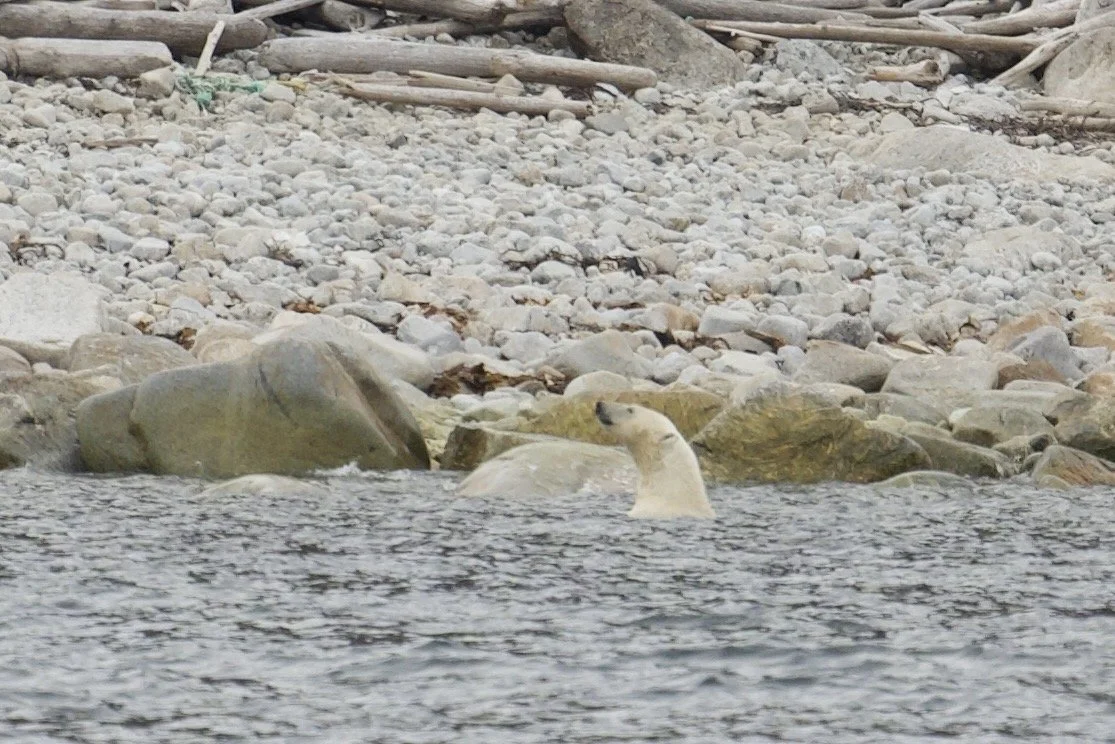
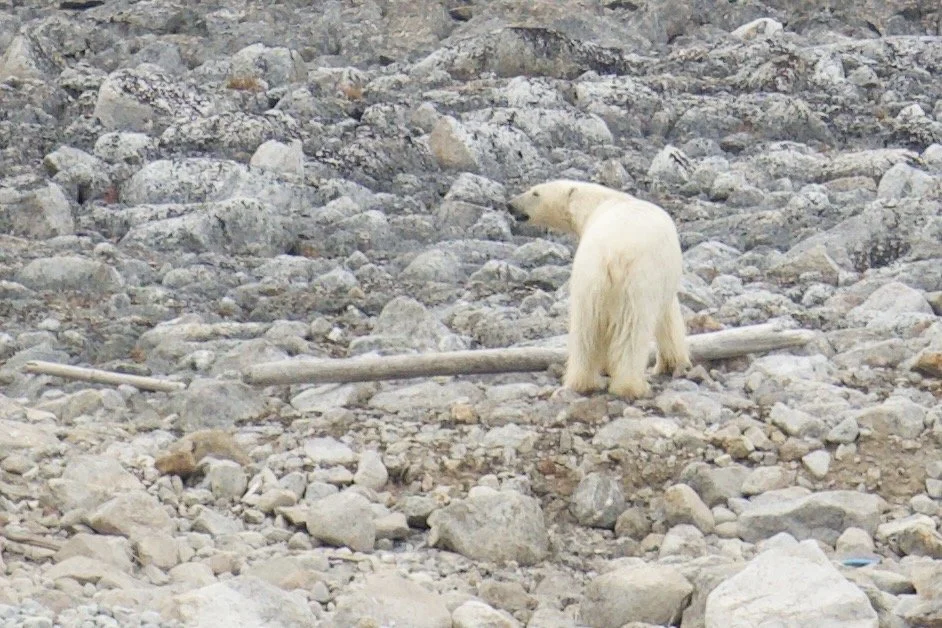
Then she went into the water, and none of us had seen that. I have watched them stand on land, but I had never once watched one swim. On Day 08 at Witches Bay three of them came out of the water almost on top of us. This was the confirmation. There is nearly nothing to see. Now and then the back breaks the surface, now and then the head comes round to check on you, and the rest of the time it is two small ears moving through the chop. A ghost with a nose. Stand on the ice with your back to the sea and you find out late. She was the ninth bear of the voyage and the fifth I got pictures of, and she was also the last, though nobody tells you that on the day.
We went ashore at Ytre Norskøya, the outer Norwegian island, a small rock at the top left corner of Svalbard carrying an enormous amount of history. The landing was the hardest of the trip. No beach, only wet rock on a slope. Sarah told us how she wanted it done and then we did it, one person on the rocks taking bags, another further up taking people, everything passed hand to hand, and it went smooth from the first bag to the last. Twelve days will do that to a group of strangers.
She briefed us standing on that rock. Normally we get a perimeter and the freedom to wander inside it. Not here. Single file up, single file down. You are not one person walking here, she said. You are one of a thousand. Your footprint is a thousand footprints and a thousand more are coming along behind you. The damage is already in the ground and you can see it. The graves are on the path. Dutch whalers ran this station from about 1620 to 1670, and until the 1950s it was the most northerly permanent settlement of any size in the world. They buried their dead in thin soil in pine boxes carried north with them, and the ground has been freezing and thawing underneath those boxes for three and a half centuries and has pushed them back up. The boards lie there in the open with the nails still in them. No bones. Only the boxes, opened by weather. Anyone who read Day Zero already knows the mechanism, because it is why Longyearbyen runs its water pipes above ground in wooden boxes through the middle of town. You cannot bury anything here and expect it to stay buried.
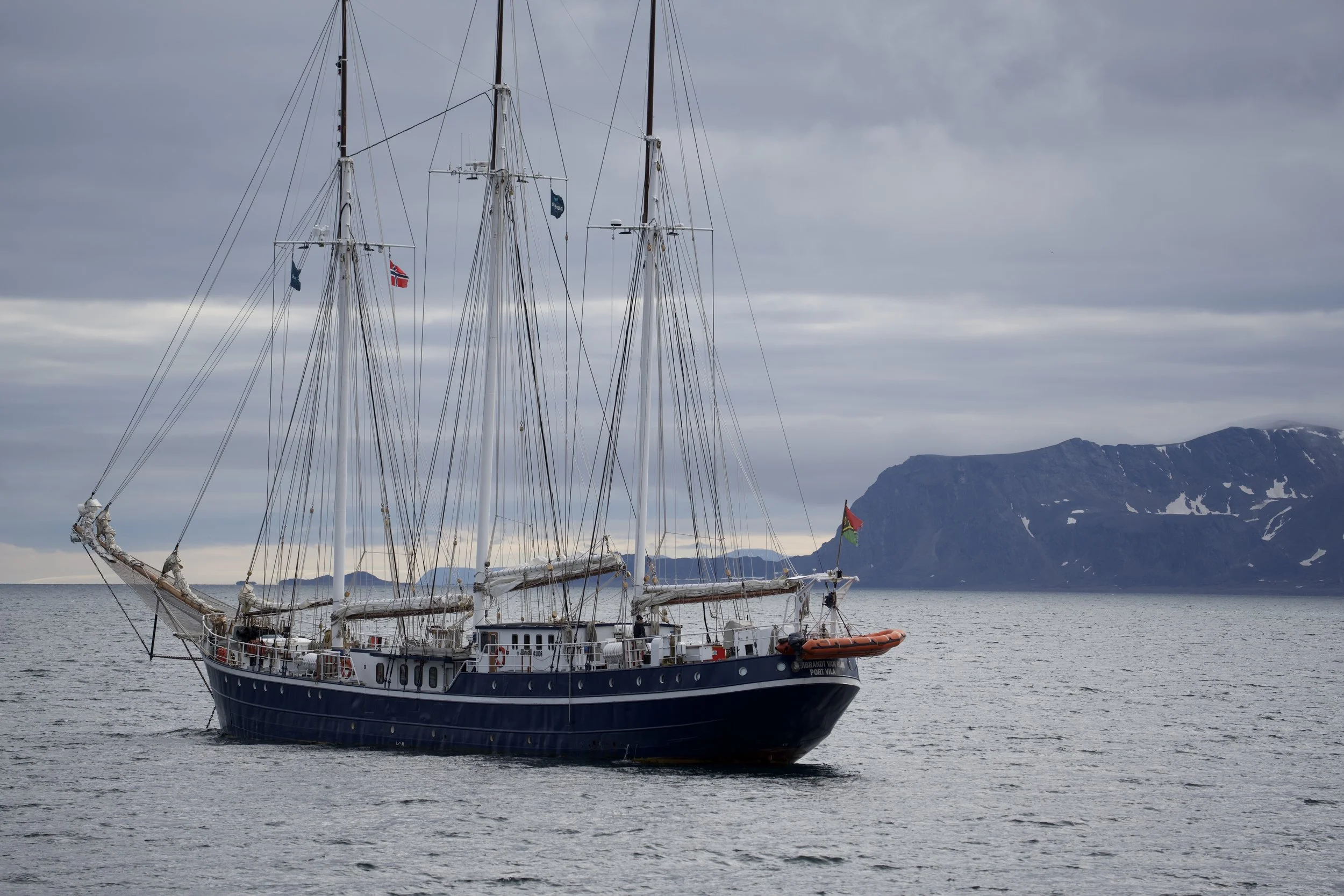
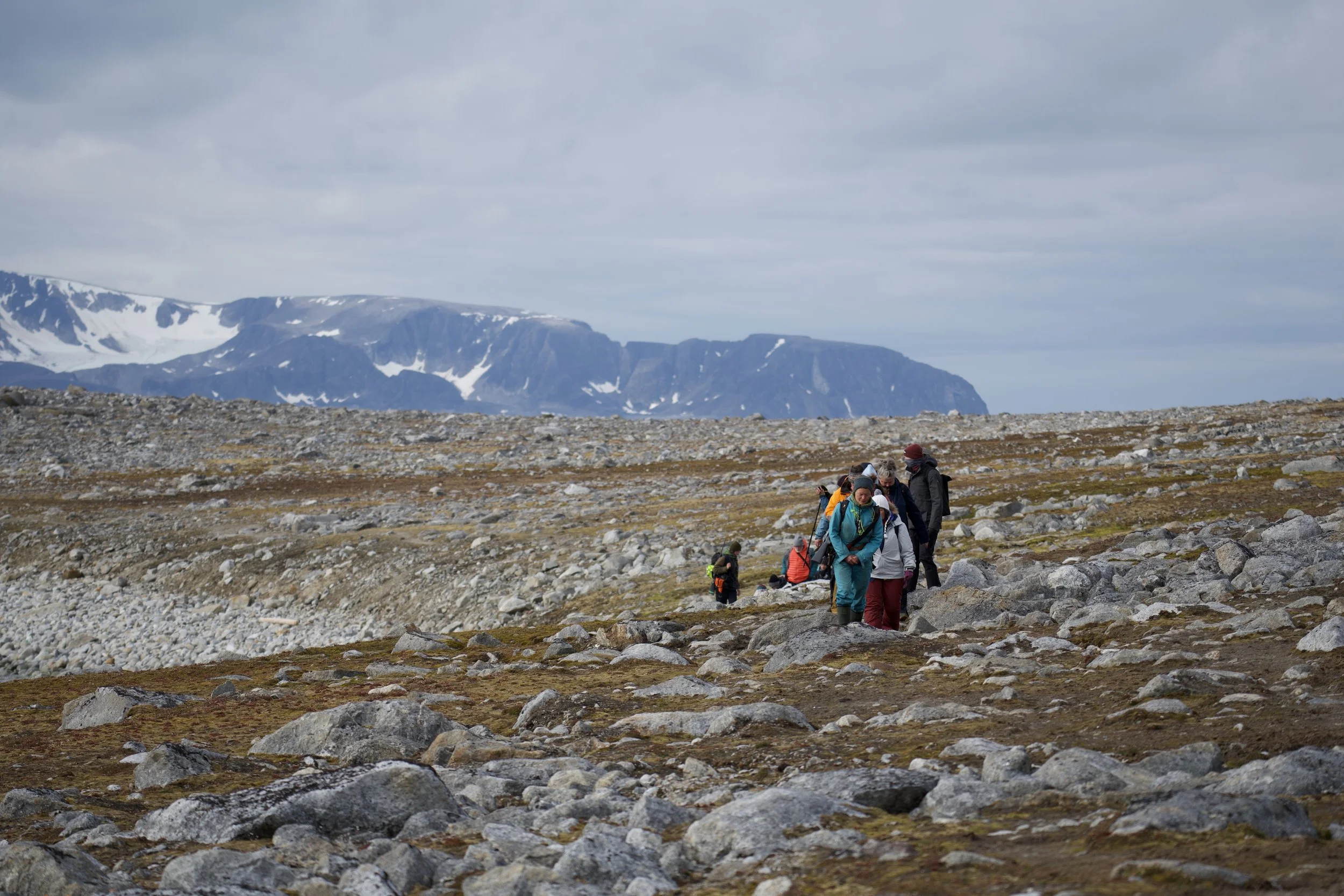
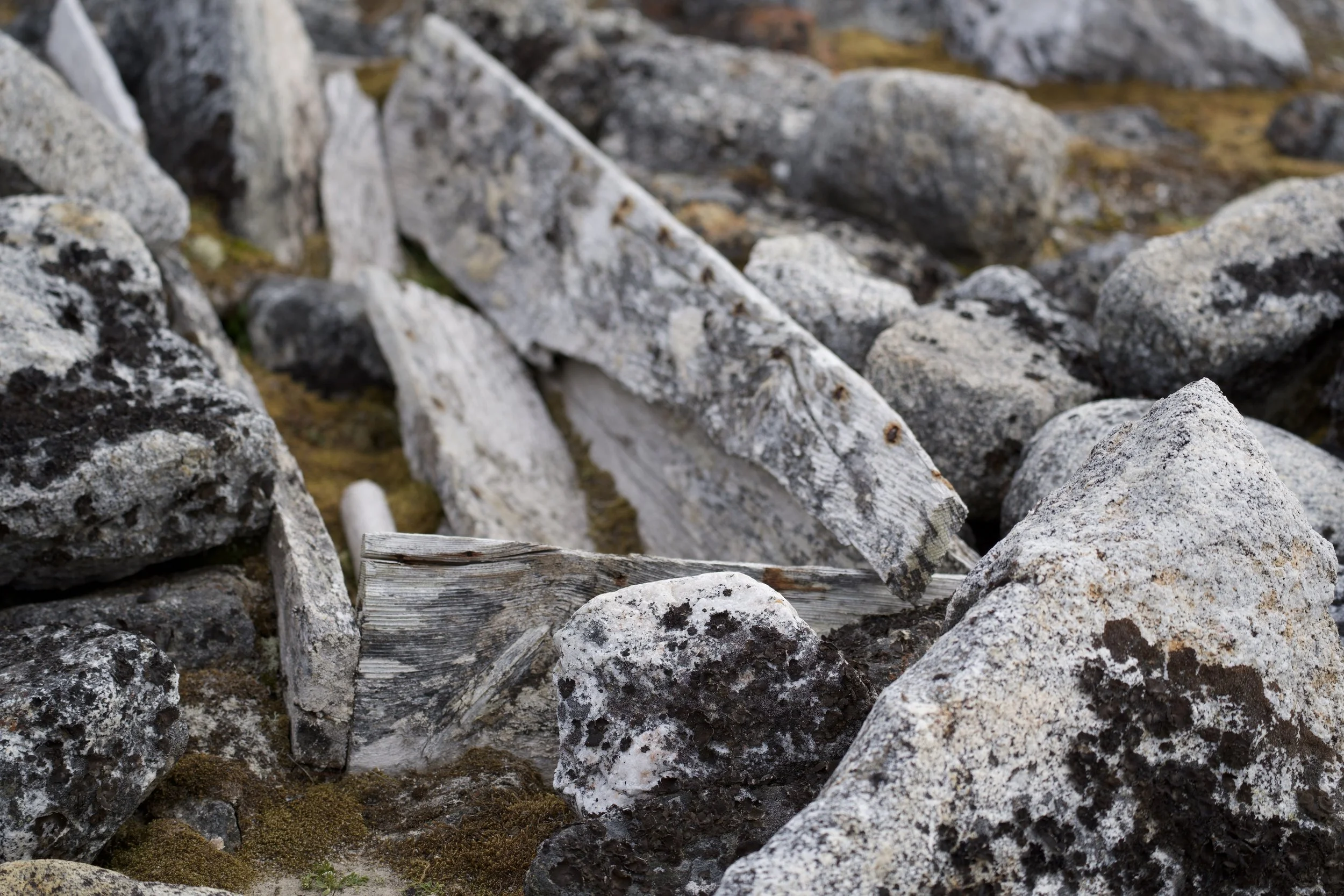
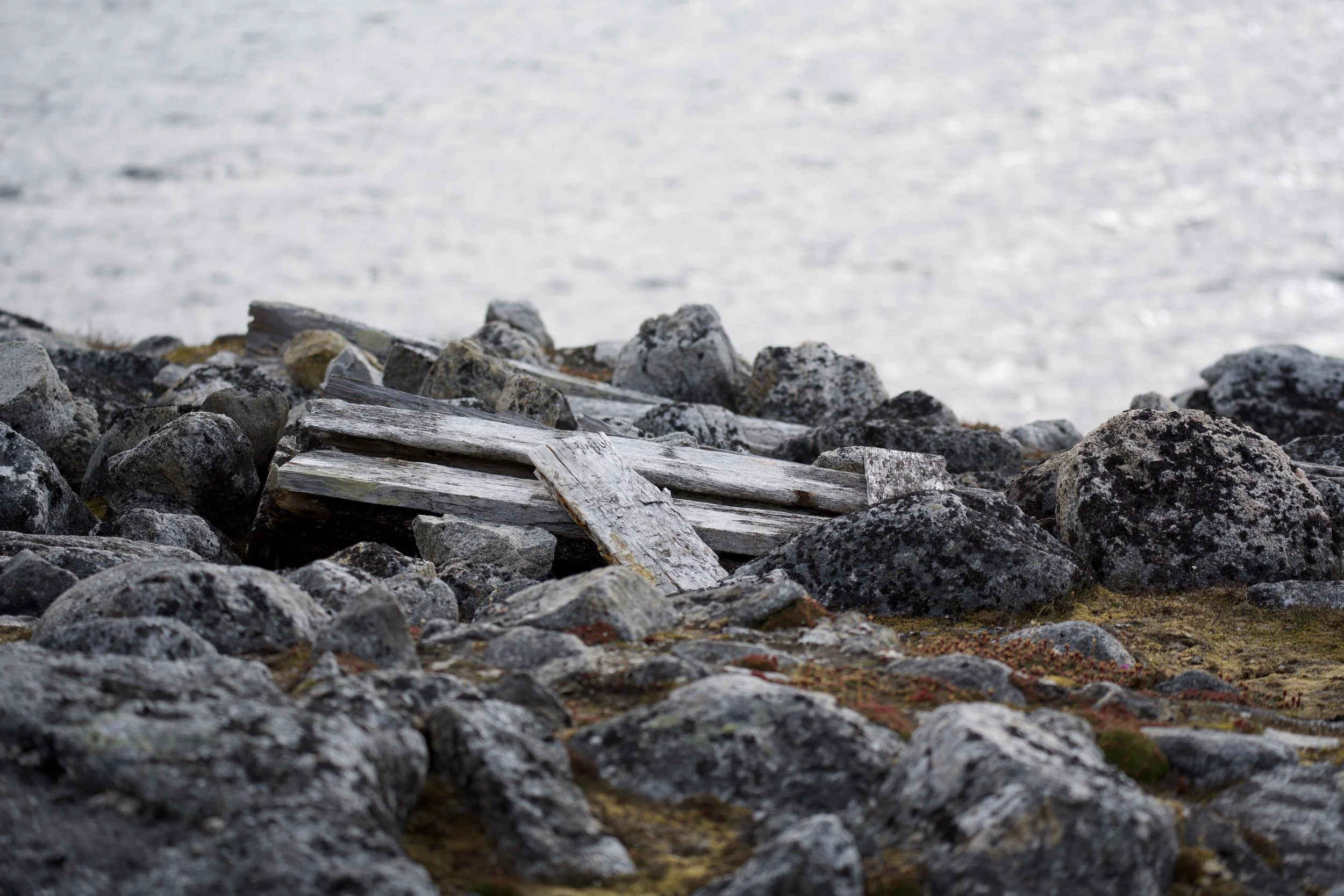
We are all walking in a single line. You are one of a thousand. The graves are on the path.
One more thing, which I learned afterwards. In 1980 archaeologists excavated fifty of those graves and brought the clothing home, and it sits in the Svalbard Museum. On Day 01 I killed two hours in that museum before the bus, looking at taxidermy, and walked straight past their coats without knowing whose they were. When the first whalers reached this coast in 1611 they wrote that the sea was boiling with whales. Two hundred years later the big whales of the north were finished. Two days before I stood on that hill I had humpbacks feeding along the hull close enough to hear breathing.
Sarah offered the two lookouts, the big one up the hill and the small one along the shore, De Groote Uitkijck and De Kleine Uitkijck, named by men who stood on them watching that water for spouts. I had settled on the small one. At the last second I switched, on the grounds that the bear had gone up a hill and there might be another, which is not a reason and is exactly the reason I gave myself.
Rhys was on the long walk with Beth, and halfway up he stopped, pointed at a snowfield and said fox. There was nothing on the snowfield. There was one grain of pepper on the snowfield. I put five hundred millimetres on the grain of pepper and it turned into an Arctic fox cub, brown as peat, and I have never been so pleased to be corrected.
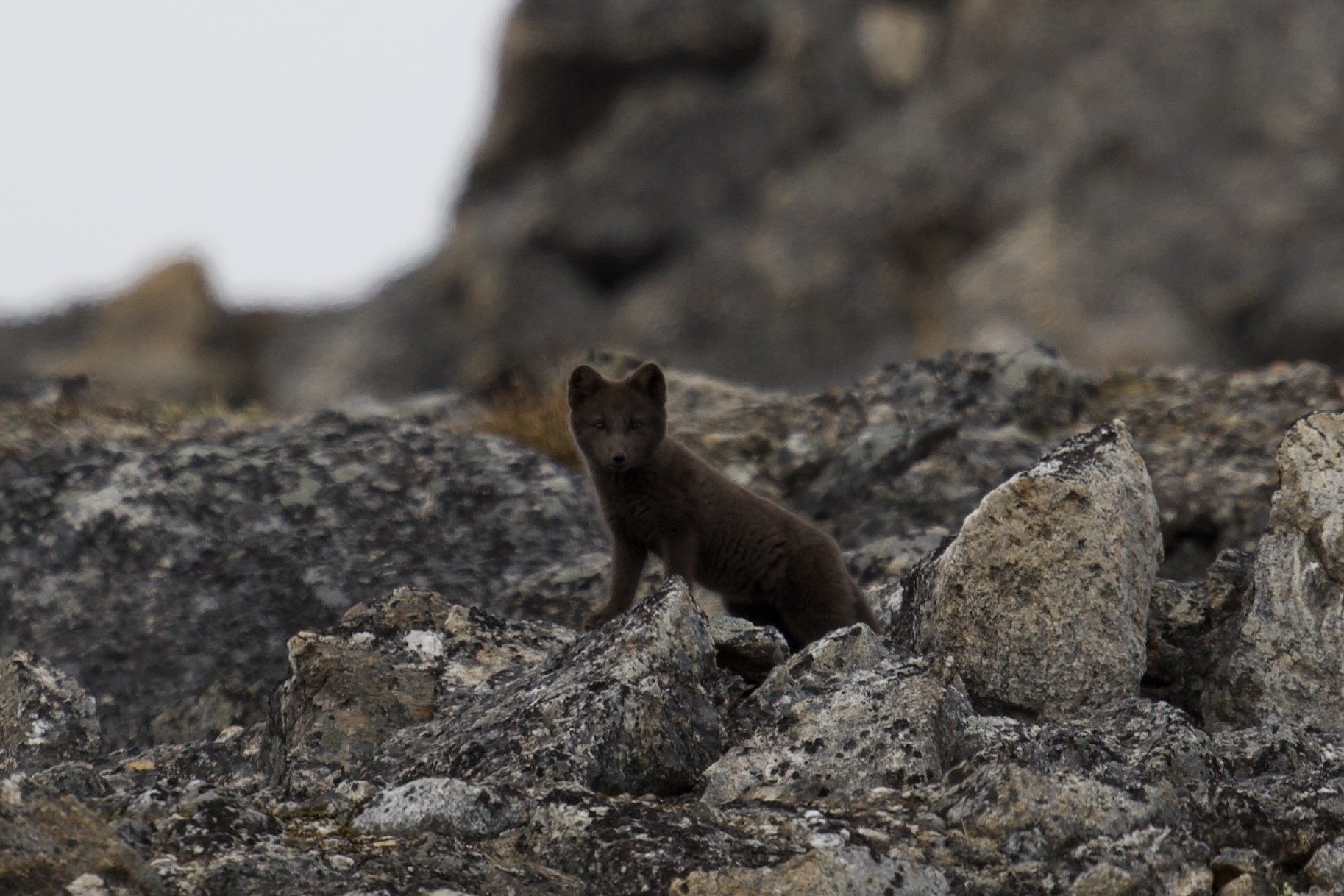
The Arctic Blue Fox Cub
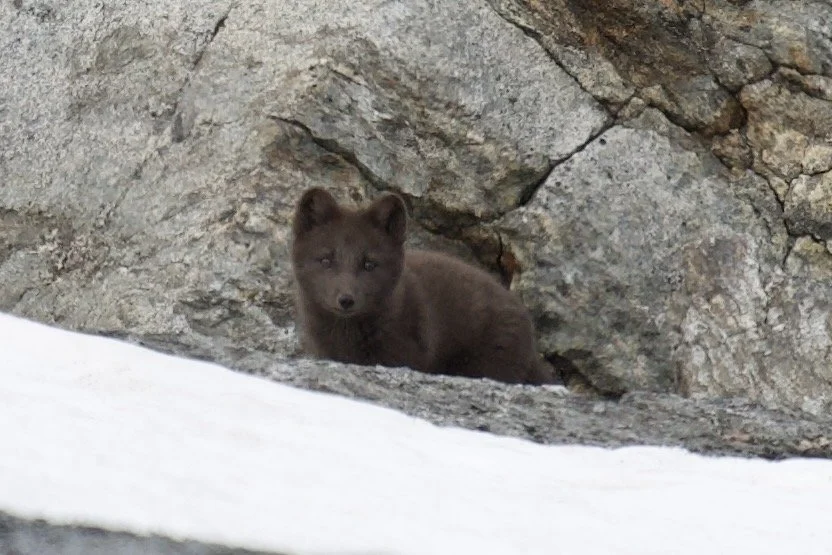
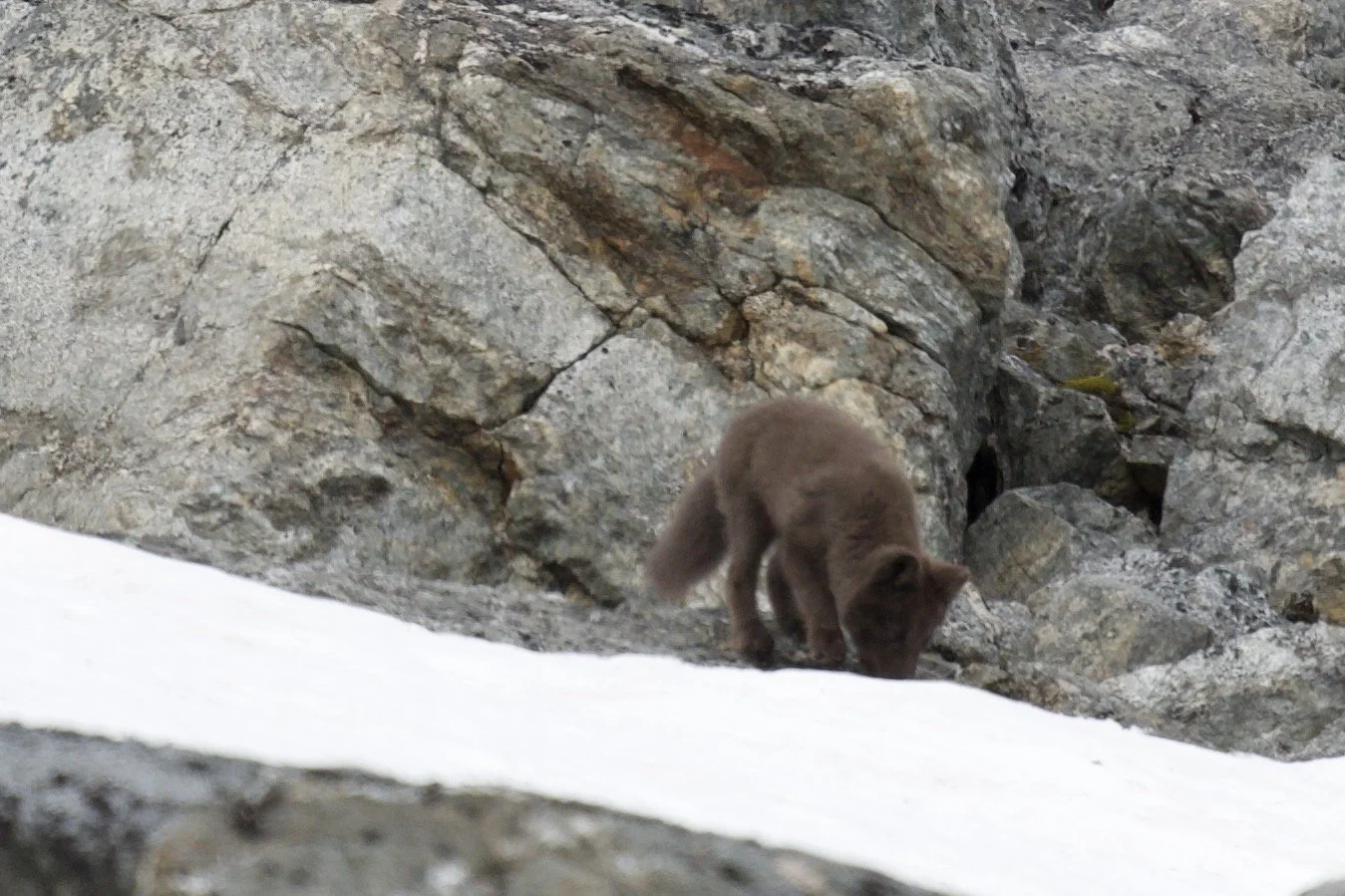
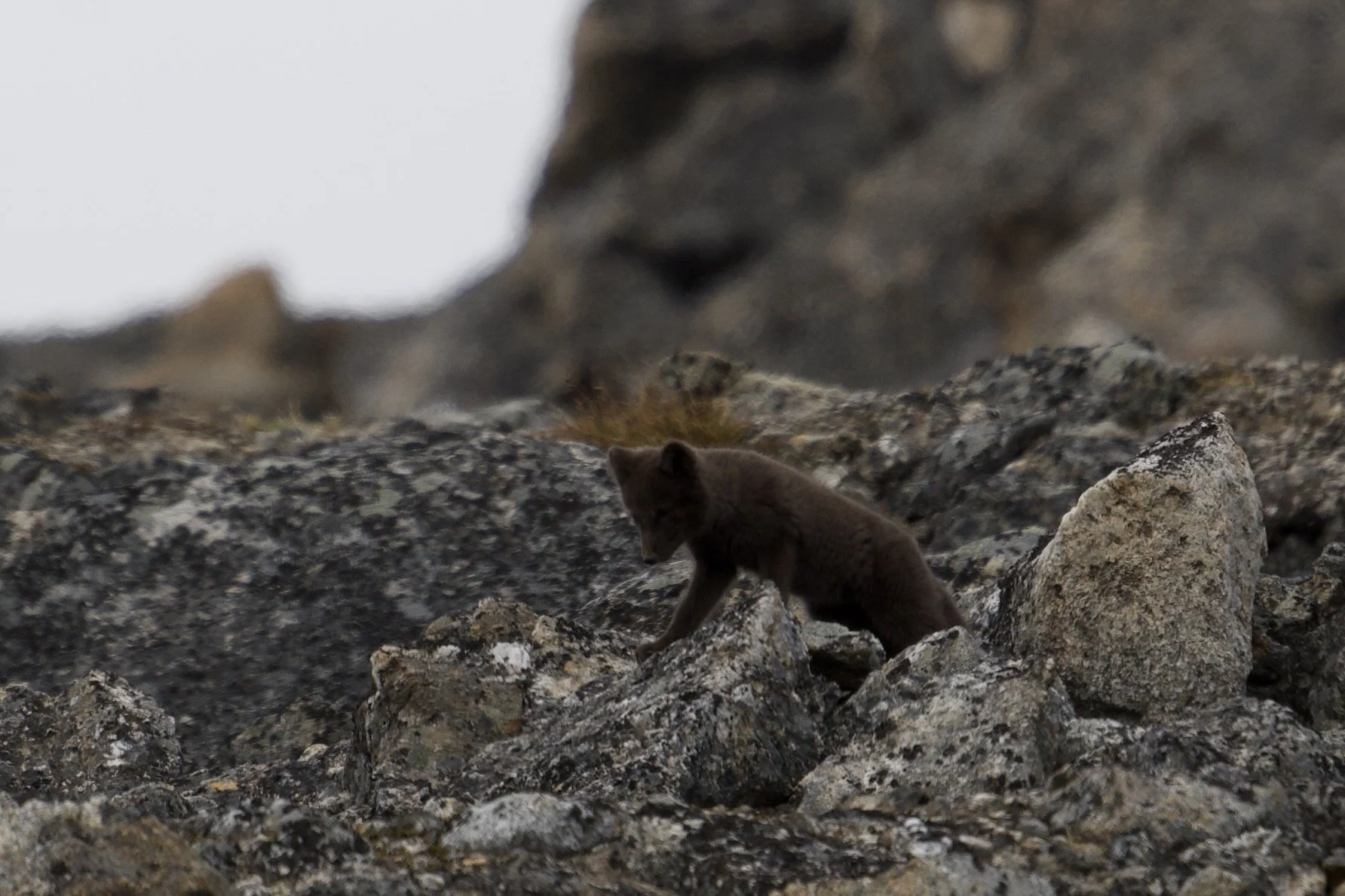
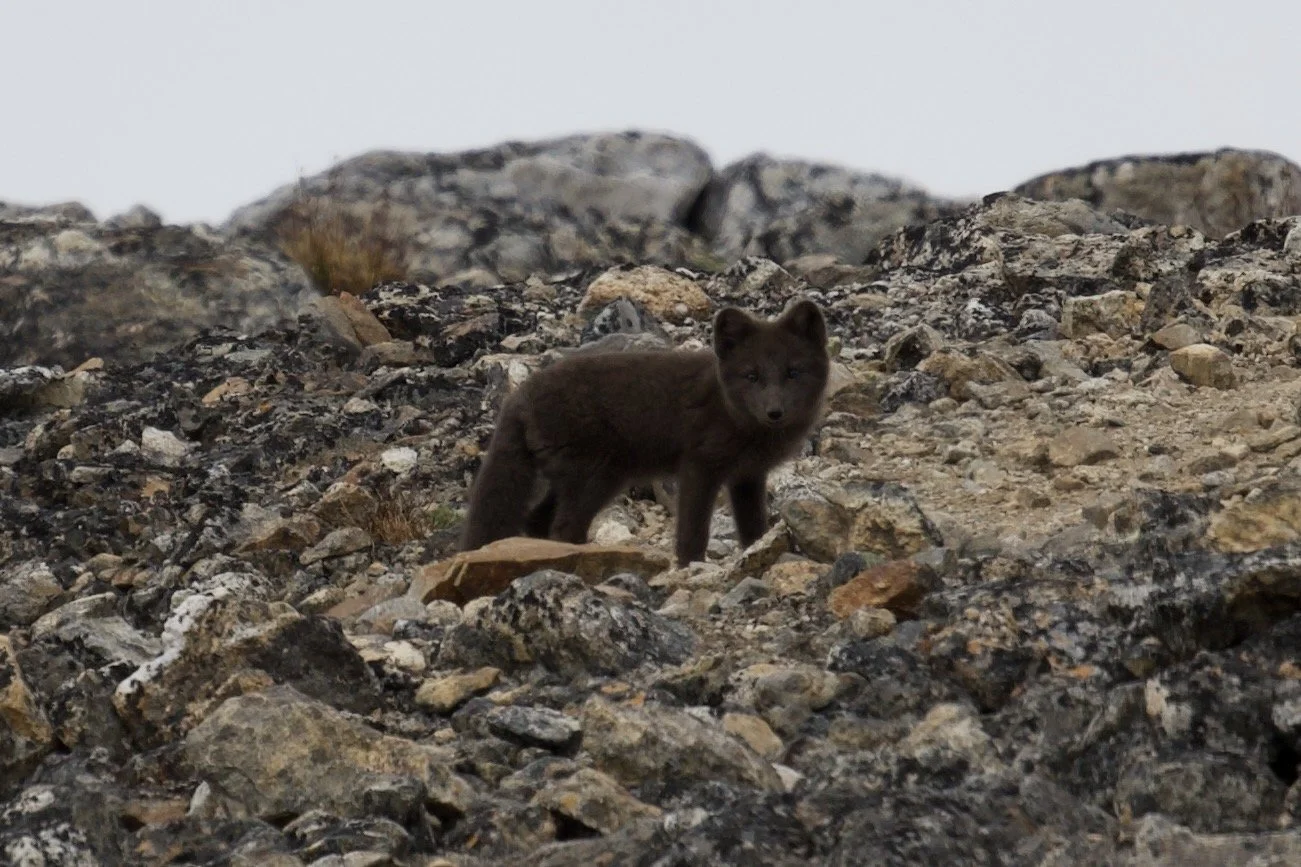
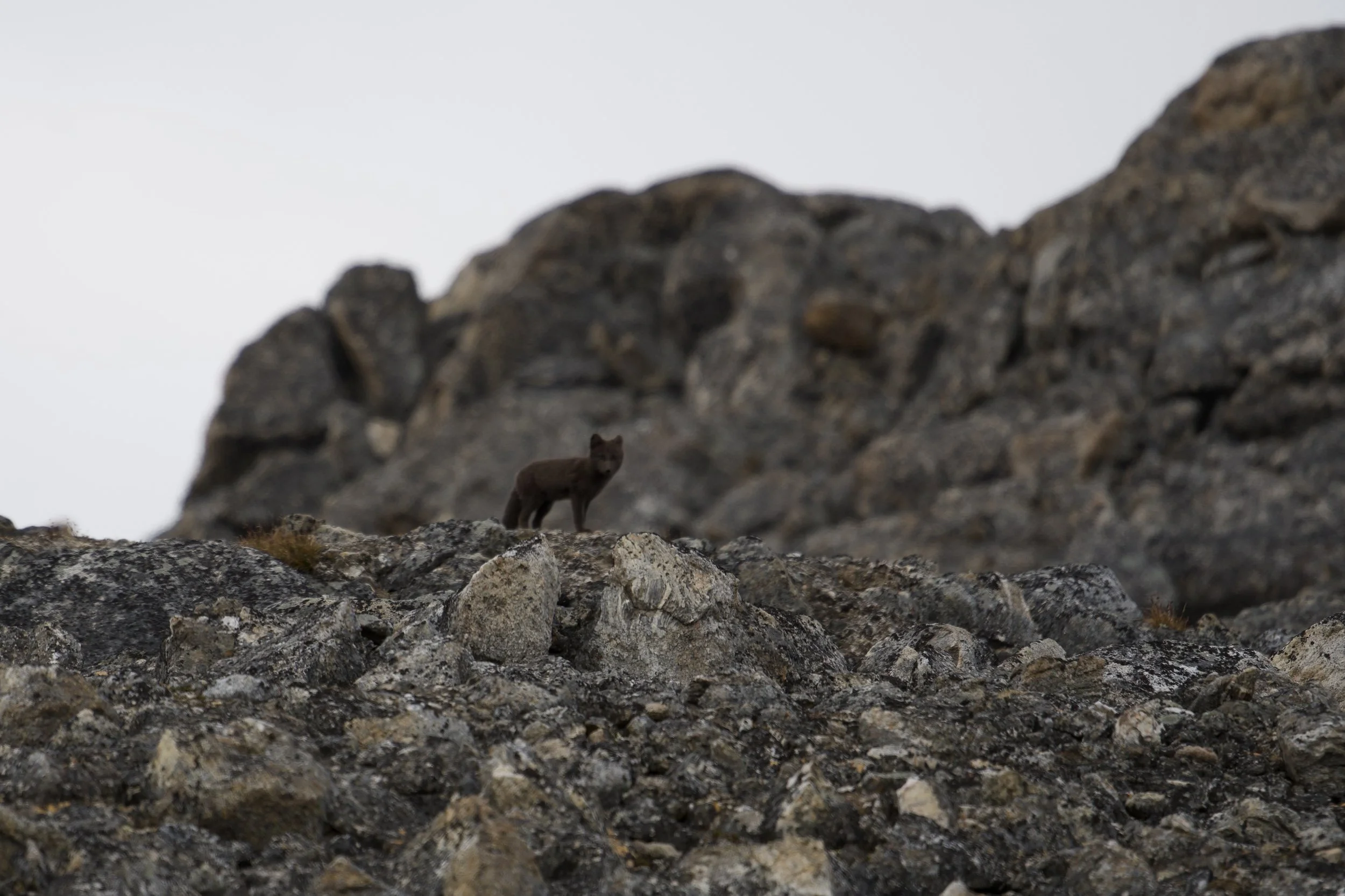
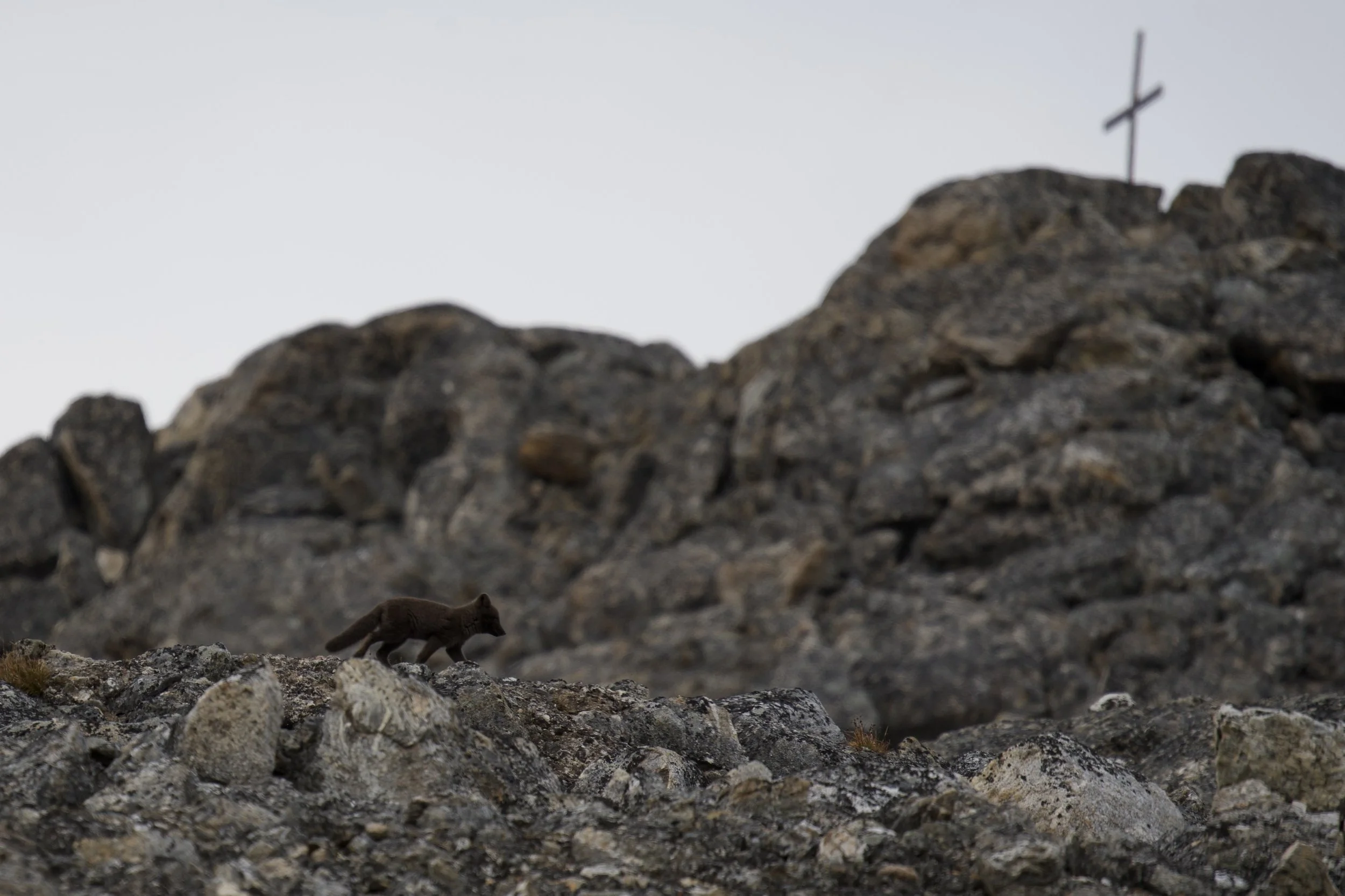
It was the best animal of the whole trip, and I say that having just spent half this entry on a bear. It could not make up its mind about us. It came forward, thought better of it, went back, came round the side, put its nose in a crack, looked up to check we had not moved, then did all of it again. Curiosity and nerve in something the size of a large housecat, with the nerve losing every round. Blue foxes are scarce almost everywhere, one or two in a hundred, and Svalbard is one of the few addresses on earth where the odds get anywhere near decent. There was only one cub. Rhys said a litter can run to ten or twelve, which holds where there are lemmings, and Svalbard has none, so the foxes here live on seabirds and eggs and seal pups and ptarmigan, and a litter is five or six. Somewhere on that island were four or five more, and none of them came out, and this one had drawn the job of finding out what we were.
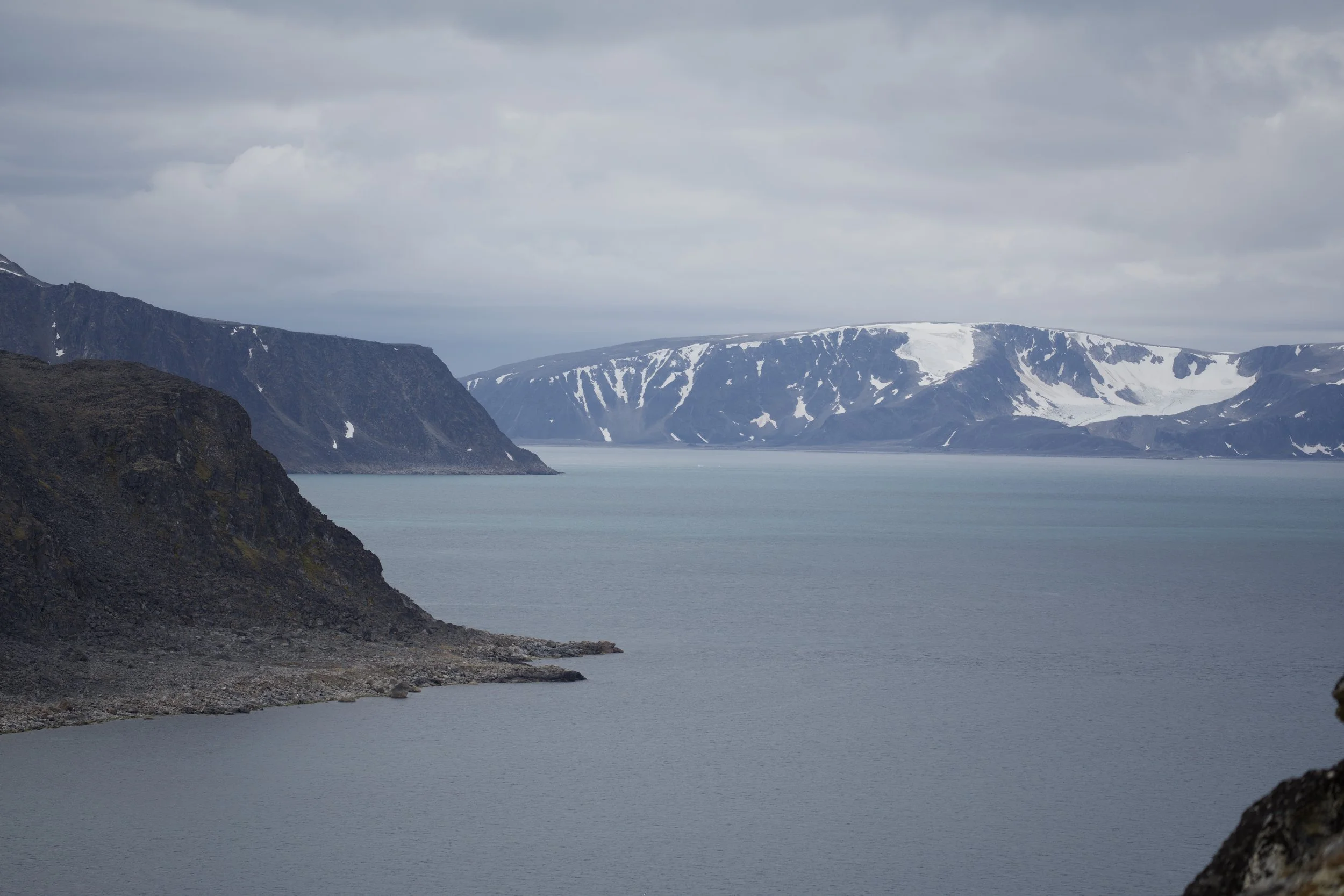
At the top the whole point of the place became obvious. The sea runs flat in every direction and there is nothing between that rock and the North Pole. Men stood there for fifty years watching for spouts. We stood there looking at the same water with nothing in it. Fog, and even at five hundred millimetres there was little beyond the suggestion of mountains. Rhys let me stay behind when the group moved off, in case the cub came back. I sat and waited and it did not.
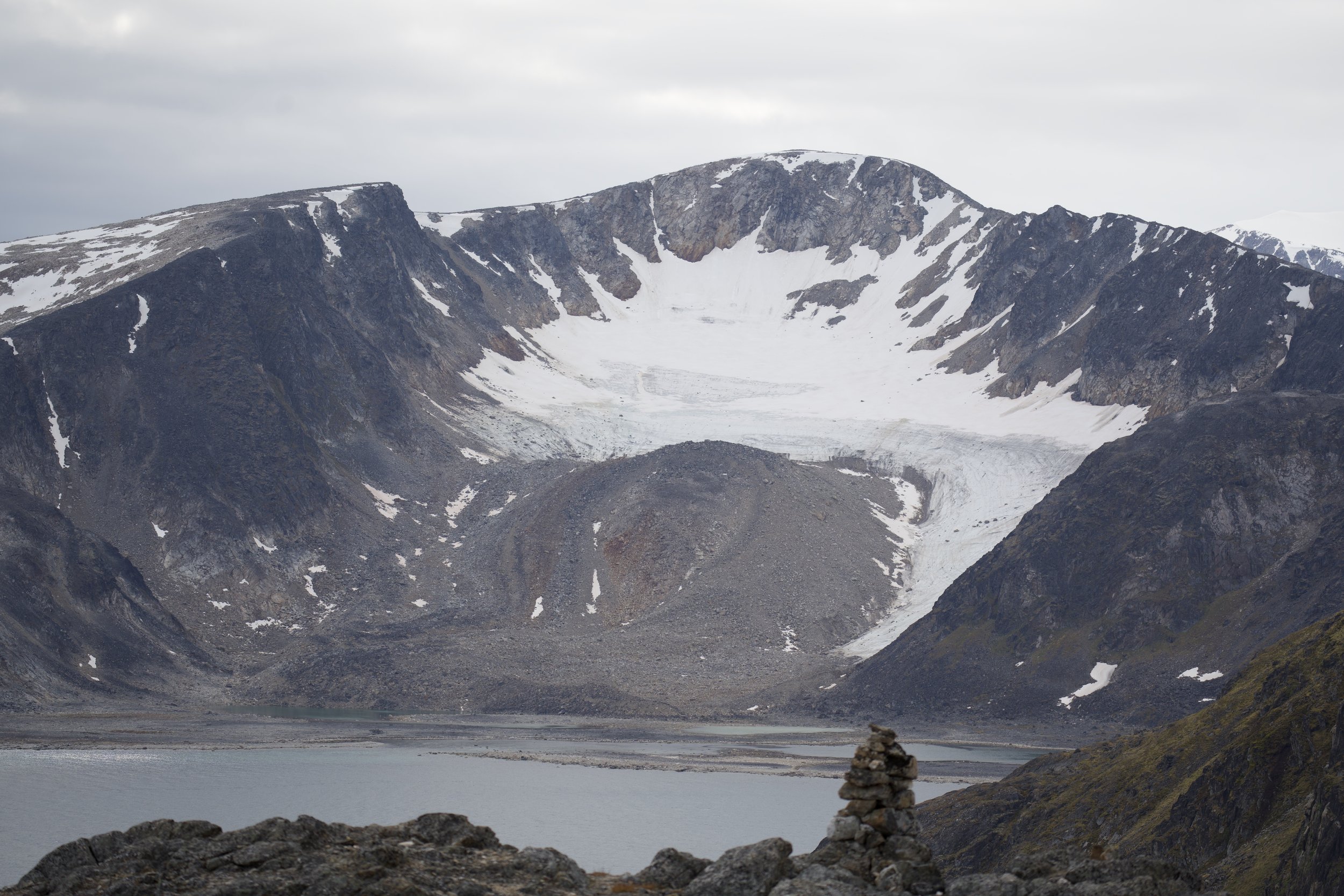
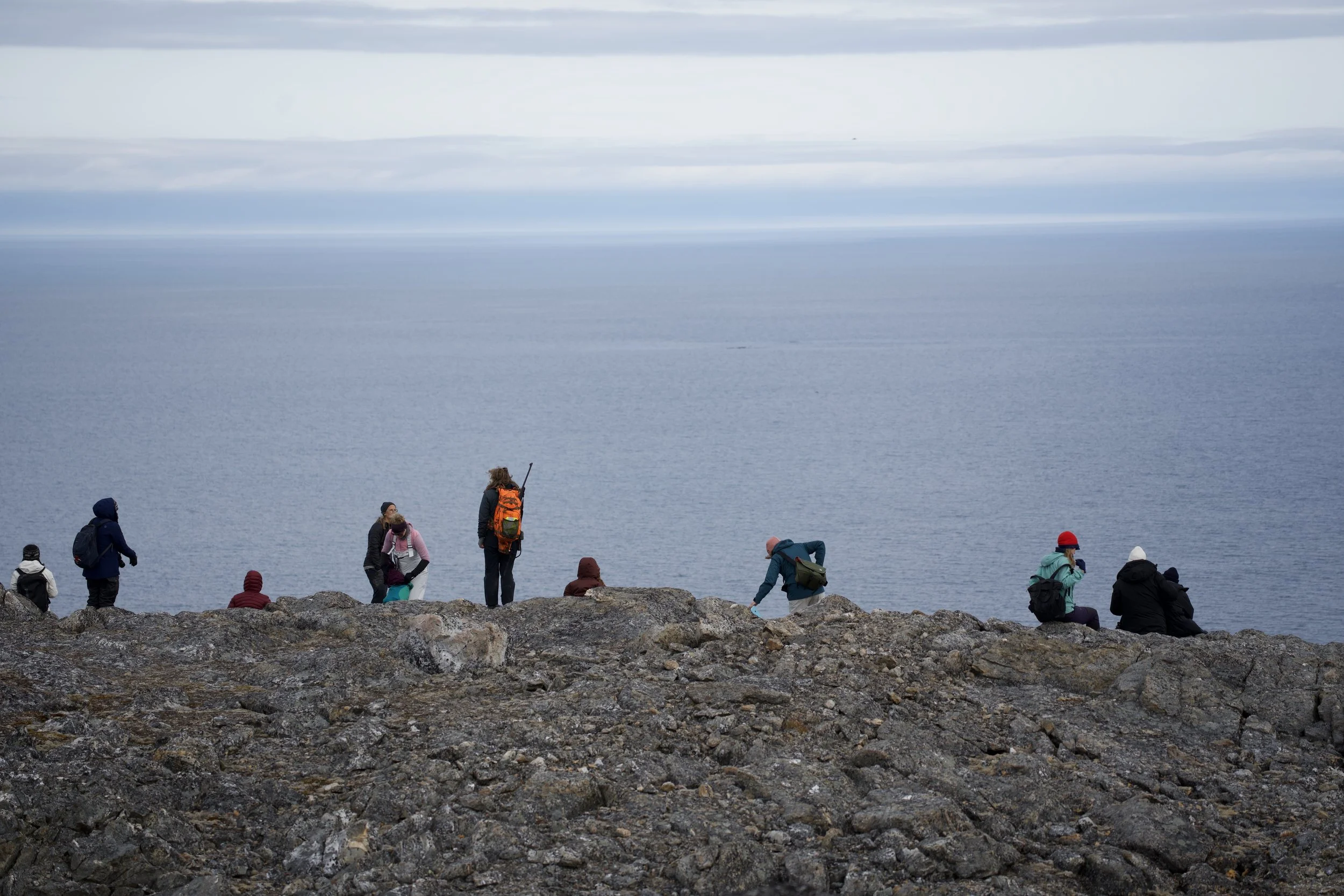
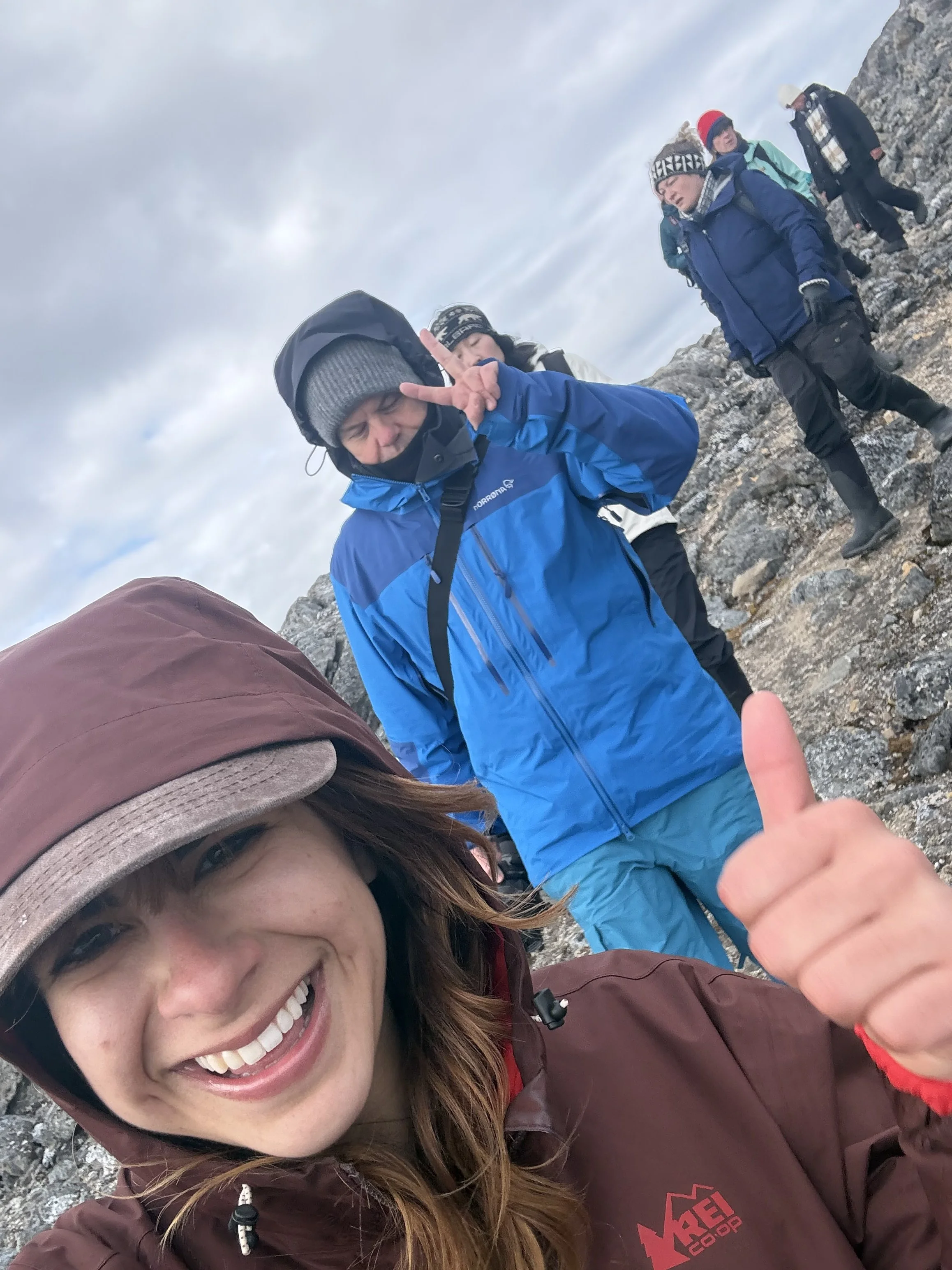
People are looking out to the North Pole. Group walking photo: Annalise Wellman
On the way down we got puffins. They came past us at the same height as the fox had been, in and out of the rock, which means a colony in the cliff and which also means the cub had a larder about four minutes from where we found it. I did not lift the camera. On Day 01 a puffin went by the hull flying the way they all fly, wings going far too fast, feet trailing, the whole body committed to a bad idea, and I got the frame and named him Superpuffin and have been living off it ever since. A man knows when he is ahead.
Single file down, chain in reverse, and back on the boat. We made our way through Fair Haven into Fuglefjorden, where the water dropped from just under seven degrees to just under two in the course of an afternoon. That is what a working glacier does to a bay. Fog on the tops, water flat as glass, and thunder going more or less continuously. Then a proper one came off, a slab off the front, and the wave crossed the bay and reached us, and I finally had the whole picture. On the first night of the trip, at anchor in Tempelfjorden with no wind and no swell, the ship moved under me in the dark and I lay in a windowless cabin trying to work out what could possibly be pushing it. In the morning meeting Joachim gave us the answer. Tunabreen had let go in the night and the water carried the news down the fjord and moved forty-nine metres of steel under thirty sleeping people. Eleven days later I was standing on deck watching the transaction from the other end.
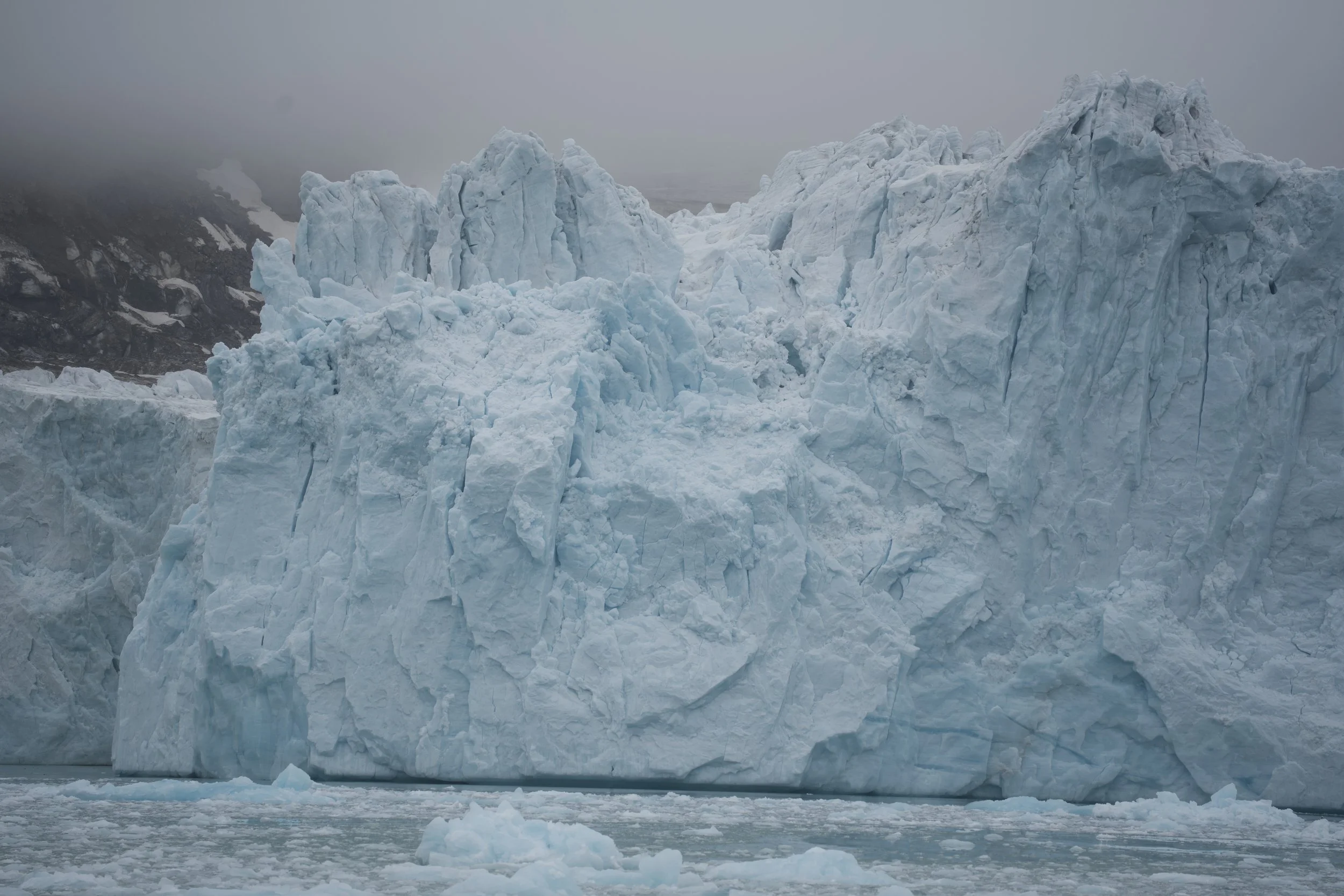
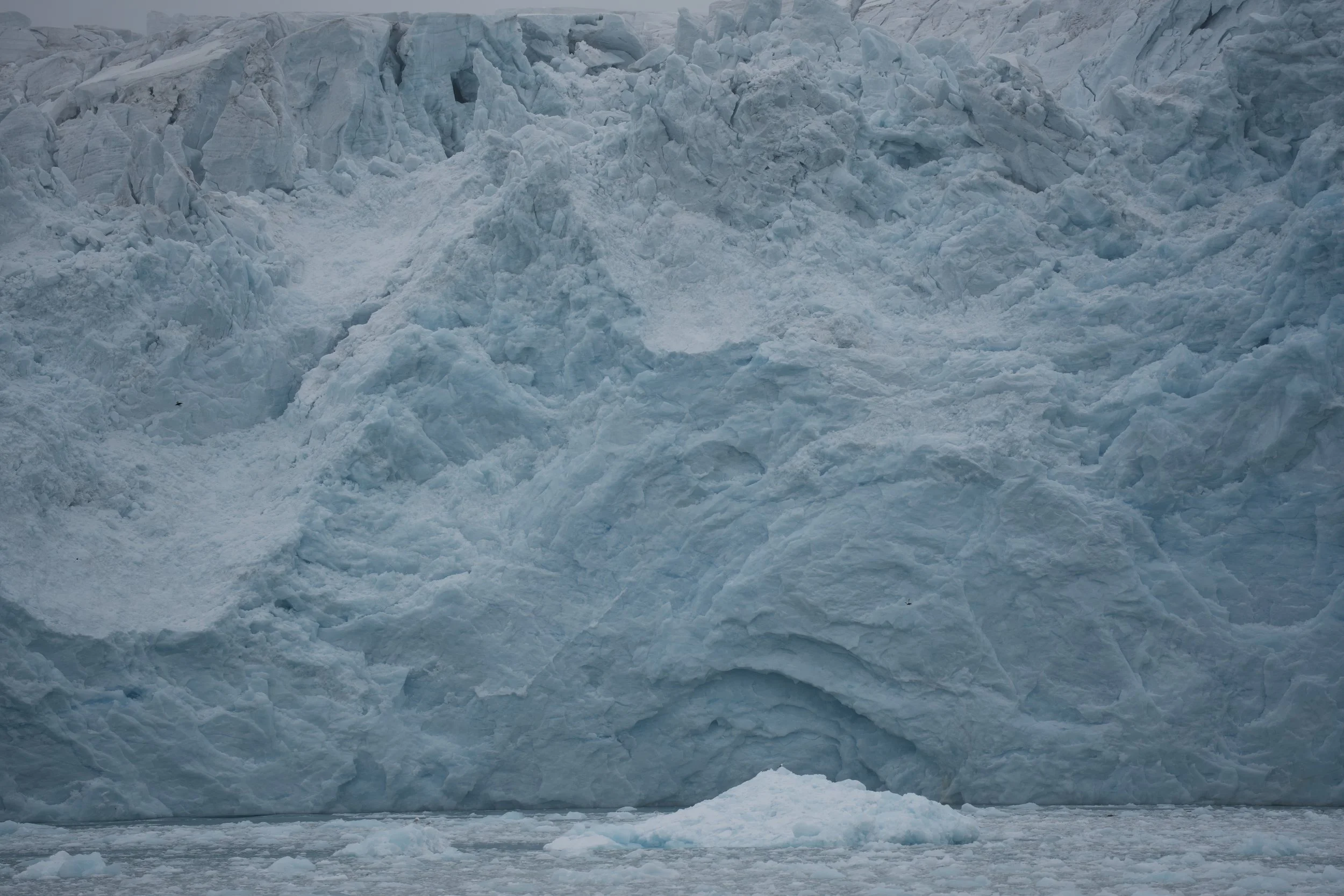
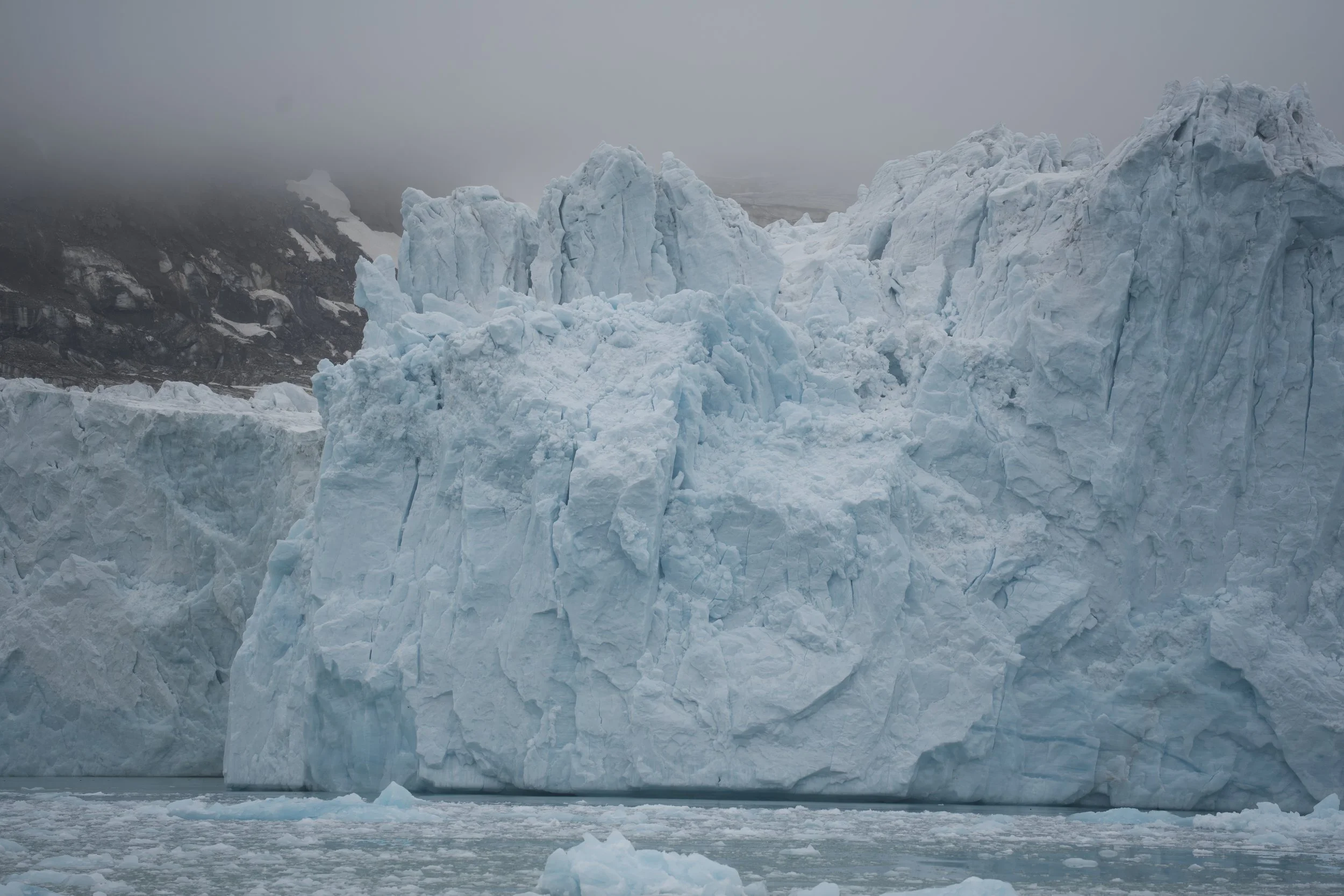
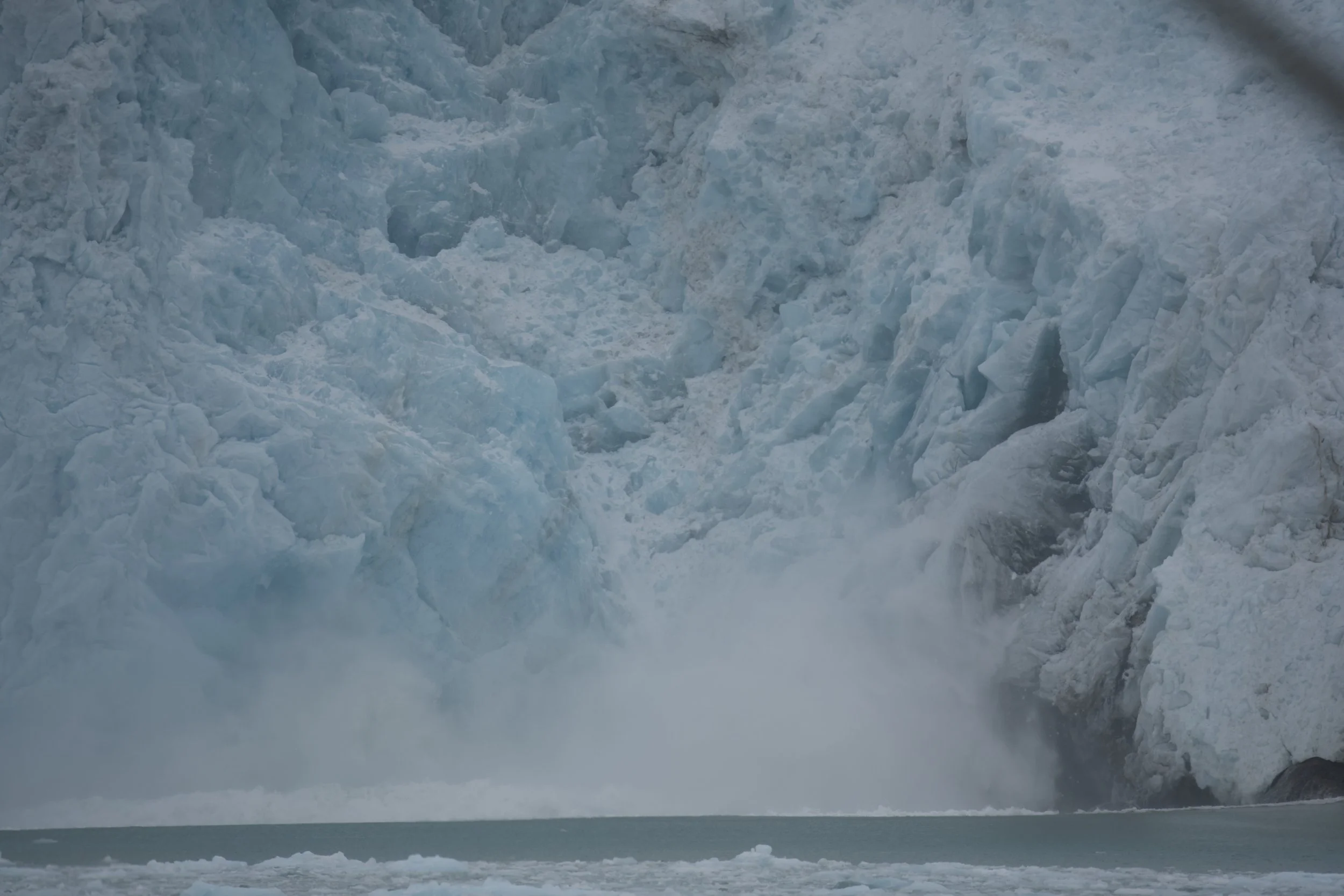
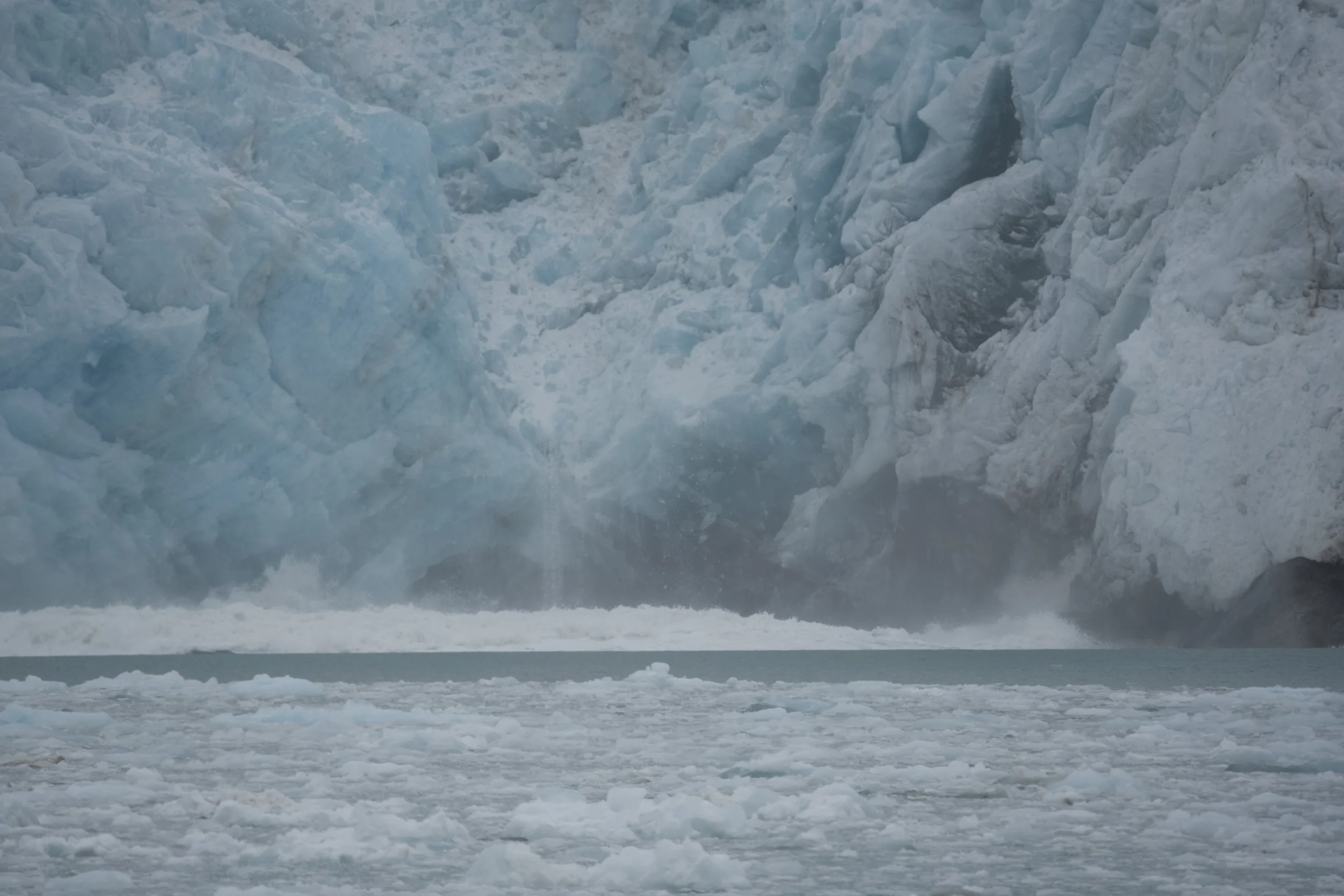
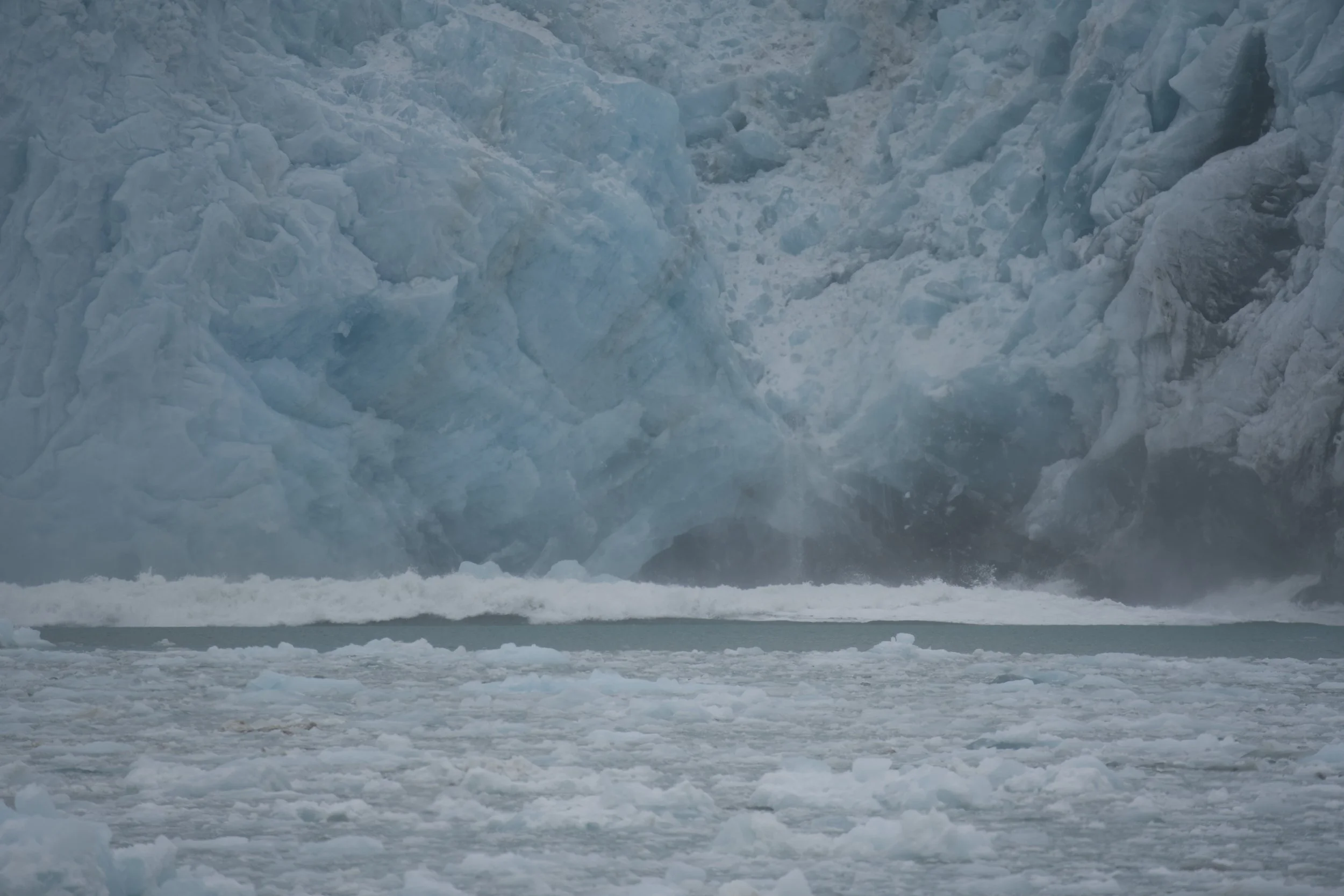
At the evening briefing Joachim said he took us further into that bay than he ever has, and he has been coming here fifteen years. On the way in we passed rock that was under ice a few seasons ago. He said it without any ceremony, which made it land harder. Twelve days in, everyone was tired in a way that does not look like tiredness. Gear on, gear off, boat, ladder, lunch, boat again. It is the best fatigue on the market and it is still fatigue.
Eleanor had twelve small skies laid out on a table that afternoon. Eleanor lives in southeast Minnesota, teaches place-based drawing at a small liberal arts college and runs a study abroad drawing and printmaking programme in Australia, and her subject is how people perceive the natural world and what art can do about it. She has spent years making prints with a prairie ecologist out of soil samples, working sediment and layering and time down into repeated lines. Before any of us boarded she wrote that on this trip she would make small watercolours every day as a way of staying inside the place she was in. She did it. There they were in a grid, twelve days of weather, with a stack of blanks underneath for the days that had not arrived yet. A few weeks after we got home she sent me a photograph of about forty of them. She did not stop when the ship did.
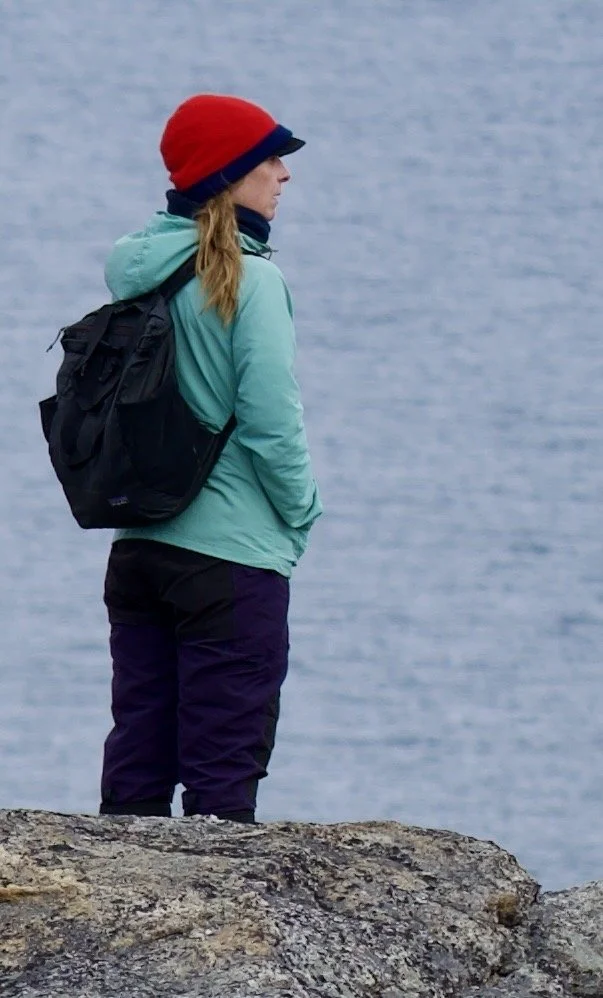
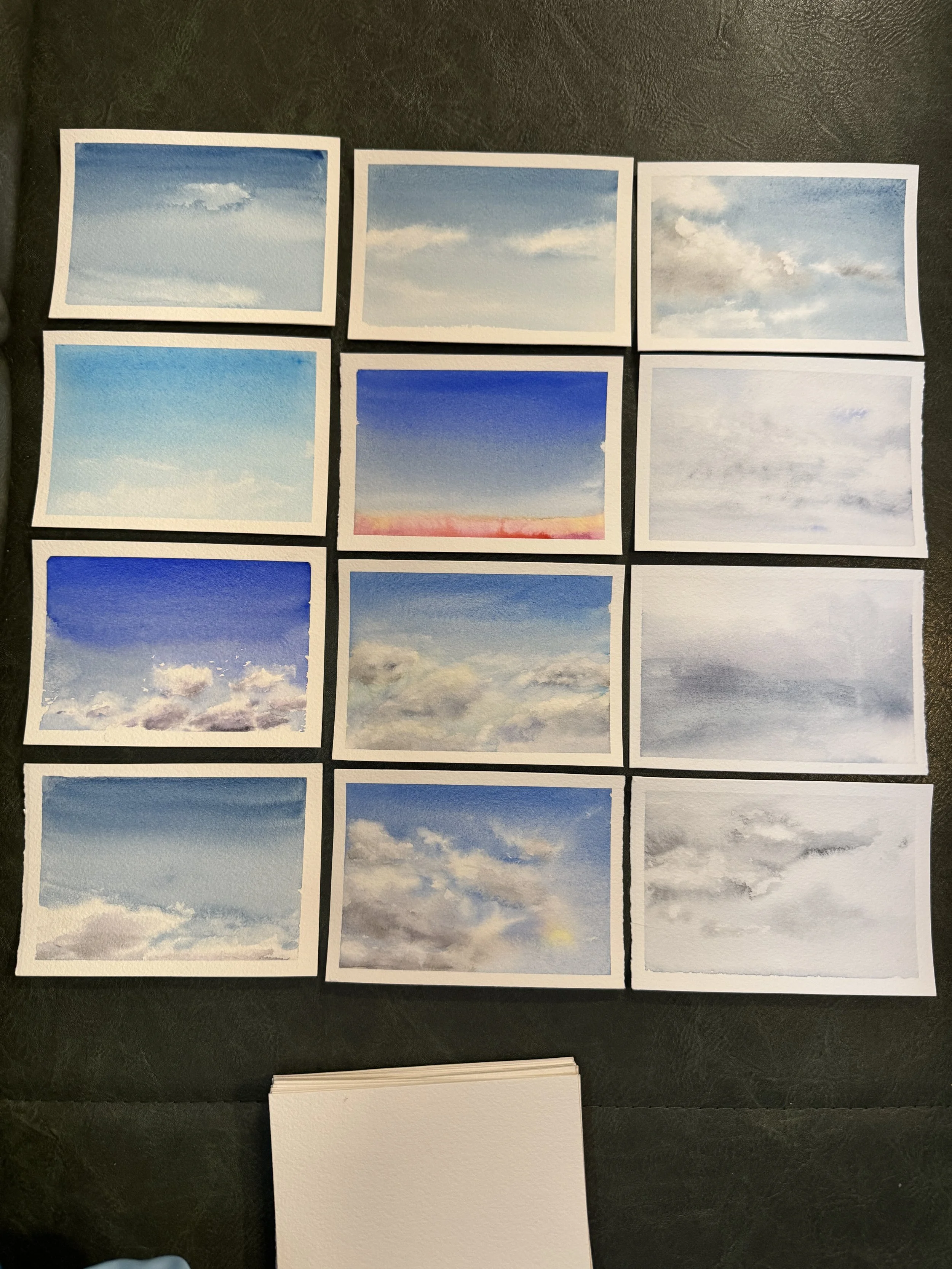
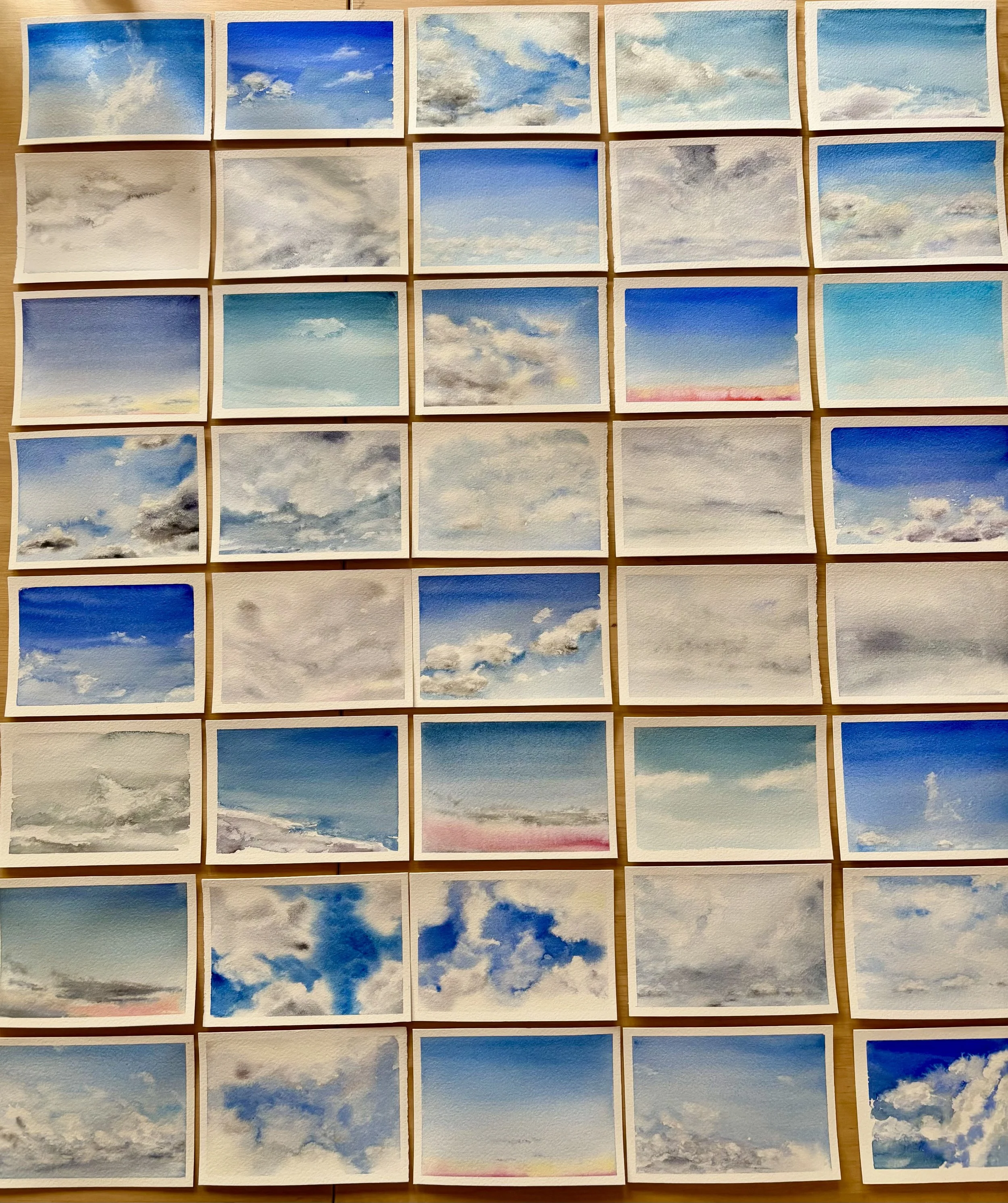
Eleanor observing the skies. She painted them every day as a way of staying inside the place she was in.
Karen performed her piece Calving Body in the bowsprit netting, the rope slung under the spar at the very front of the ship, face down over open water with the glacier coming apart behind her. An hour and a half later Vicki went out with the clarinet, the third time this voyage, and played into the ice with the calvings interrupting her. From the deck it looks as though she is out there alone. She was not. Sarah was lying flat in the bottom of the boat, driving it and keeping herself out of the picture, giving Vicki the room. One of them was making work about a body coming apart and the other was playing into a glacier doing the same thing.
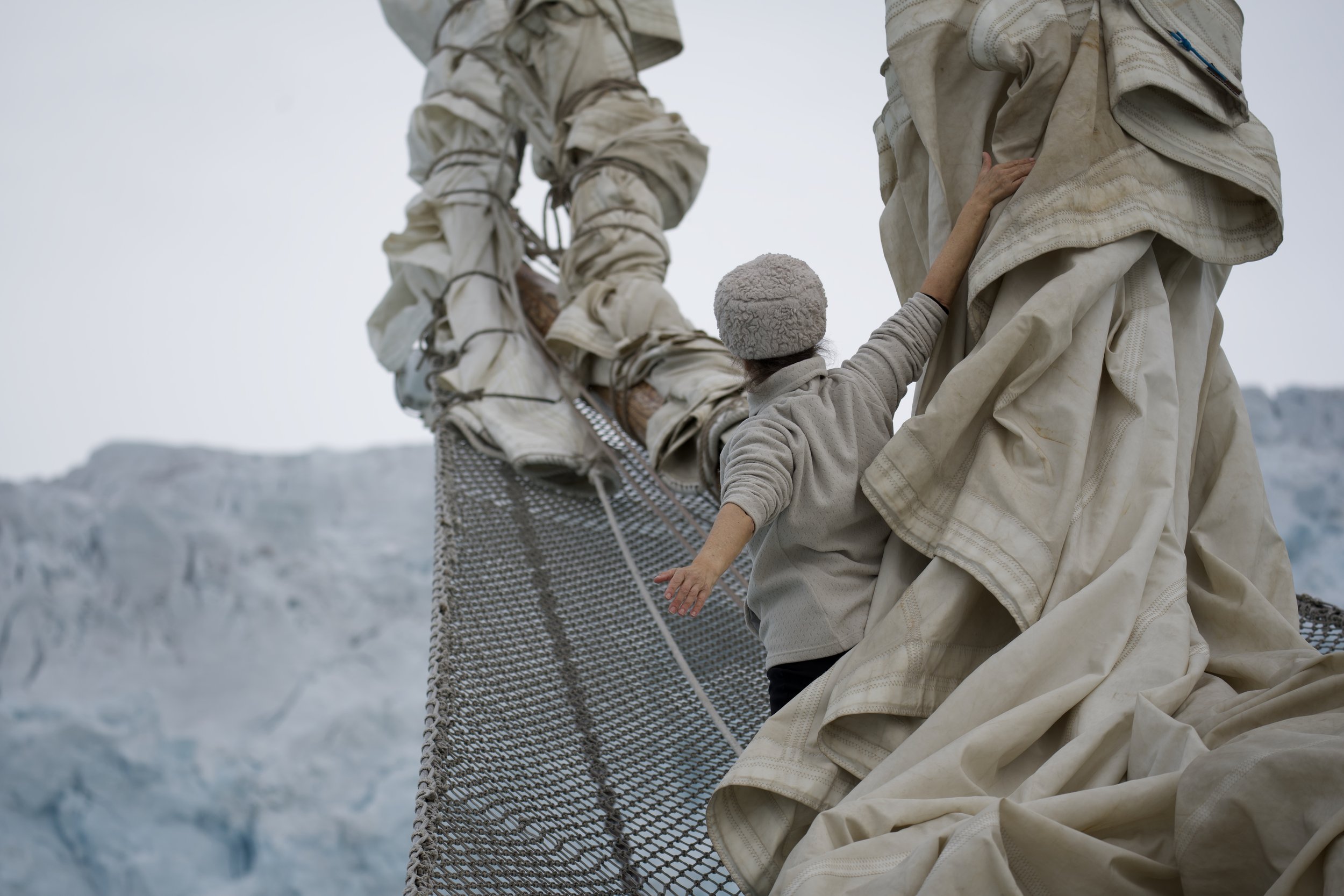
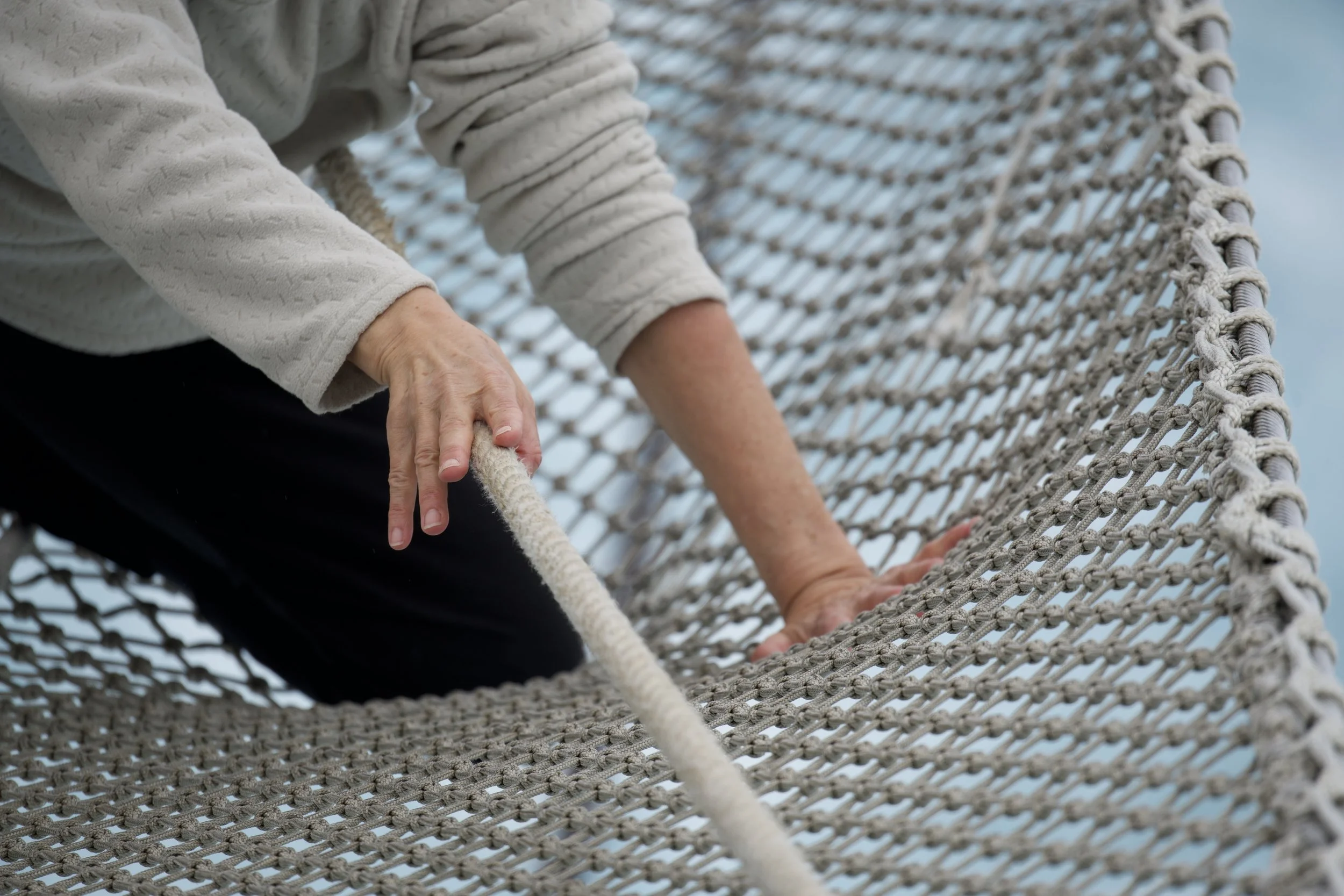
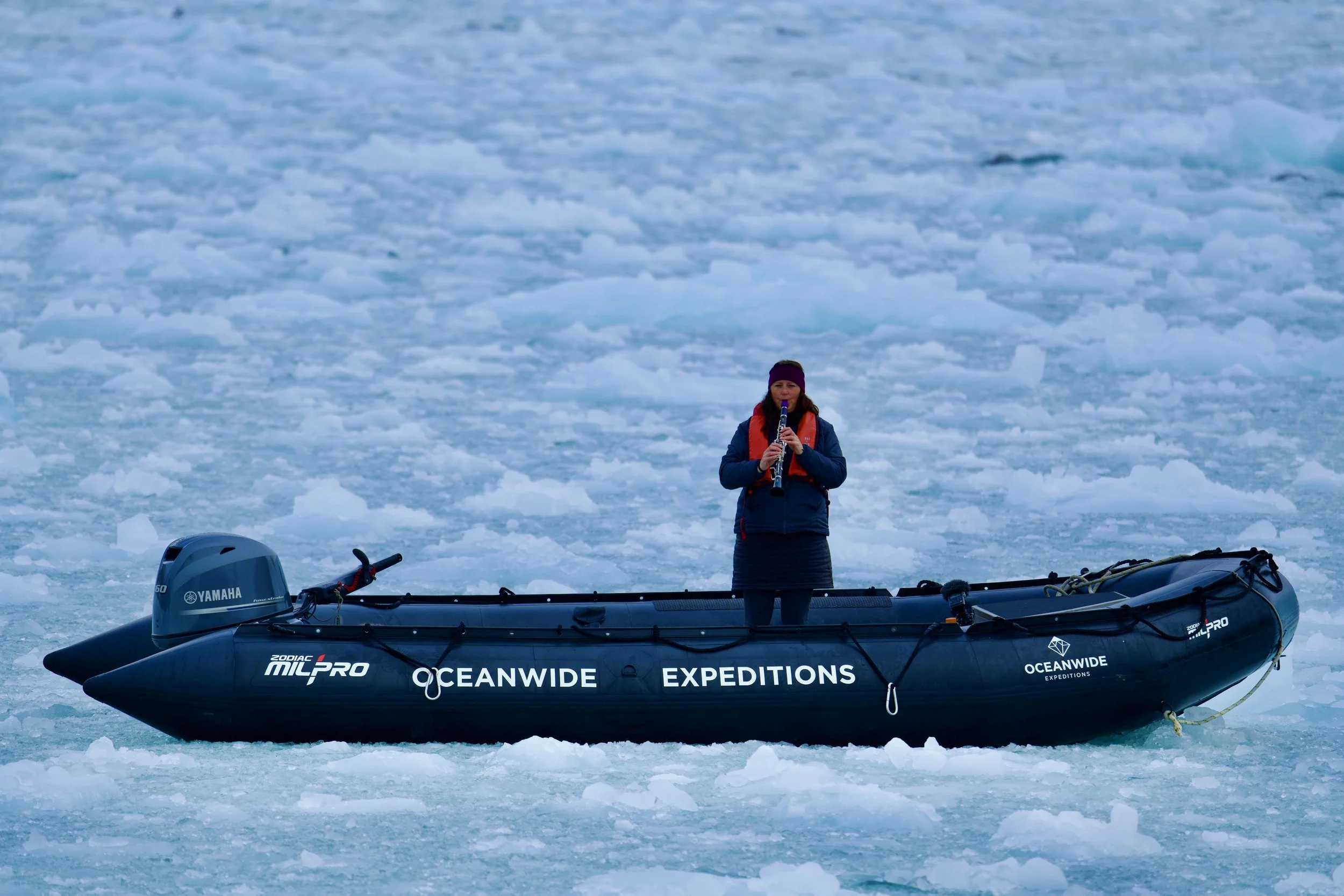
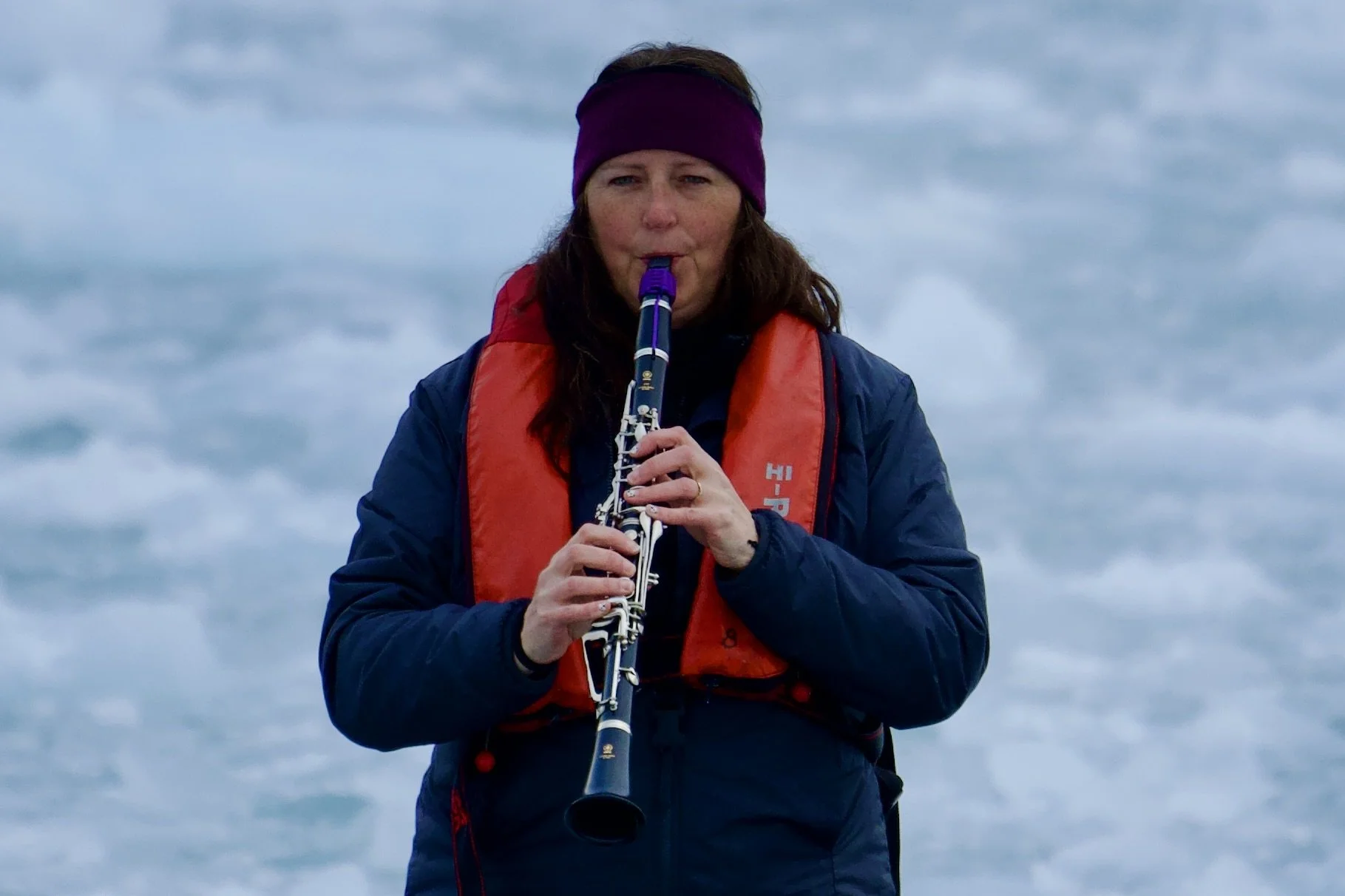
Karen performing in the bowsprit netting. Viki playing the clarinet on a Zodiac.
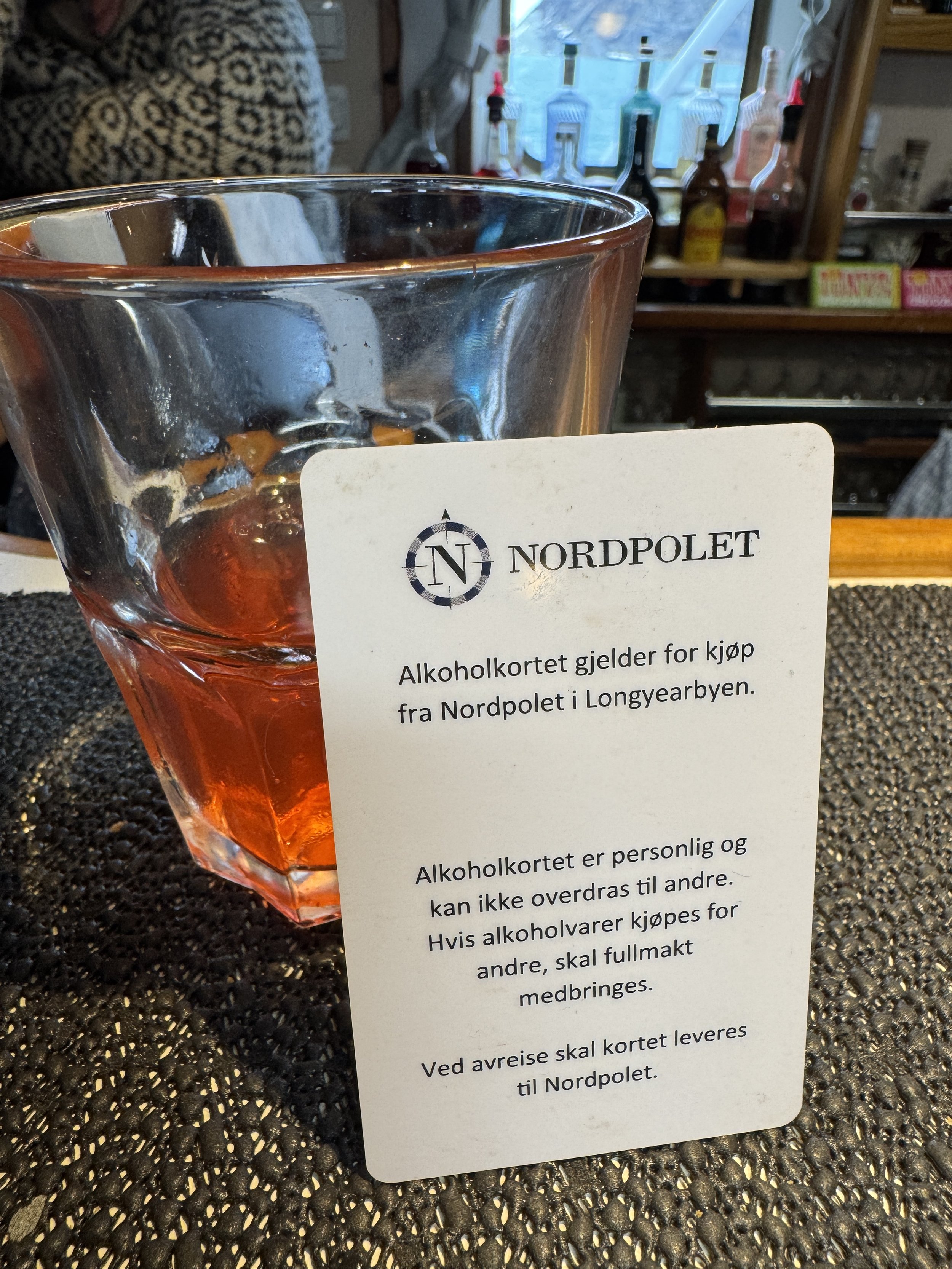
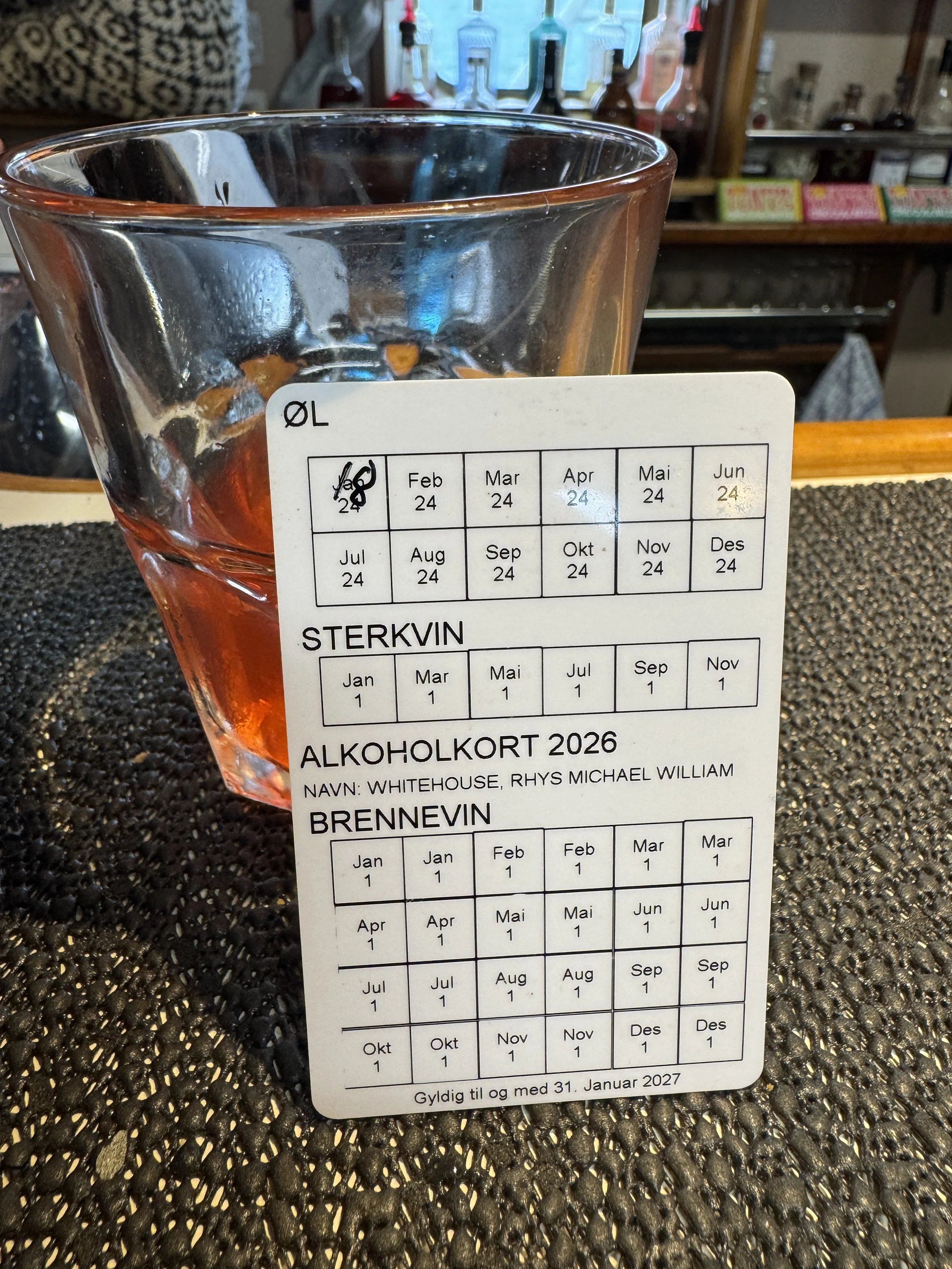
No presentations that evening. We sat in the bar going south and Rhys showed us his alcohol card, which is a real object you carry in Svalbard. Twenty-four beers a month, two bottles of spirits, one bottle of fortified wine every second month, a box for each that gets marked off when you spend it. Wine is unrestricted, because the rules were written by the men who drank wine for the men who drank beer, and they have been sitting there since the mining days doing precisely what they were built to do. He hands the card back when he leaves. We went south through the night.
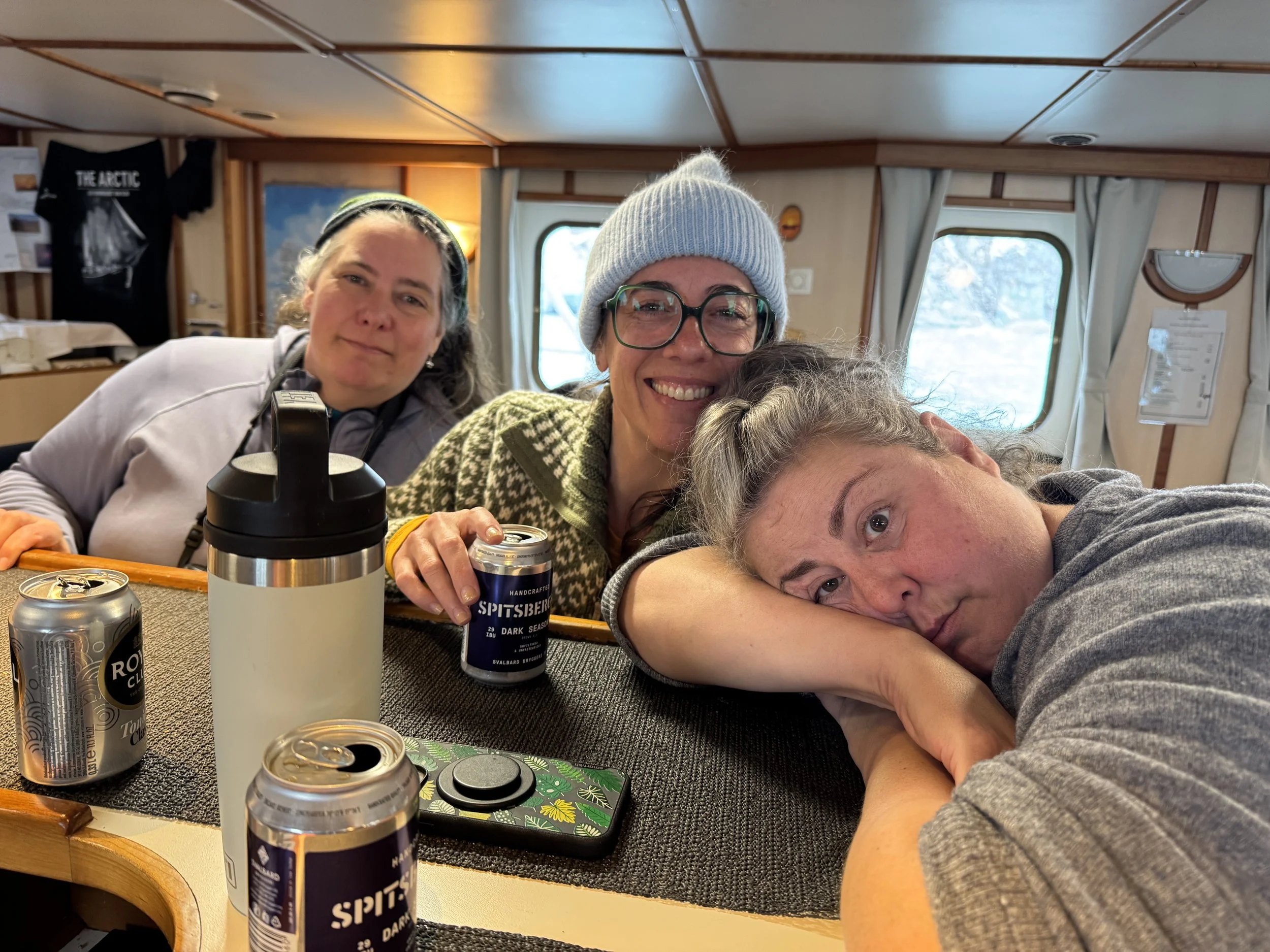
People have asked me since how it was. I have not once managed to answer. Spectacular. Extraordinary. Every big word I reached for came out flat and none of them were the thing I meant. The thing I meant took weeks to crystalize, and when it came it was a place. Fuglefjorden, late in the day, fog down on the tops, water like glass, a wall of ice coming apart in front of us for four and a half hours without a pause in it. Thunder the whole time. Somewhere in there you stop being a person looking at a glacier. You are standing at the end of the world and it is loud and it is going. I had no name for it in the bay. I had no name for it at the airport. It turned up weeks later at a walk with nothing in front of me, and it was this. I saw the end of the movie.
“You must have gazed on the deadness of all things to grasp their livingness.”