Entry 047: Day 11: In As Good Order
Let me step out of the frame for a paragraph. This is day eleven of sixteen, and day fourteen is the last one on the ship, which means these entries have three or four left in them. I did not expect to mind. I had planned one a week and then could not help myself and started putting them out every three days, which was faster than anybody could keep up with, and I watched even the faithful readers fall behind. That is fine. I am mostly writing this for me, for the memory, for the process of finding out what I think. What I did not expect was that coming up on the end of the writing would land the same way that coming up on the end of the trip did, on the last morning, with a flight to catch and thirty people I was not going to see again. I will do the proper goodbye when we get there. Today I only wanted to say that I can see it from here.
Saturday, 25 July 2026. Alkefjellet, Murchisonfjorden, Kinnvika.
Sarah had told us the night before that it would be early, so we went to bed early. There were two windows this day when our ship could make that passage. The other one fell in the afternoon, and the afternoon was already spoken for. On day ten, when the speaker said whales at two in the morning, I lay in the bunk and did math. This time the speaker said birds and I was dressed before it finished. I am not a morning person. I need coffee and ten minutes of nobody talking to me. None of that survived sixty thousand pairs.
The cliff is called Alkefjellet, which means auk mountain. It is dolerite, the same rock Sarah stood on above the evacuation at Petermannbreen, forced up through limestone about a hundred and thirty million years ago and cooking that limestone into marble where the two met, so the black wall carries a pale seam through it. It runs a kilometre and stands a hundred metres, and on it are more than sixty thousand breeding pairs of Brünnich's guillemots, the largest colony of that bird anywhere on earth. We went past under power at three knots and never stopped, which is why there is no pause in our track for the best hour of the morning.
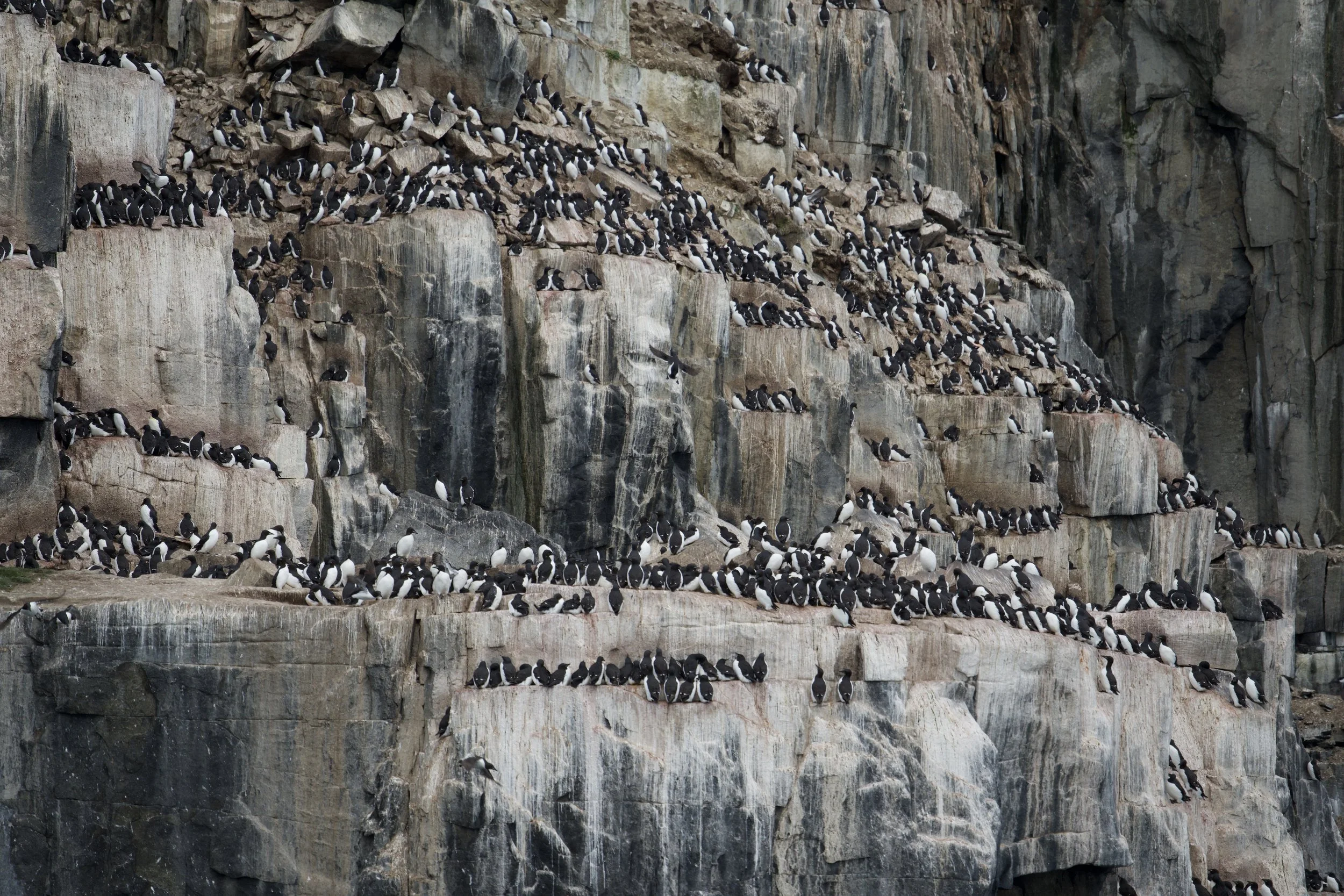
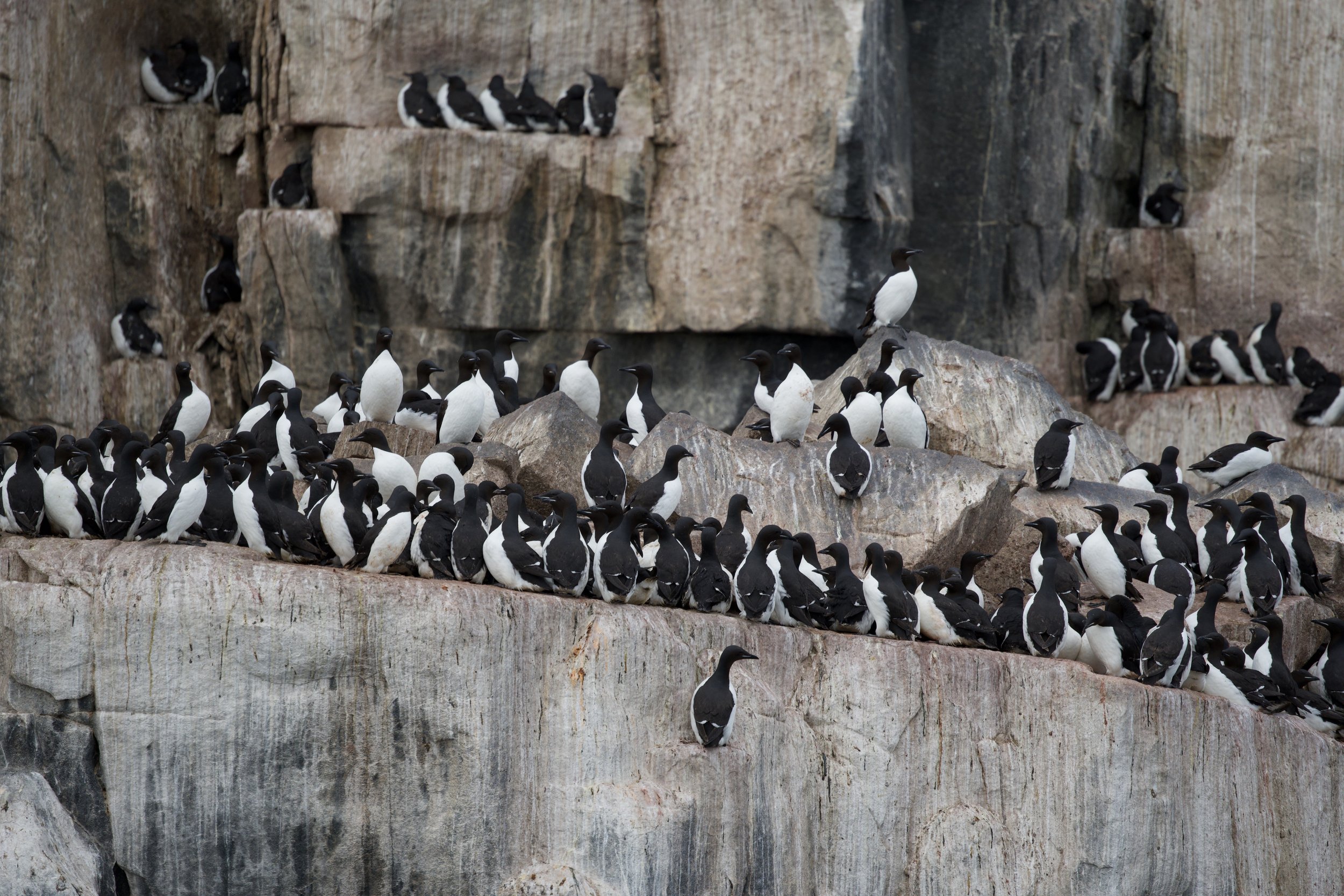
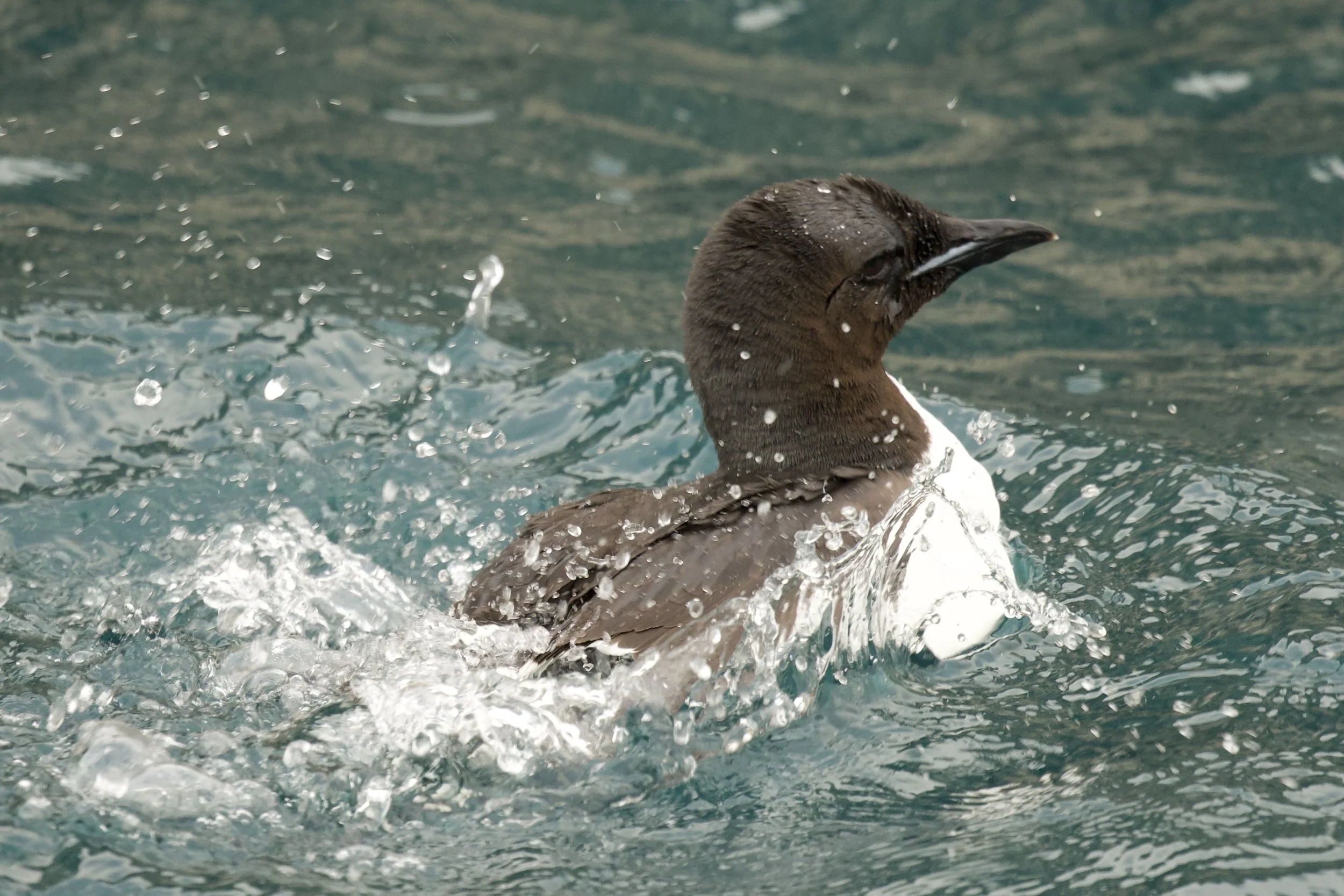
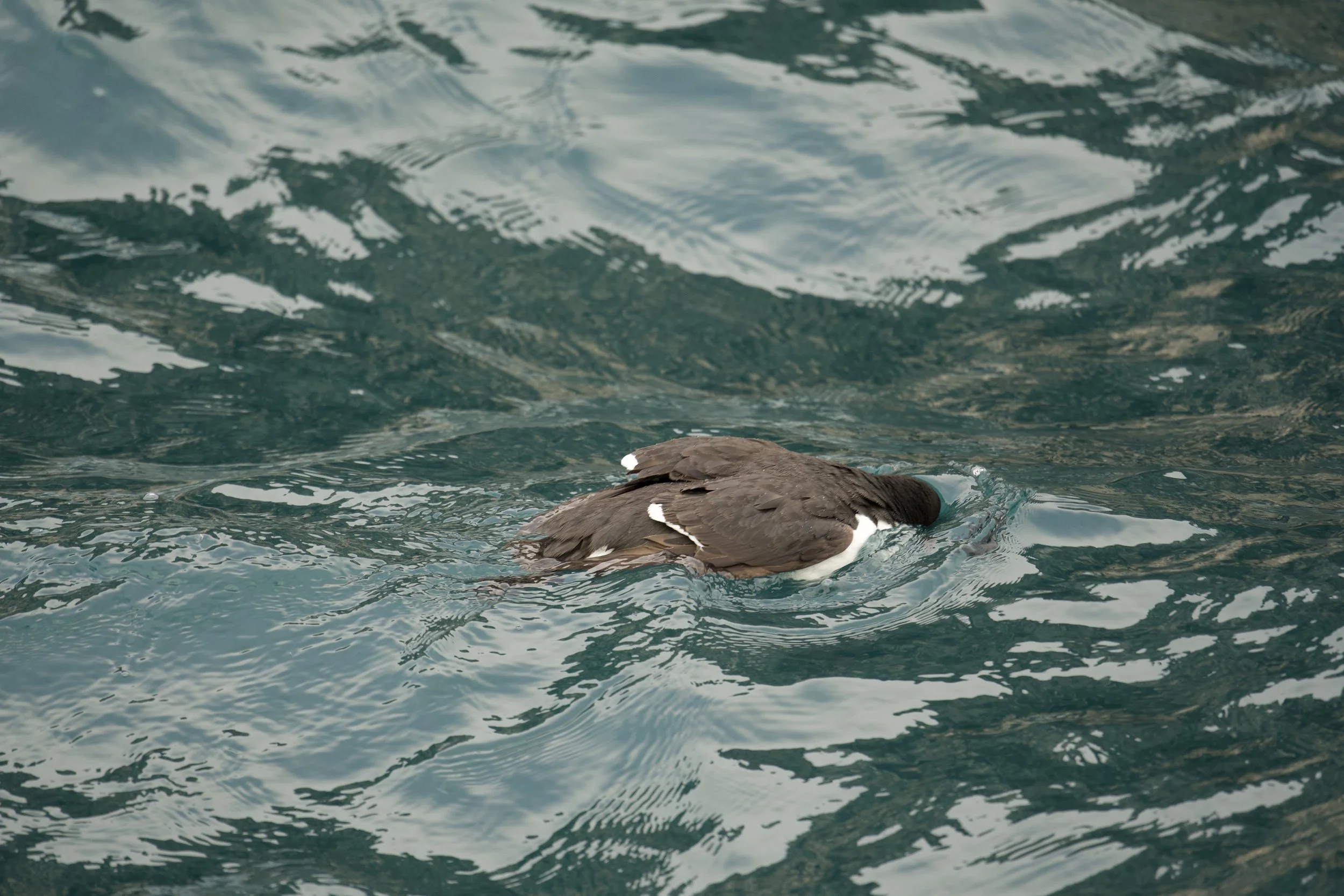
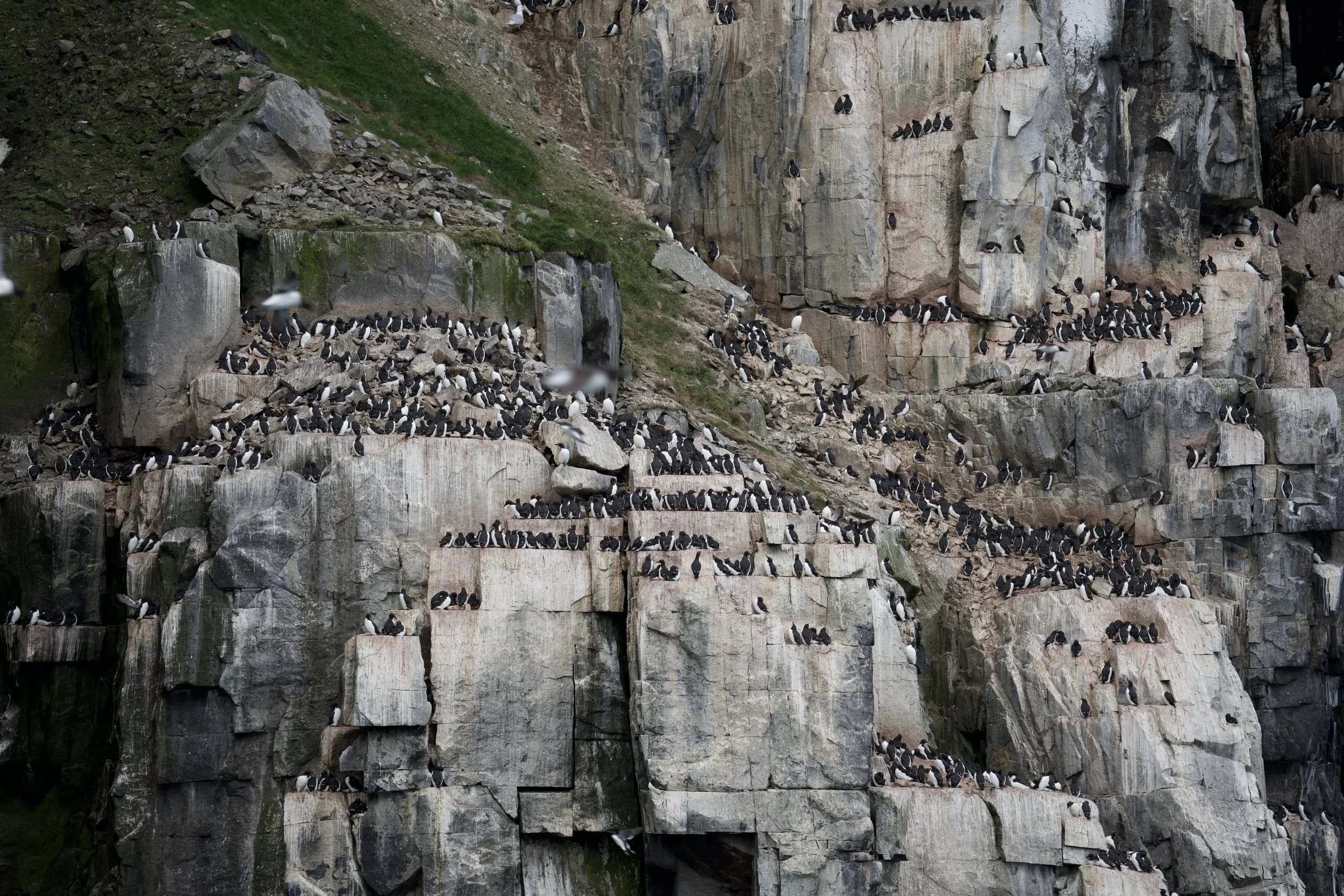
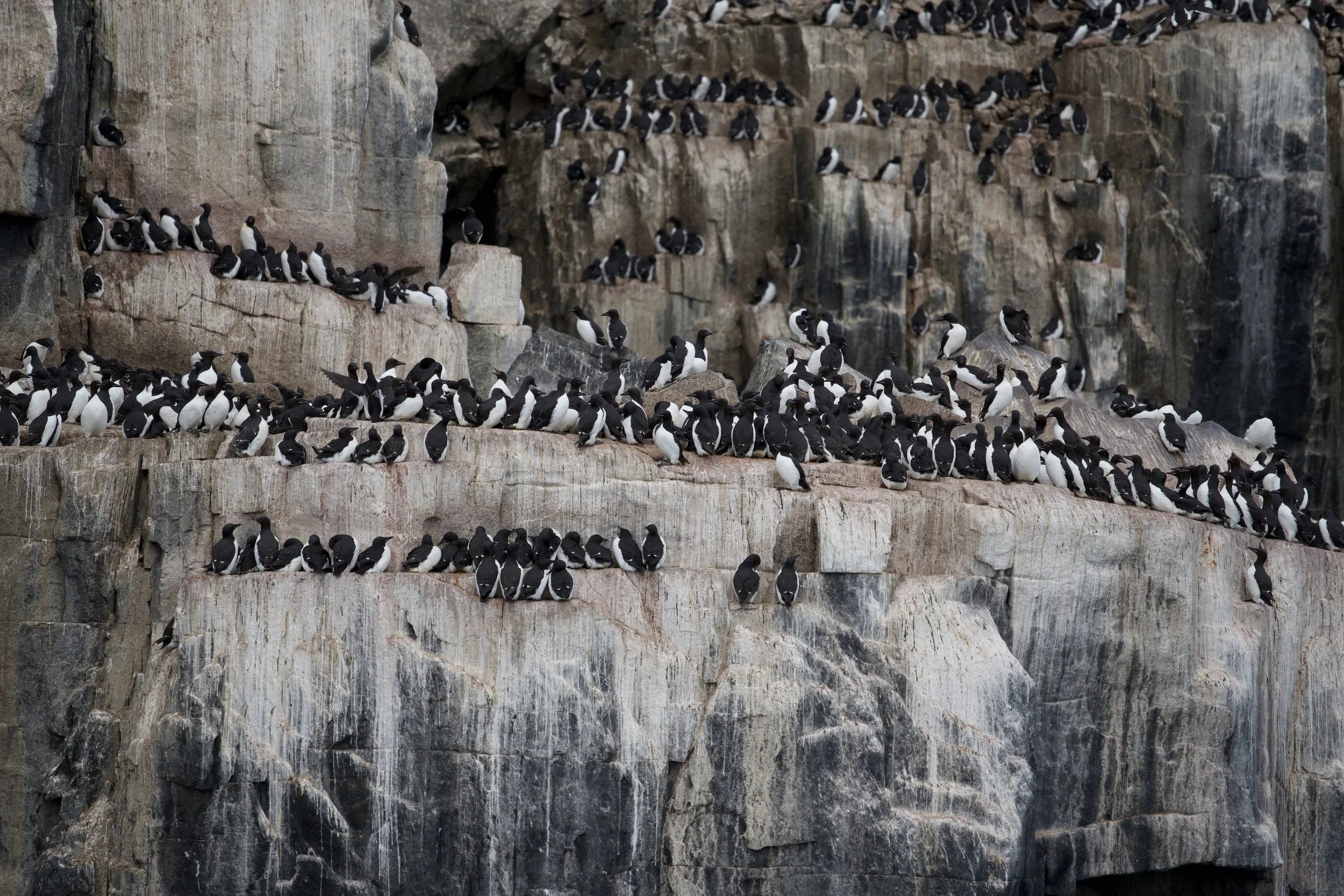
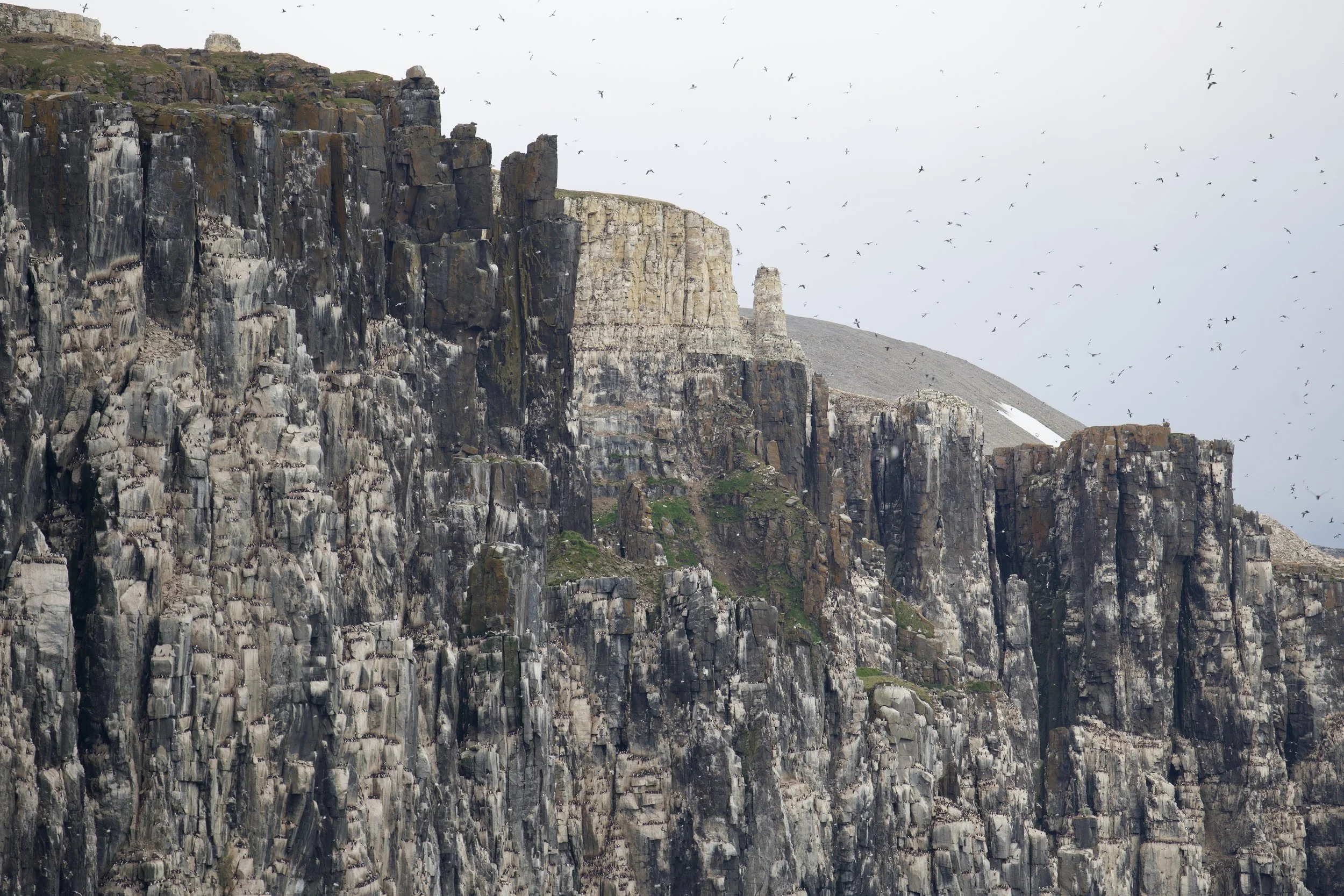
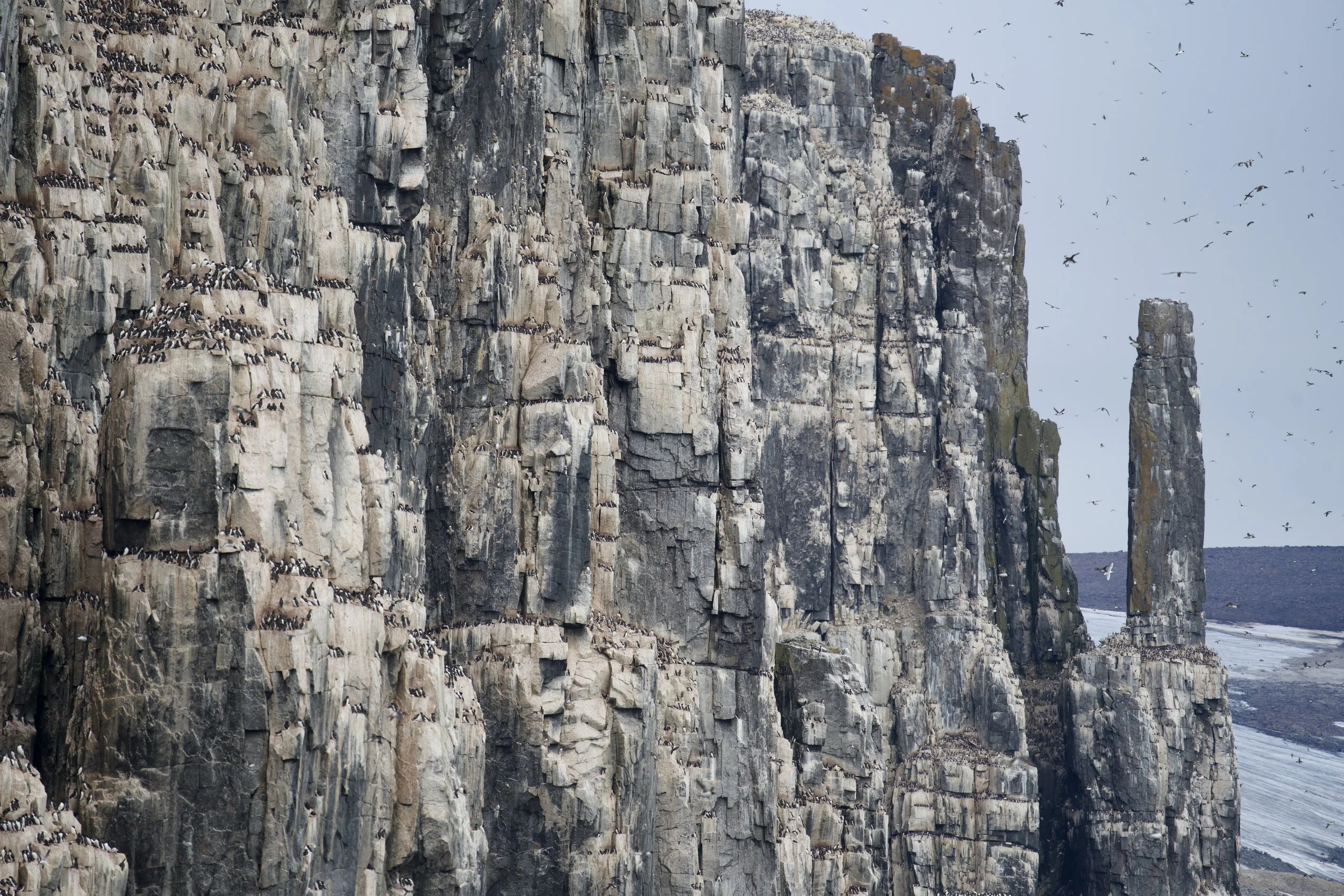
I love birds. I have gone to the Faroes to look at puffins. I still did not know what to expect and what I got was Hitchcock. The noise builds as you close and then it does not let up. The ledges are packed solid, rows of them standing shoulder to shoulder on shelves the width of a book, and the air above the water is full to the edge of the frame in every direction and stays full. There is a band of green at the foot of the cliff that I was not expecting, and it is there because of what falls. Sixty thousand pairs fertilise a slope. That slope feeds a fox. I searched for one the entire way past and did not find a single one, which I still find hard to accept. There is a free lunch under that wall for anything with four legs and no scruples, and nobody had come to collect.
At the briefing the night before, somebody had asked Sarah whether we were crossing eighty north the next day. She said yes, and then she said she has never understood the fascination with it, because nothing happens at eighty. Sixty-six is a line, she said, because that is where the sun stops setting. Ninety is a line, because that is the axis the whole thing turns on. Eighty is a round number that somebody wrote on a chart. Then she asked whether anybody else was excited about it, and not one hand went up, mine included, and I had been thinking about that number since Longyearbyen.
Her day sheet had it on there anyway, in marker pen. Northwards, to eighty degrees north. So the furthest north I will ever be in my life was on the timetable between breakfast and lunch, like a train. When it came I was down in the main hall with a coffee. It arrived as her voice on the intercom, over the tables, and people looked up and then went back to what they were doing. That is the entire record. There is no photograph of it.
Her log for the stop that followed says one word, swims, and a position, and a water temperature of 6.7. Two days earlier at Straumslandet I had stood at the edge of a pool and not got in, and Sarah had told me that this was the last time I would ever be here, and she meant that pool, that afternoon, that particular hole in the ground, which is a true thing about every stop on this voyage and about most days in a life. There were plunges all over this trip. Seth took nearly all of them. I have now turned down two in one week, in two different places, for reasons I am still not able to give you. I have jumped out of an airplane close to seven hundred times. I competed in skysurfing for Austria. And I stood on a cold deck in a warm jacket and watched other people climb down a ladder into seven degree water and thought, no thank you.
I went up to see what the fuss was about and left the camera below on purpose. Sarah had told us this was not a screaming, everybody-in-together moment, that it was a private one, and she was right. It is not a thing to stand over with a five hundred millimetre lens. People went down the ladder and came back up with something on them.
After lunch we anchored at Kinnvika. Before we ever left Longyearbyen, Aaron had told us the Arctic is a desert and to bring plenty of moisturizer, and standing on top of Kinnberget, a hundred and twenty-eight metres up, I finally understood him. It looks like the Badlands. It looks like the country around the Grand Canyon with the color taken out of it. Pale terraces stepping back to the horizon, dry gravel, a mesa on the skyline, and then you turn your head and the water arrives and puts the only blue in the picture.
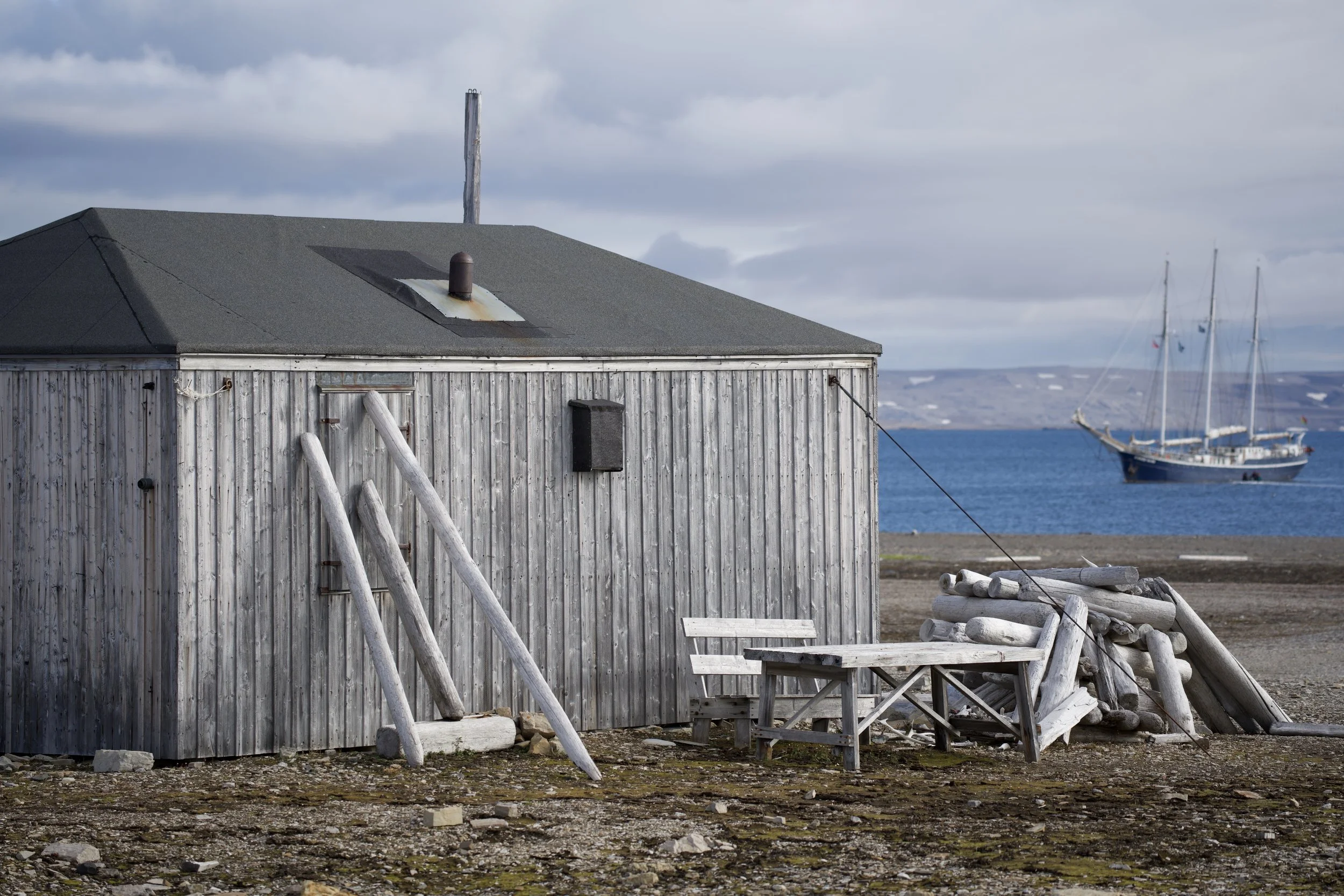
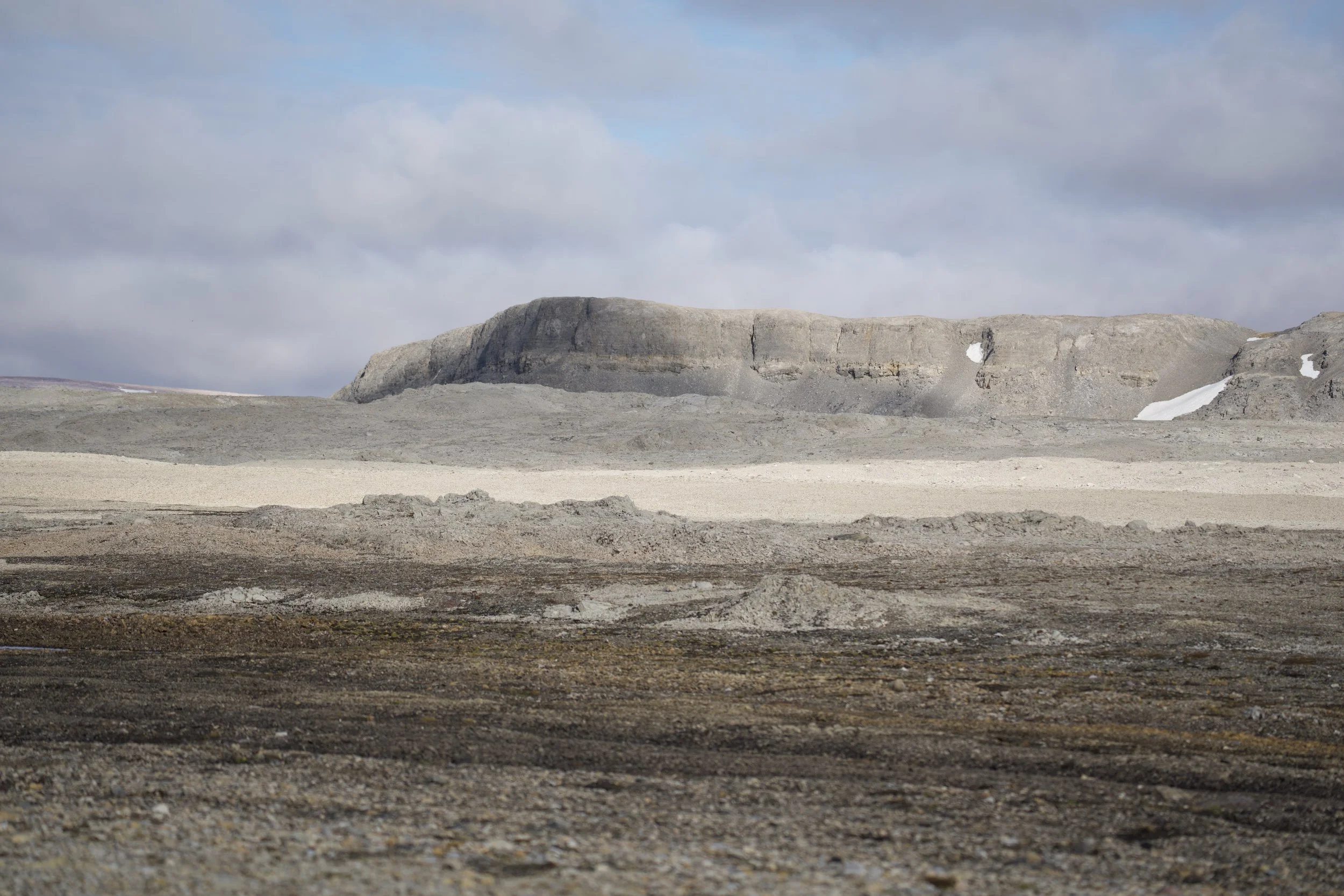
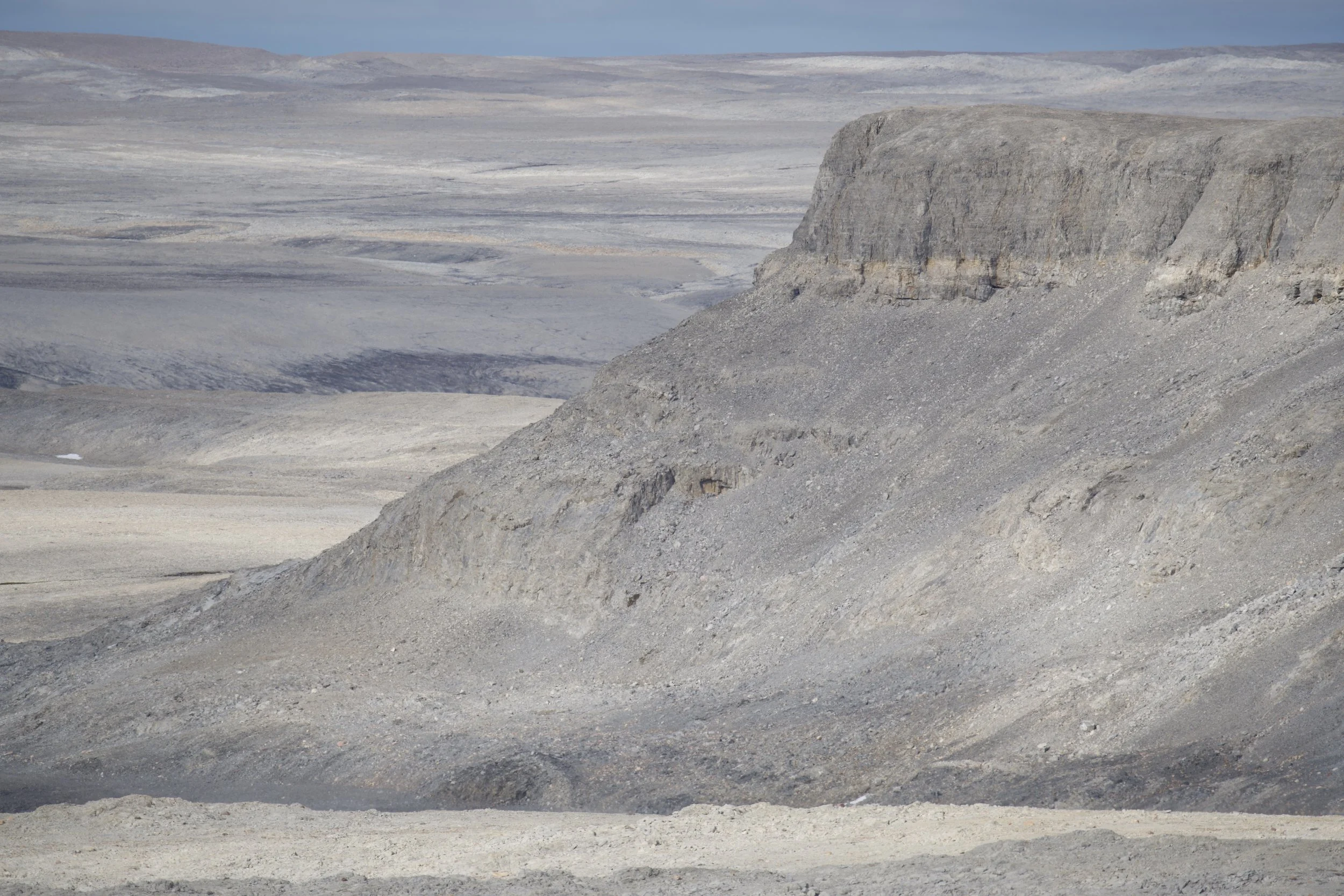
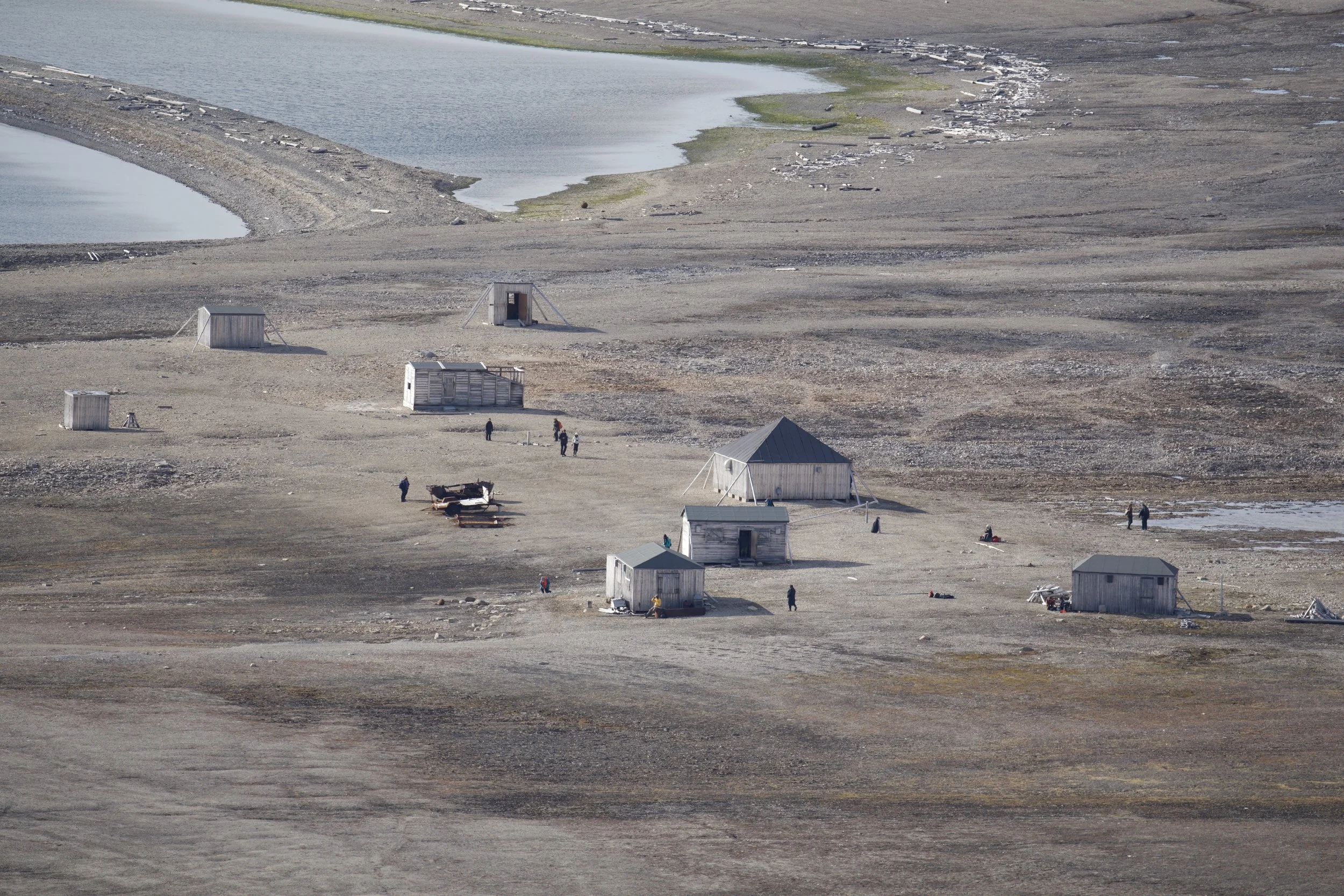
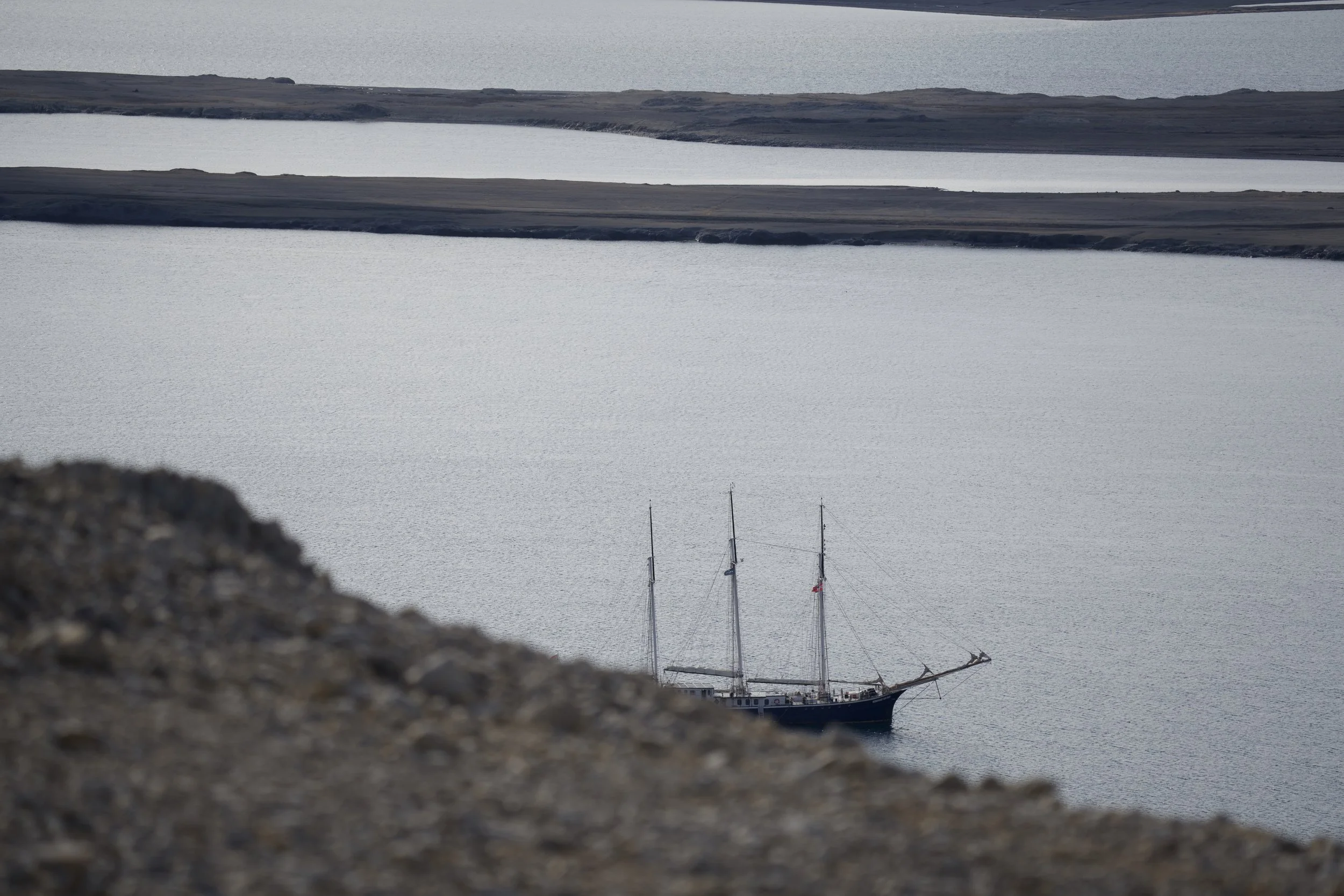
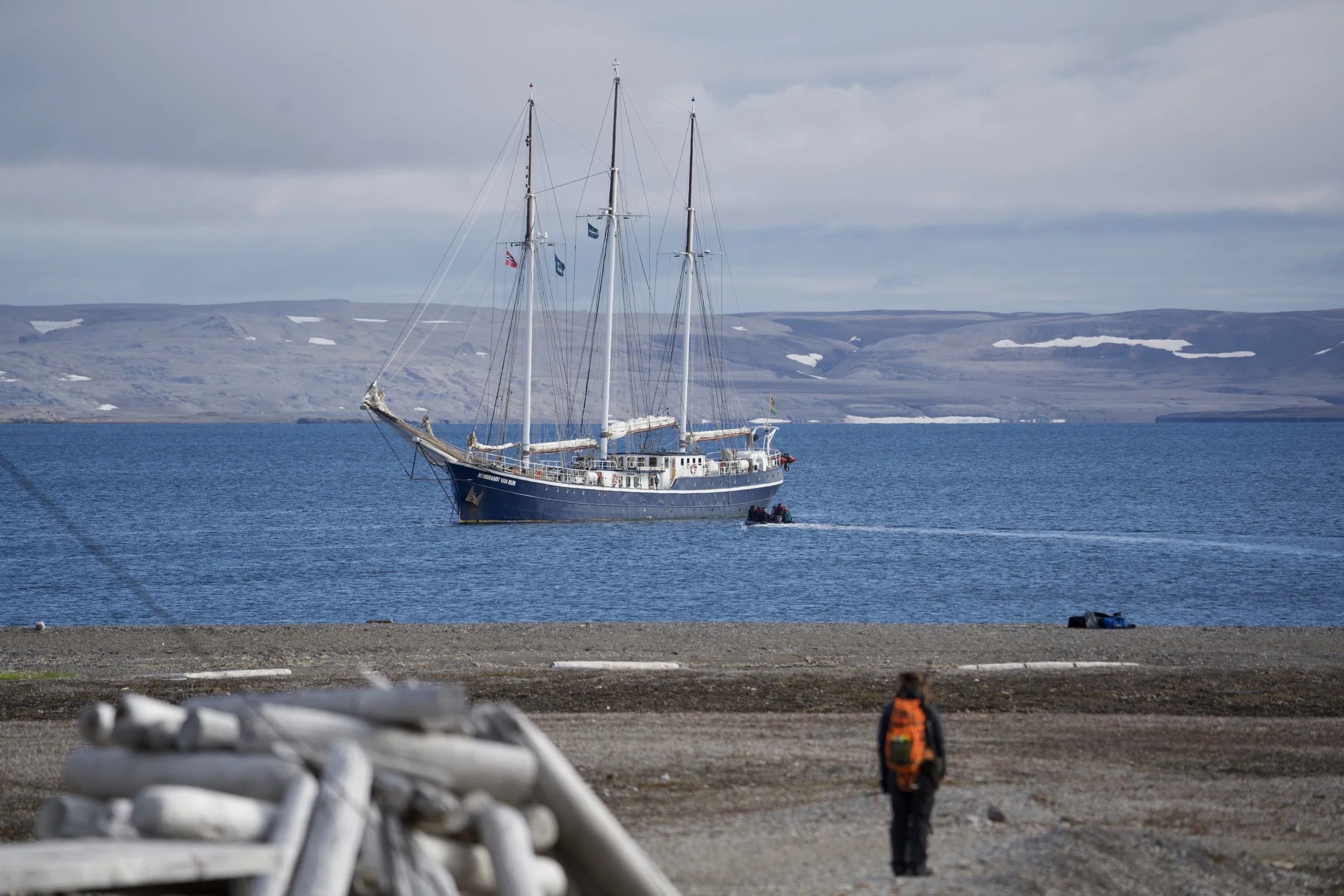
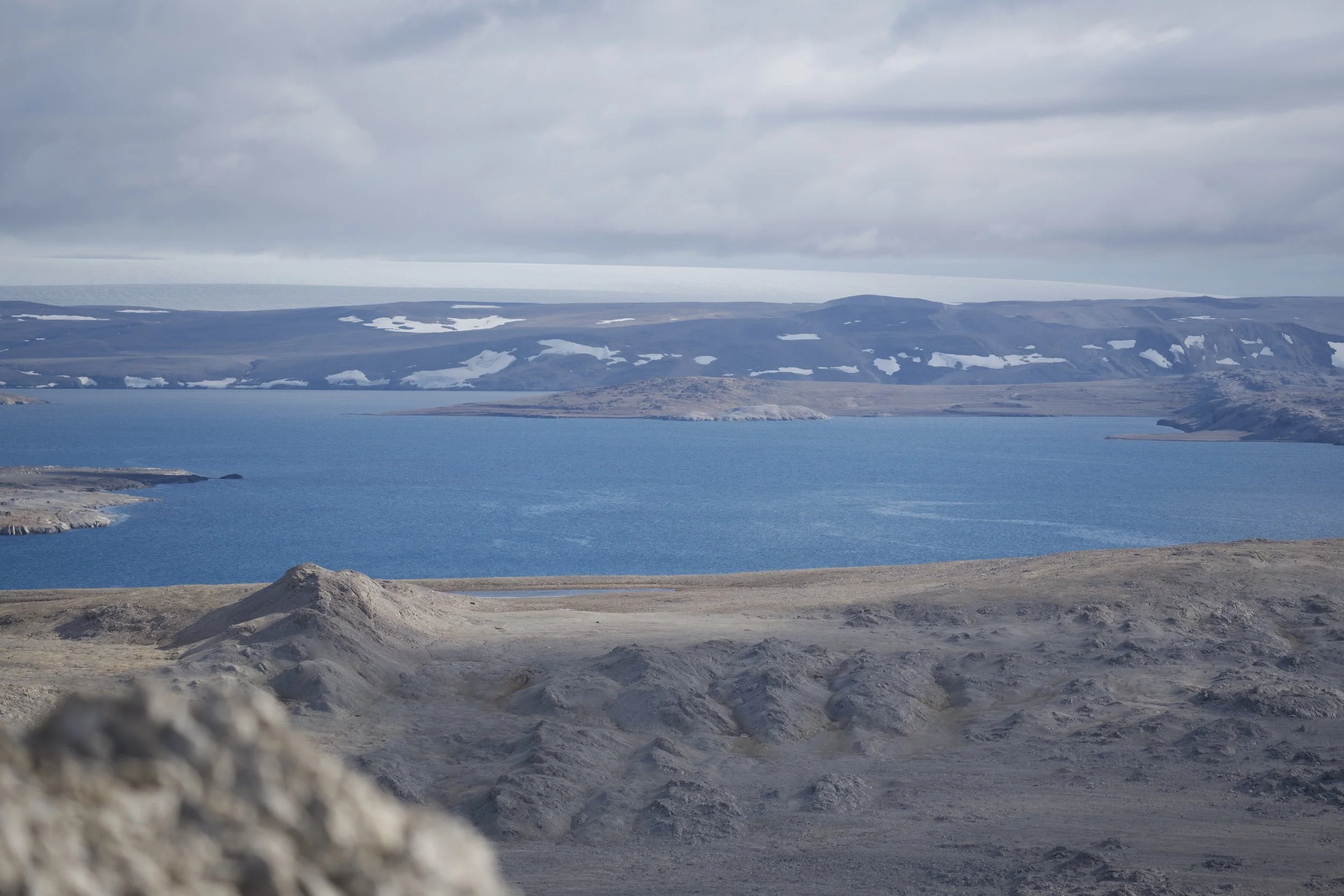
Cathleen, Eleanor, Hattie, Ling-lin, Sarah and I went up. Ling-lin took the photograph of me lying flat on the scree with the long lens out, a blue blob in a grey country, sun raking across the terraces behind. There is a cairn on the summit, chest high, flat plates stacked with intent. I have been asking since Agardh whether a stack of stones out here is heritage or somebody's afternoon, and standing on a hill directly above a station that spent two years measuring things, I am willing to guess this one was a survey point.
And then the ground did it again, twice. The first was a rounded grey cobble with pale lichen grown across the face of it in a scatter of islands with water between them, and I crouched over it and saw Svalbard. It is not Svalbard. I know it is not Svalbard. But there is a main mass with a ragged western edge and outliers thrown off to the north, and I stayed down there long enough to understand that we were going all the way round, past the top and down the far side, instead of turning at eighty and coming home the way we came. Sarah had written westwards at the bottom of that morning's sheet, with an arrow. I had read it and not taken it in. It took a stone.
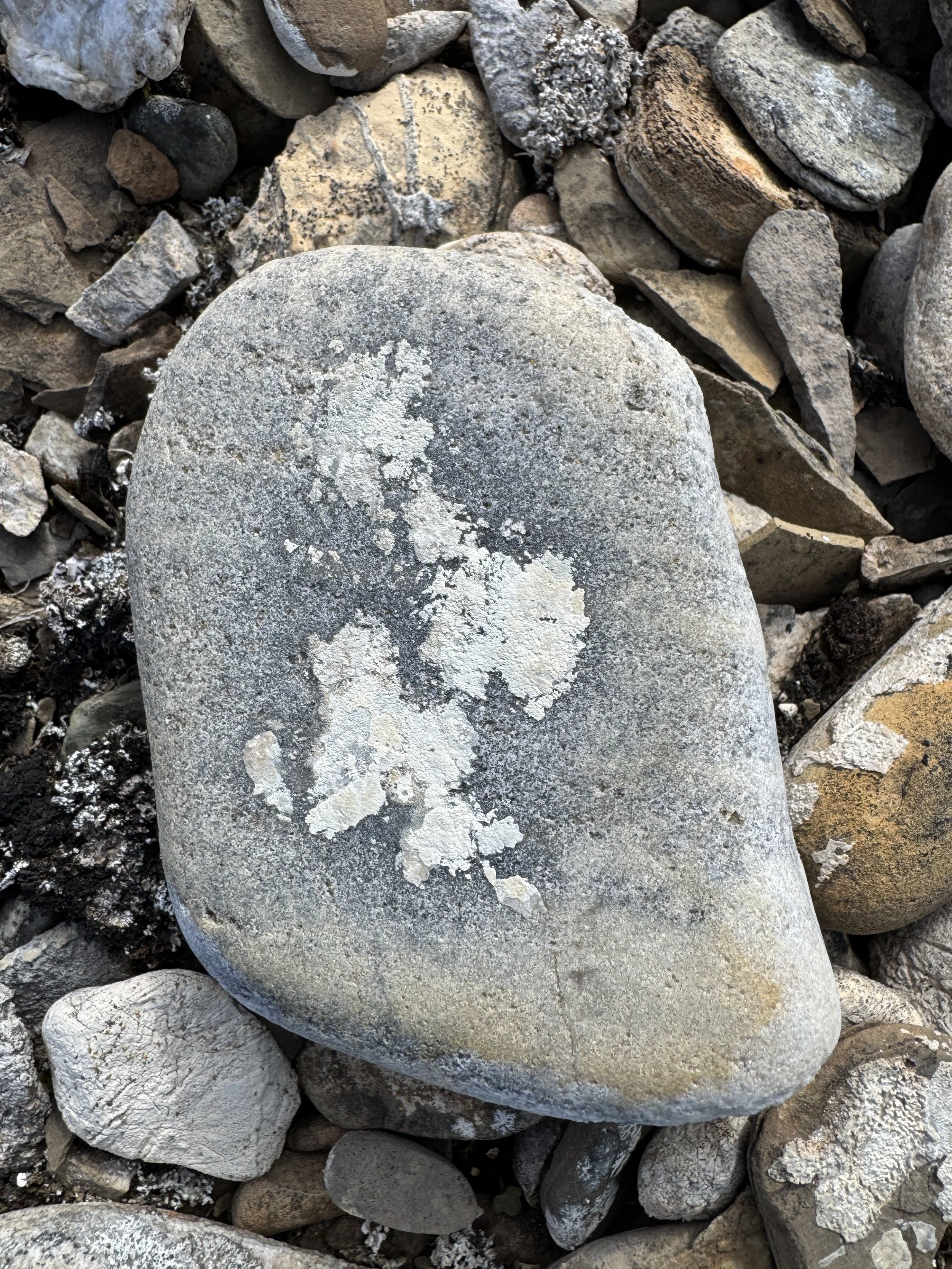
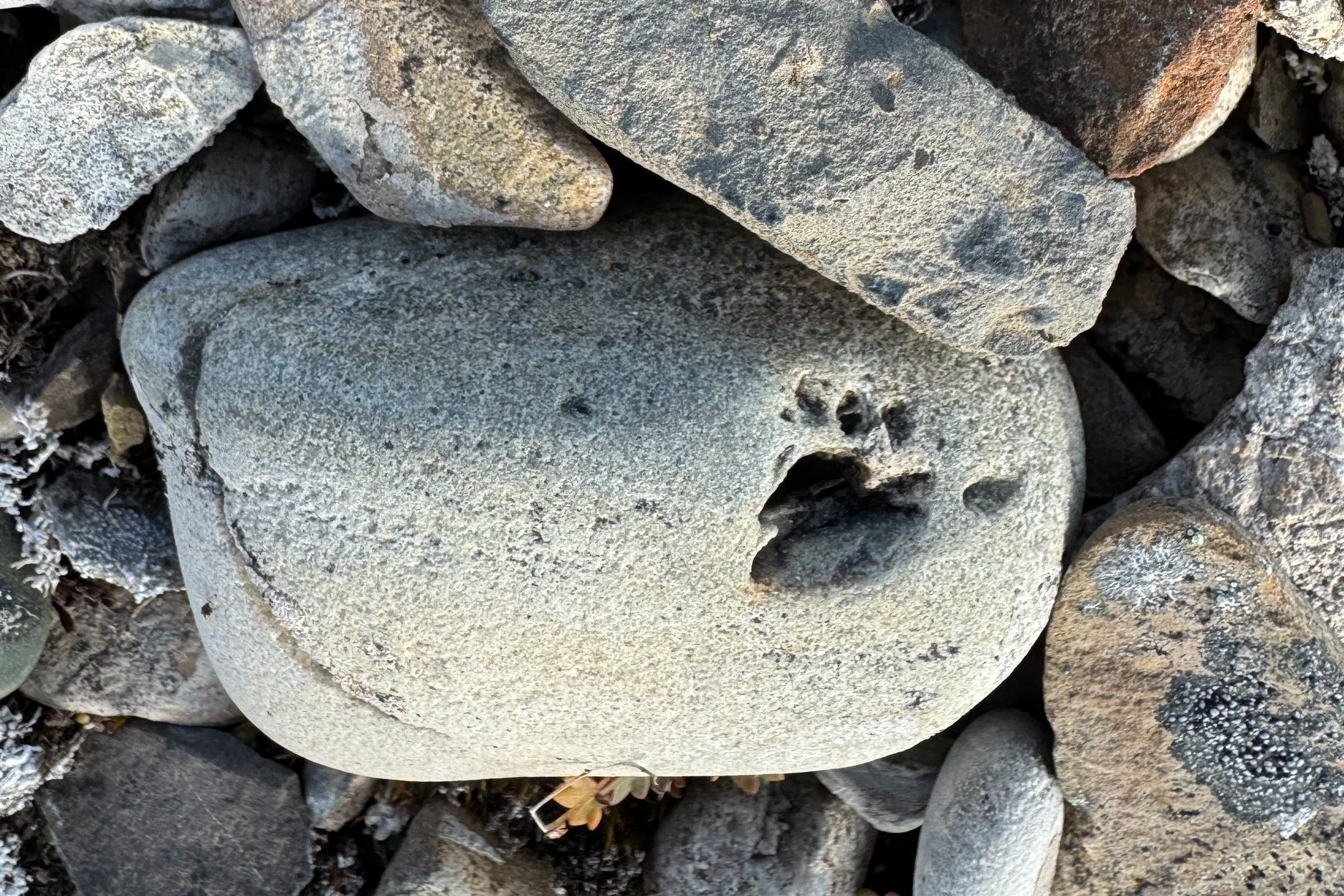
The second was a paw. An actual paw, pressed into the face of a cobble, pad and toes, cut by water rather than by an animal, and a paw all the same. I photographed both of them and left them where they were, which is what you do here. Both are lying on ground a hundred metres above the sea and both are water-rounded cobbles, because Kinnvika stands on raised beaches. The land has been lifting since the ice came off it, and the old shorelines have gone up with it. Those two stones are on a beach. It stopped being a beach a few thousand years ago.
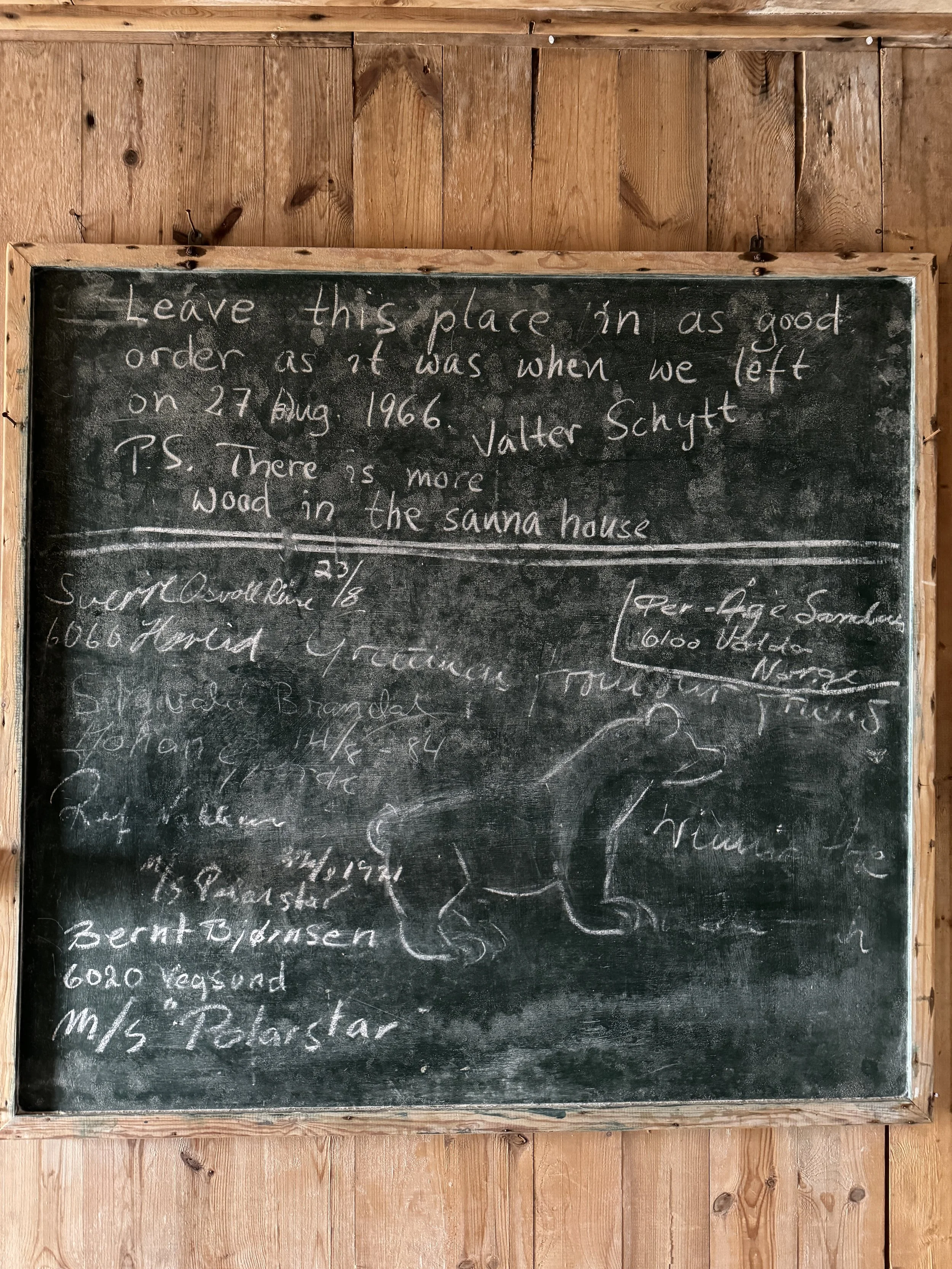
There are ten buildings down there and they stand far apart from one another on purpose, so that a fire could not take all of them. At eighty degrees north, surrounded by water and ice, the thing they were afraid of was burning. Inside one of them there is a blackboard on the wall, and on it, in chalk:
Leave this place in as good order as it was when we left on 27 Aug. 1966. Valter Schytt.
P.S. There is more wood in the sauna house.
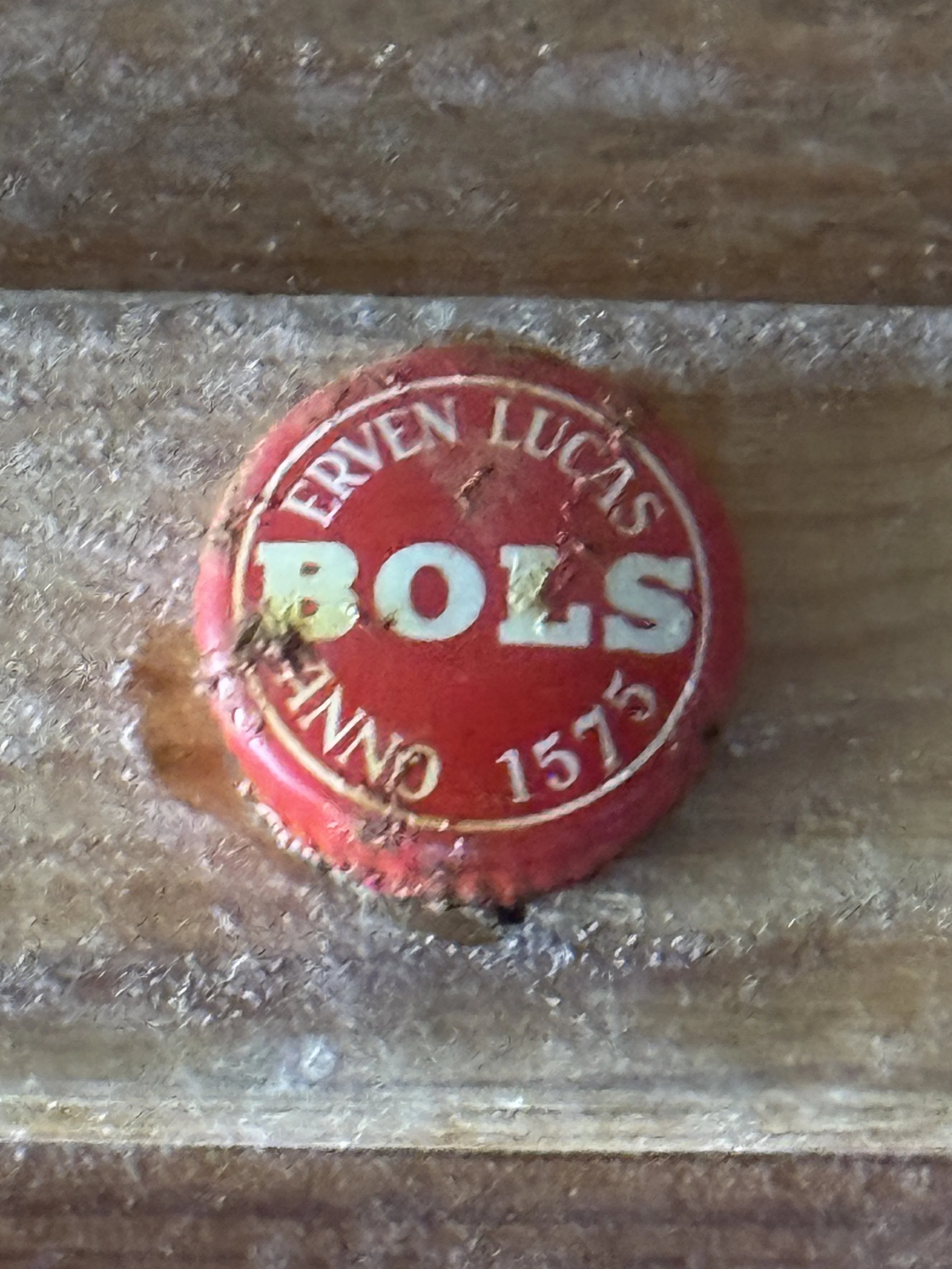
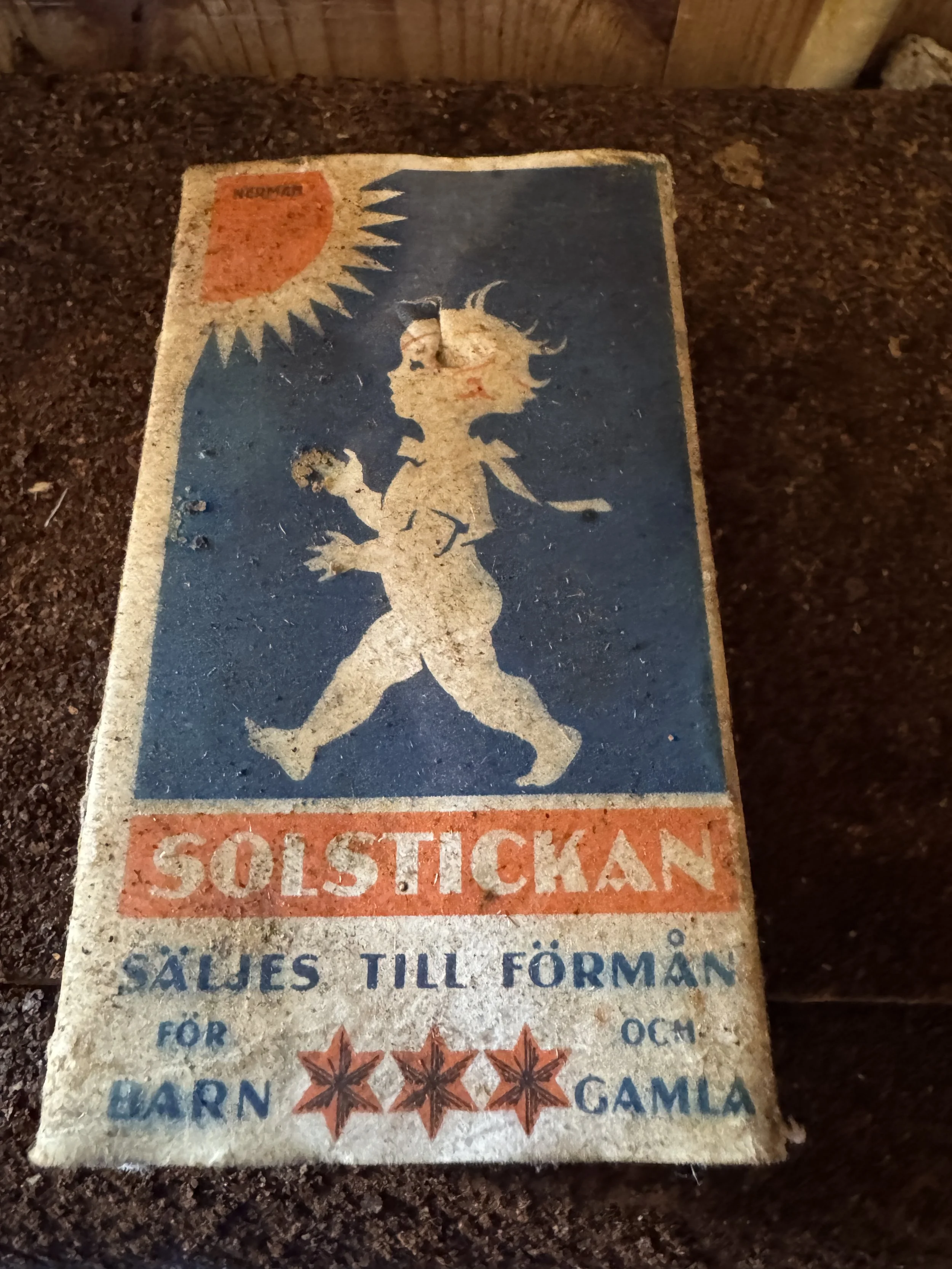
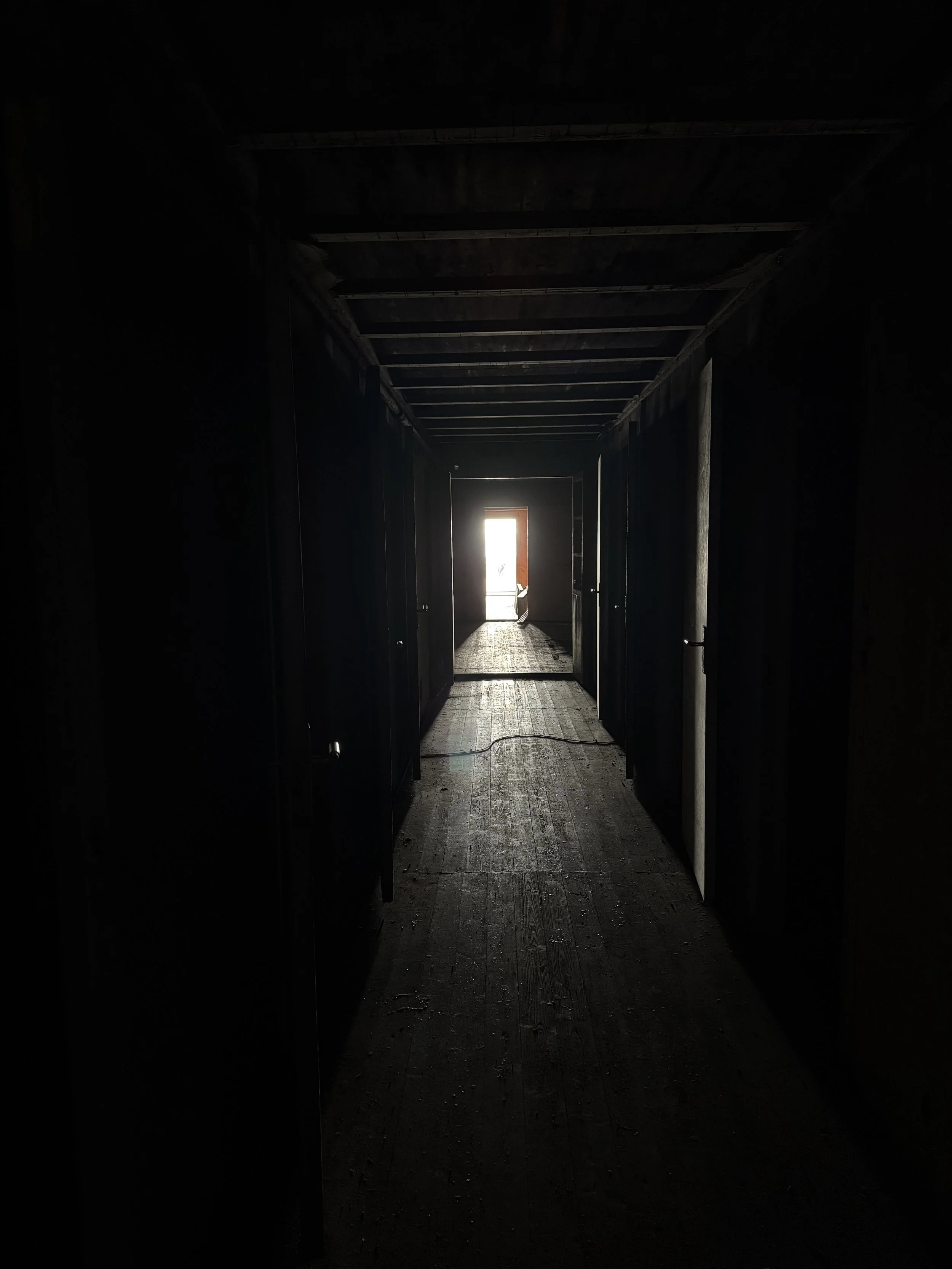
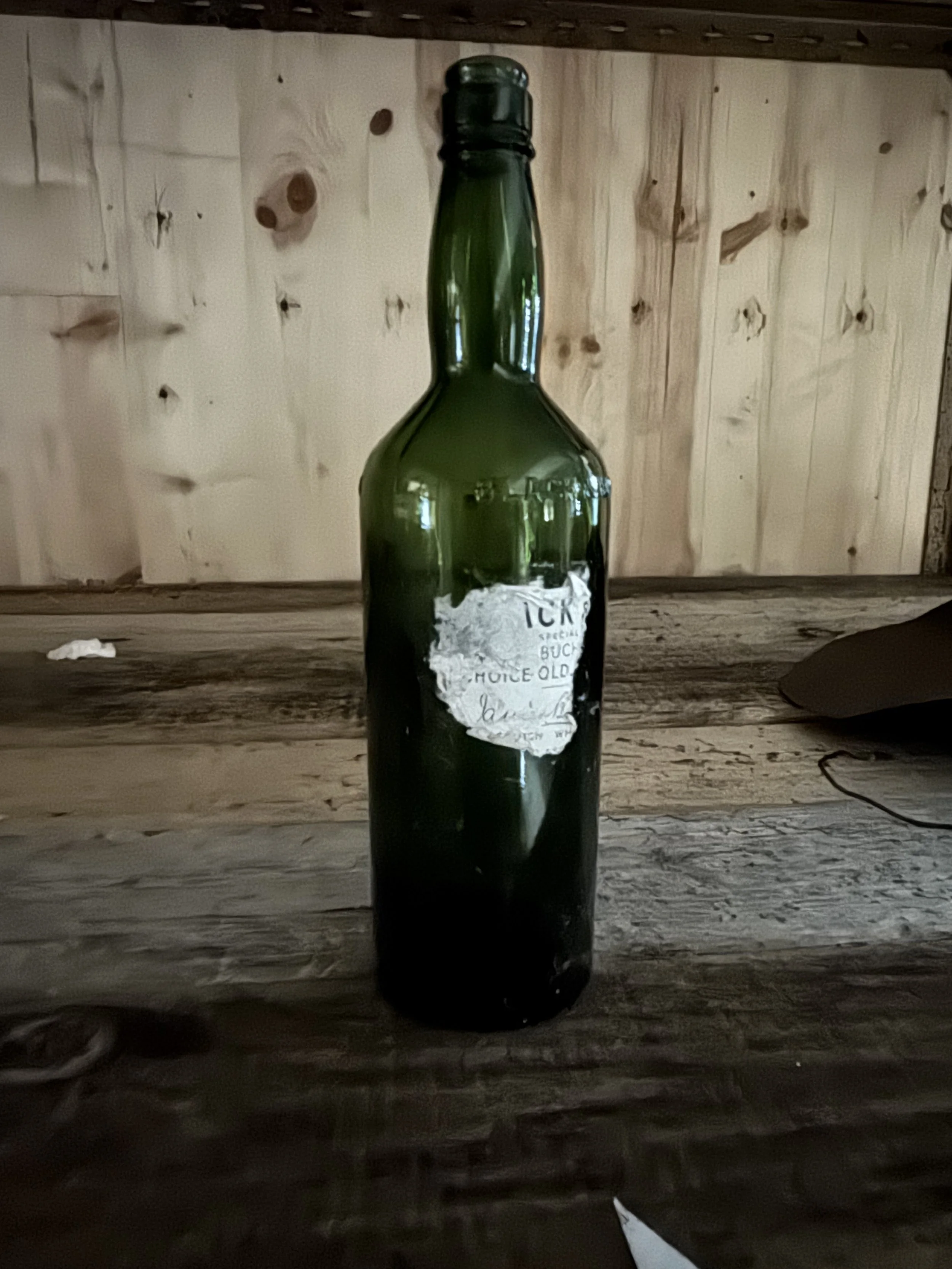
Valter Schytt was Sweden's leading glaciologist. He led the Swedish-Finnish expedition that built this station for the International Geophysical Year of 1957 and 58, and before that he was chief glaciologist of the first international scientific expedition to Antarctica, which went south to find out whether the changes people were seeing in the Arctic were happening at the other end of the world. He spent the rest of his life running a research station in Lapland where they have measured the same glacier without a break since 1946. He died in 1985. What he left on this wall is housekeeping. Tidy up, and the wood is next door. I went and looked in the sauna house. There is almost none left.
Under his line there is sixty years of chalk. Norwegian postcodes. A date reading fourteen eight eighty-four. M/S Polarstar, twice. Somebody's polar bear drawn across the middle of it, big enough to cover half the board. All of it in chalk, on a board, in a building nobody locks, and not one person has ever wiped it.
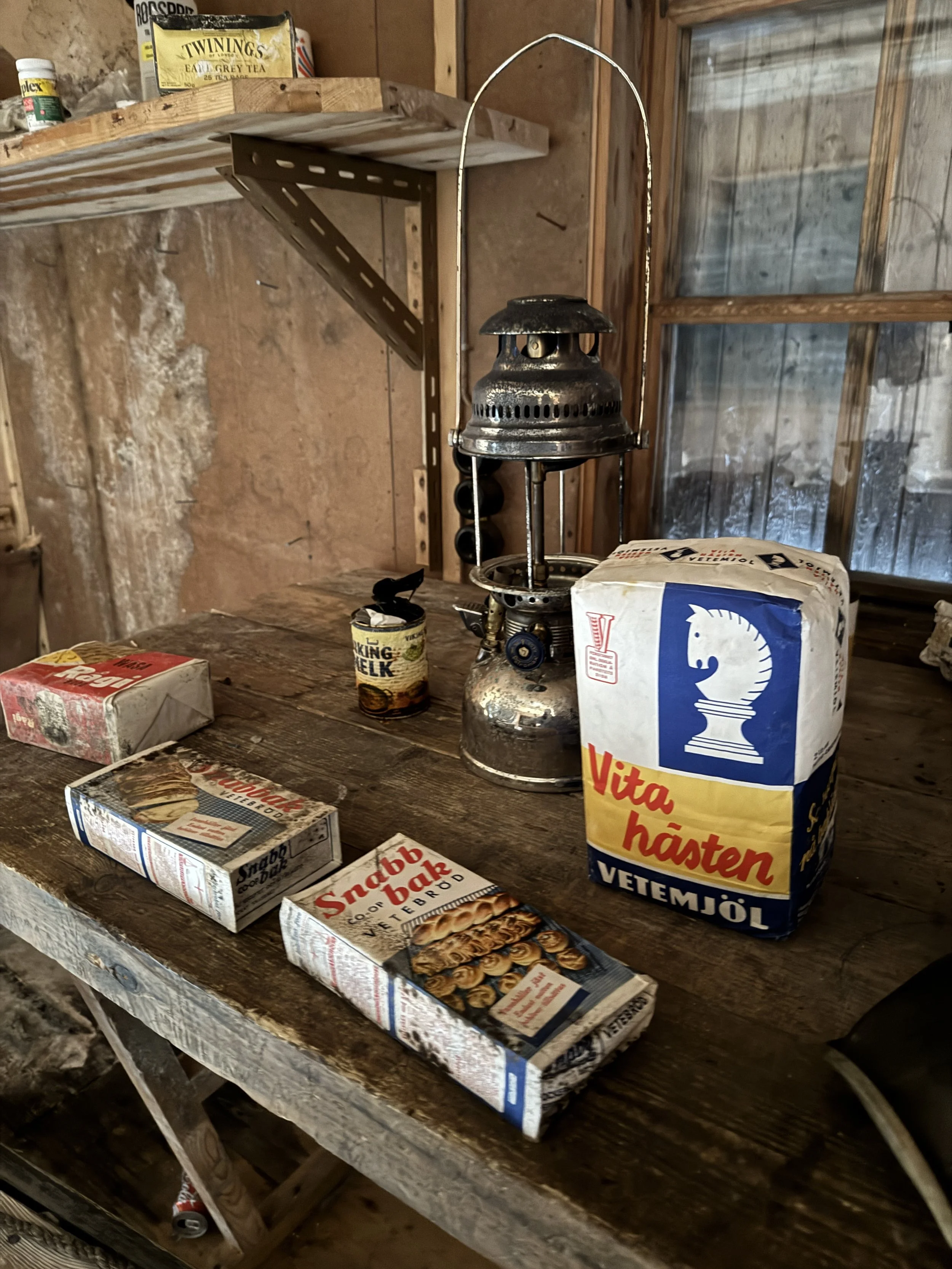
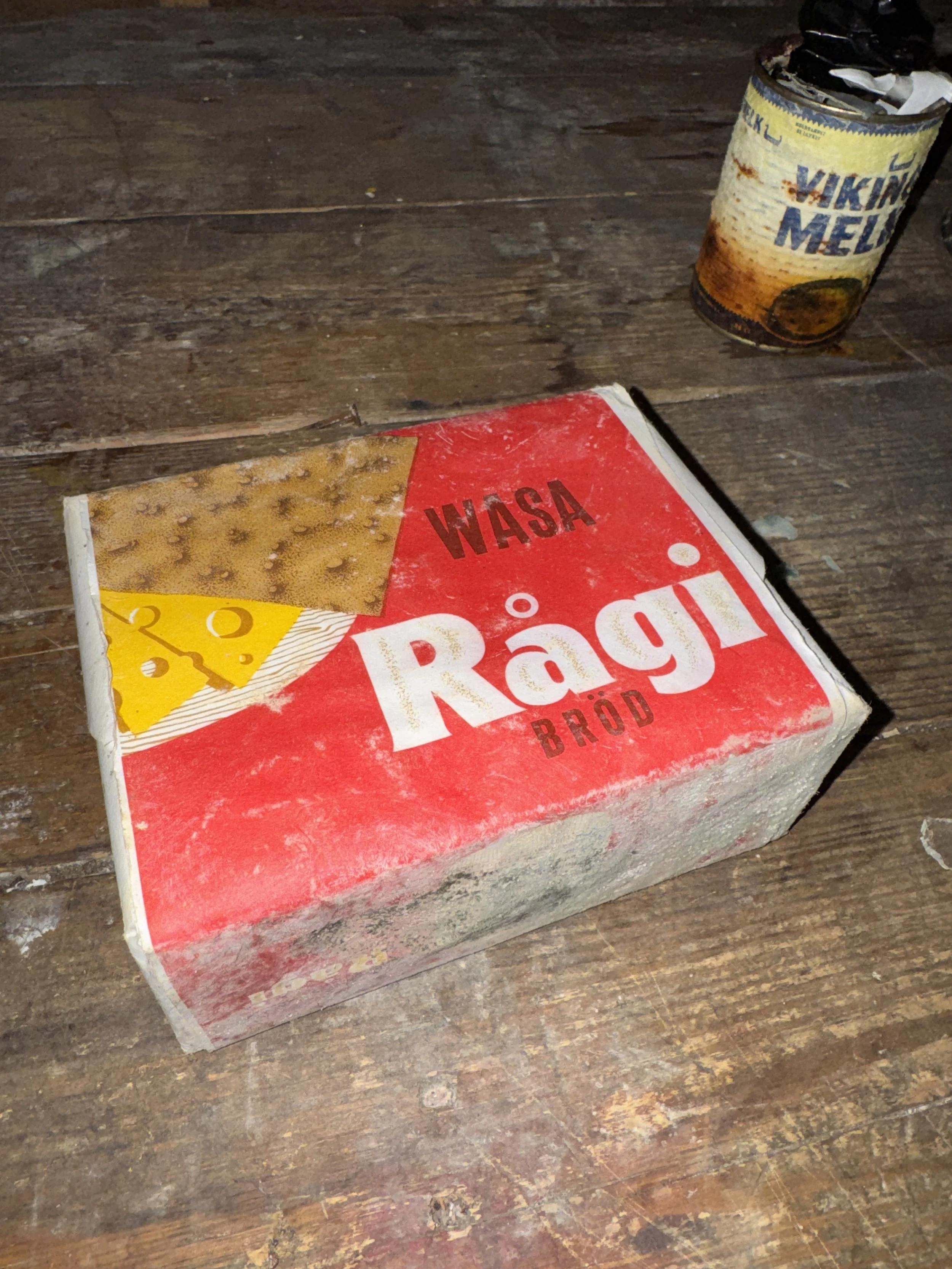
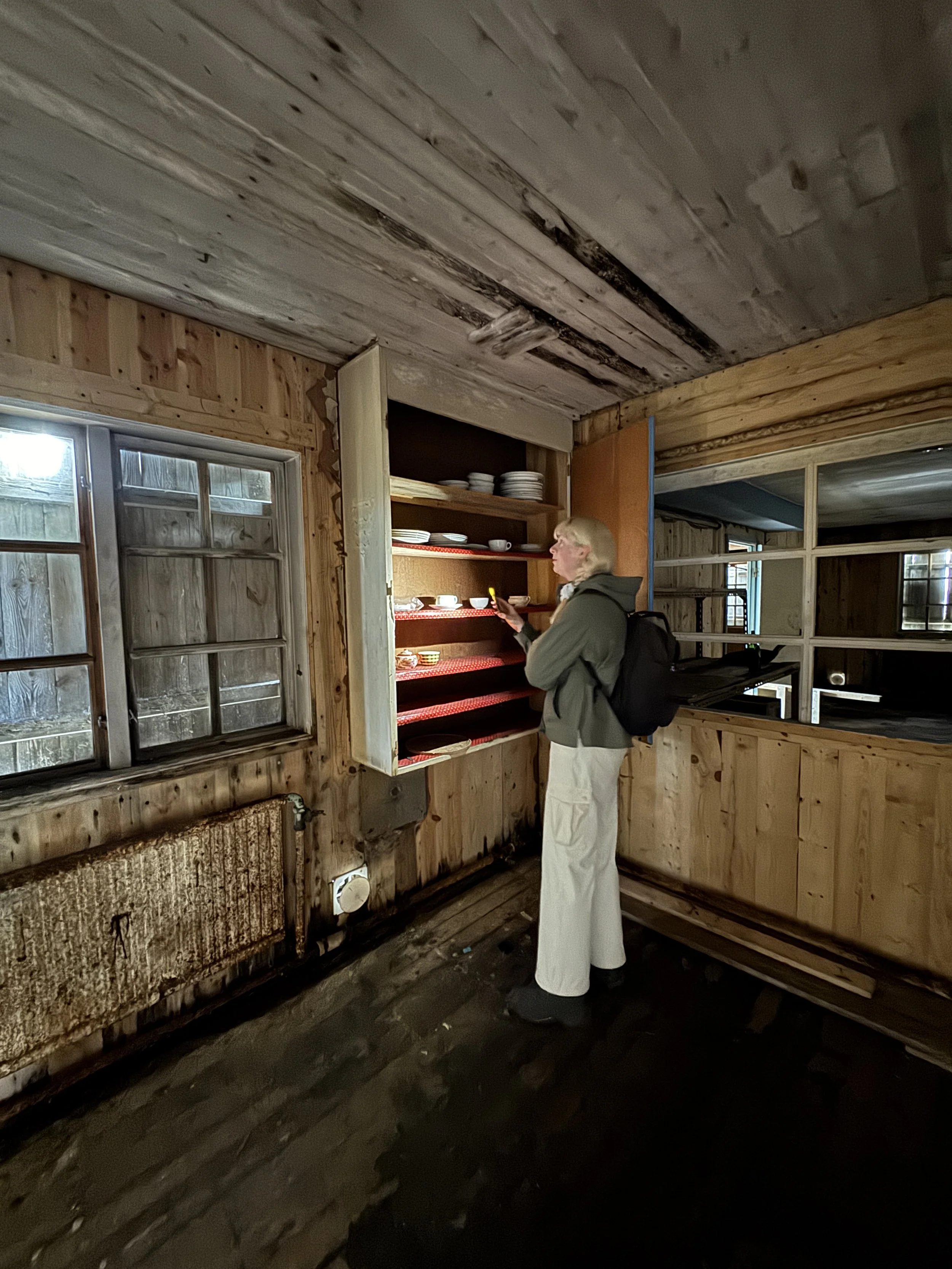
In the kitchen the plates are still stacked in the cupboard with the red gingham liner lying flat underneath them. On a bench there is a bag of Swedish flour with a white chess knight on the label, which after four entries of losing chess opponents one at a time I chose to take personally. There is crispbread, a tin of Norwegian condensed milk, and a box of Solstickan matches, the Swedish ones sold since 1936 for the benefit of children and the elderly, with a boy walking toward the sun on the front. A box of matches, in a settlement laid out around the fear of fire.
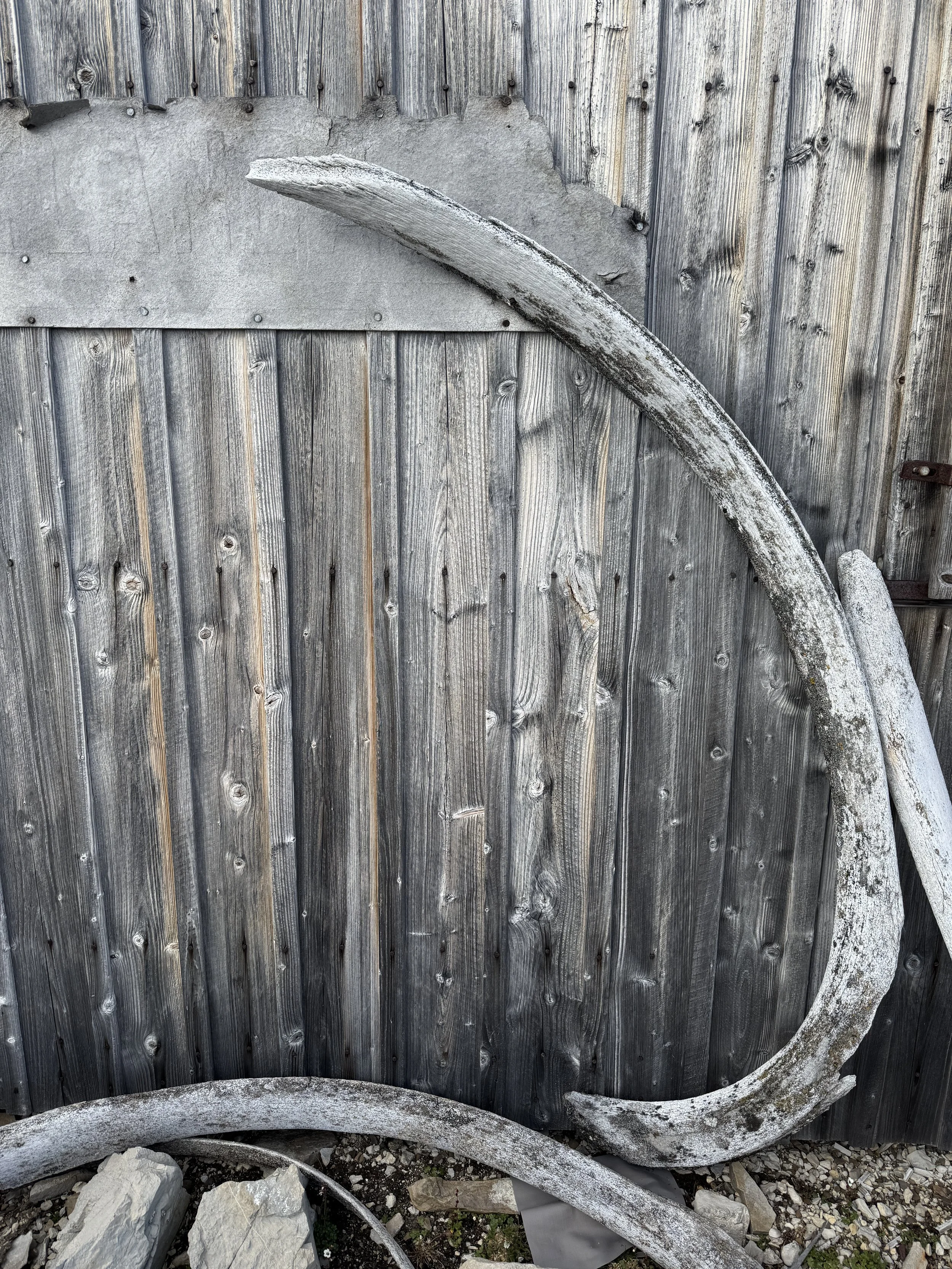
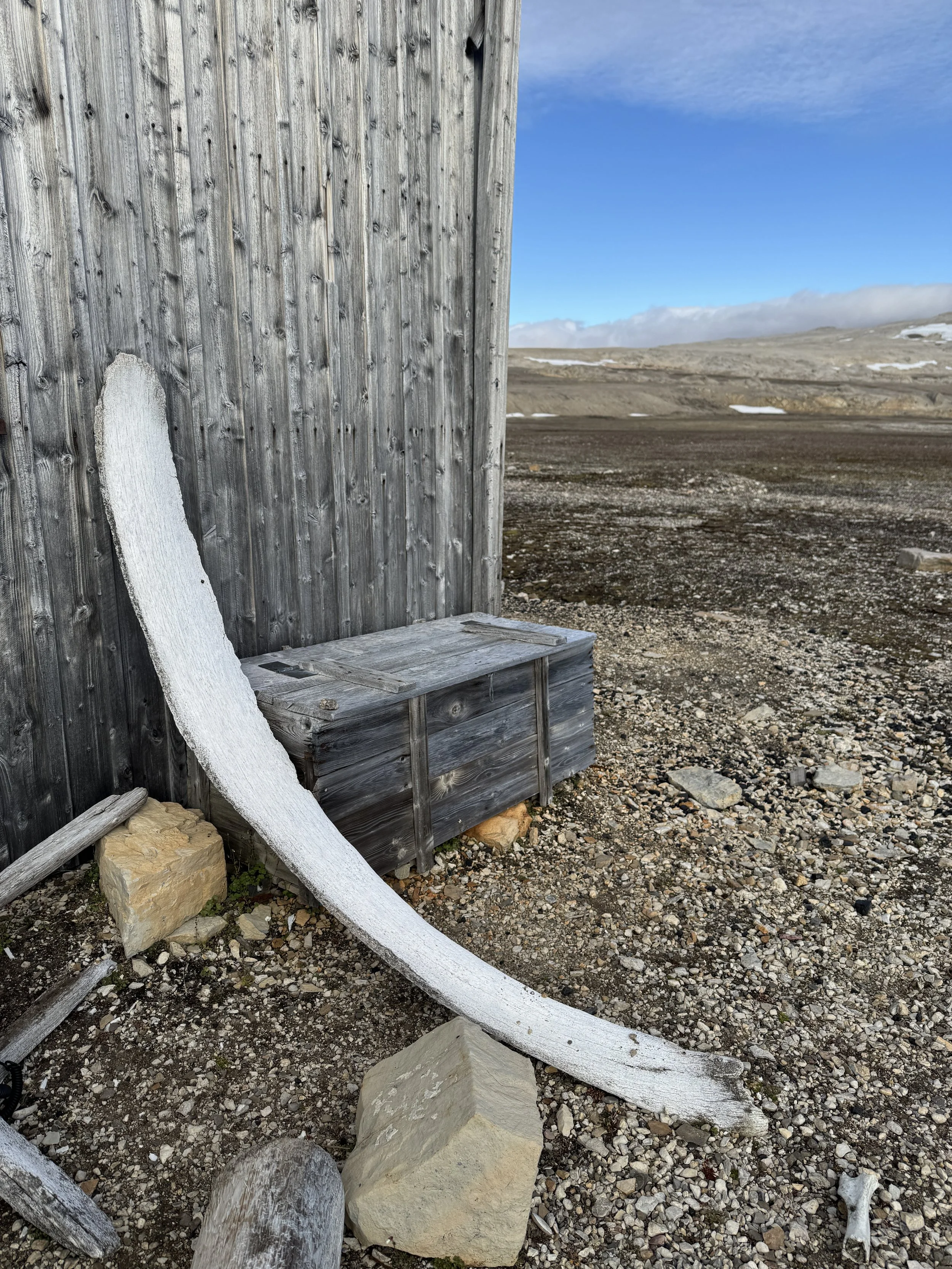
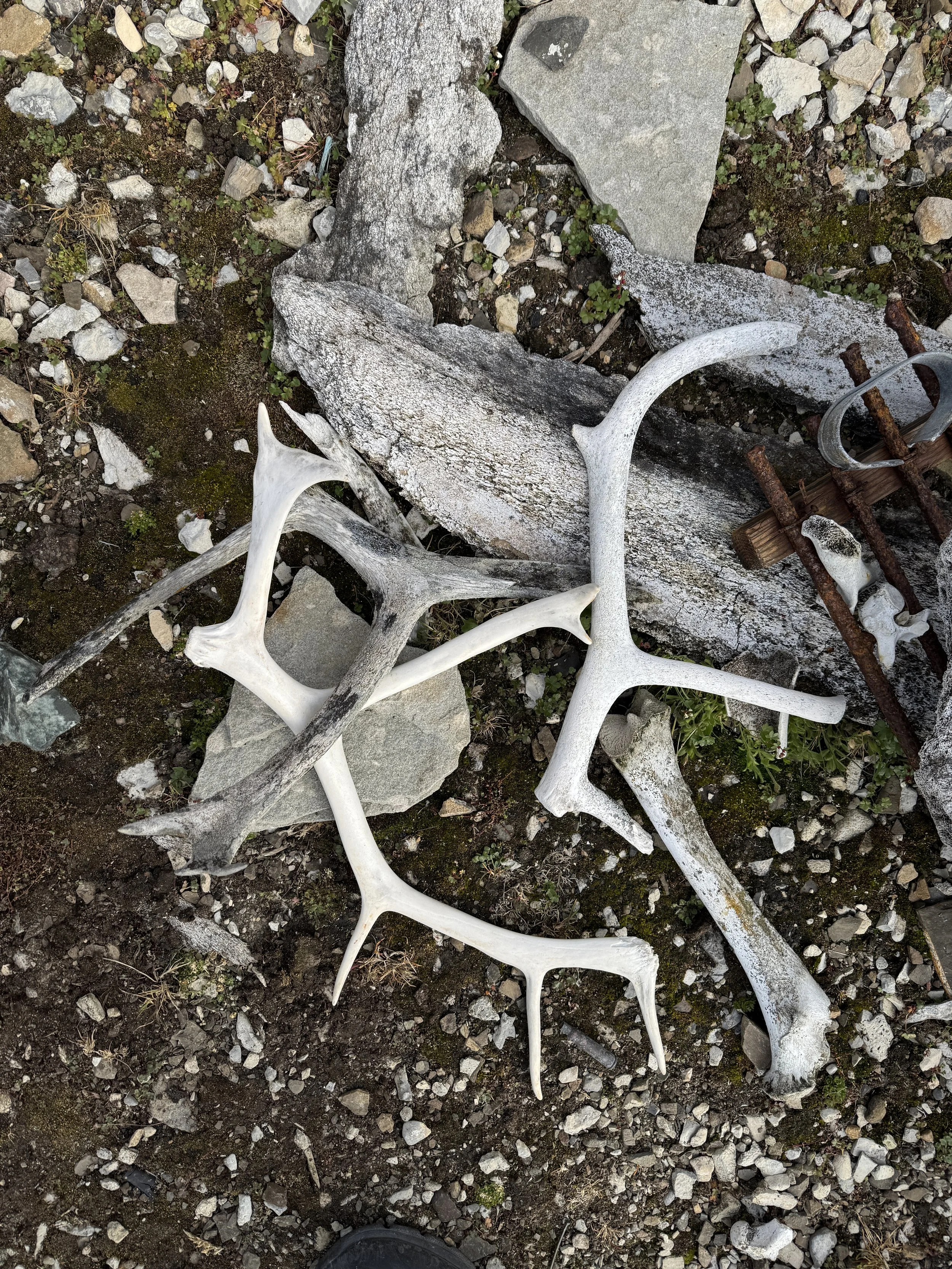
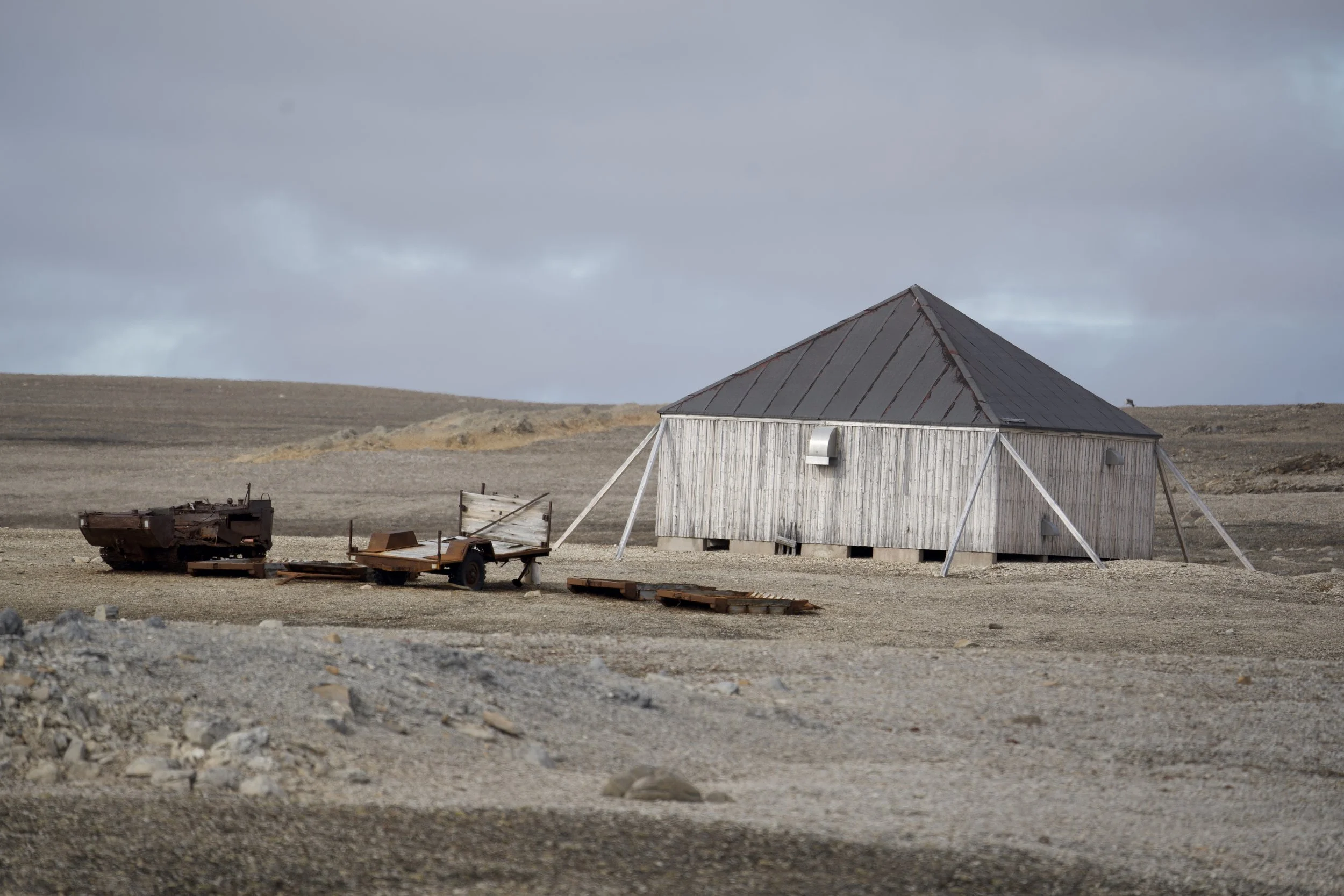
On the shelf above the Swedish groceries sits a box of Twinings Earl Grey that is nowhere near sixty years old, because the place was opened again. A couple wintered here in 2003. Scientists from ten countries worked out of it for the International Polar Year of 2007 and 2008. It was built for the year the world decided to start measuring itself, it closed after two, and it was opened again fifty years later so that people could come and measure what had changed. All of that is sitting on two shelves in one photograph. Hattie and I went down a long corridor in the dark with a phone torch, bunk rooms on both sides, doors standing open, and it was creepy in the way that only a place built for people is creepy when the people are gone.
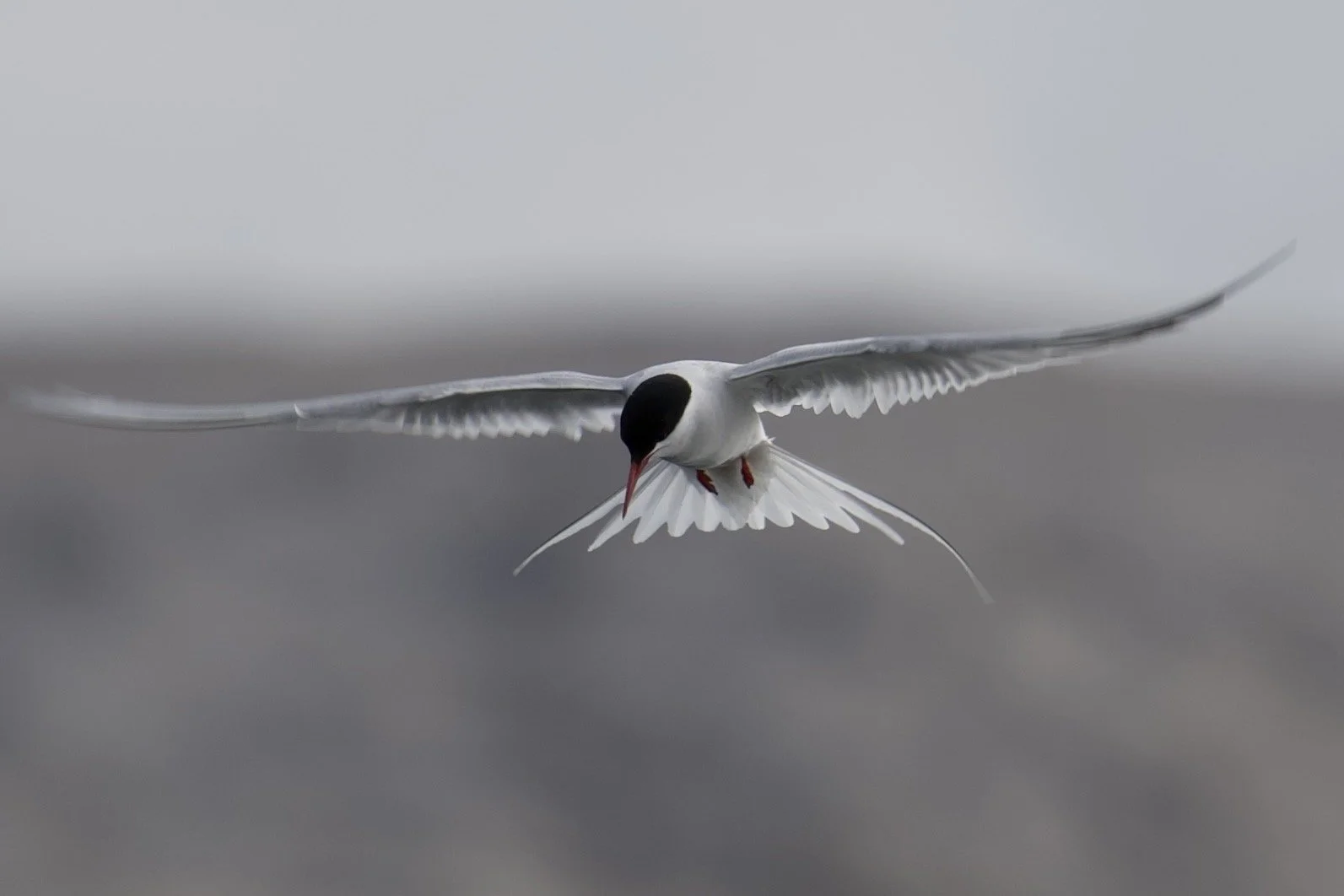
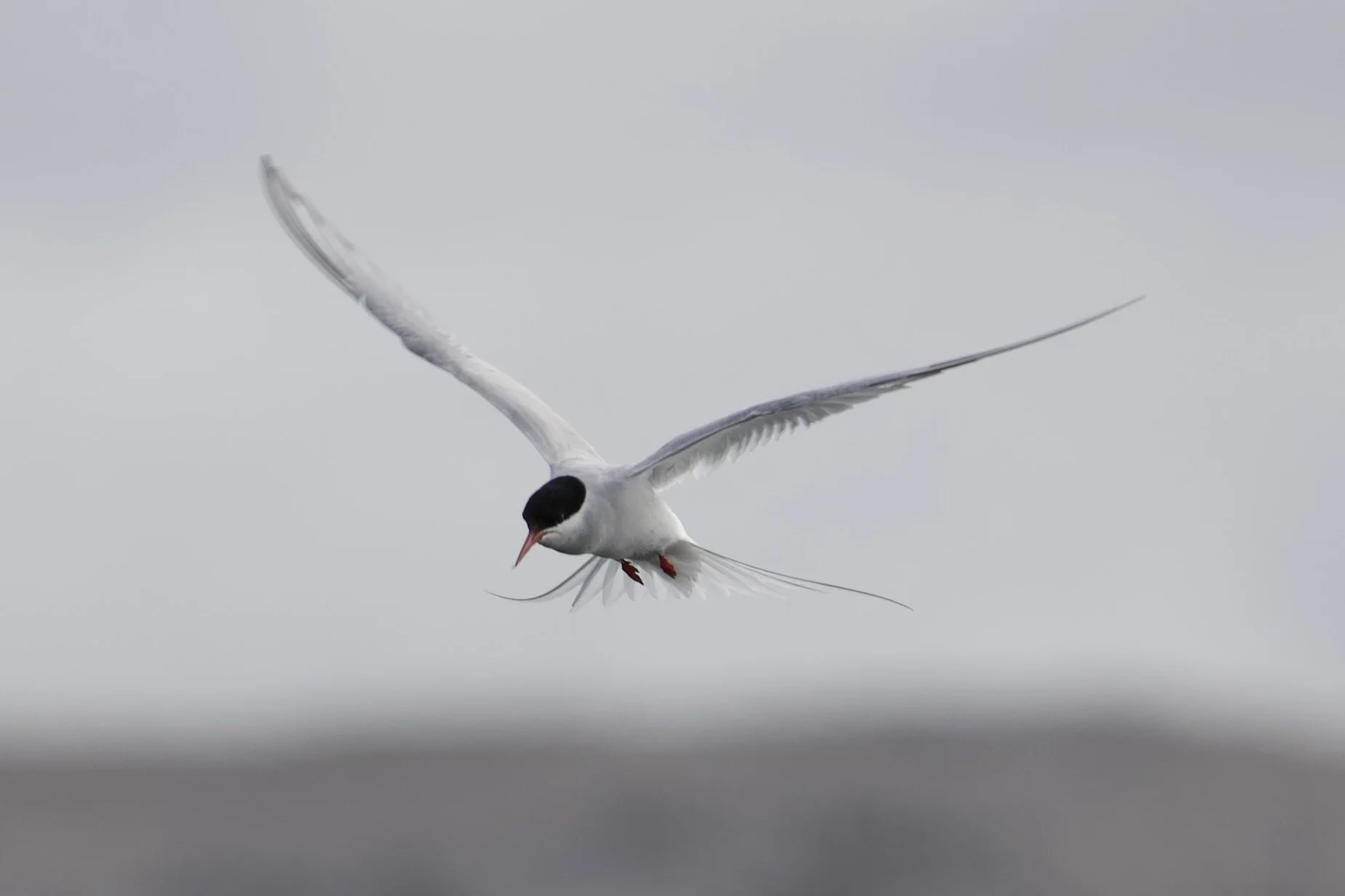
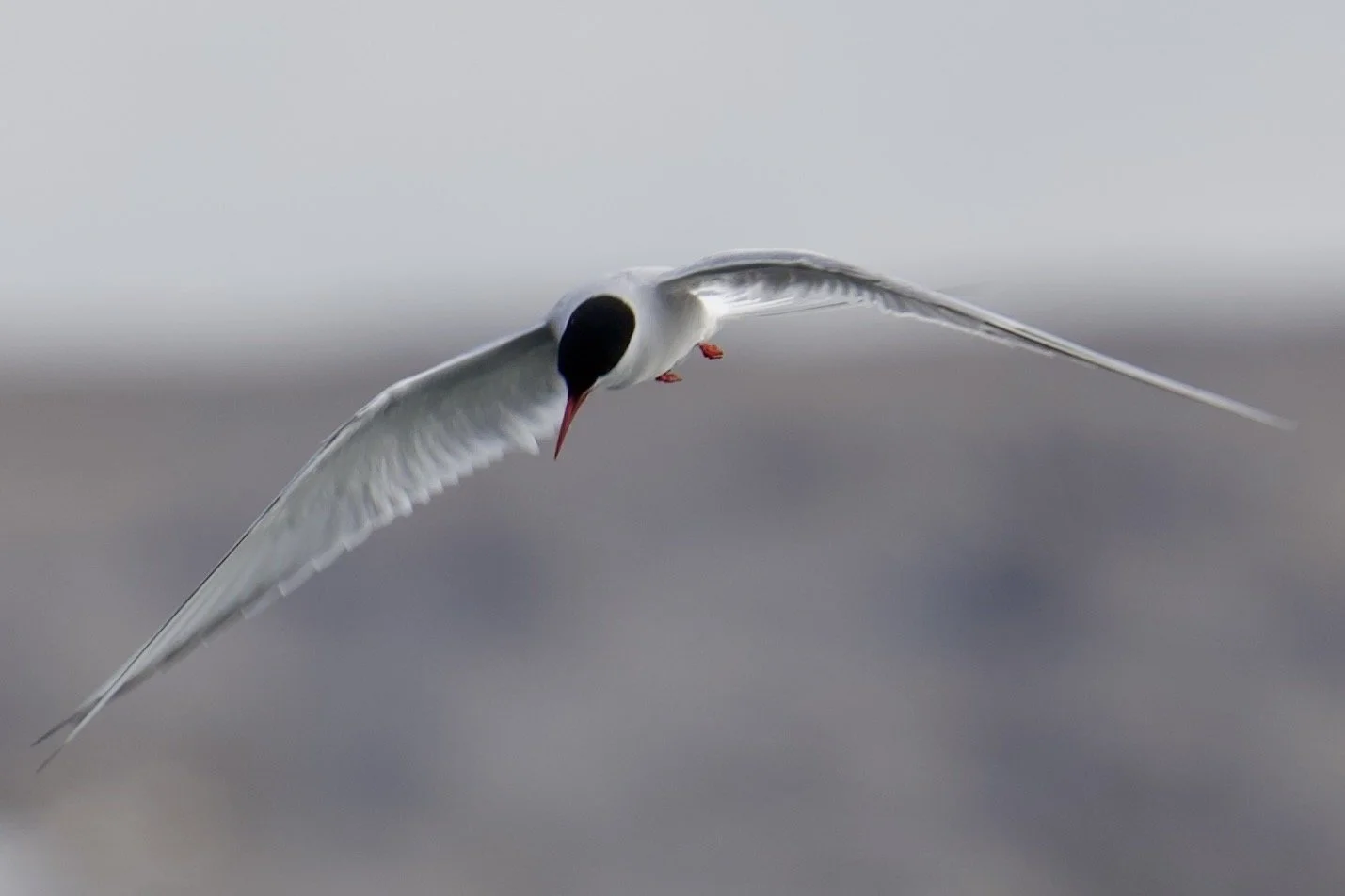
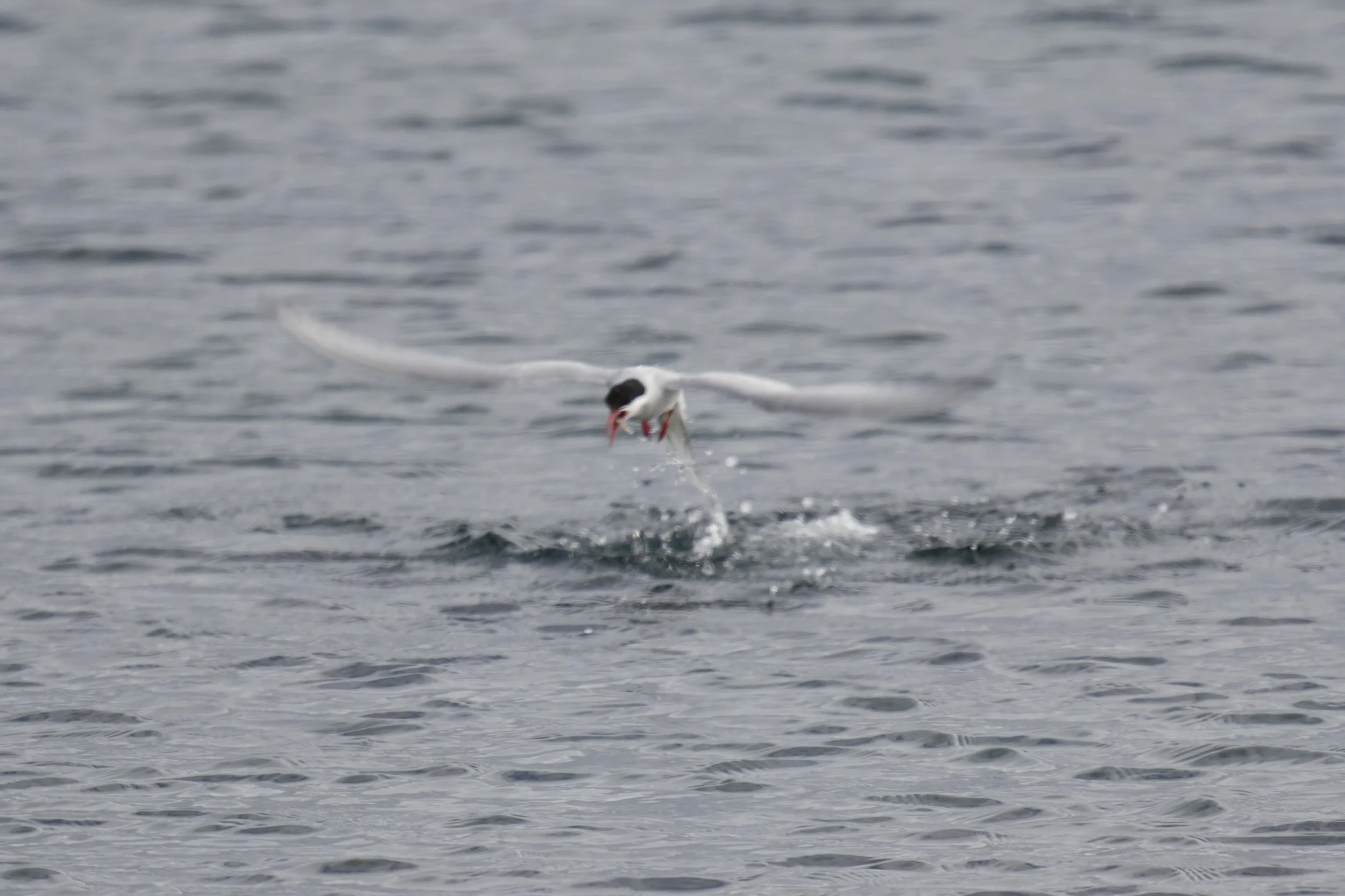
Back in the bay before dinner I spent an hour on an Arctic tern. Everybody loves the bears. Nobody writes about the terns and they should, because that bird flies further in a year than any animal alive, pole to pole and back again, and the one hanging over our anchorage in July will be in Antarctic water by December. It sees more daylight in a lifetime than anything else on this planet. I watched this one hold, drop, hit the water and come up with a fish, and I got the frame. It is the best bird photograph I have ever taken and it cost me eleven days and several hundred failures.
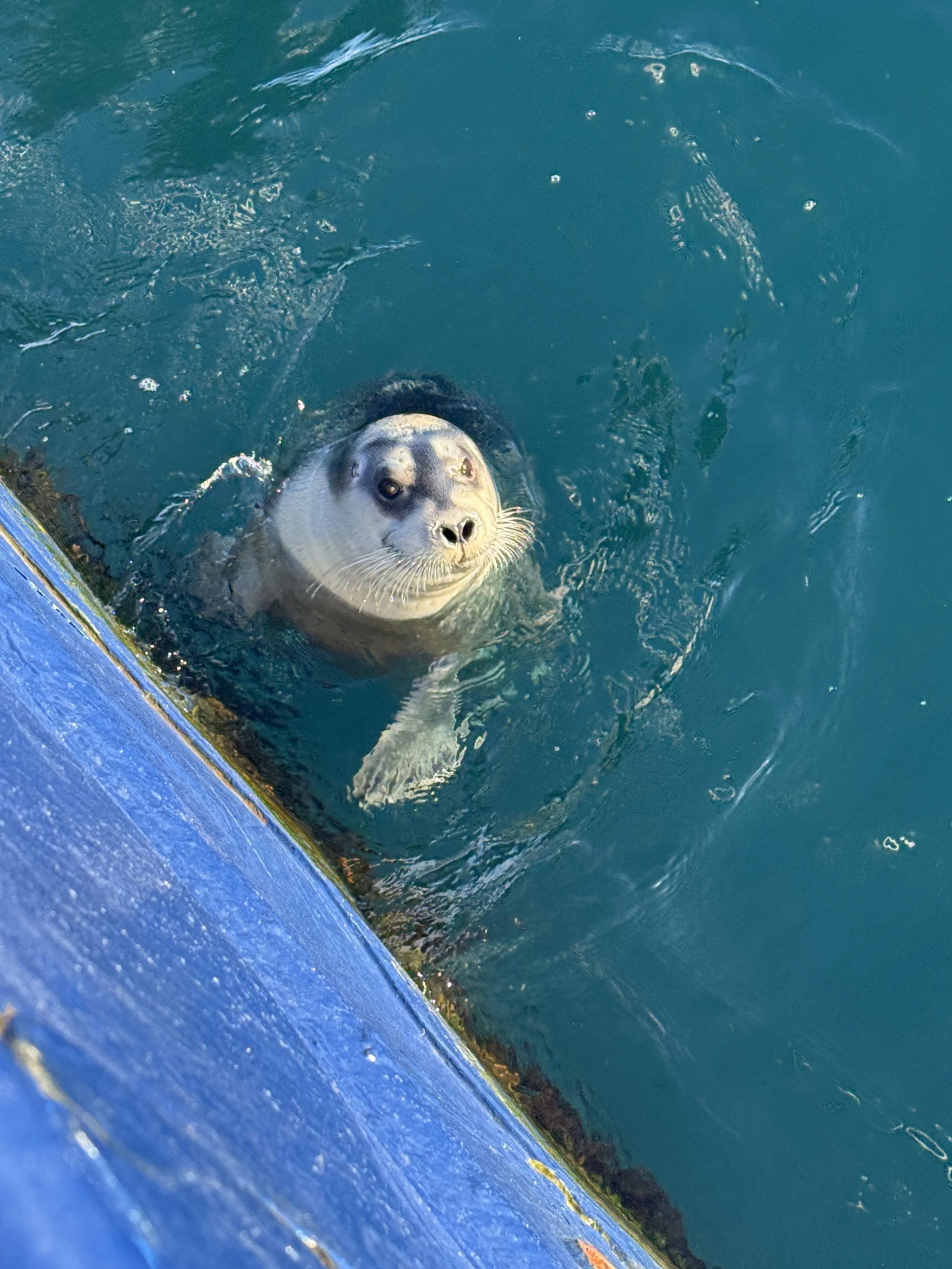
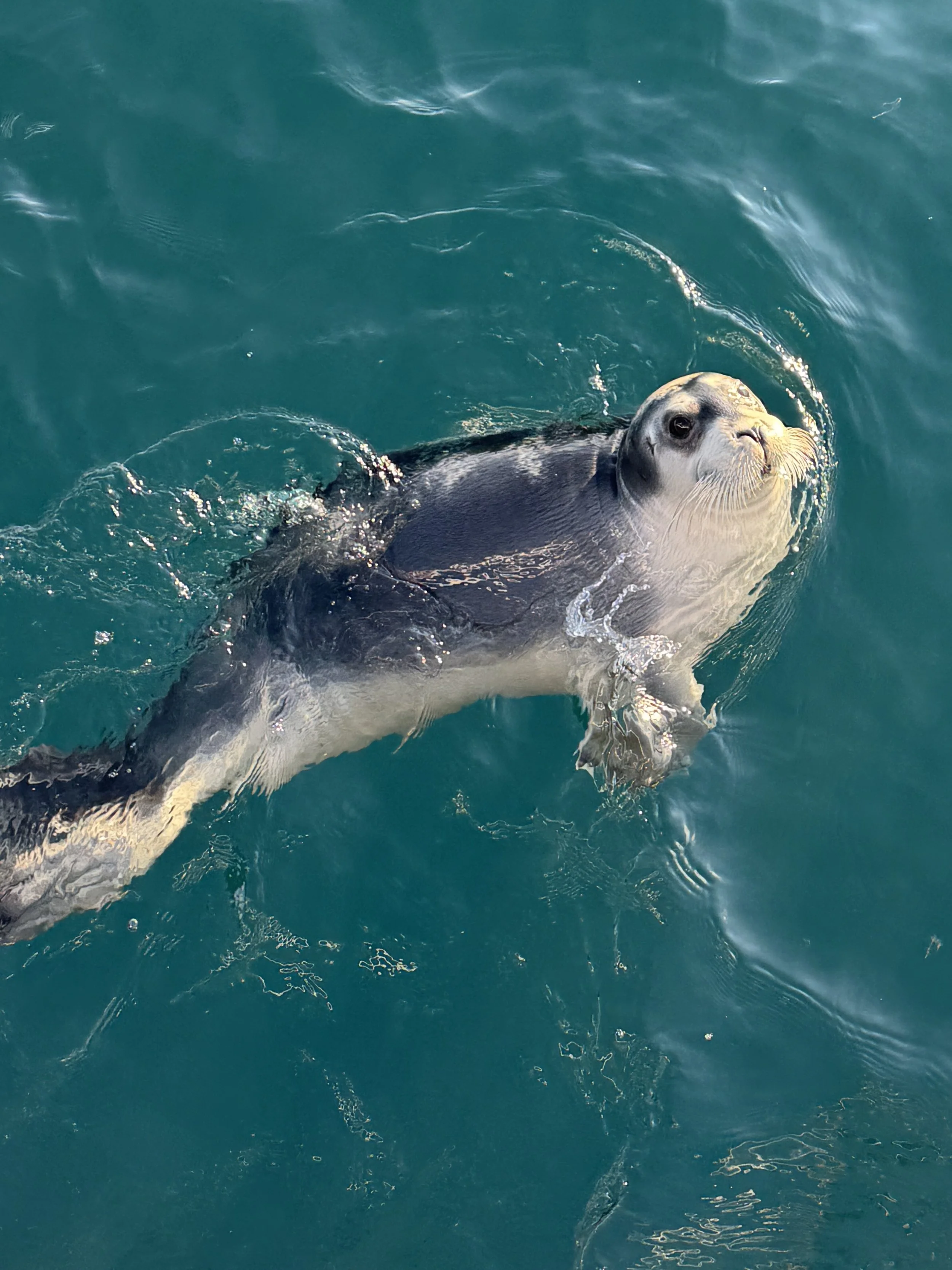
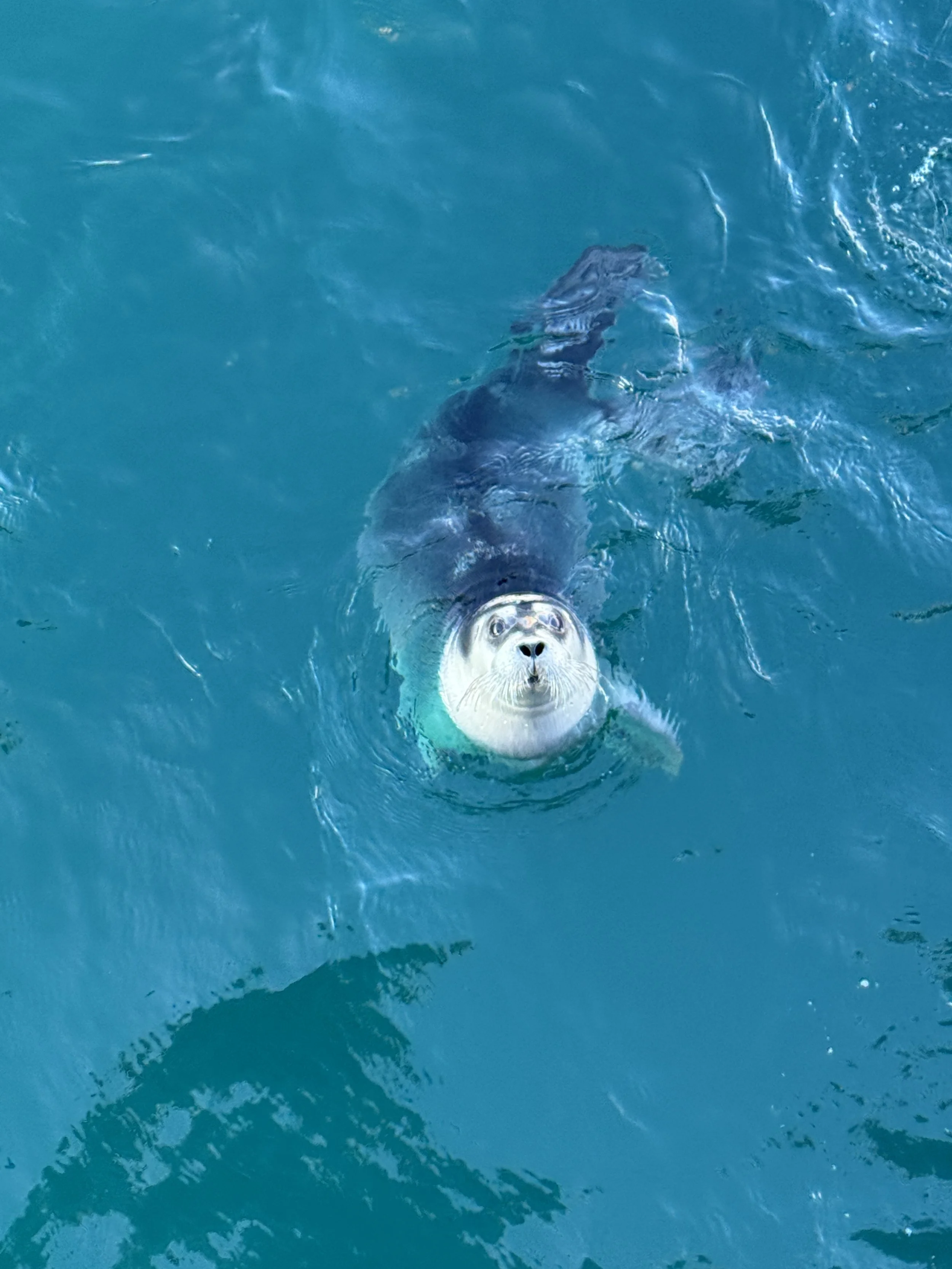
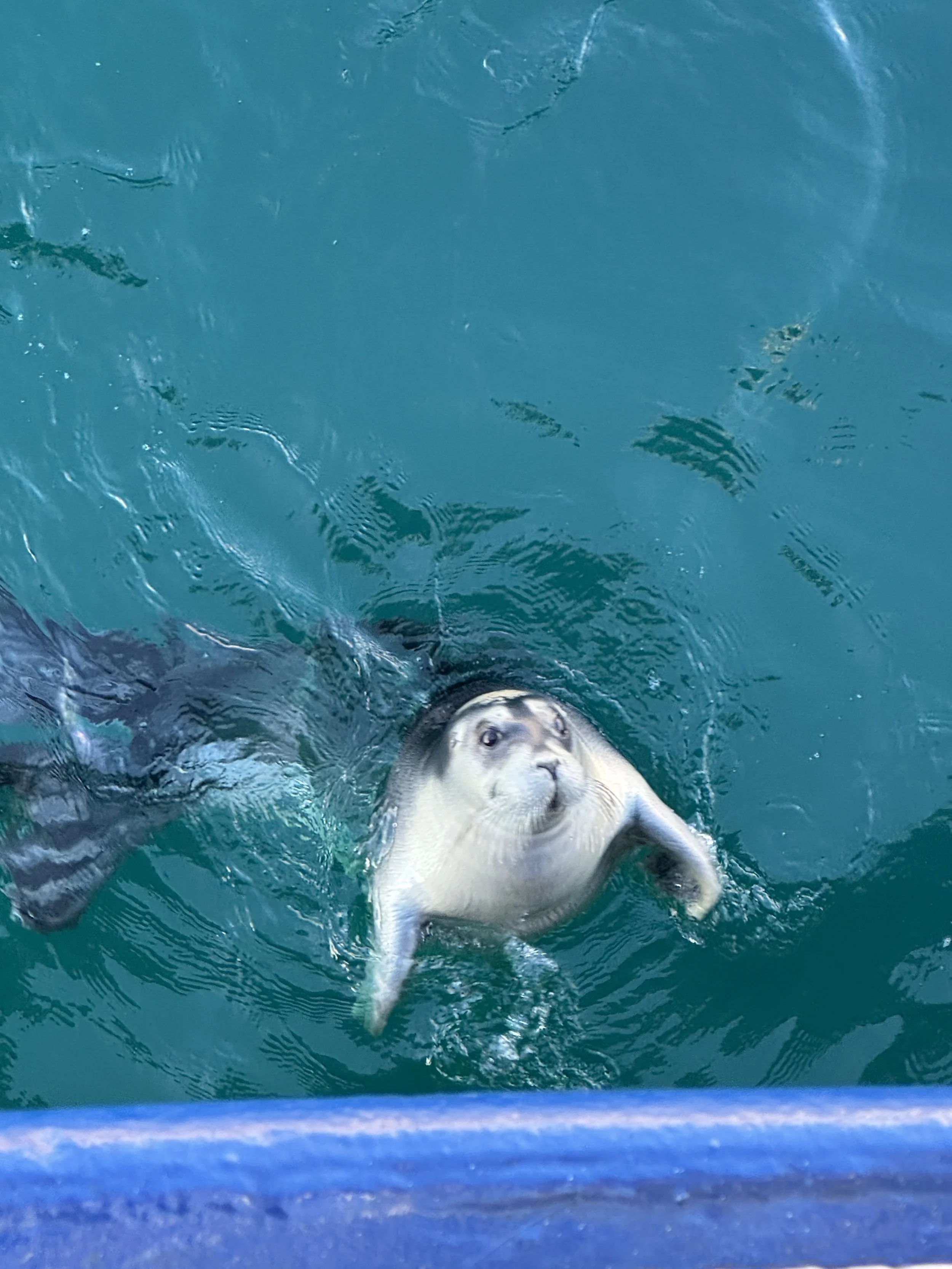
After dinner, Maggie and I were the only two on deck when a bearded seal came up beside the hull and then would not leave. It rolled and looked at us and went under and came back on the other side and looked at us again, back and forth, left and right, like something that had been trained for it. I told it we had a spare cabin. Cabin one had a pole running straight through the middle of it and was too small with the pole in it, so Gergő and I took five instead, and cabin one spent the rest of the voyage as the room where everybody's boots went. I remain convinced that seal would have been happy in there.
Then Rhys came up and said everybody down. Round three of the presentations, and on day zero I had told people to bring extra chocolate for the middle of the trip, because that is when a room goes flat and there is nothing left in it to give. I was right. At the break every single person produced their own supply at the same moment, like a customs inspection, and it went round the tables. Christina threw mine across to the next one and it hit the floor. She has felt bad about it ever since and told Cathleen so, and Cathleen had to explain to her that the floor was never the problem.
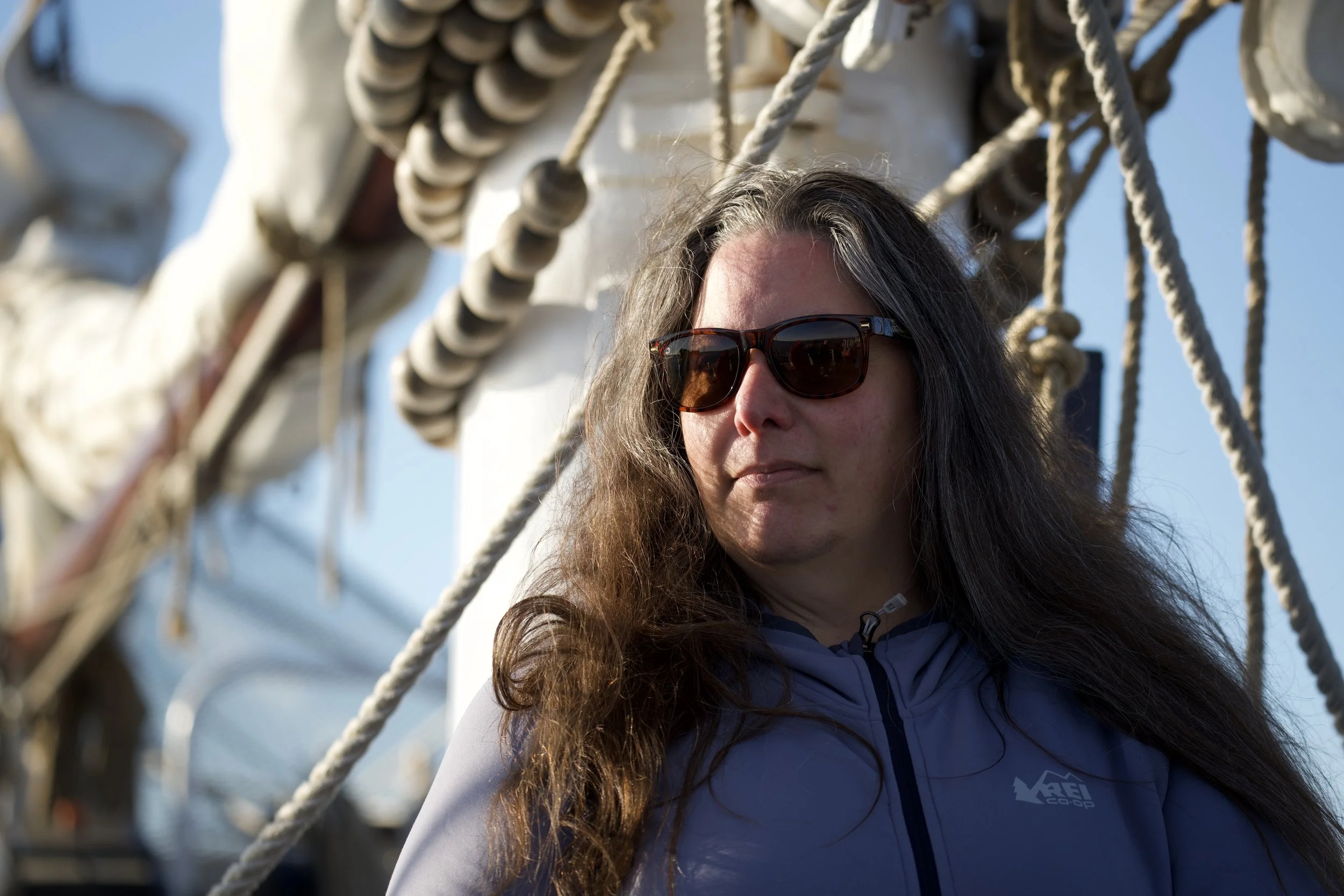
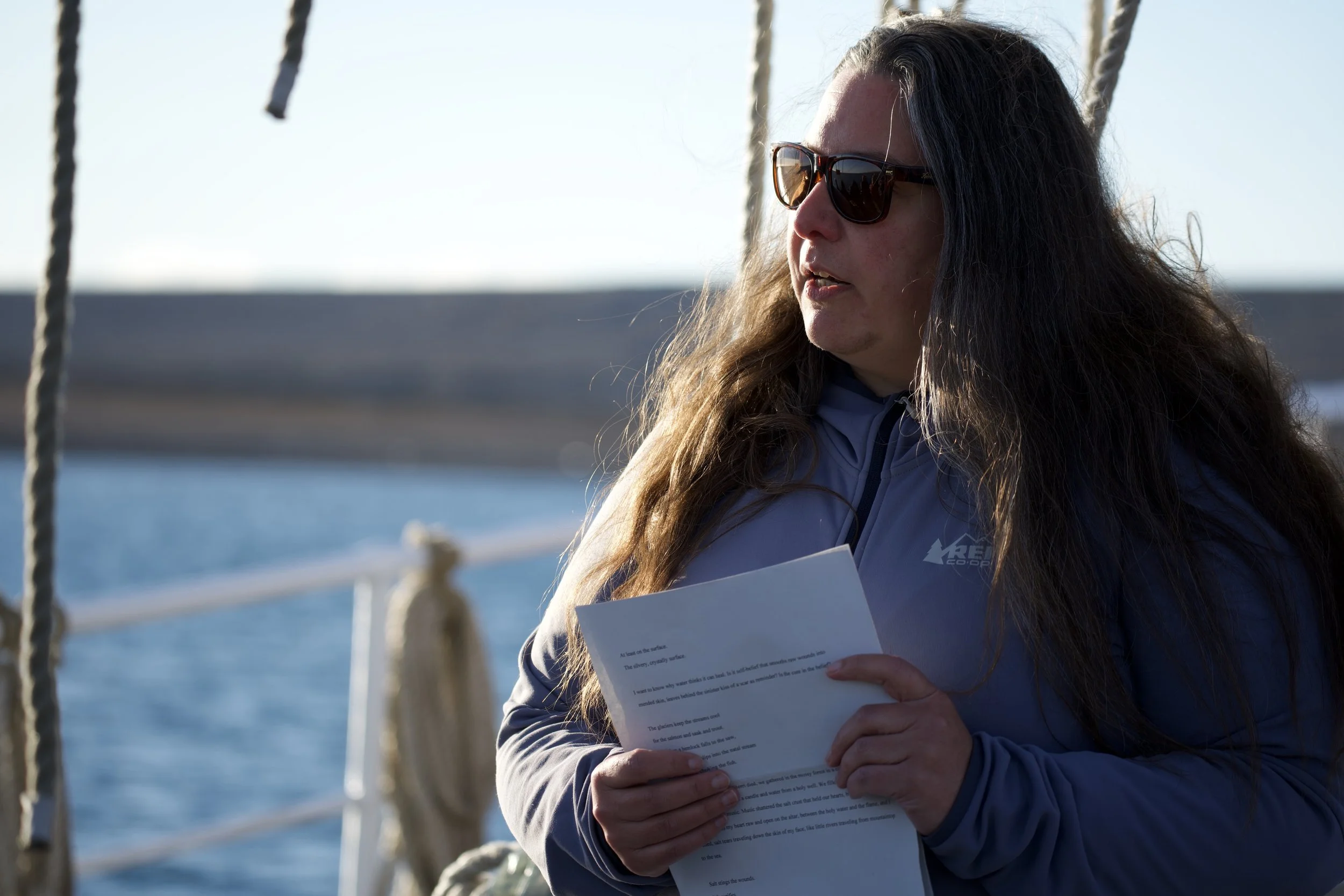
Shannon read last, up on deck in the evening sun with the pages going in the wind. It is a lyric essay called Salt Cures, it was published earlier this year, it is about a friend of hers who died, and I am not going to put any of it here because it is hers and you should go and read it where she put it. What I will say is that a woman stood in the open air at eighty degrees north and read about grief to thirty-two of us, and the deck went still, and I cried, and I was not the only one. I hugged her afterwards because anything I could have said would have been worse than that.
Afterwards the usual six, Christina, Shannon, Cathleen, Maggie, Vicki and me, went to the bar. Johanna had been trying for a day to buy me a drink for filming her casting at Austfonna and I had been too tired to let her, so we finally had it. A Pink Walrus. Rosy cheeks, salty tusks, surprisingly graceful, according to the flyer, which Victoria made herself, and it comes with two pretzel sticks standing in it for the tusks. Maggie drew the polar bear that is going on my arm and I bought her a beer. Two artists settling up in the only currency available at eighty degrees north.
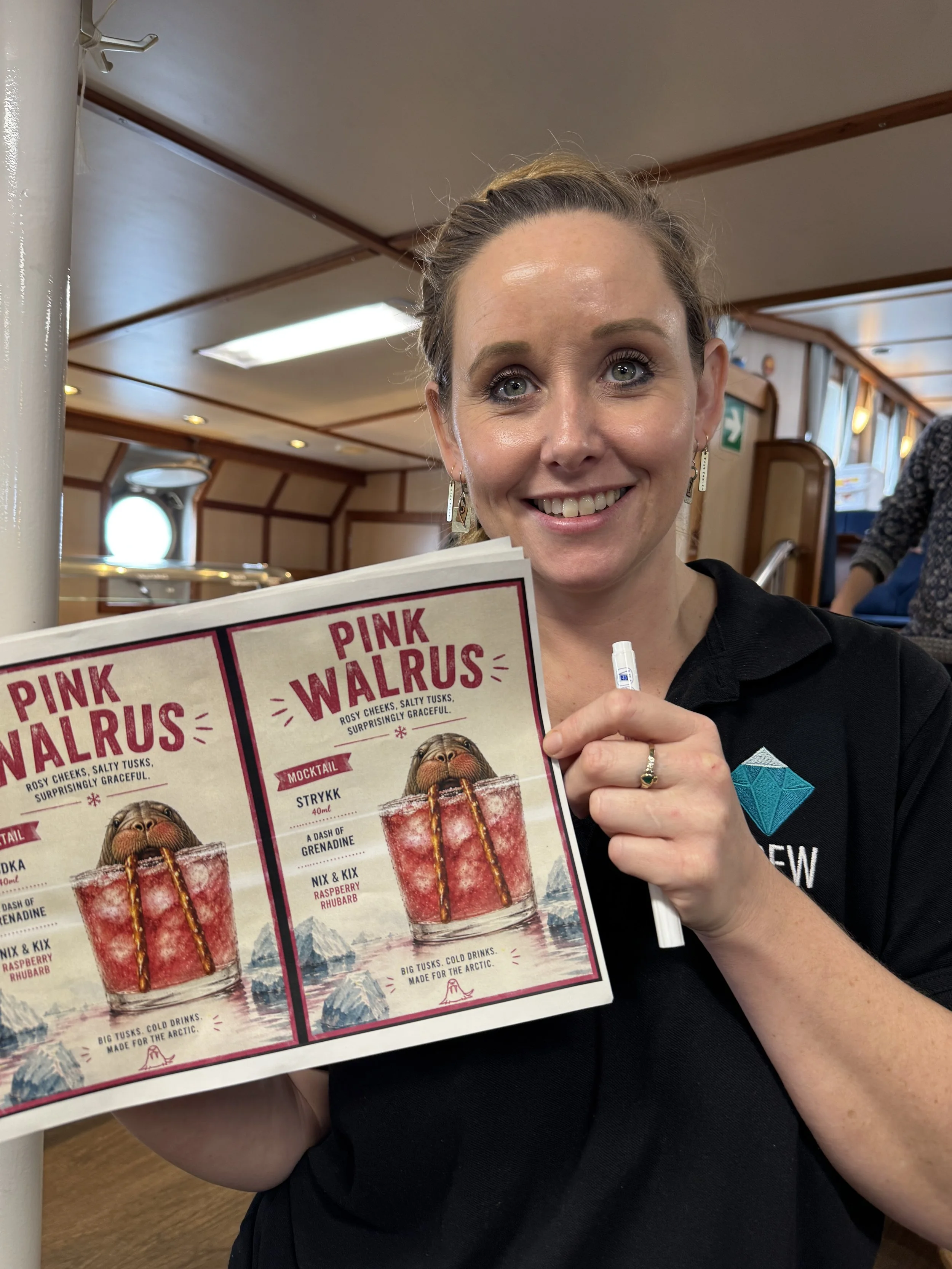
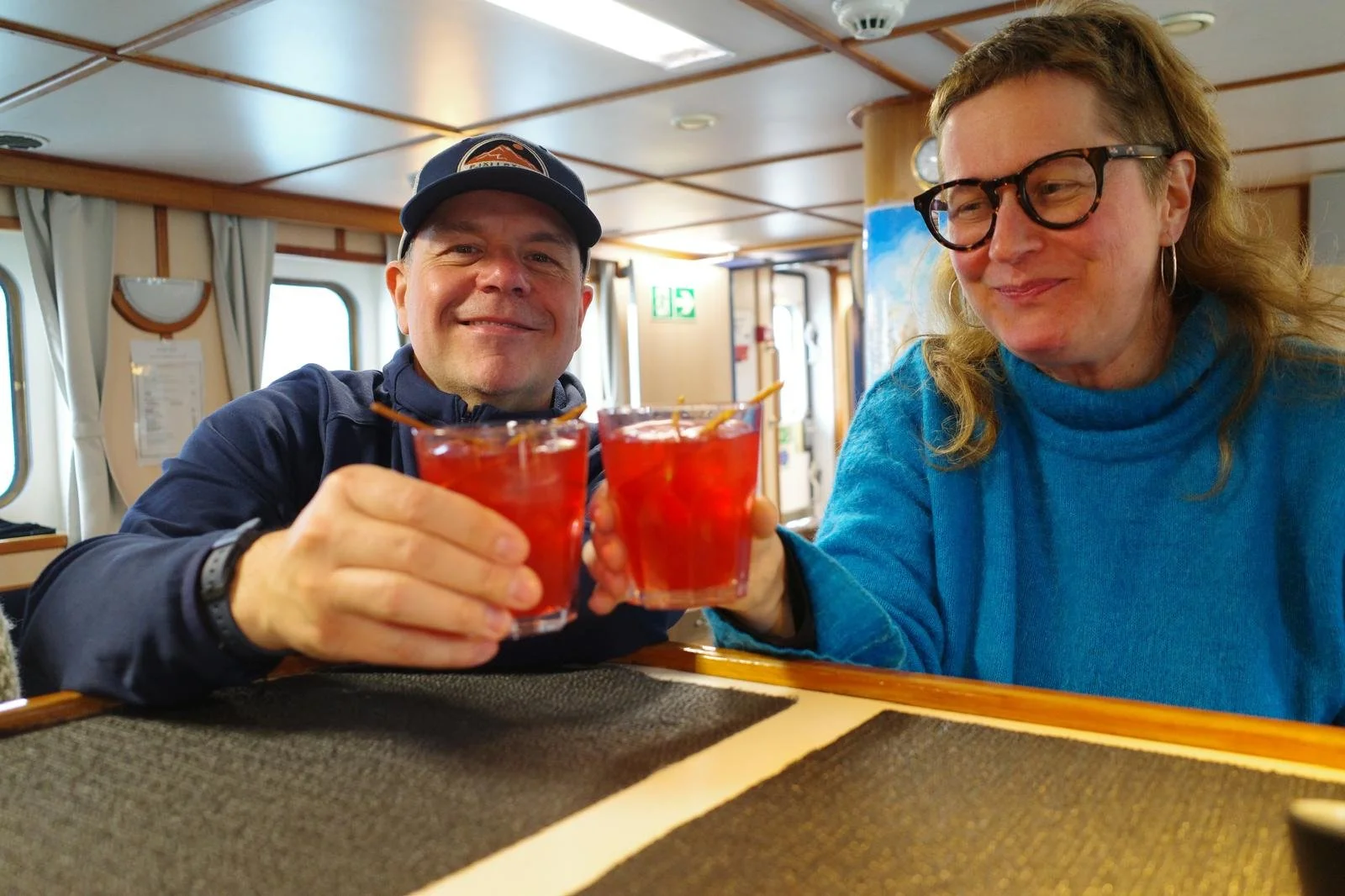
Photo: Christina Olson
I went to bed at eighty degrees north with six stones behind me. Four of them have already been paid. The one shaped like Svalbard will take the rest of the voyage to settle, and I am content to wait on that one, because a stone that promises you the entire circumference is not in any hurry. The paw is a different kind of debt. That one gets called in fast, and I lay in the bunk knowing it, and went to sleep anyway.
“How varied are the experiences one lives through in the Arctic.”