Entry 052: Day 16: Takk for turen!
Thursday, 30 July 2026. Longyearbyen, Oslo, Copenhagen.
This is the last of them and it is the longest of them, and those two facts are related. Sixteen days took sixteen entries and the sixteenth is not going to be rushed. Get a coffee.
We went to bed at closing time and breakfast was at eight, and every one of us turned up for it. The room at the Coal Miners' had strangers in it, ordinary tourists at the next tables with their bread and their phones, and at least two of them looked like people Christina had separated from their boots the night before. They had no idea what they were sitting next to. A room full of people who had just come round the top of the world together, and who looked like it.
We had an hour before the bus. Most of the group was on the morning flight, so we spent it going back over the same fourteen days we had been going back over all week. Around nine they started getting picked up. Then something happened that I had not expected. Everyone said goodbye to everyone, including the people who were not leaving, because it had been everyone's last night up at the cabins and the ones staying on were moving down to the hotels in town, and nobody could be sure of running into anybody again. Thirty adults stood up in a breakfast room and worked their way around it. Just in case.
I never took the camera out. Not once, on the last day of a project that had kept five hundred millimetres on my chest for two weeks. Everything I have of that day came off the phone, which had come back on for the first time since we sailed and had a great deal to tell me about what I seemingly had missed. On the fourteenth day I wrote about the future coming back and starting to make arrangements. By the sixteenth it had the calendar open looking at my return flight departure time.
Then packing, which by that point was a reflex. You pack, you unpack, you repack, you move things from one bag into another for reasons you could not defend in court. We had been told to bring duffel bags, no wheels, and I followed that to the letter, because I follow instructions, and then I watched other people roll their suitcases across the gravel with one finger. The ship has a hold the size of a small garage. It would have taken anything. I carrtied those bags around the Arctic for sixteen days and the rule that put them on my shoulder had nothing behind it. There are about forty things like that I would tell somebody before they go. If enough of you want them I will write them down, so email me the word DUFFEL and I will know.
Christiane Ritter packed in this country in 1934. She wrote that she could not take in that they were leaving so suddenly, and then she got on with the clearing up and the looking for things and the packing, and she noted that everyone was in the best of tempers. I read that page weeks later on an airplane and recognized our breakfast room. Not the size of it. The tempers. The coalminer cabins let you leave your bags in the entrance until the afternoon, with a room out back for anything you would rather not stack in a hallway, which is where the laptop and the cameras went. Then Maggie and I walked down into town.
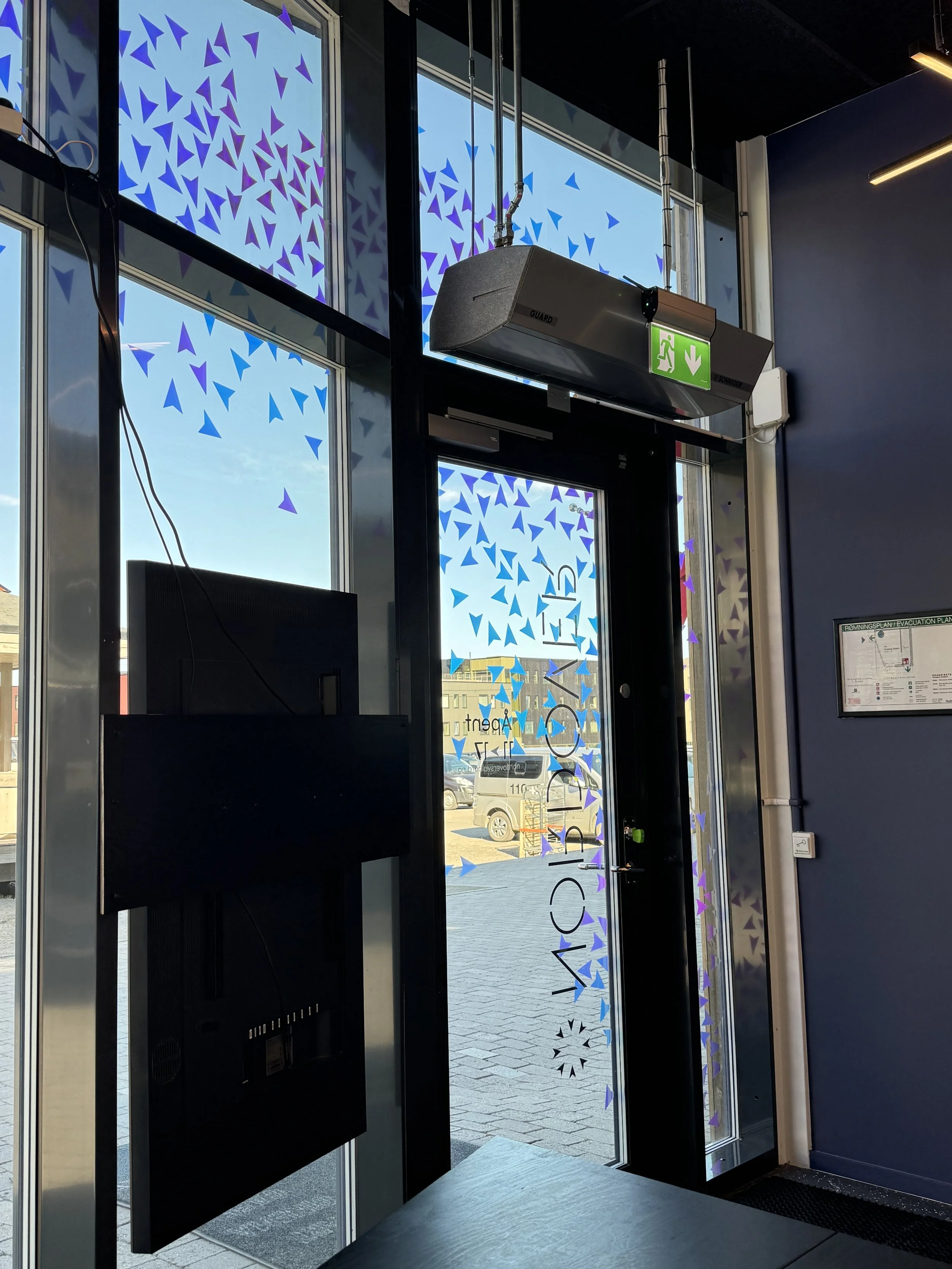
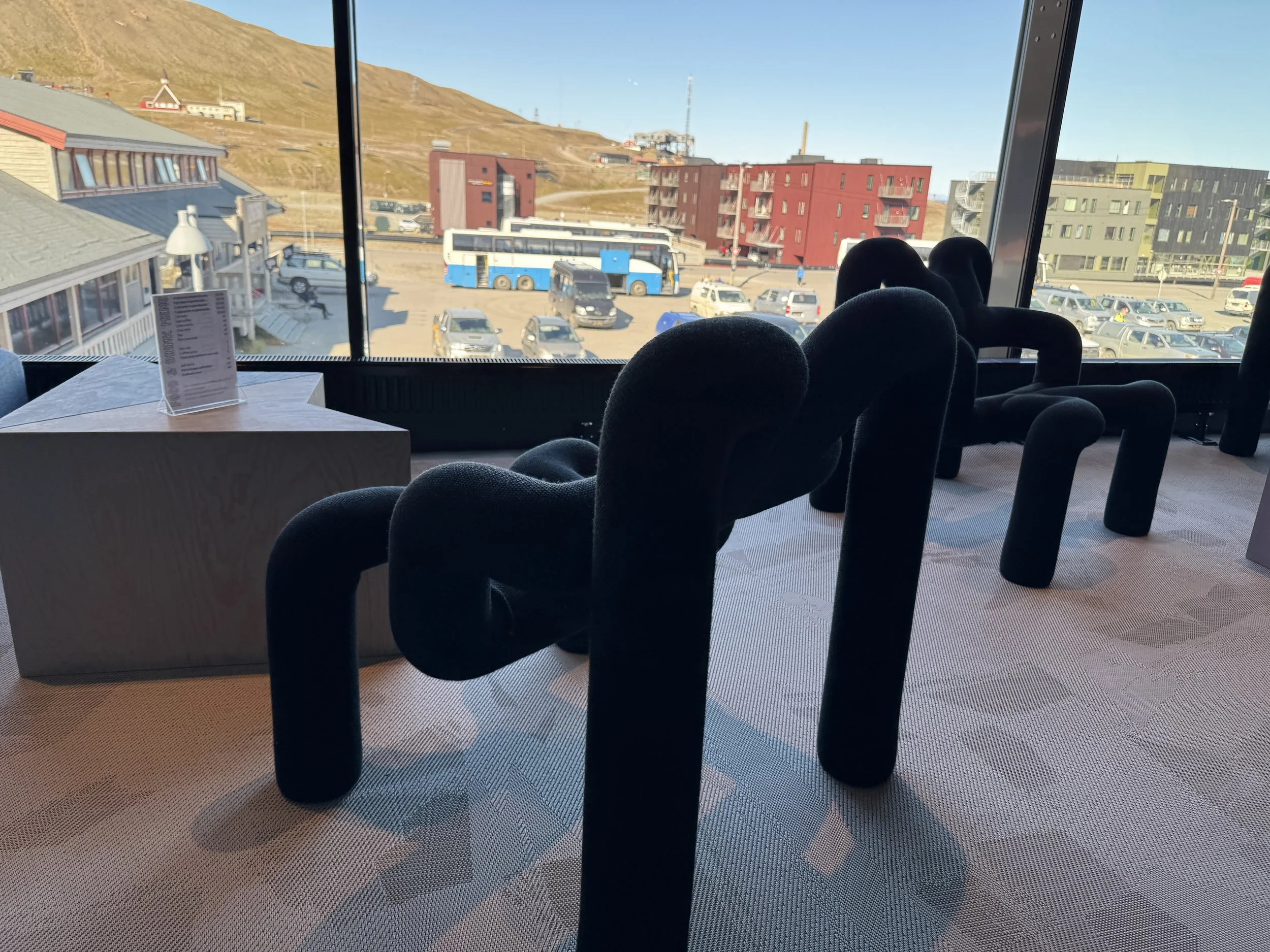
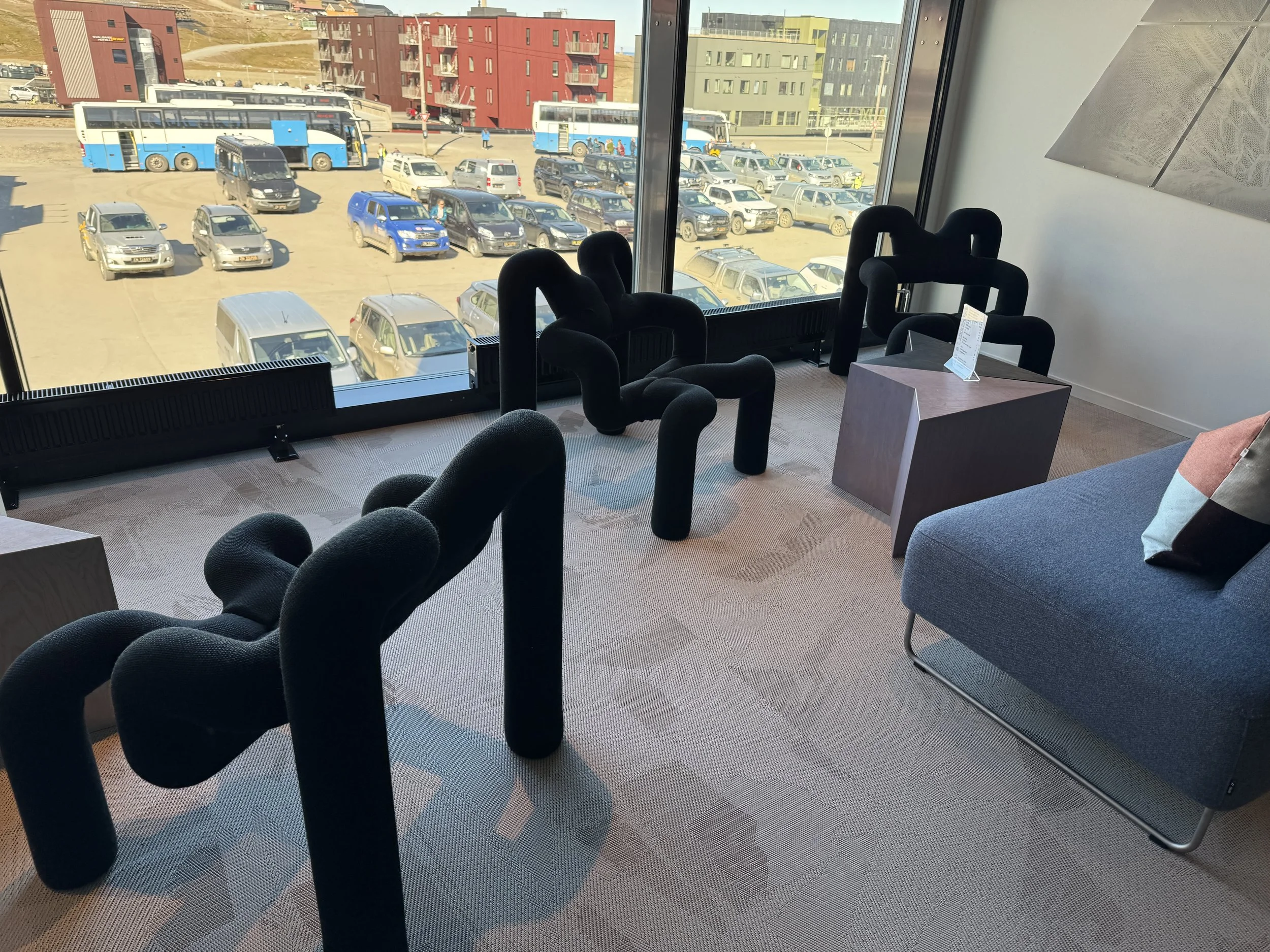
We wanted coffee and Maggie knew where. Nordover sits in the pedestrian street beside the shop, and it took the job over when Galleri Svalbard closed. It holds the Kåre Tveter collection, a rotating show, a cinema, and a café upstairs looking down over the buses. We took our shoes off at the door, went up, and sat in two of the strangest chairs I have ever put a body into, which turned out to be some of the most comfortable. We never once looked at the exhibition. Two artists at 78 north in an art centre, drinking coffee and going through the gift shop.
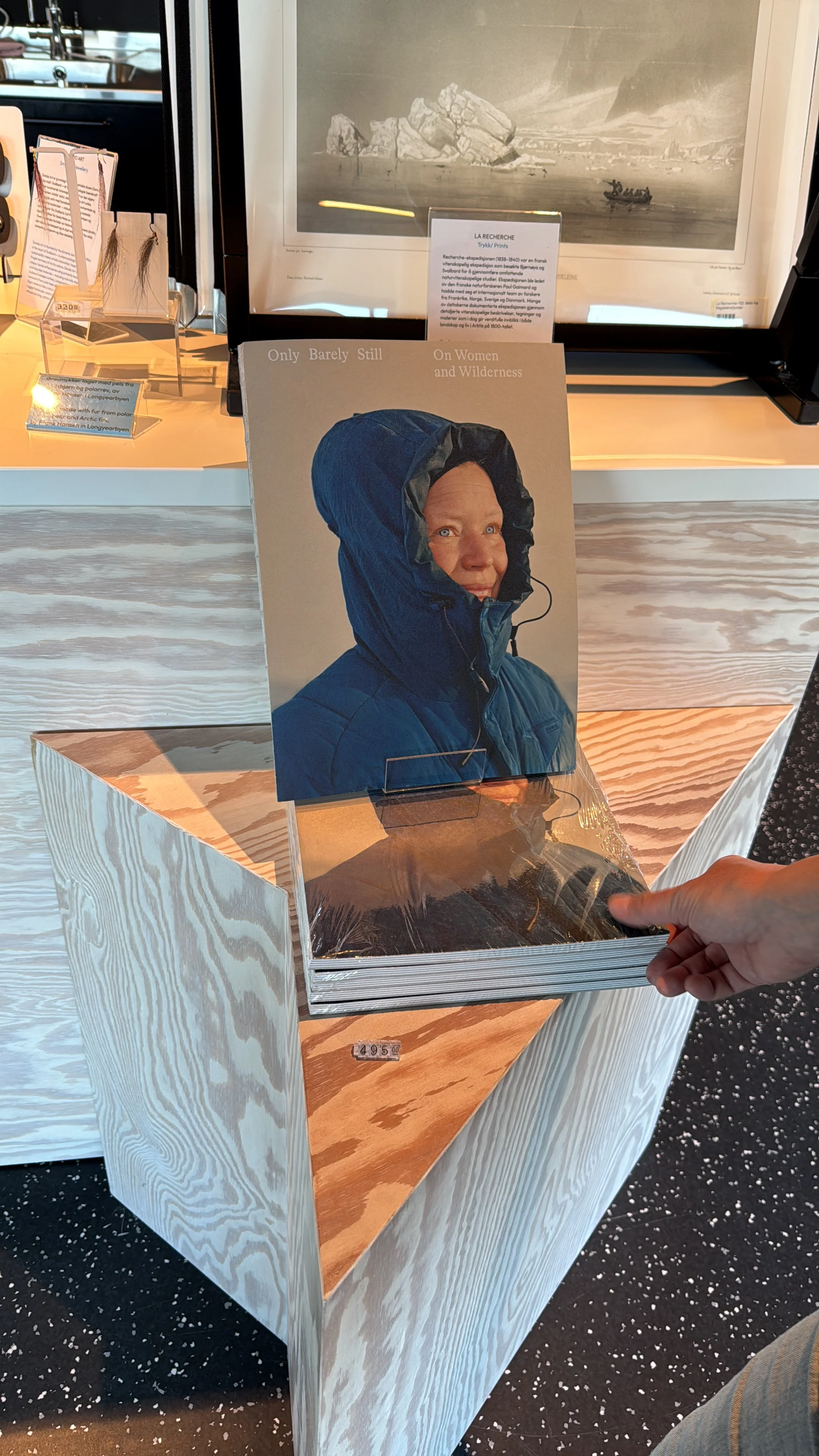
Upstairs, before any of that, I had picked up a book. Grey cover, a woman in a blue hood looking straight out of it. Only Barely Still, On Women and Wilderness, by a Belgian photographer called Catherine Lemblé, who first went to Svalbard in 2017 and kept going back for eight years to photograph the women who live and work there, the guides and the mechanics and the researchers, against the old story where only hard men survive up here. The woman on the cover is Sarah. I stood in a gallery in Longyearbyen on the last morning and found the person who had run my sixteen days on the front of somebody else's eight years.
An American woman came over. She had moved to Svalbard years back and she told us how, and then she told us the rest of it, and Maggie and I sat there with our cups going cold and our manners holding. There is a version of me who says we really have to be somewhere. I have never met him. Then Vicki and Shannon walked in. The four of us went for lunch, and not to Station, which I had already worked twice. We went to the pub at the Radisson, which calls itself the northernmost in the world and is where that town goes when it wants to be among people. A friend of half the boat works there. Her name is Ruth. She is British, she waits the tables and works the bar, she does tattoos, and she is an artist. She was going to put the polar bear on my arm the day before until the day ran out of time. I was coming down with something by then and did not order a beer, which had not happened once in sixteen days. That was the cold arriving. It came home with me and lasted a week.
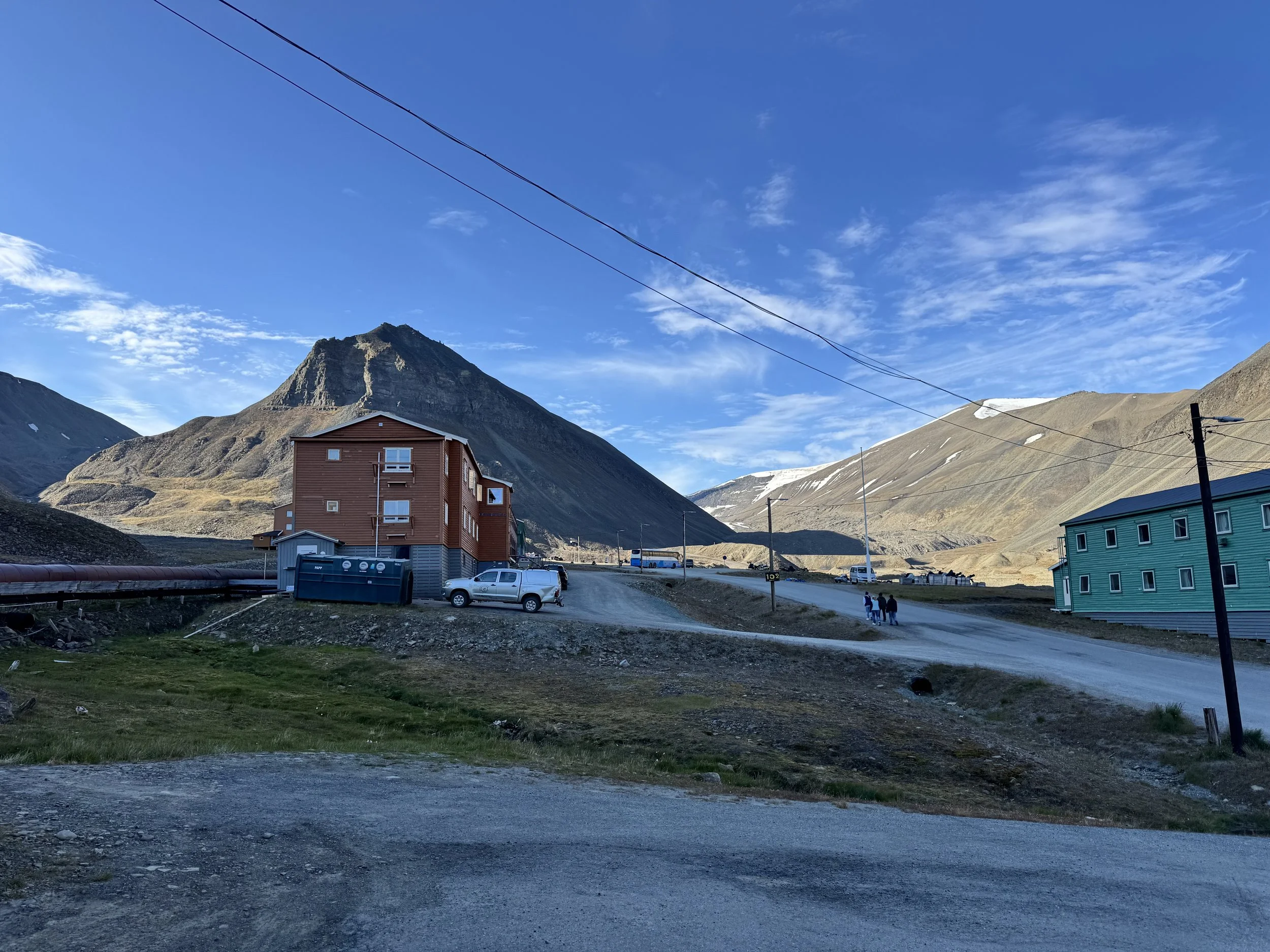
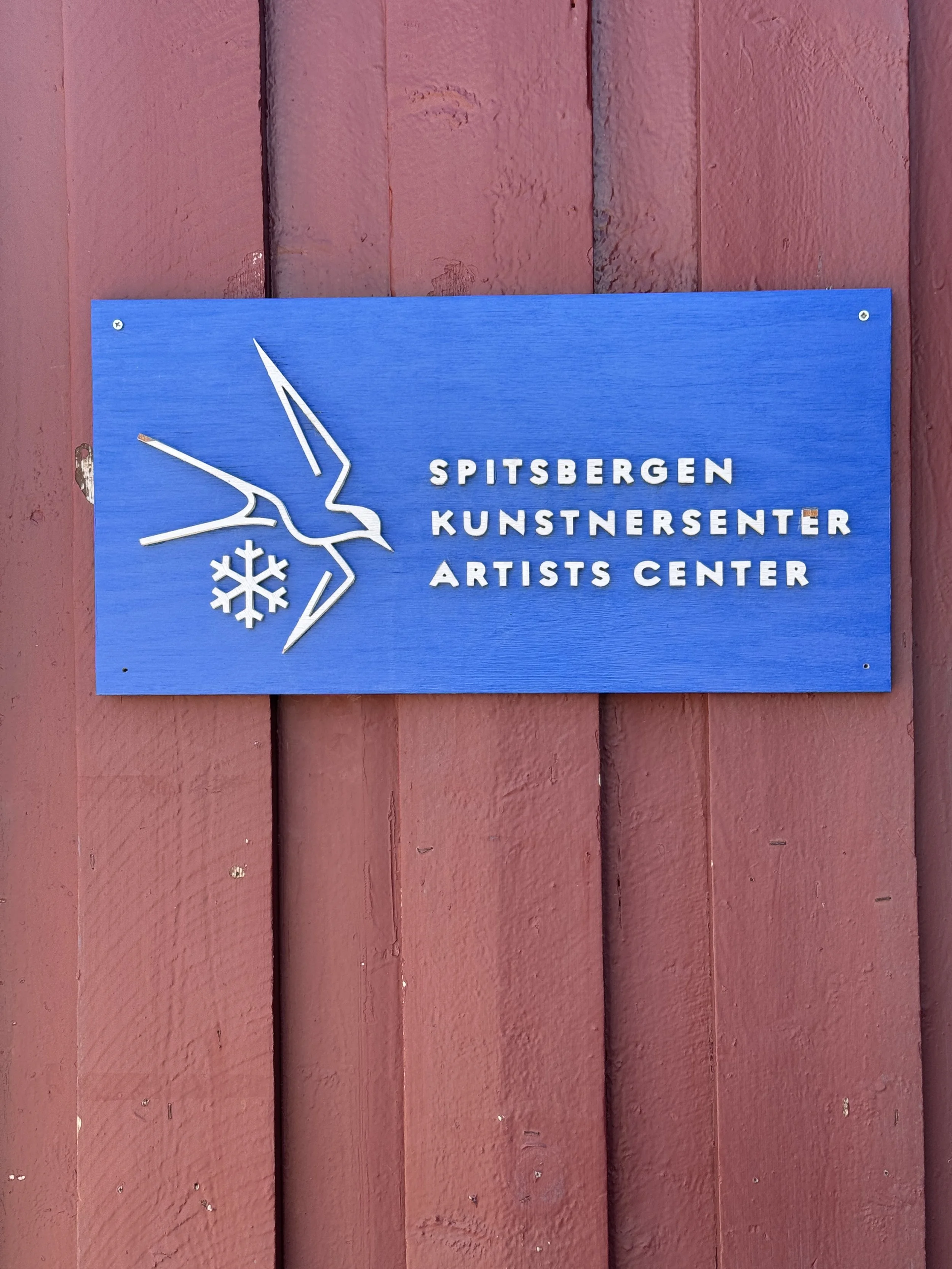
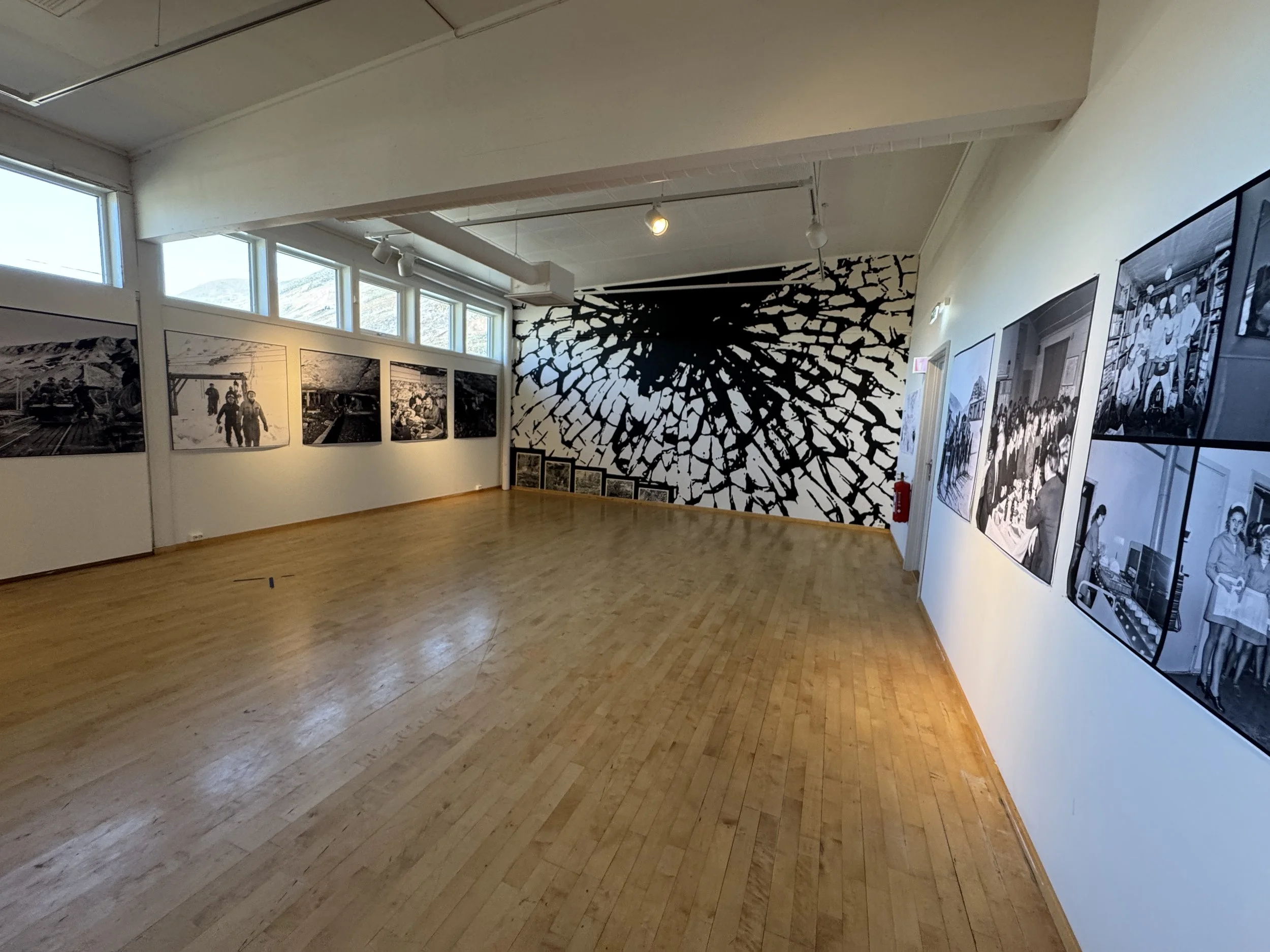
Maggie and I walked back up the valley. Just below the cabins there is a long red building with a blue sign on it, Spitsbergen Kunstnersenter, which went up in 1947 as the store for the miners and now holds eleven studios, a shop, exhibition rooms and a residency on the floor above. I ate dinner beside that building on day zero without understanding what it was. On the last afternoon I went in.
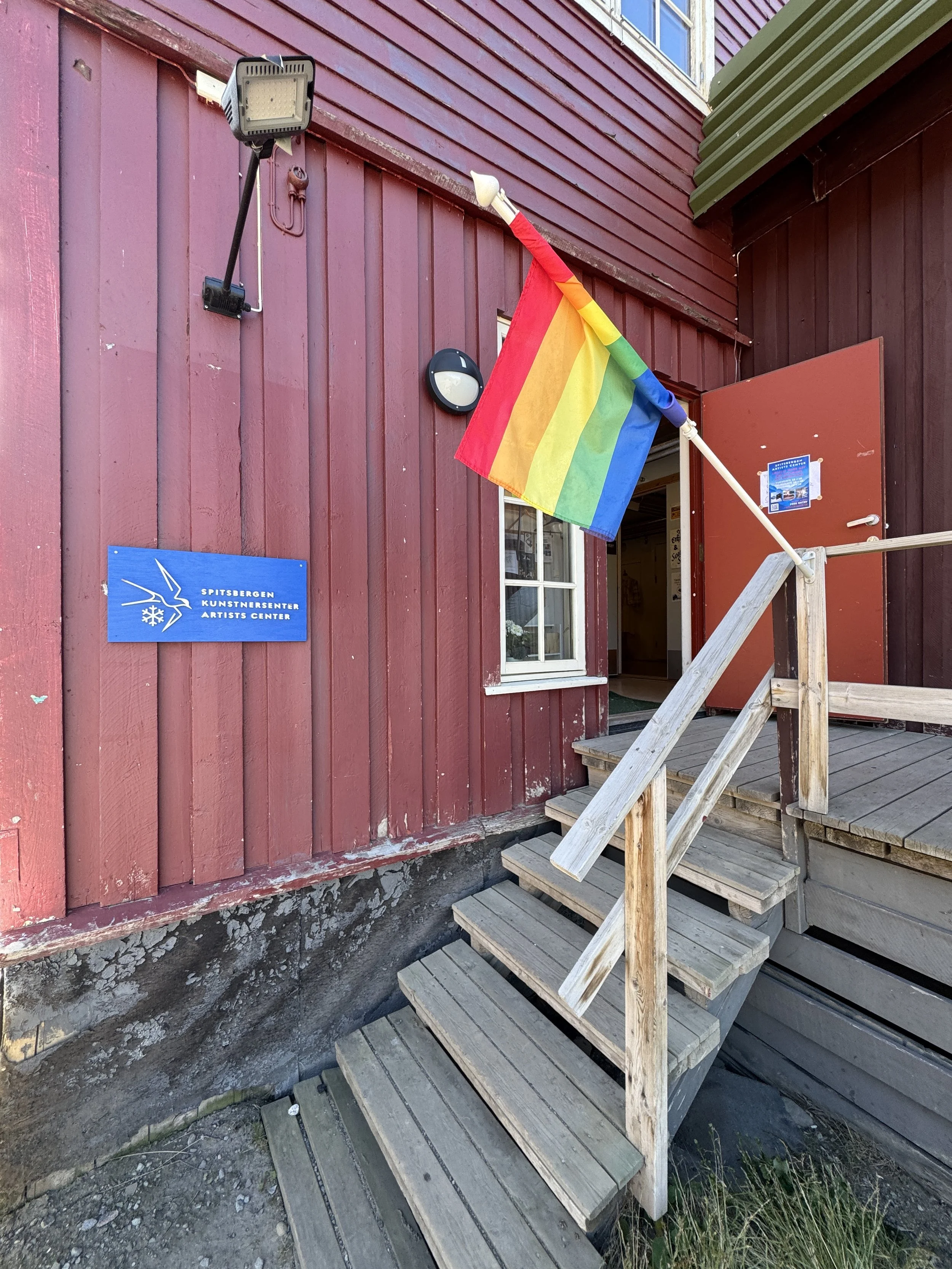
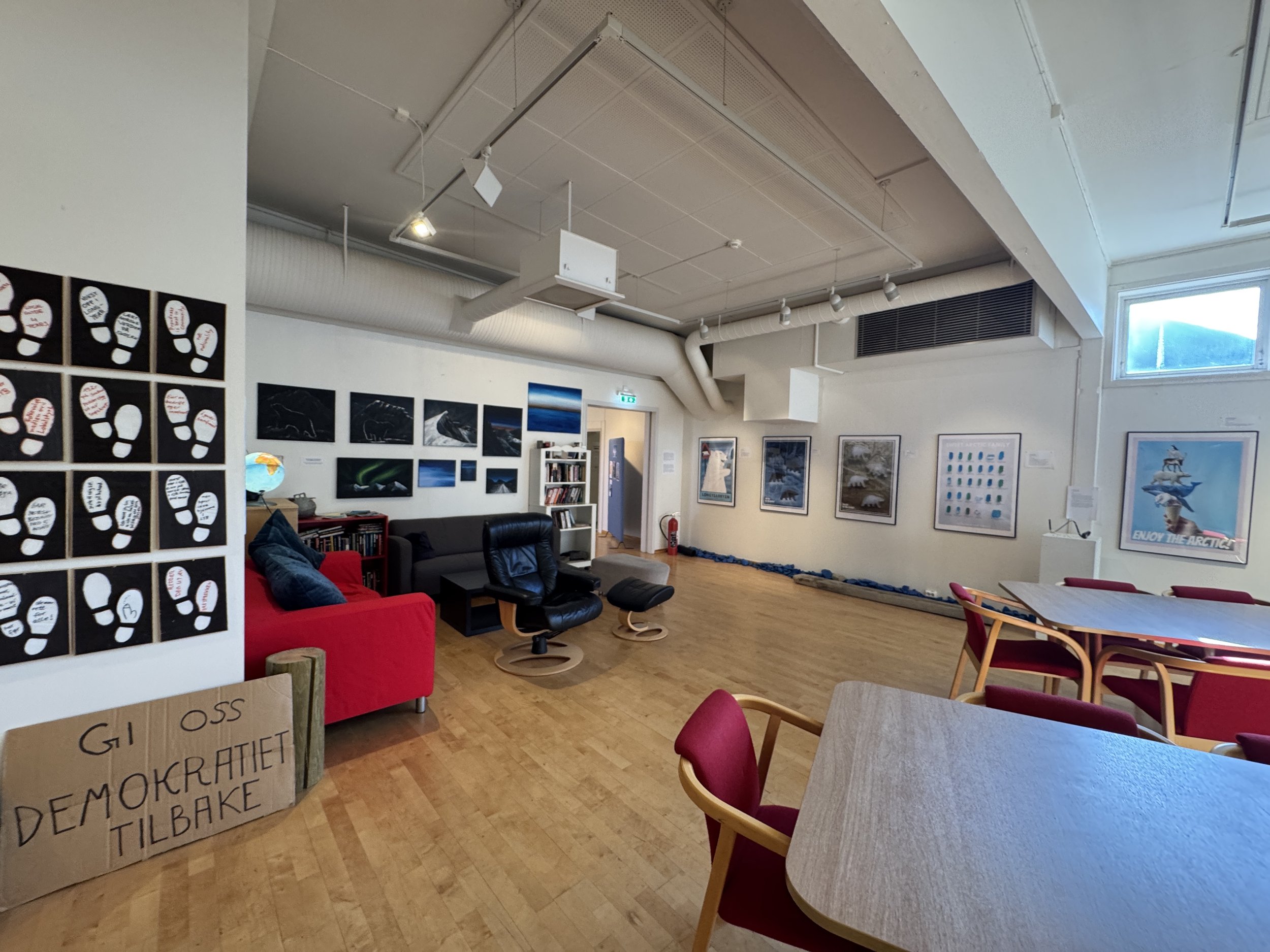
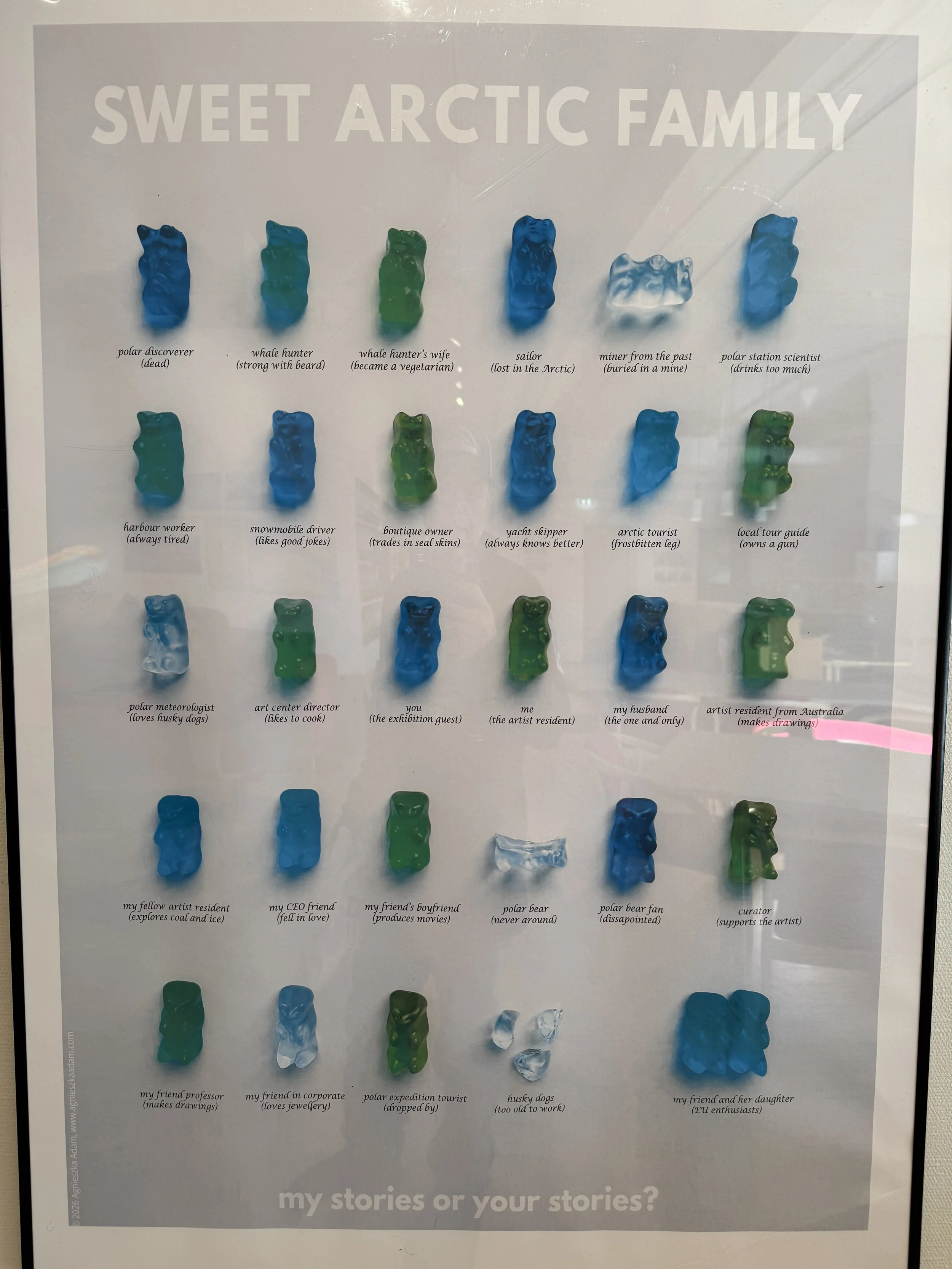
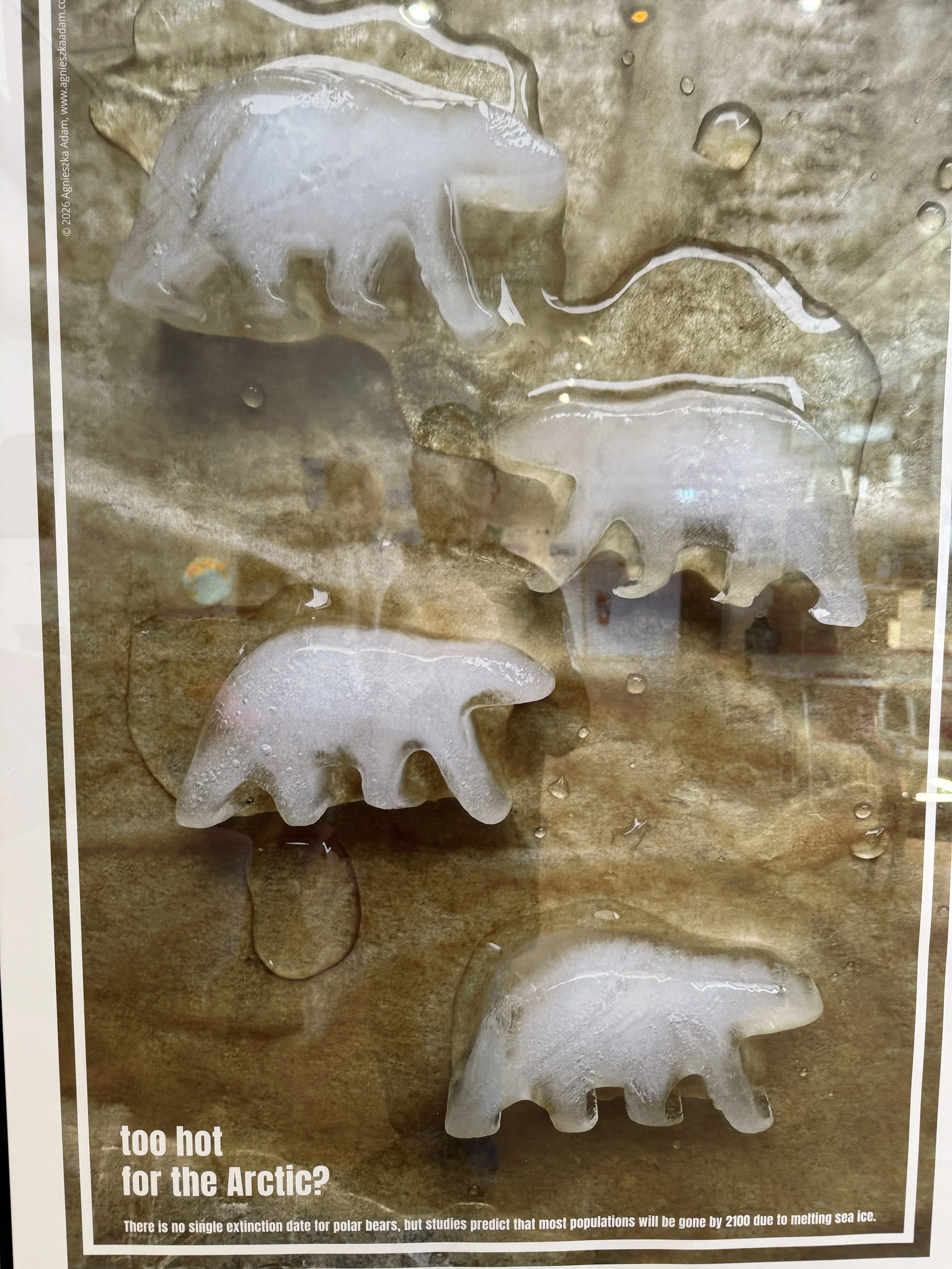
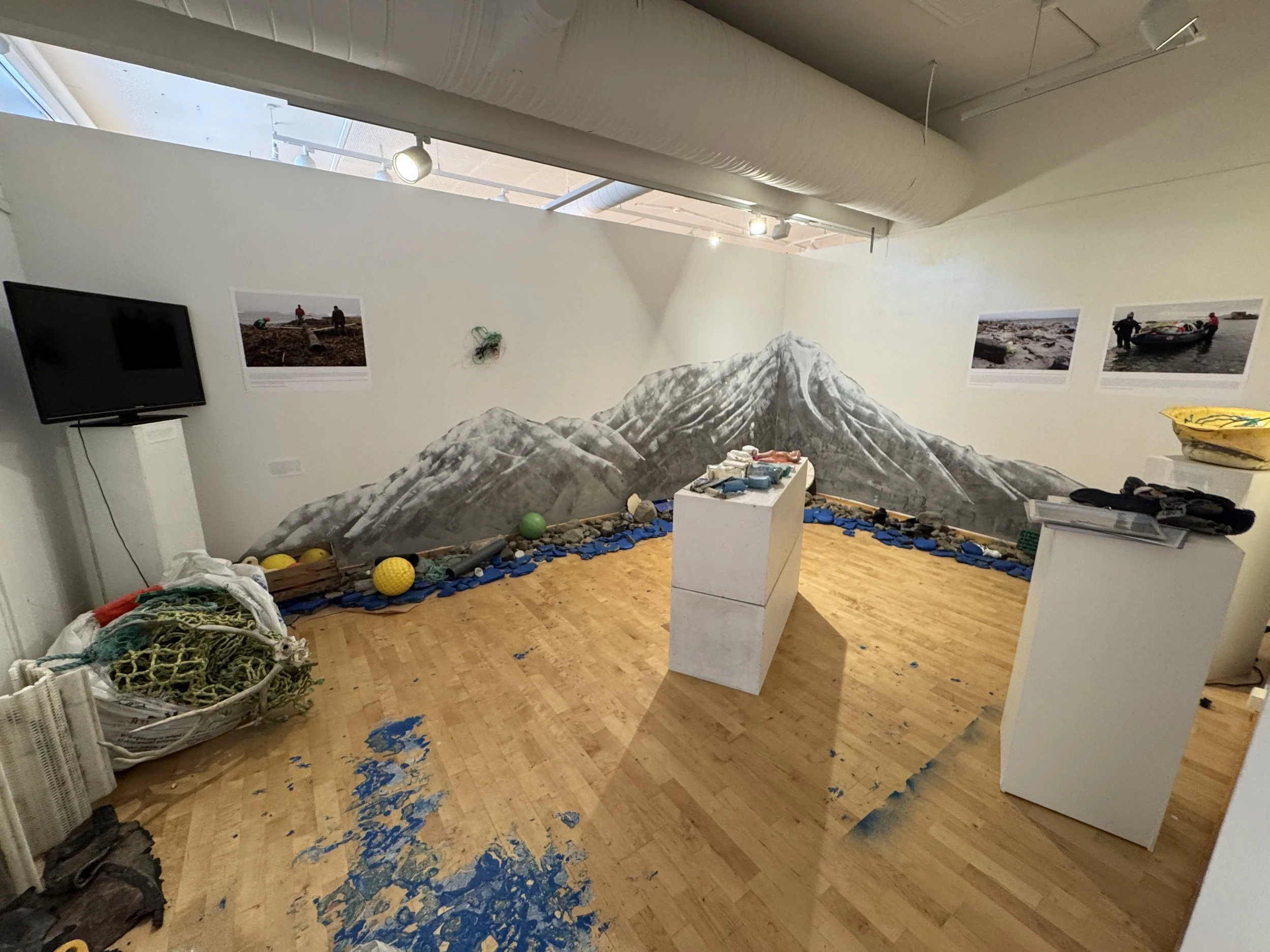
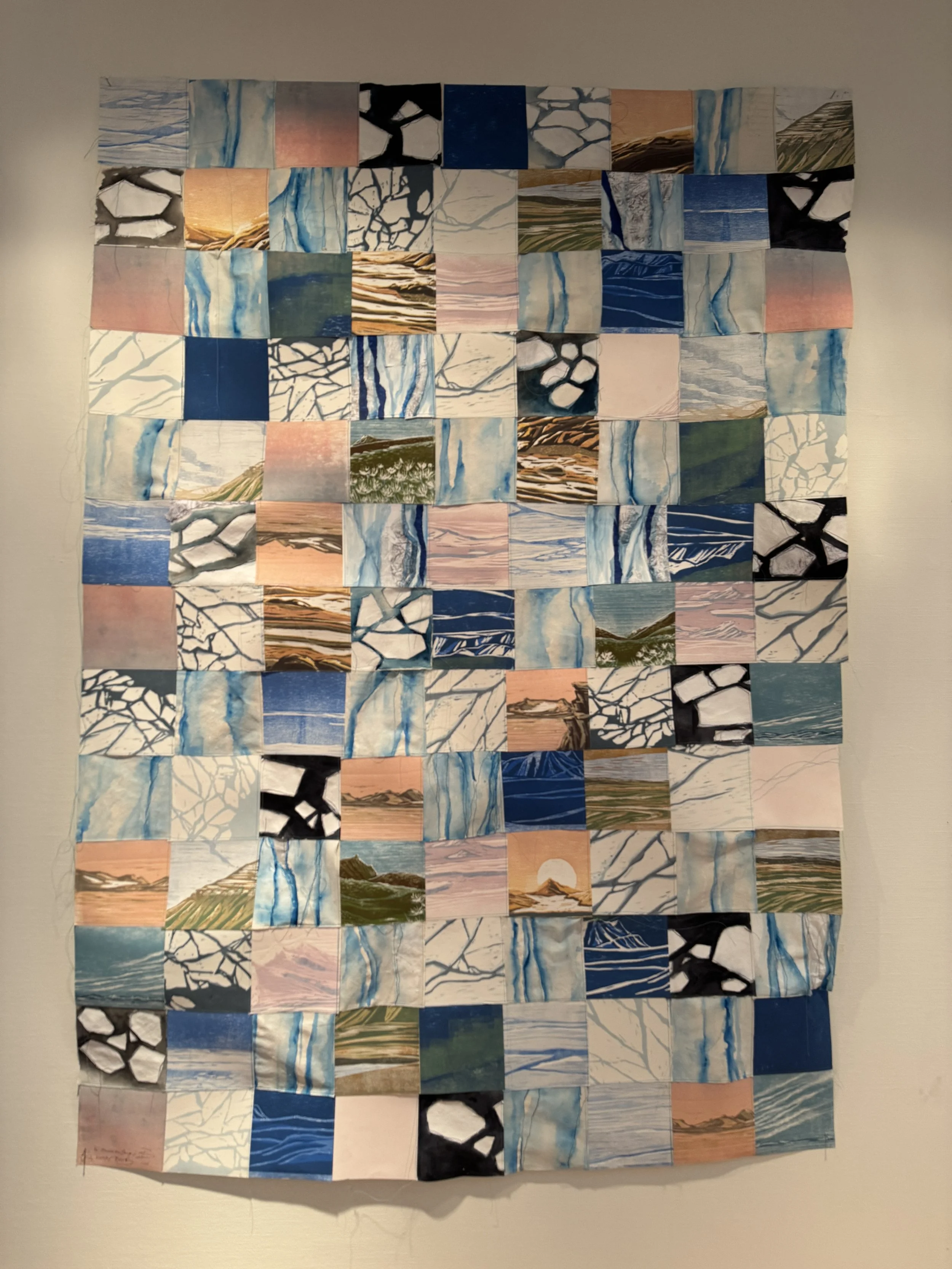
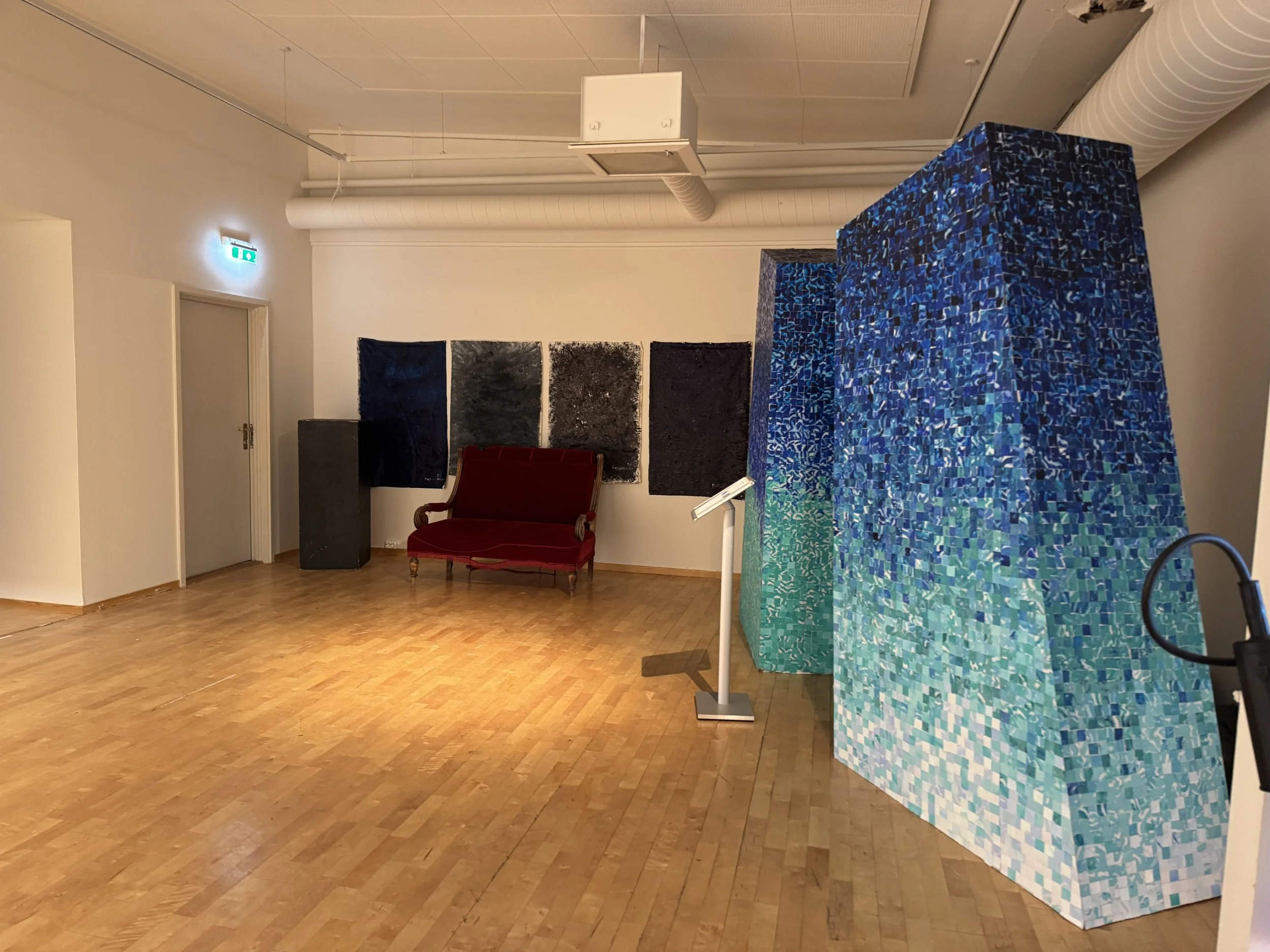
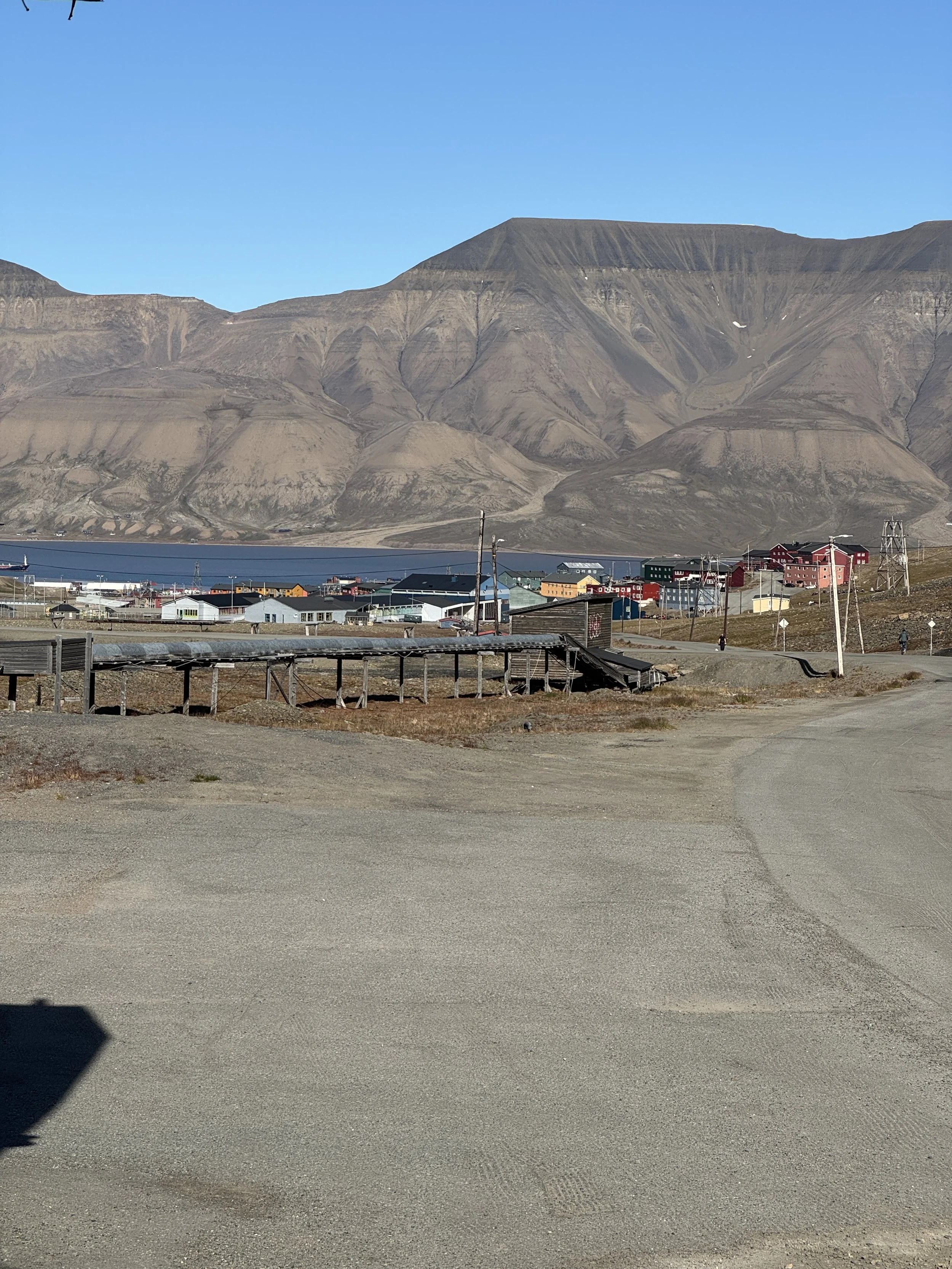
There was a show up by Agnieszka Adam. One piece is a grid of gummy bears on grey, each with a caption, a whole society of them. Polar discoverer, dead. Miner from the past, buried in a mine. Arctic tourist, frostbitten leg. Polar bear, never around. Another is four bears cut out of ice, melting into their own puddles, with a line at the foot about most populations being gone by 2100. In the next room somebody had built a coastline out of the things that wash up on one, ghost net and buoys and rope, with a mountain drawn on the wall behind it. When I got home I applied, and they took me. I will be back on the 24th of April until the 10th of May, on land this time, with a room and a studio and no ship under me. Maggie has an April residency there. In the last entry I wrote that I had already booked it again and that this gave away more than I intended. That is what I meant. Before I left the building I turned round and took a run of frames back down the valley at the town, with the pipeline crossing the foreground on its stilts and the water at the far end. They are not good photographs and they were never meant to be. I wanted the shape of the place from the last spot I stood in it.
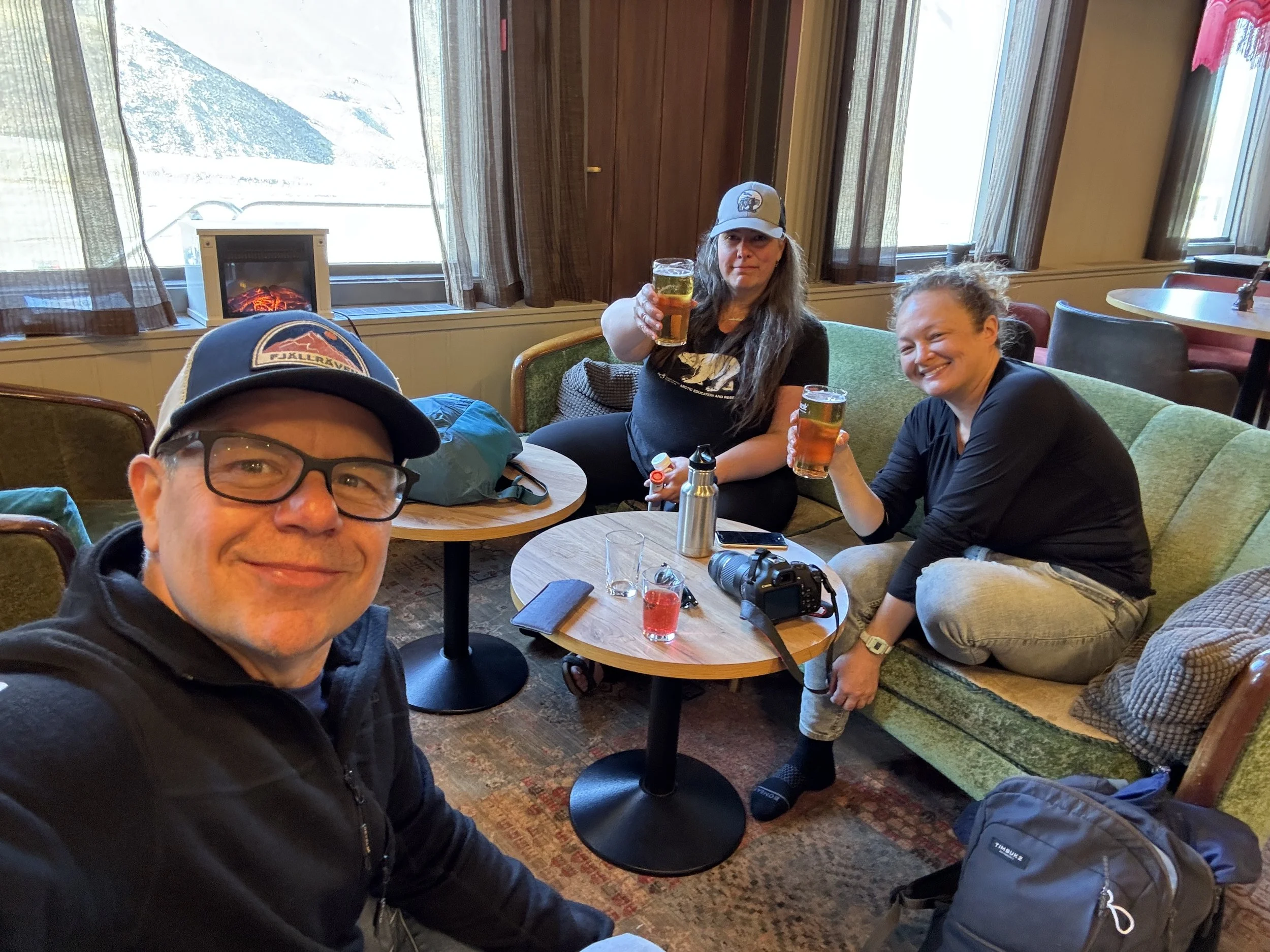
Day 16th. The last of us
Sarah came for us at two. Gergő was on the same flight, which neither of us had known until that week, so the two out of cabin five went home in the same plane. Maggie and Shannon were there for a last good bye. Sarah said something I am going to get a little wrong, and she said it to everyone standing there. This is the hard part. She is Sarah the guide for fourteen days, and the job runs the whole way and then it stops, and on the one morning she would like to turn round and say hello, I am Sarah, what is your name, everybody has to leave. Then her eyes got a bit wet and so did the rest of ours. She would have liked to know some of us as more than just passengers. That window opens on the last morning and shuts the same afternoon, and it opens again on the next voyage, and the one after that. Guides protect themselves. They have to. They meet more people in a season than most of us meet in a decade, and every one of those runs sixteen days and finishes on a gravel road with a plane waiting. Sarah does it too, and she is entitled to. Which is what makes the thing she said beside that car worth writing down. She did not owe any of us that one. At the airport she helped me carrying those f*** Duffel bags in from the car, and then she gave me a hug that went on. You can feel that going through the both of you and coming back. I started to let go before I meant to and she pulled me in again. More tears form in my eyes.
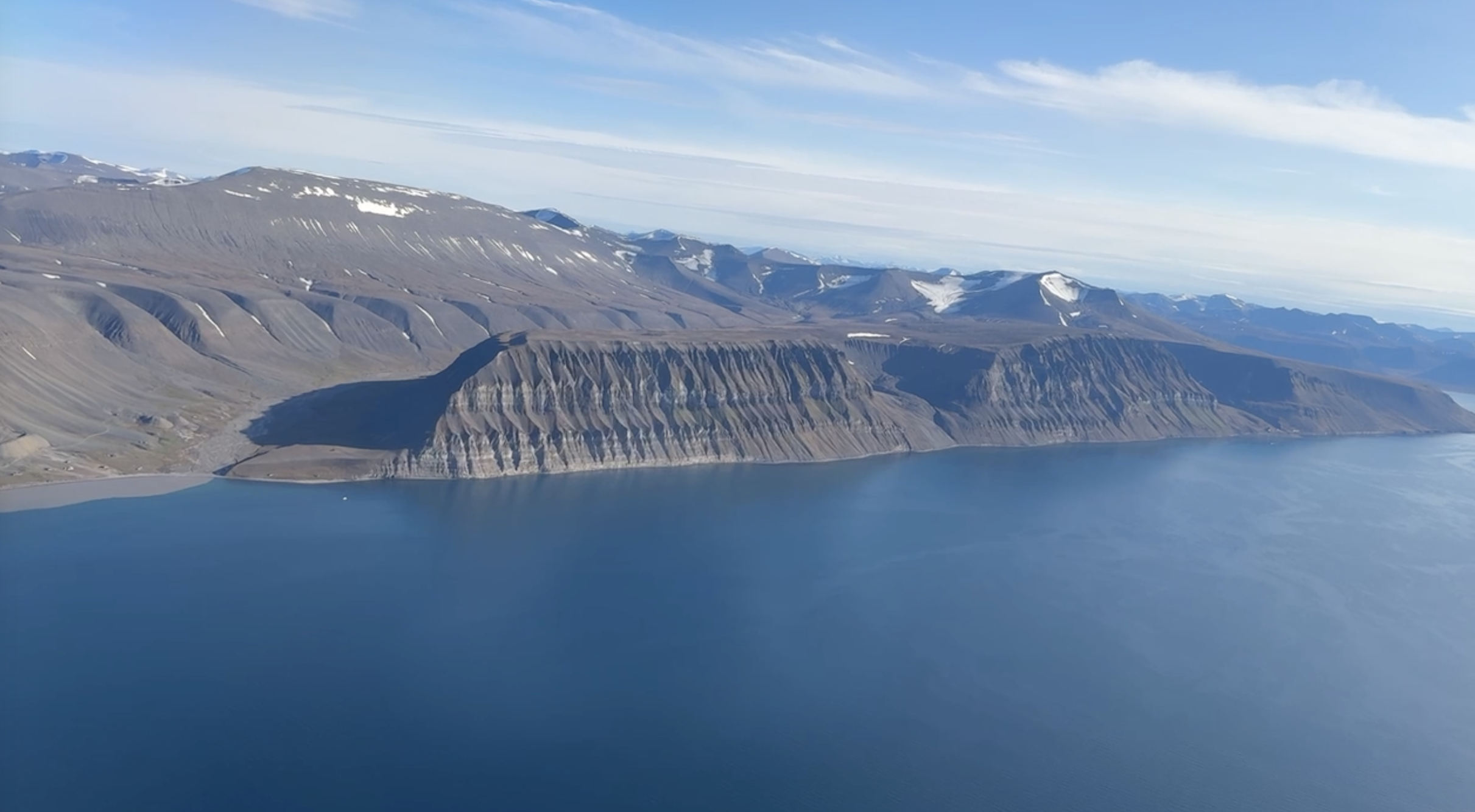
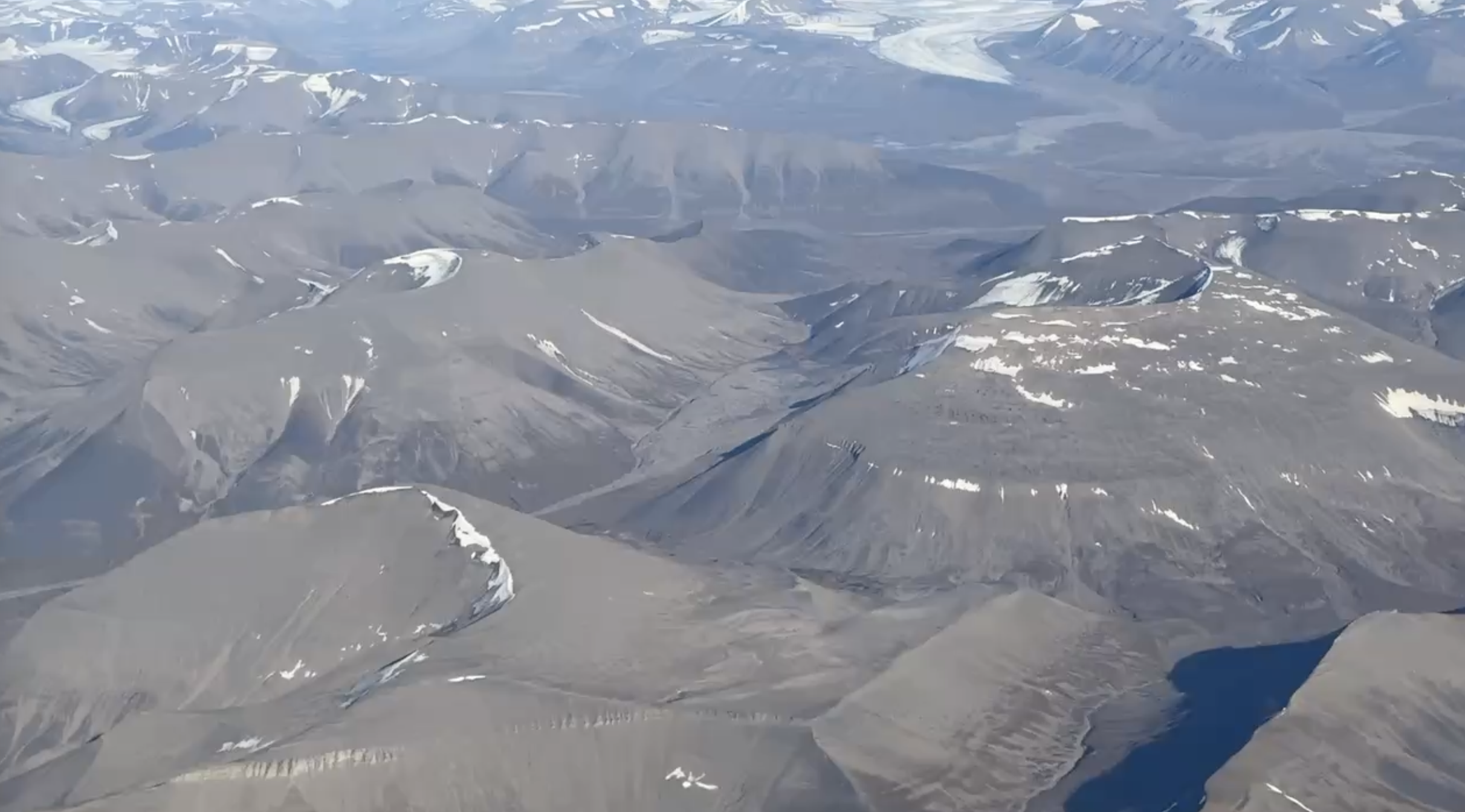
Svalbard has the smallest security I have been through. Gergő said, God, I hope they do not ask us to, and did not reach the end of the sentence before we were asked to take out all electronics. Nowhere else on the entire route had wanted that. So there I was at the top of the world unloading two cameras, a laptop, a drive and a bag of batteries onto a tray. Past the gate the waiting hall was hot, and I do not mean warm. It was a sauna with seating and nobody could tell me why. We went out over the fjord in the afternoon and I got the last frames the same way I got the first ones coming in, lens against the plastic. On the plateau above the airport there is a line of white domes along the ridge. That is the satellite station, and what it does is pull the data down off the polar orbiters as they cross the top of the world, several times a day, including the ones counting the ice. The last object I saw in Svalbard was the machine that measures it.
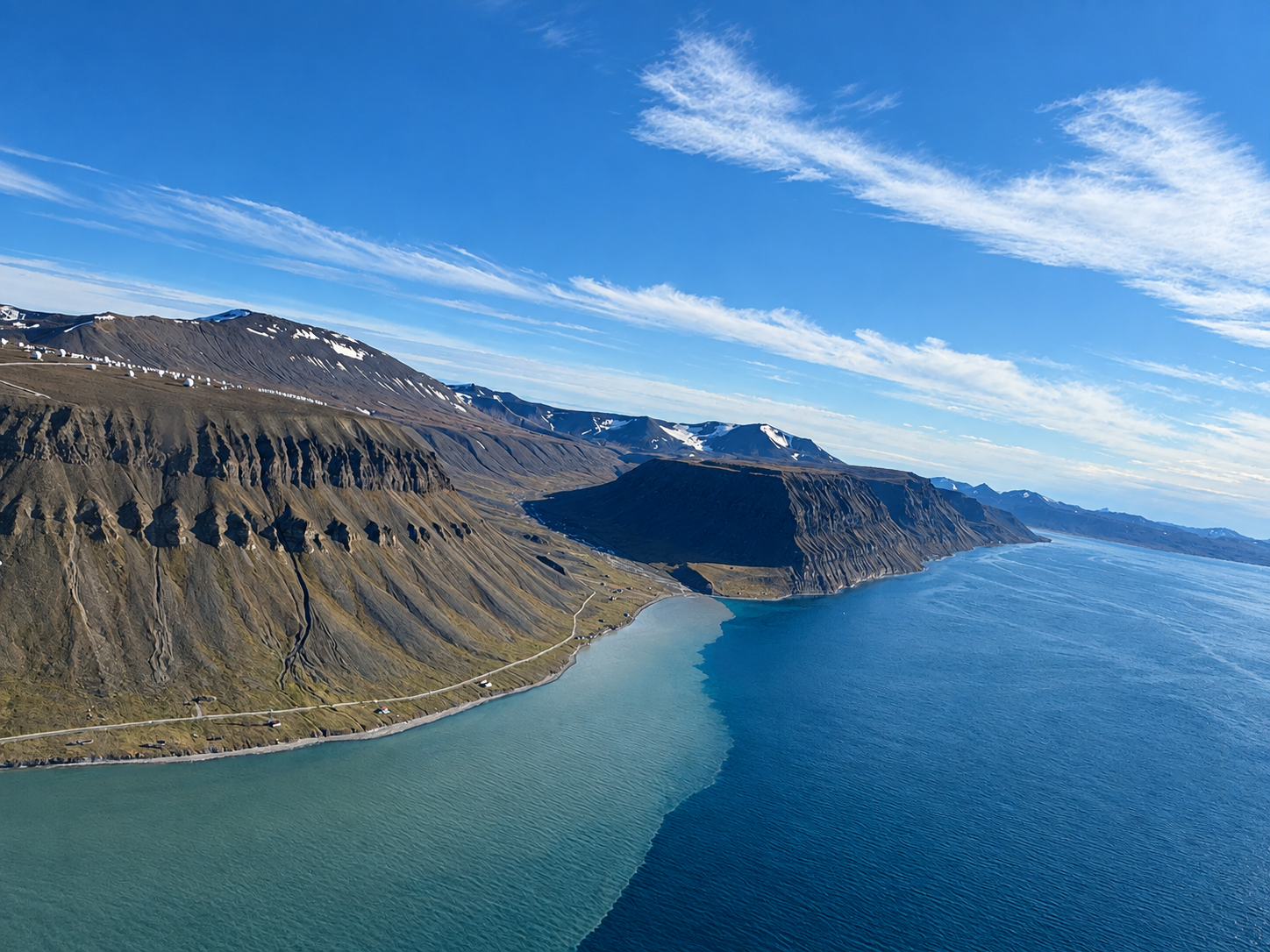
Satellite station. It listens to the polar orbiters. Some of them are counting the ice.
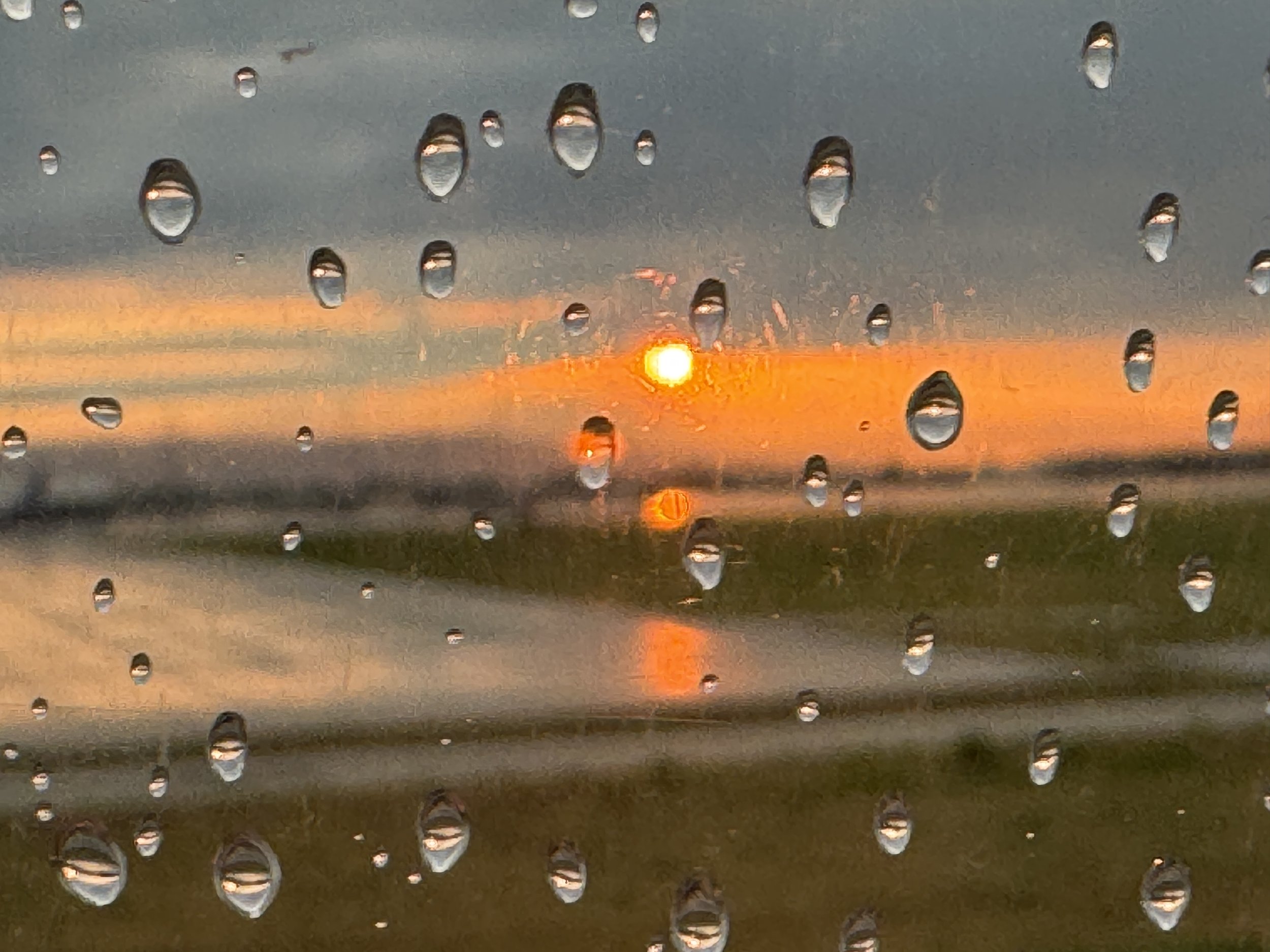
Oslo had thunder and rain and a thirty minute connection, and I made it running. I have a photograph out of that window of the sun on the horizon behind water on the glass. It is not a good picture, and it was the first time in seventeen days that I had seen the sun heading for anything other than round. Then we took off for Copenhagen and I understood what was about to happen. I was going to fly into the night. I had got used to a day with no lid on it, sun at ten and sun at midnight and sun at two, and the strange gift inside that, which is that nothing is urgent because there is always more day. I did not want it back. I got it anyway, over Denmark, and I have already written what that was like. Copenhagen was late and the baggage hall was full and nothing came down the belt for a long time. I stood there most of an hour with a thousand strangers after sixteen days of thirty-two faces. Watching all of it move, everybody with a bag and somewhere to be, so many people that it felt suddenly very overwhelming and I had a thought arrive that I did not want. We are the virus on this planet. I had just come off a ship burning diesel to carry me to the top of the world so I could look at it, so that sentence has me inside it, and I do not know what to do with it beyond putting it down here. Then I got to the hotel, felt worse, and went to bed in a room by myself for the first time in sixteen days. I somehow did not enjoy that either.
The Dark Returns
At breakfast the next morning a kid at the table behind me asked how you pack a suitcase, and I turned round to check, because after sixteen days I could no longer be certain it was a kid. Let’s just say people asked a lot of questions during the past sixteen days. Then eleven hours to San Francisco. Denmark was still out of the window when I opened the laptop and started dragging footage into Adobe Premiere. Four minutes, cut somewhere over the Atlantic. First Svalbard impressions. It runs under a piece by Ólafur Arnalds called Undone, off some kind of peace, and I chose it for the woman who speaks at the start. She talks about how small a person can feel inside something beautiful and endless, and about the difference between dying and being born, and I cut the film to her. The parts we had just witnessed, and the parts underneath them.
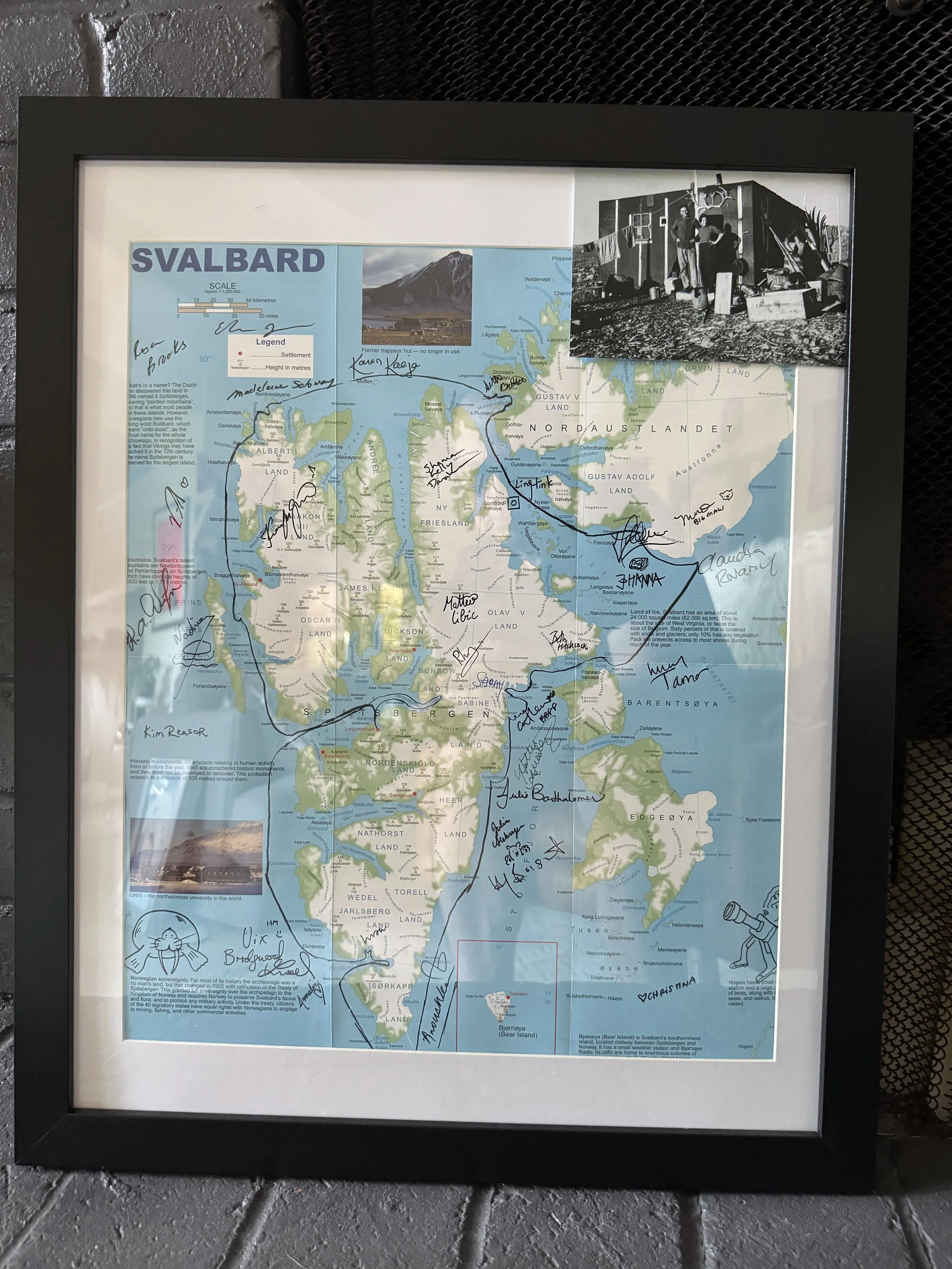
My son picked me up. The best thing about that landing was his face at the other end of it. He is the same height as Gergő, which I noticed on day zero and thought about for two weeks, and I was gladder to see him than I knew how to say in a car. He asked how it was on the drive, and I have already written about the failure that question produces in me, so I am not doing it twice. The map came out of the bag that night, the one I drew our track onto and carried around the ship until every artist and every guide had signed it. It was framed and standing on the mantle inside two days, with a photograph of Christiane Ritter and her husband outside their hut mounted at the top right, because she came the whole way with me.
I finished her book this morning. I started it before I flew north, and on a beach at Camp Heaven Cathleen was twenty pages ahead of me and had to explain what I was standing on, and it has taken me until September to catch her. That was not the book's fault. I slowed down on purpose, because I did not want to be finished with it. Near the end of the winter she watches the ice in her fjord begin to go. Blue and watery patches showing in the white, a fissure opening around the peninsula and widening with the wind until it is as broad as a river, and then one day with a south wind behind it the whole fjord empties and the floes go past the coast at the speed of an express train. She wrote that about spring. I stood in front of Fuglefjorden in July and watched a wall of it come apart for four and a half hours and that was not spring. The words are the same. What sits underneath them has changed. I saw the end of the movie, and once you have seen that, a great deal of the rest of it goes quiet. So I am moving faster. Things I had been carrying around for a while have dates on them now, and the reason is not complicated. Sixteen days went past me like a hand closing, the ice goes the same way, and it is not waiting for us to finish looking. I am not going to ask you to be aware of anything, because I wrote a whole entry about how much I hate that word and I have not changed my mind since. The question I have instead is harder. What do we actually do?
Here is one thing, and it is small and real and it has a deadline on it. That red building in Nybyen holds studios and workshops for seven local businesses and four independent artists. Since 2025 it has taken in more than a hundred artists from over twenty-five countries, put on more than seventy exhibitions and events, and had around five thousand people through the door every year, including me, for four minutes, on the last afternoon. The decision to sell it has been made. The lease runs out in 2027 and there is nothing affordable left in Longyearbyen that can absorb everybody who has to move. The people who run it have a petition asking the local council to come up with a plan for those people, and to exhaust every alternative before the creative life of that valley gets pushed out for good. It closes on the 9th of December and it was a few dozen names short of its target when I wrote this. openpetition.org/xvsvw. It takes a minute. I will be working in that building in April. Please sign this!
The photographs came home with me and so did the cold, but the part I keep going back to is the people, so before I stop I am going to name them.
Sarah, Lisa, Rhys and Beth are the best guides anybody could hope to be handed. Their job on every landing was to stand out in the cold with a rifle at the edge of the group so that twenty-eight people could put their heads down and work without thinking about what might be coming along the beach. They did that for two weeks. Joachim and the crew ran a flawless ship. He took us into places without any visible fear about it, and said exactly what he thought while he was doing it. Victoria ran the breakfast and she ran the bar, and she came in with the same lift in her on all sixteen days without exception, which is harder than it sounds and which made the hours after the landings as good as the landings.
Ling-lin, Hattie, Seth, Eleanor and Rosa thank you for being easy company. Johanna, thank you for the lessons and for the attitude you brought them with. And Gergő. Two grown men, one cabin, fourteen nights, and not one cross word between us. I would take that room again tomorrow.
Then table two. Vicki, Maggie, Cathleen, Christina, Shannon and Annalise. I sat down with strangers on the first night and stood up sixteen days later with friends. We are on calls together, we are still in each other's inboxes, and the conversations that started at that table have not run out. I went for the ice. That is not what I came back with. And to every other artist on that ship, I took something from each of you. Thank you!
A big thank you to my Arctic Supporters! Twelve people paid for parts of this before any of it existed. Ines, Eva, Gina, Maria, Carin, Nikolas, Lottie, Corina, Molly, Vito, Hope and Leena came in at the Arctic Fox and Arctic Tern levels, and they got stickers and postcards out of it. What came out of all of this has gone already further than I expected. On the 4th of November, I am running a session for Gina Danford's artist accelerator, on why counting one revenue stream and calling it your income is how artists get wiped out. On November 16th I am at Oberlin College and Conservatory in Cleveland Ohio, with Ling-lin Ku, standing in front of her students, which I am very excited about.
So that is the voyage. What I have is a boat's worth of photographs and film, a book I finished this morning, another Svalbard residency in April 2027, and one painting in the works that walks off the canvas when you turn the dial, which is still the goal rather than the achievement. This goes on from here, slower and out of order, because none of it is finished. Sixteen days, and thank you for going all the way round with me. I am ending this with Sarah's own words from her last logbook entry: Takk for turen!
“I meet the person I will become.”