Entry 022: Kin: Conversations With People Who Cannot Hear Me
There is a question I have never answered directly, not even to myself. When I paint a musician, what am I actually painting?
Not the face. That much I know. Faces are easy. Cameras do faces better than any brush. Photography can freeze the exact angle of a jaw, the precise tension around the eyes, the way light falls across a cheekbone at a specific moment in 1991. I cannot compete with that, and I have no interest in trying.
What I am after is something a camera cannot hold. Something that exists between the music and the body that makes it. A frequency, maybe. A residue. The thing that stays in a room after the song ends and the lights come up and everyone goes home.
Paul Auster once wrote about the way a book contains the ghost of every reader who has ever held it. I think about that when I paint. A musician's face contains the ghost of every song they ever made. My job is to find that ghost and put it on canvas.
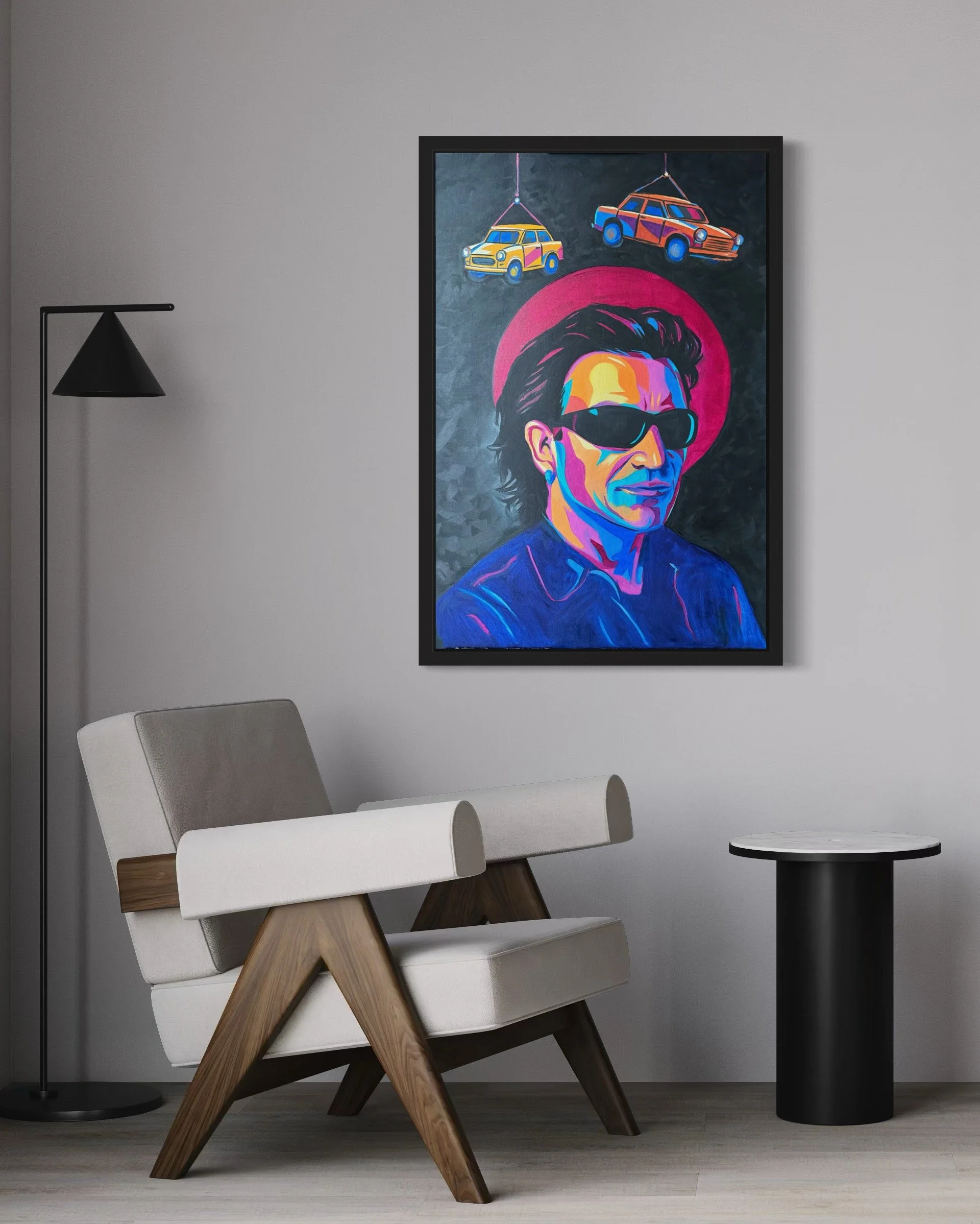
I was seventeen when I heard U2 for the first time in a way that mattered. Vienna, 1992. Sixty thousand people by the Danube. When Where the Streets Have No Name began, the air itself seemed to vibrate. Not metaphorically. Physically. Every cell awake. The world cracked open and turned into sound.
I have seen Bono four times since then. The Elevation Tour, the 360° Tour, most recently at the Sphere in Las Vegas, where my son sat beside me. He was seventeen. The same age I was in Vienna. I did not plan that. It simply happened, the way certain things simply happen when you have been paying attention long enough.
Bono has appeared in my dreams for years. Sometimes sitting on a New York stoop, answering questions I never quite manage to ask. The painting I made of him is a continuation of that conversation. I do not know what I am asking exactly. Something about how a person carries that much sound without breaking. Something about what it costs.
When I paint Bono I am not painting Bono. I am painting 1992. I am painting seventeen. I am painting the moment the world first told me it was larger than I had imagined.
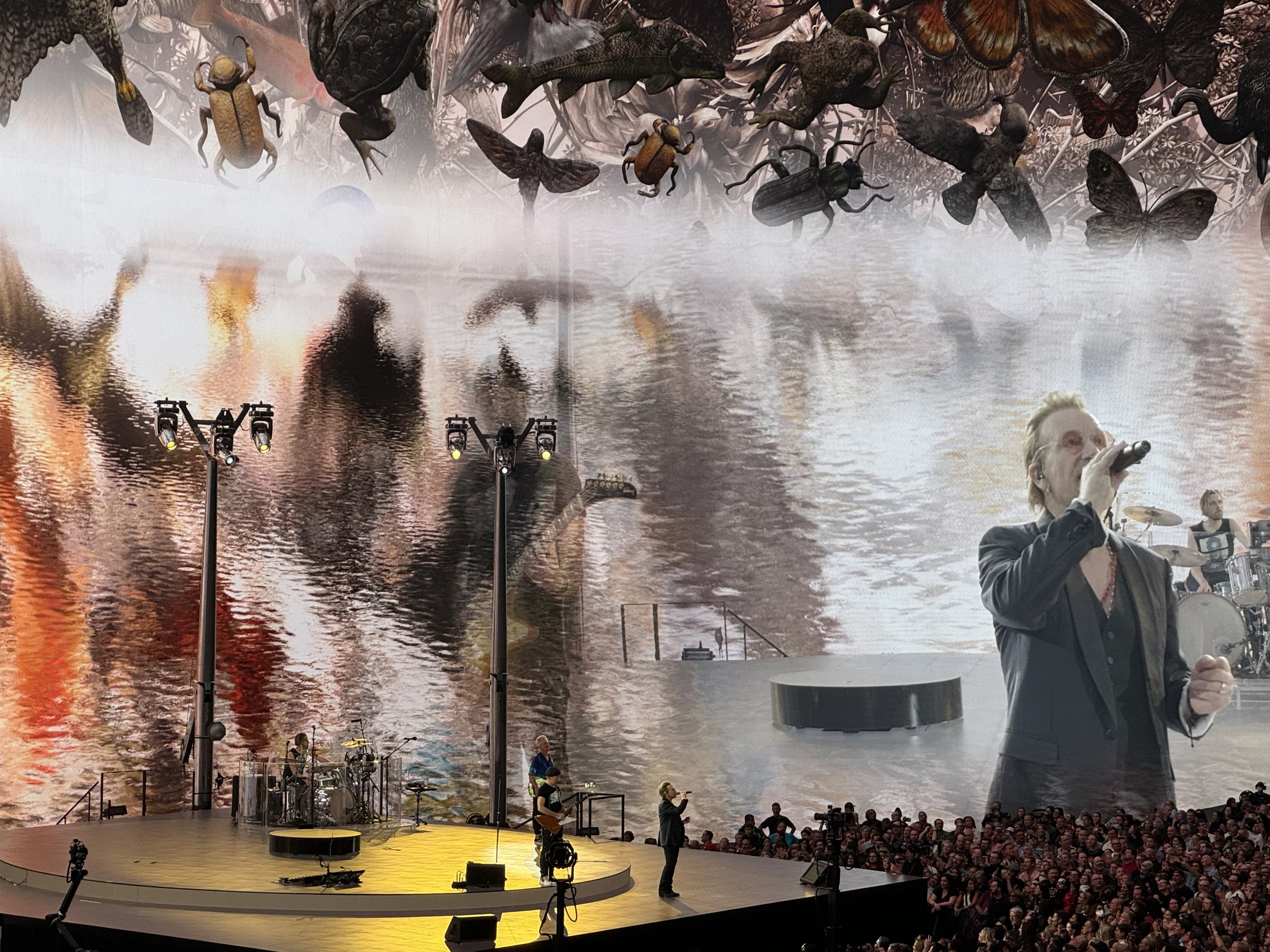
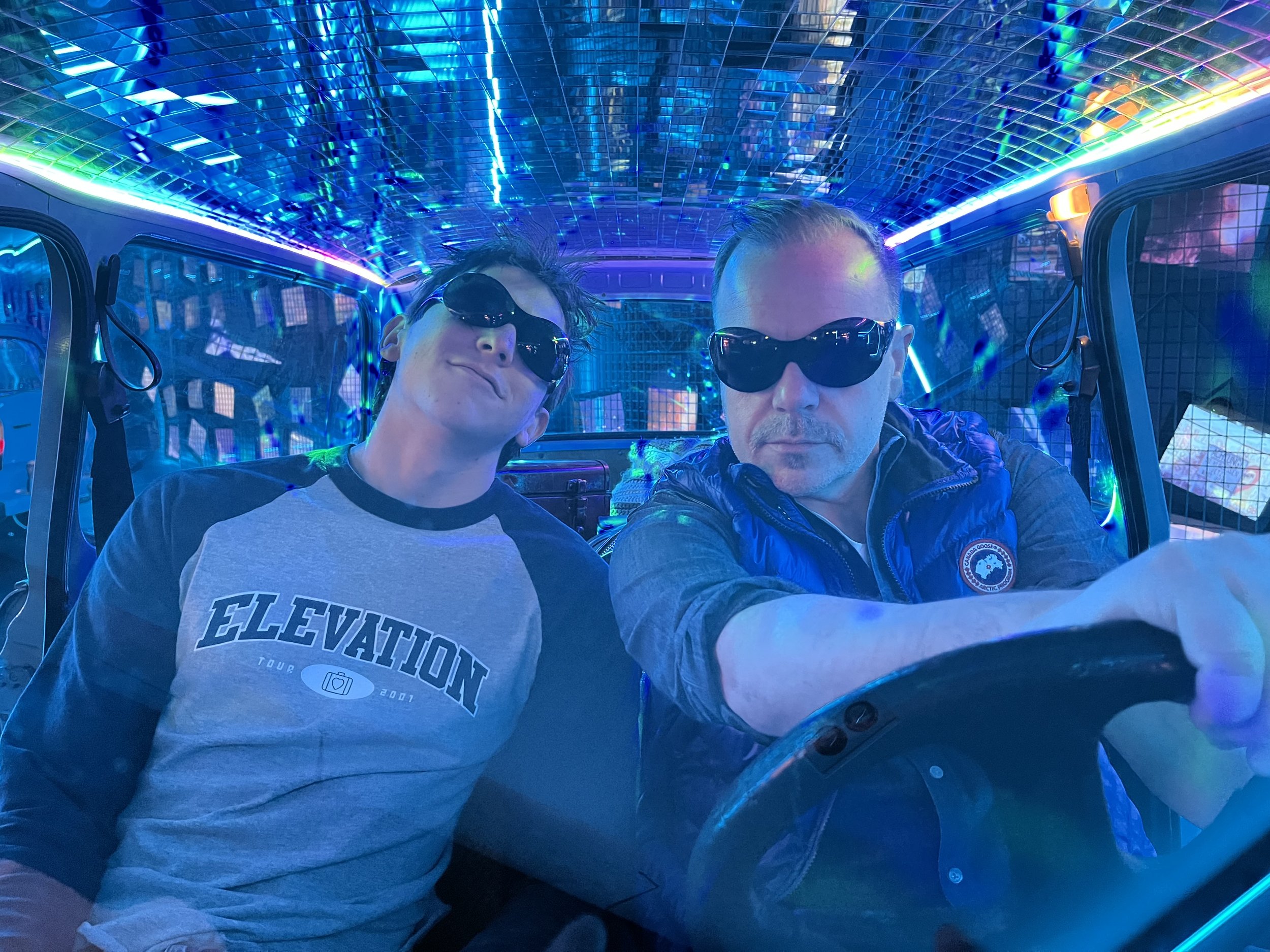
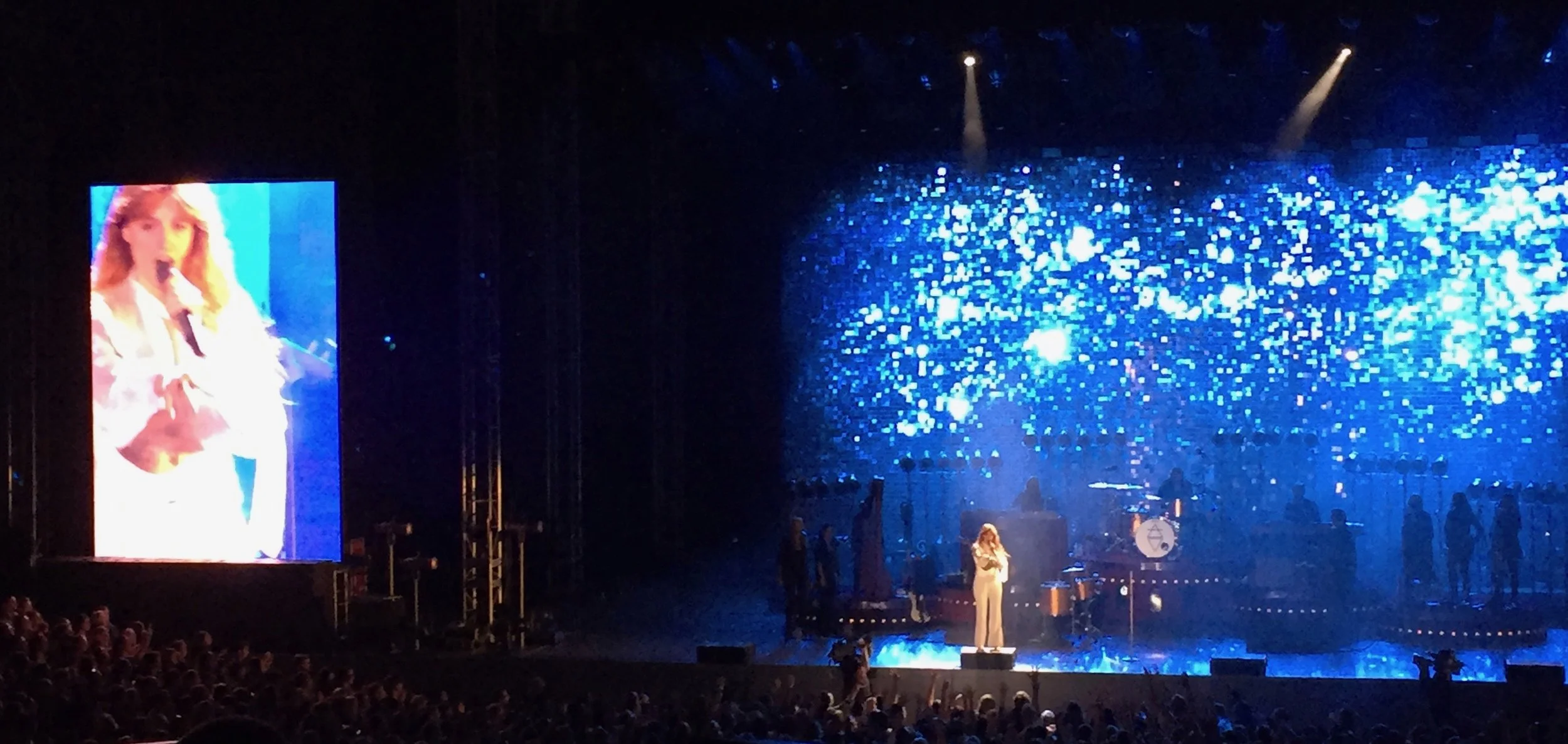
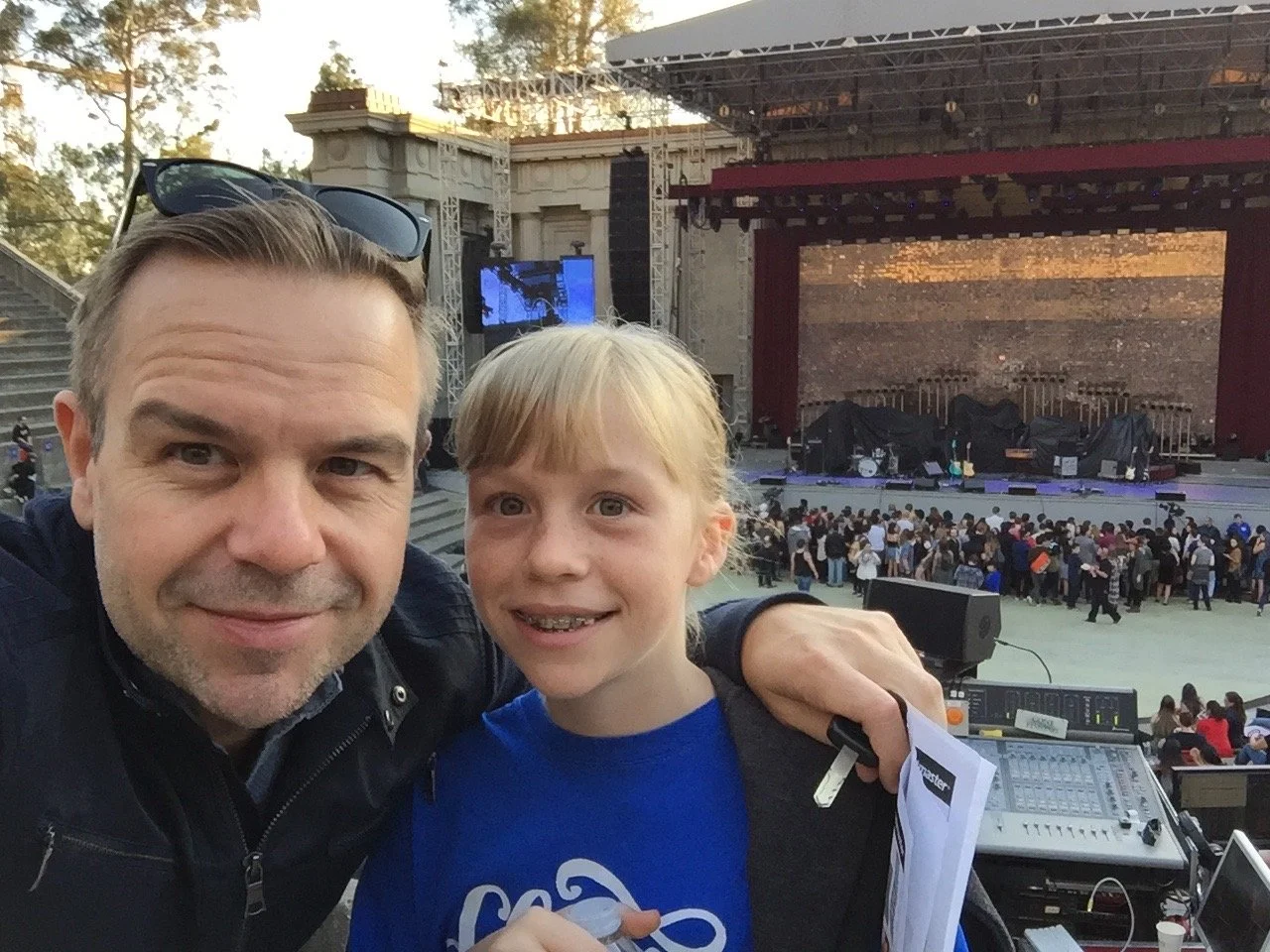
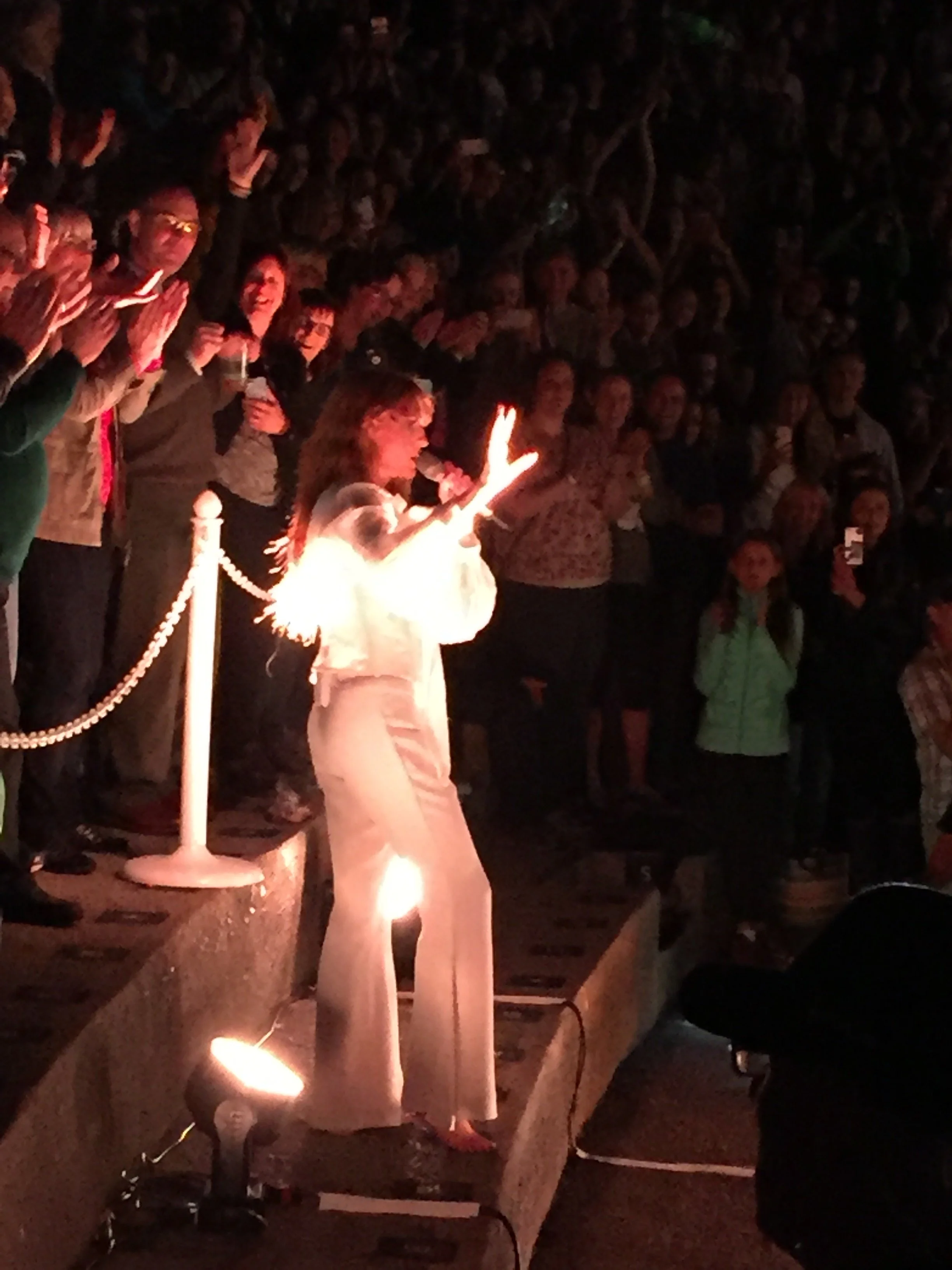
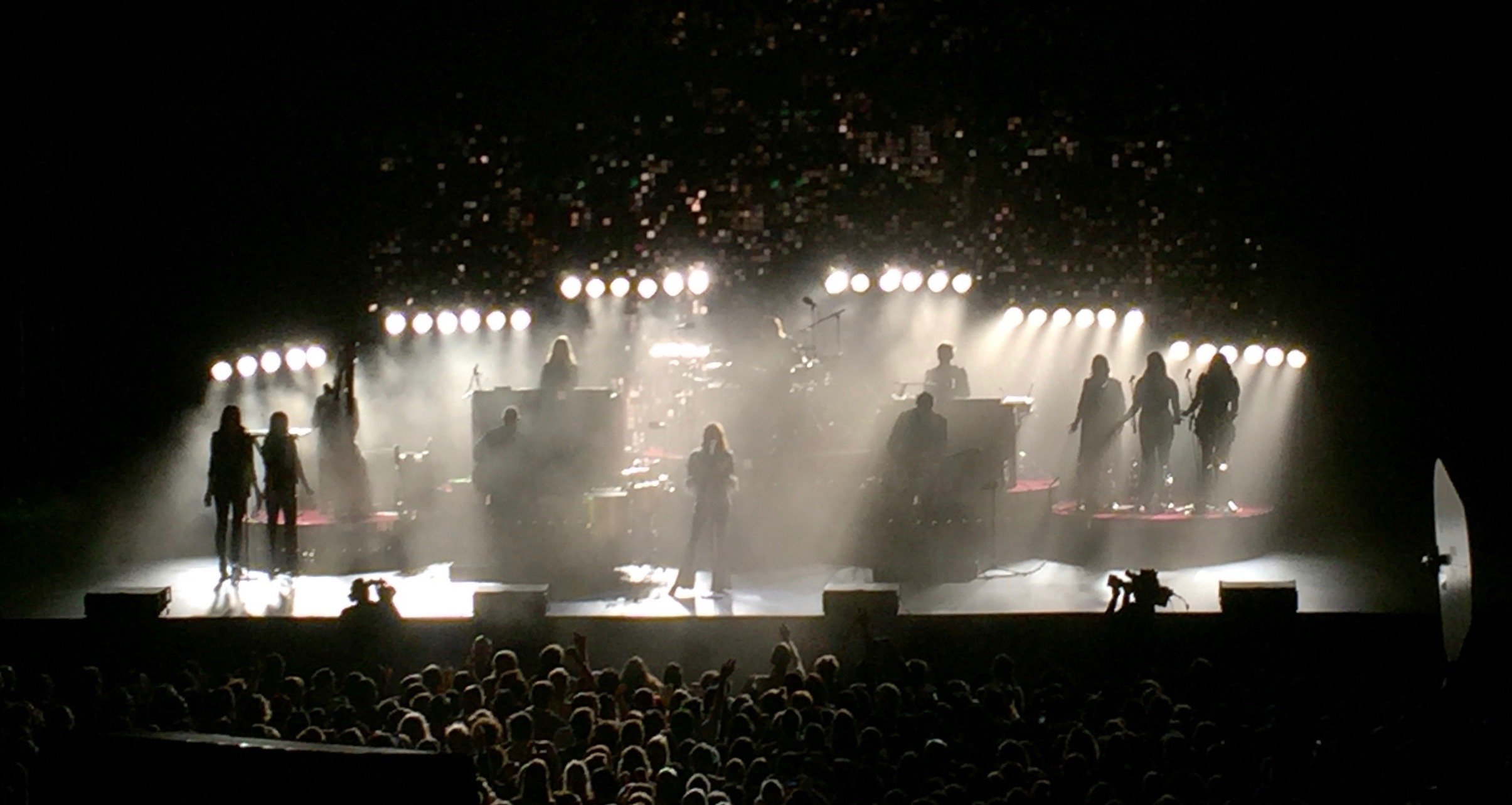
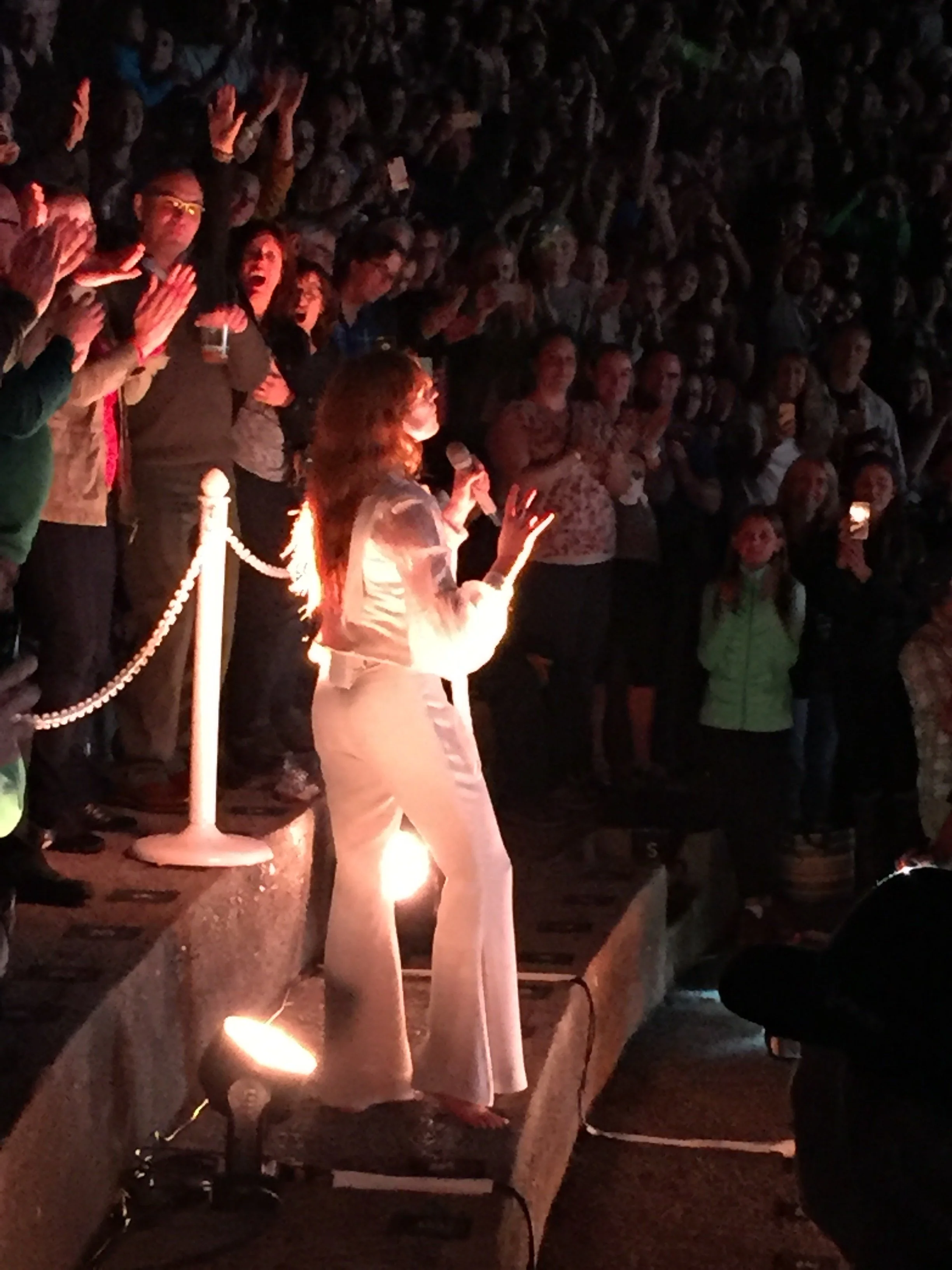
U2 – Achtung Baby at the Las Vegas Sphere (2024) & Florence + the Machine – Berkeley Tour (2014)
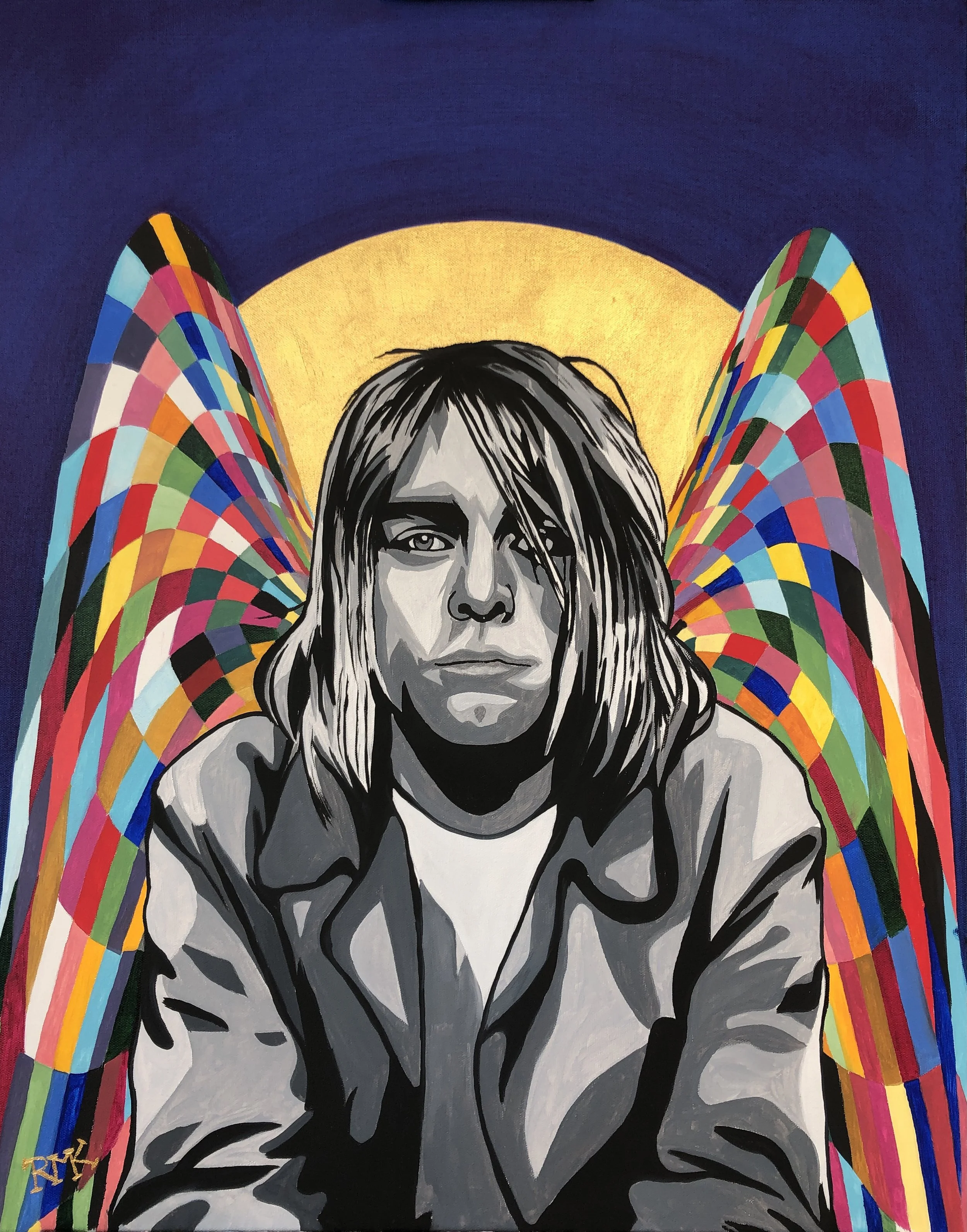
With Kurt Cobain it was different. Painting him was not nostalgia. It was more like pressing a bruise.
I started a band in Klagenfurt in the early nineties. We were called Mistake. We sounded like Nirvana in the verses and Cat Stevens in the bridges, which tells you everything about being young and confused and serious about everything simultaneously. We made the radio once. Once. We celebrated like it was a world tour.
Dave Grohl once described Kurt's singing as spitting nails. That intensity. That specific quality of meaning every single syllable as if it might be the last one. I do not hear it like that anymore, in anyone. Maybe it cannot be manufactured. Maybe it only exists in people who are genuinely unsure whether they will survive long enough to finish the song.
When I painted Kurt I went back to 1992, 1993, 1994. The brush was a time machine. I did not choose that. It simply happened. You pull back a surface and find out what is underneath.
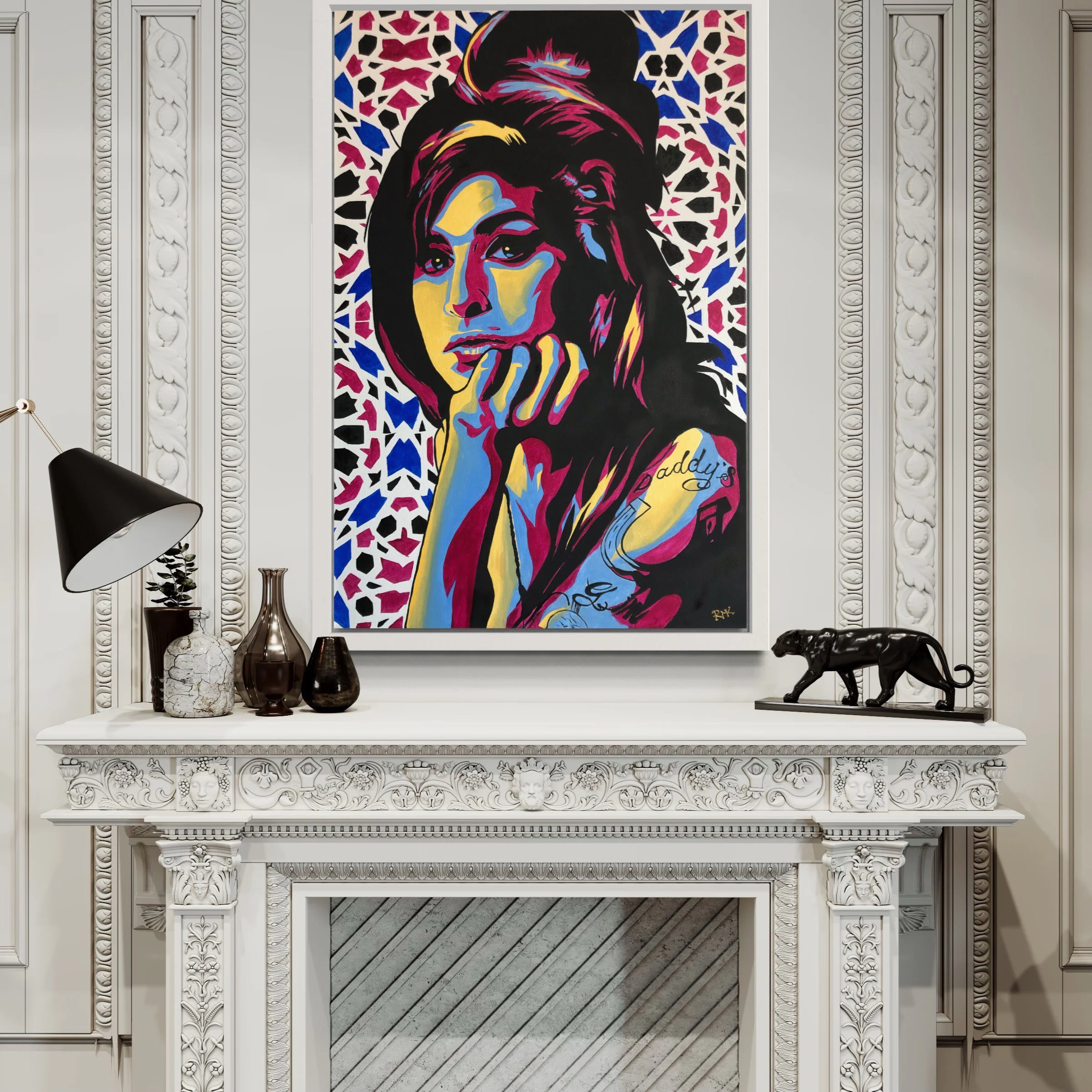
Amy Winehouse I painted thinking about absence. Not her absence specifically, though that too. The absence of the songs she did not get to make. There is a particular grief in unfinished work. In talent that exceeded its container. The cracked kaleidoscope I put behind her was not planned in advance. It arrived because it was true. Her soul in colors that also had dark spots.
What I was painting, I think, was the question of what we lose when we lose someone too early. Not the person. The future work. The songs that existed somewhere in her body and never found their way out.
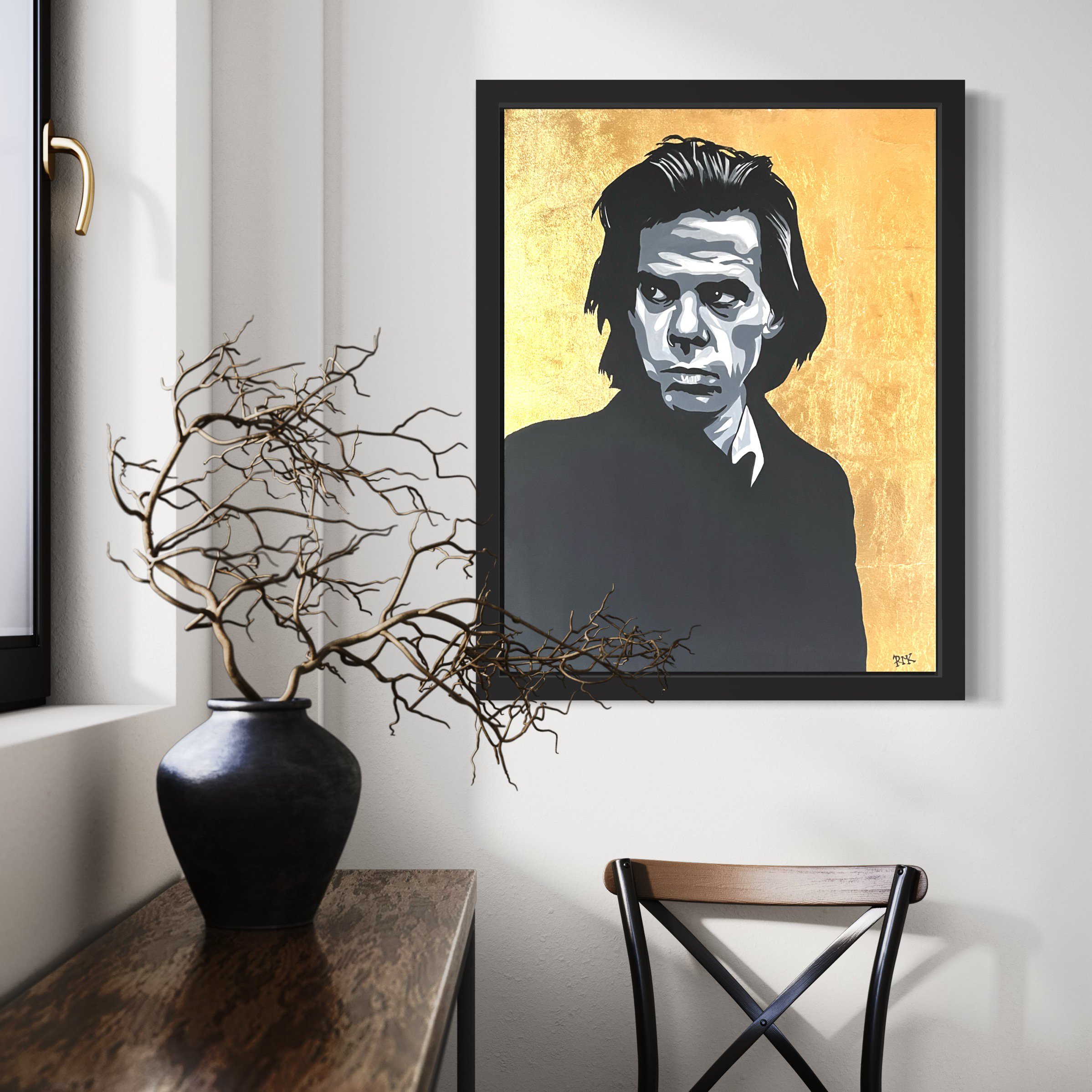
Nick Cave is a different story altogether.
I saw him in July 1996 in Wiesen, Austria, on the Murder Ballads tour. Kylie Minogue was not there to sing her part, so he put on a dress and sang both halves himself. I have thought about that image for almost thirty years. A man willing to make himself absurd in service of the song. No vanity. No protection. Just the song and whatever it requires.
Nearly thirty years later he is still doing this. Bright Horses. Push the Sky Away. I get goosebumps every time. Florence Welch is the same for me. She is the finest female voice I have ever heard live, and I have heard her four times, once with my daughter beside me, her first concert, her introduction to what live music can be when it is fully inhabited.
These are my personal gold standards. Not for technical reasons. For reasons of commitment. For the willingness to mean it completely, every time, regardless of who is watching.
When I paint them I am painting that willingness. I am trying to understand it. How does a person stand in front of thousands of people and mean every word? Where does that come from and where does it go when the stage empties?
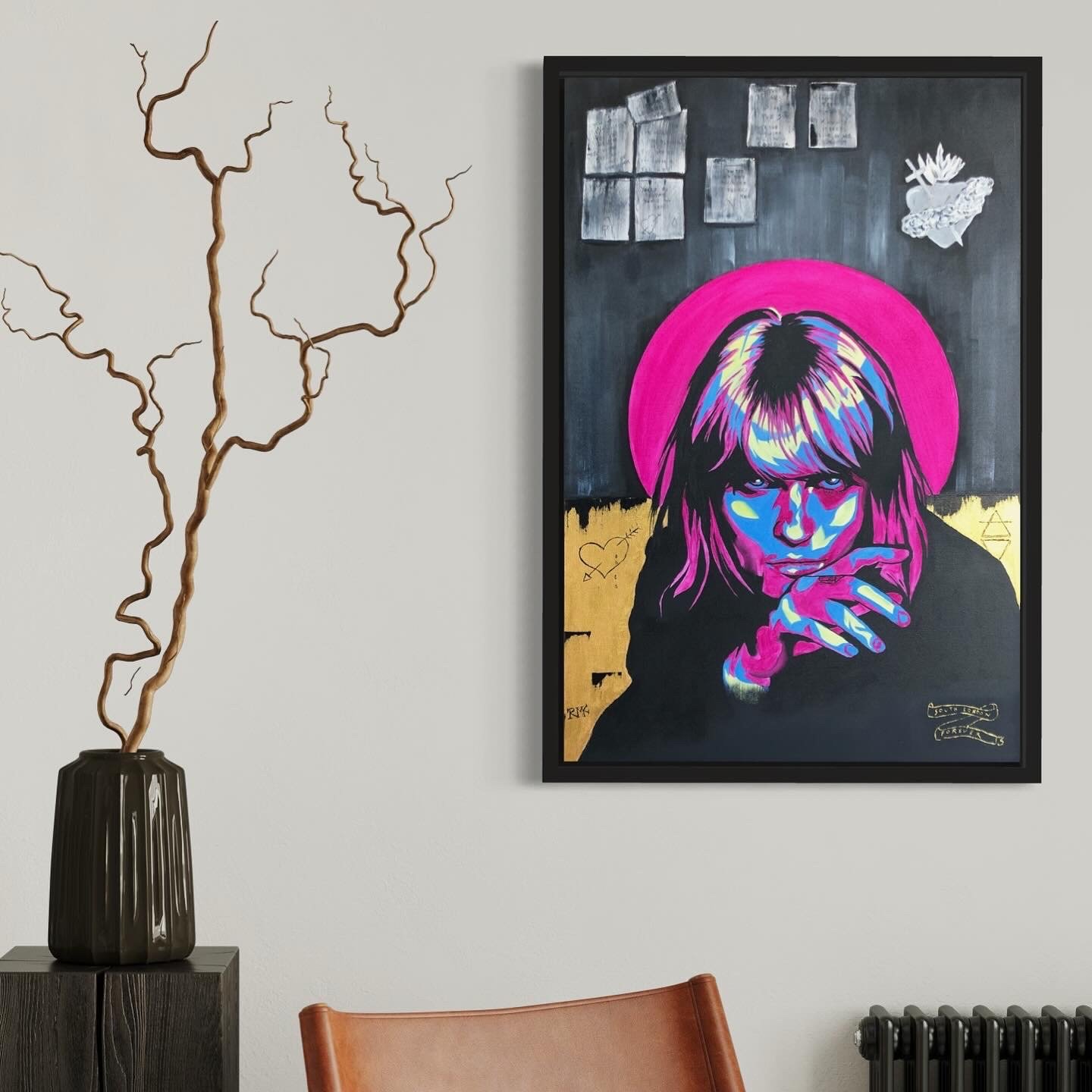
Falco is the one that surprises people.
He blew up in Vienna the same decade I grew up in Klagenfurt, though he was . Rock Me Amadeus reached number one on the American charts in 1986, making him the only artist whose primary language was German to achieve that. In Austria he was as natural as skiing and Wiener Schnitzel. You did not choose to love Falco. He was simply there, woven into the fabric of what it meant to be Austrian in the eighties.
At his core he was a poet. A man who could make you feel good and think hard in the same three minutes. When I paint him I paint my childhood, but I also paint the question of what it means to carry your language into a world that does not speak it and make that world sing along anyway.
Here is what I have come to understand, working through these paintings one by one.
Photography captures a moment. Painting asks a question. When I photograph a musician I get a record of what they looked like. When I paint one I get a record of what they made me feel and what that feeling is still trying to tell me.
The camera is accurate. The painting is true. Those are different things.
I paint musicians because music arrives before explanation. It enters the body before the mind has time to prepare a defense. A chord can undo years of careful construction in three seconds. I have never fully understood how that works. The painting is my attempt to stay inside that question long enough to learn something.
I am not sure I am getting closer to an answer. But the paintings keep arriving. And the ghosts inside them keep talking.
I am still listening.
“The dead are not absent, they are invisible.”