Entry 025: Twelve Cubic Feet
Something shifted in the last few years. The ground under remote work was moving. Companies wanted bodies back in offices. Not for productivity. For proximity. For the comfort of seeing people sit in chairs.
I have managed design teams for twenty-five years. I have never understood this. The pandemic proved what should not have needed proving. People can work from home. They can be productive, often more so. Less commuting. Less gas. Fewer cars. Cleaner air. Companies save on rent, on snacks, on the small machinery of keeping a building full of people fed and lit. Employees get back hours they used to spend in traffic. They see their families. They eat dinner at a table instead of a desk. The math is not complicated.
If someone does not perform, let them go. If they do, what does it matter where they sit. You cannot call a person's home office unproductive at two in the afternoon and heroic when they answer an emergency at midnight. You work to afford a life you barely get to live. That equation has never balanced. It still does not.
But the shift was real. And I am someone who has moved nineteen times in twenty-six years to stay close to work. I hate commuting. I hate it the way some people hate heights, completely and without negotiation. So when the ground moved, I looked at my house in Marin and started thinking.
In February 2025 I put it on the market. Interest rates were high. The market, for all Marin's reputation, did not cooperate. The house sat on a hill with a private view and zero yard. Buyers wanted yards. You can blame the realtor for pricing too high. You can blame the house for being what it was. It did not sell.
But I had already emptied it. Everything into a storage unit on the Peninsula, where I thought the work would be. The rooms stripped to walls, floors, and the Ikea Kallax shelves I seem to collect the way other people collect regrets. I lived in the house with almost nothing. A few pairs of jeans. A few black t-shirts. Two jackets. Two pairs of shoes. A few paintings left on the walls because I have way too many. Nothing personal. Ready to leave at a moment's notice.
Six months of that. And in those six months I learned something I was not looking for. I did not miss a single thing in that storage unit. Not one object. Not one box. The unit grew. My life did not shrink.
By September I took the house off the market and moved everything back. Box after box after box into rooms that had been empty long enough to feel whole without them. I stood there, surrounded by six months of things I had not wanted, and the only thought I had was: enough.
The Swedes call it döstädning. Death cleaning. Dö meaning death. Städning meaning cleaning. The practice of sorting what you own before you leave, so the people who remain do not inherit your burden. Margareta Magnusson wrote a book about it. She was a painter. She understood that objects carry weight beyond their mass. She died this past March at ninety-one. Döstädning is not morbid. It is generous. It says: I will not make my accumulation your problem.
I am not dying. But I am leaving. And the difference between the two, when it comes to what you carry, is smaller than you think.
I went through every box. Held each thing and asked one question. Does this serve where I am going. Not where I have been. Where I am going. My great-grandmother's stamp collection. Nineteen moves. Never opened. Carried like a debt I could not name. Gone. Memory boxes from Austria. Letters, photographs, objects saved because saving felt like loyalty. Most of them gone. I passed things down to my kids. Pieces from parents and grandparents that might mean something to them. That is their decision now. Not mine.
Each week the storage got lighter. Each week something loosened that I had not known was tight. Goodwill. eBay. Donations. Boxes handed to my kids as they get ready for their own apartment. I was not sentimental about it. Sentiment is what fills storage units. Honesty is what empties them.
Now I am packing for the Arctic. Same logic. Different scale. A 70-liter duffel bag and a carry-on.
Entry Two of this blog described the Rembrandt van Rijn's cabin storage. Twelve cubic feet per person. Enough for boots, layers, notebooks. Not much else. I wrote that nine months ago as a romantic idea. Now it is a constraint. Everything I bring to 80 degrees north has to earn its weight.
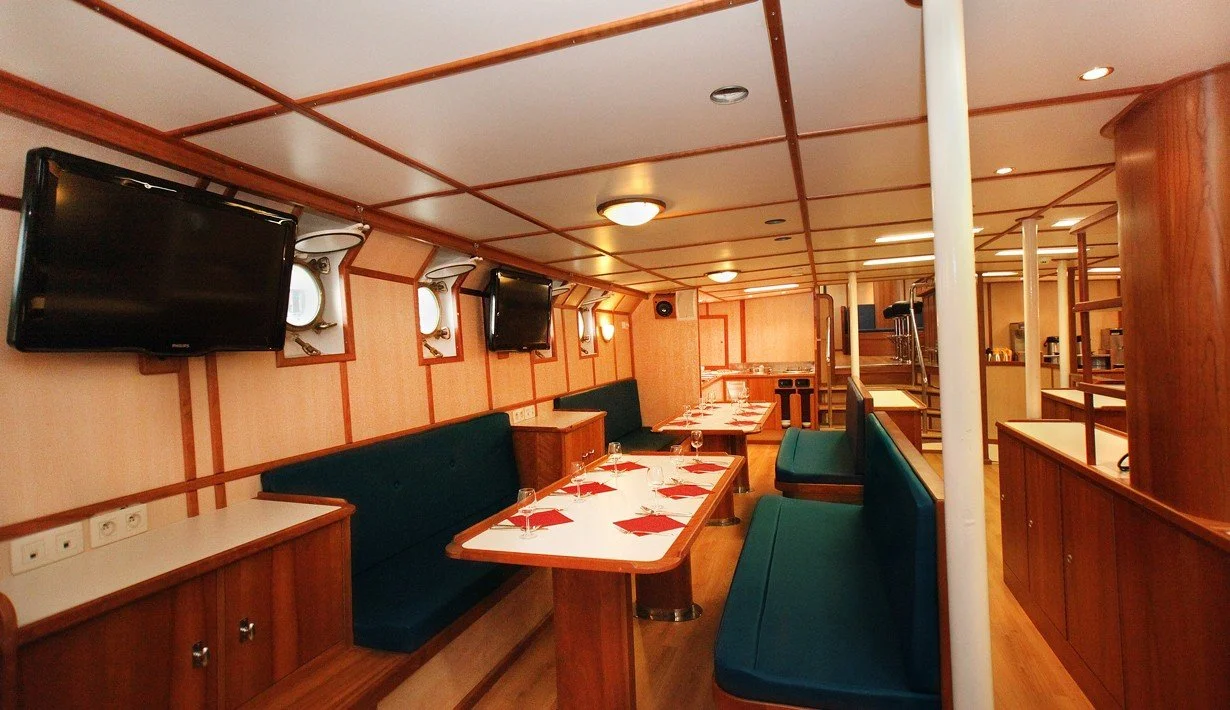
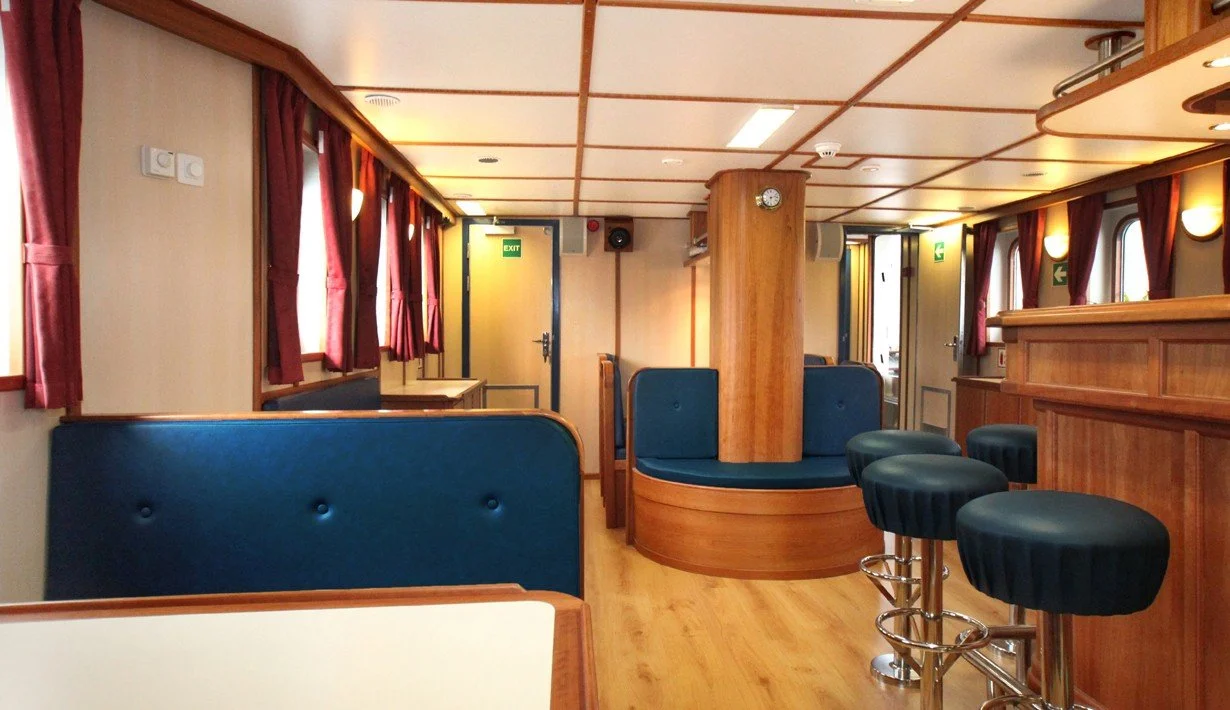
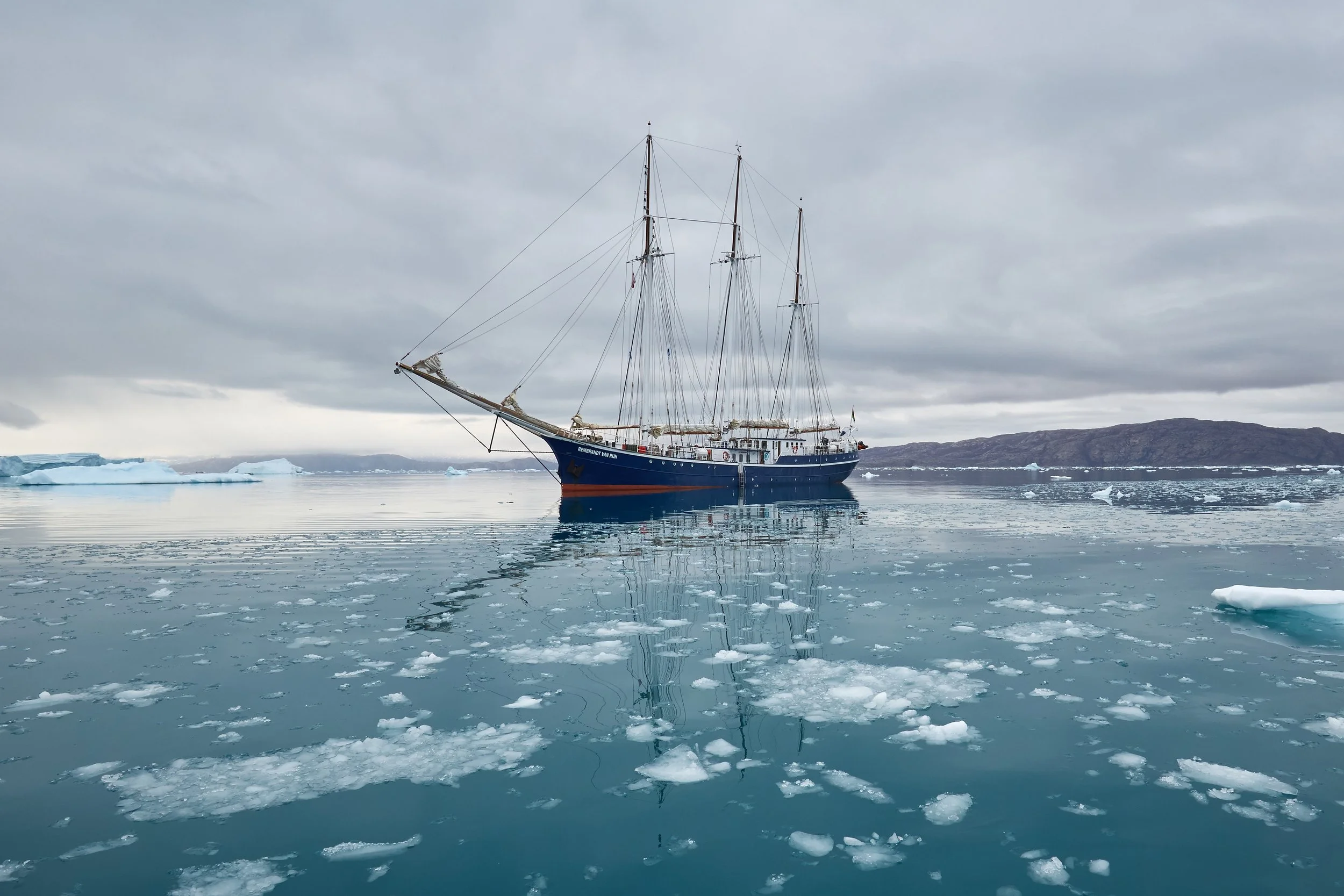
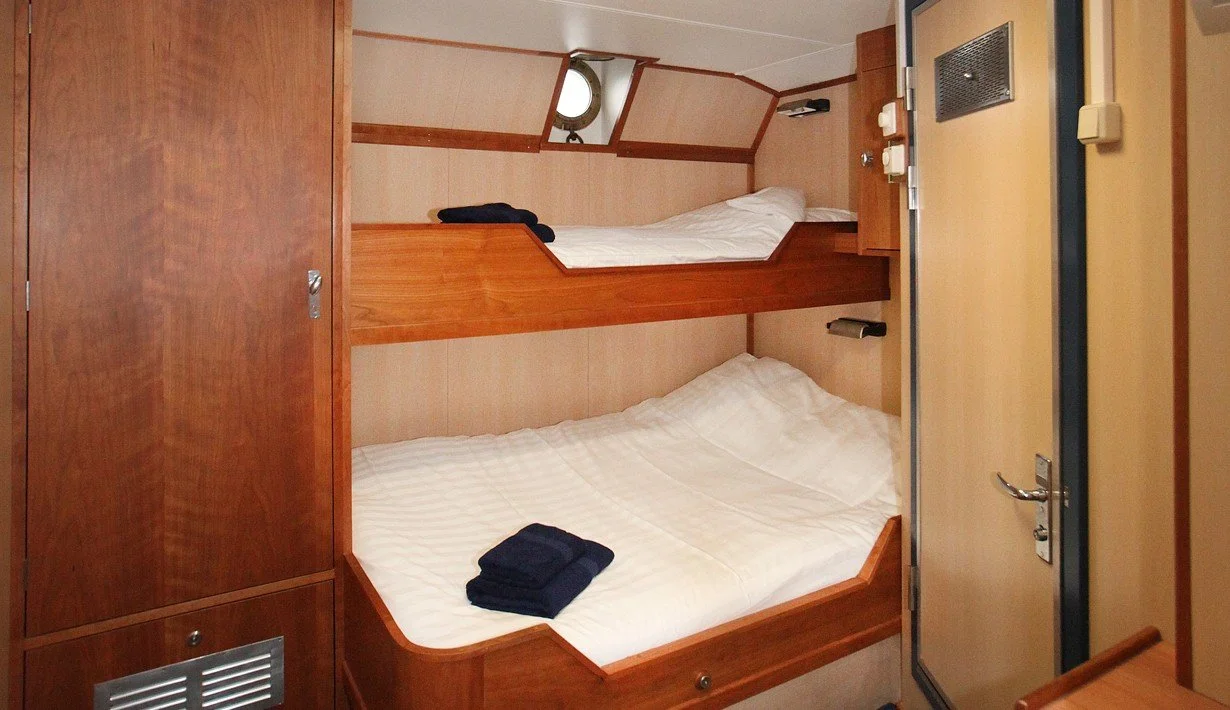
Rembrandt van Rijn cabins & public areas
Some of it I have. Boots. A down jacket. A snow overall for excursions because my back has always needed the warmth. Two pairs of gloves. Two beanies. Thermal base layers in merino wool because it dries fast and forgives sweat. Mid layers. A waterproof shell jacket and pants for the Zodiacs. My Sony a6000, bought for Iceland ten years ago, small and compact, still working when everything newer has been replaced twice. Two lenses.
Some of it I still need. A DJI Osmo for video on the ship. I hear a new one is coming. Waterproof pants for launch days. A dry bag for shore excursions, because Zodiacs throw spray and the sea does not care what you are carrying. UV sunglasses, because the Arctic reflects light off every surface. Moisturizer and sun cream, because Svalbard is a desert that happens to be cold. Binoculars. Seasickness medication, because hope is not a strategy. A sleep mask, because the sun will not set and midnight will look like noon.
A sketchbook. Pencils. A notebook for words that are not drawings.
What I have not figured out is what to wear between excursions. The in-between hours on deck. Not expedition gear, not technical layers, just something for standing in the wind when you are going nowhere except north. Suggestions welcome. In May I will have my first call with the expedition team and learn who the other artists are. We are asked to share resources, to collaborate, to avoid thirty-three people arriving with identical supplies. Until then the list stays open.
There is one more thing I have not solved, and it has nothing to do with gear.
I have never been a camper. Never spent a night sharing a room with someone I did not know. The cabin on the Rembrandt is shared. Two people. I do not yet know who the other person will be. I am a light sleeper. I wake when someone turns over. I wake when someone breathes wrong. Earplugs only do so much. And there will be no dark to signal the body that the day is done. Just light. Constant. Indifferent. Arctic light. Shared bathrooms are not something I have ever been at ease with. That is all I will say. It is a small thing. Mine. Everyone who travels carries a version of it. The private discomfort that never makes the itinerary.
I will manage. I always do. And part of me thinks the discomfort is the point. The Arctic does not arrange itself around preferences. The ship will not adjust to my habits. I will have to adjust to the ship.
A few days before I fly north I will be in Denmark. Visiting friends. Walking through coastal towns where the light is already long and the sea is close enough to hear from any street. A pause before the motion starts.
I think about those boxes sometimes. All those years of accumulation. Weight, not wealth. The Arctic is asking me to do in a duffel bag what the past year taught me to do with a life. Carry less. Carry what matters. Trust that the space you make by letting go is worth more than the things you held.
Twelve cubic feet. It is not much. It might be enough. "Per aspera ad astra." Through hardships to the stars.