Entry 043: Day 07: The Bear and the Bird
Somewhere on the seventh day I found a member of the crew and asked whether anyone actually checks the emergency emails. You give one contact before you sail. One address, one person, everything routes through them. Then you go north and you are gone. A week with nothing from anybody. Someone told me yes, they are checked, every day. That was the whole exchange, thirty seconds standing in a corridor, and I thought about it on and off for the rest of the day.
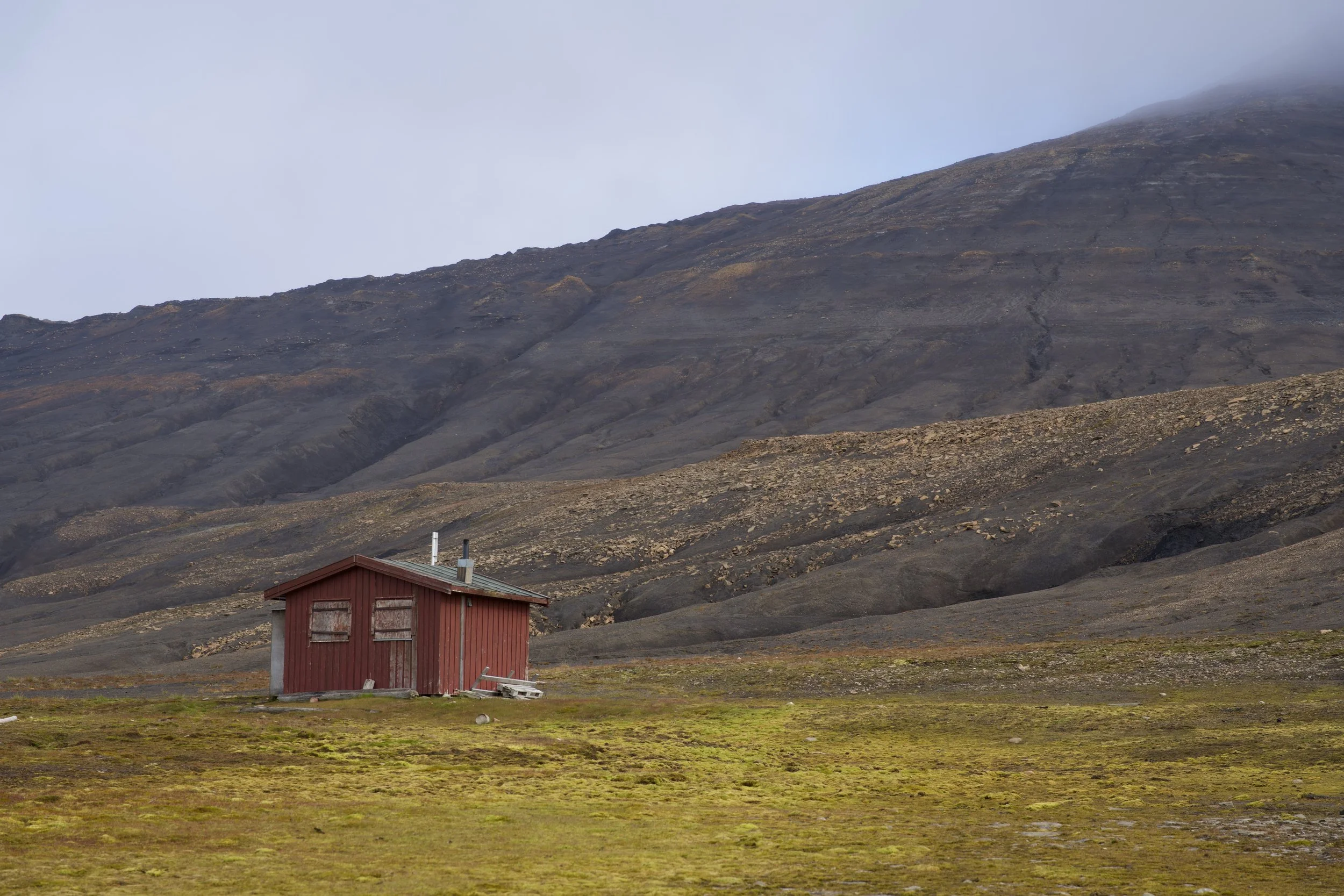
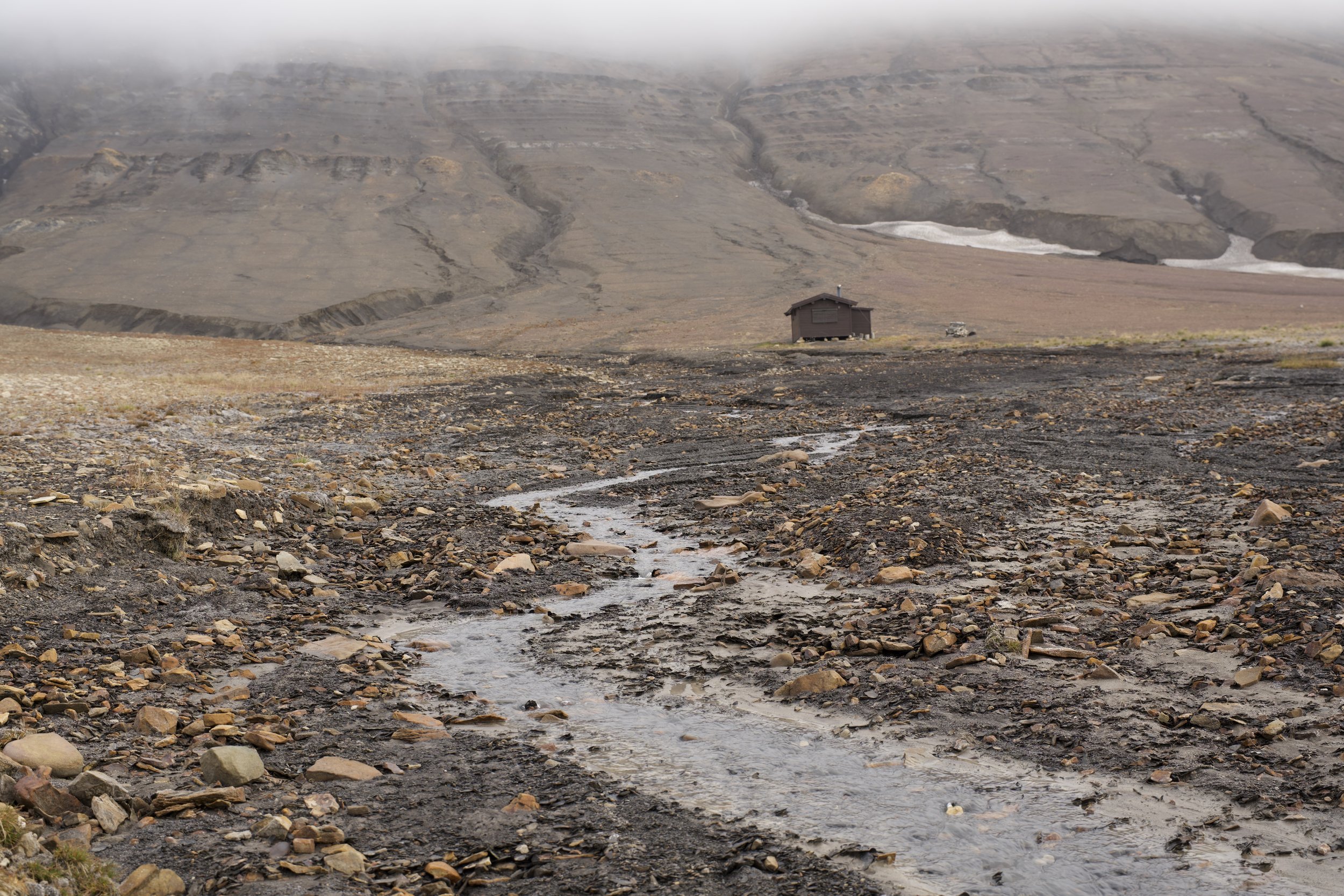
We had anchored at Agardh the night before and the ship did not move again until after one in the afternoon. Eleven hours at 78° 02,4' N, 018° 39,4' E. Air six degrees, water 4.8, the barometer climbing a little. The morning came in foggy and opened into cloud and sun, but the mountaintops stayed inside the fog all day, and a peak that will not come out is a strange thing to stand under. You have the base of it in front of you and the top of it is a rumor. The landing opened at half past nine, and Sarah's log gives it plainly. A red hut belonging to the hunting and fishing association, a second hut higher up belonging to the Sysselmester, the governor, and a lighthouse. Short walks first, then a perimeter on the beach with the hut and the fossils and the polar bear tracks, then an extended perimeter higher up with the lighthouse, the other hut, and more tracks. The red one stands alone on a carpet of green moss with black scree rising behind it and the fog cut off along the ridge like a line somebody drew. Windows boarded, two stovepipes, a pallet leaning against the wall. The brown one sits inland on a terrace with guy wires bolted into the ground on both sides so the wind cannot take it and firewood stacked under a rack beside it. Nobody was in either. They are tied down and waiting for whoever comes next.
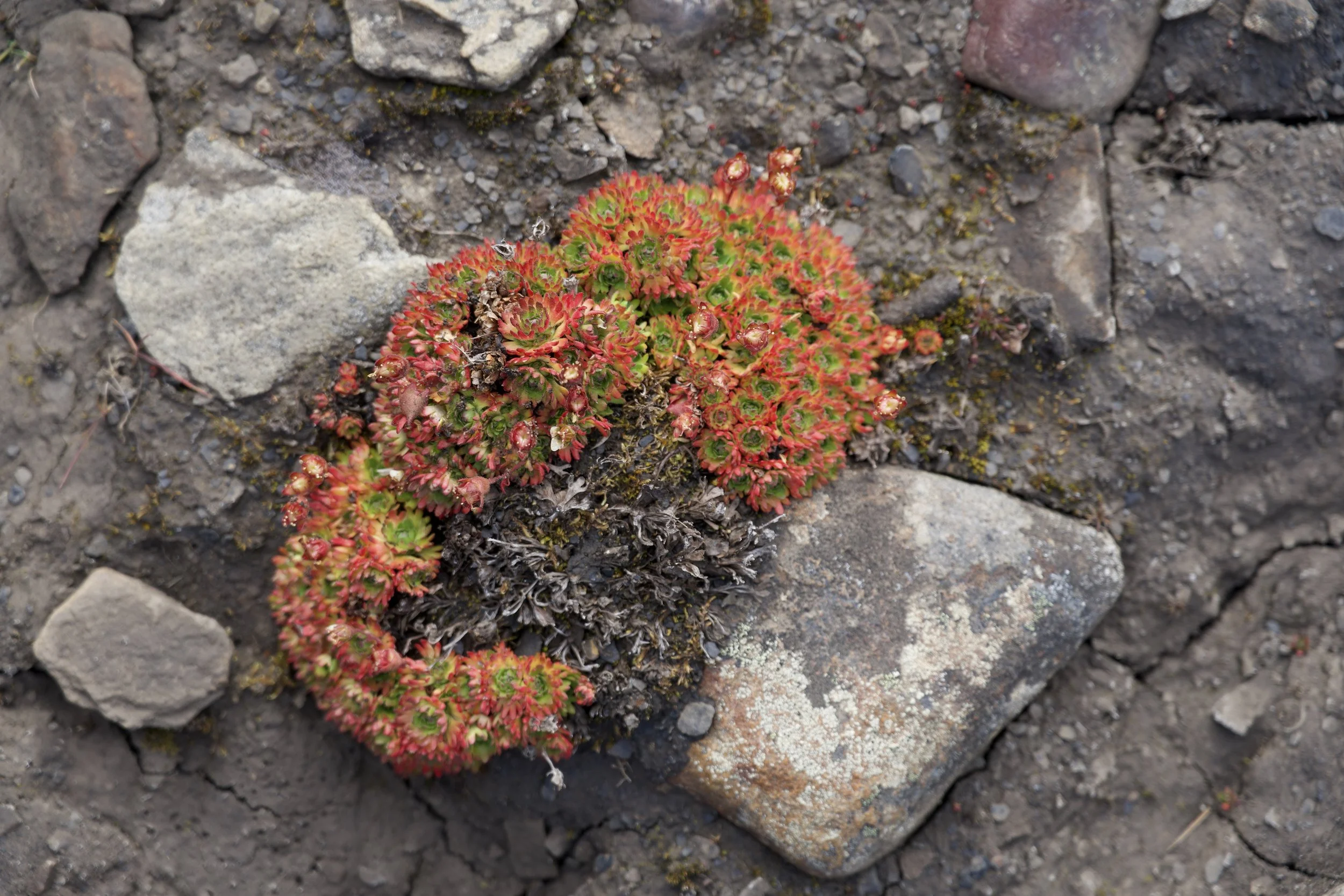
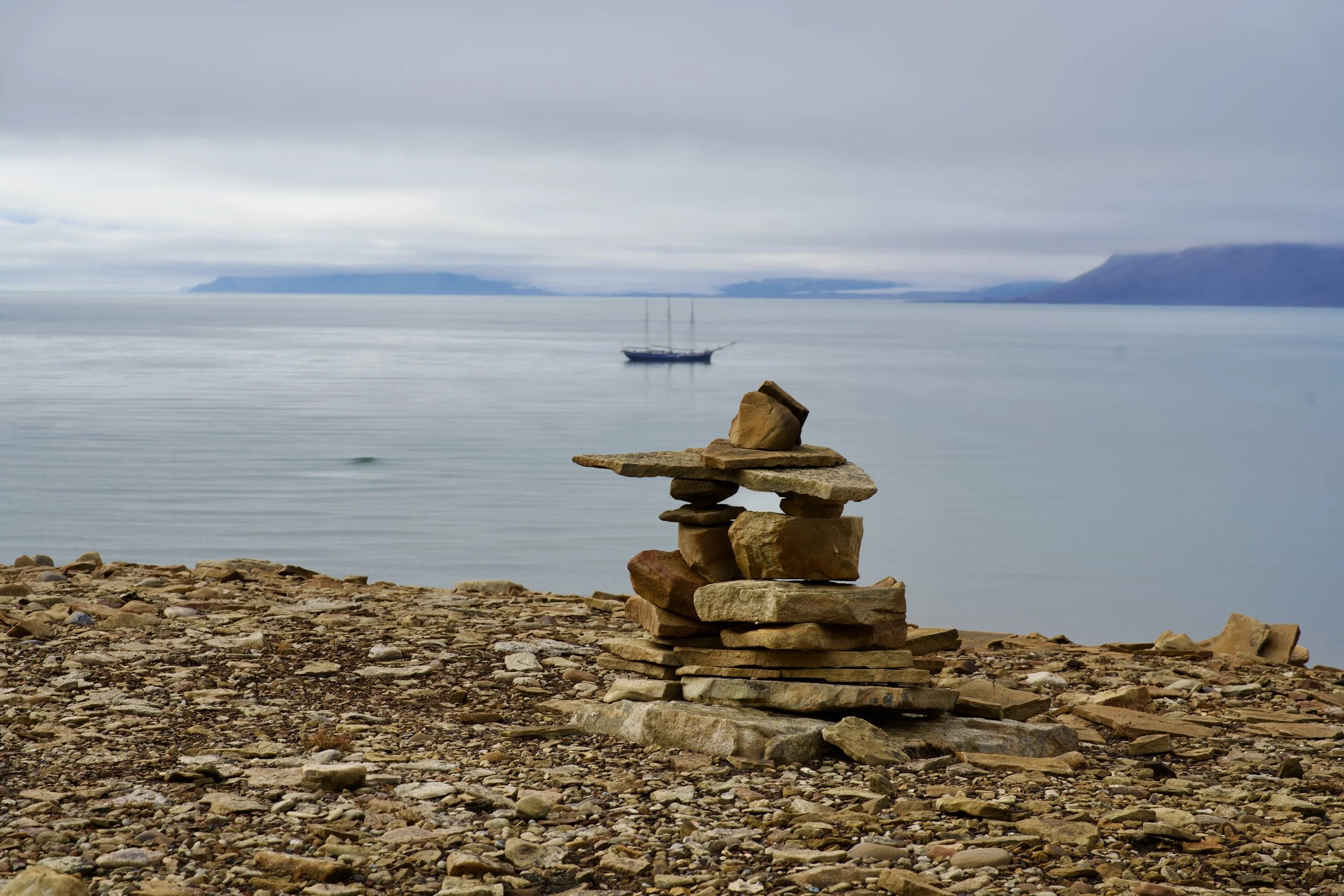
I got down on the gravel for a saxifrage, a low red cushion of it flowering out of stones that have no business growing anything, and then I found the other stones. Somebody had stacked flat sandstone plates chest high on the shingle with a slab laid across the top like a lintel, and from where I stood the ship sat behind it on glassy water with three masts and the mountains of Storfjorden behind that. On the first day they showed us an animated film about how to behave up here, and one of the rules is that you do not stack stones. AECO tells operators not to build cairns and not to rearrange stones in any way and not to let anybody else do it either. The same guidance says a cairn may be a signpost and must not be altered. Everything on Svalbard from before 1946 is protected by law. So which was I looking at. I read Christiane Ritter's A Woman in the Polar Night before I came and I know that people who live in this country build markers to find their way home through fog and snow. The Norwegians call them varder. In German you would say Wegweiser. Where there are no trees and the visibility goes to nothing, a pile of rocks is the difference between a route and a guess, and two huts stand within sight of that beach, and somebody had to walk between them in winter. Or somebody off a boat stacked it last summer for a photograph. I could not tell. Standing close enough to touch it there was no way to know whether it was heritage or litter, and the only difference between those two things is who put it there and when, and nobody wrote it down. The stones stay and the reason for the stones goes.
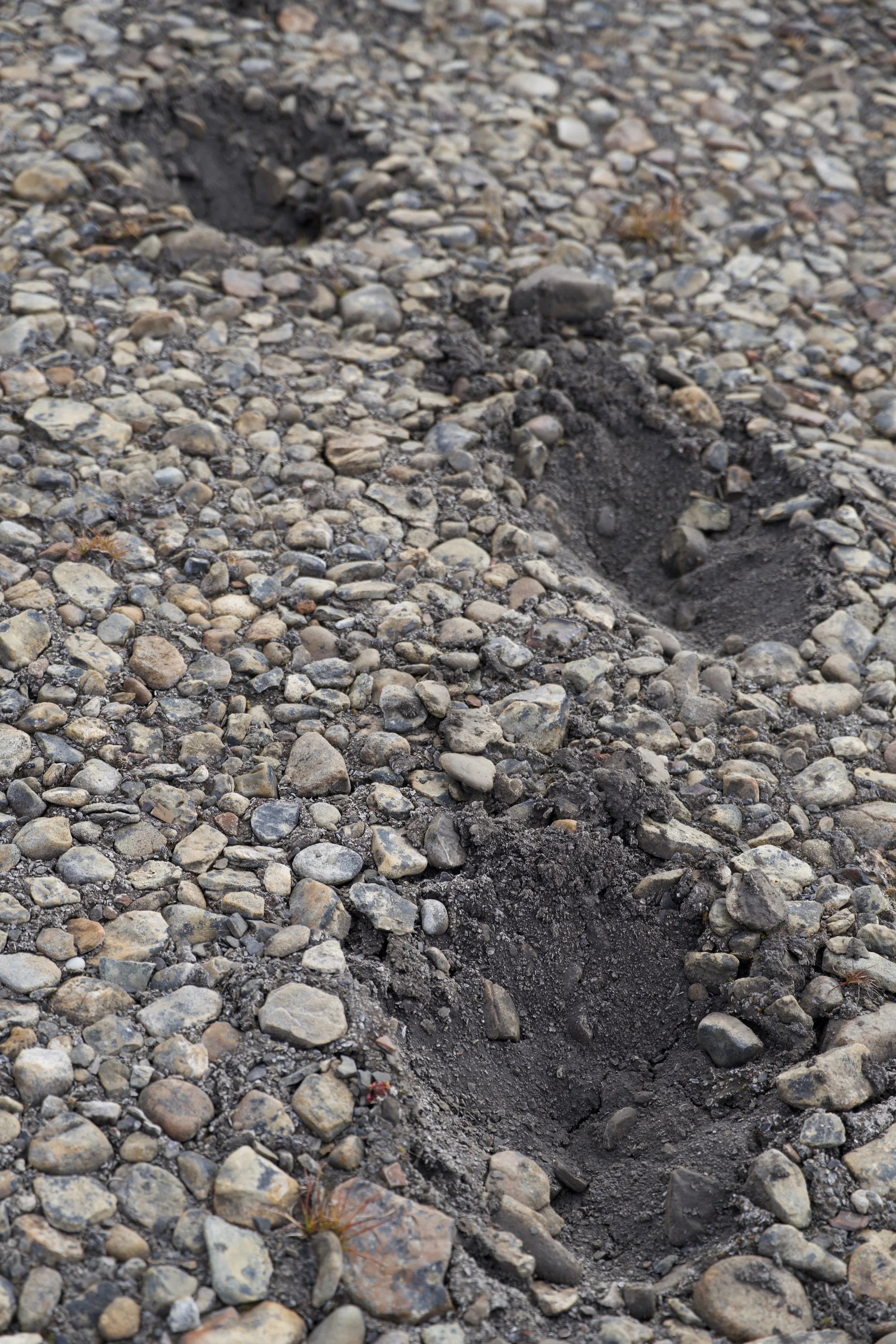
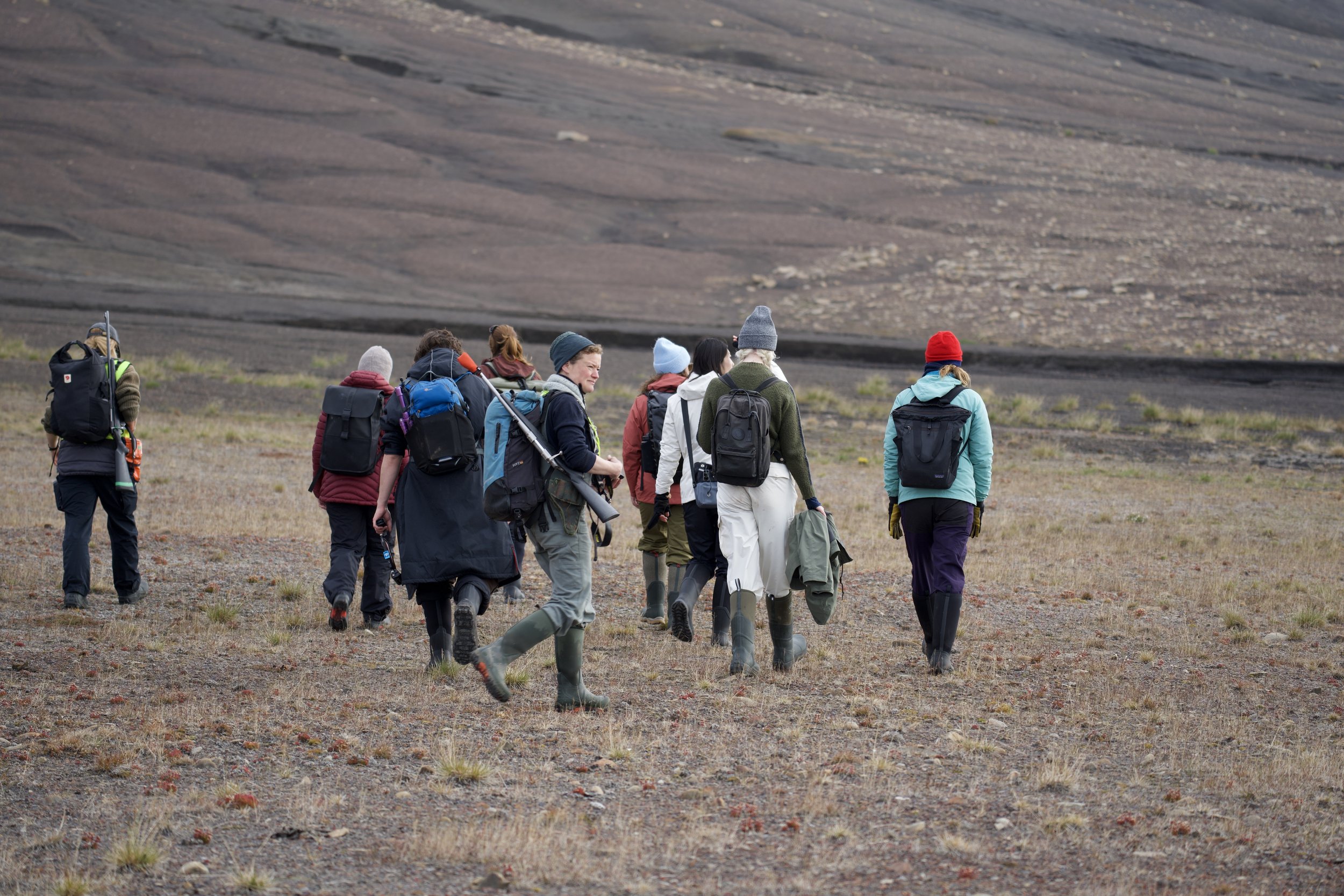
Then the bear tracks. Many of them cutting across rounded gravel, each one deep enough to hold its own shadow, wet dark sand at the bottom. Not old, not this week either. And at that point we had not seen a single bear. Seven days in the Arctic and we had a bear-shaped stone, a skull, a jaw, a spine and now a set of prints. The group split after that, some staying on the beach, some going further up with Sarah and Lisa. There were fossils in the shale and reindeer antlers lying where the animal had left them. Down near the water sat a long row of red fuel drums strapped to pallets, the reserve you keep in a place like this in case a helicopter ever has to come, somebody's plan for the worst day standing out in the open on a beach nobody visits. I photographed the group walking inland away from me and stayed where I was.
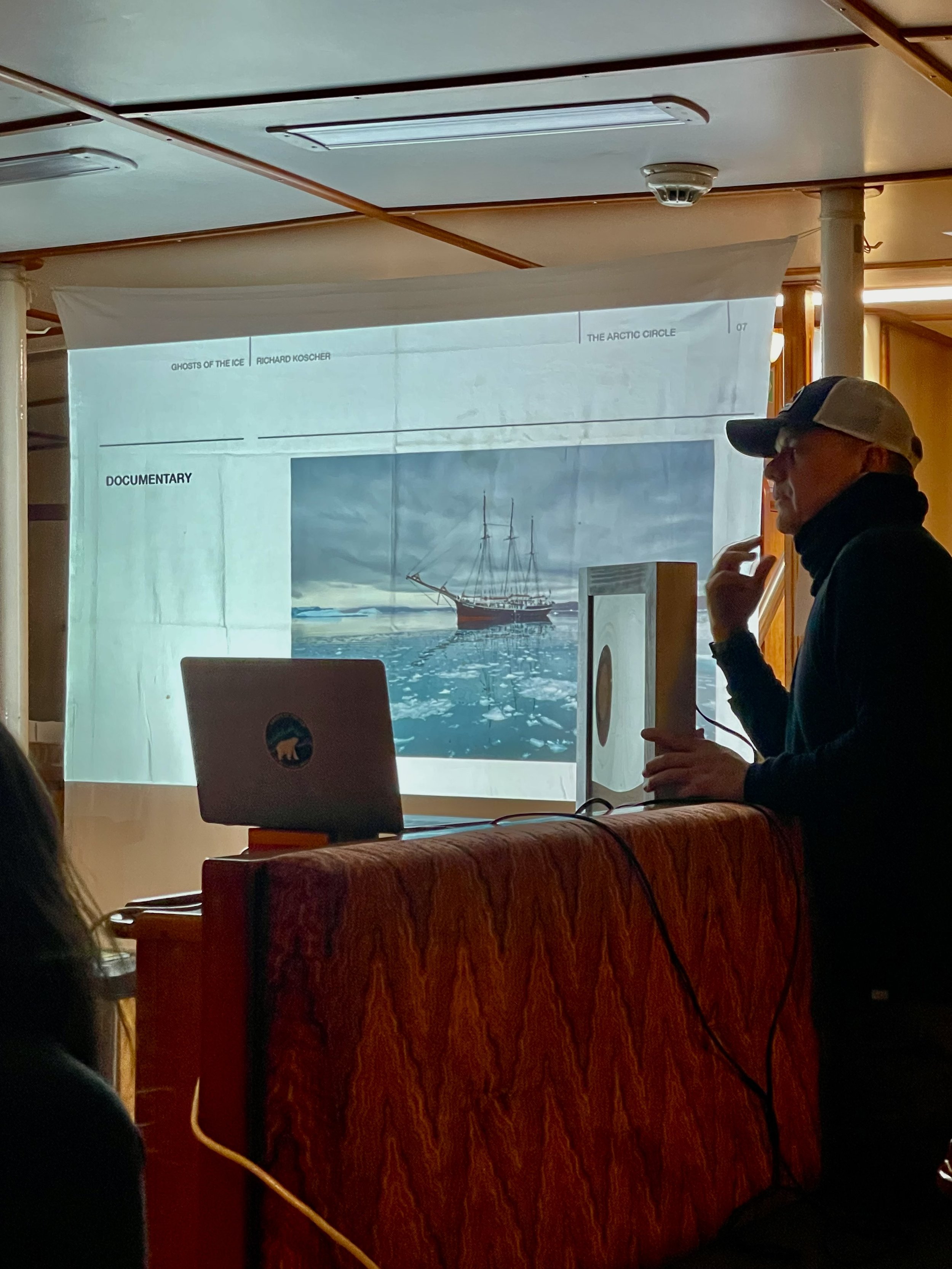
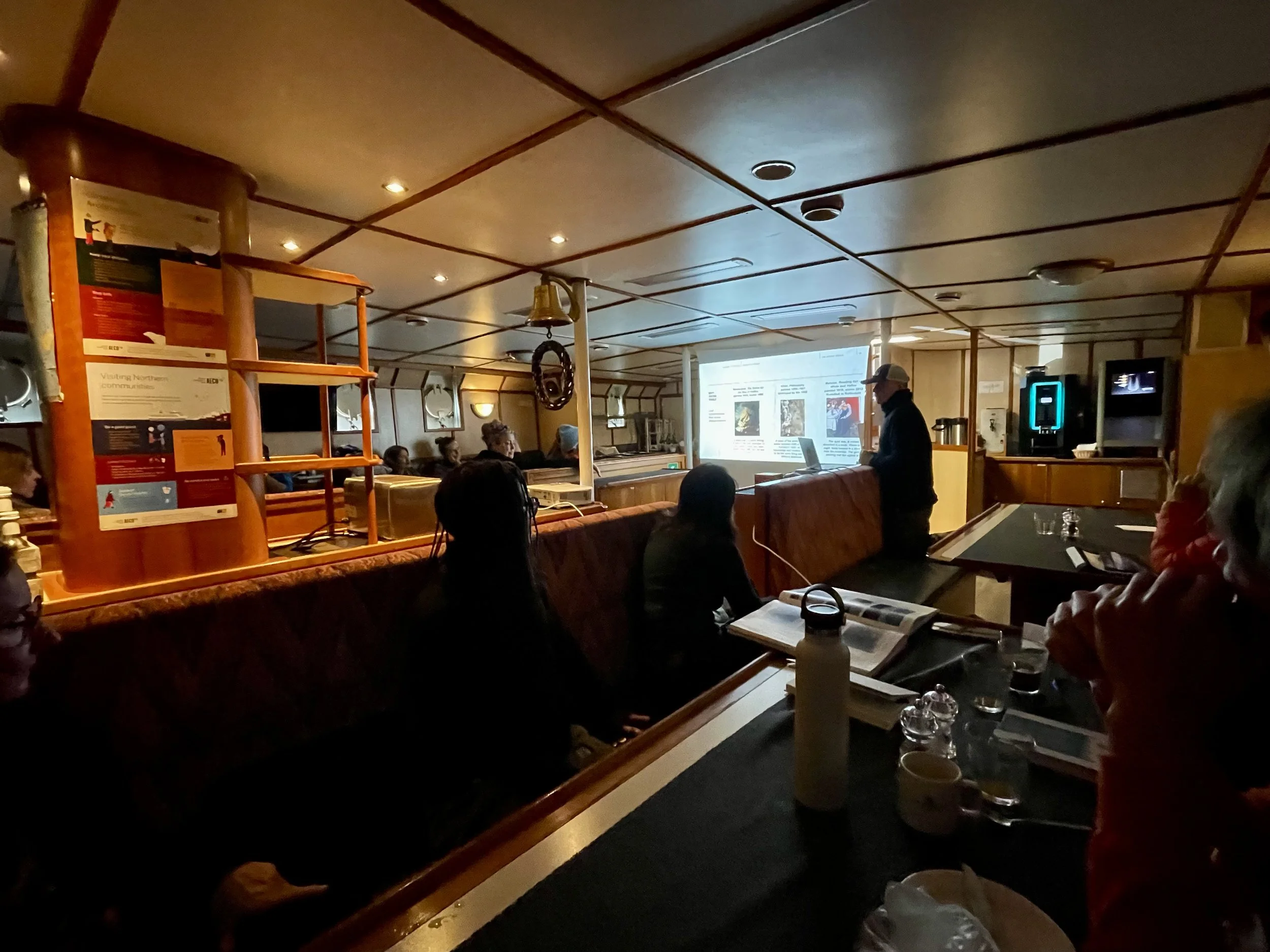
Anchor up at 13:12, first presentations at half past two. We had signed a sheet, Bob first, then me, then Maggie, then Christina, but Bob and Christina wanted the deck and Maggie and I were below, so the below-deck pair ran first, which is how I came to open. Ten minutes each and not a second over. They had rigged bedsheets across the lounge for a screen and I stood behind the bench at the end of the seating with the laptop in front of me, and for the first time in a year I told the whole story of Ghosts of the Ice to a room of people. Where it came from, what it is for, why a painting has to leave the canvas for any of it to work. That is the argument and I have never improved on it. Not that ice is disappearing, which everybody already knows and nobody feels. That you can watch something go while you are standing there.
Photos: Ling-lin
The prototype was on the bench with me. My brother-in-law Gerhard built it. I called him about that frame for months, and when I landed in Vienna he told me it was not ready, and he soldered heating coils into wood until three in the morning and handed it to me at the airport at half past seven. Heating panel behind the canvas, ten fans, air channels cut into the back, and a small bear painted on it in thermochromic oil, nothing precious, made because I needed something to show. In Svendborg it had gone most of the way and stopped short of the end. On the ship a few days earlier, when the crew asked us what we needed and I set it up for them, it barely moved at all. Three minutes on the timer is nothing in that cold. There was a hair dryer in the corner of the lounge with the merchandise and I asked Victoria if I could borrow it. So I gave the room fair warning and turned the frame on and held the dryer over the vents in the back panel, and the bear went. All the way, inside a minute. Thirty-two people, artists and crew, watched a painting leave a canvas in front of them. I left it standing there and kept talking, and by the time I finished it was already coming back.
Maggie went next with the ceramics, the sectioned whales, the ghost nets. Really stunning! Then Bob on deck with the quilt he and his wife had made, spread across the boards like an installation. Then Christina read Better North Than Never into the wind, holding the pages down. Her father died two months before she sailed. He was a geologist, and the poem uses what he taught her, that ground which feels firm is a thin crust with everything moving underneath it, and she stood on a deck in Storfjorden and said it out loud to us. She is an extraordinary writer. The poem was very moving, I found her afterwards and put my arms around her. Four talks, four projects, all four about the Arctic. Nobody read out a résumé, nobody listed a group show from 2011. We were off to a perfect start. This did not survive the whole voyage.
Then north for Mohnbukta through big blue ice with the waterlines scalloped out underneath, and at five o'clock the speaker came on and Sarah said, guess what. I said what, out loud, to nobody. There is a bear. And everybody ran.
First frame is 17:20. He is up on his haunches on the lip of a bank with his head thrown back and his nose in the air, scenting. Two minutes later he turns and looks straight down the barrel. Well fed, large male, food behind the hill somewhere. He stands, he lies down, he gets up again. Then the gull. A glaucous gull walks in along the ridge and stops fifteen feet off him and just stands there, and the bear looks at it, and the gull edges in until they are almost touching. Then the bear gets up and follows it a few steps, not seriously, the way you might, and the gull moves off and settles, and the bear lies down, and nothing whatsoever happens to the gull. We watched the two of them for most of an hour. He went over the ridge and did not come back, and only then did the ship move.
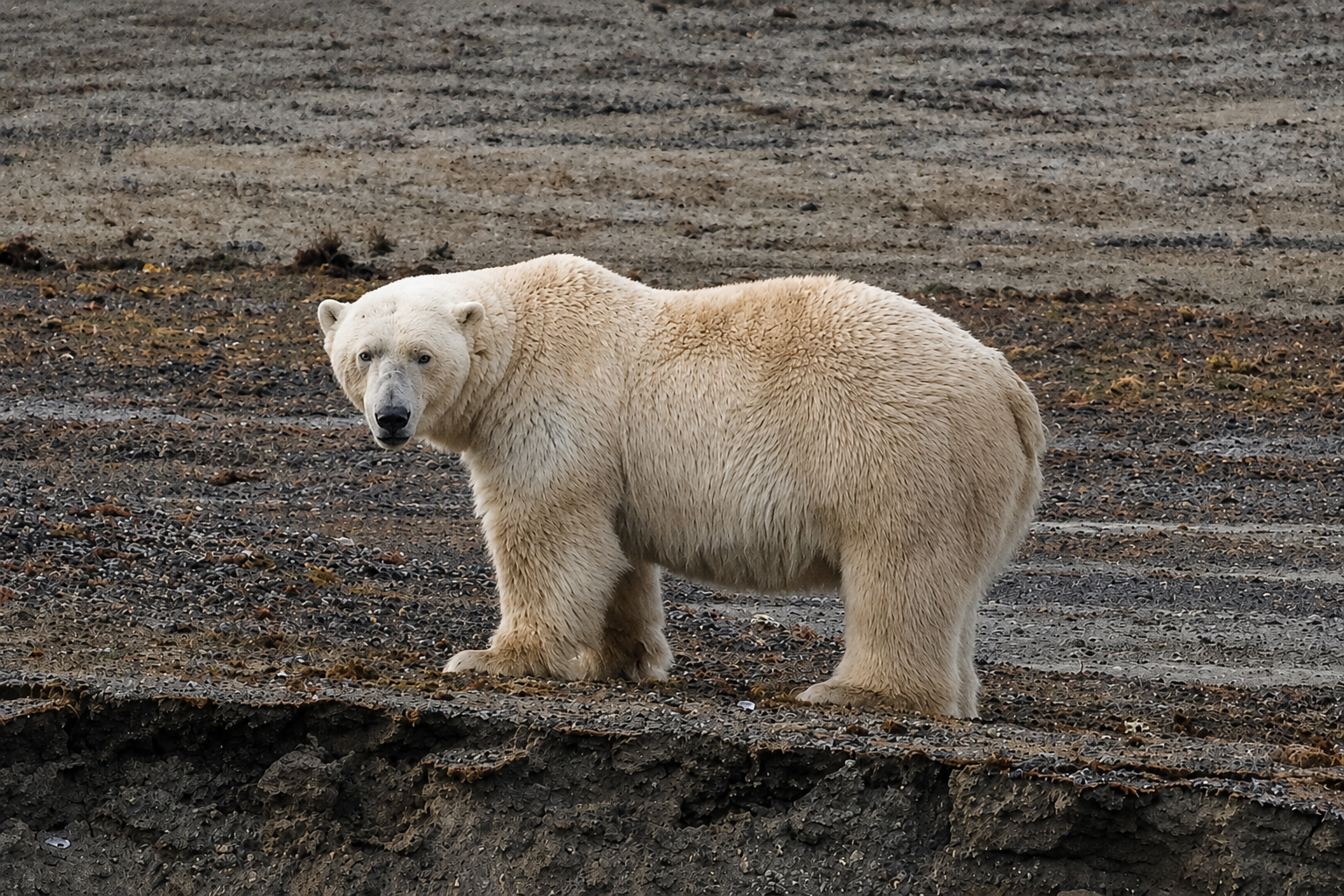
Our first bear
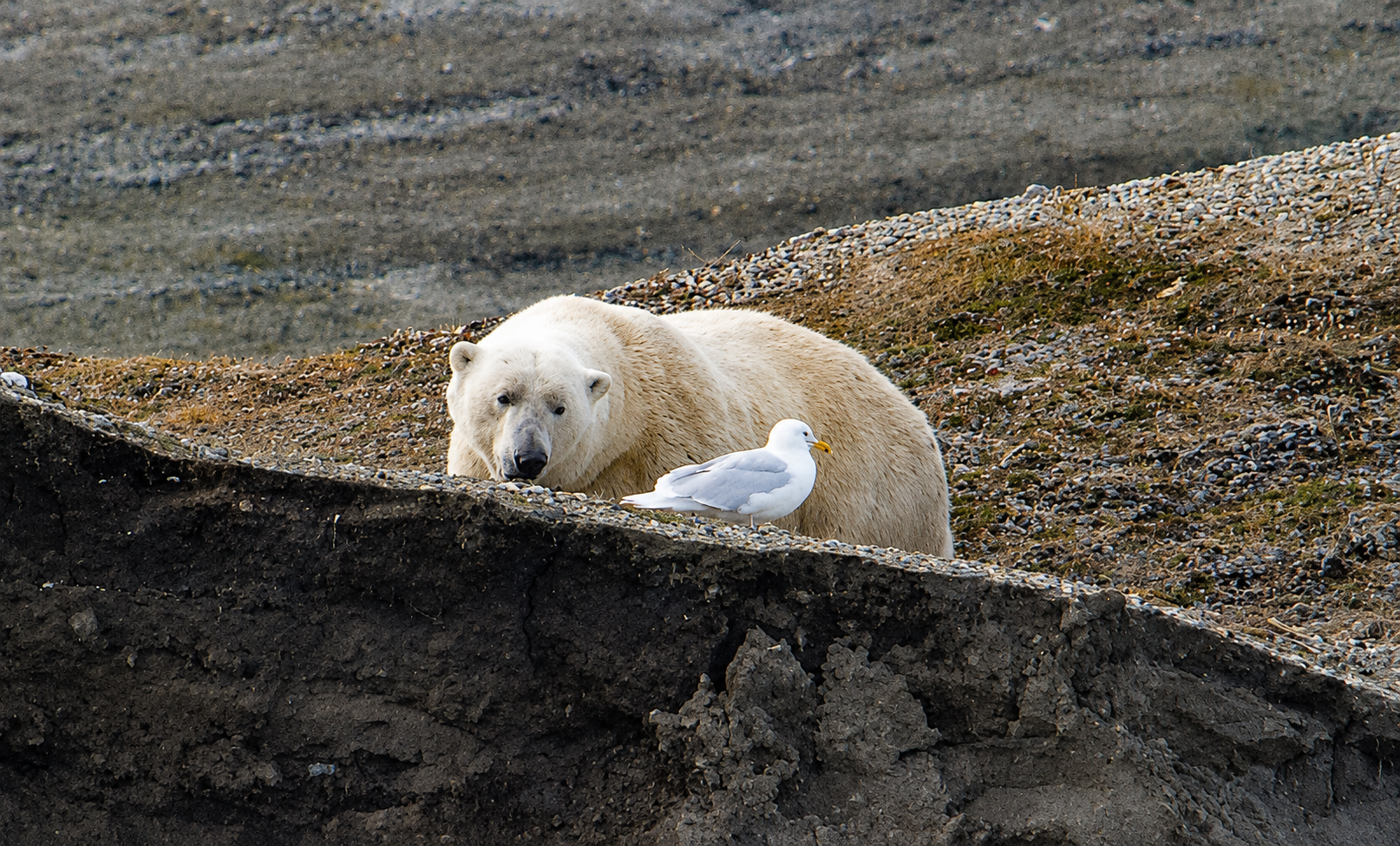
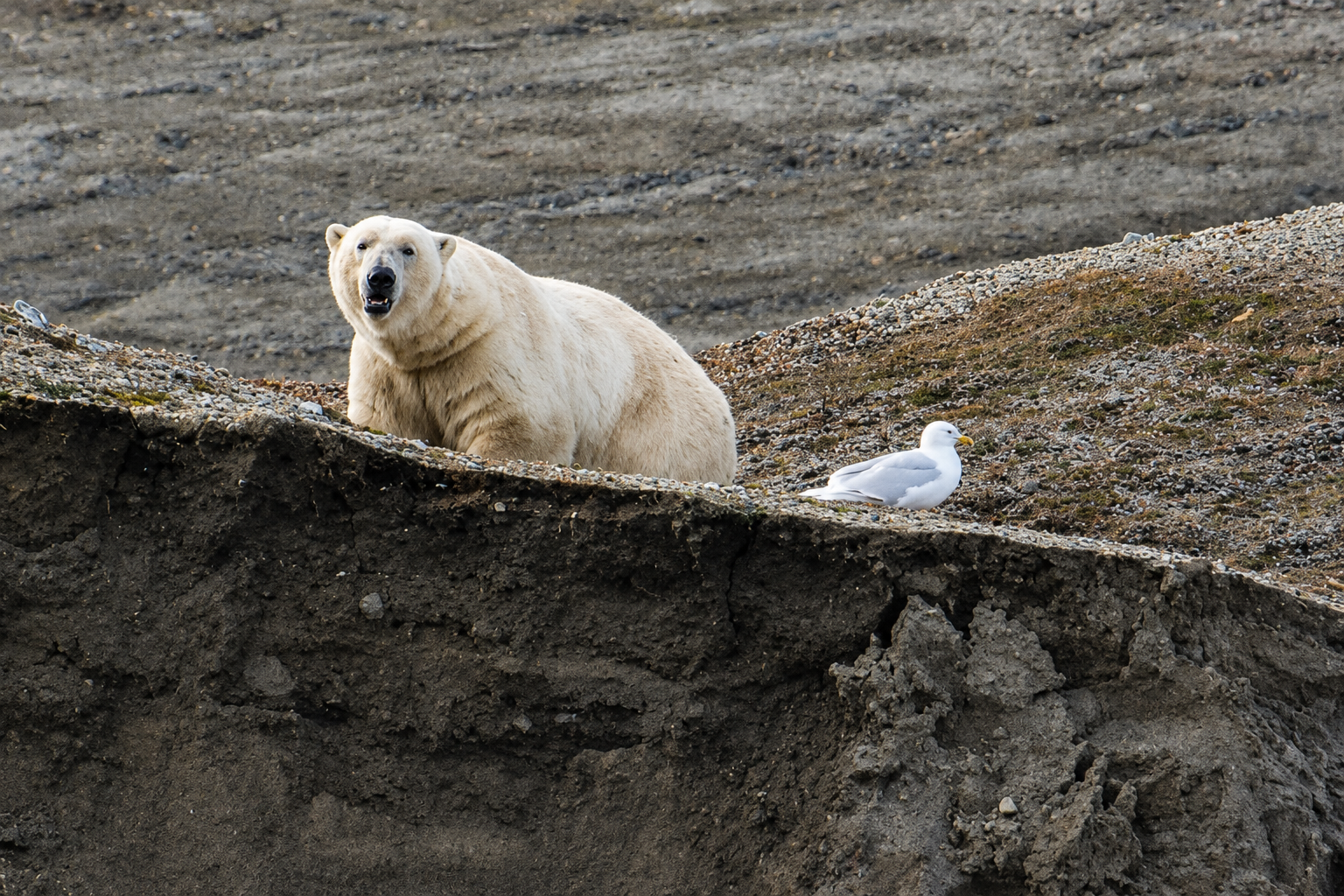
Here is the part I did not expect. People came to me on deck before I had looked at a single frame. Your shots must be incredible. You must have got him. I was the only person aboard with a five hundred and it lives on my camera, so nobody had to ask what I had been shooting with. What I felt was not pride. It was pressure, arriving early and settling in, and it stayed with me for the rest of the voyage, because the bear had been a long way out and I had no idea what that lens was going to give me at that distance. Nobody does until they look. So I looked, and I pulled the first one larger on the screen expecting mush, and it was sharp. I sat with that for a second on my own. Later I had four or five that were good and one person leaned in, and then everybody came. Over the back of the bench, standing on the seats, the whole room around a laptop.
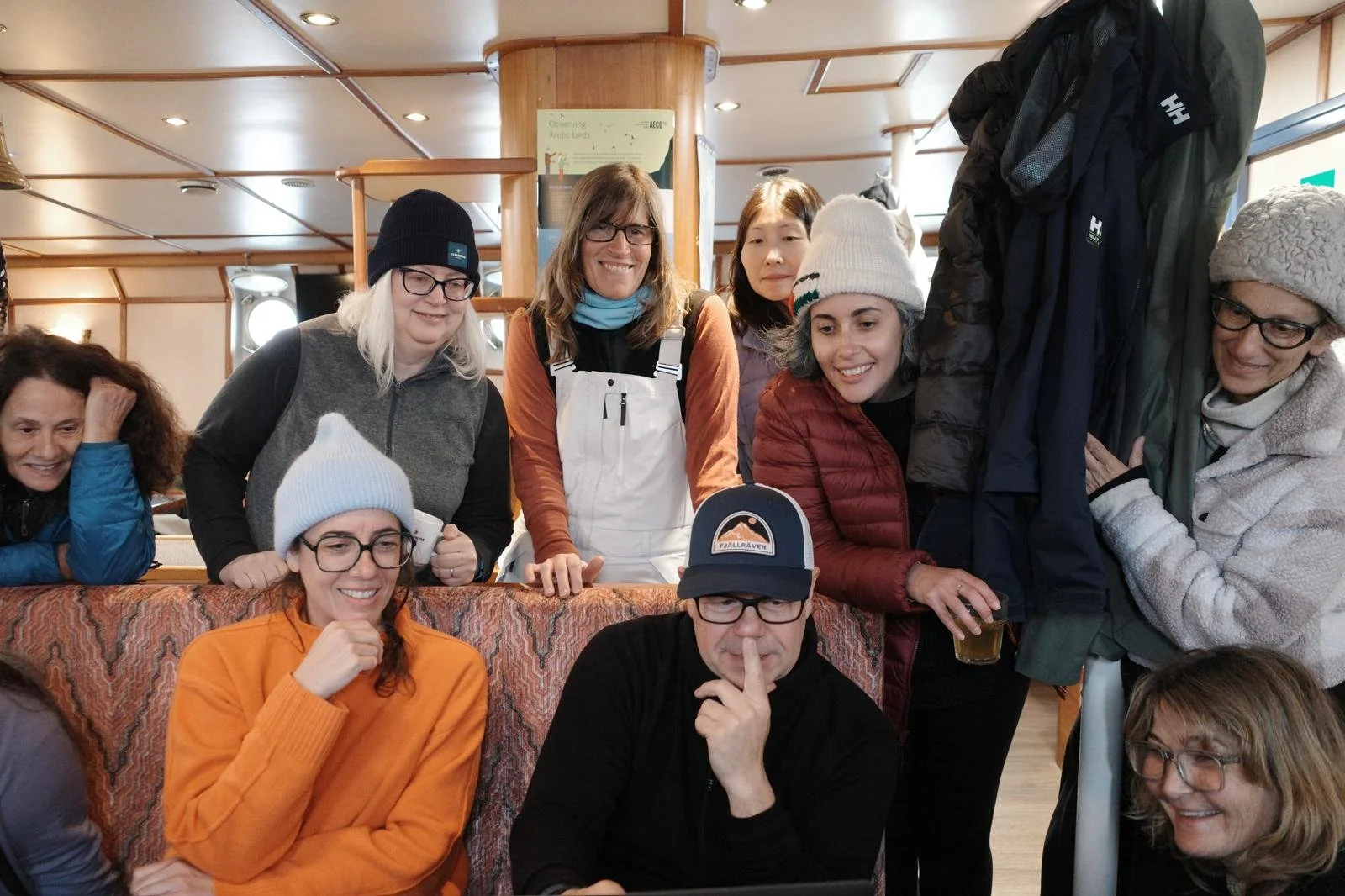
Photo: Christina Olson
The ship kept working after he was gone. Sarah had us exploring Mohnbukta and charting uncharted water the whole way along Heuglinbreen, which is a sentence worth sitting with. Not surveying somewhere remote. Somewhere unmapped. The soundings going down and the numbers coming back and a line appearing on a chart that did not have one, on the twenty-first of July 2026, six minutes at a time. Then dinner, and then we went back out into the ice.
They had been there on the way in too, on the approach north, big and dirty under a hard blue sky with brash spread around them and snow still on the far mountains. But the evening ones were different. Flat overcast light and no shadow anywhere, and the bergs stopped being white. Kittiwakes were working the face of the first one, small and very bright against all that blue. The second is the one I keep going back to. A dark scratch cut across the top of it and then a broad band of deep blue running diagonally down through the whole face, saturated, almost artificial, the colour of nothing else up there. That stripe is a crack. Water got into a fracture in the glacier and froze again without any air in it, and clear dense ice holds the blue while the bubbled ice around it throws it back as white. So the brightest thing on that iceberg is the place where it broke. It looked like a set. It looked like somewhere the Night King lives. The last one had its waterline eaten out into a row of caves and hollows, turquoise going to black inside them, and the water underneath had gone green.
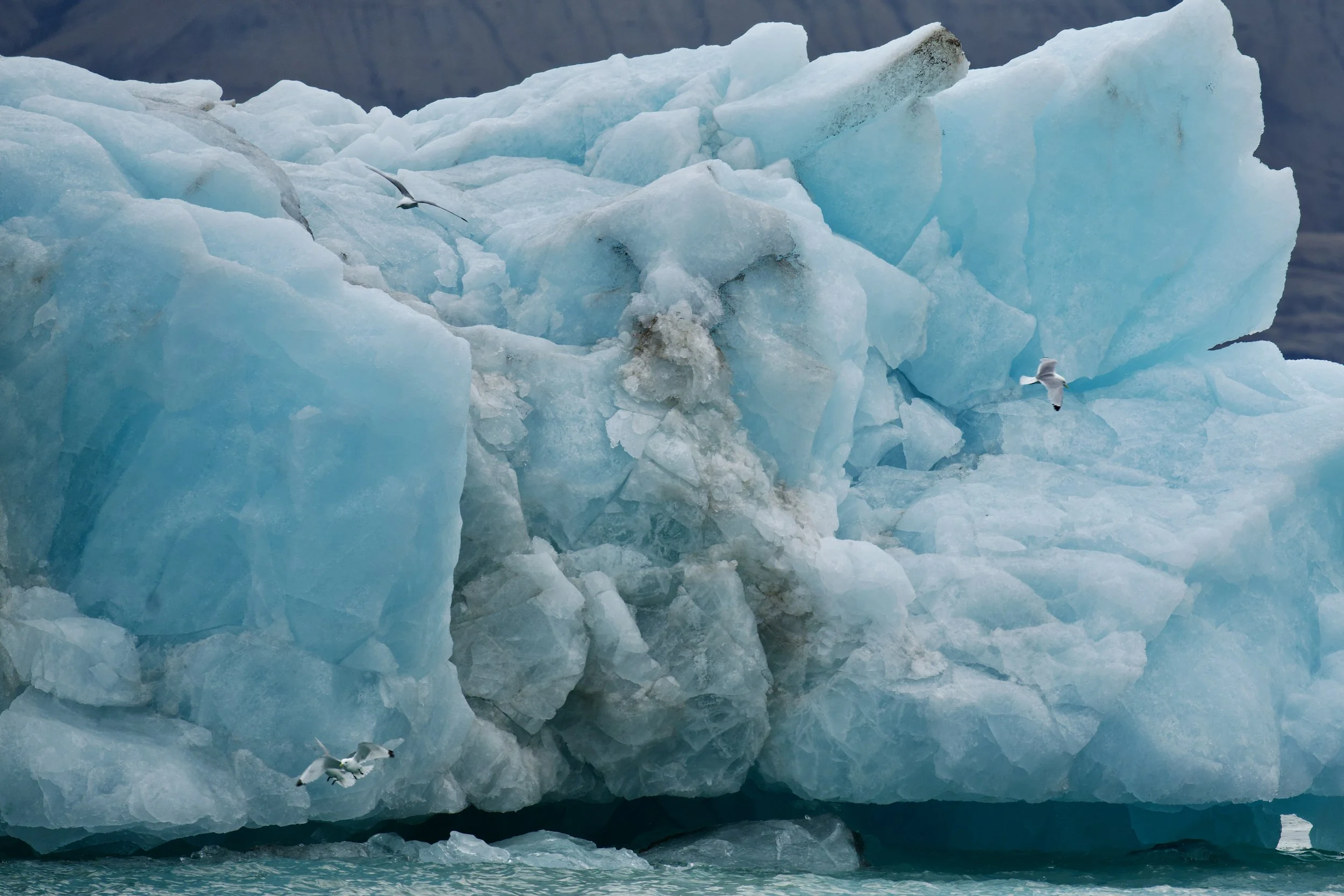
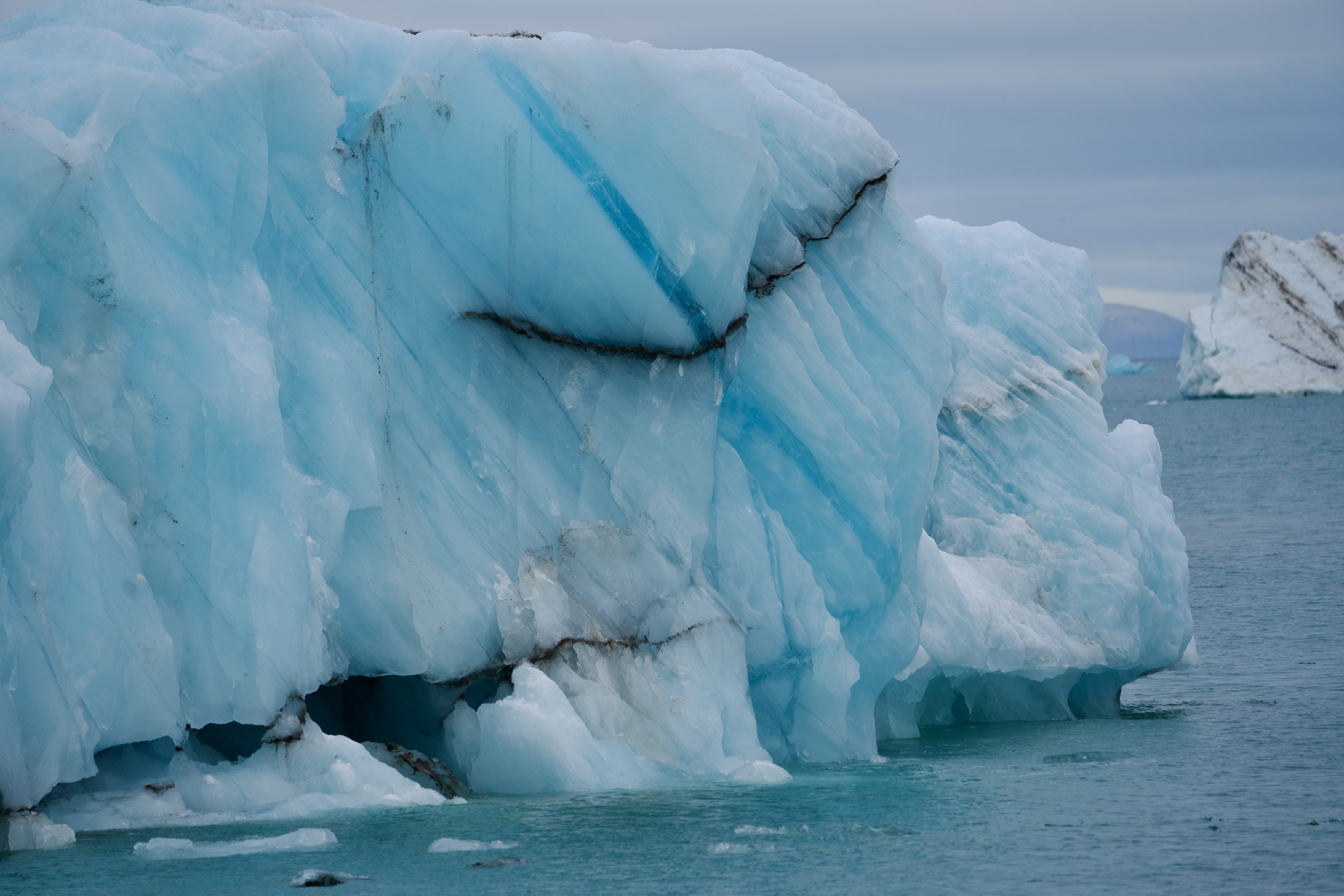
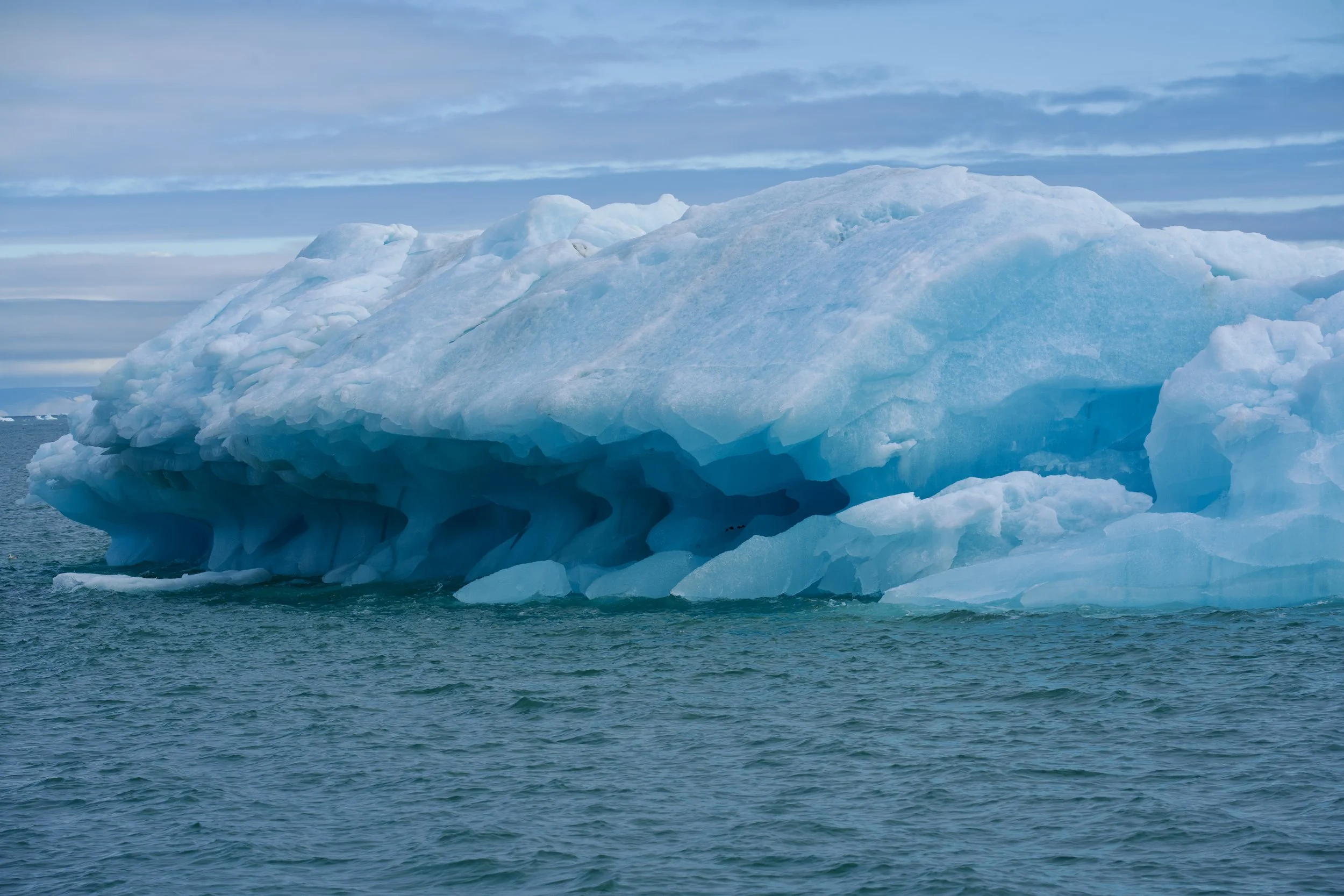
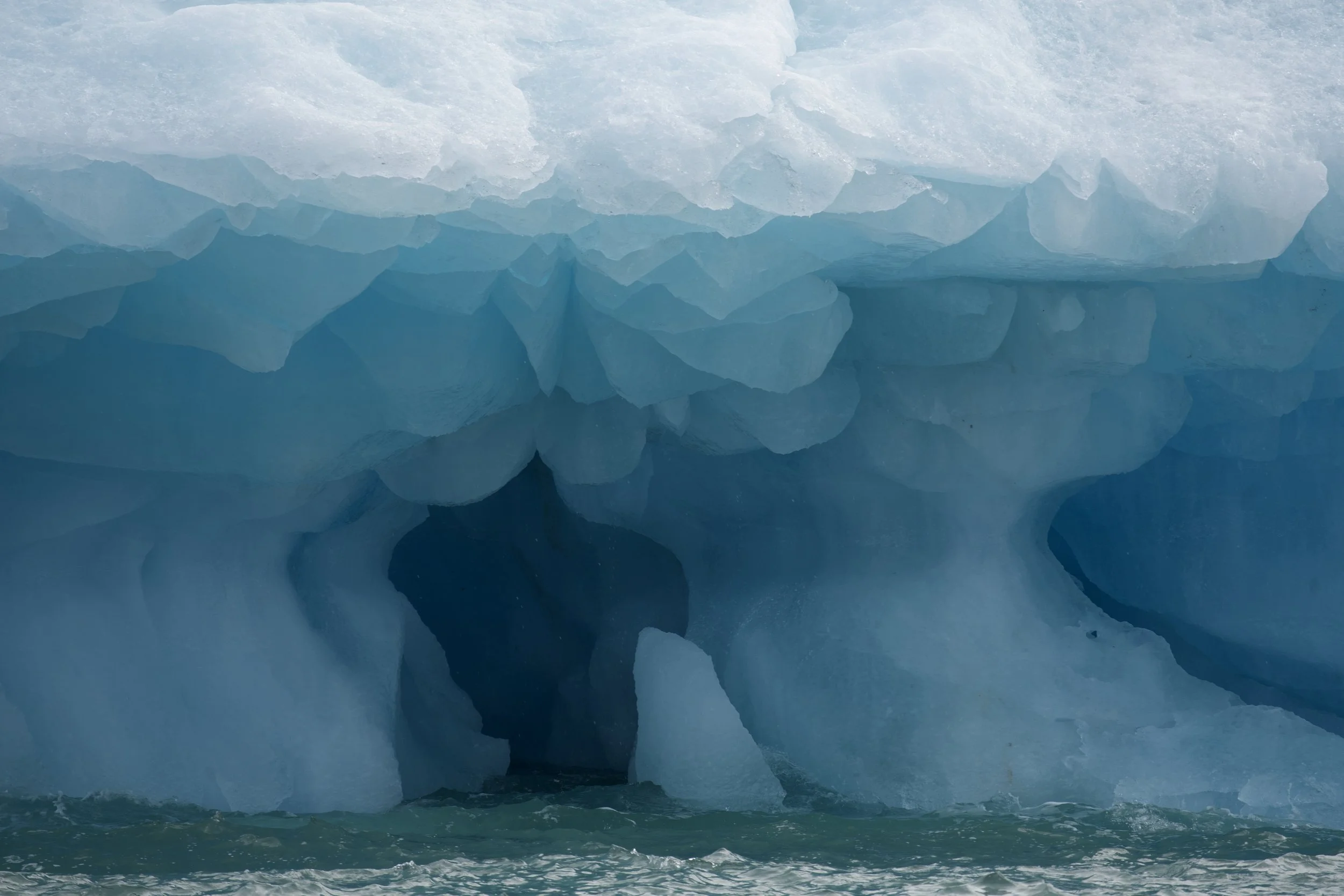
Anchor down at Witches Bay at midnight, 78° 29,9' N, 018° 52,8' E. Eighteen nautical miles from our first landing in Tempelfjorden. Six days down the west coast, around the bottom of the archipelago and up the entire east side, and we tied up a morning's walk from where we started. Best day of the trip. I thought that on the seventh day the way I had thought it on the sixth and the fifth and every one before them, and I went to bed certain it could not be topped, and in the morning the next best day started right away.
“The Arctic does not yield its secret for the price of a ship’s ticket.”