Entry 044: Day 08: Out of the Water
Wednesday, 22 July 2026. Wichebukta, Petermannbreen, Johansenbreen, Negribreen.
At breakfast we were still on the goulash. It had turned up at dinner the day before, and Gergő is Hungarian, and a Hungarian does not have to say one word about a goulash for you to know exactly where he stands on it. Eight days at sea and we had reached the stage of holding an inquiry into a stew.
Sarah's log calls it the calmest day of the voyage and she is not a woman given to superlatives. Slightly foggy in the morning, lifting by nine into overcast with the sky opening in patches, then a bright sunny afternoon, an overcast evening with strong colours in it, and fog closing in at the end of it. Wind almost nothing. The water flat enough all day that you stopped noticing you were on a boat. Air four degrees in the morning and six by the middle of the day. And the sea temperature in the bay at 0.8°C, which she wrote down with an exclamation mark after it, the only number in sixteen days she bothered to punctuate.
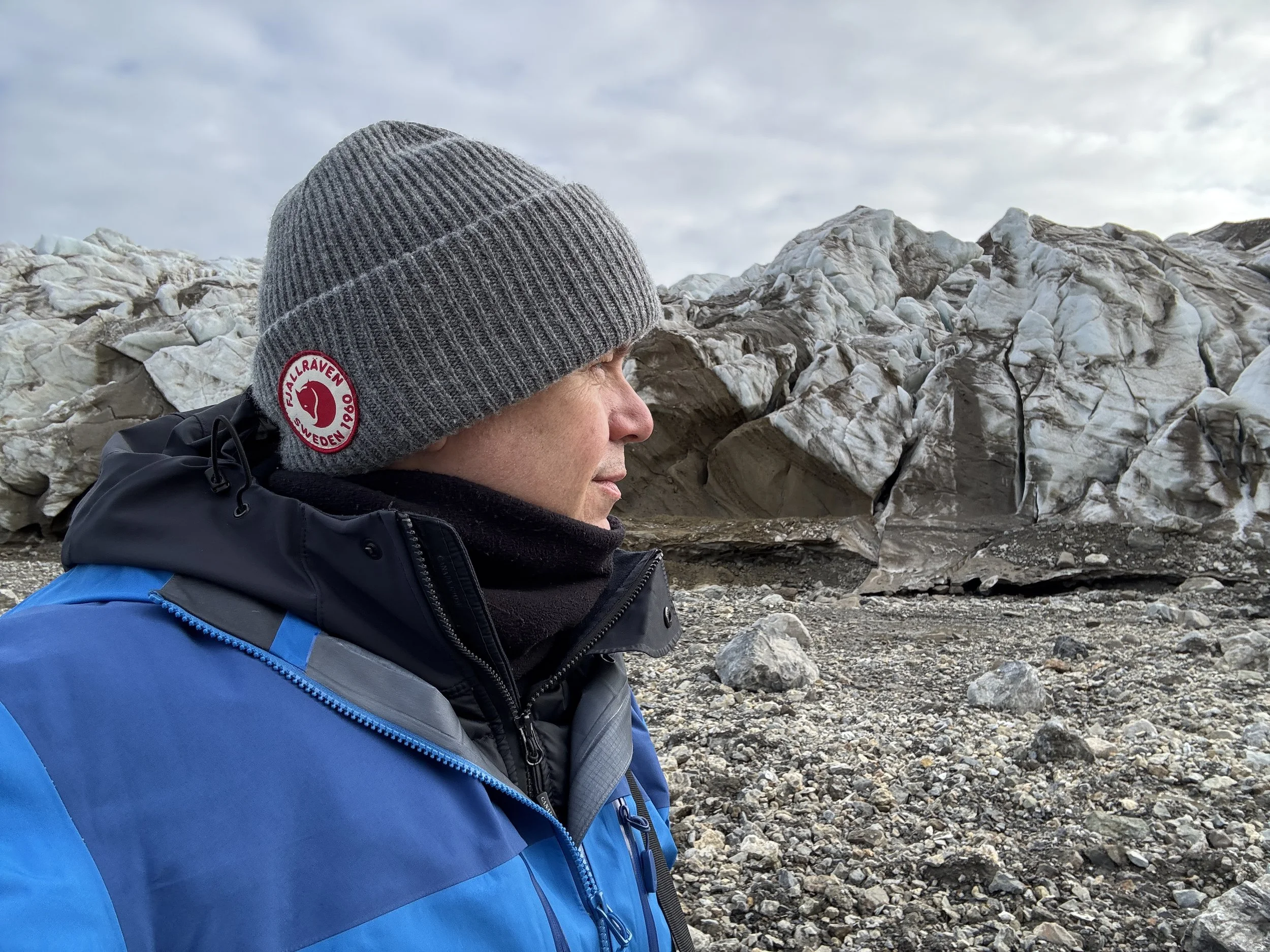
The bay is called Wichebukta. It is named for Richard Wiche, a London merchant and shipowner who put money into the Muscovy Company fleet in the early sixteen hundreds and never came within two thousand miles of the place that carries his name. Nobody on that ship called it Wichebukta. Everybody called it Witches Bay, Sarah included, and she leaned on it a little when she said it, the way you do with a name that is better than the truth. Witches Bay. So that is what it was for the sixteen hours we were in it, and that is what I am going to call it, because by the end of the day I had reason to.
We had been lying at anchor there since the small hours and the ship did not move again until two in the afternoon, which means everything that happened that morning happened off a hull that stayed exactly where it was. The landing opened at half past nine. A perimeter landing in front of Petermannbreen, which comes down to the water in a wall of blue and white a kilometre across and makes everything standing in front of it look temporary. Getting ashore had become routine by then. Nobody was fumbling with layers any more. We could dress for a landing in minutes. People still forgot the magnets. Eight days in and there was still not a morning without somebody standing at the board going back for their own name.
I want to be honest about the first hour. It was not much. Sarah had told us this was a site for ivory gulls and I did not know what an ivory gull was, and then I saw one and understood the fuss. A bird that is entirely white, every feather of it, with black legs and a dark eye set in a red ring and a short bill that runs blue-grey at the base into yellow and then orange at the tip. Nothing else up there looks like that. There are somewhere between eight and eleven thousand breeding pairs left in the world. It is red-listed in every country it breeds in, Norway moved it to Vulnerable in 2021, and the monitored colonies in Svalbard have been falling about seven per cent a year for a decade. It nests almost entirely in the east of Spitsbergen, on Barentsøya and Nordaustlandet, which is to say more or less exactly where I was standing. It lives off the drift ice. It also eats what polar bears leave behind. I did not know that last part yet.
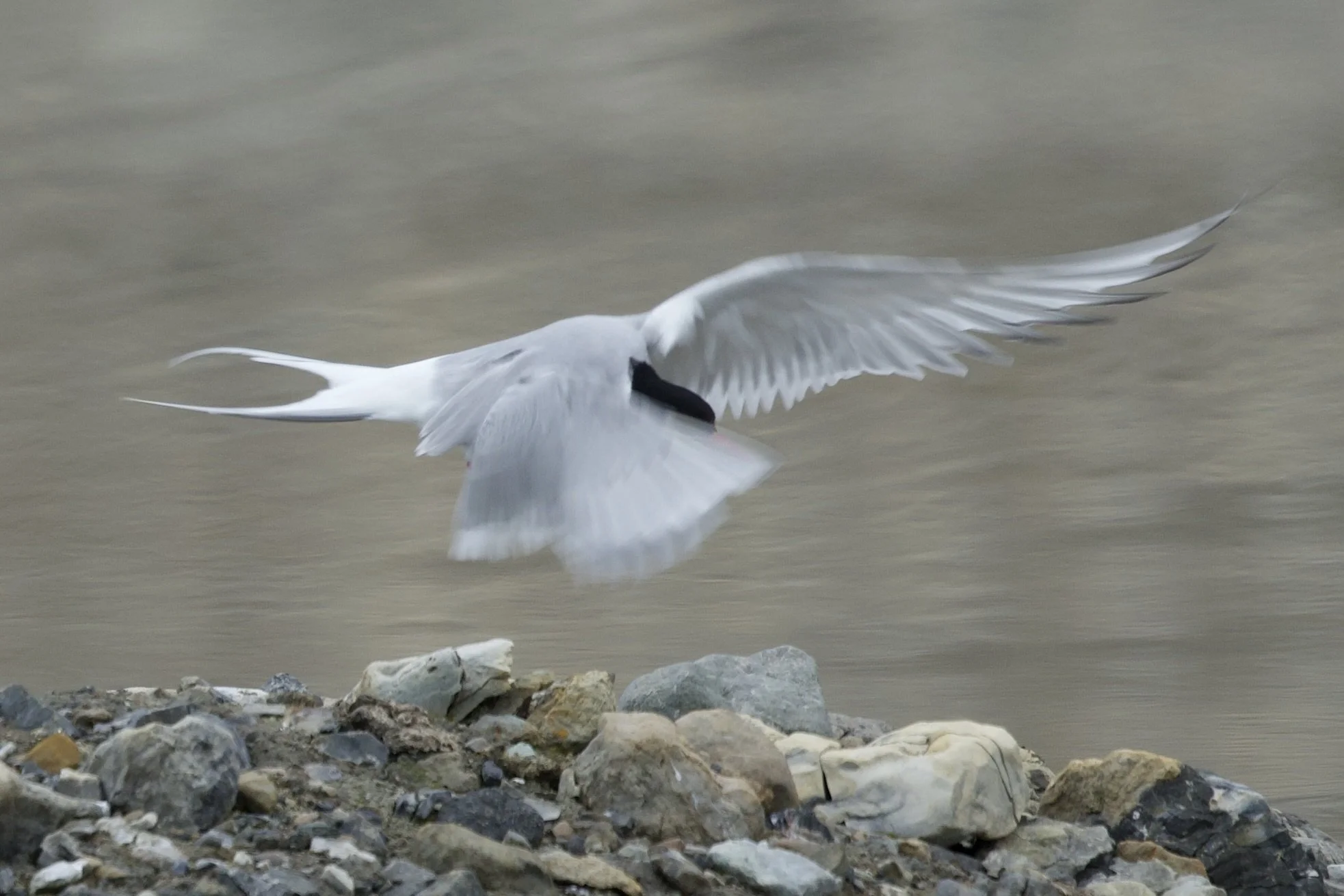
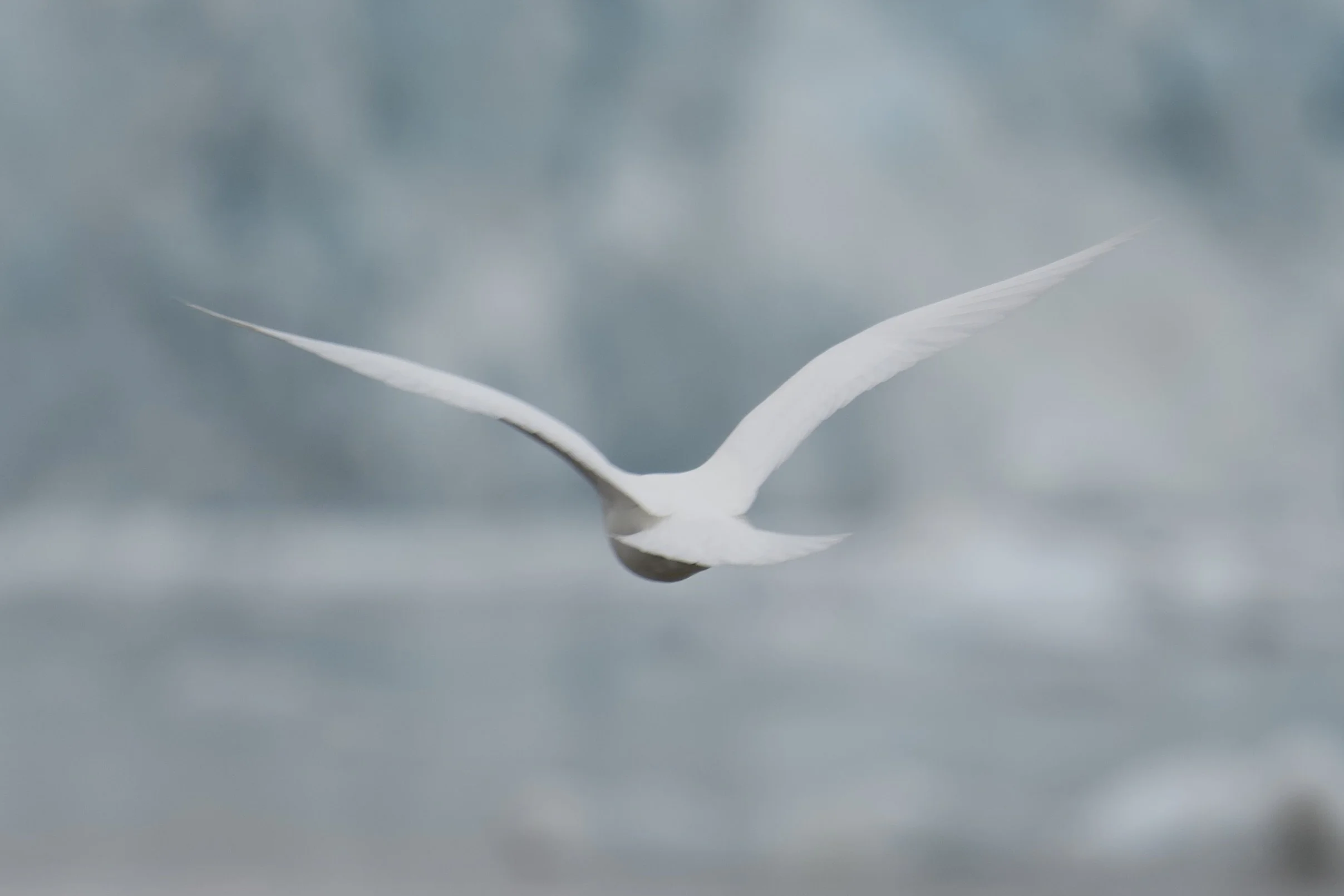
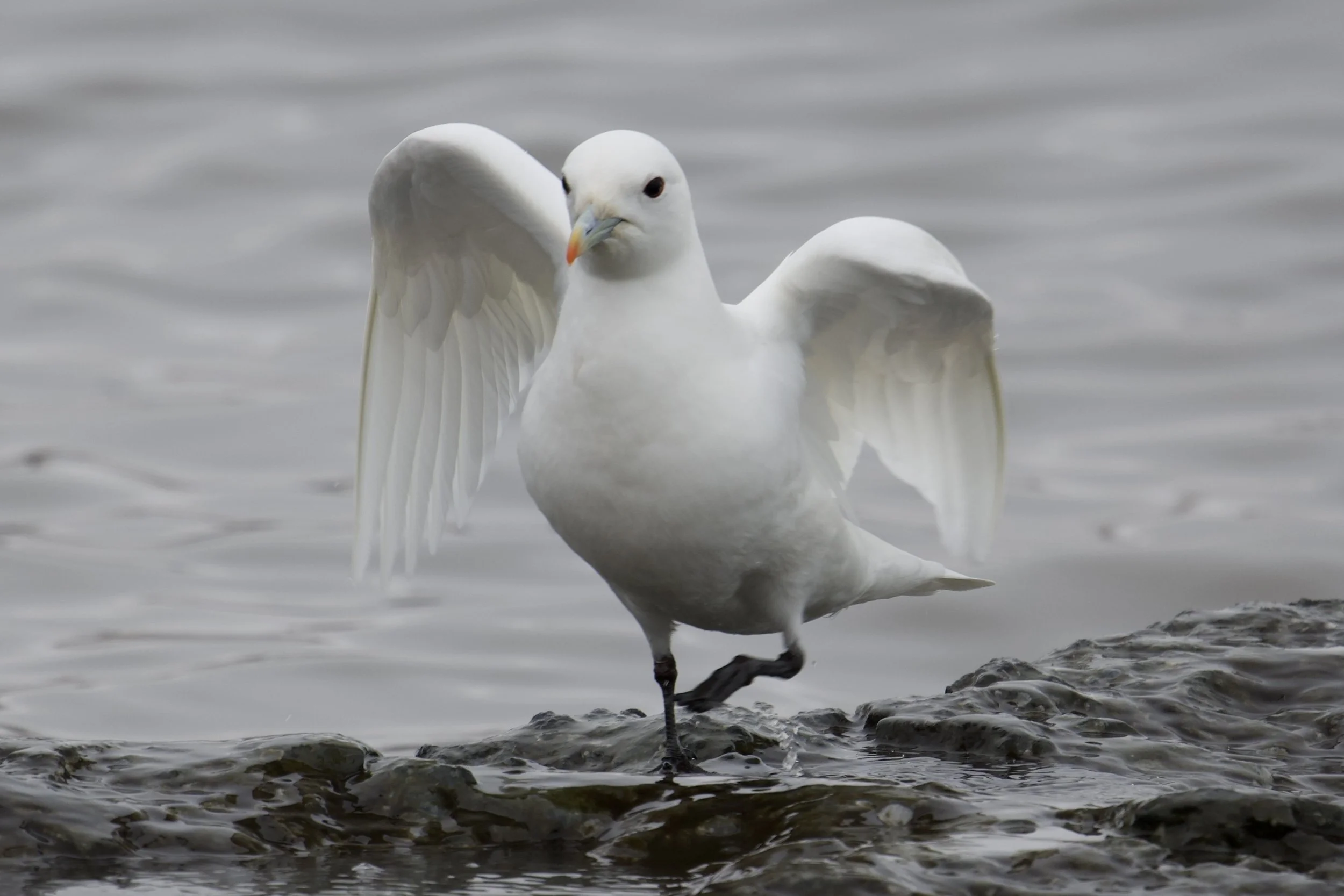
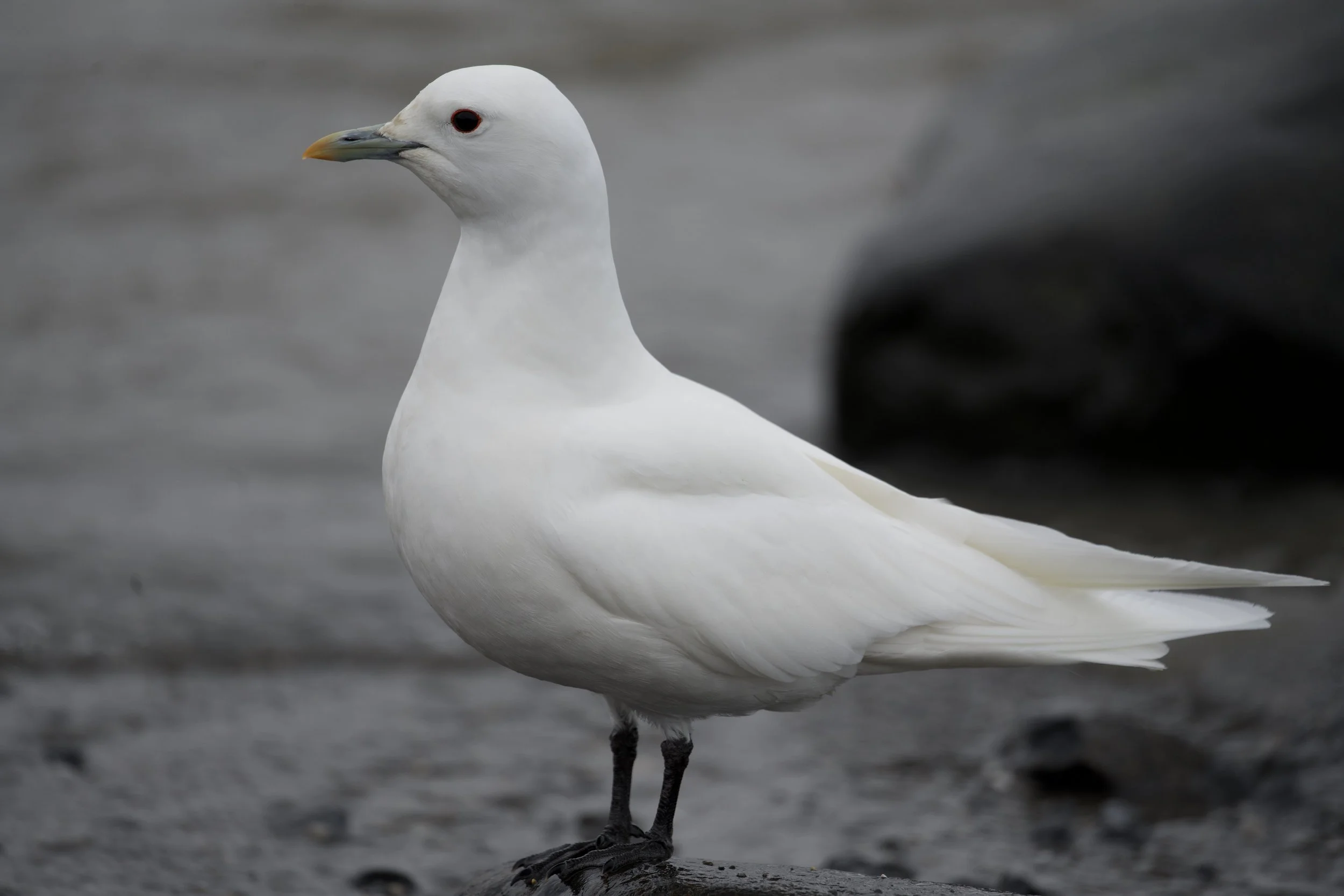
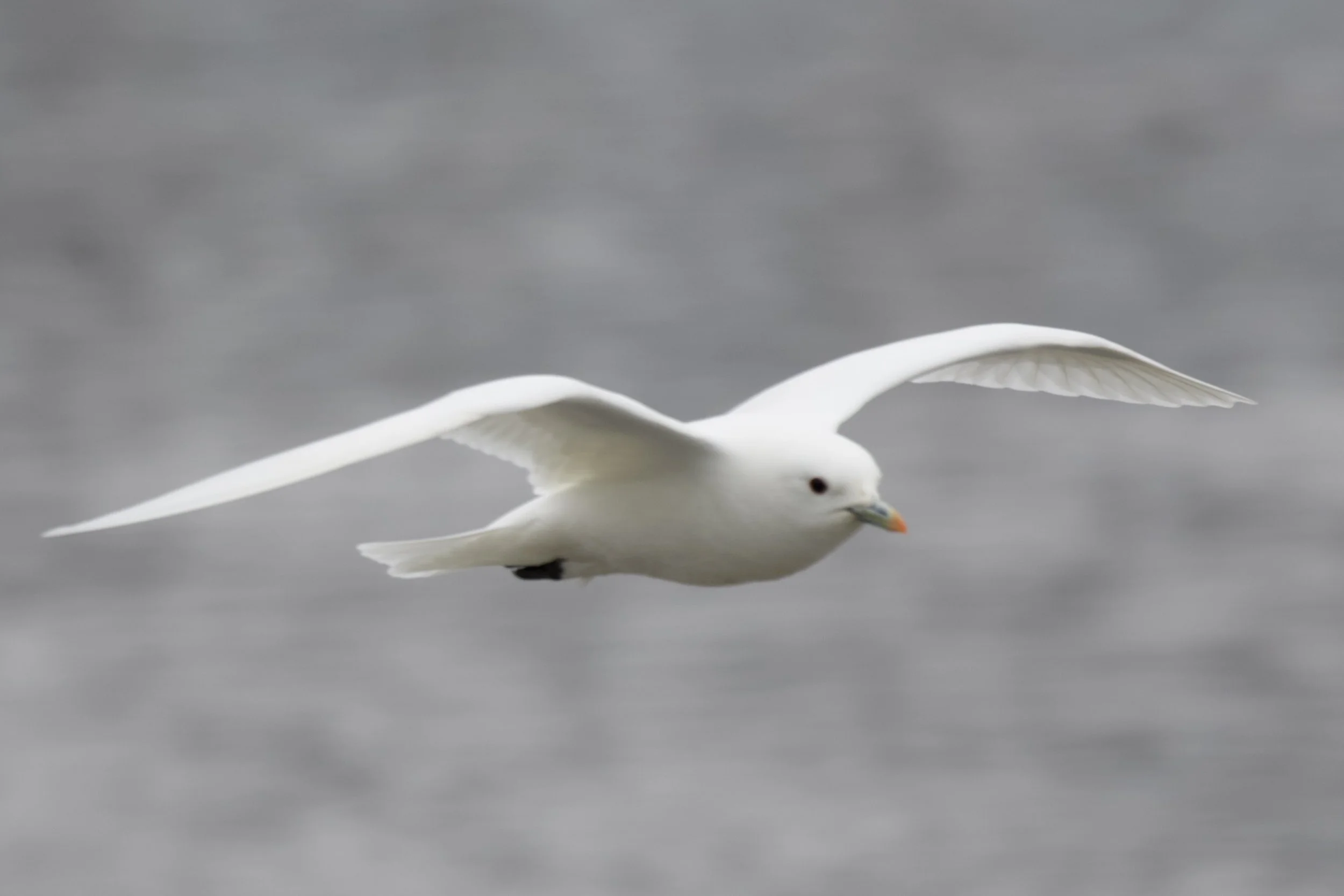
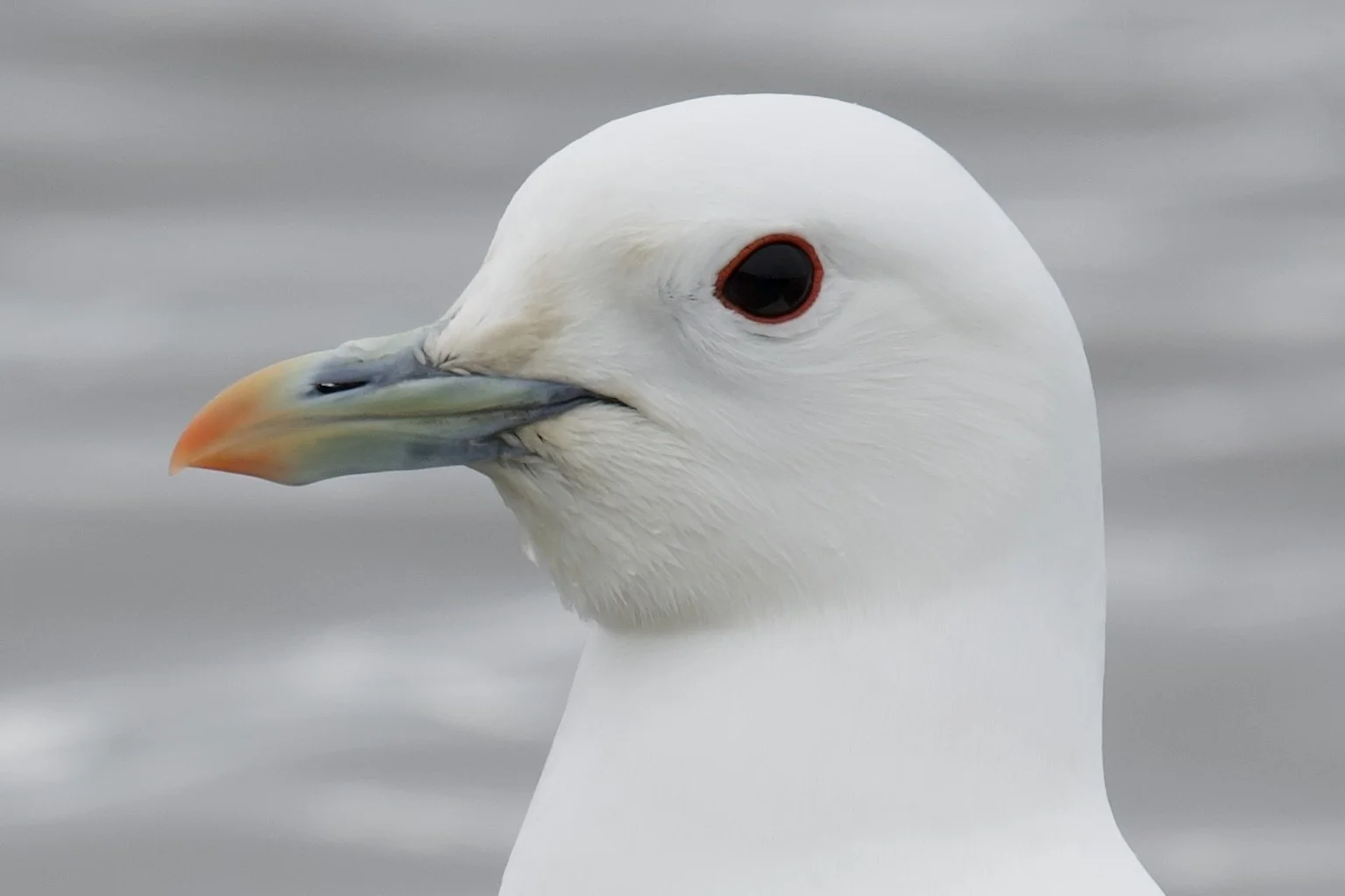
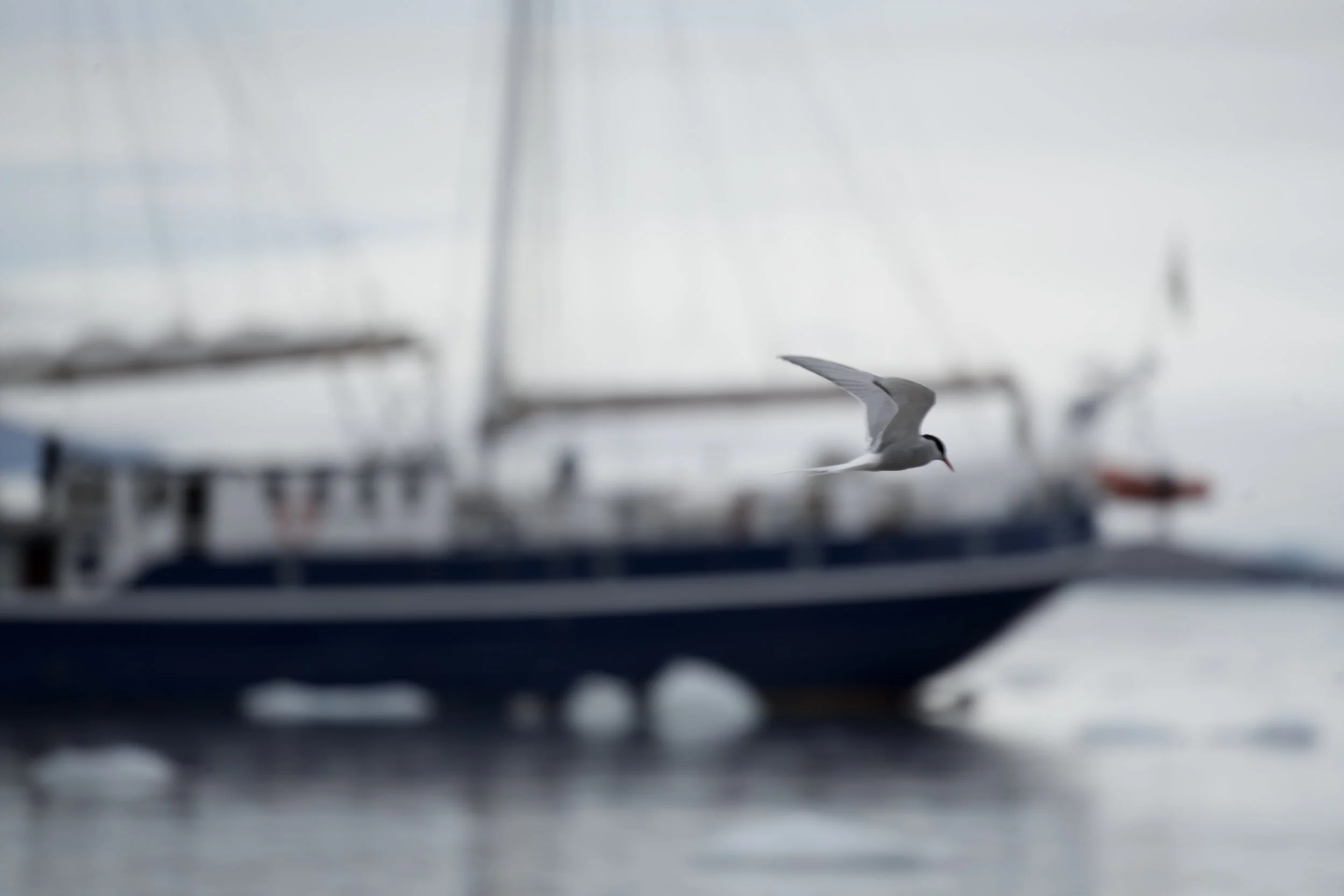
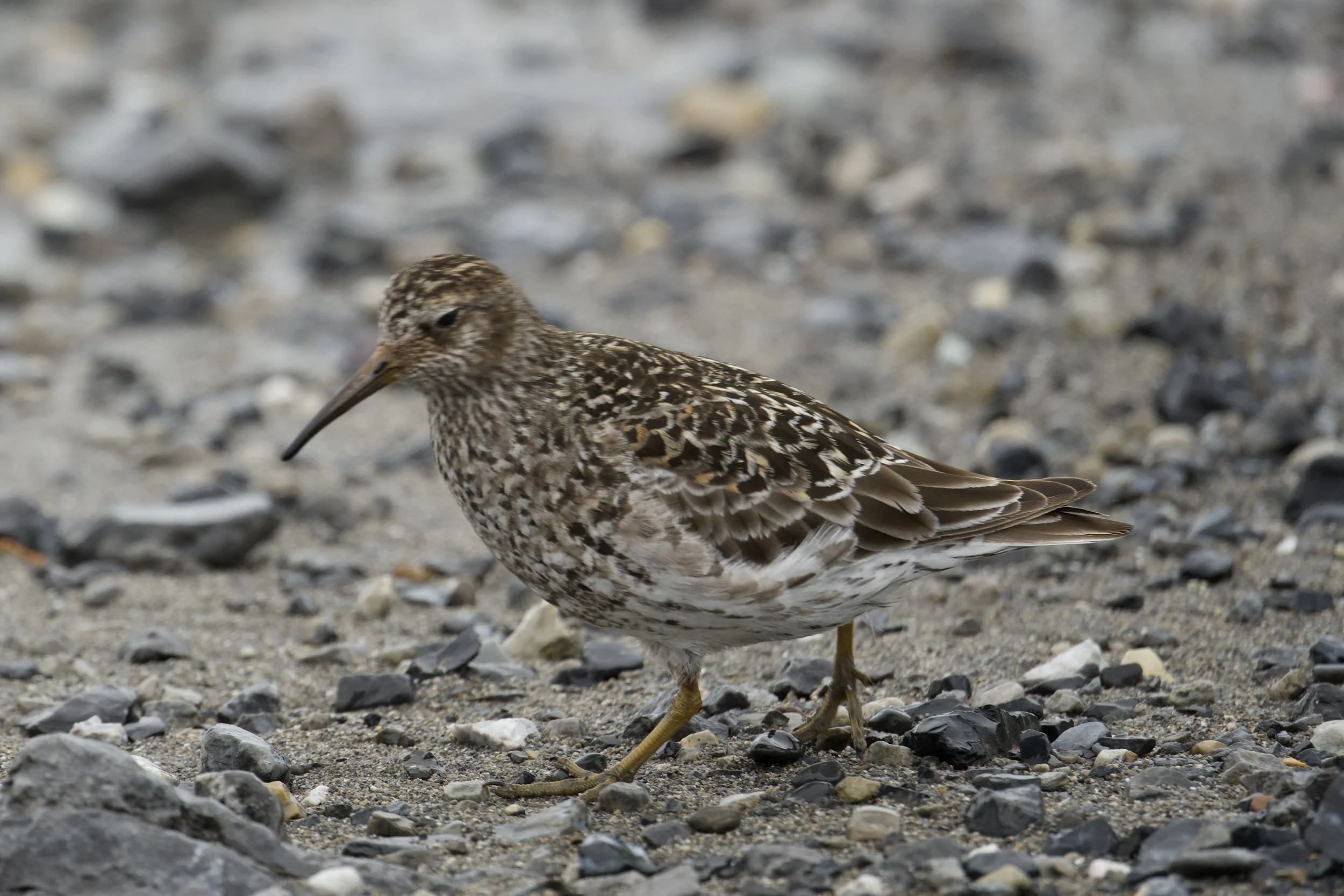
So I photographed birds, in flight, which is hard, and then I photographed stones. Then more birds. Then more stones. Ivory gull, kittiwake, purple sandpiper, Arctic tern, stone, stone, stone, glacier, stone, bird, and I will admit that somewhere in there I started to think about lunch. Vicki and Claudia were down at the waterline recording and we had been asked to stay out of that stretch of beach so they could work, which took away the only part of the shoreline I had not already photographed twice. It was a beautiful morning and it was slightly boring, and I am allowed to say both.
Then I found the stone. Rust-orange, water-worn smooth, about the size of two fists, with a pale grey and white quartz inclusion set into the face of it. And in that inclusion there is a muzzle and a brow and the shape of a head. It is a polar bear. It is unmistakably a polar bear, and I stood on a beach in a place everybody was calling Witches Bay and photographed a bear in a rock, and thought nothing of it beyond how good it looked. That was ten twenty in the morning.
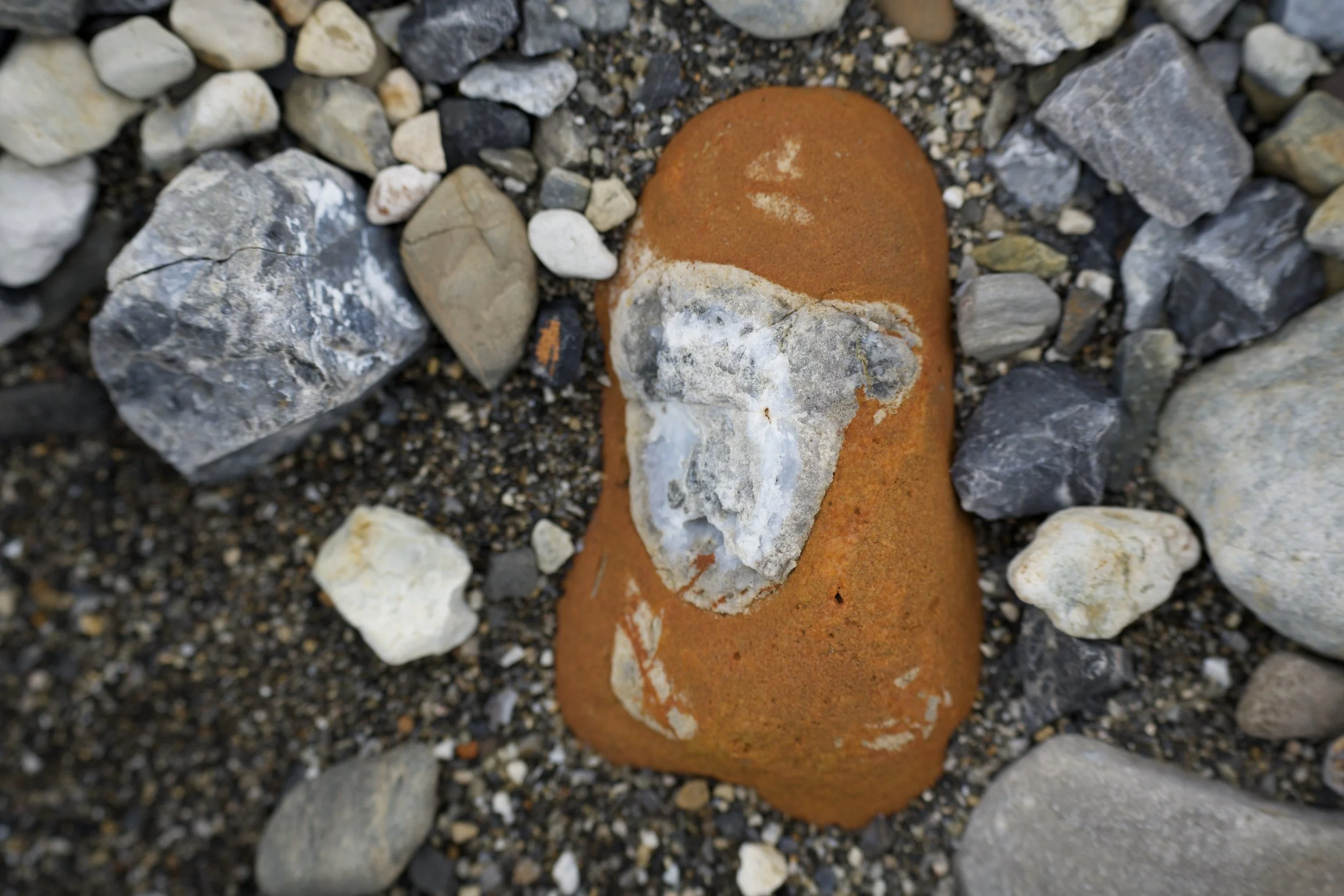
THIRTY-FIVE MINUTES - A bear in the rock at twenty past ten. Two more on the beach before eleven.
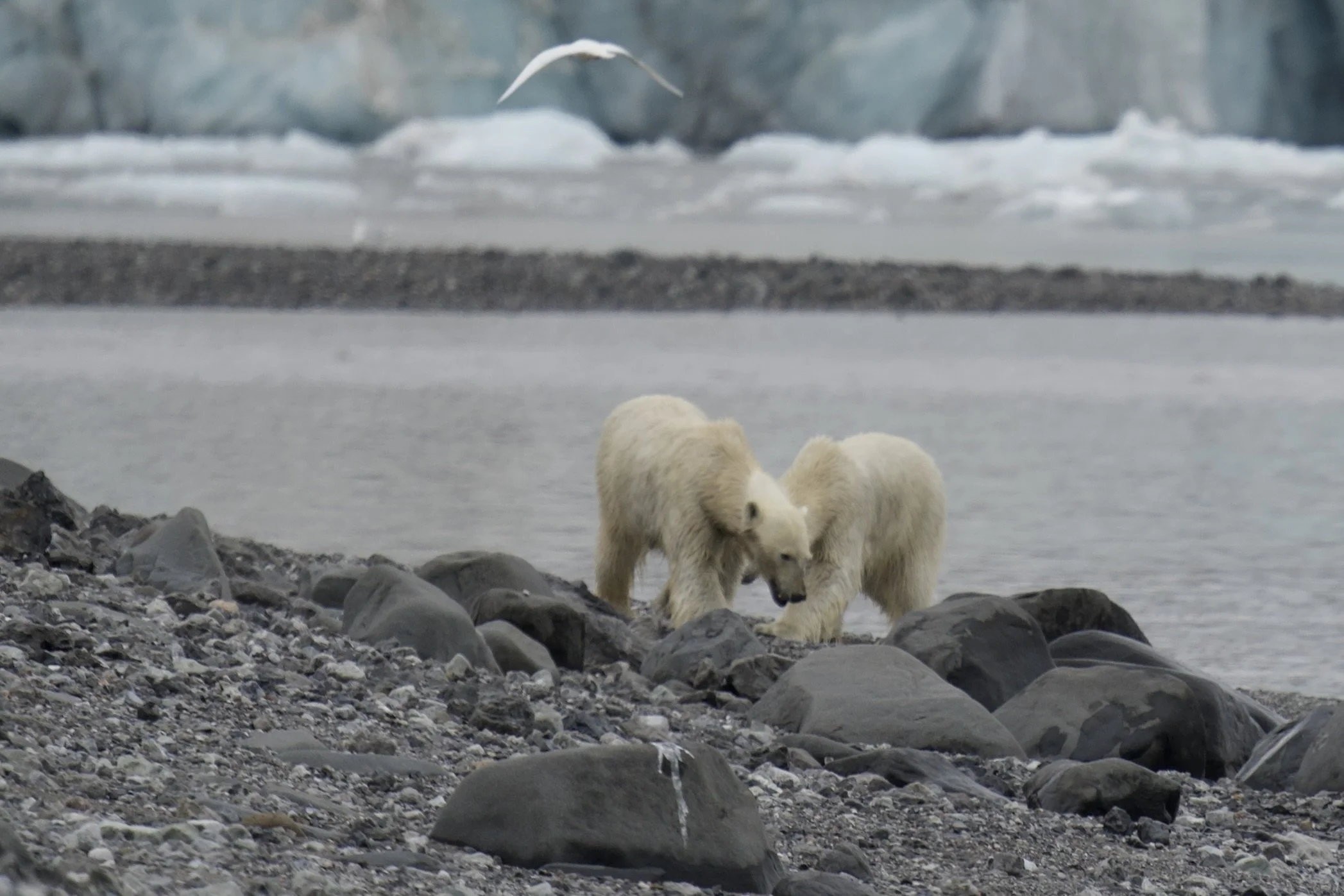
At about ten to eleven I was up the beach looking out at the Rembrandt van Rijn on glassy water when I heard Rhys. Oh no. Oh no, you don't. Not loud. That flat tone people use when the thing they were hoping would not happen has started happening. I turned, and I saw them before I heard the word bear. Two of them, on the shore, already on our side of the water.
They had come out of the sea. We worked that out later, and confirmed it days afterwards when we watched one swimming and understood how little of a bear is above the surface when it does that. A back and a head and nothing else. They had swum in while everybody was looking at birds.
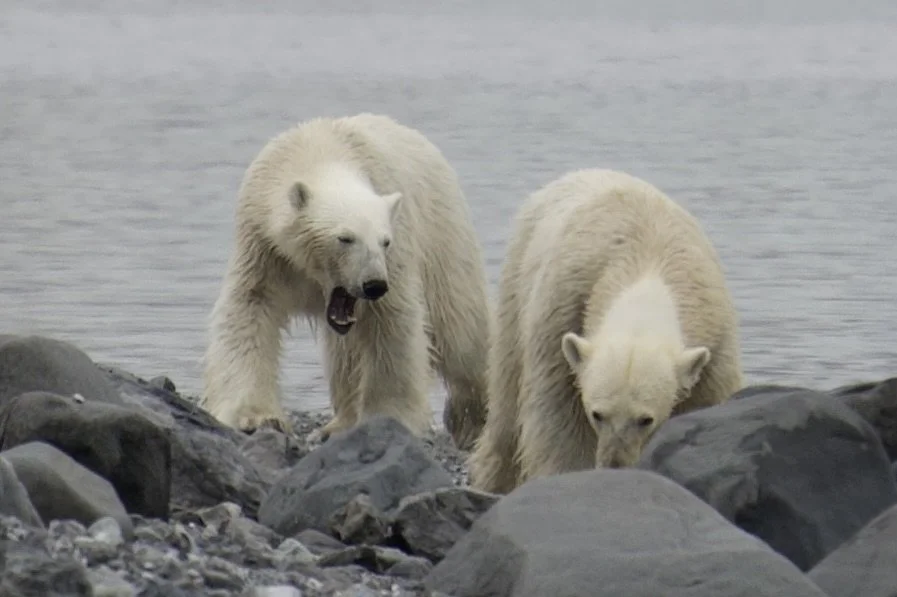
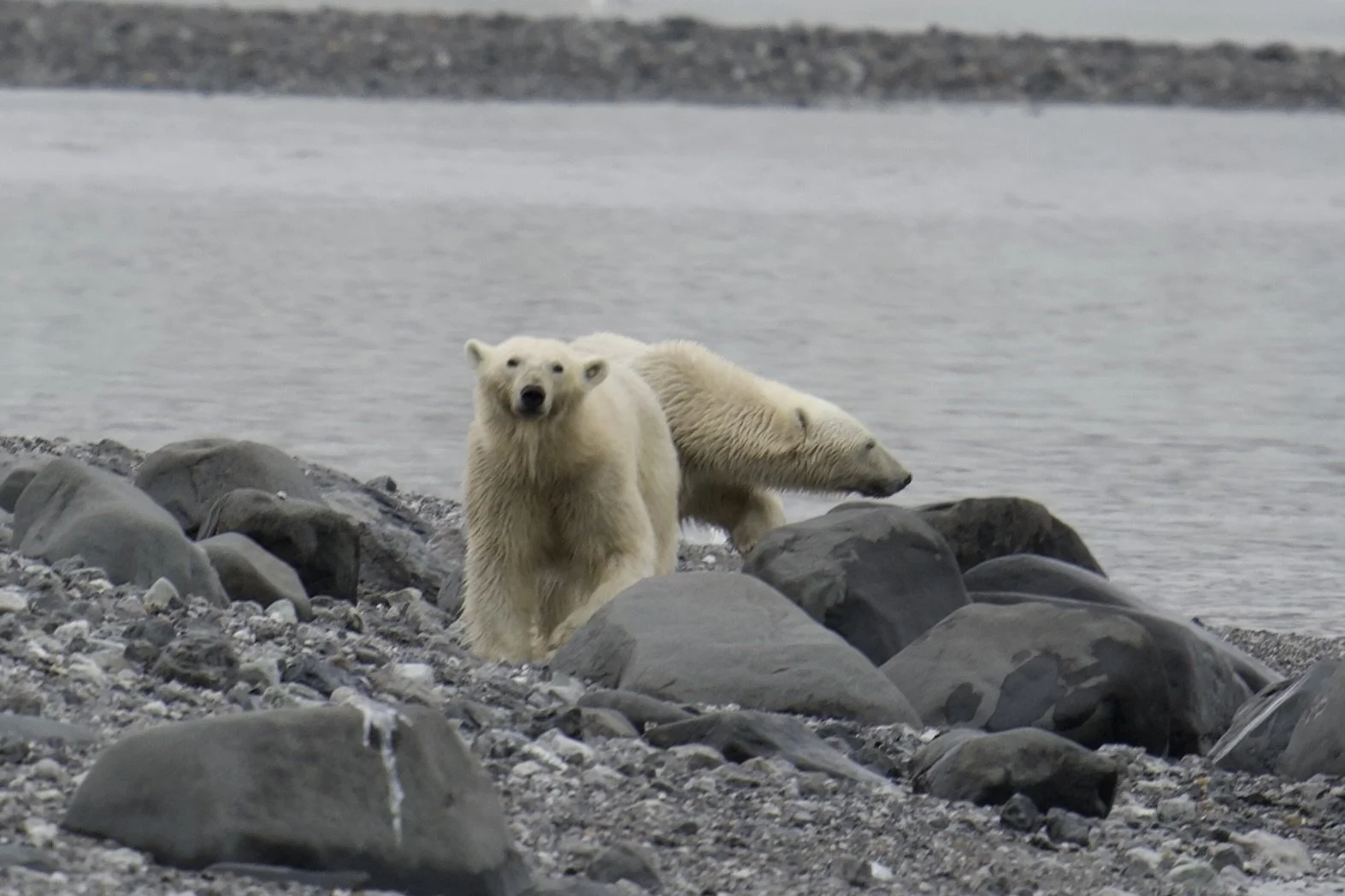
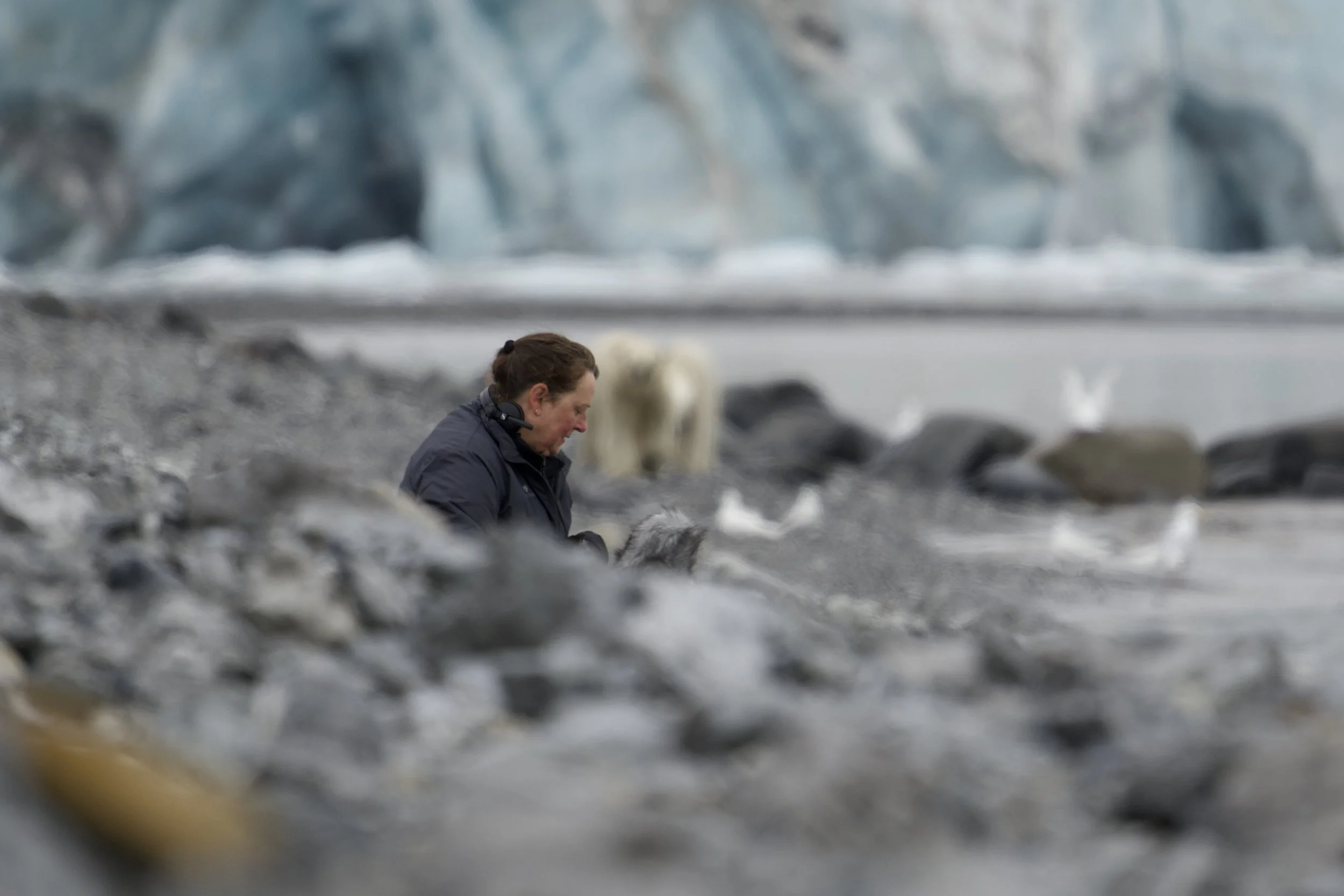
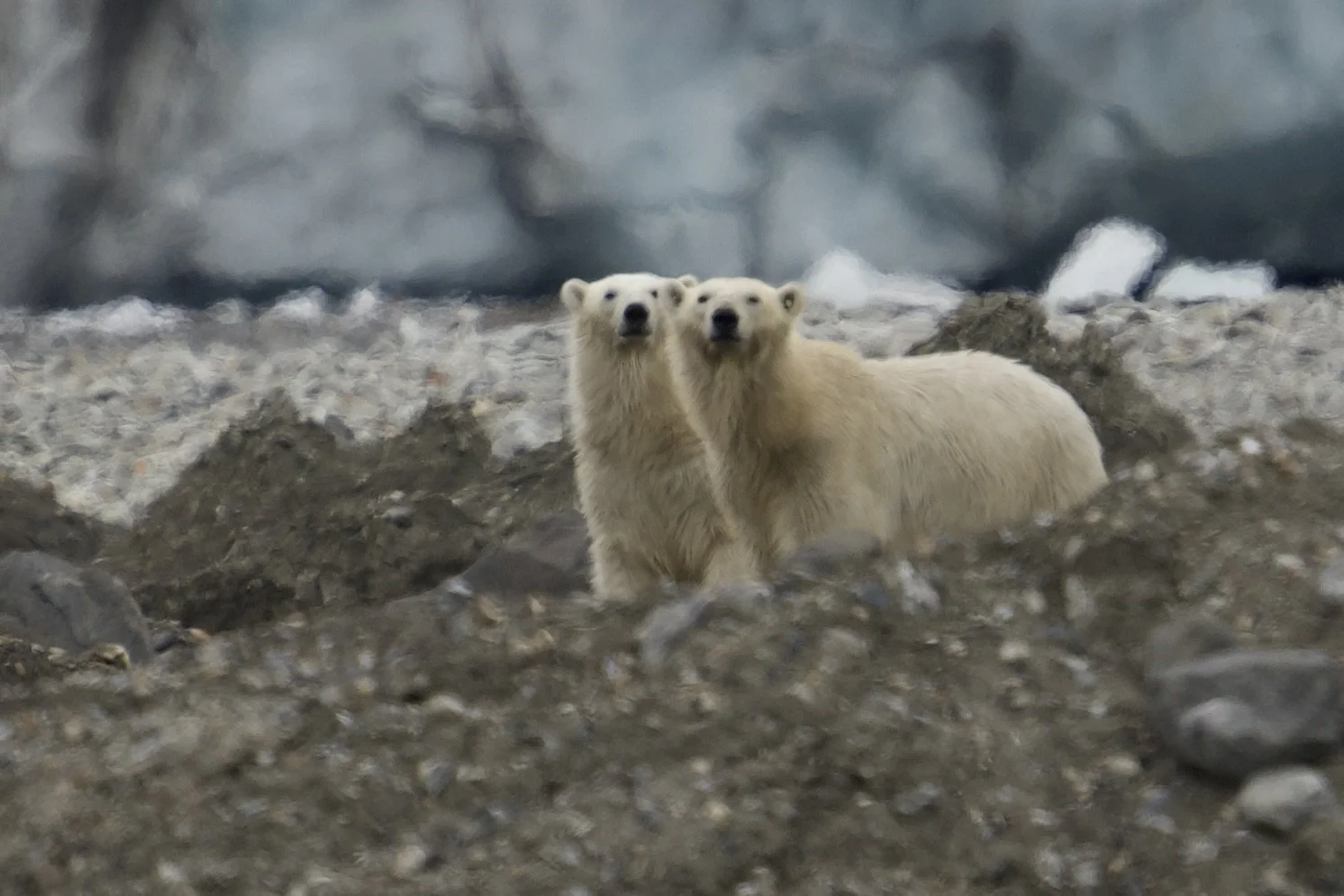
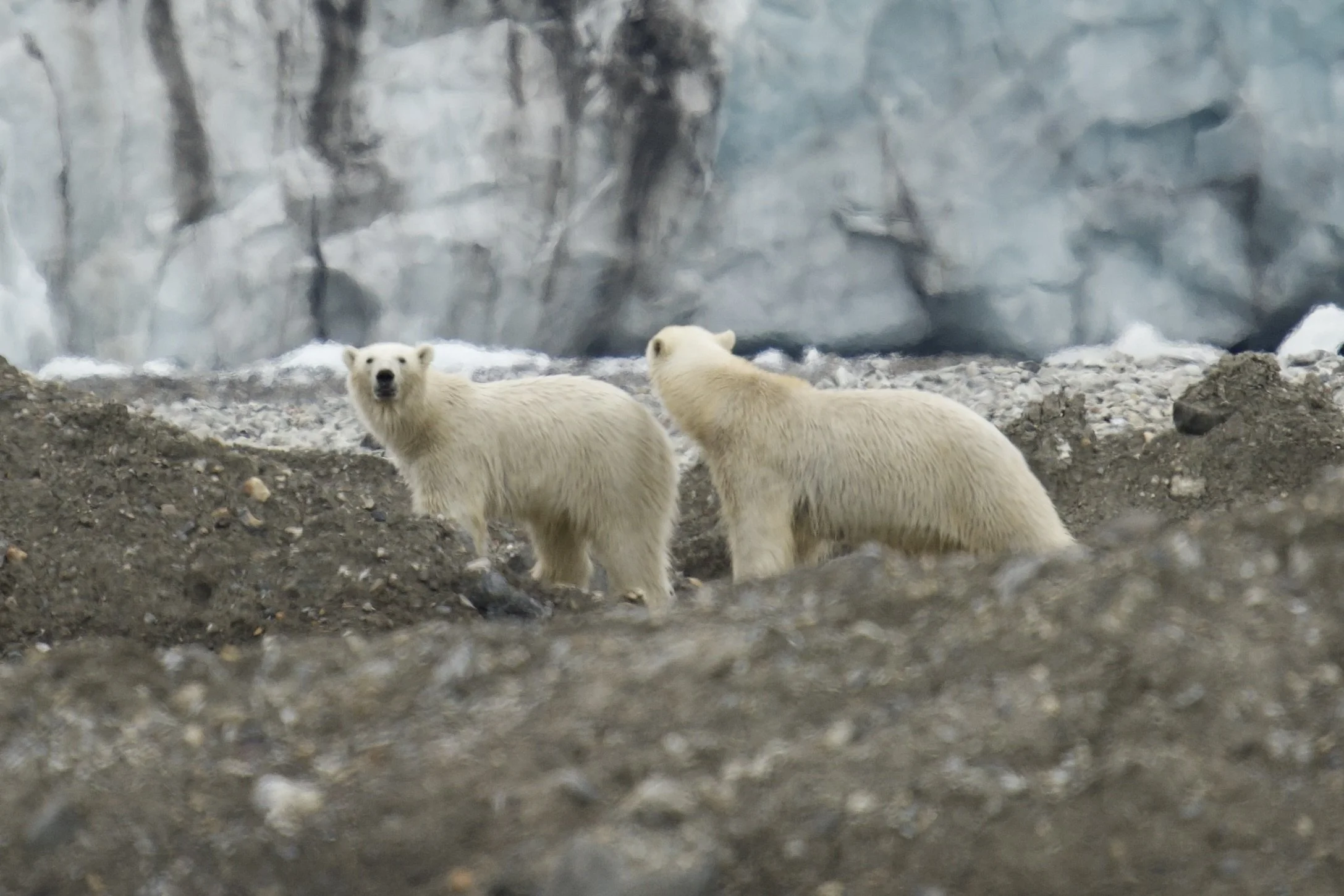
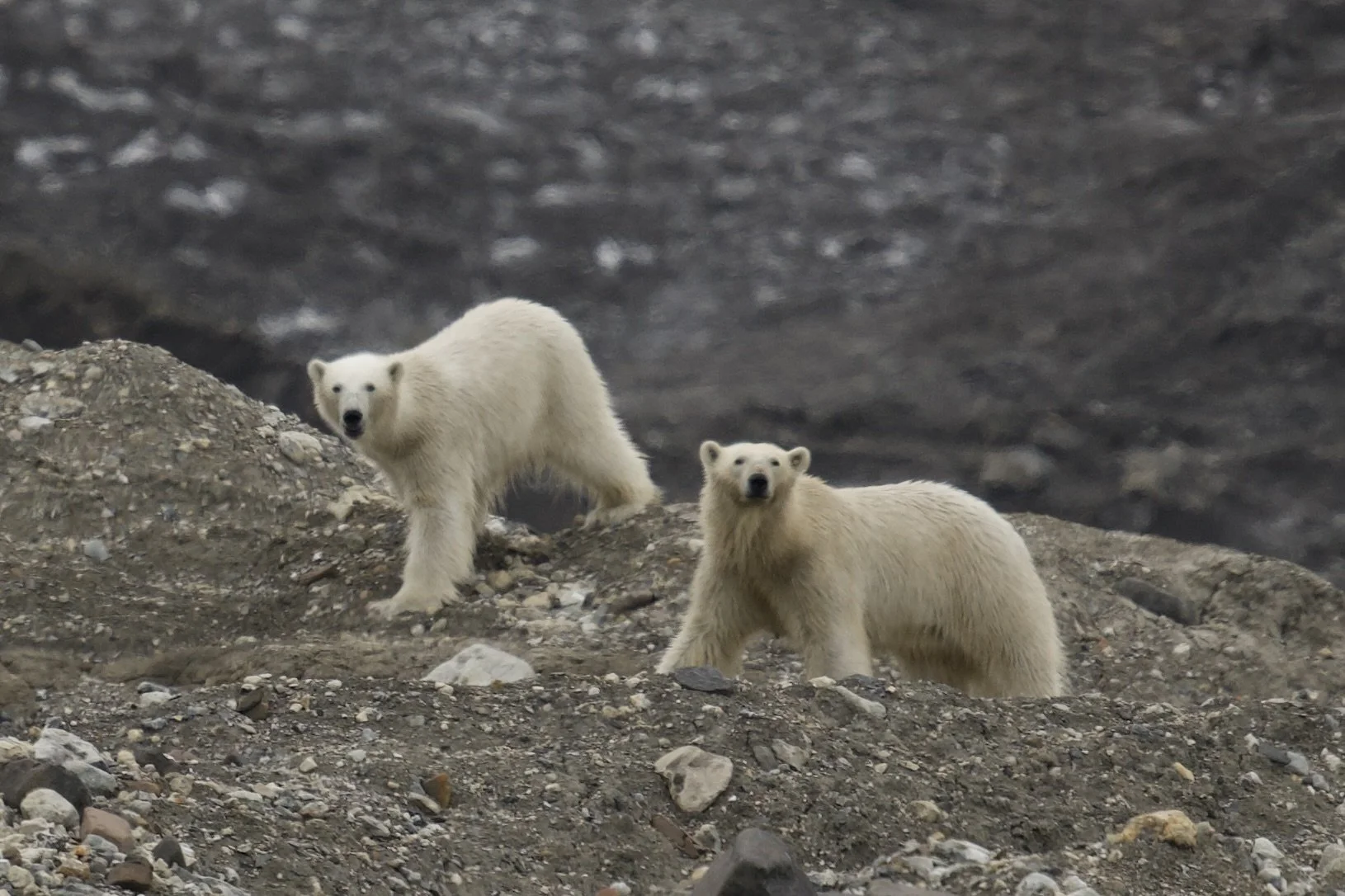
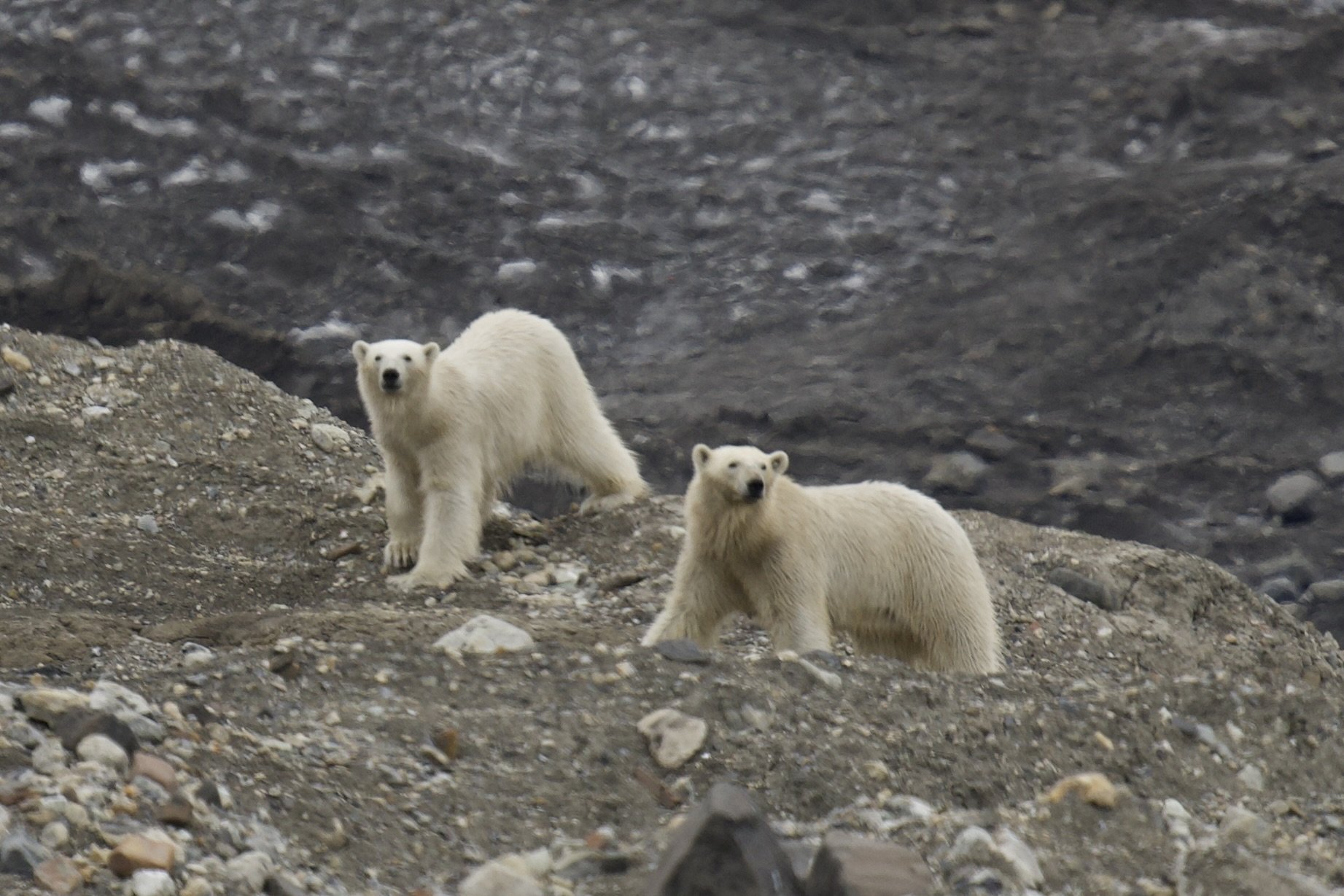
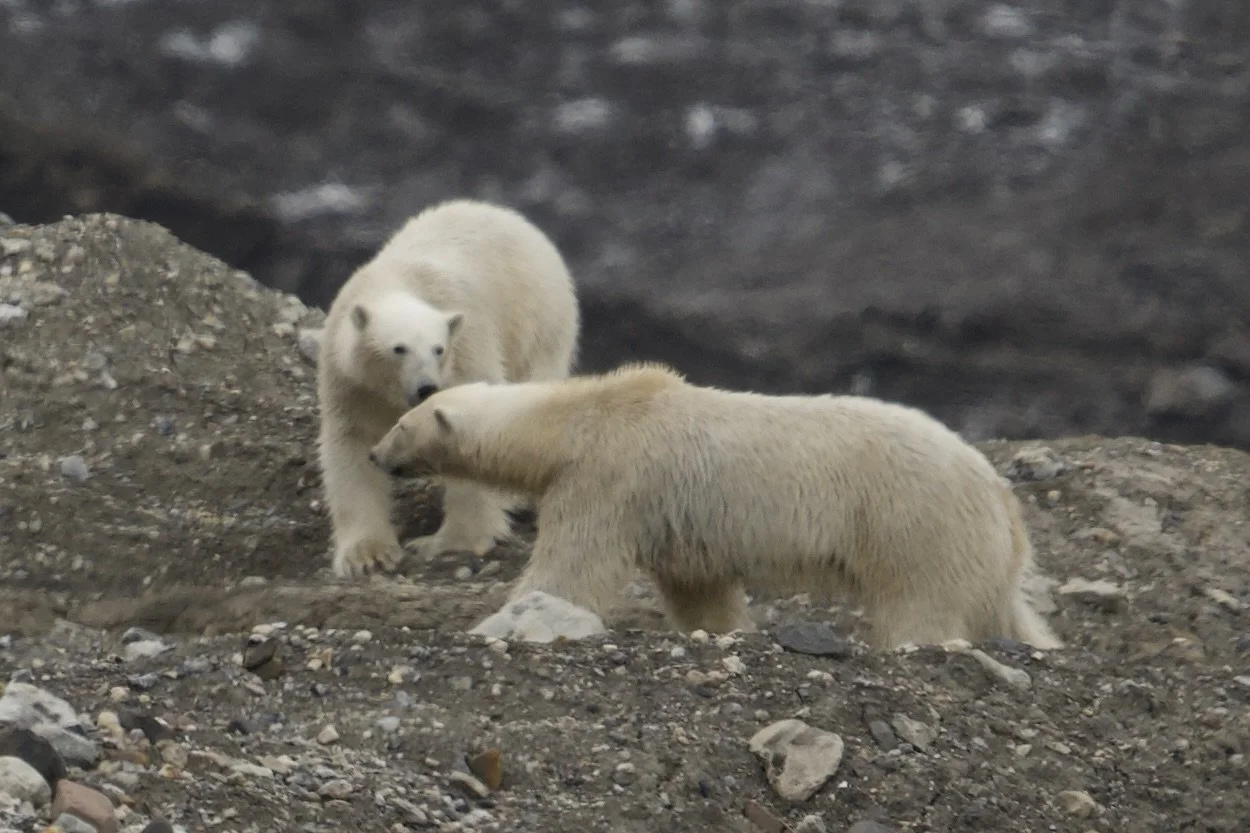
First frame is 10:56:01. Mother and cub at the waterline with an ivory gull crossing above them, and thirty seconds later I have a photograph of Vicki in the foreground with her gear and the two bears in the frame behind her, and you can see the distance, which is not a distance you want. Then Sarah on Rhys's radio, right next to me. They are circling us. Within seconds, and I do mean seconds, the zodiacs were off the ship and coming in. I have never seen a thing done that fast or that quietly.
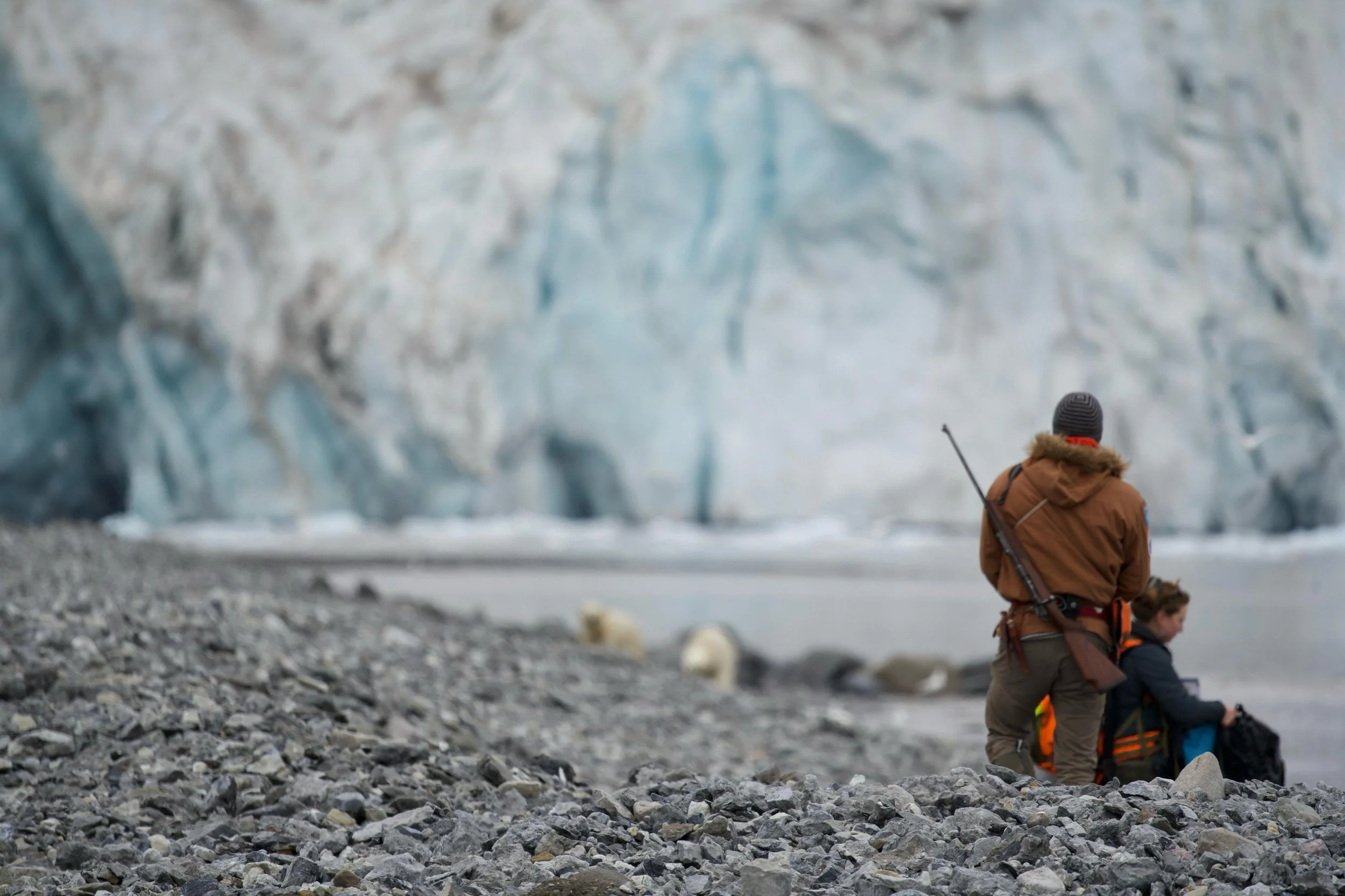
Rhys and Beth went towards the bears. Not away. Towards, to put themselves between the animals and everybody else and push them off, and in one frame Rhys has a hand already on the flare gun, which he never fired. In my frames Claudia is already up and moving, gear in her arms, going. Vicki is still down at the waterline, and you can watch her taking the rig apart piece by piece at the speed of somebody putting away equipment she is responsible for. Then Rhys and Beth reach her and help her pack, and Rhys keeps his eyes on the bears the entire time. He is standing about as large as a person can stand. I think he shouted at them. Something worked, because the cub spooked and started drifting sideways, and then both of them turned and went for the hill.
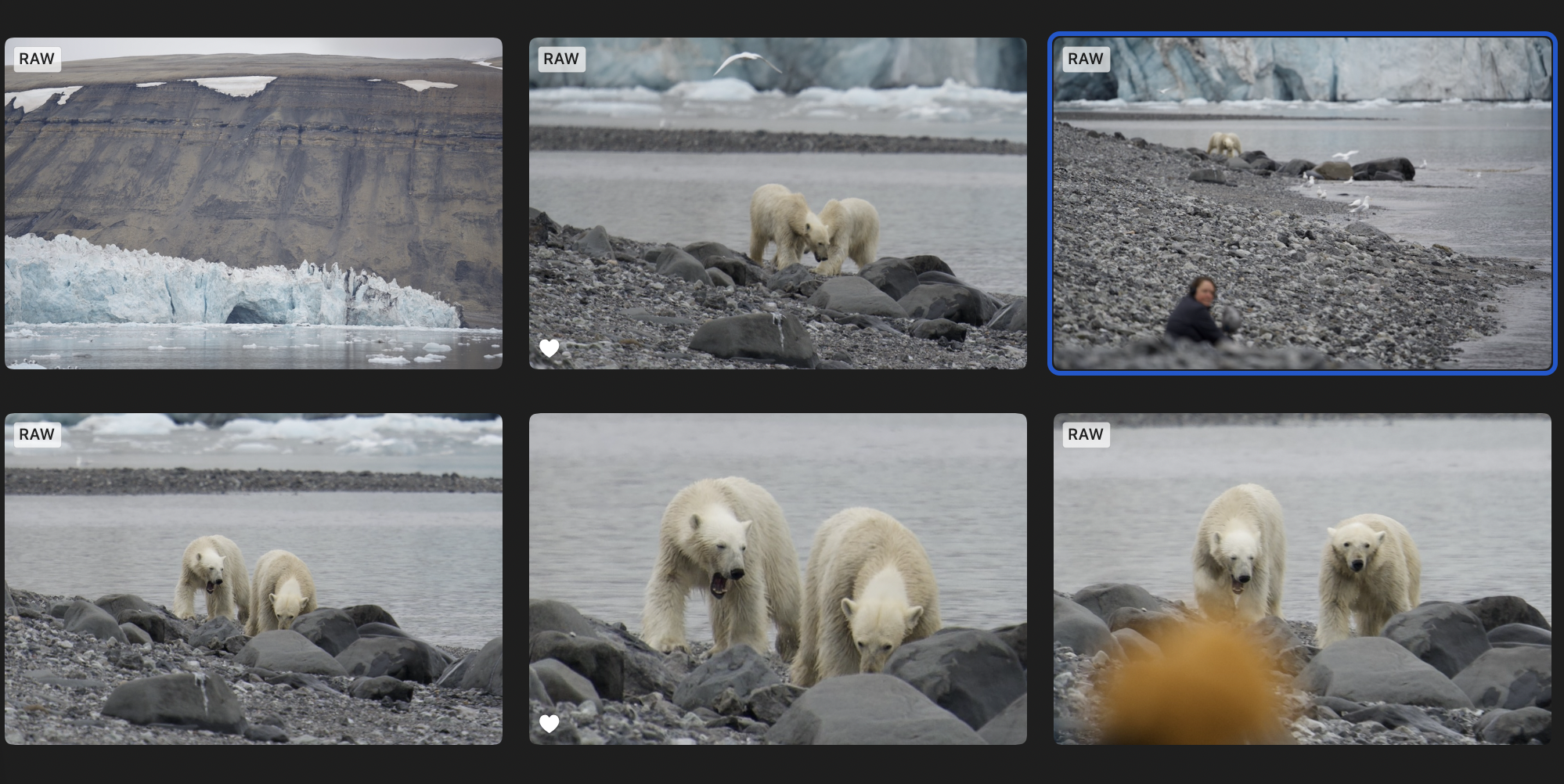
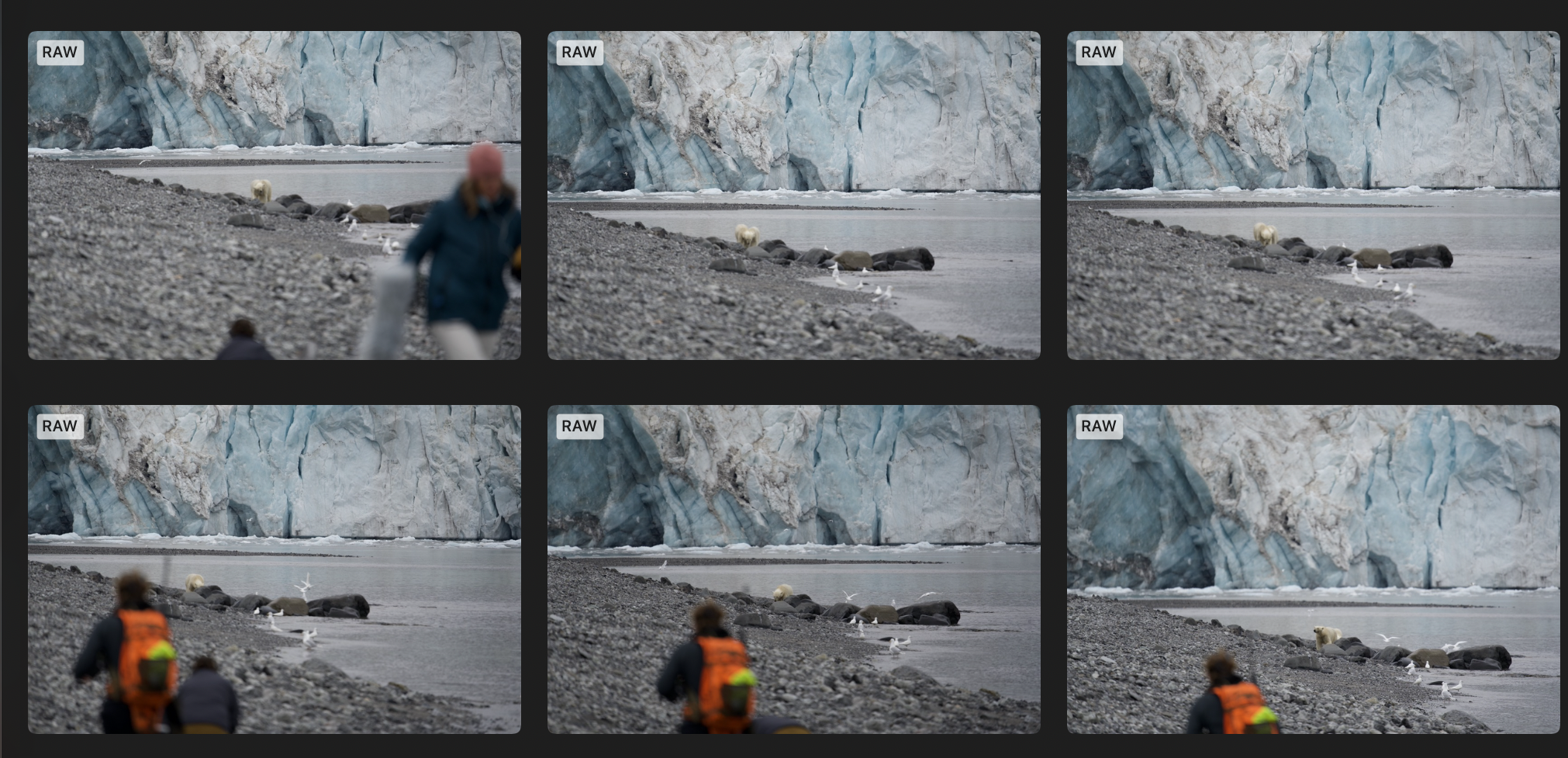
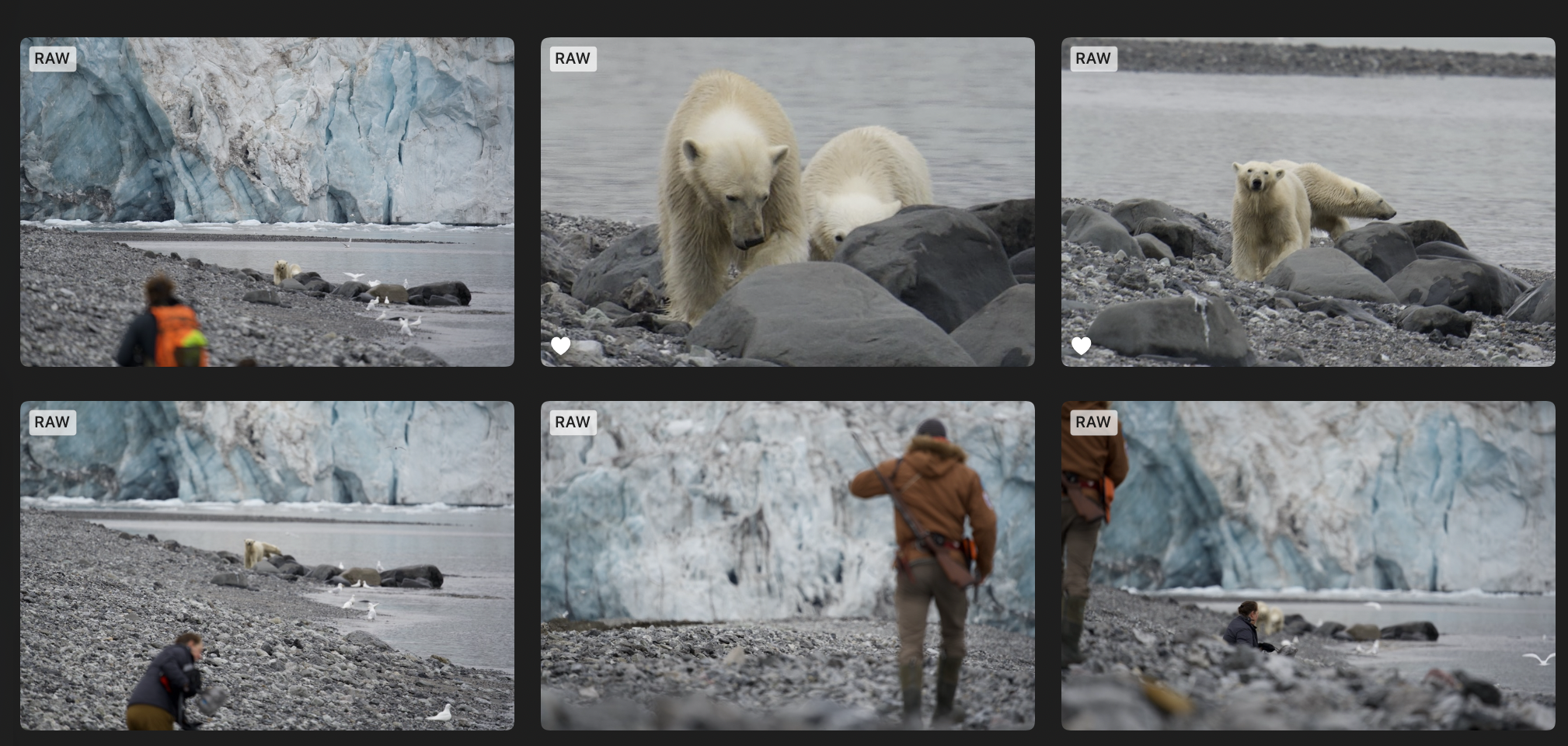
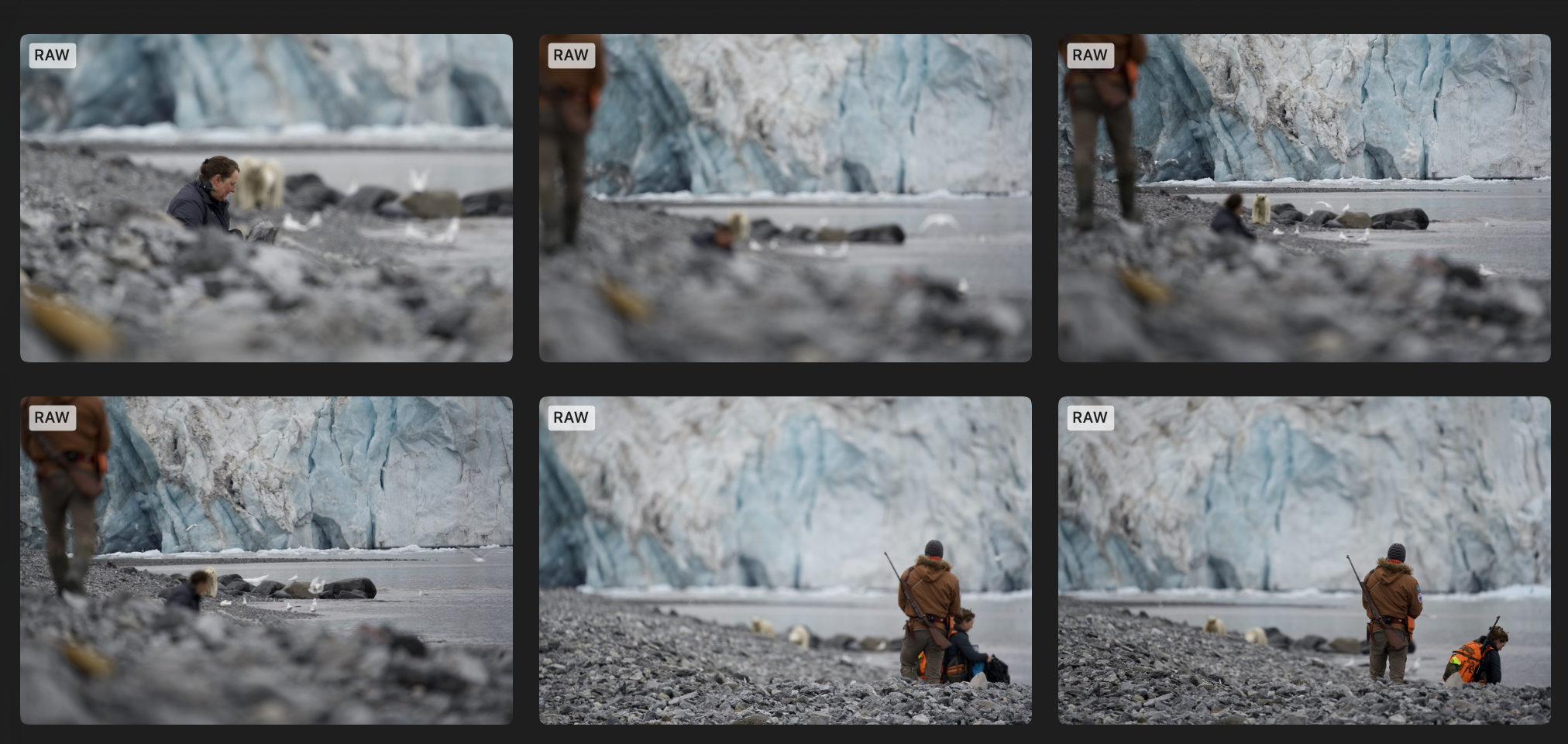
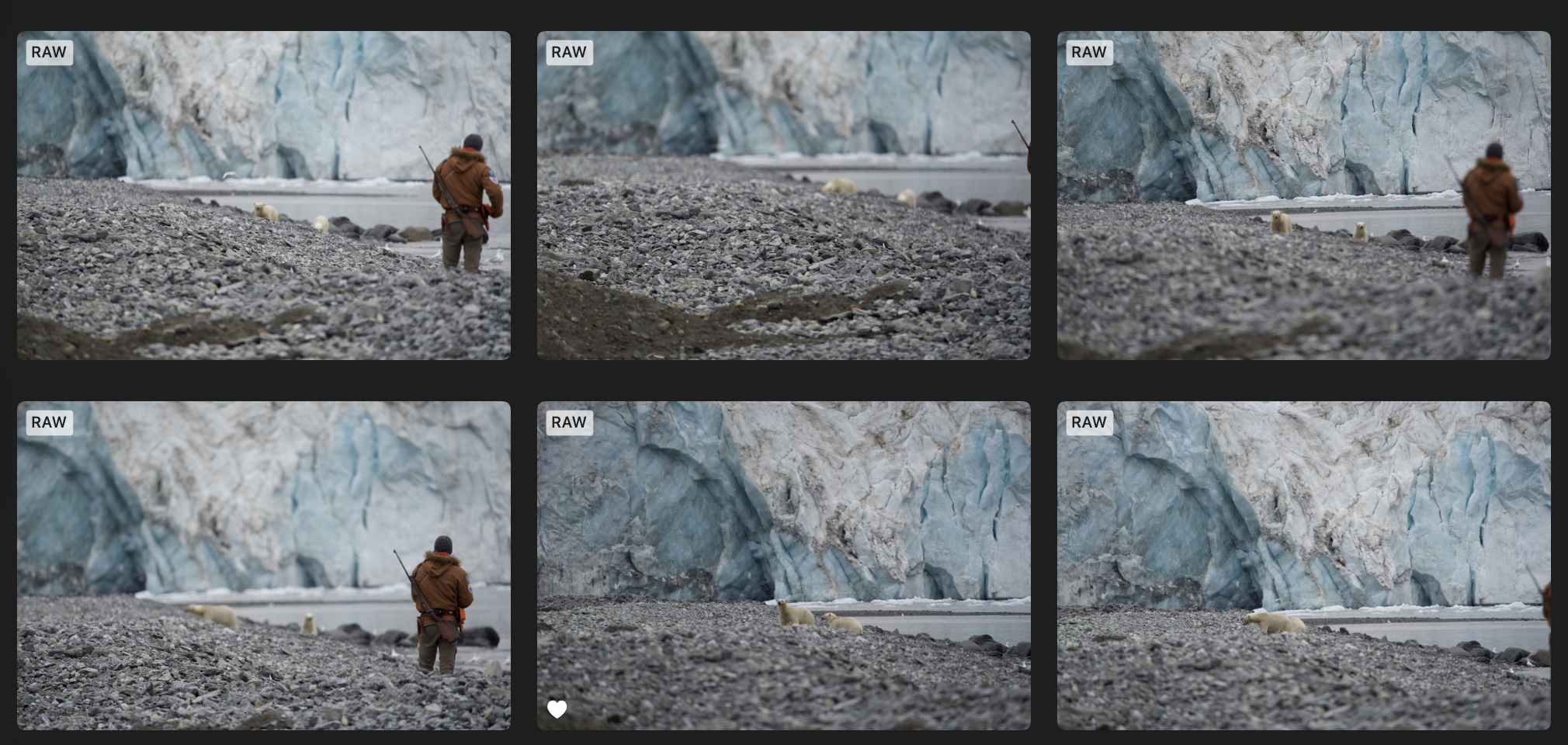
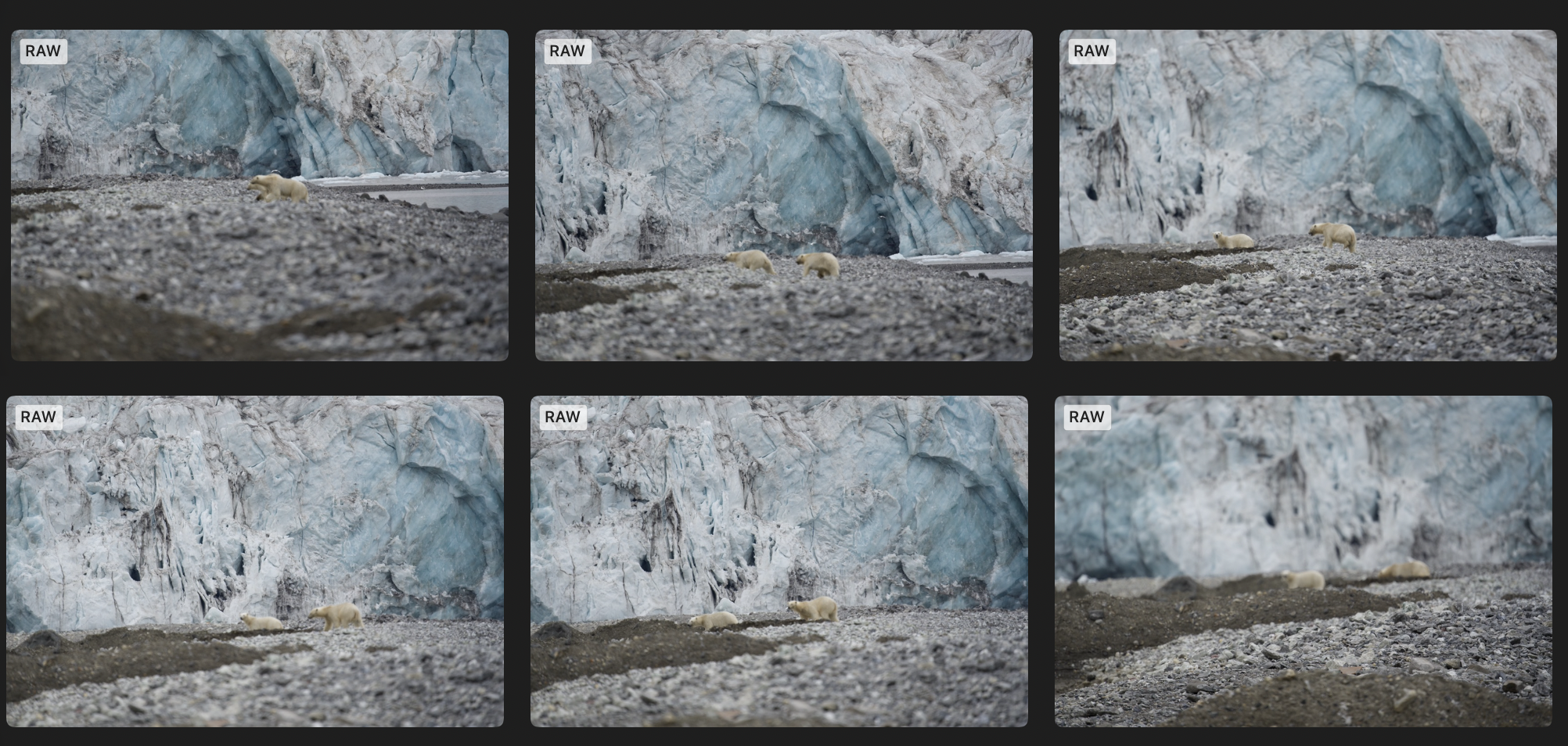
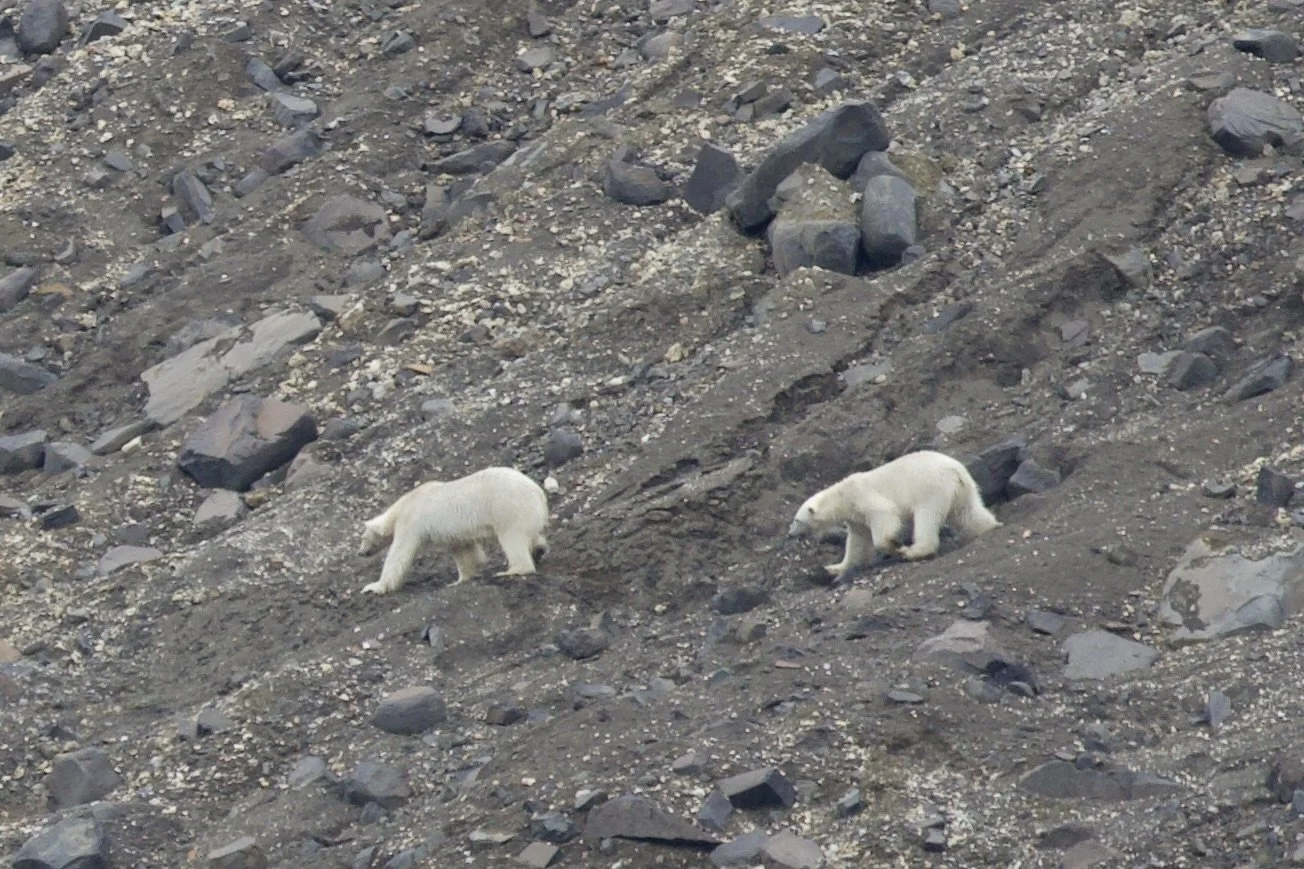
The sequence as it was shot frame by frame
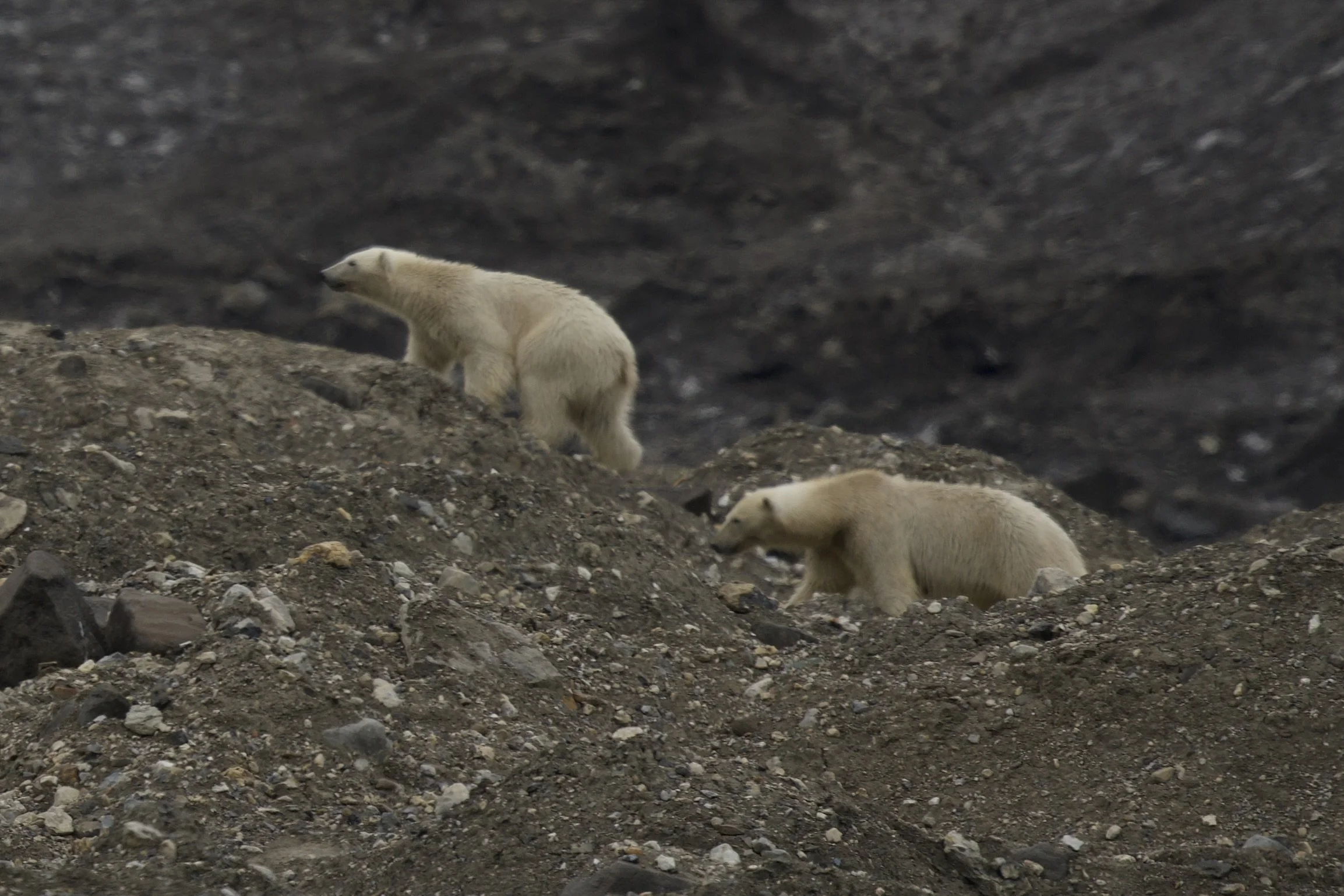
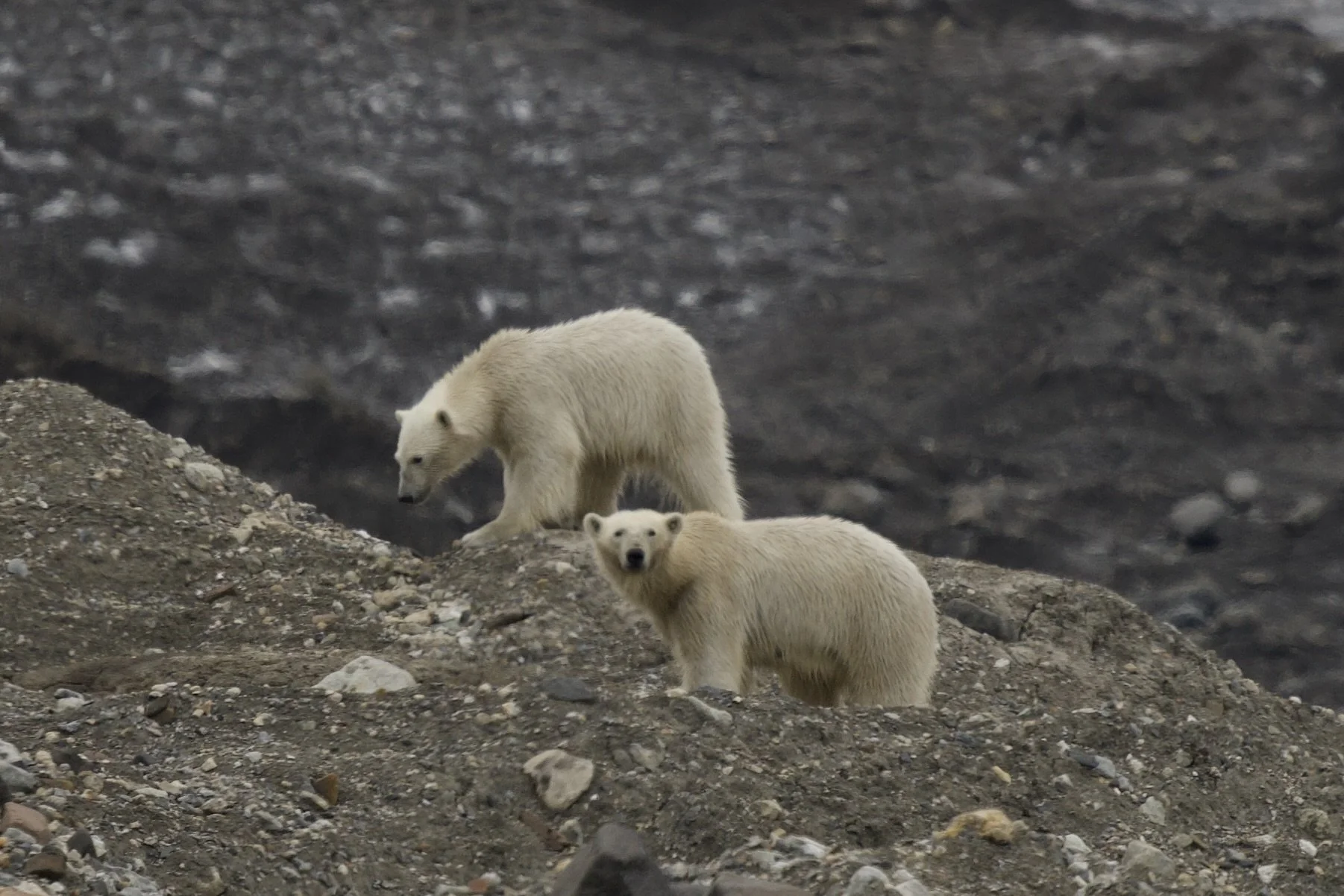
That is the run of photographs I will keep. Two bears going up a grey scree slope, mother behind and cub ahead, and every few strides one of them turns its head and looks back down at us. Going and looking back. Going and looking back. At 11:10 they are high up and moving in step across open rock and they have stopped checking.
Somewhere in there Rhys shouted my name. Richard, go back to the boat. I had been following him up the beach instead of retreating, which is a thing I did not decide to do and would not have described that way at the time. When I finally turned and looked, the first zodiac was already full and the second was standing off waiting. So I walked backwards down a beach in Svalbard with the camera up, shooting the whole way, which is why I have so many frames of that morning and so few memories of moving my feet. The magnet board by the gangway had looked like nothing on the first day. That morning it was the only thing on the ship that knew, instantly and without asking anybody, how many people were still ashore.
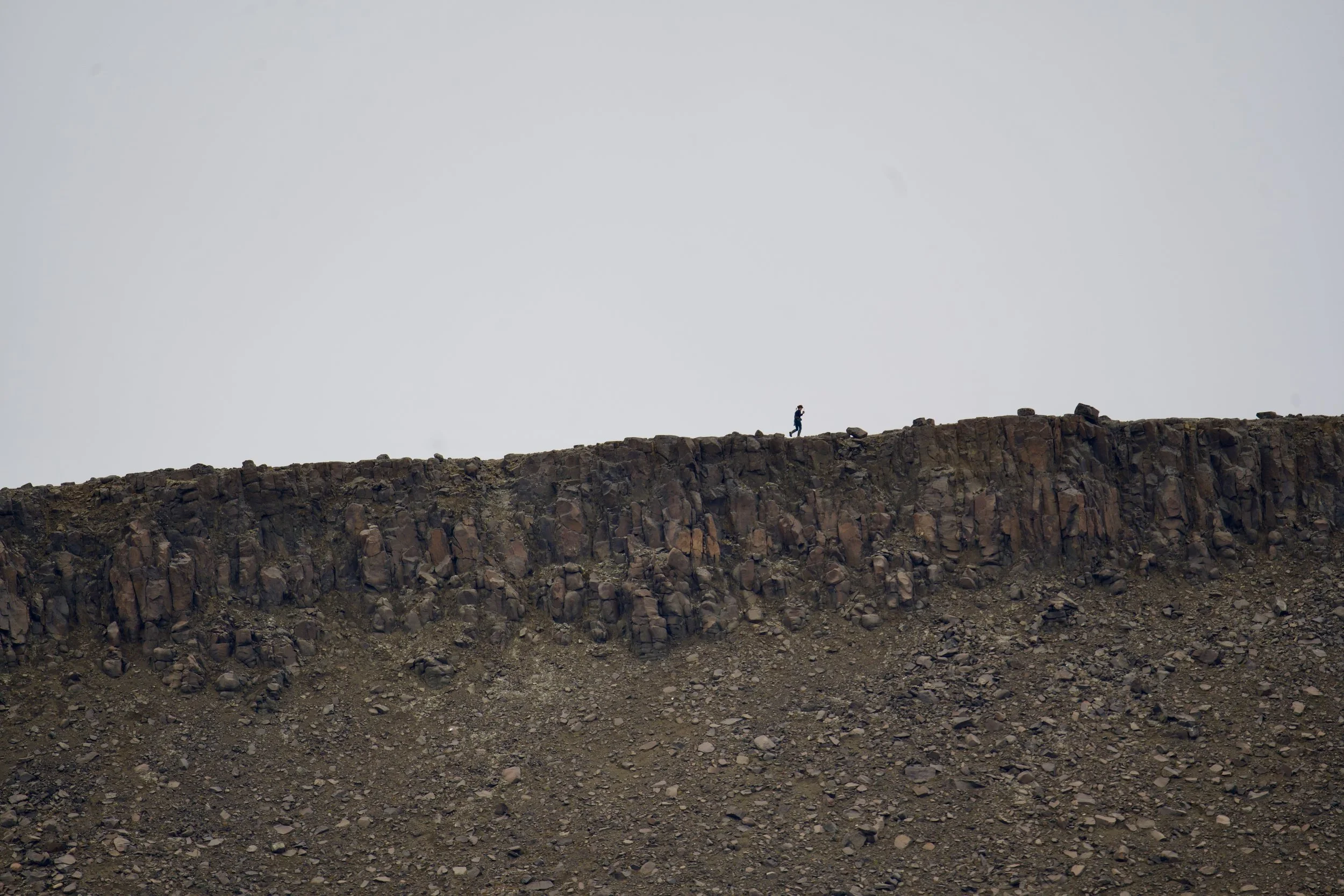
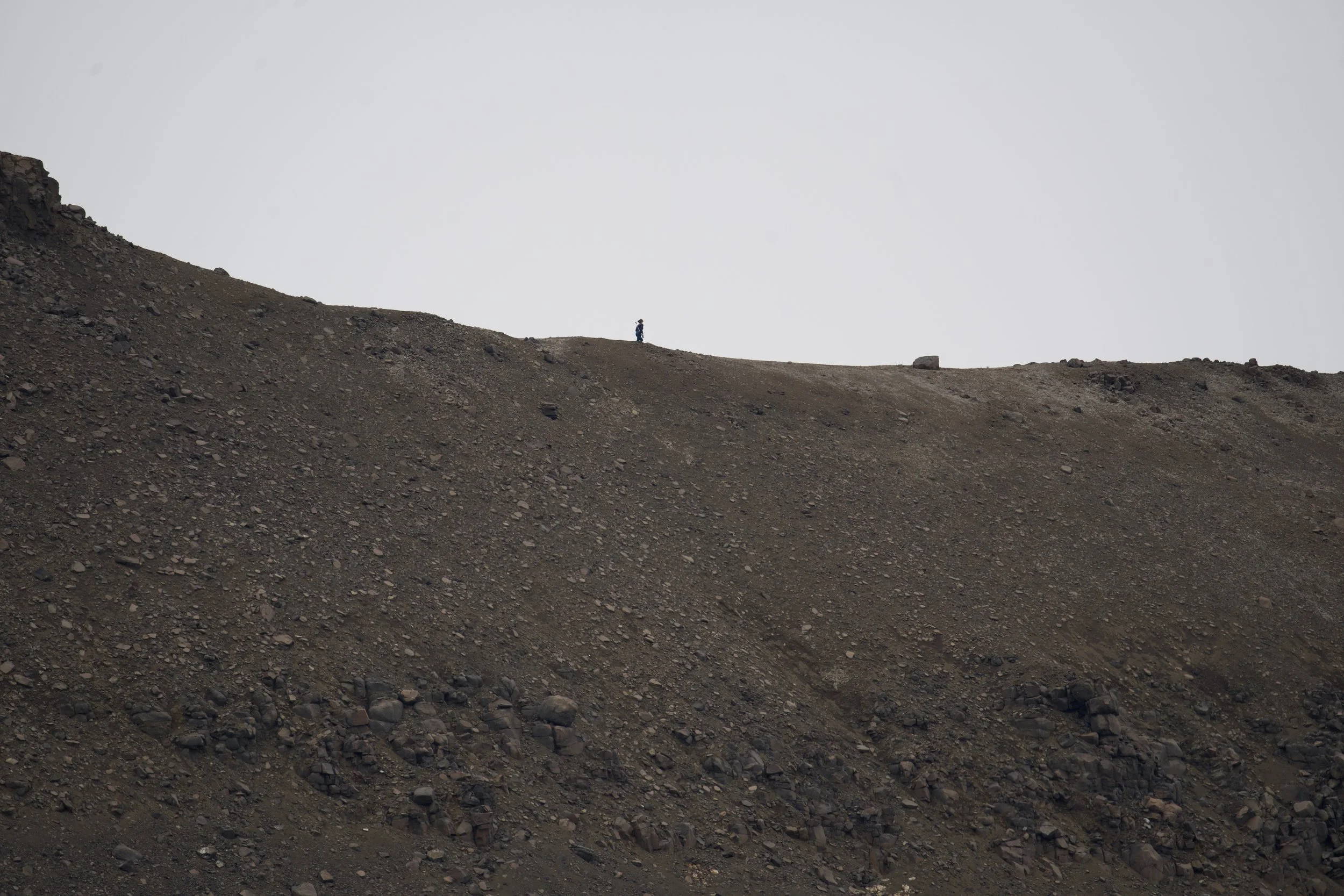
Sarah was on the hill. There is a photograph of her from that morning that I did not understand until I looked at it later: a columnar basalt cliff filling the frame, flat white sky above it, and one small dark figure walking the rim. That is at five hundred millimetres. She had gone up to see, and from up there she could see all of it, and she ran the entire thing from the top of a cliff while everybody else was getting into boats.
And then, while we were all watching two bears go up a slope and congratulating ourselves on how well that had gone, a third one came out of the same place. A male. Big. He had been behind them the whole time.
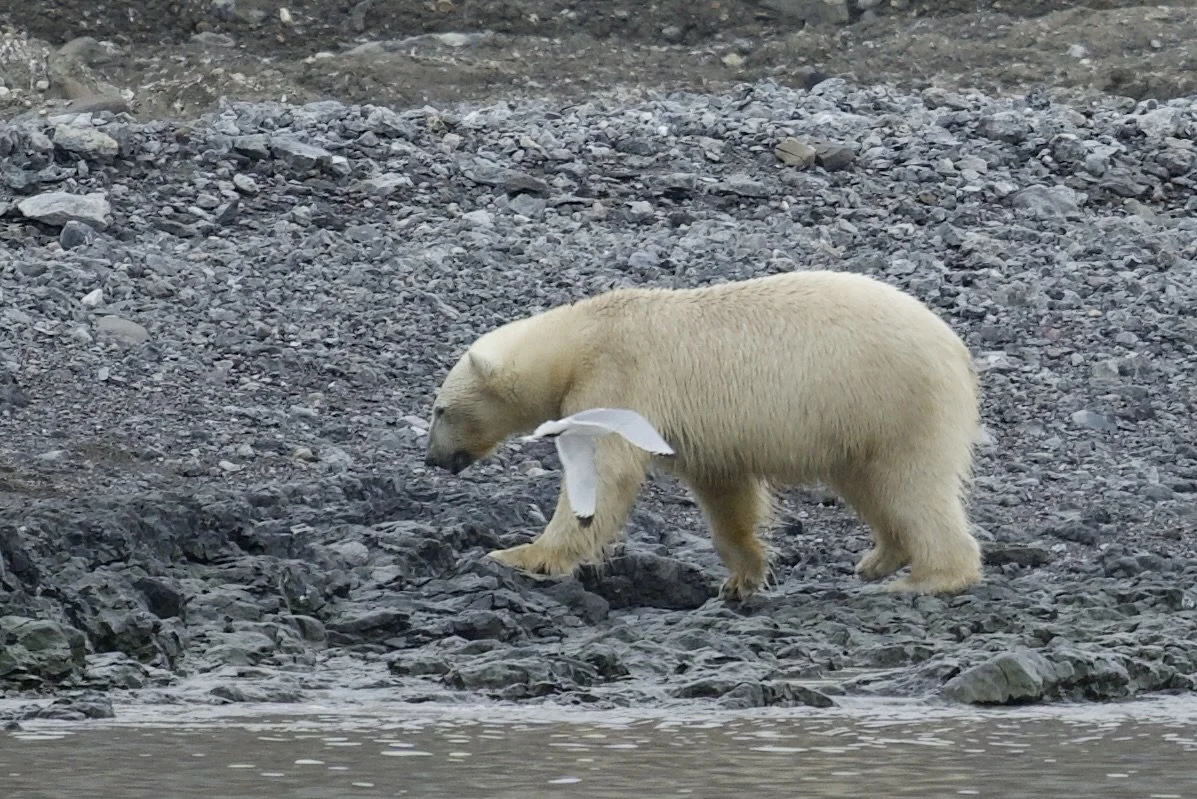
Shannon told us afterwards what we had actually been looking at. Male polar bears will kill a cub, because a female with no cub comes back into season. So the mother had not spooked at us. Or not only at us. She had been running from him since before any of us knew he existed, and we had walked into the middle of somebody else's emergency and assumed it was about us.
He came onto the beach at twenty past eleven and worked it for four minutes with his nose down. Sarah's log says he was following the track of the other two, and she is right about the direction. But he never went up that hill. The mother and cub went up and he stayed on the shingle, walking the waterline with his head down over the ground where we had been standing, and I think our scent was the more interesting of the two. He stood square at one point and looked straight at the lens, and then at the ship, and then put his nose back down. An ivory gull cut right across his chest while he did it, and another one crossed his forelegs a minute later, and he did not lift his head for either. They knew what he was for.
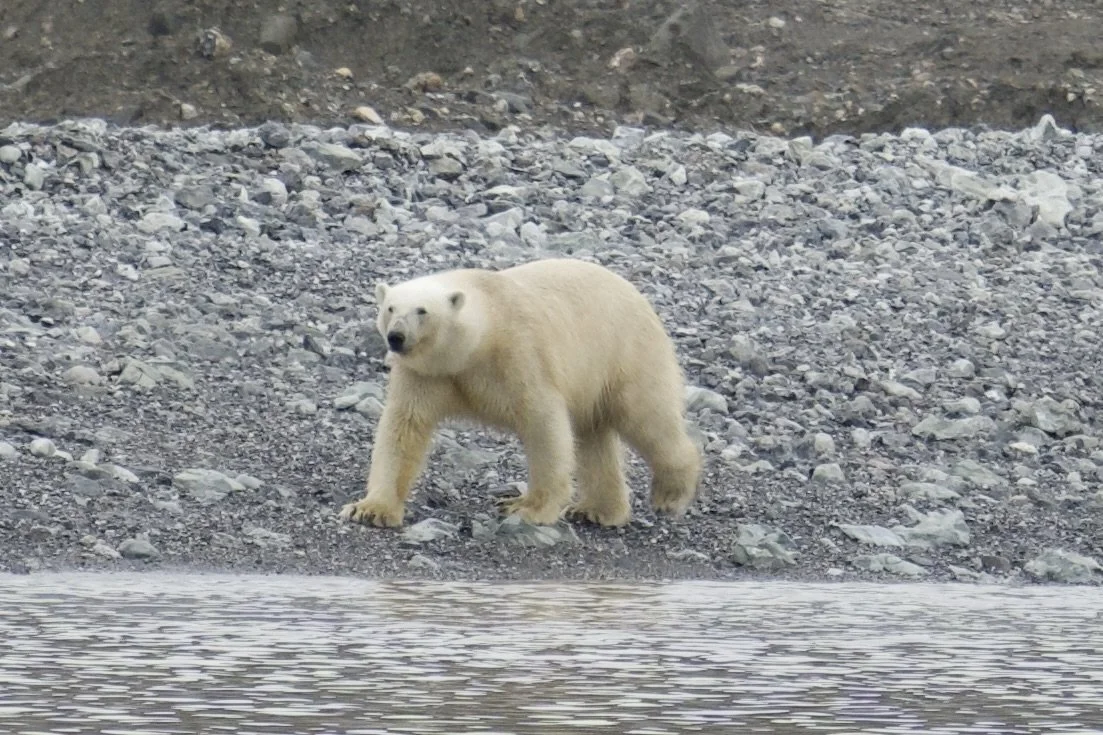
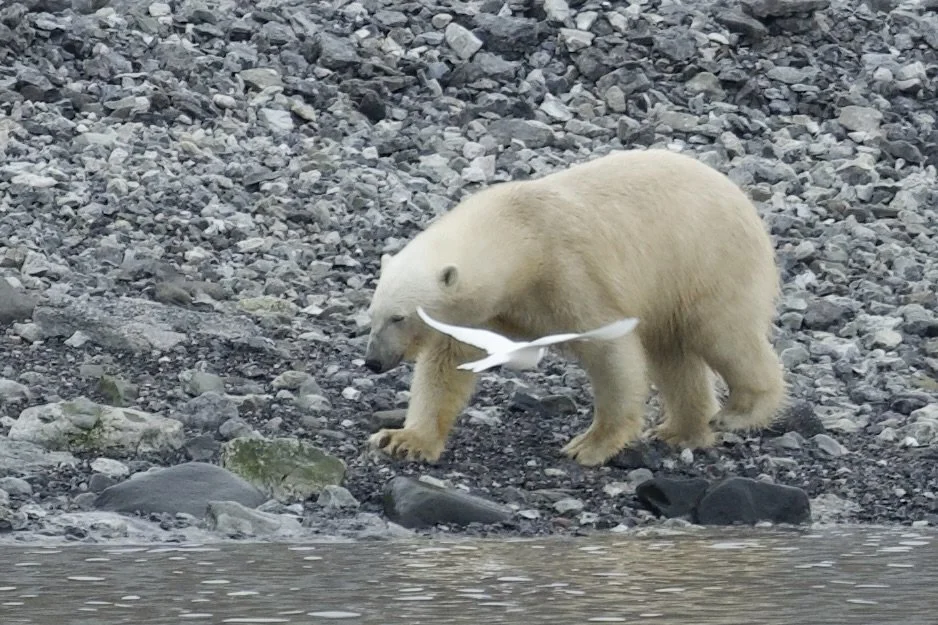
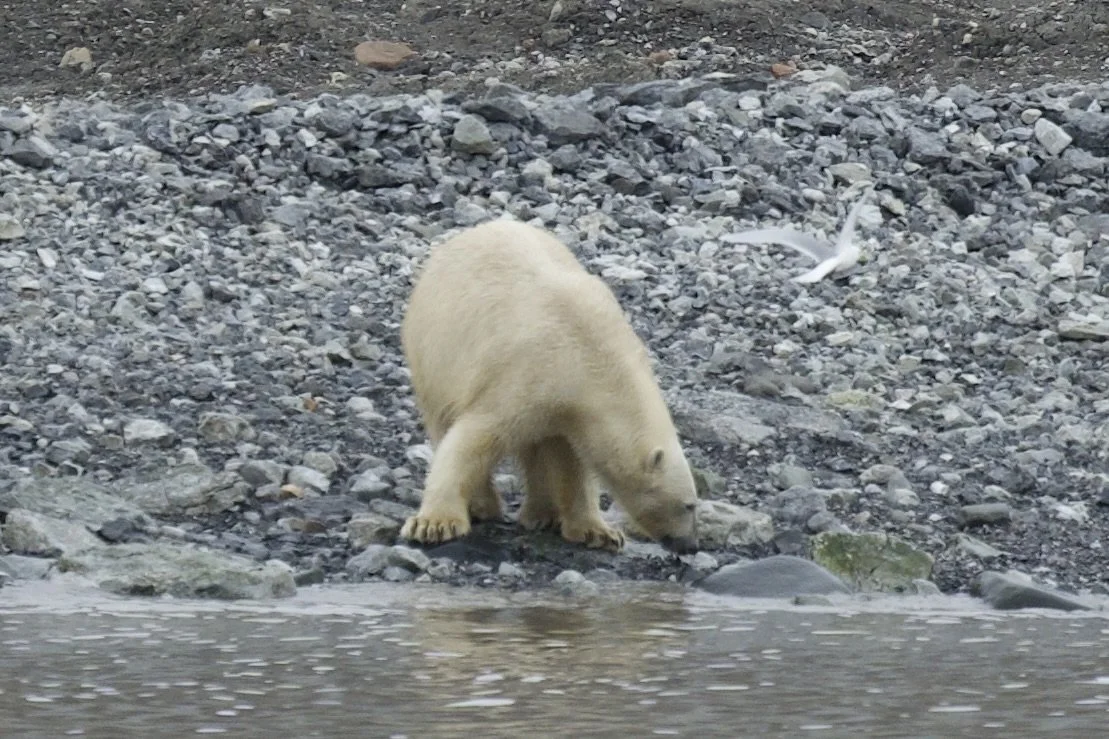
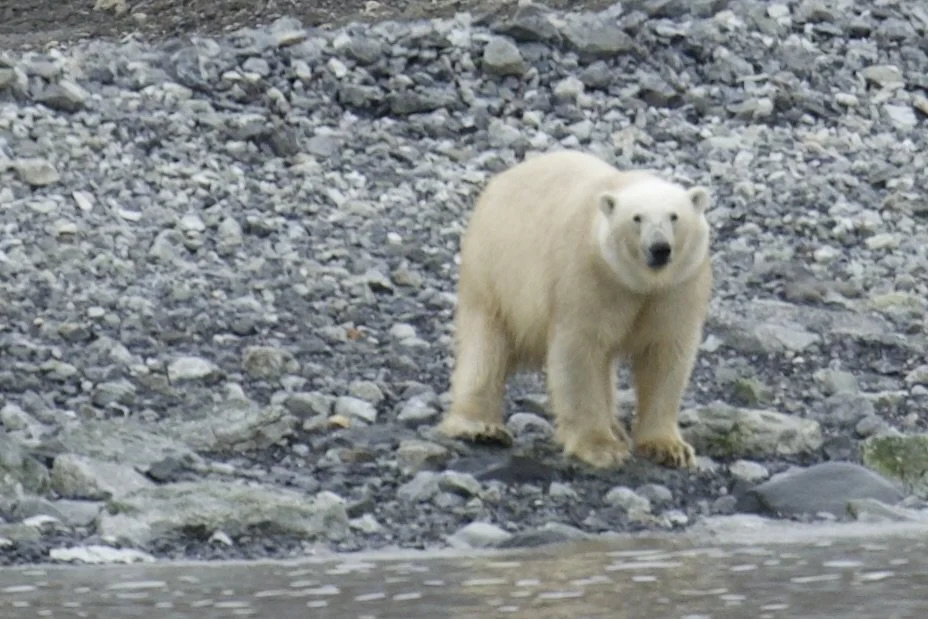
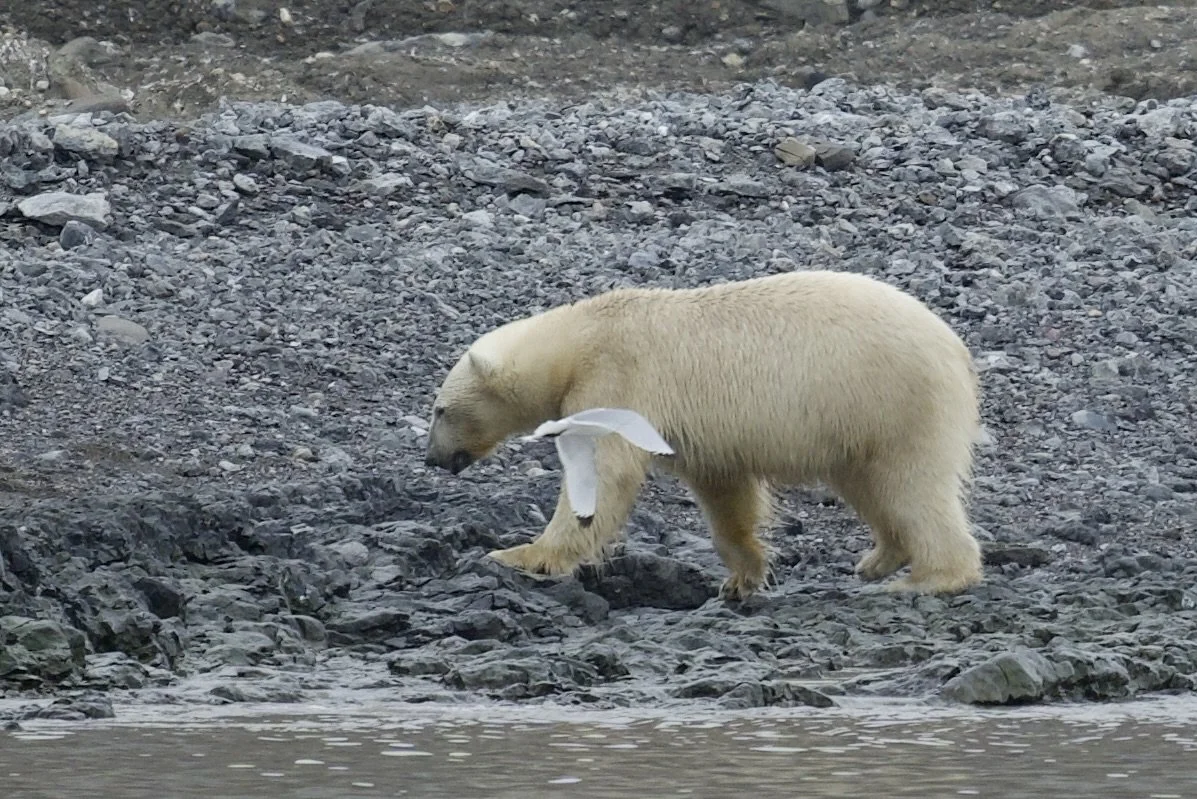
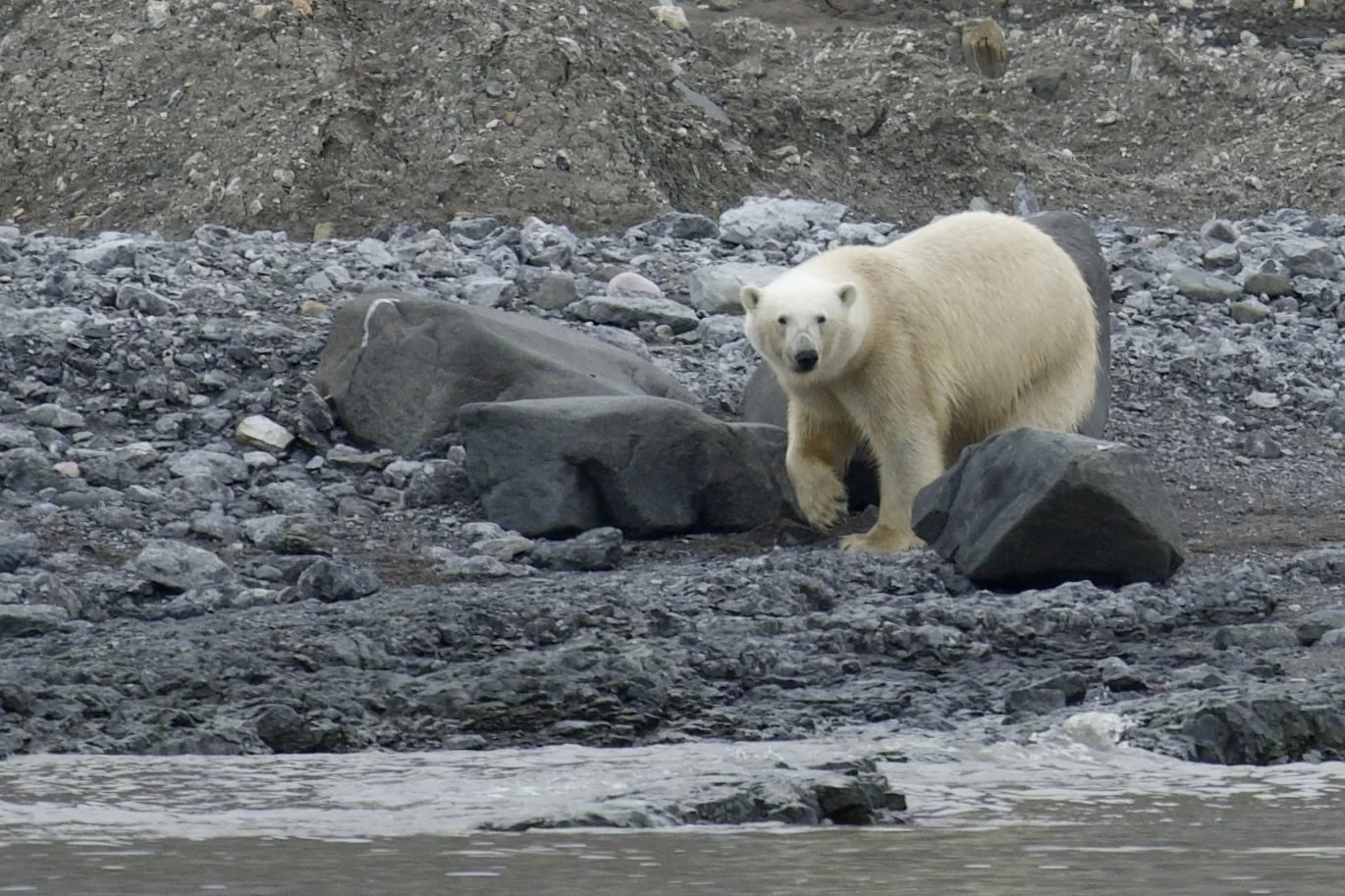
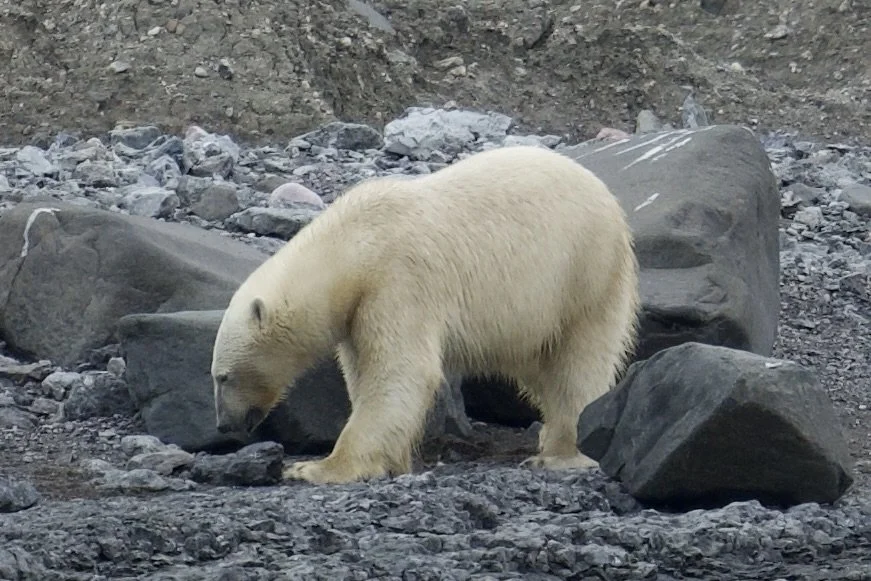
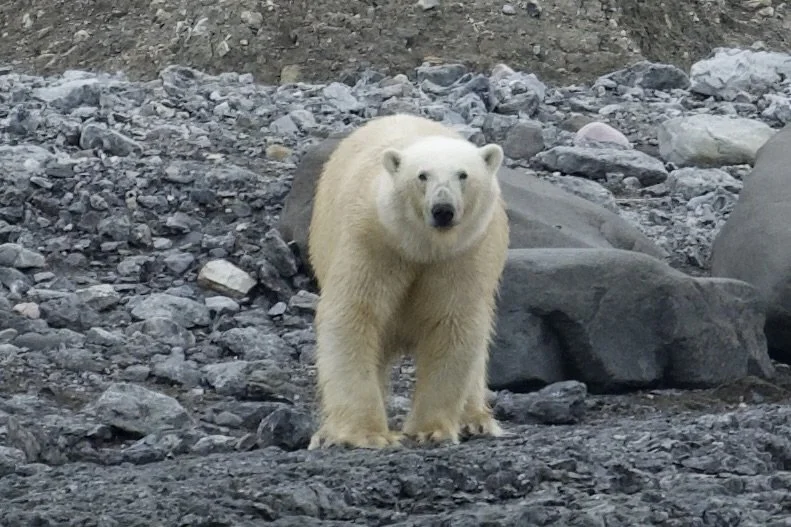
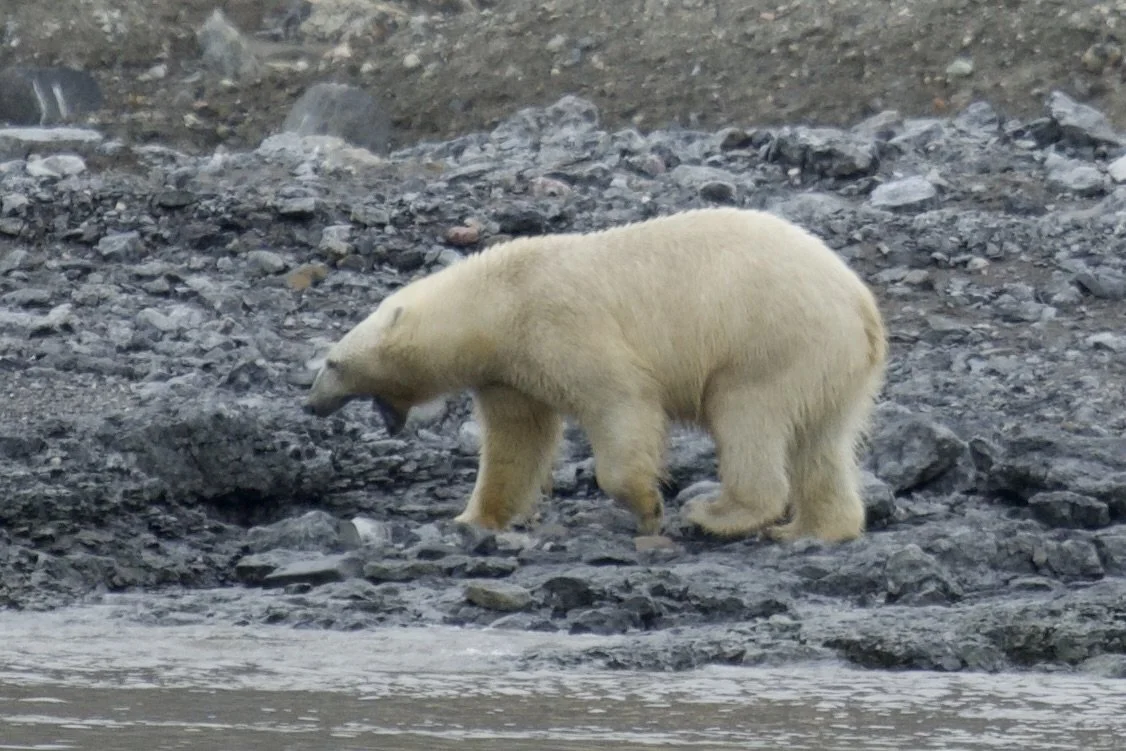
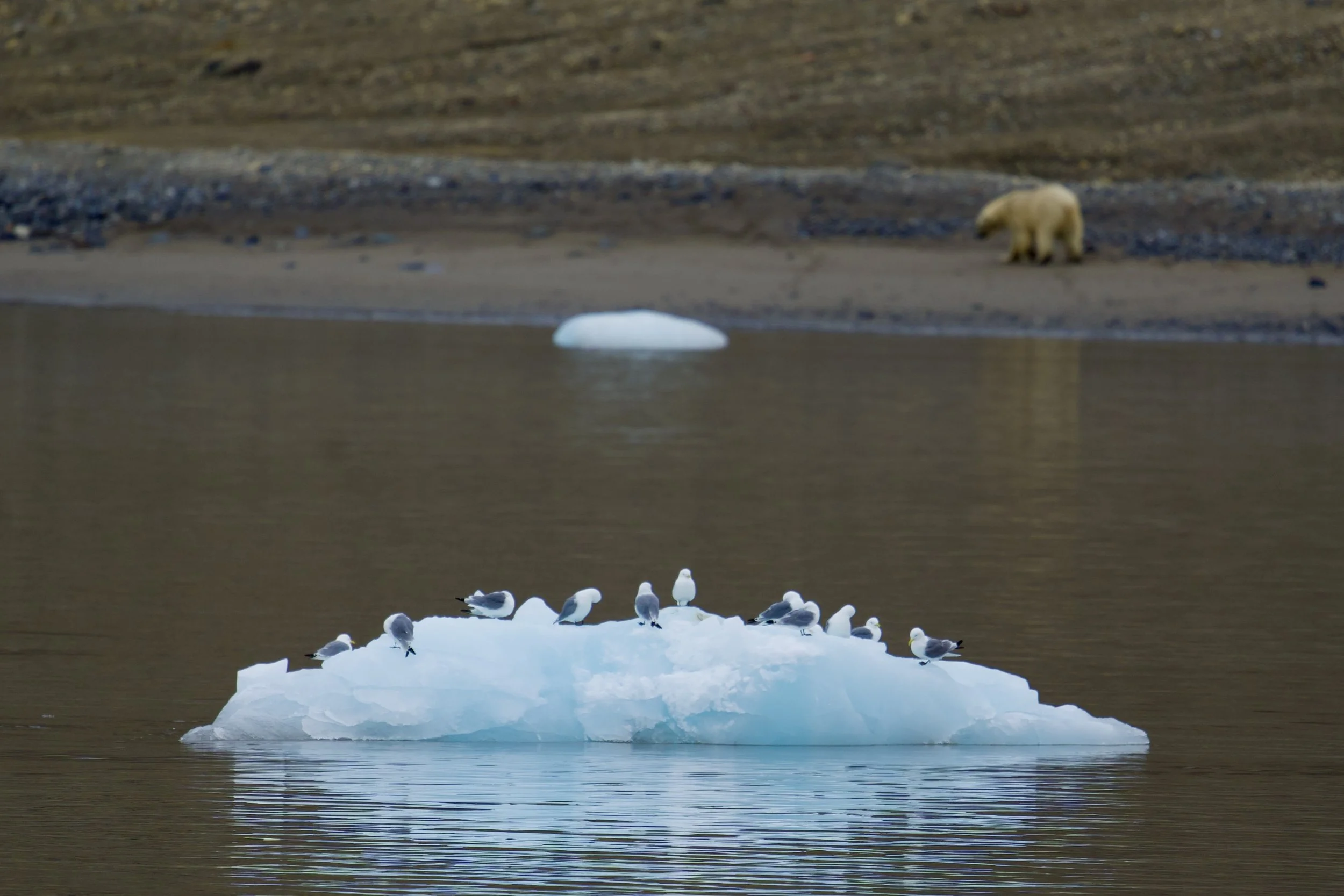
By then everybody was aboard except Sarah, still up on her cliff, and the whole ship was at the rail watching a large male hunt along a beach we had been standing on twenty minutes earlier. Out on the water a floe had about fifteen kittiwakes standing on it in a row, facing the shore, watching the same thing we were. Better seats than us and no ladder to climb. I have three frames where I could not decide whether the subject was the bear or the birds, and the focus goes back and forth between them, and not one of those birds moved the entire time.
He moved off eventually. Sarah came down off the hill and a zodiac went in and picked her up, and that was landing one.
Four bears in eighteen hours. One on a moraine at Mohnbukta at five the previous afternoon, and three in ninety minutes on a beach the next morning. Eight days with nothing but tracks and a jaw and a stone, and then this.
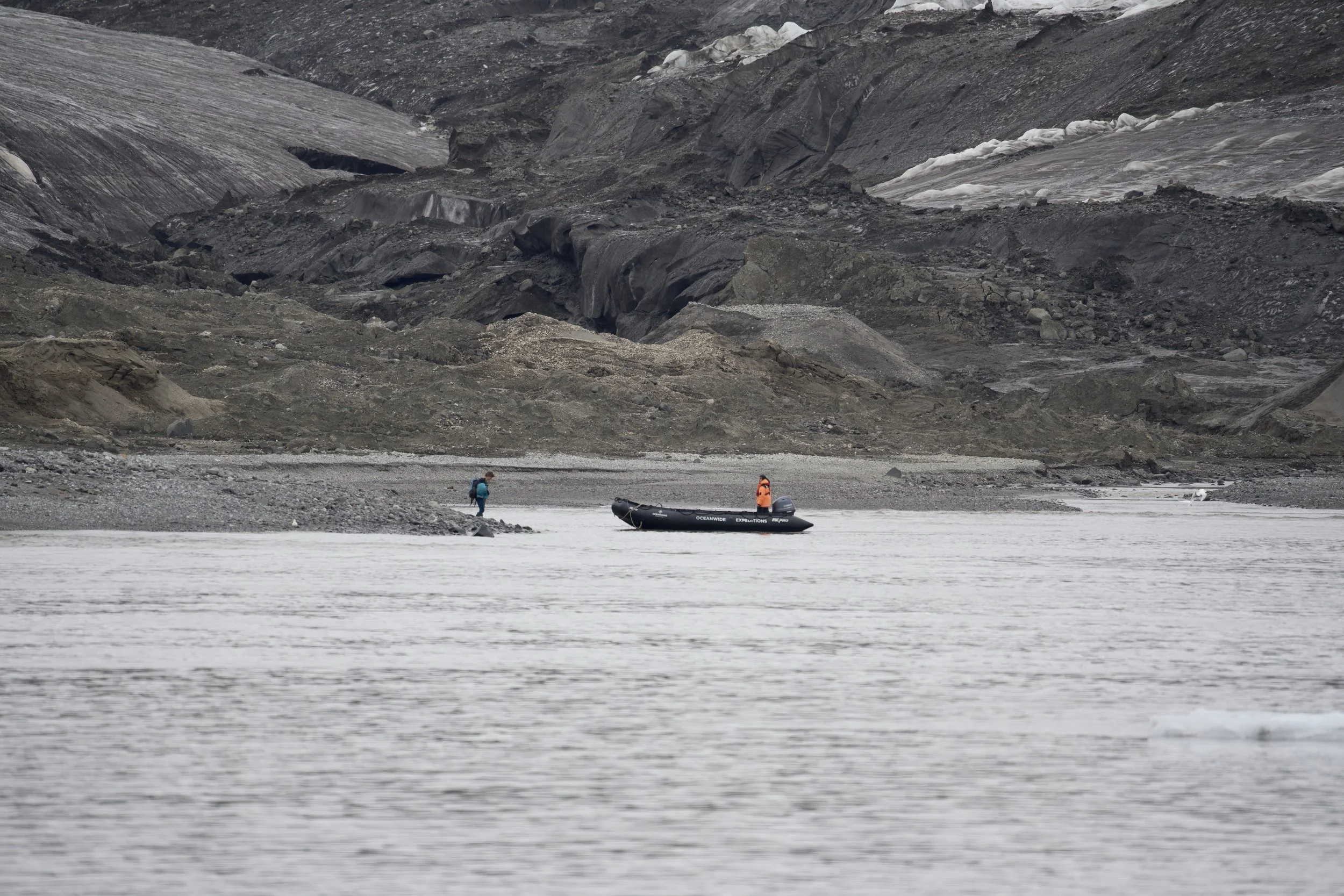
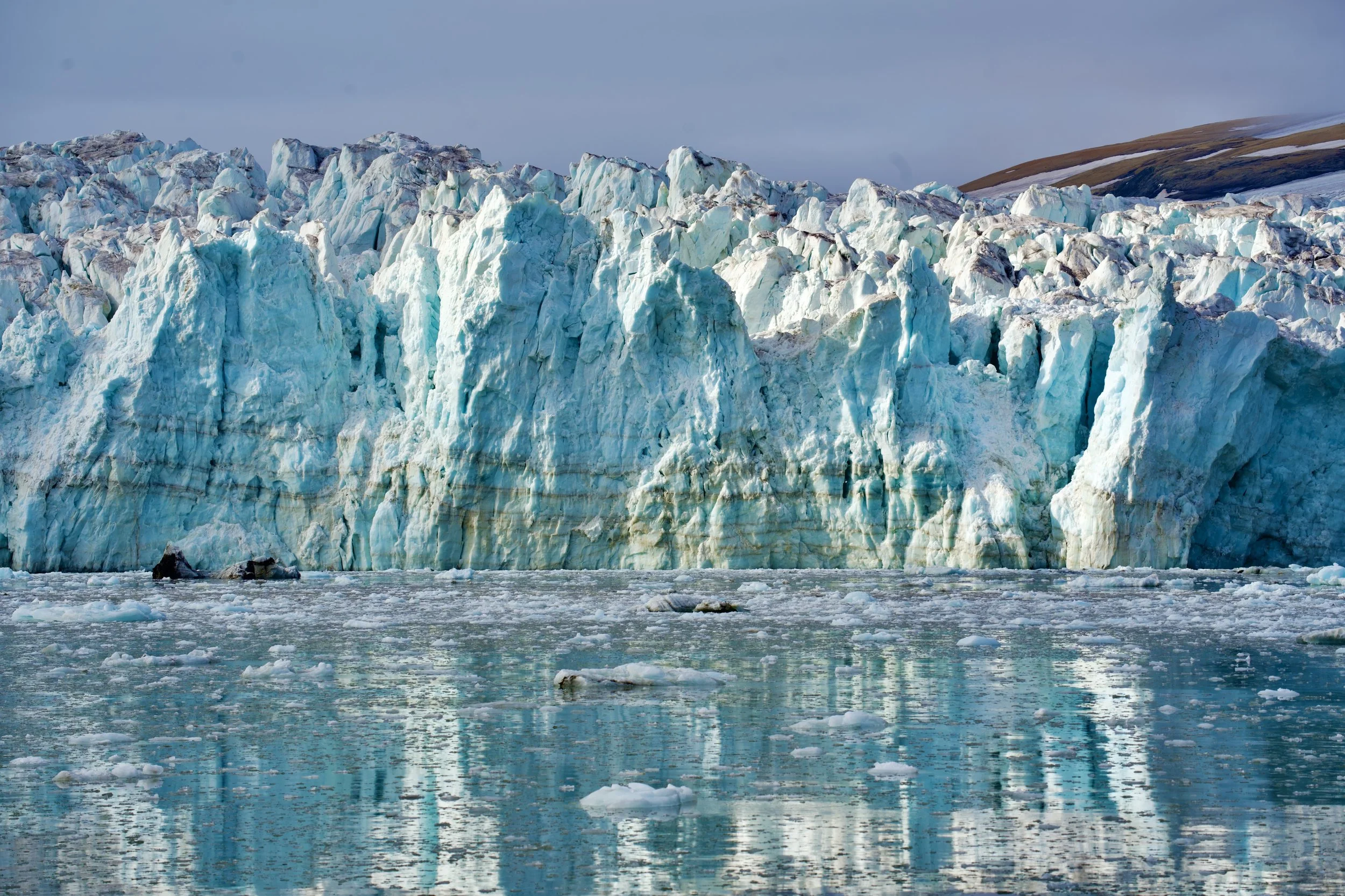
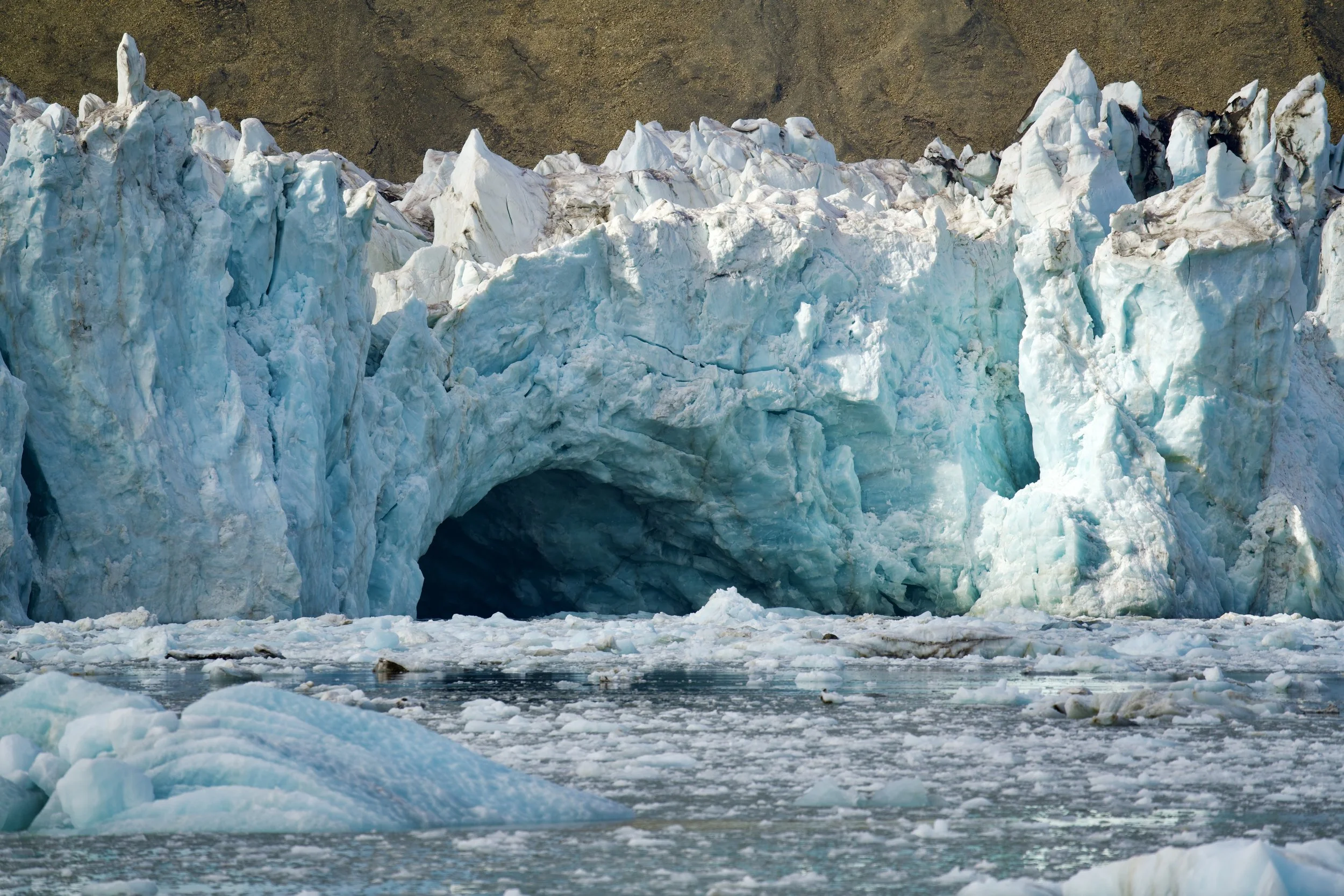
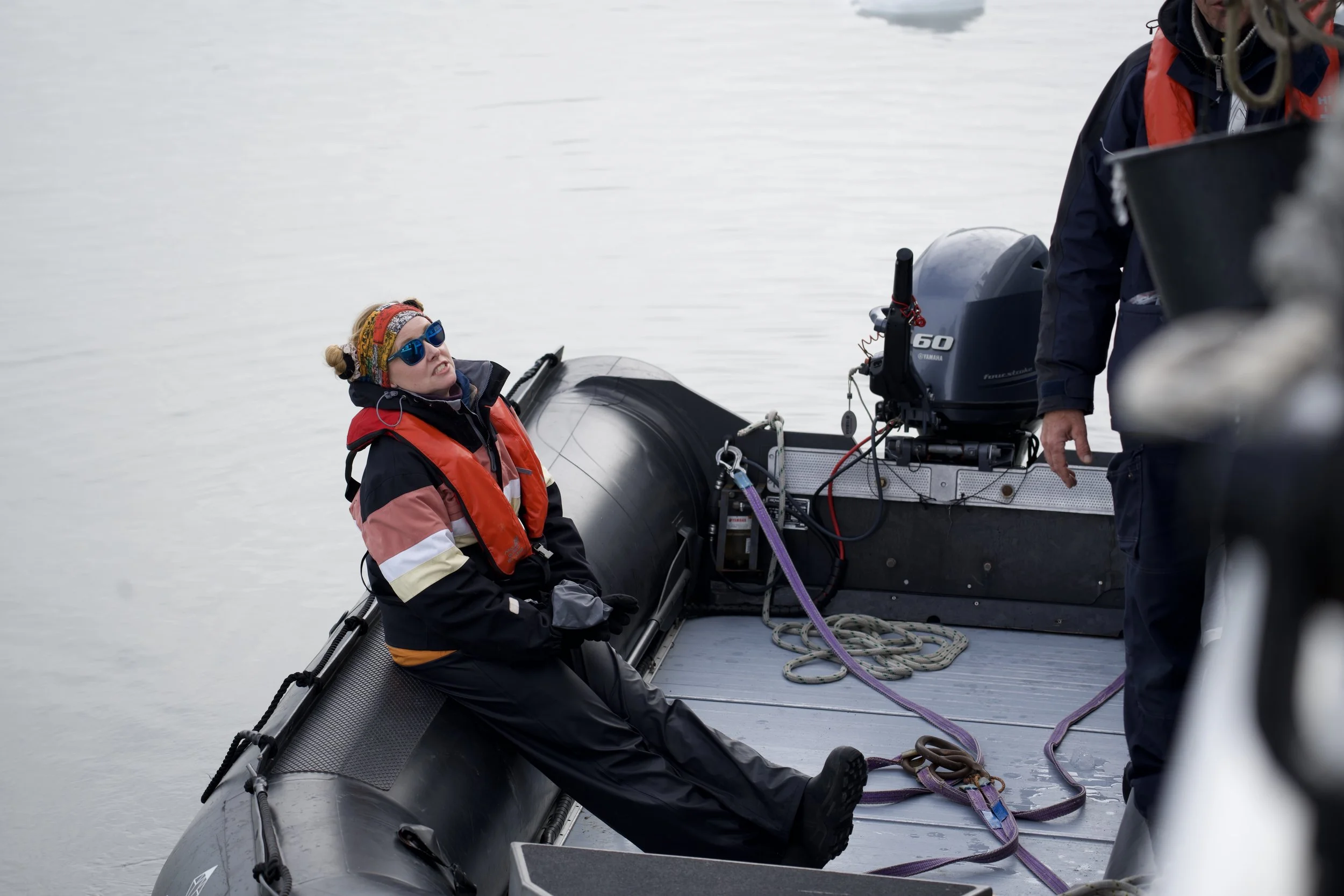
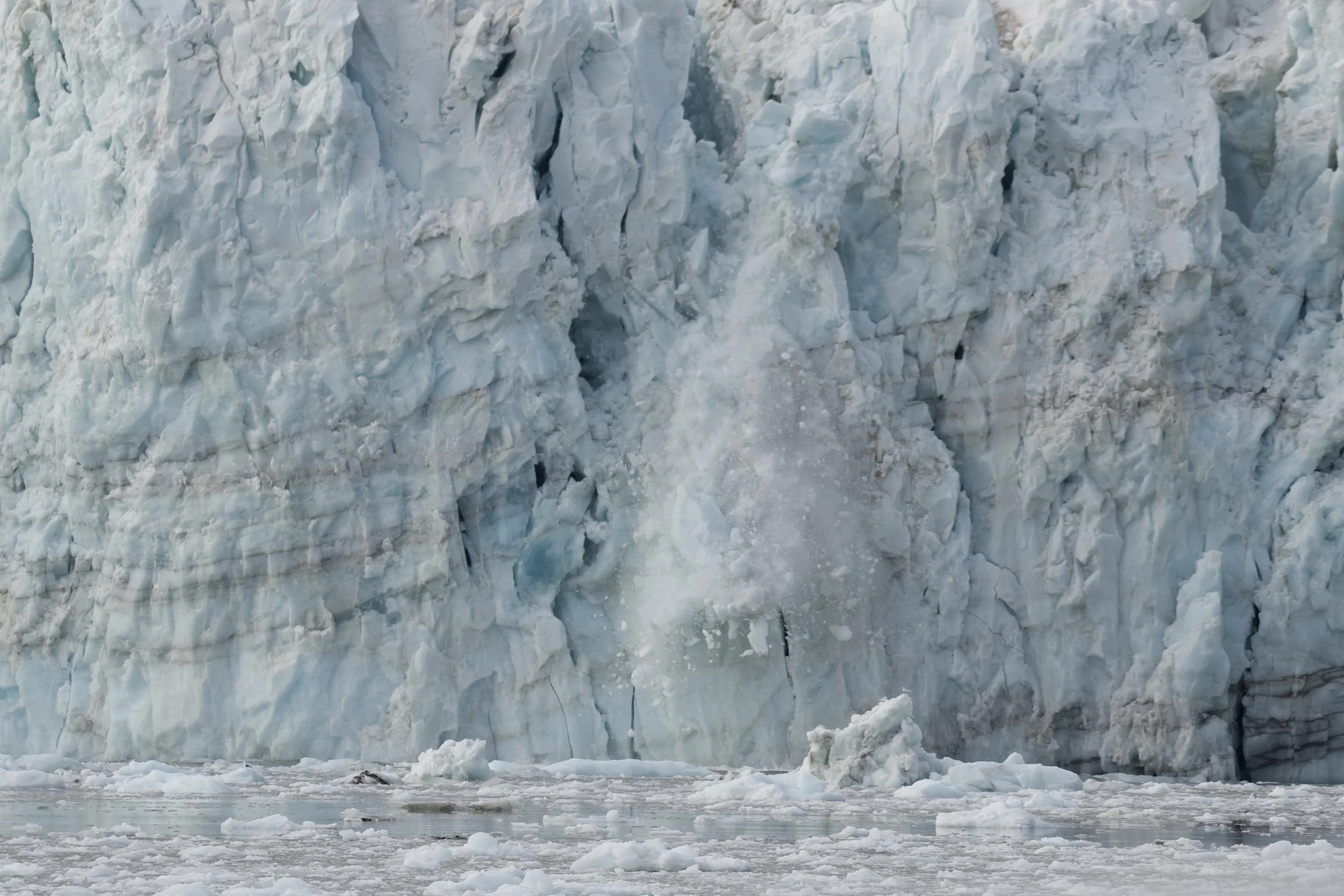
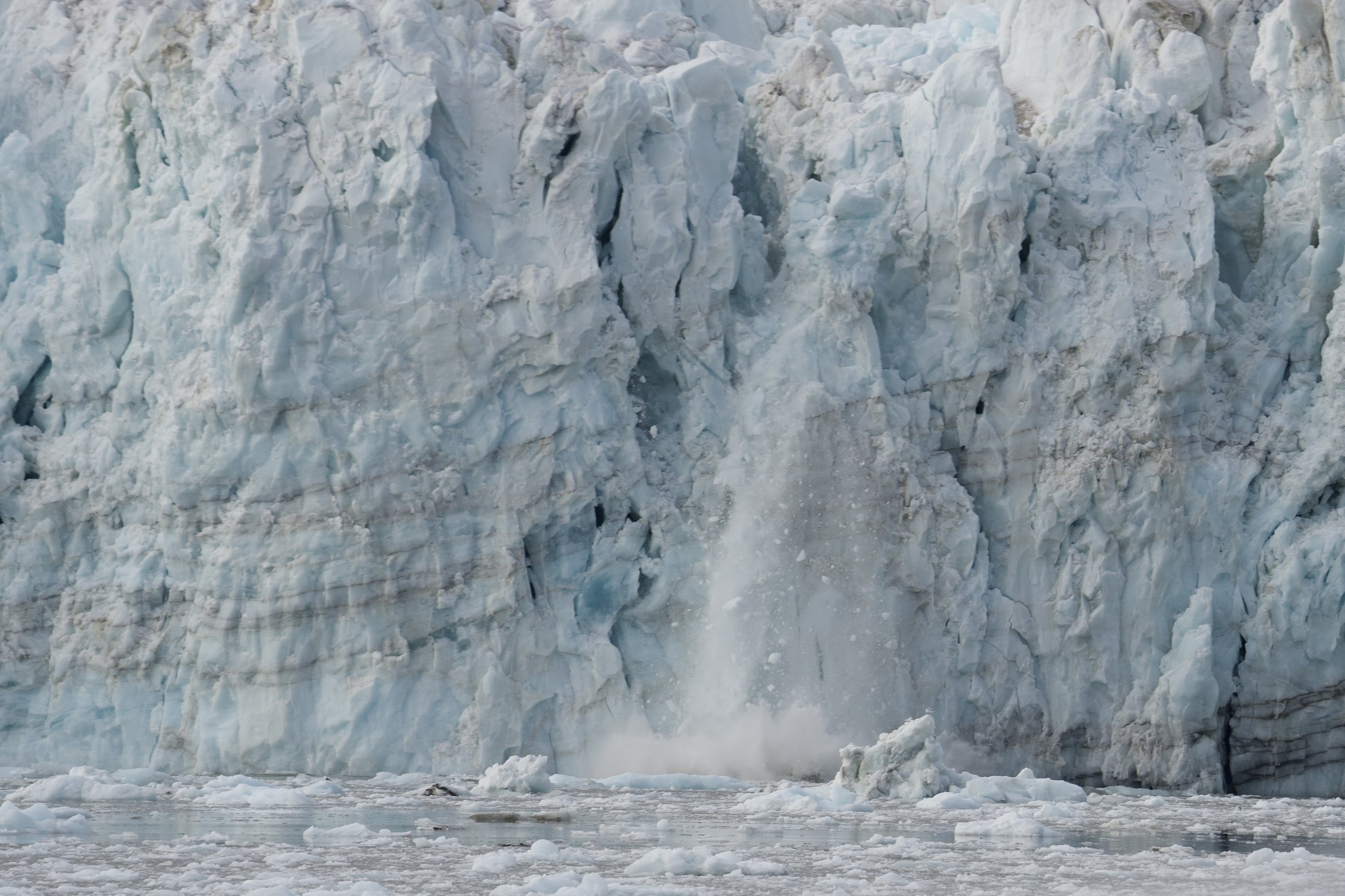
In the afternoon the ship stopped and turned everything off. Engine, generator, all of it, for the better part of an hour in front of Petermannbreen. It was for the recording. There were more people aboard working with sound than the two who had been on that beach, and for one hour they got a forty-nine metre steel ship that made no noise at all, and the rest of us got to stand in it. Somewhere in that hour the front of it came off. I have two frames six seconds apart, one with a plume of ice dust coming down the face and one with the water going up in a wall. Somewhere in the same hour Victoria went off in a zodiac and disappeared. We were halfway through the trip, so I concluded she had gone for supplies, and by supplies I meant beer, and within about ten minutes I had the whole thing worked out. Rendezvous at sea. A crate handed across. I was fairly pleased with myself. It was a battery. There was another vessel out there somewhere, and the crew went and got what they needed and came back and solved it and never mentioned it to any of us.
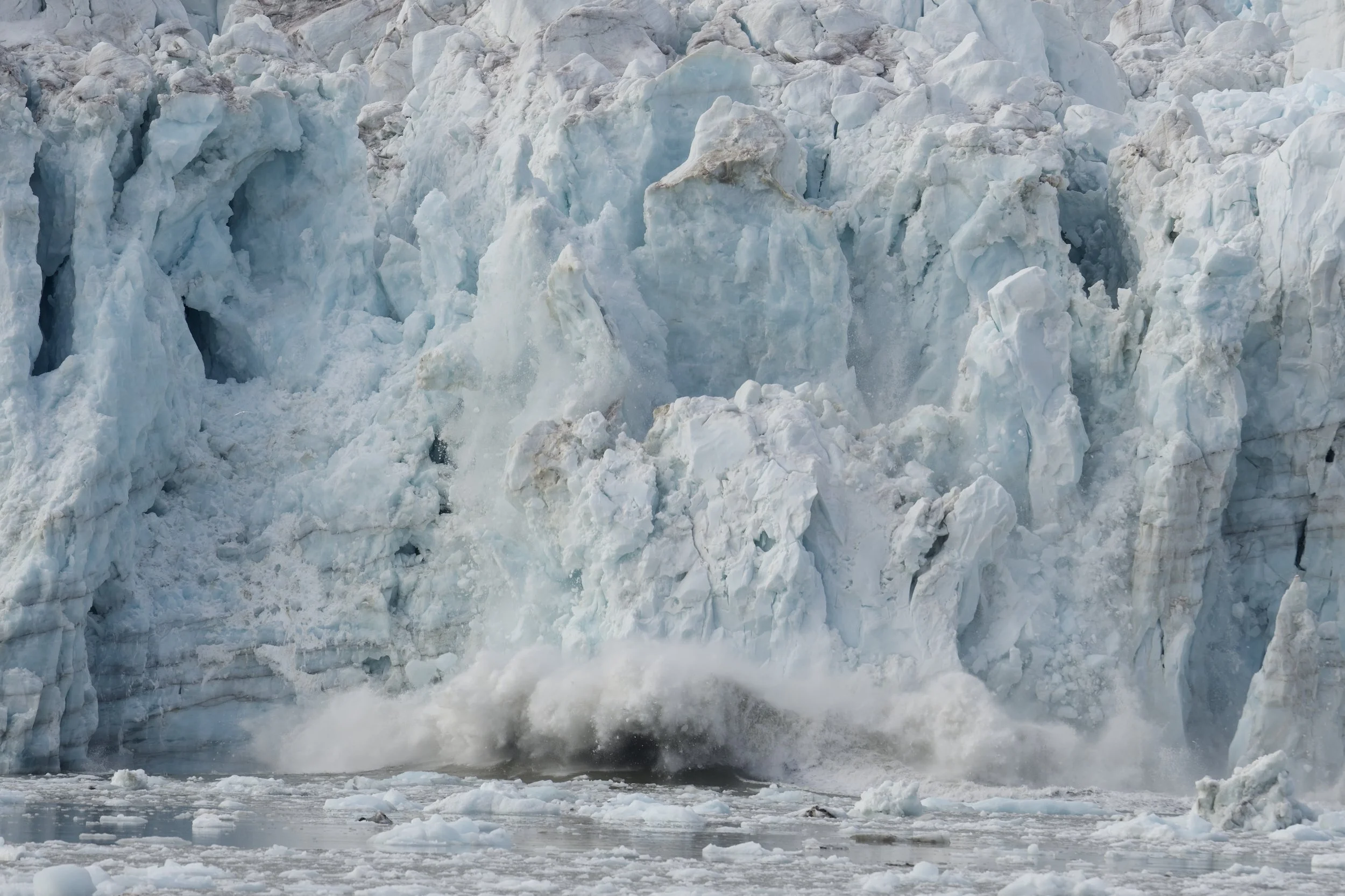
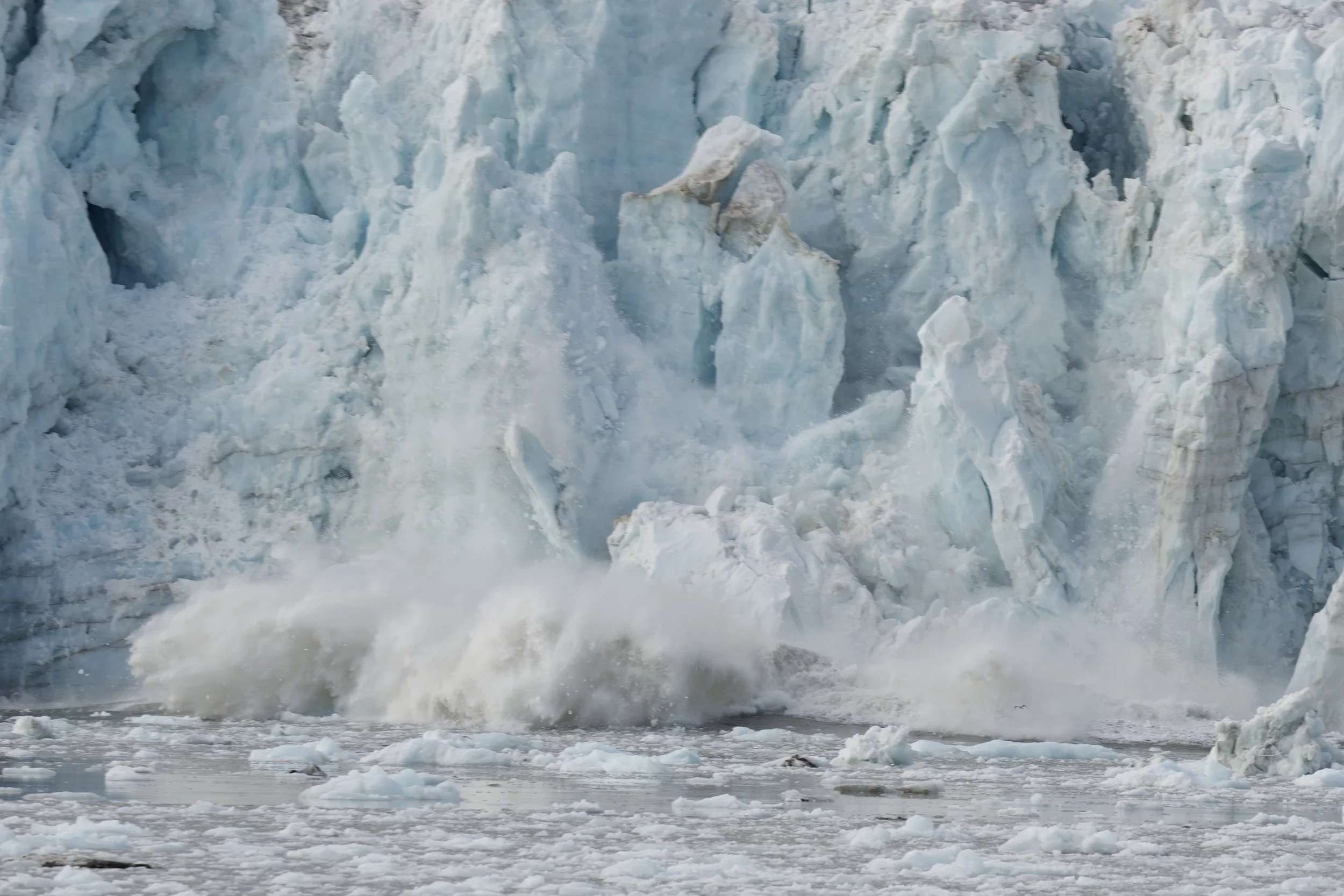
The second landing was Johansenbreen at quarter to five and it was small. Short perimeter, tight, and not everybody went. That morning was still sitting on people. I found the second stone there. A dark cobble with a pale form set into it, and it is a seal. Nothing about it is ambiguous.
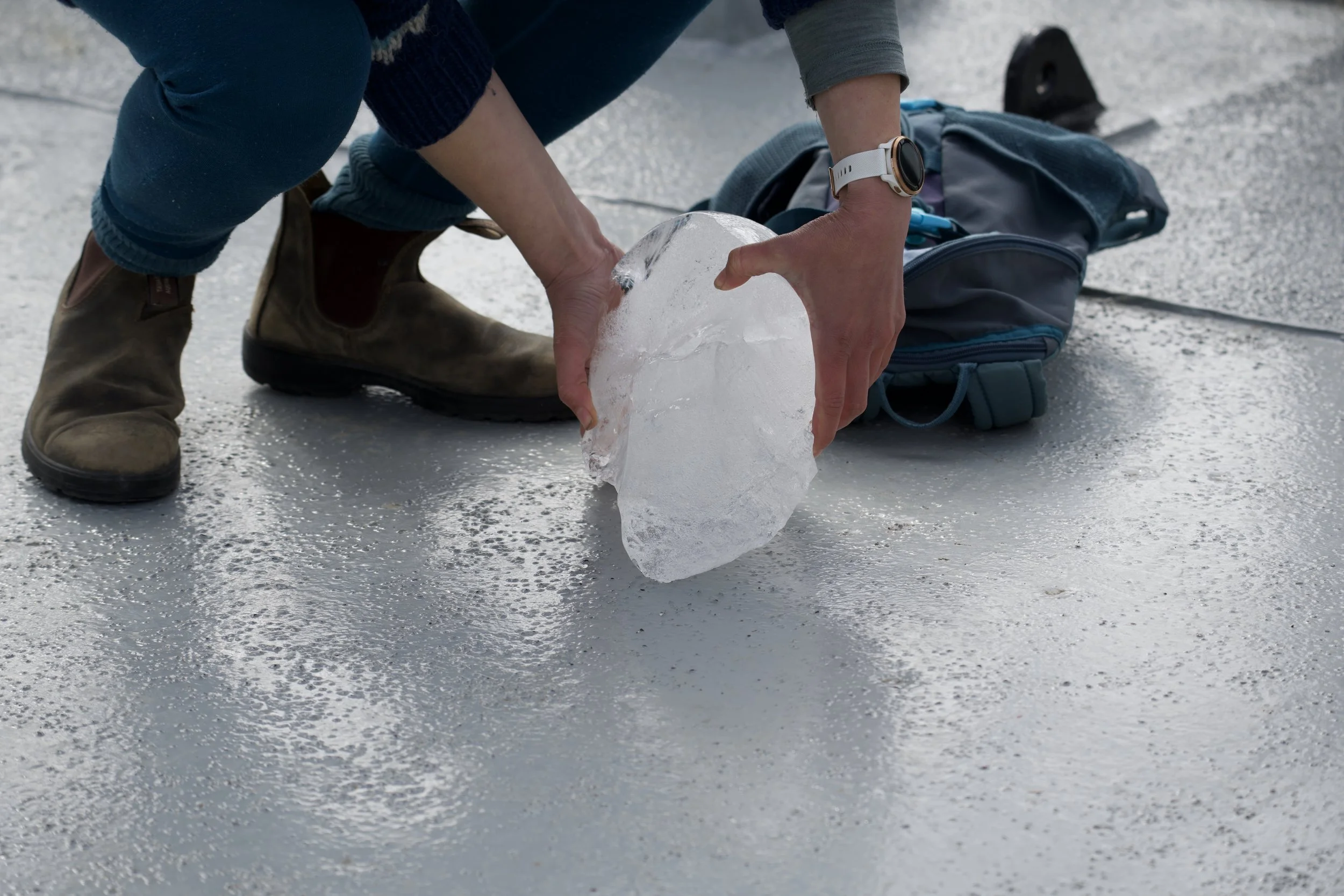
Seth and Annalise knelt down together in front of a block of ice and stayed there a long time. Vicki brought the clarinet out again. She had played once before, on the foredeck at the end of a long grey day, and the whole ship had gone quiet for her. It went quiet again. It always did. Four hours after three polar bears, against a wall of filthy glacier ice, with a rifle guide standing off to one side, everybody stopped and listened to a clarinet.
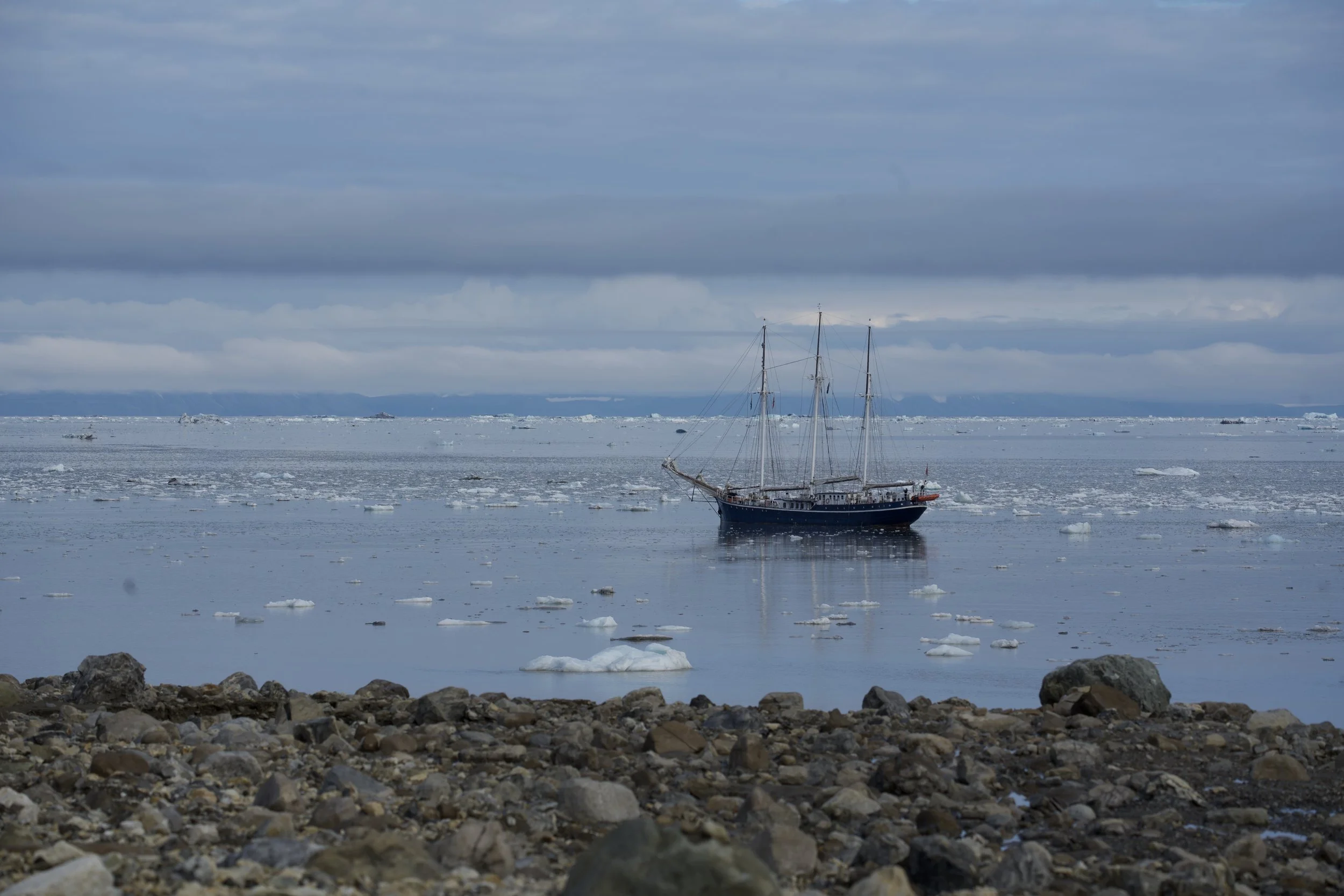
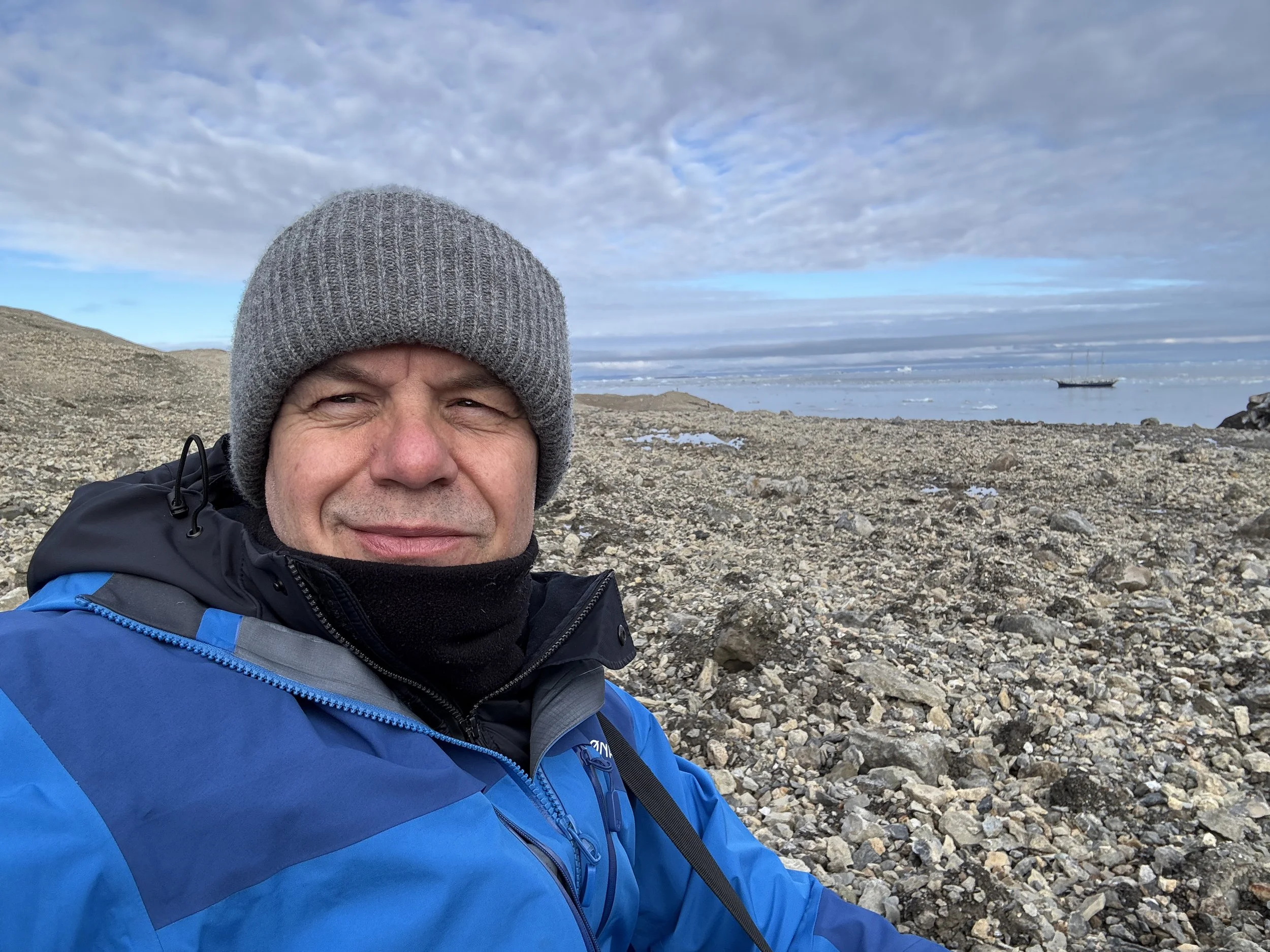
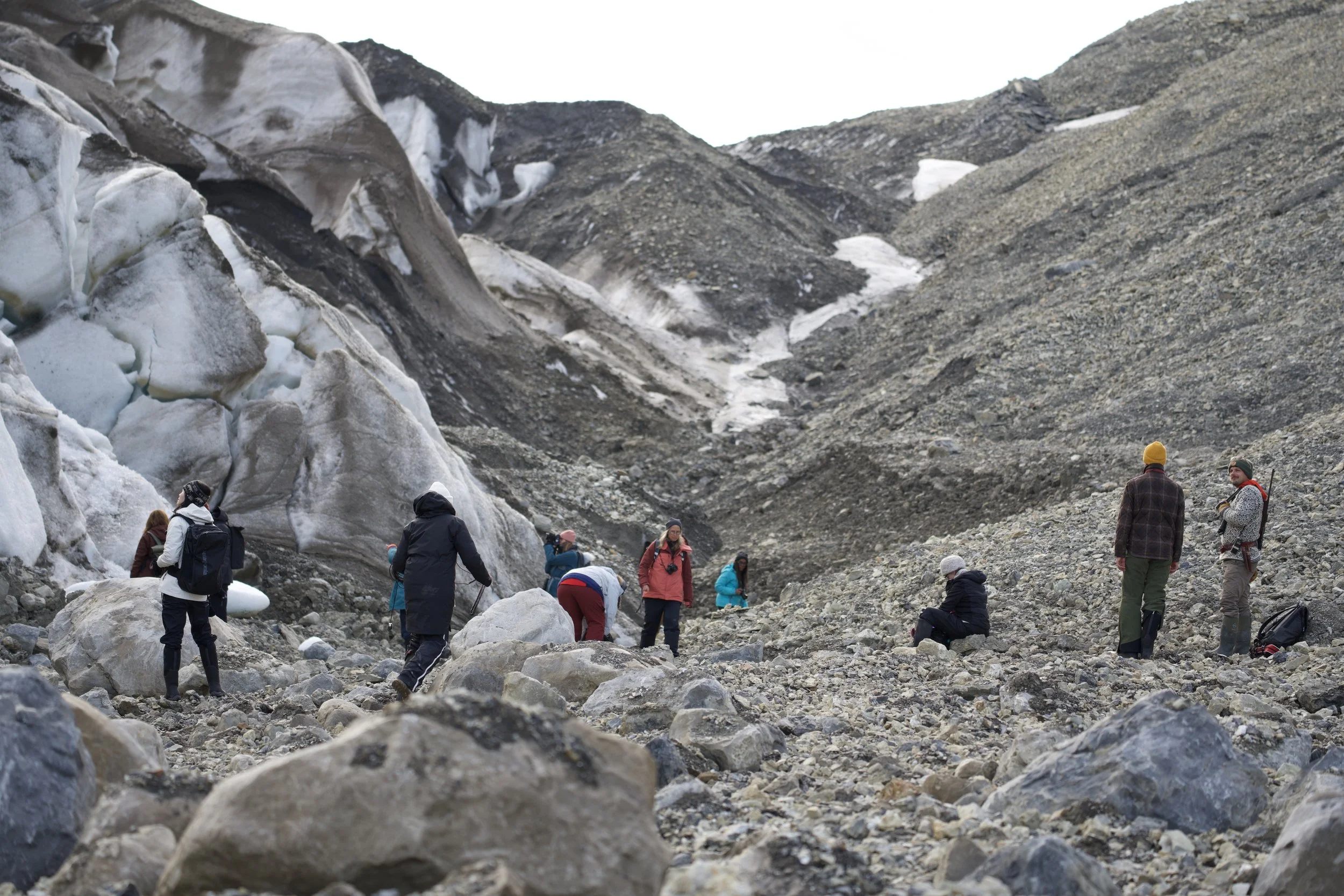
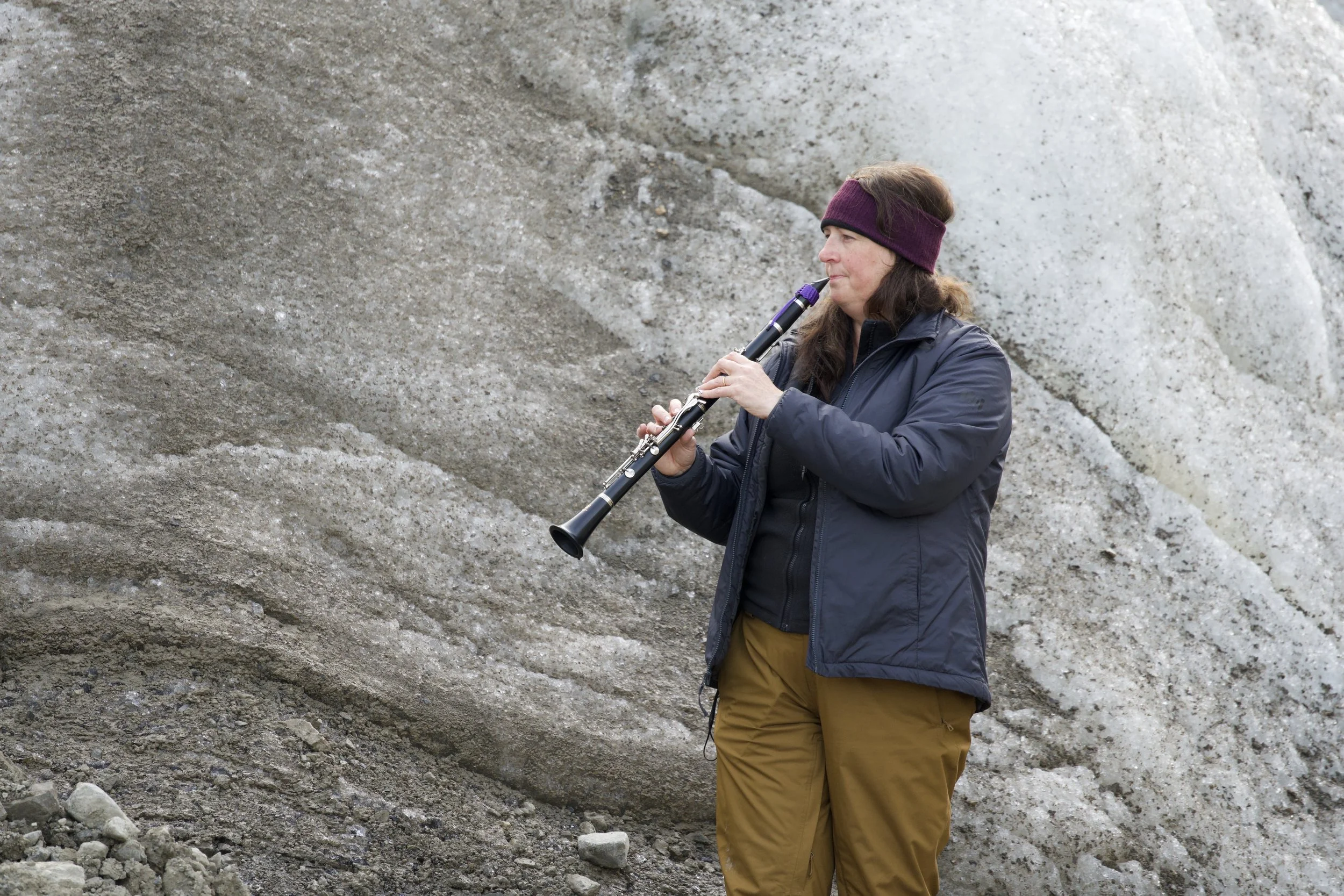
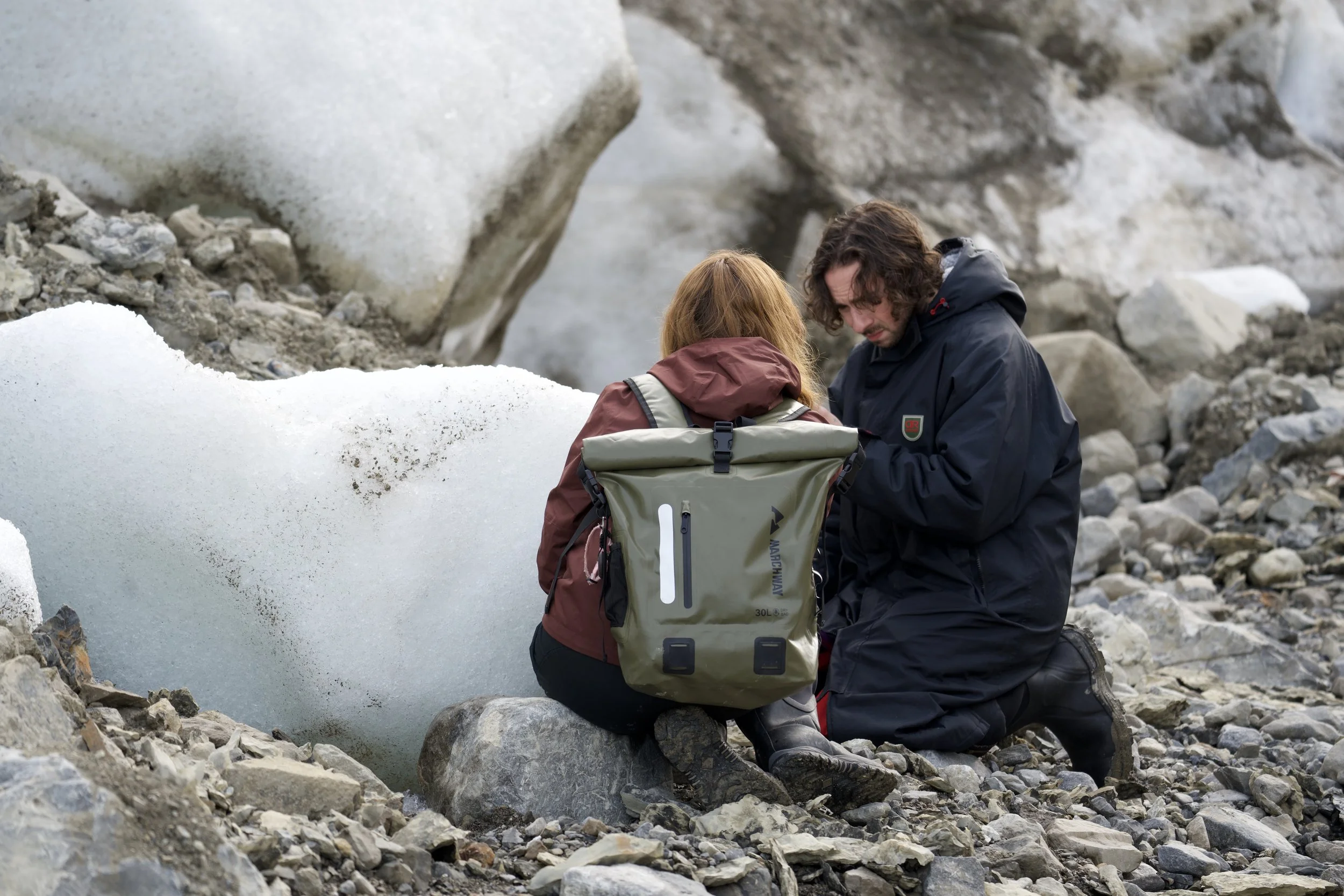
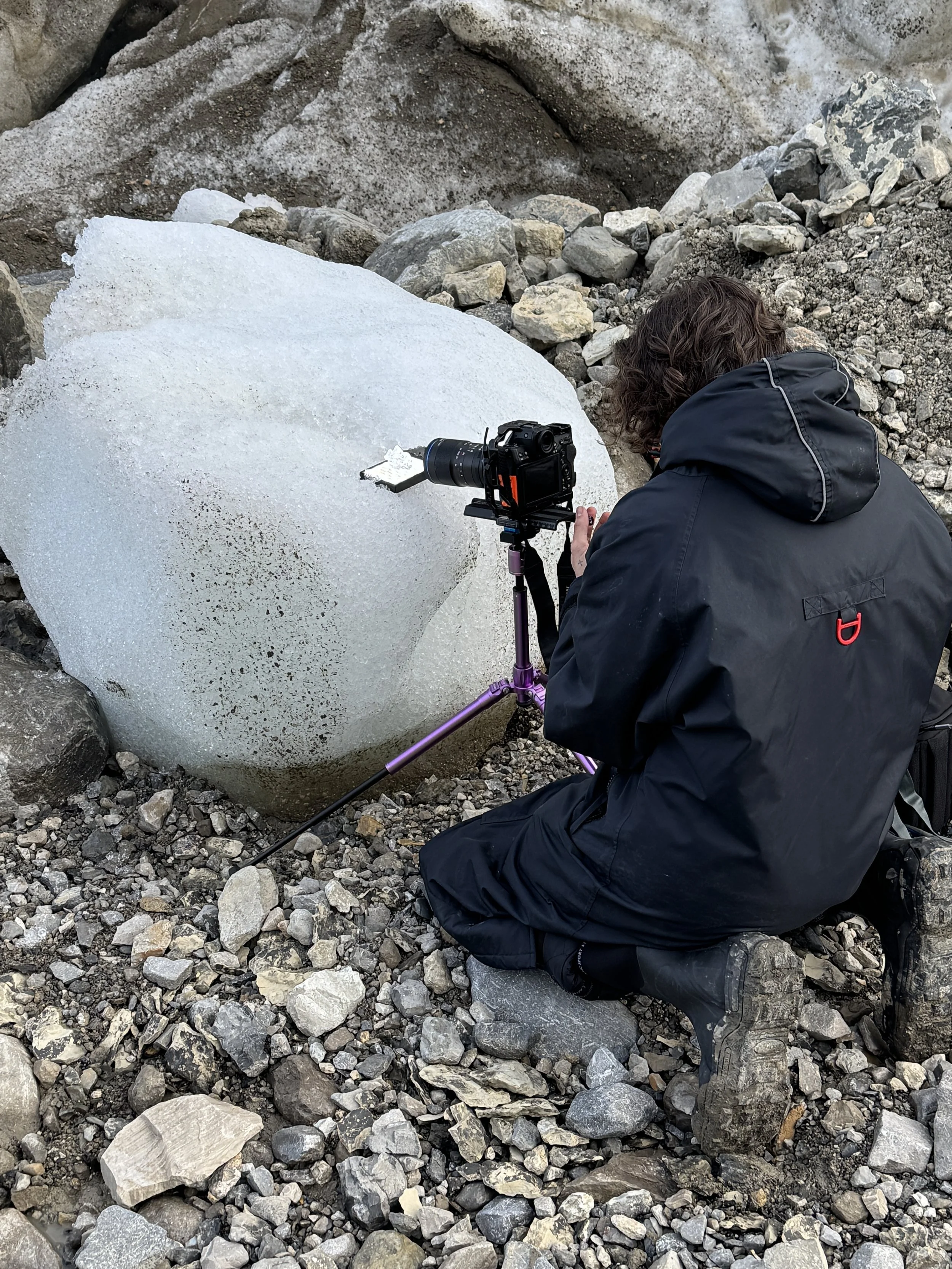
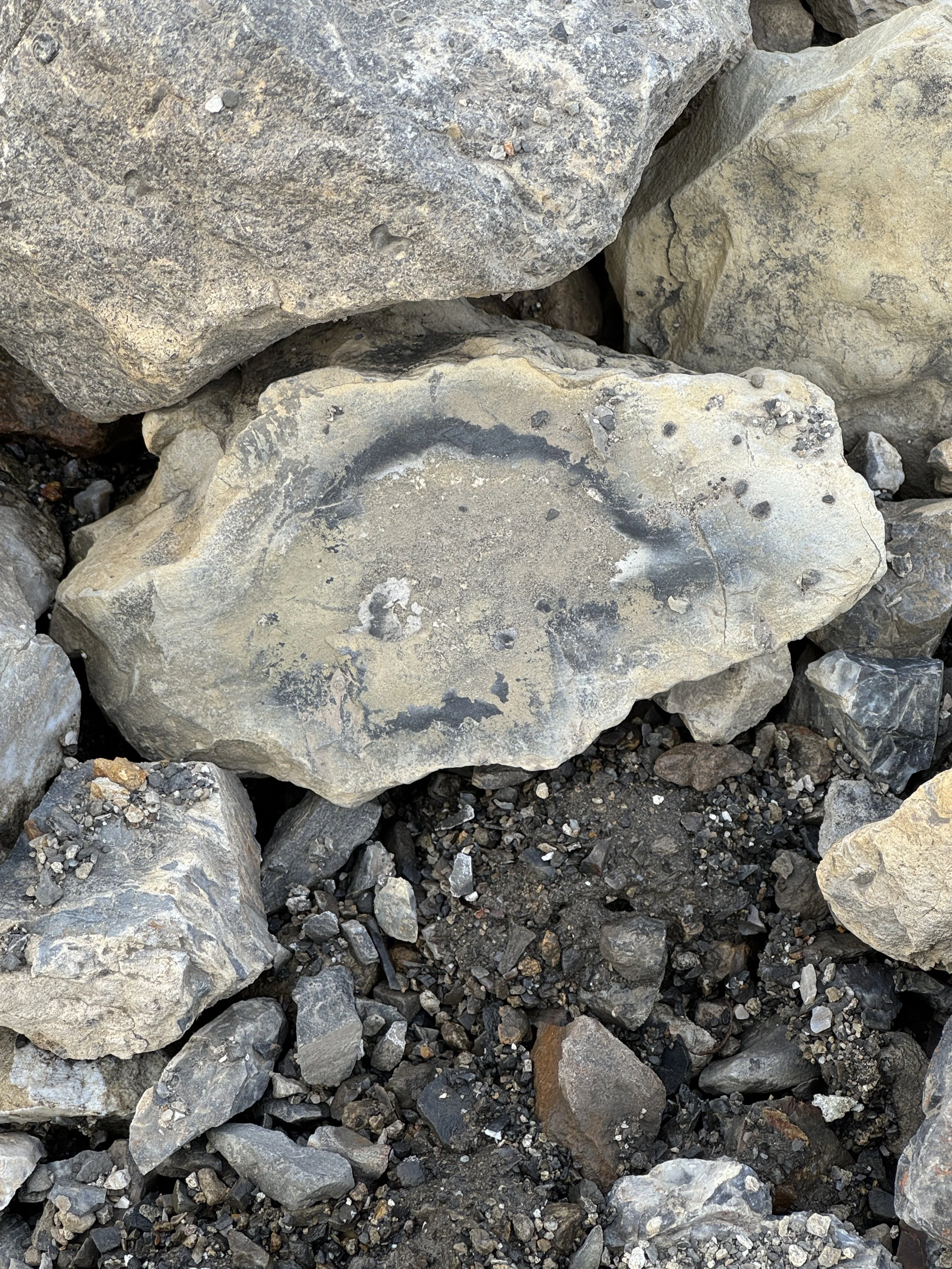
IT WAS RIGHT AGAIN - A seal in a stone in the afternoon. A real one drifted past that evening.
Then north into the best water of the whole voyage. Flat, clear, ice everywhere, the light going long and strange. The biggest icebergs we saw, and one tabular berg off Negribreen that Sarah thought might be the largest ever recorded on Spitsbergen, flat-topped and blue against a sky gone nearly navy. Some of those photographs look fake. They are not.
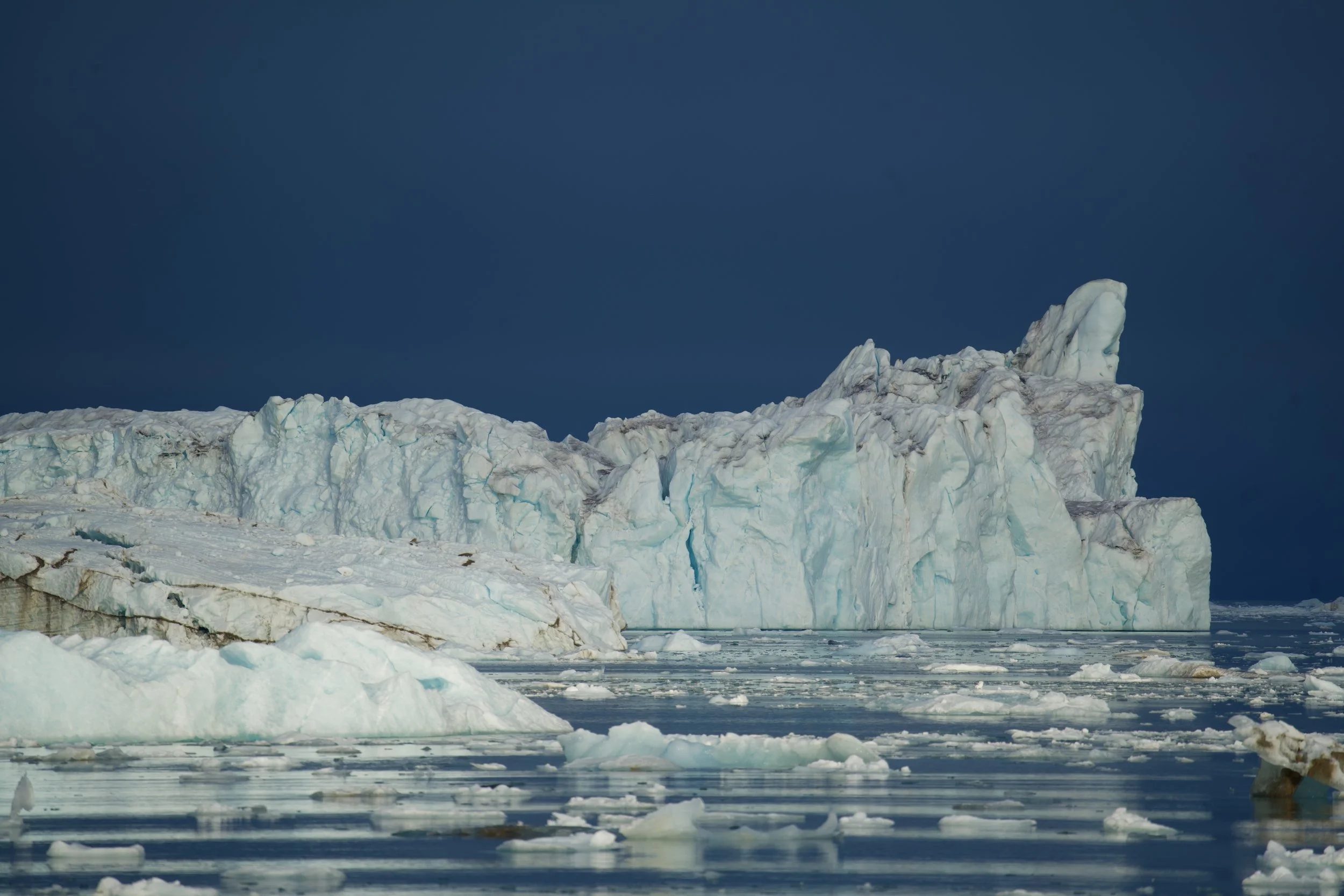
We put music on. It was about nine in the evening and everybody was up on deck, and it was a release, because everybody had done the right thing that morning and got off that beach and got back on this ship and the whole day was still ours. And in the middle of it a bearded seal came past on a small piece of ice. Full length, head up, whiskers lit, going by at walking pace roughly ninety seconds after I had photographed the largest iceberg any of us had ever seen. It did not get off. It just lay there and looked at a boatload of artists dancing badly under a sun that was not going to set, and drifted on out of the story.
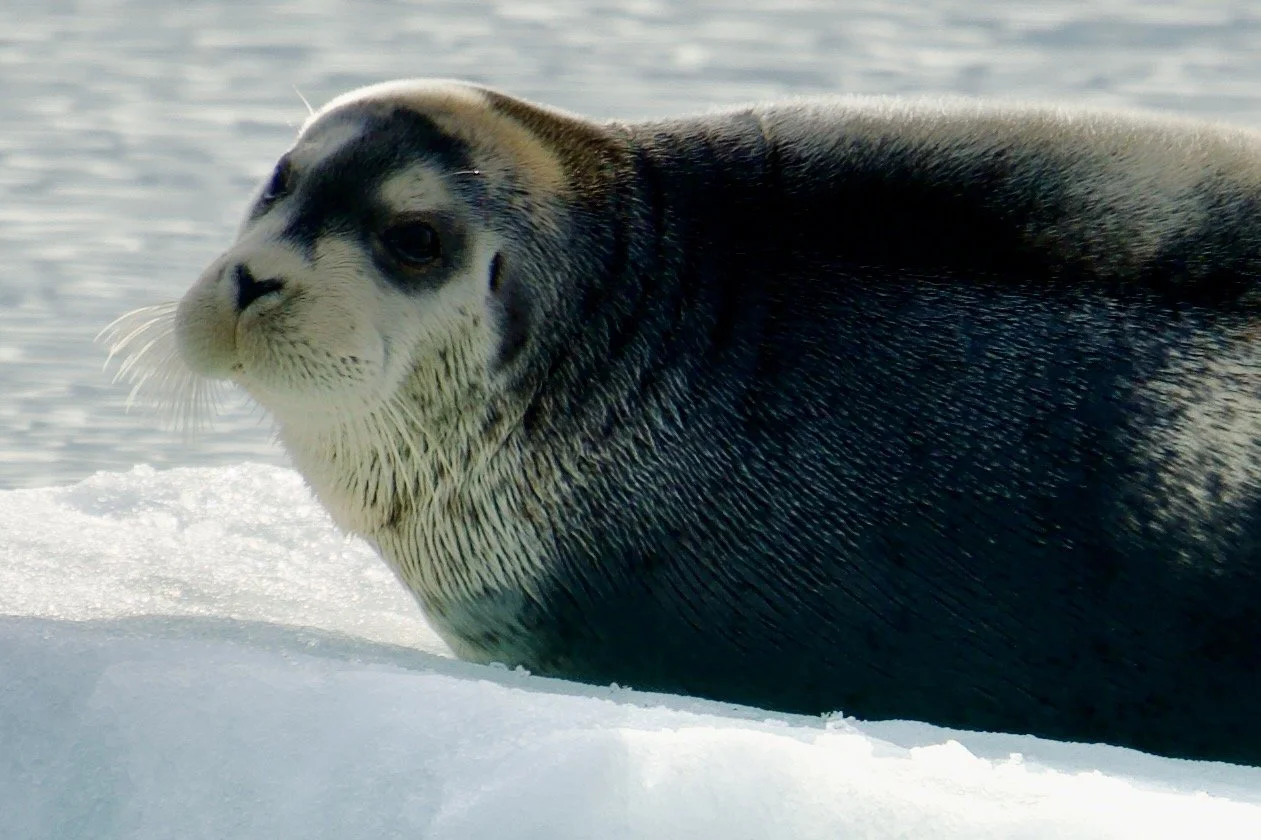
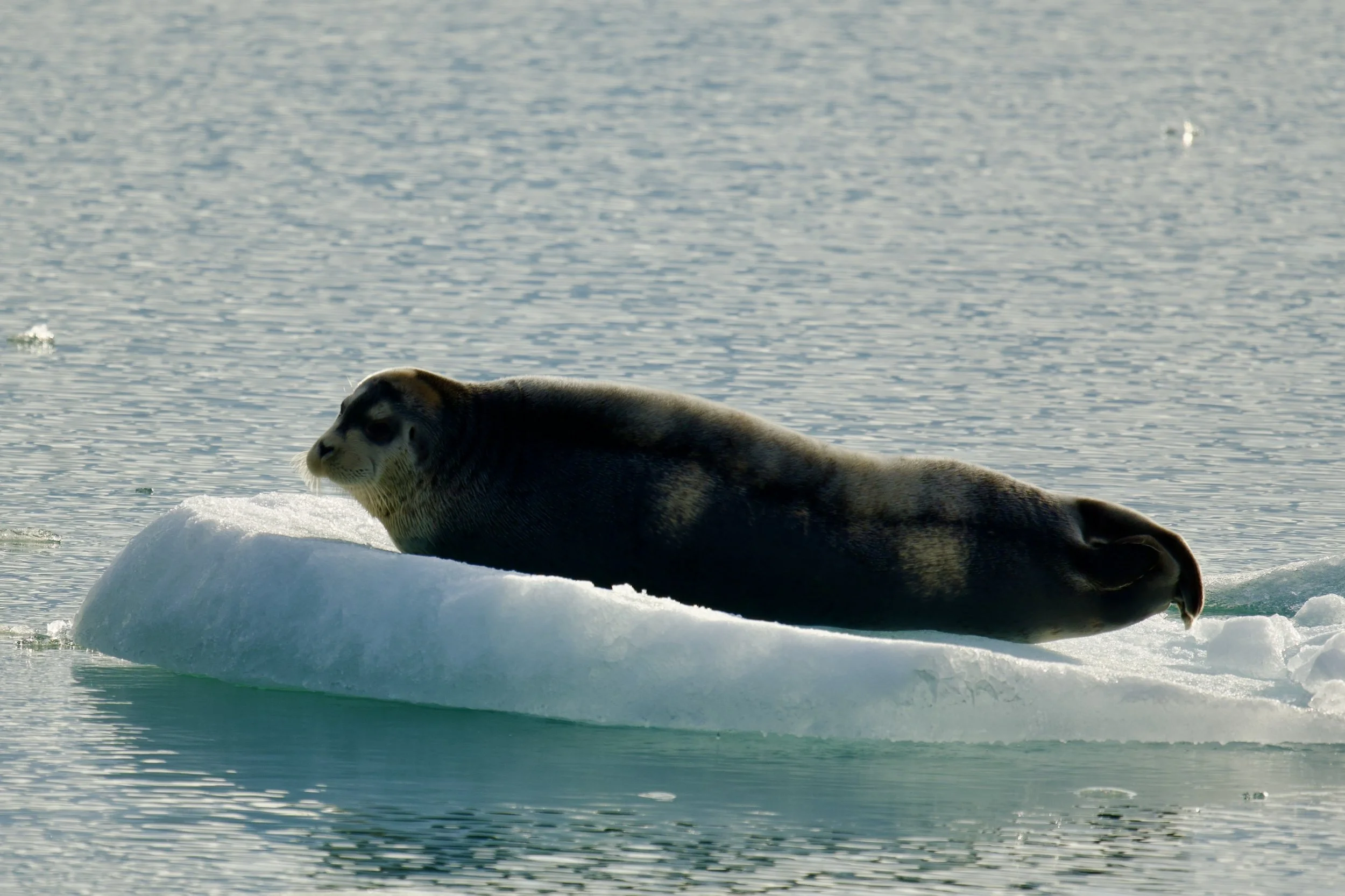
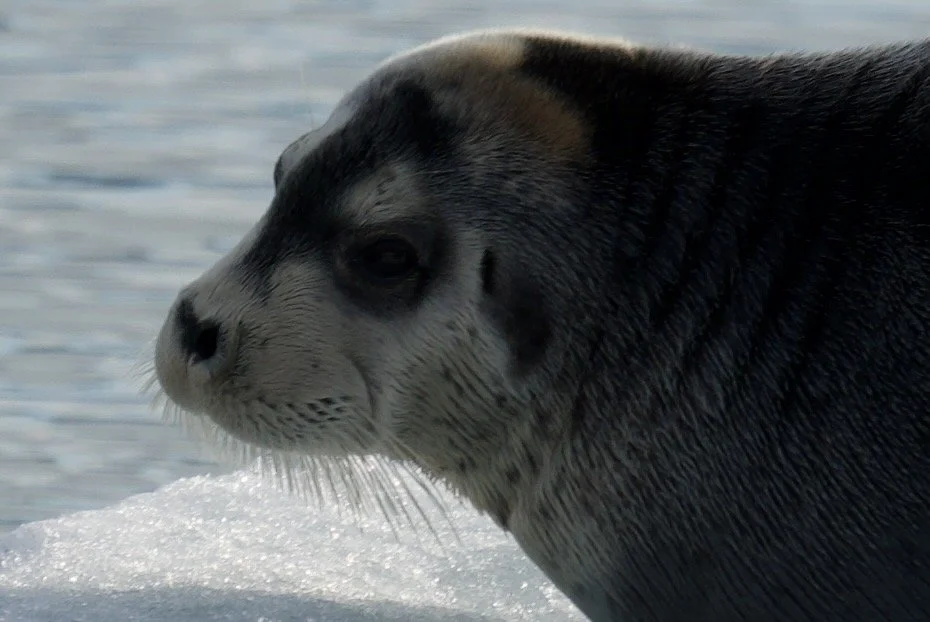
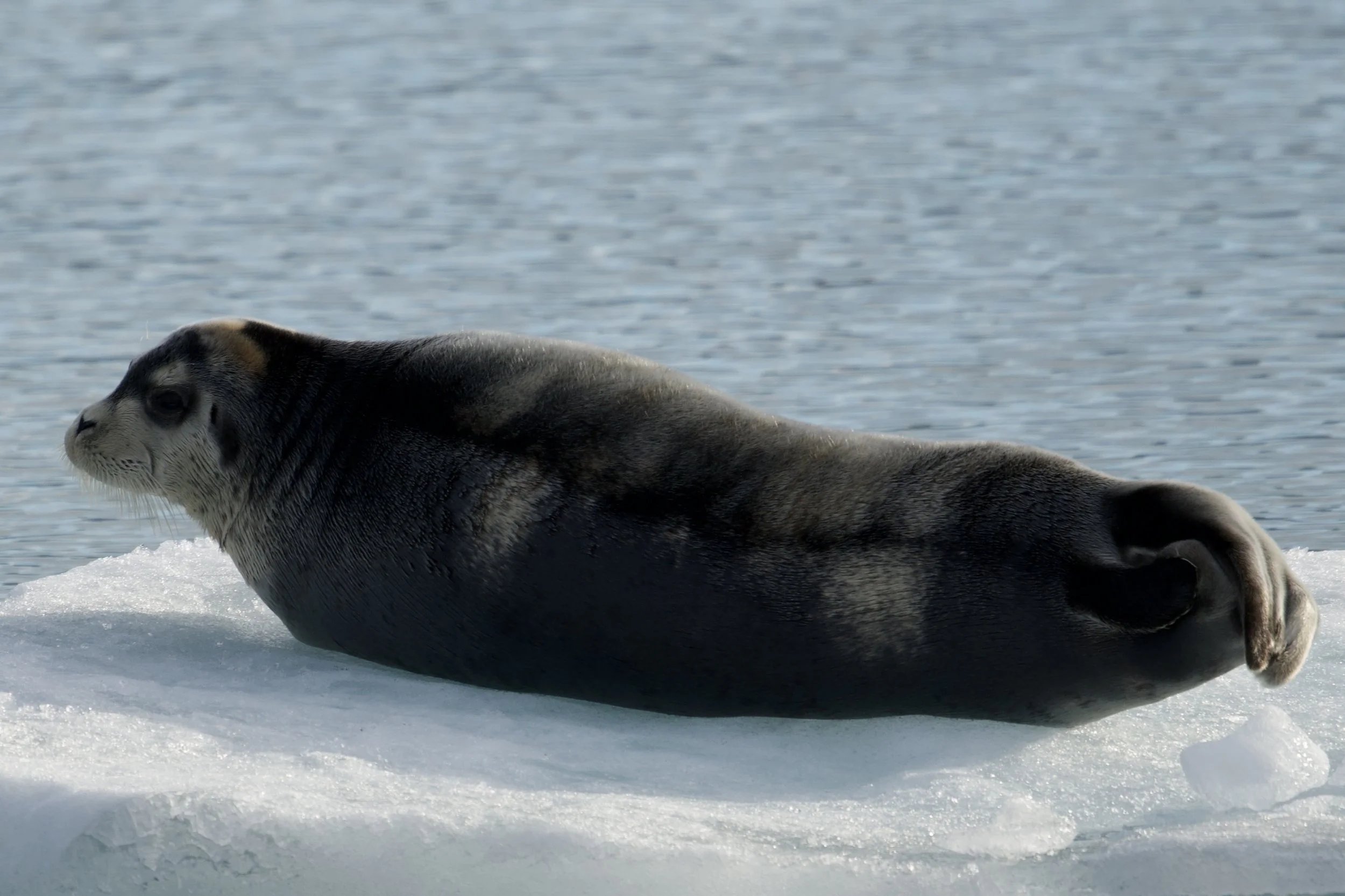
That was four hours after I photographed a seal in a stone.
I did not think anything of it at the time. I did not think anything of the bear stone either. There is a third stone I have not mentioned yet, and I am not going to mention it yet.
“But ‘tis strange.
And oftentimes, to win us to our harm,
The instruments of darkness tell us truths,
Win us with honest trifles, to betray ‘s
In deepest consequence.”