Entry Sixteen: Why Social Media Can’t Hold Scale
I have been around long enough to remember when this all felt innocent. In 2008, Facebook was not a marketplace. It was a bulletin board. You posted a photo, a thought, an update about where you were or who you missed. It was clumsy, slow, imperfect. Before that there was MySpace, even more chaotic, but still human. You decorated your page like a messy bedroom wall. You connected with people you actually knew, or people you wanted to know. Nothing was optimized yet.
By the time Instagram arrived, the promise felt similar, just cleaner. A square image. A caption. A moment shared. When I returned to painting more seriously and started using Instagram again, it worked. It worked for artists. It showed process, mistakes, time passing. You could follow someone’s work evolving. Six years ago, the platform still rewarded patience.
In 2020, during the strange stillness of that year, my following grew fast. Faster than I expected. I posted work, sketches, fragments of thought. People stayed. Conversations happened. It felt like a community, not an audience. That version of the platform is gone.
What exists now is not a place to share work. It is a machine built for reaction. Reels did not change Instagram. They replaced it. The endless vertical feed functions like a casino slot machine. You pull the lever with your thumb, the screen spins, and something new drops into place. Sometimes you win. Most of the time you do not. But the next pull always feels promising.
There are studies now that confirm what most of us already feel in our bodies. Variable reward systems increase addiction. Dopamine spikes are strongest when rewards are unpredictable. This is not accidental. This is design. When people compare social media addiction to smoking in the 1950s, they are not exaggerating. Back then, doctors smoked next to patients. The harm was real, but culturally invisible. It took decades to admit what was happening.
There is now a growing body of real research showing that these patterns are not just felt in the body, they show up in the brain and in everyday life. Studies have found that social media platforms are engineered with variable reward systems, the same kind of unpredictable reinforcement schedules used in gambling, which activate the brain’s dopamine pathways and make repeated checking more compelling over time. One review of this mechanism explains how intermittent rewards increase “behavioral stickiness,” essentially teaching the brain to seek engagement again and again in pursuit of unpredictable hits of pleasure.
Beyond the dopamine effect, other scientific work has documented that excessive social media use is associated with higher levels of stress, anxiety, and depression, even among working adults. A recent cross-sectional study found statistically significant links between social media addiction and symptoms of depression, stress, and anxiety, raising questions about the broader psychosocial impact of compulsive online engagement on wellbeing.
There is also evidence that social media use can affect attention and cognitive function. Research looking at brain activity before and after social media exposure shows changes in the prefrontal cortex, the part of the brain responsible for working memory and response inhibition, suggesting that heavy use may impair focus and executive functioning.
Taken together, these studies sketch a picture very different from the “light entertainment” narrative often used to sell platforms. They show that social media’s design isn’t neutral, and that its effects on attention, mood, and behavior are measurable and, for many people, detrimental. And that detriment isn’t just a personal failing, it is a structural consequence of how these platforms are built.
I tried to leave more than once. Every time, the same message came back to me from the professional world. Galleries asked about my following. Not my work. Not the ideas. The numbers. Your audience, they said. Your reach. As if the art itself had become secondary to the distribution channel. That was the moment it broke for me.
I am not complicit anymore. I stopped. I do not support billionaire czars whose wealth is built on attention extraction. I quit Spotify. I quit Amazon Prime. I never used products tied to Musk and never will. This is not virtue. It is refusal. A small one, but mine. And this brings me to the larger problem.
Why Social media cannot hold scale.
Climate collapse is slow, distributed, impersonal. It does not happen in one moment. It does not announce itself. It unfolds across decades, across regions, across lives that do not go viral. Platforms built for instant reaction cannot process this kind of loss. Everything must be immediate. Personal. Shareable. Outrage must fit into a clip. Empathy must resolve in seconds. So what survives are contradictions.
Celebrities post about climate awareness and step into private jets. This is not rare. It is routine. Leonardo DiCaprio has been photographed flying private while advocating environmental causes. Taylor Swift’s jet usage sparked public backlash. The problem is not the individual. The problem is the system that rewards visibility over coherence. The message circulates. The behavior does not change. The platform absorbs both and sells the engagement. Nothing slows down. And that is why social media cannot hold what I am trying to do.
It is striking to think how different the world was for artists who asked audiences to stay with something rather than scroll past it. Austrian artist Nitsch, for example, did not invite people to glance; he invited people into a space, into time, into an experience that required commitment and presence. His exhibitions were not snapshots but environments that unfolded over hours, sometimes days. Similarly, composers like John Cage created works such as 4′33″, a piece that asks listeners to sit in silence, to slow down, to let time be the art itself. These moments stand in stark contrast to scrolling culture: they are not immediate, they are not distilled into bite-sized clips, they demand something social platforms cannot measure, prolonged attention. And that is precisely the point of the work I want to make and to document.
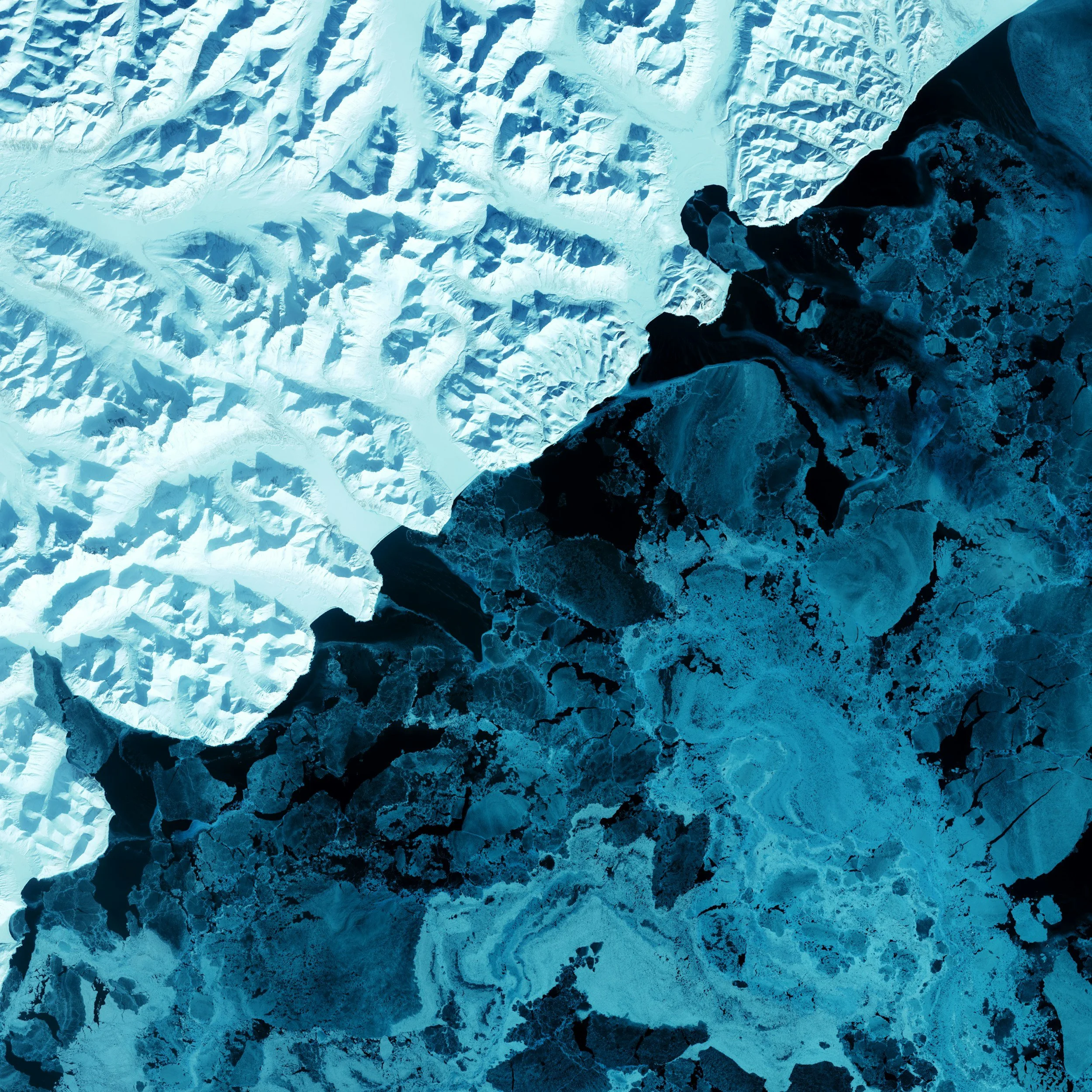
Ghosts of the Ice is slow. It requires time, presence, uncertainty. It asks people to stand in front of something and wait. To feel temperature shift. To notice disappearance that does not perform itself. This cannot be compressed into a reel without becoming something else.
Yes, I complain. But I also believe in alternatives. You can leave. It is maybe uncomfortable for a while. You will miss things. That is the point. JOMO instead of FOMO. The subscription economy tells you that access is ownership. It is not. Buy a vinyl. A CD. A cassette. Sit with an album because you chose it, not because an algorithm queued it. Or listen to Ö3 my favorite Austrian Radio Station. Go to exhibitions. Talk to people in rooms. Push real buttons. Turn real dials. Watch something change in front of you because you are there. That is impact.
I hope social media ends. Or at least transforms into something less addictive, less extractive, less hostile to attention. I hope we look back and recognize the harm, across all age groups. Children, adults, seniors. No one is immune. Until then, I will keep building work that refuses to be optimized. Work that fades slowly. Work that asks for presence instead of performance. That is my hope.
“Attention is the rarest and purest form of generosity.”