Entry 053: So You're Going to Svalbard?
What to pack for Svalbard, what to leave at home, and what I would do differently on an Arctic expedition ship.
So you're going to Svalbard. Maybe you got into The Arctic Circle residency, and in a few months you'll board the Rembrandt van Rijn with twenty-some artists and scientists you haven't met yet. This is written for you. If you're on another ship, most of it still holds. Either way, somebody has handed you a packing list. You've read it four times. You still don't know what you need. I didn't either. I spent a year getting ready and sixteen days finding out what I got wrong.
So here are my best tips. Forty of them, give or take. What to pack, what to rent, what to leave behind. How to get there, how to pay for it, how not to get seasick. Where to go in Longyearbyen. And the one piece of advice that matters more than the rest of them put together. Most of it costs nothing. Some of it cost me.
One thing first. This is the July departure. Mine. Fourteen days on a ship around Svalbard in the middle of summer. I cannot tell you what May is like. What follows was true for one voyage. Maggie sailed the same program two years before us in October, same program, different ship, same waters, and did not see a single bear. We saw nine. There is no trip I could send you on that would give you mine. These are my opinions. One man, one voyage, take them for what they are worth. Nobody paid for this entry. No brand sponsored it, and nothing here was sent to me for free.
Before You Go
The forum. The Arctic Circle opens an online forum before the trip where the artists introduce themselves and their projects. Use it. Read every introduction. Comment. Ask questions. I commented on every single artist (except the ones who posted a few days before we sailed, when I was somewhere over the Atlantic, which I maintain is a valid excuse), and as far as I can tell I was the only one. On the ship Sarah announced this to the room, which is how I found out I'd been the class overachiever for four months. I'd do it again. Talk about gear too. I assumed the two filmmakers would bring long lenses. I was the only one with a 500, and there wasn't a single professional photographer on board. Know who is bringing what, and you can share, help, plan things together. Fourteen days go fast. I meant to interview more people and film them at work, and I never got to it. When people present their work, you'll want to know more, and by then you're too tired to take much in, physically and mentally, from the landings and your own project. Get to know each other before. Start a video call if nobody else does. And keep a group going after. A few of us still talk almost every day. That was one of the gifts of this trip, and I didn't see it coming.
Permits. If your project needs anything out of the ordinary, check first. Drones need a permit and almost nobody has one, so don't bring one without a permit. One of our artists came to cast the Austfonna ice cap in plaster and found out on the bus that the permit to stand on Austfonna takes about two months from the Governor. There are good reasons it takes that long. Ask early.
Emergency contact. You give one address before you sail. One person, everything routes through them. Decide who. The crew checks that inbox every day. If something happens at home, you will hear.
Travel insurance. Don't be cheap here. You are a long way from a hospital. Make sure your policy covers medical evacuation, not only a doctor's visit, and read the fine print on cancellation before you buy it.
Flights. Copenhagen to Longyearbyen through Oslo has come out cheaper than Oslo direct. Twice now. Don't ask me why. Book the Longyearbyen leg the moment you are accepted, because it fills in season. Booked early, business class was only $100 to $200 more. It comes with a great many more kilograms of baggage, a lounge, early boarding. In Copenhagen you can check your bags the night before. I did. By the time I reached security at five in the morning they were already gone. If you have the time and the money, add days in Europe on either side. I spent mine in Svendborg, on the Danish coast. So worth it.
Read Christiane Ritter's A Woman in the Polar Night. In 1934 she left her home in Austria to join her husband for a year in a trapper's hut on the north coast of Spitsbergen. No electricity, no road, no other woman for a hundred miles, and months of darkness. She went expecting to be bored. She came back changed. The book has been in print since 1938, and it's the best thing I know about what the Arctic does to a person who stays still long enough to let it. It's short. Read it before you go. Half of what I understood up there, she had already written down.
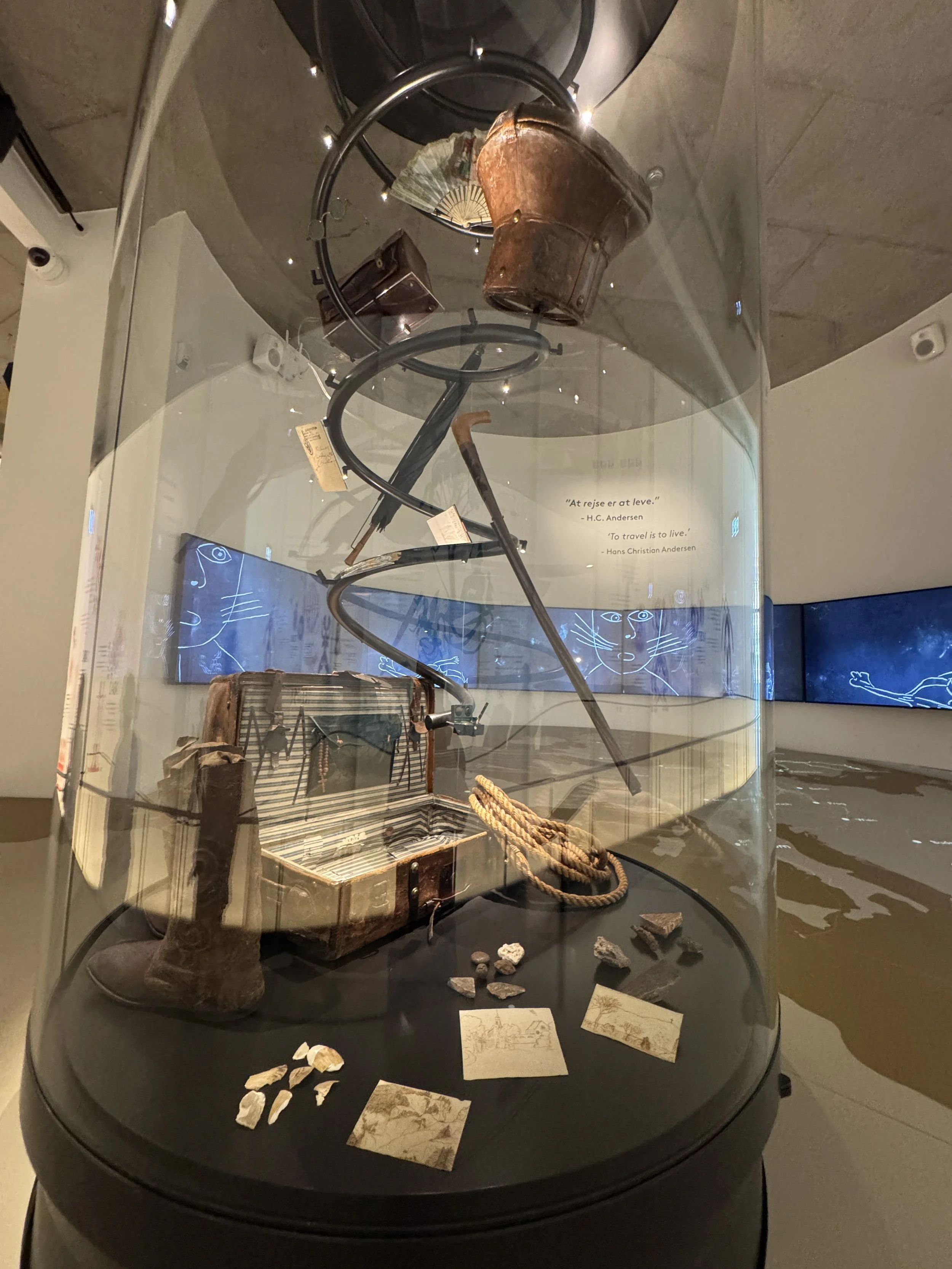
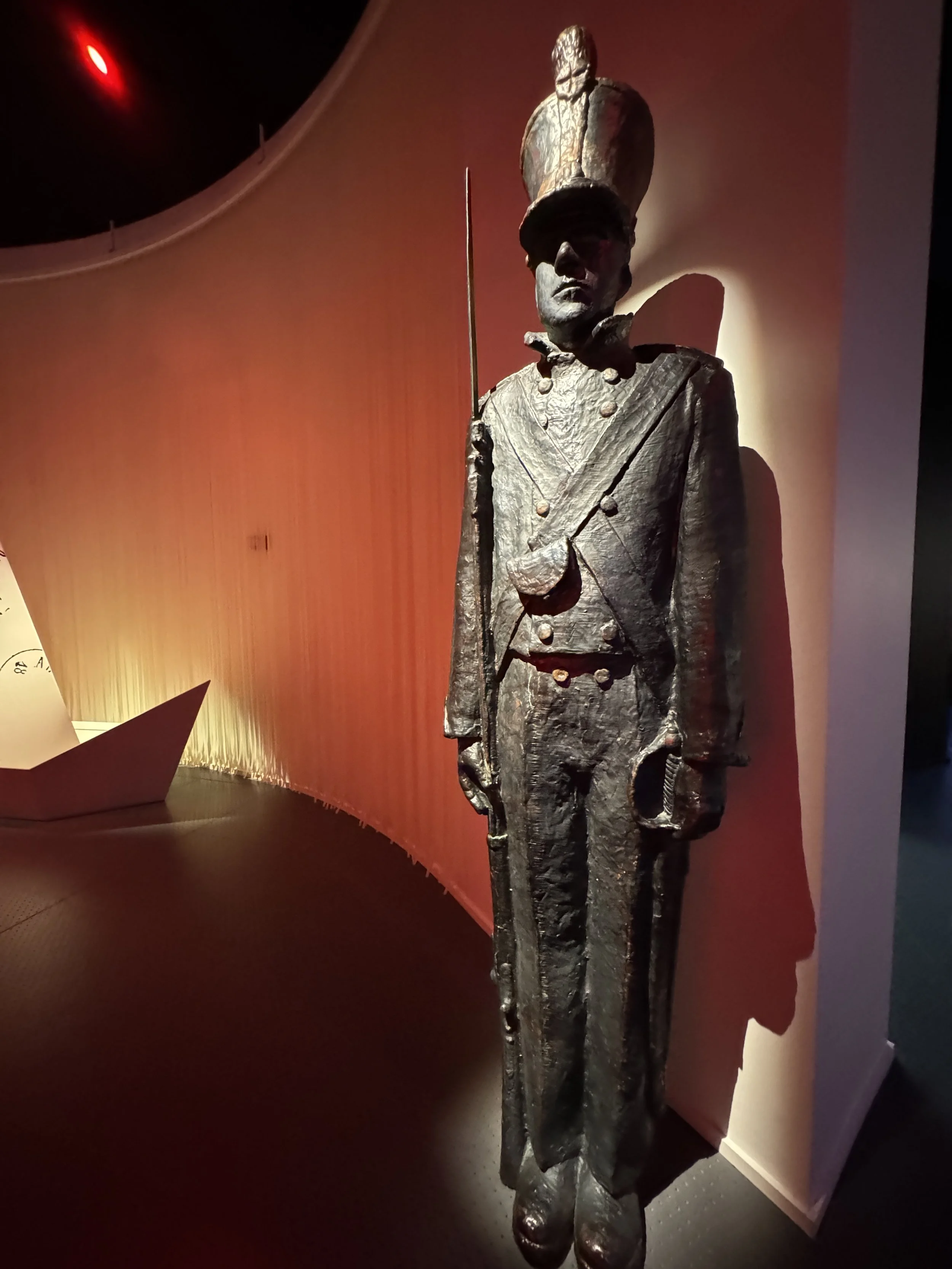
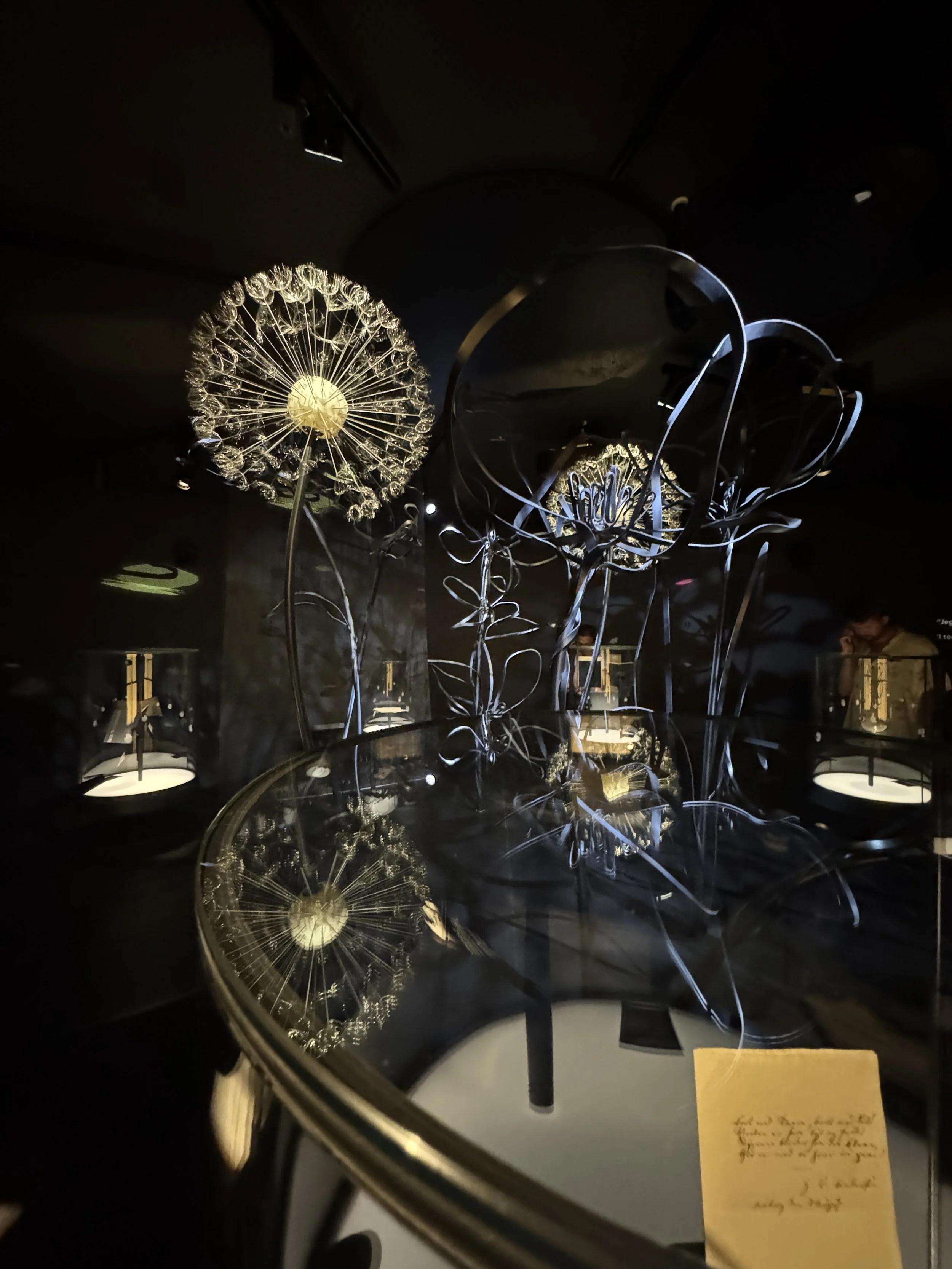
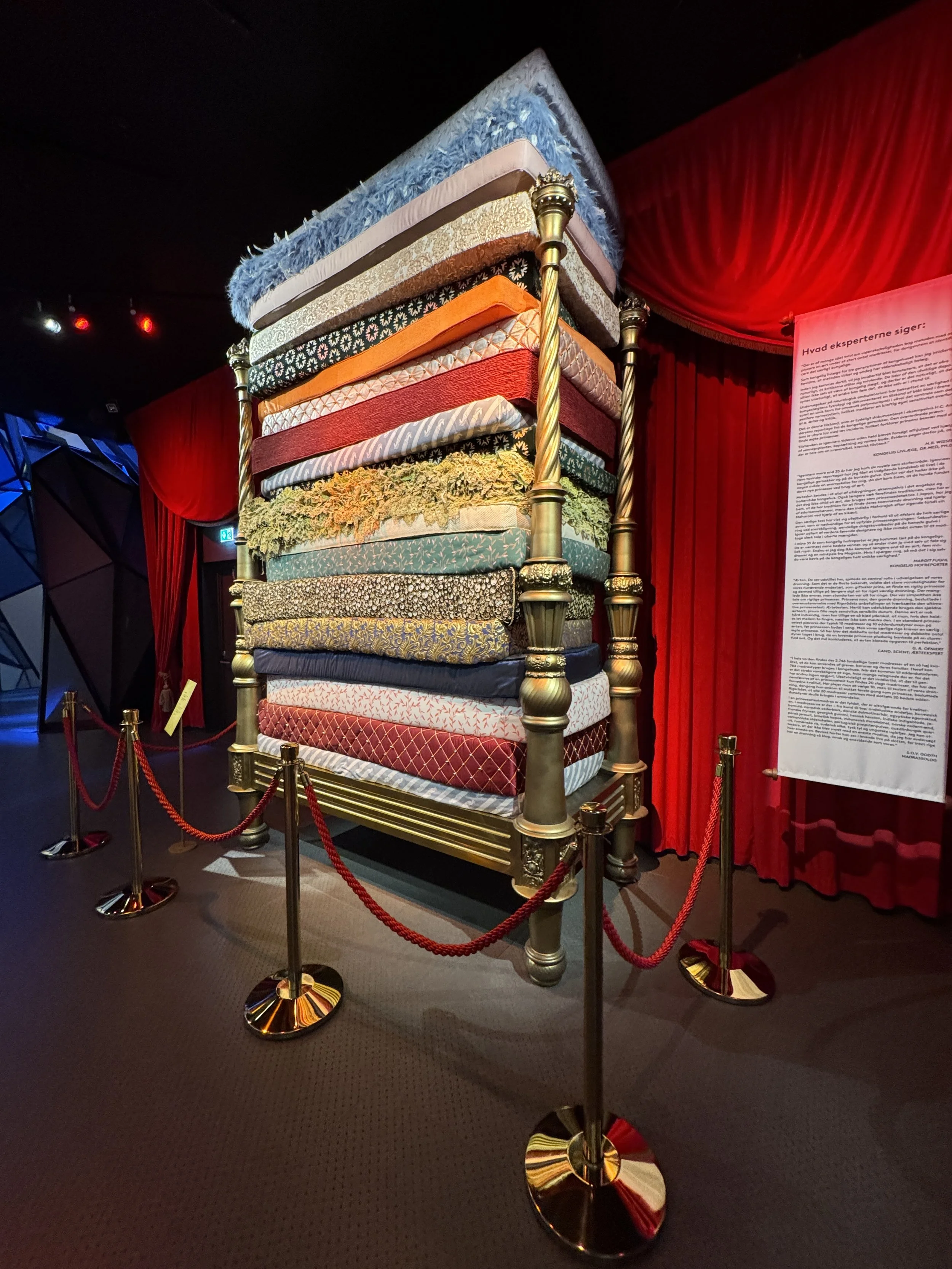
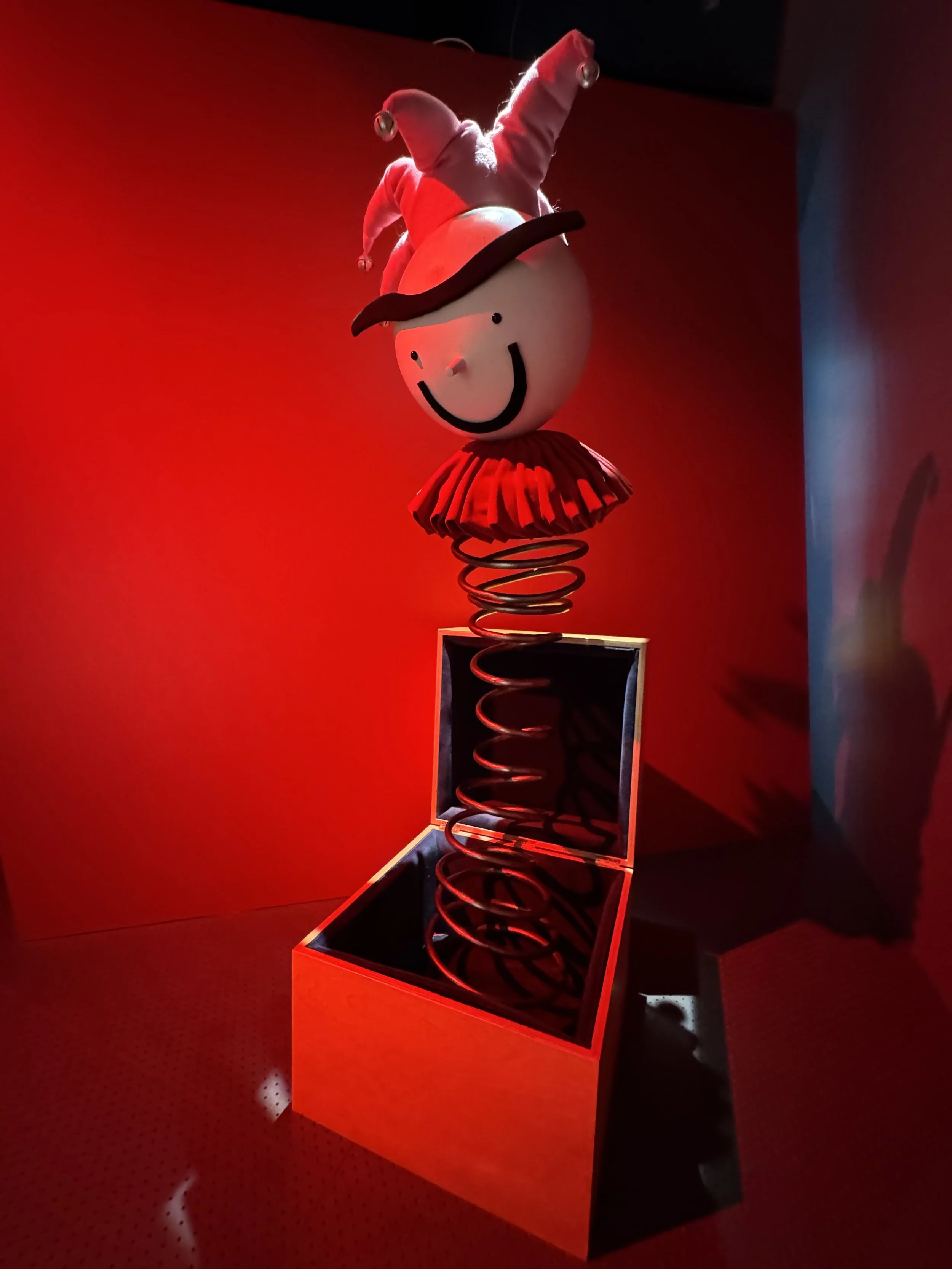
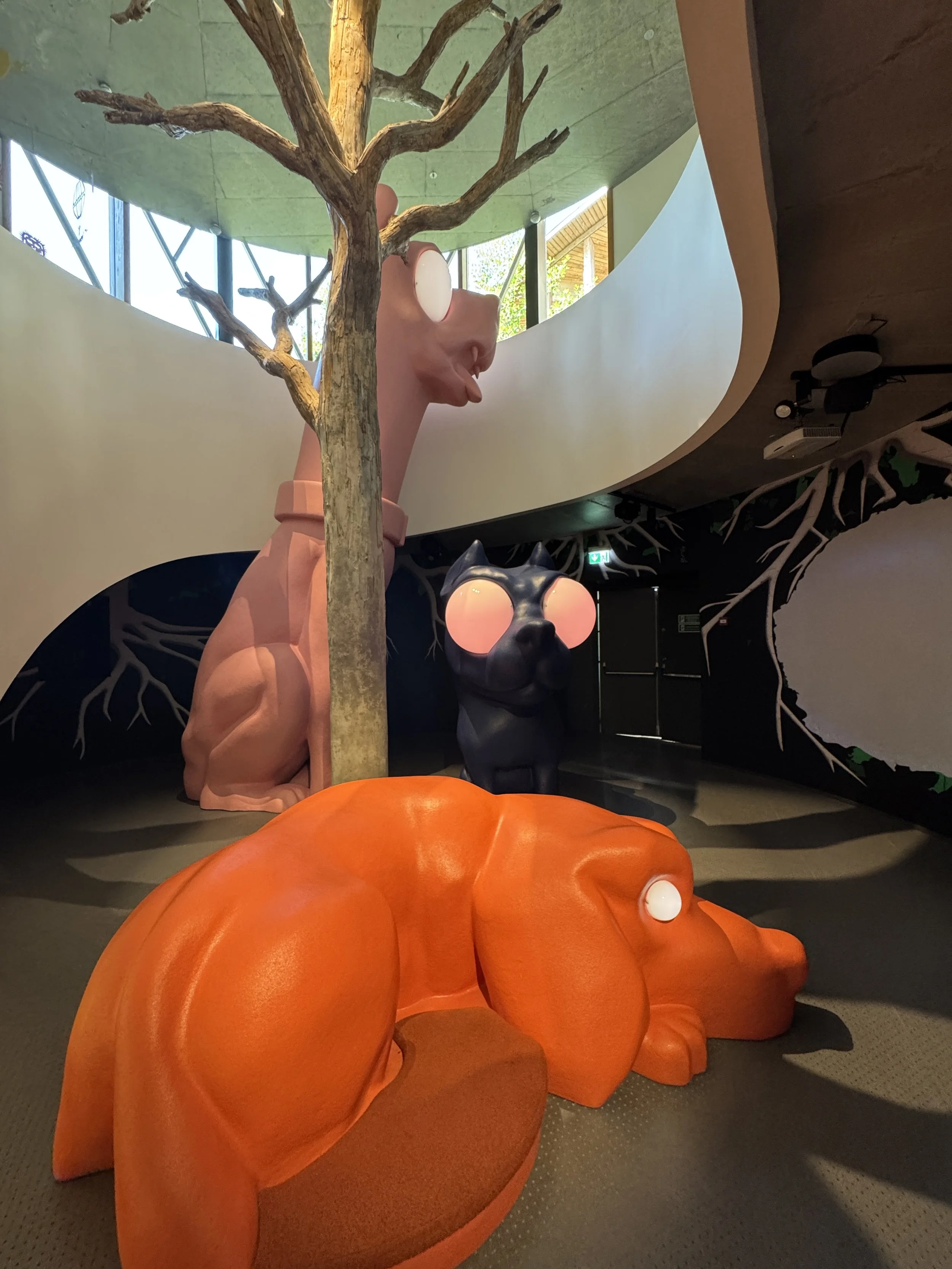
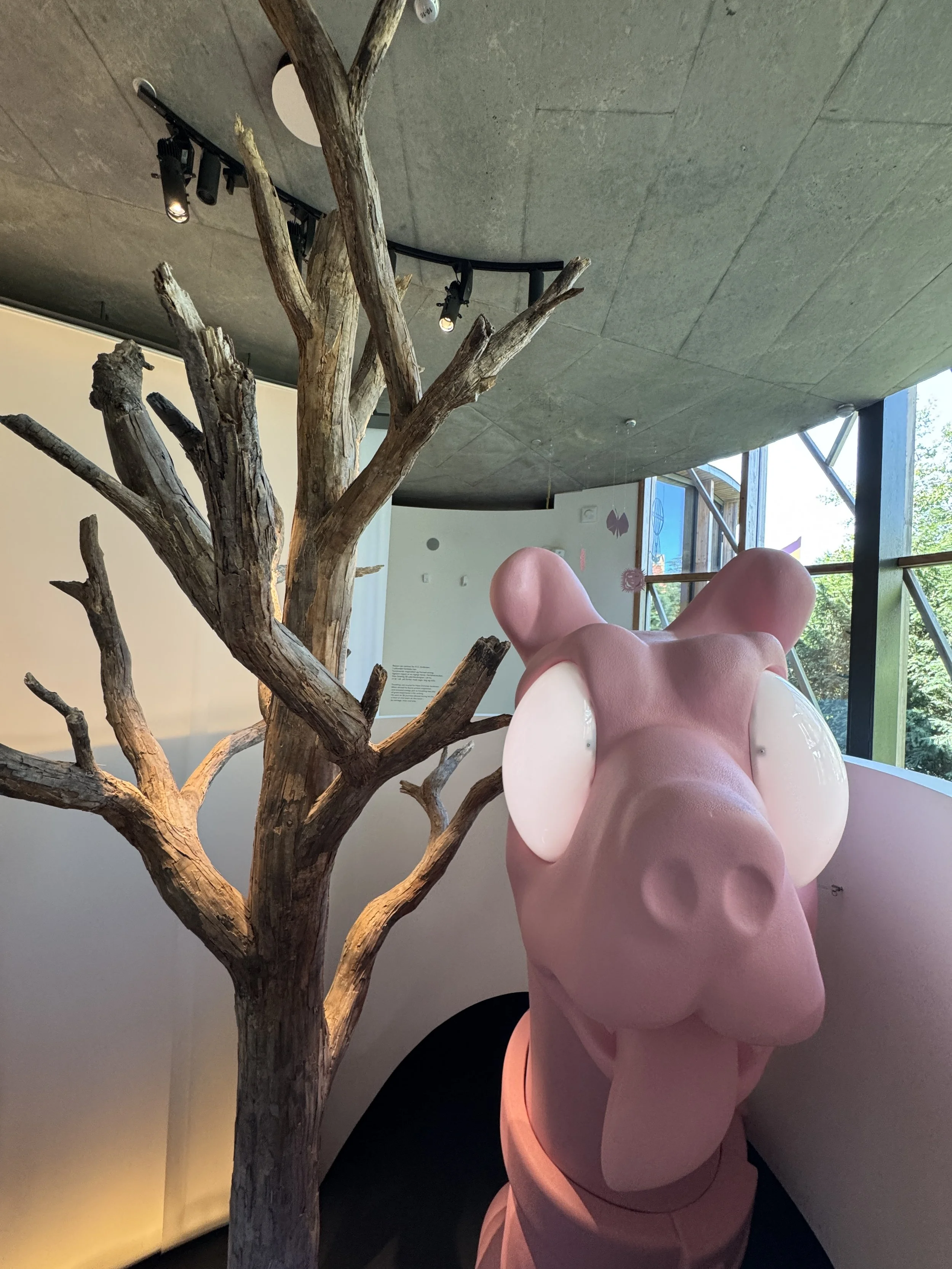
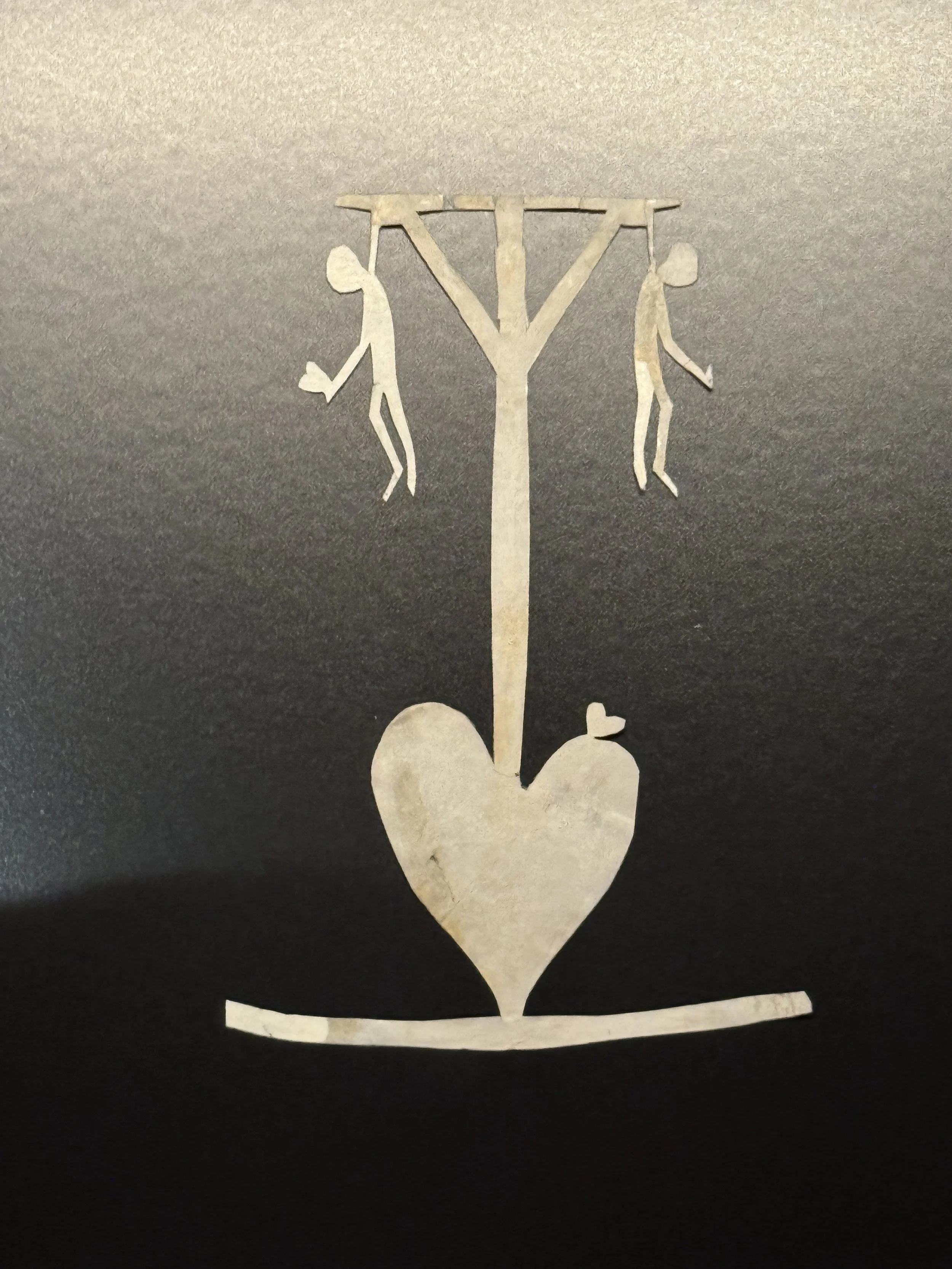
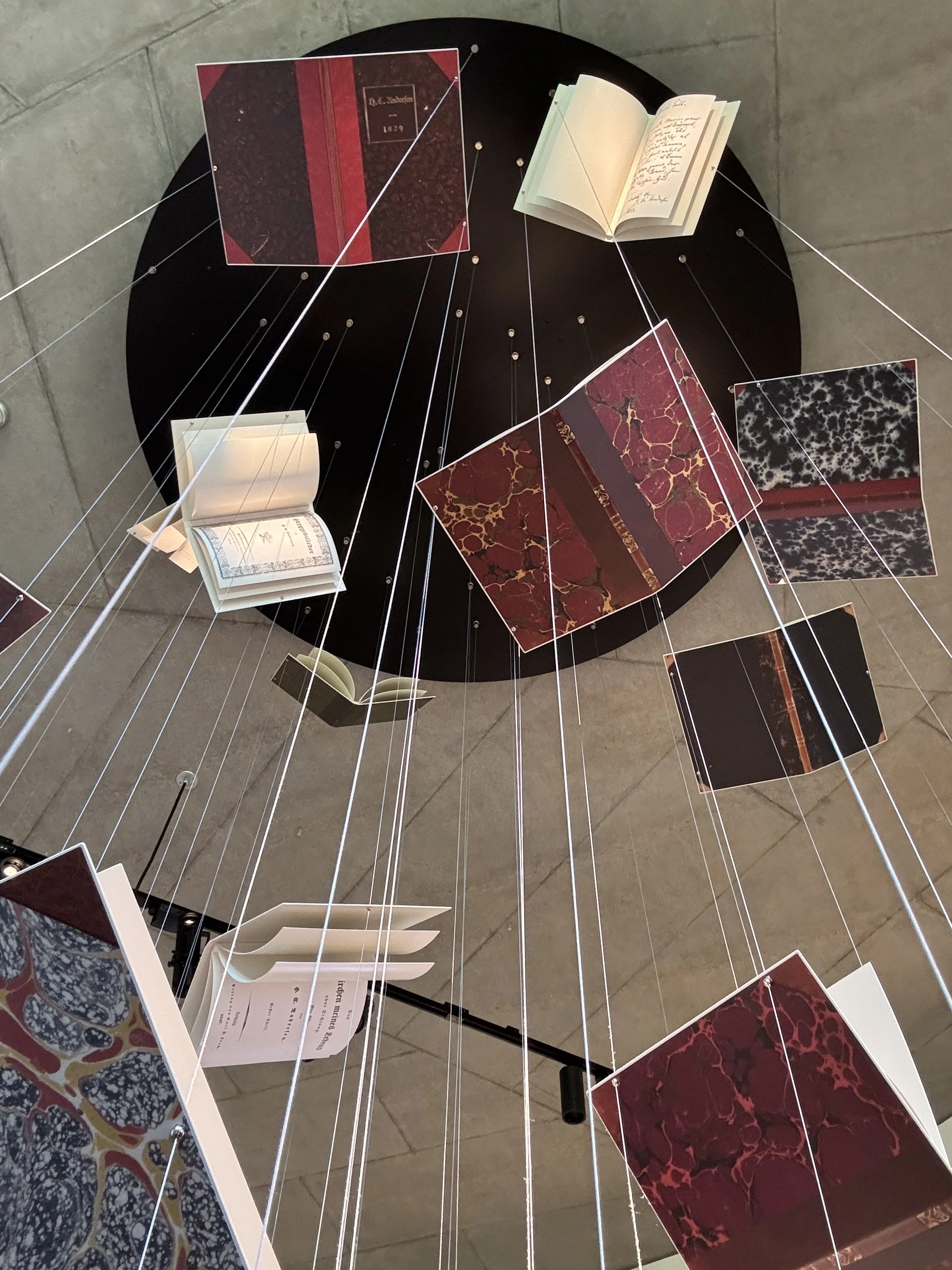
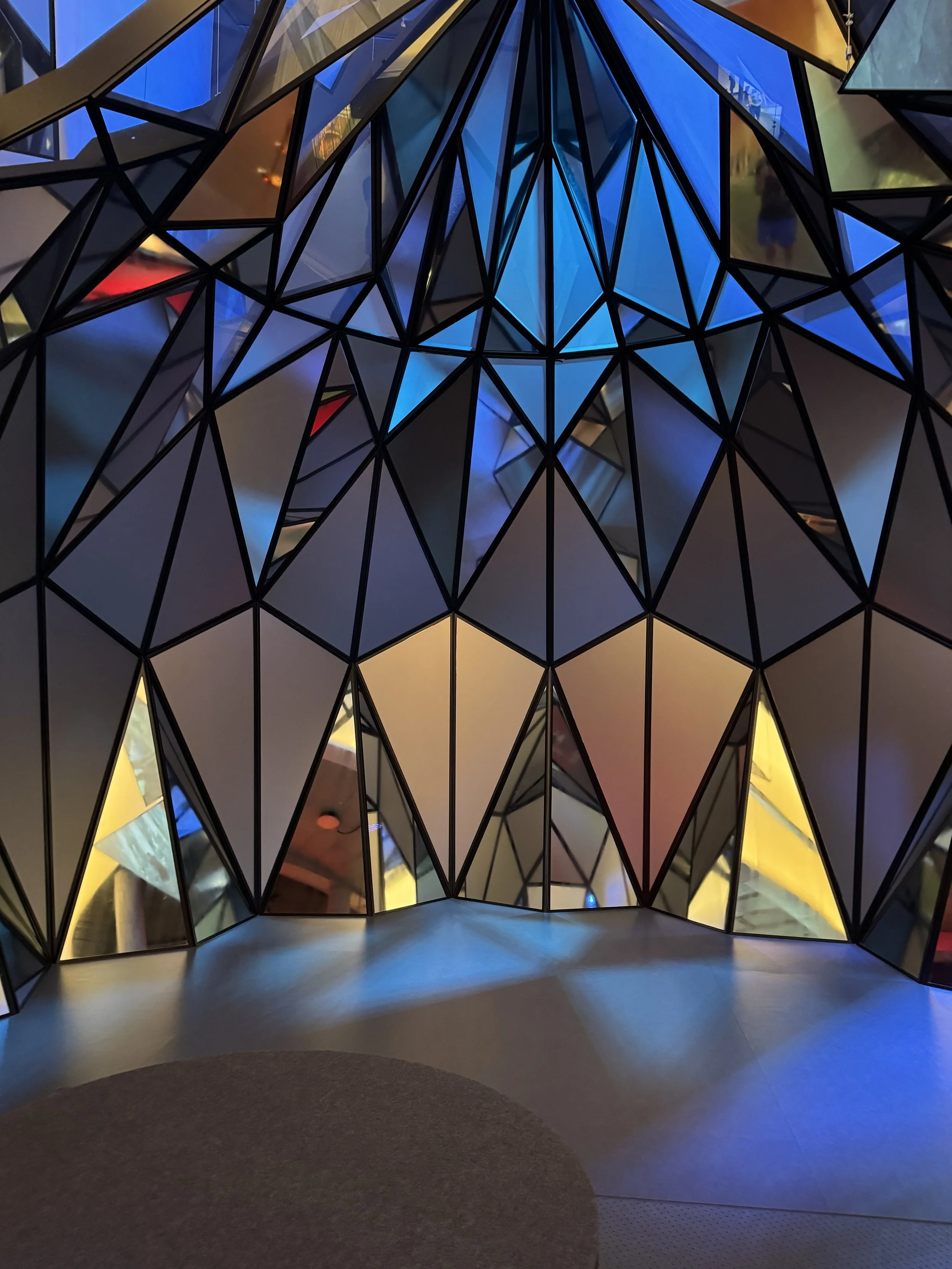
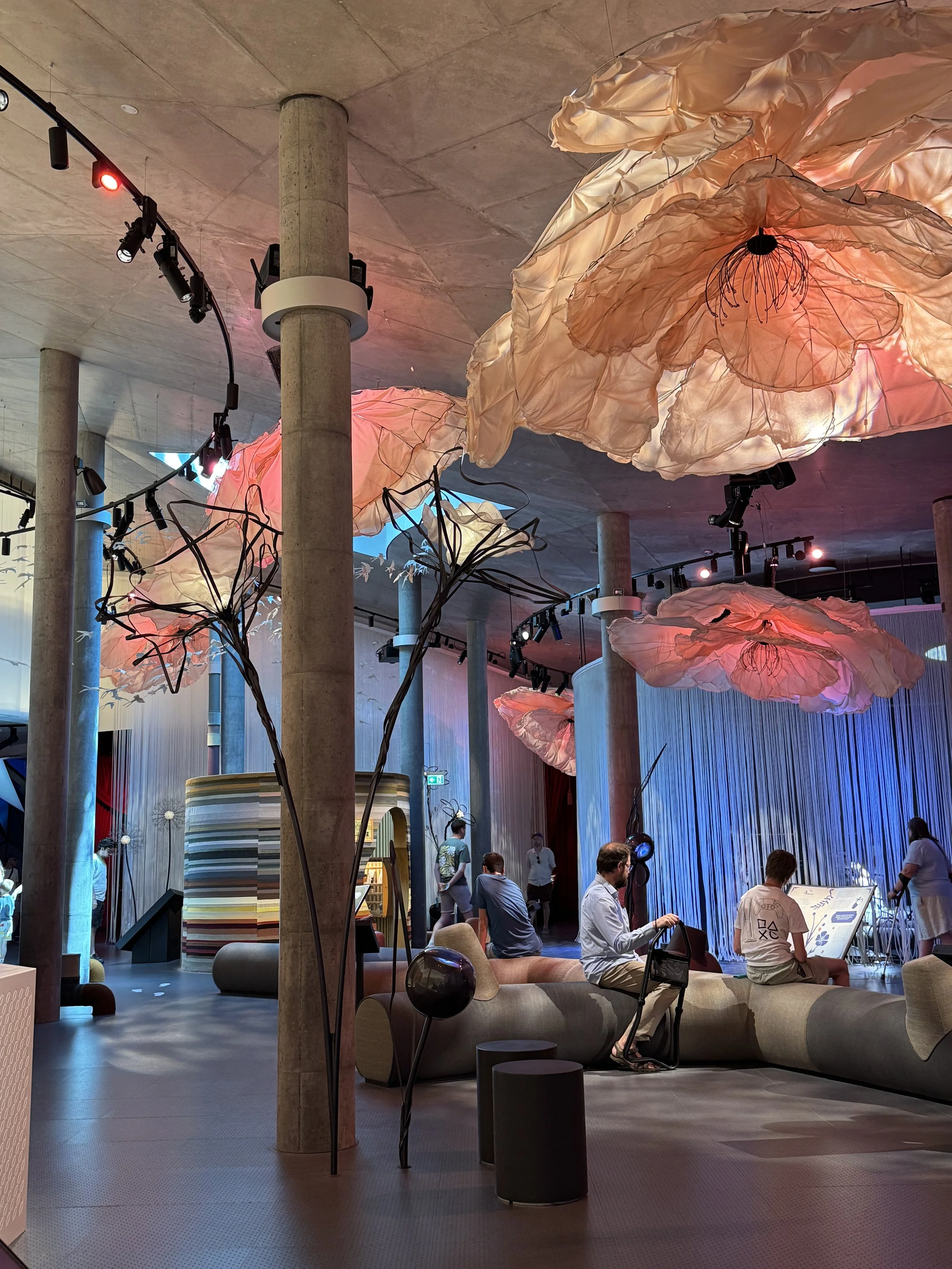
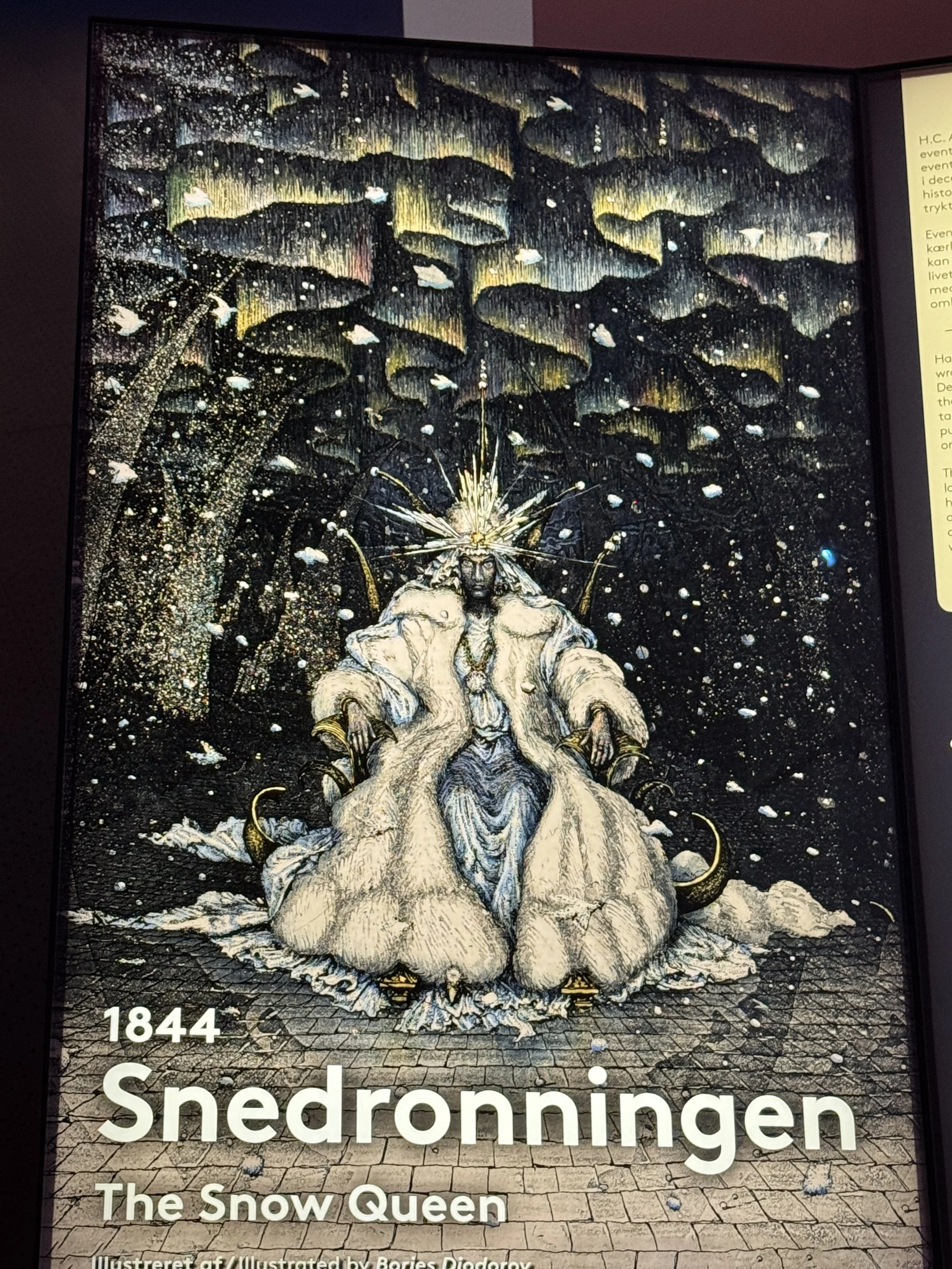

A lot of people fly through Oslo, but how about Denmark? You can visit the Hans Christian Andersen Museum in Odense.
Longyearbyen
At every door you take your shoes off. The library, the museum, the hotels, the cafés. It started with miners and coal dust. The habit stayed. By the last night I was sending Christina across a bar to tell tourists to take their boots off.
If you are with the Arctic Circle, Sarah will probably pick you up. First night at the Coal Miners' Cabins, with the person who will likely be your cabinmate, bathrooms down the hall, dinner together. We boarded at three the next afternoon, so the morning was ours. Coming back, we were off the ship at nine and had the whole day. Two or three half days are enough. It is a small town.
If you stay extra days I reccomend the Coal Miners' Cabins. The Radisson in town runs three or four hundred a night. The walk down is fifteen minutes and easy. A taxi into town is about fifteen dollars. Down to the beach, about thirty. The Coal Miners' Cabins also have a full bar with snacks, serve breakfast, and even have a souvenir shop.
You don't need cash. Not in town, not on the ship. At the airport people were panicking about it. I never needed it.
Residents buy alcohol on a ration card. You show your return ticket.
In town, a few things are worth your time. Some for an hour, some for a coffee, and one for the souvenirs worth bringing home.
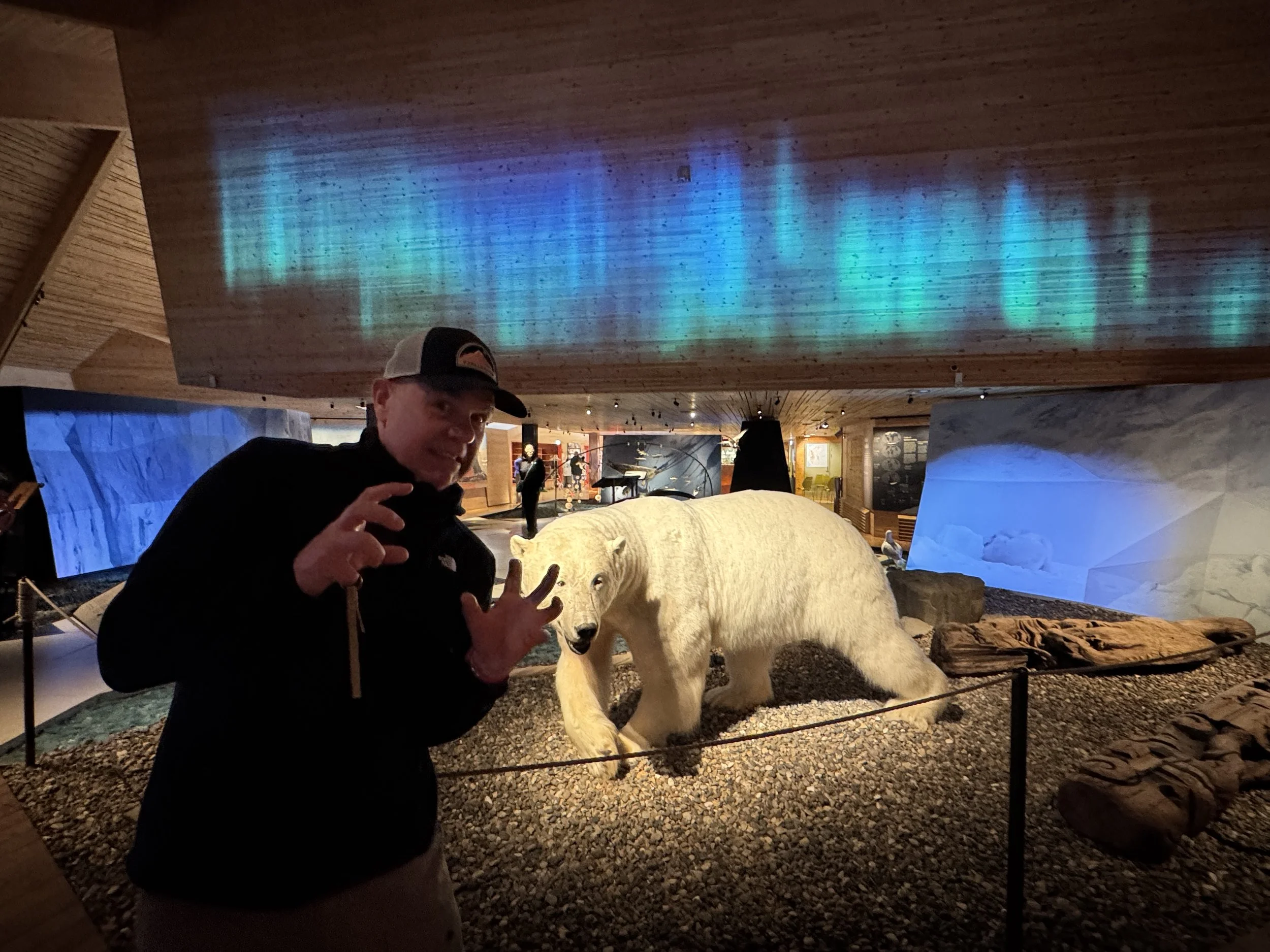
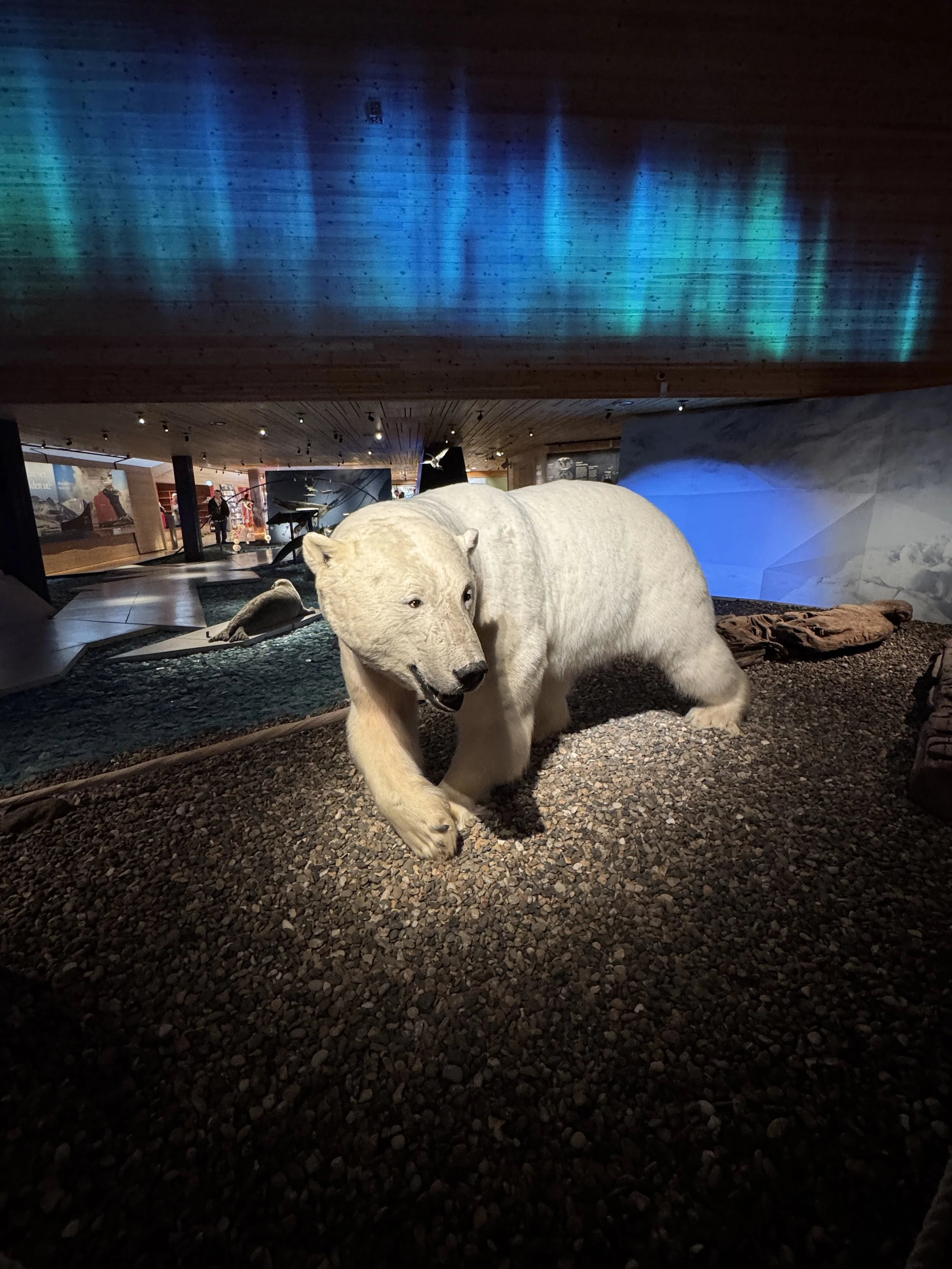
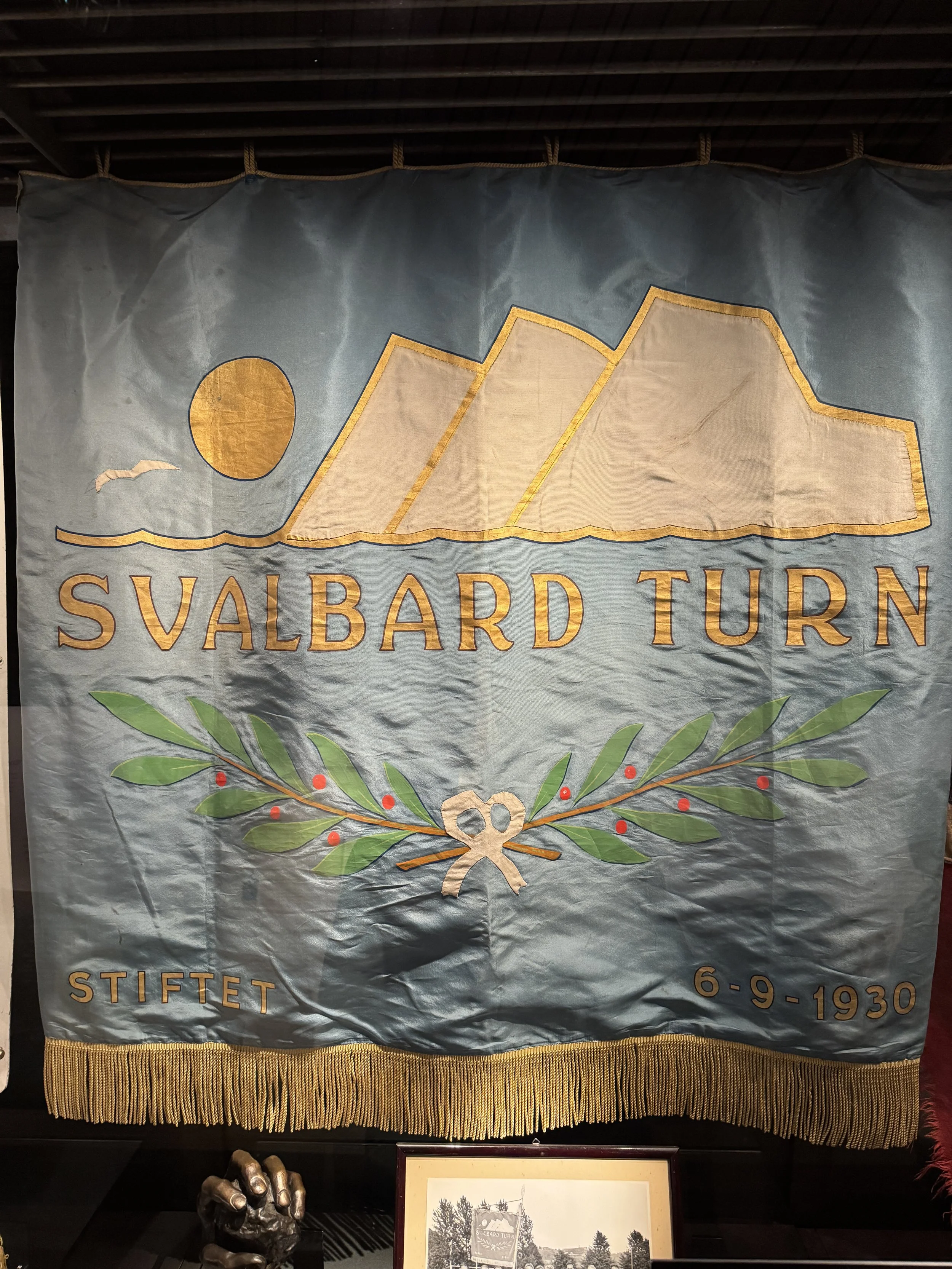
Start with the Svalbard Museum. I loved it. Somewhere in there is the clothing of Dutch whalers, dug out of their graves on Ytre Norskøya in 1980. If your ship lands there, you will walk past those graves single file. I walked past their coats first and did not know whose they were. Look for them. The shop has Christiane Ritter’s book and postcards too.
The Husky Cafe, northernmost café in the world. Two huskies on shift at a time and a room full of people waiting their turn. Fantastic coffee. My only complaint is not enough huskies. 😂
Nordover, for coffee upstairs in the strangest comfortable chairs I have ever sat in plus a great exhibit and gift shop. Station, if you want a panini to a country song about a truck.
The Seed Vault is out past the airport and too far to walk. When we went it was mobbed, and there is not much to do there but look at a door.
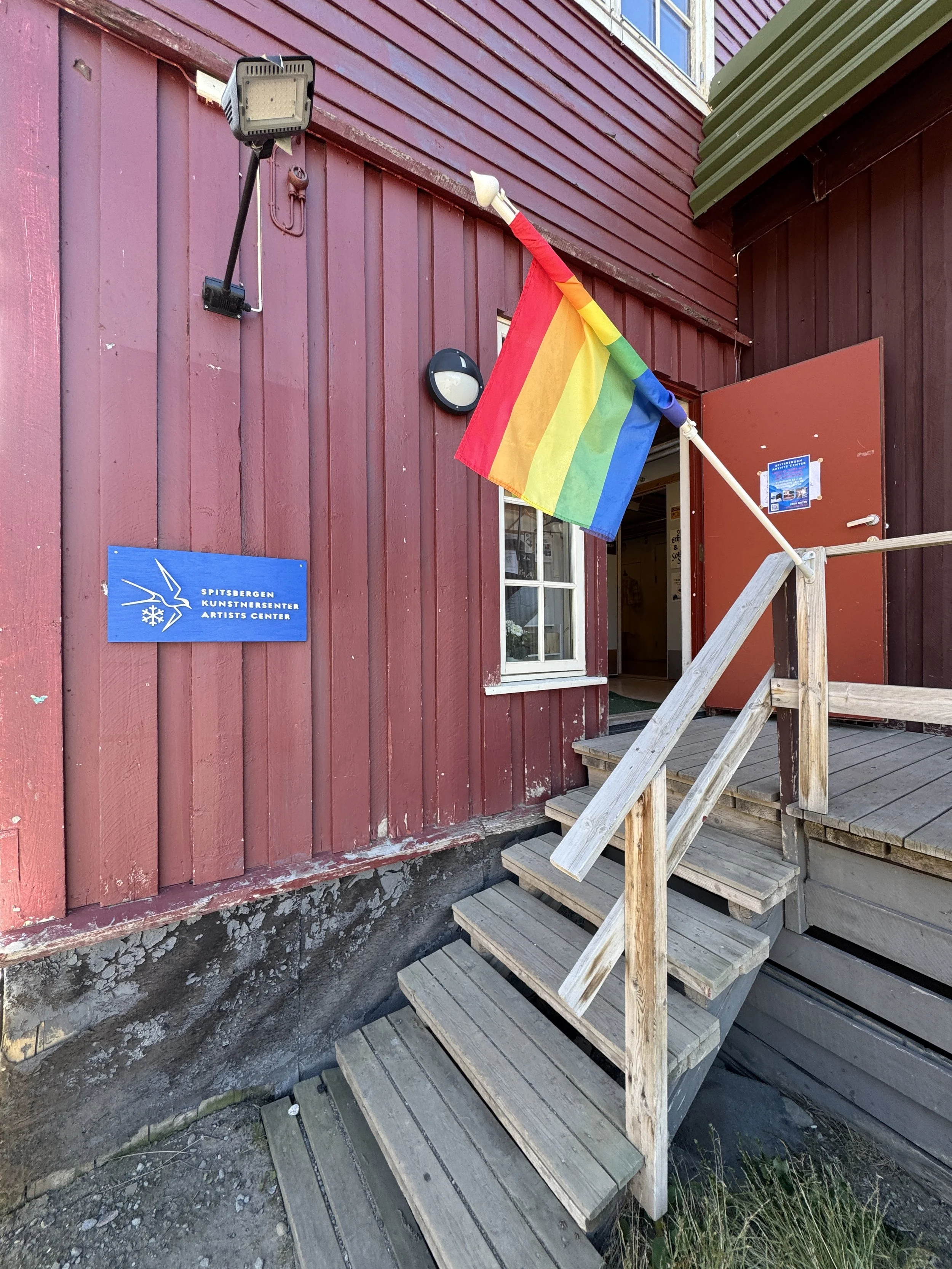
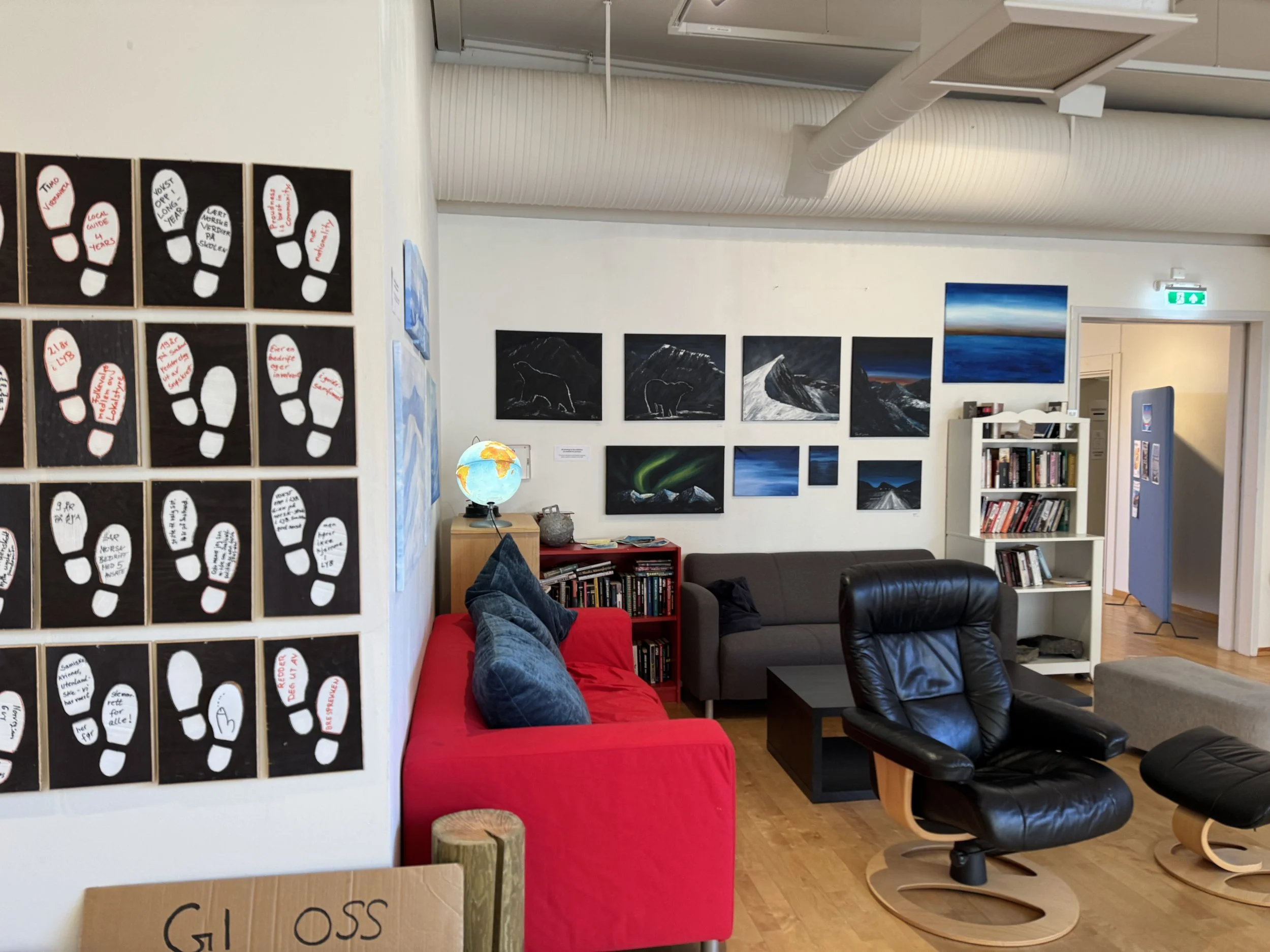
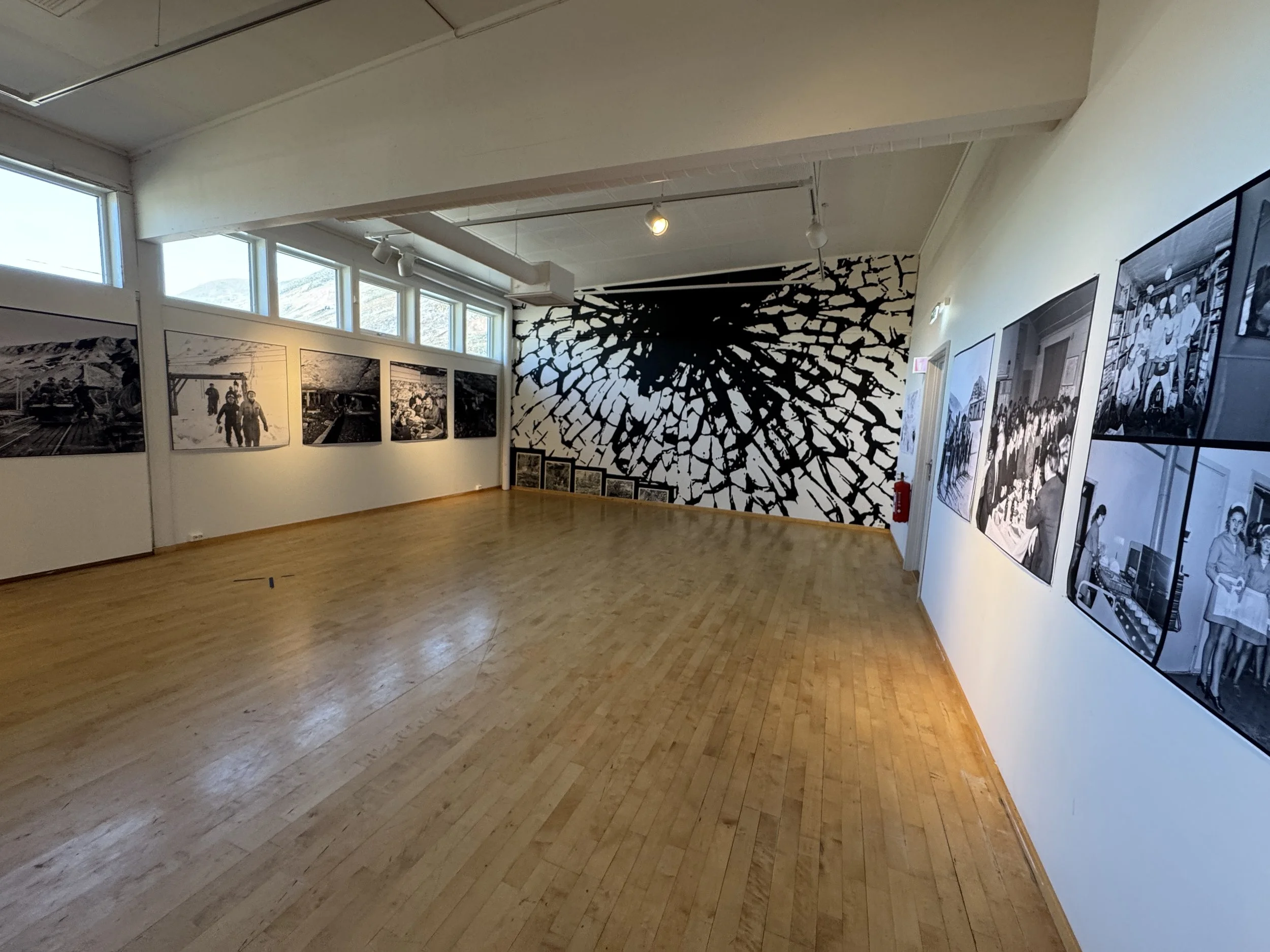
And the Spitsbergen Kunstnersenter, the long red building just below the cabins. If you want a real souvenir, buy it there. Everything is handmade by the artists who work in that building. The money stays with them. The building is being sold, and the lease runs out in 2027. The people who run it have a petition asking the local council to find a plan for the artists who have to move. It closes December 9. It takes a minute: openpetition.org/xvsvw Please sign!
Don't Buy Everything at Home
Longyearbyen has several outdoor shops and a small mall. Norrøna, Fjällräven, Helly Hansen, the European brands. No 66°North (Icelandic), which surprised me. In mid-July a lot of it was thirty to forty percent off.
Muck Boots can be rented in town. Spitzbergen Reisen charges NOK 200 for the first day and NOK 60 for each day after, so about NOK 980 for a fourteen-day voyage, around $90. You book and pay online and pick them up at their office on the day you board. New, they start at about $130. If you will wear them once in your life, rent. You save money, and more importantly, a lot of space in your bag.
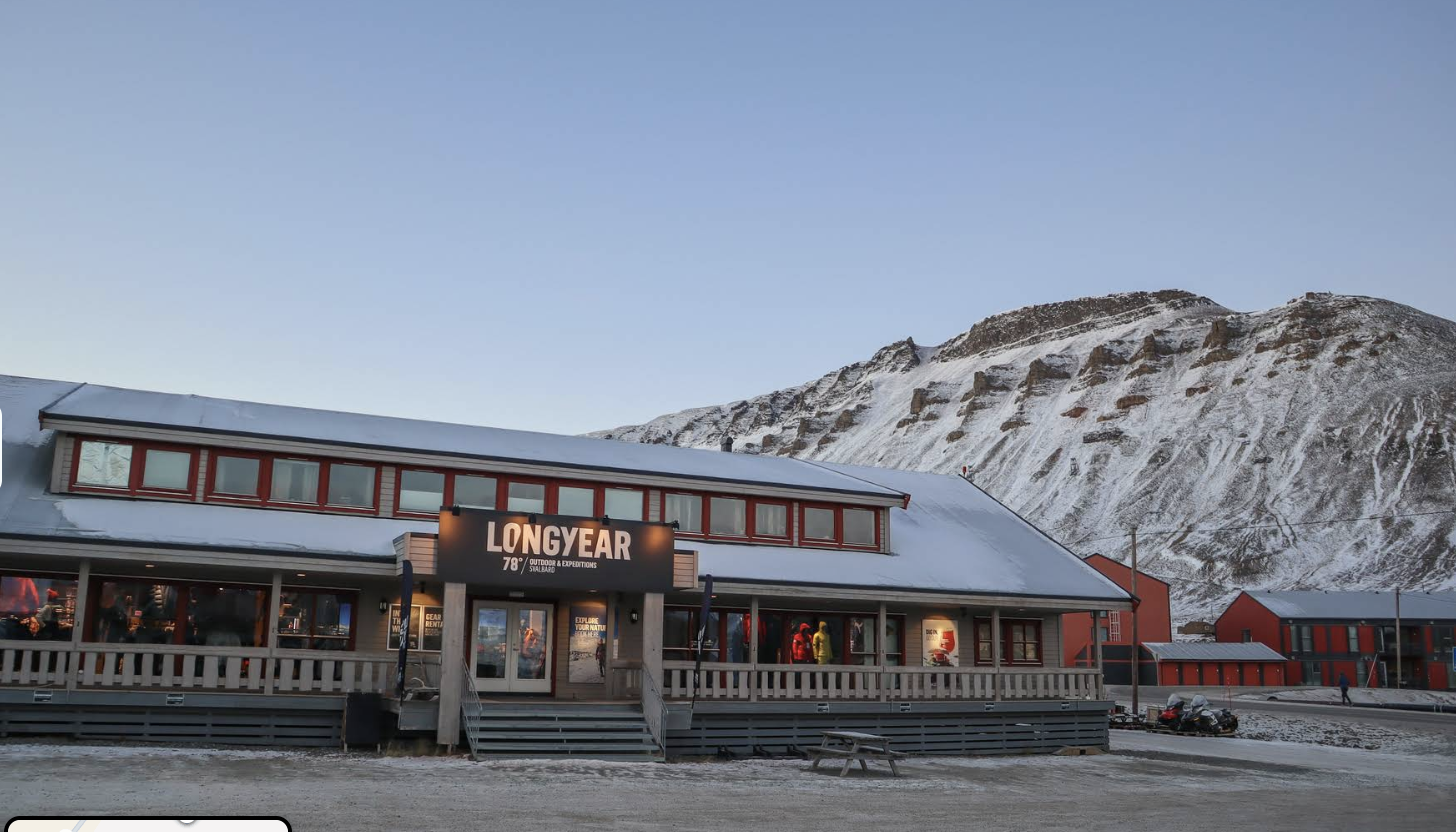
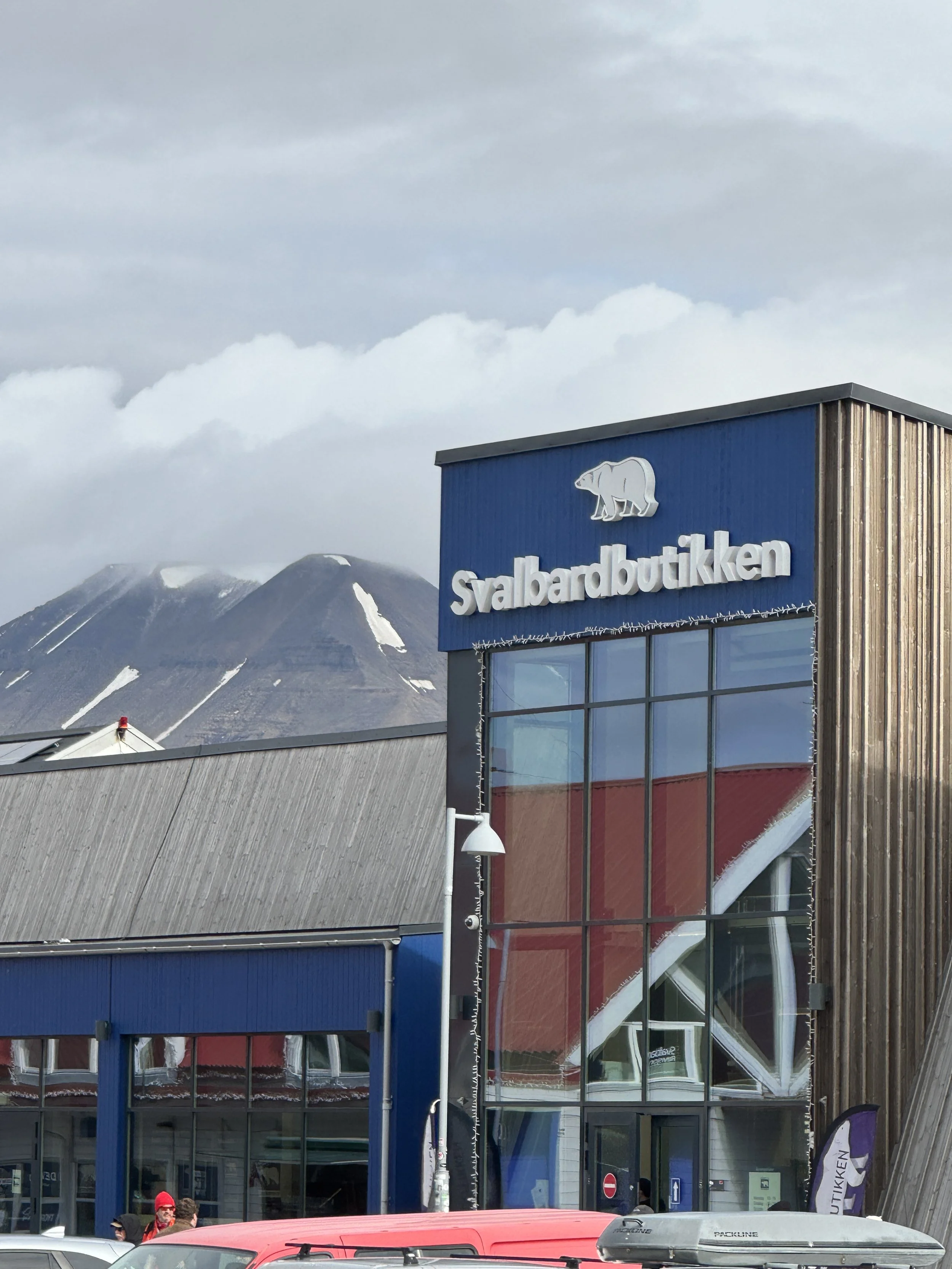
Photo left: Longyear 78°/Google
The Duffel Bag
The planning document says duffel bags. No wheels. The ship has a hold the size of a small garage. Your luggage goes down there the day you board and comes back up the day before you leave. A duffel does not fit in the cabin, folded or not. Mine fit nowhere. I slept beside four compression bags for fourteen nights. Bring a suitcase. Or duffel with wheels at least.
Compression packs will save your life. One pair of underwear for every day and seven pairs of wool socks, sealed flat. Don't plan on laundry. There is little space for it and there is no time. The Coal Miners' Cabins have a laundry room you can use once you're back on land. And if you run out of shirts, Longyearbyen has plenty of souvenir shops. I bought three.
What to Wear
Loose layers. The planning document is right about that and wrong about how many.
Two sets of merino base layers, long top and long bottom. Alternate them.
Four merino tees for the ship. The ship is heated and you will live in them. They do not hold a smell. If one needs washing, wring it out and hang it up.
One mid layer. A fleece. Or do what the guides did and go ashore in a big Nordic wool sweater.
One jacket. I brought two. I also packed rain gear for the spray in the Zodiac. The Zodiac never sprayed and we had no rain. If you worry, a light shell that fits over your jacket.
Fjällräven Vidda Pro trousers. Two pairs. There are two landings a day, the ground is mud as often as rock, and people fall or get stuck in the mud. You want a dry pair for the afternoon in case the first gets wet. I also brought a North Face bib. It kept me warm. I did not need it. In every photograph I am a blue blob in a big landscape. Three pairs. One too many.
That is the rule for almost everything. Two of it. Not three.
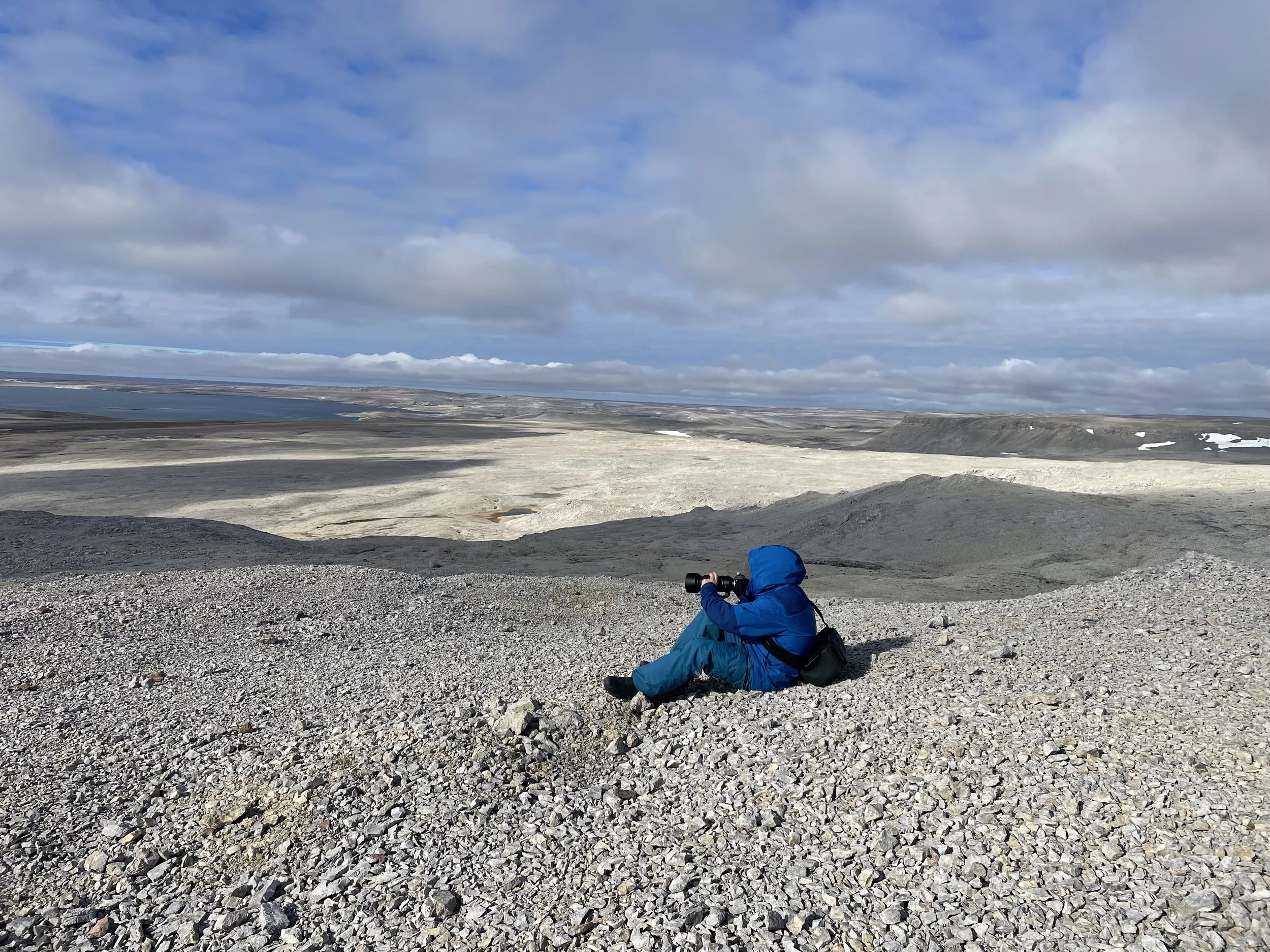
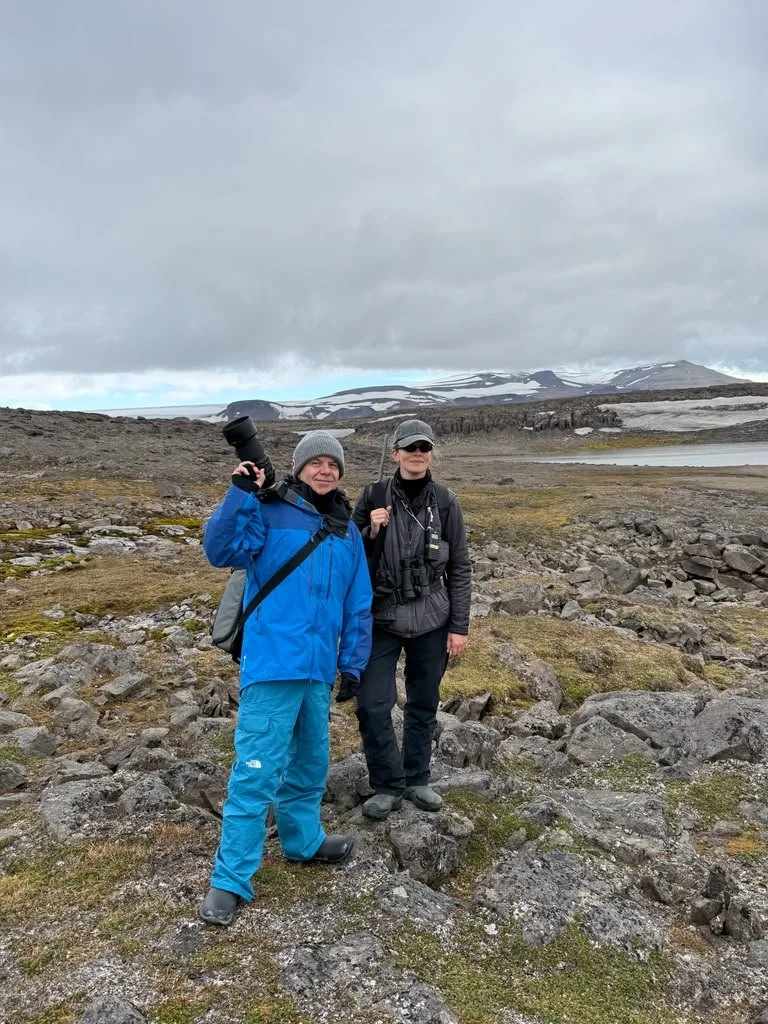
Muck Boots, and don't buy or rent a knockoff. I hiked every landing in them, including the long walks. I brought hiking boots as well. They never came out.
A neck gaiter. It kept my neck warm every day.
A wool beanie. Two if you go on the long hikes.
Gloves. I brought three pairs and used one, barely. The Zodiac rides last three to five minutes. Ashore, when the sun is out, it is warm. On one landing I fell asleep on a rock for half an hour. Gloves also make a camera hard to work. Bring a thin waterproof pair and a liner. With one exception. Standing still on deck with a camera, the cold builds up. By day ten I put the liner on first and the hat second. Learn that on day one.
Sunglasses. The ones you already own. In July the land is green and brown and the snow is patches. I spent hours researching glacier glasses. You don't need them.
A swimsuit. There is a polar plunge. Seven degree water, down a ladder. I passed. I passed twice. You can do better.
Moisturizer. The Arctic is a desert. Hands and face. A small one lasts fourteen days.
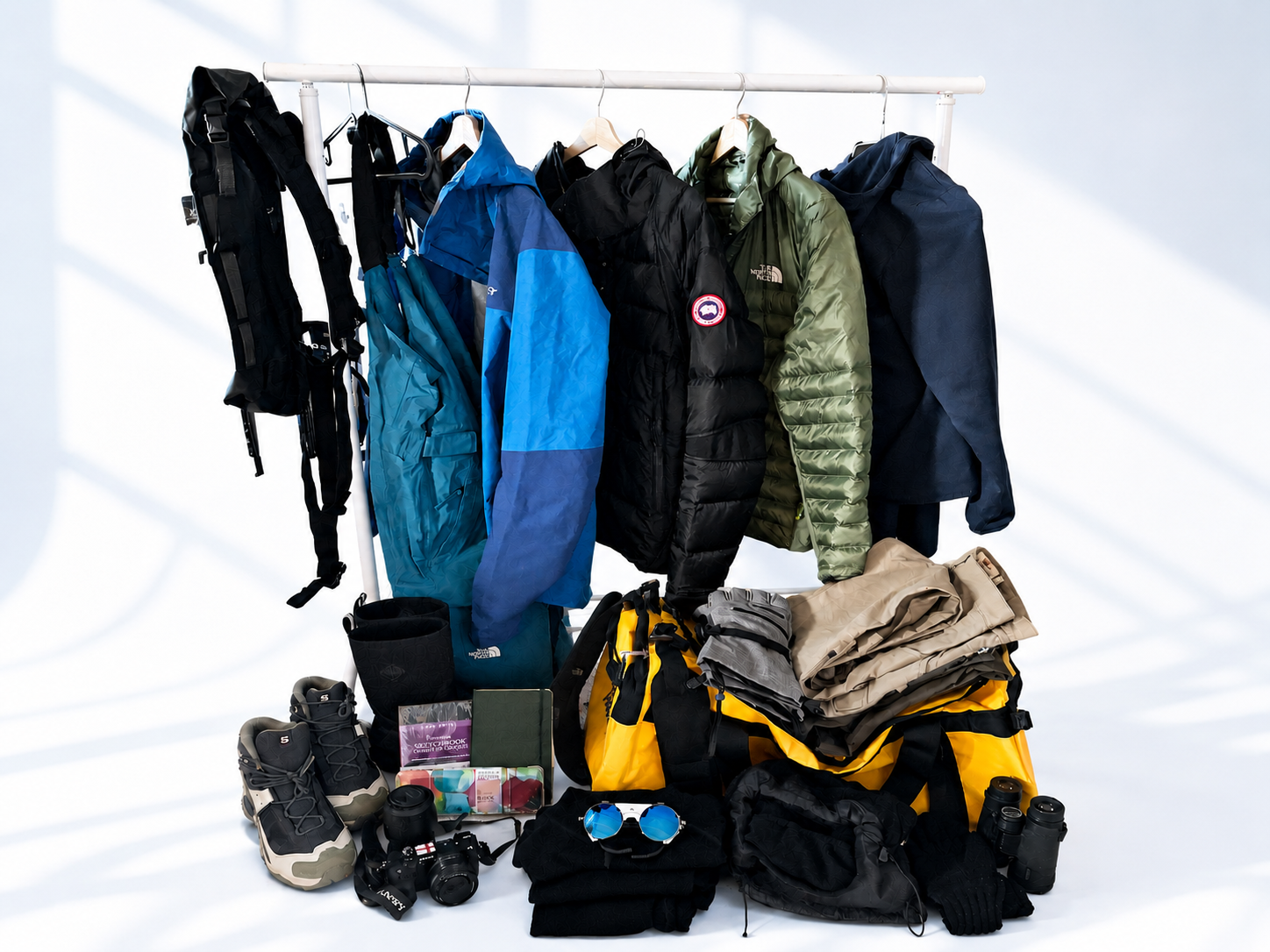
I brought way too many layers
What to Leave
A headlamp. A flashlight. The sun does not set in July.
A sleeping bag, towels, sheets. The ship has them.
Games. The ship has chess, cards, all of it. A word of warning if you play chess and win. By day six nobody would sit down with me. People walked past the board making meaningful eye contact with the horizon. Lose once in a while if you want to keep playing!
Attitude. Leave it at home. Don't cut in front at the food line. Wait your turn. Don't be that guy. The pancakes aren't going anywhere. There are always more pancakes. Bringing cheese won't save you. And every artist gets ten minutes to present their work to the ship. Don't go over. People are tired, and they'd rather be on deck. Take the early presentation slots if available.
What to Bring
A sleep mask. My cabin had no window and on the ship I never needed it. If yours has a porthole, you will. You will need it at the Coal Miners' Cabins either way. The drapes are dark and the room is still light.
Wax earplugs. The cabin is shared, and your cabin mate may be called up at two in the morning to set sails. Mine was. No matter where your cabin is, you will hear the engine. They also take care of the neighbors being sick through the wall, the bathroom, and the snoring. Nobody on that ship snored. Ask anyone.
Binoculars. Small and good.
Dry bag. You need one for the Zodiac landings. You can get away with a regular backpack too. My bag never once got wet. Then again, I went in July, and we had zero rain. It will get dirty at the landings.
Chocolate. The ship puts out cookies all day, every kind there is. Nobody goes without. But if you are a chocoholic like me, go to the supermarket in the center of town before you board. The ship sells it too but just one brand. Around day ten the schedule catches up with everyone and a round of presentations goes flat. At the break that night every person in the room produced their own supply at the same moment, like a customs inspection.
Seasickness
I get seasick. In 2001 I went whale watching in Monterey Bay and got so sick I have arranged part of my life around never doing it again. Before this trip I asked my friend Julia, who has sailed to Baja, and did what she said and nothing else.
Bonine. Chewable, over the counter, tastes like strawberry. One every morning, three hours ahead. Take one when you wake up.
A Reliefband on the wrist. About $80 online. It sends a small pulse through a nerve and looks like a second watch. Somebody made fun of me for wearing two. Then they wanted one.
Scopolamine patches from your doctor, behind the ear. They make you groggy, so only at night. The captain announces rough weather hours ahead. Patch on, bed. My doctor gave me sixteen. I used one. The rest went to other people. I would bring sixteen again.
I never got sick. Not once. Some people did. I went up to breakfast hungry.
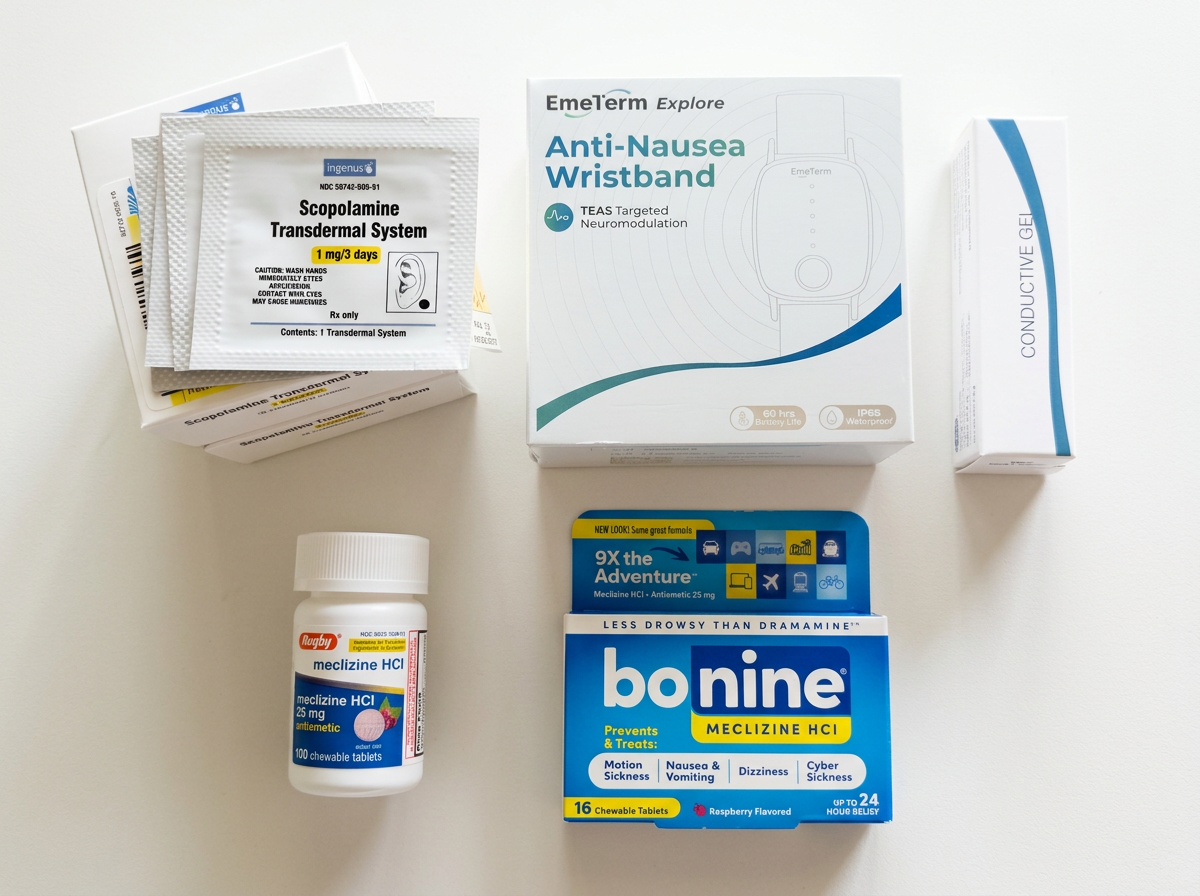
The magic combo. Never once got sick
The Cabin
A guide will tell you the cabin is small. You will see it and think it is small. Then you will live in it and you will get used to it.
One cubby, shared down the middle. It is not a lot of space. Your things will fit if you are lucky, and nothing will be within reach. This is where the compression packs earn their money. You know what is in each one.
A few wall hangers. Life vest, jacket, hat. Keep them there. Someone will say whale and you want to be on deck in thirty seconds.
A small corner bench for chargers and cameras. Watch that your bunk buddy doesn’t step on it on its way up. A shelf on the wall above your bed for the book, the glasses, the journal, the chocolate.
Your passport goes in the cubby on day one and stays there. Someone on our voyage lost theirs.
The bathroom is a toilet and a shower. Small, and it works. The toilet runs on a vacuum system, like on a plane. Every flush uses up some of the vacuum and the system needs time to build it back. If too many people flush at once, it runs out. So if you flush and nothing happens, don't flush again. Each try lets more water into the bowl, and it rises. Wait a few minutes for the system to reset. Then try once. There is a mirror cabinet with room for everything you brought. The shower is hot and works better than you expect. After a long landing there is nothing better. If the water doesn't drain right away, don't panic. The ship is leaning. Give it a moment. There is a squeegee. Use it. Dry the floor for your cabinmate. They will do the same for you.
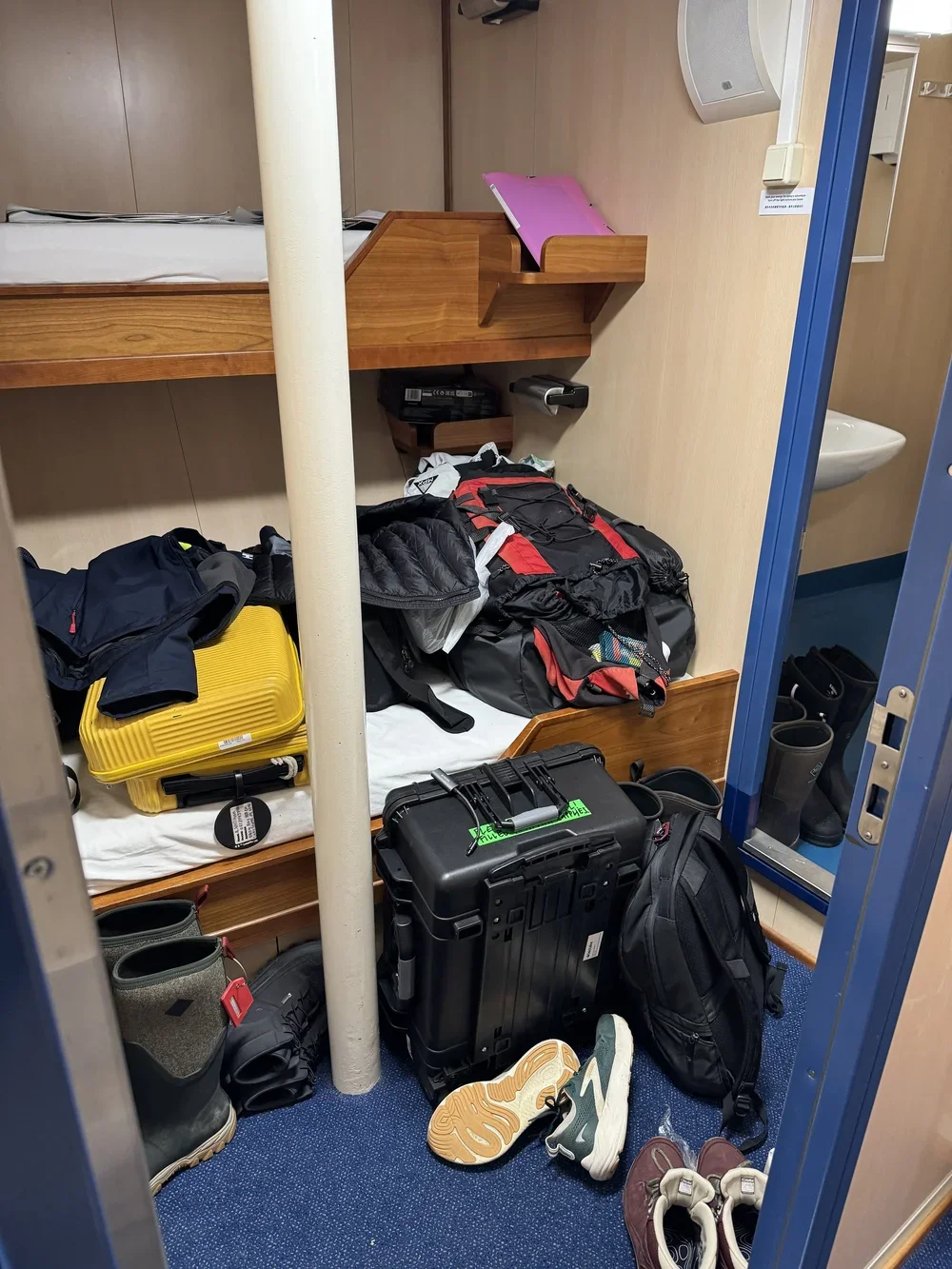
Cabin 1, with a pole through the middle of the room. We traded it for Cabin 5, and it spent the rest of the voyage as storage for some peoples gear and boots.
The Ship
Three meals a day. A rotation of hot dogs, pancakes, bacon and eggs for breakfast. Bread, butter and jam every morning for me. An automatic coffee machine, water, juice, cookies, whenever you want them. By day thirteen the salad was gone and the Nutella with it. I will not be taking questions on the Nutella. BYON (Bring your own Nutella)
The bar was about five dollars a beer in 2026. You write your own tab on a sheet. At the end you settle it, and the crew tip with it. Card is fine. There is an envelope if you want to leave cash.
The bridge door is always open. Go up. At the end of the trip I heard the crew had hoped more of us would.
Sailing is volunteer. If they need hands for the sails, put yours up. Under sail, your life vest stays on. Always. The captain put it plainly. Go overboard without one, and by the time they turn the ship around, they are not rescuing you. They are recovering you.
The magnet board by the gangway. Your magnet goes out when you go ashore and back in when you return. That is the whole system, and it exists so nobody is left on a beach while the ship sails to the next fjord. There was not one day in sixteen when somebody did not forget. Don't be one of the magnet people.
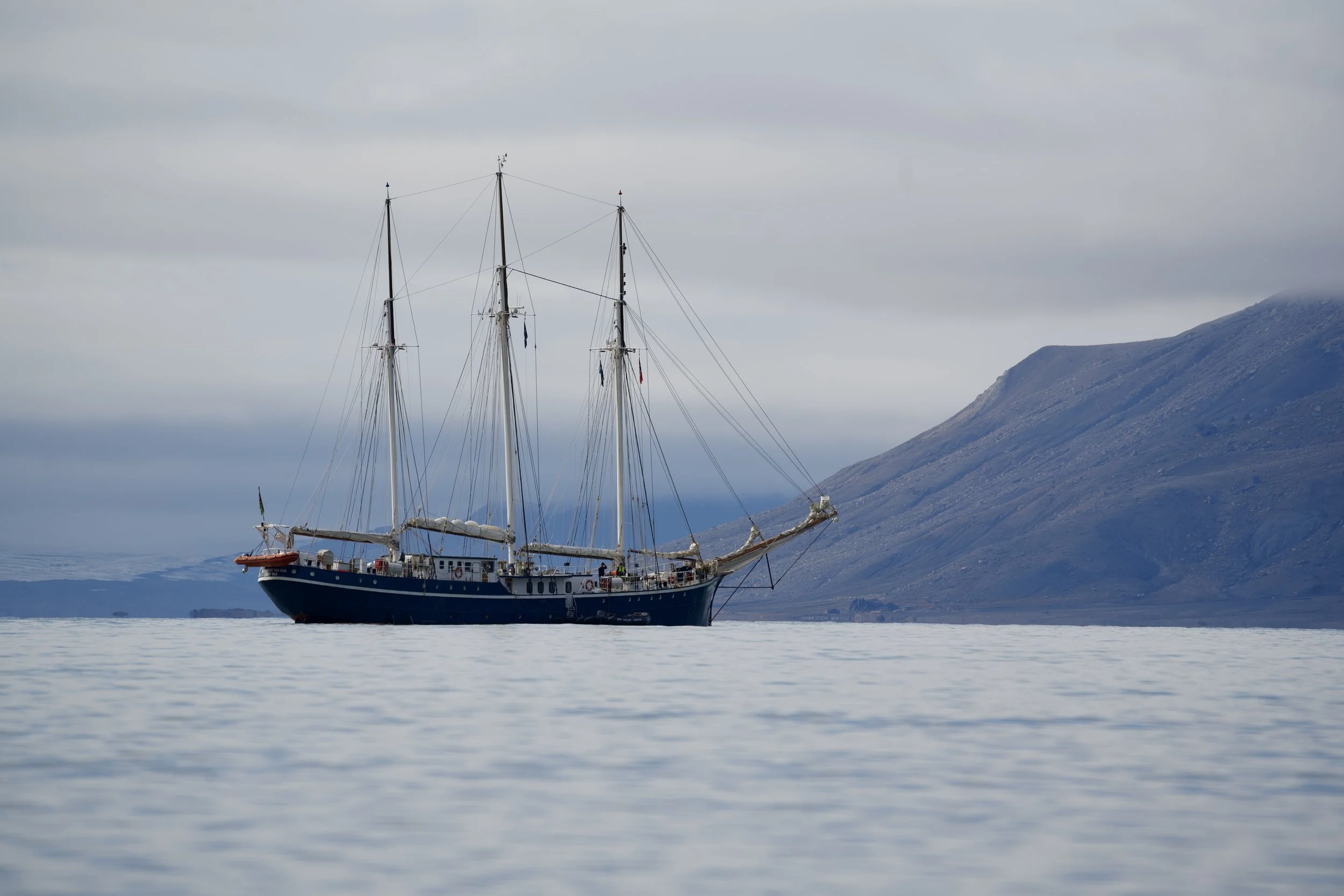
What a beauty! The Rembrandt van Rijn. A Dutch three-masted schooner, registered in Port Vila, Vanuatu, sailing the Arctic.
Stay Offline
The ship sells Starlink data. Five and ten gigabytes. Some people bought it. Some made phone calls to their assistants. Don't be one of them. It is your fourteen days. Close the laptop. Write in your journal, dictate into your phone if you have to, and turn the rest off. The emergency email is checked. Nothing will happen at home that you won't hear about. I had not been offline like that since before offline was a word anyone needed. Most everyone was very present. It was one of the best things about the trip.
Nothing on that ship is live. No live blogging, no streaming, no posting from the deck. You'll be there, and the rest of the world won't. Everything you make, you'll share later and that is a good thing.
Landings
Every landing starts in a Zodiac, and the guides walk you through it before the first one. You board backwards. Turn your back to the sea, go down the stairs, and someone takes your bag. One step to the ladder, one step into the boat, they hand your bag back, you sit. Getting out, you face the driver, swing your legs over the bow, and stand up in ankle-deep water. The first time takes forever. By the end you do it in minutes.
Most days Sarah gave three choices. Stay at the landing site. The middle walk. The long walk. The long walk means no talking, no questions, no photographs, and it will tire you out. Be in good shape before you go. The middle walks gave me an Arctic fox cub, reindeer, a polar bear's jaw. The long walk on Day 09 gave four people and a guide two bears. That story is in The Stones Go First.
Go on every landing. On day one I skipped the second. I wanted a shower and my gear stowed where my hand could find it. The next day nobody left the ship. After that I went on every landing there was.
Some days there is no landing. You maybe spend some time outing in a Zodiac, cruising along a glacier front or through the ice. On those days there is a sign-up sheet the night before, and it asks what you want to do. Write one word. I wrote "filming" and got a boat with three people in it and Sarah at the tiller for ninety minutes. She told me later she wished more people had done that, because a boat is easier to build around one verb than around a résumé.
When the speaker says whales at two in the morning, get up. I lay in the bunk on day ten and did the math on it. They were humpbacks, alongside the hull. Always get up! It’s always worth it!
The Arctic keeps its own schedule. The route is set day by day, by the weather. Be patient.
Cameras
A long lens. Five hundred millimeters. Of twenty-eight people I was the only one who brought one. Bears are far away. Without a big lens you are borrowing somebody else's photograph and hoping they are good. If you want to be fancy, add a gimbal. The ship never stops moving. If stationary, think waves.
A DJI Osmo Pocket 3 or 4. Wide, steady video on deck and ashore. One slow panorama at every landing. Its zoom is useless. That is what the big camera is for. Those two are enough.
Around day five I stopped taking the Osmo ashore. Landings that looked like nothing from the ship opened up once we were walking. I have no panoramas of them. Don't be me. Always bring it.
A sling bag. Mine swings from your back to your front and unzips flat, like a small table. The camera with the 500 fits inside. No backpack off, backpack on.
Back up your memory cards every day. Every day. It's the only time your laptop should be open.
The Work, and the People
If you are an artist you know what to bring for your project. Pack less of it. Two landings a day, three meals, presentations, the bar. I brought one book. I did not finish it. You will be very busy.
Presentations are ten minutes. Be everyone's best friend and be done in nine. I can't stress this enough. Ten minutes is also all you'll get to hear about anyone else's work, which is why you want to connect earlier on the forum. Especially with the people whose work overlaps with yours. The other filmmakers. The other painters. Whoever works like you.
Sarah keeps the log. Every landing, every position, every temperature, every sighting, down to the minute. Take your own notes anyway. But at the end of the voyage you get her log with all of it, and if you plan to write about the trip day by day afterwards, it's worth more than anything you packed. Thank her for it! The reason my blogs are so detailed is because of her log.
It is fourteen days. You can do anything for fourteen days. There will be someone you don't take to. Let it go. There will be more people you know for years.
Sponsorship
I was asked what worked on the sponsorship side. Not much. I wrote to around twenty brands. Not one signed on. Almost none wrote back. Julbo gave me a pro deal, about forty percent off. That is what most brand support looks like, when it comes at all. A discount. You still pay for the glasses. So ask for the pro deal. It is a small ask and an easy yes. Then I built my own. Arctic Ally, a set of support tiers on my site, starting with an eight dollar sticker. Readers bought in. The money was welcome. It did not come close to covering the trip. Since I got back I have been selling prints to make back some of it. That has been slow too. Maybe part of it was being a first-timer. No track record. A second trip might carry more weight. The whole story is in Entry 031, The Silence of the Brands.
The Most Important Rule of All: Listen to the Guides
My friend Steffi guides in Svalbard and Antarctica. Before I left she gave me one instruction. Number one rule: Listen to the guides. I did not always. Both stories are in Day 08 and Day 14. Their job is to stand at the edge of the group with a rifle so everyone else can put their head down and work. When they talk, stop. Always listen to the guides. Always!
Bring less
Everything above is what a ticket buys. A cabin, a cubby, three meals, a Zodiac, a guide with a rifle. Christiane Ritter wintered on Svalbard in 1934, and she wrote that the Arctic does not give up its secret for that price. She was right. The rest you bring yourself. So bring less of everything on this list. Bring more of yourself.